
Free Speech-Language Pathologist Resume Templates & Examples
An SLP resume should highlight your assessment skills, treatment planning experience, and the populations you have served across clinical or school settings. Choose a template below that presents your credentials effectively.
Real-World Resumes That Get Results
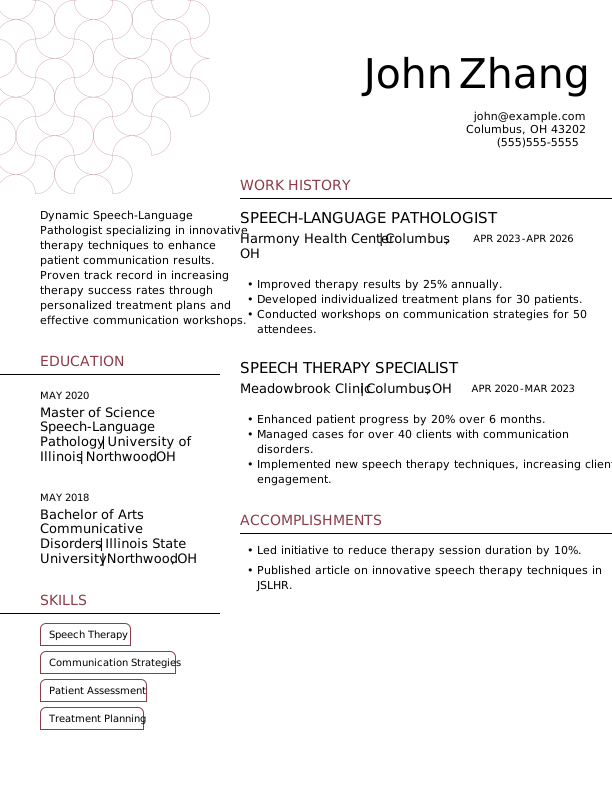
 Free
FreeSpeech Language Pathologist Entry-Level Resume
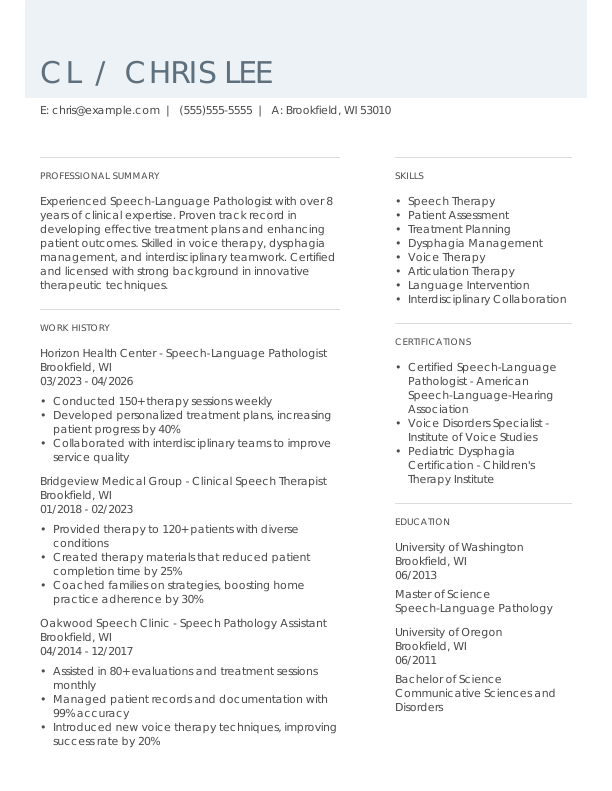
Speech Language Pathologist Mid-Level Resume
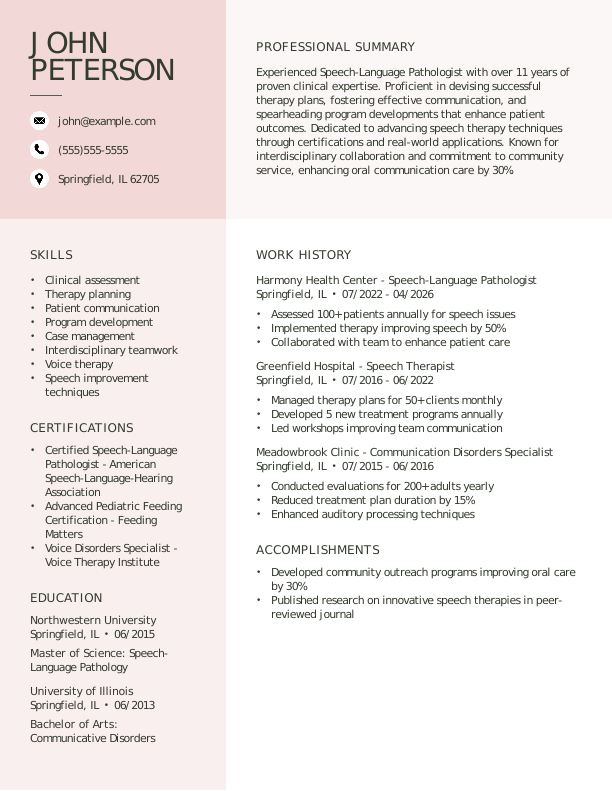
Speech Language Pathologist Experienced Resume
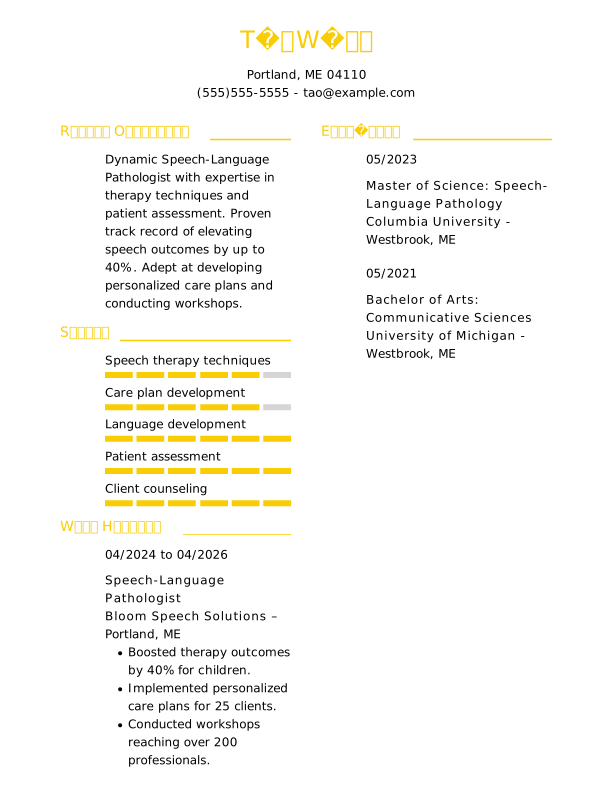
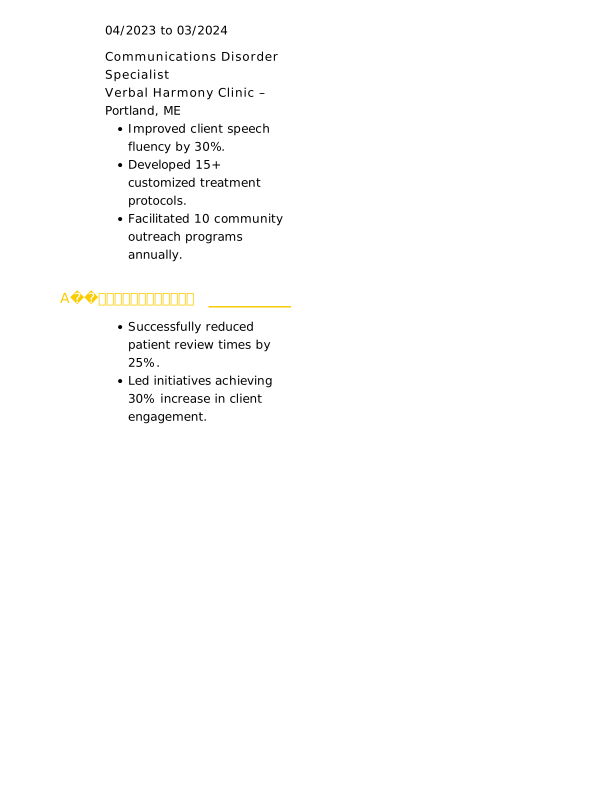
 Popular
Speech Language Pathologist Entry-Level Resume 1
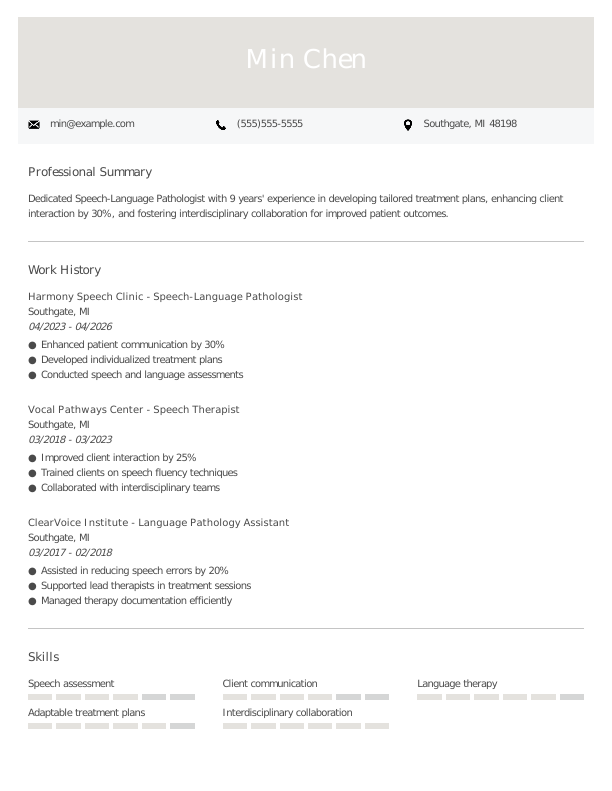

Speech Language Pathologist Mid-Level Resume 1
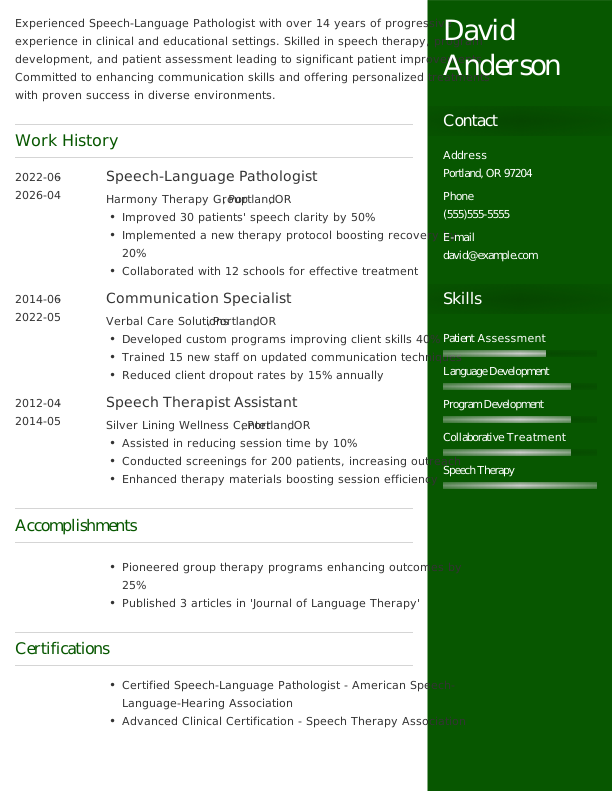

Speech Language Pathologist Experienced Resume 1
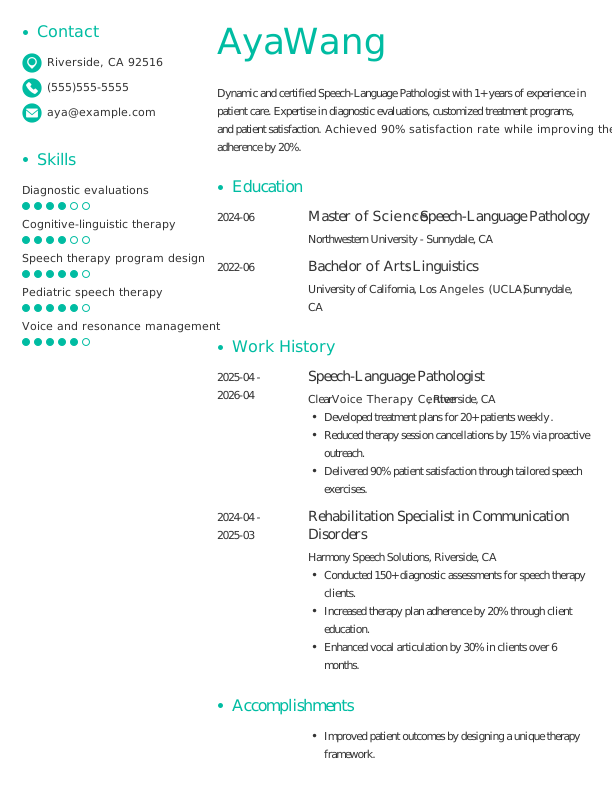

Speech Language Pathologist Entry-Level Resume 2
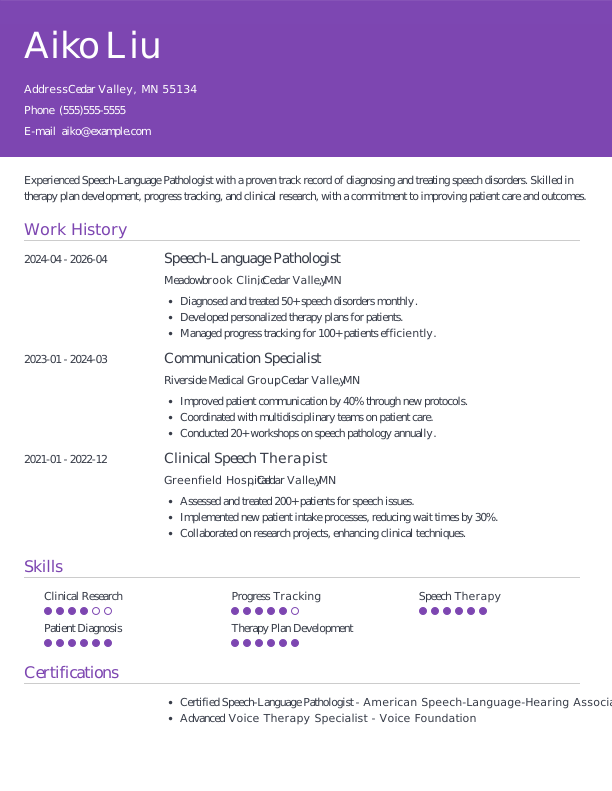

Speech Language Pathologist Mid-Level Resume 2
Browse Free Resume Templates
- Accounts Payable
- Adjunct Professor
- Artist
- Auto Mechanic
- Baker
- Business Development Manager
- Business
- Certified Nursing Assistant
- Classic & Traditional
- Cleaner
- College Student
- Concierge
- Construction Worker
- Corporate
- Creative & Unique
- Custodian
- Customer Service
- Dental Assistant
- Direct Support Professional
- Entry-Level
- Flight Attendant
- Hospitality & Food Service
- Front Desk Receptionist
- Healthcare
- High School
- Housekeeping
- Hvac Technician
- Hybrid
- Inventory Manager
- Logistics
- Maintenance
- Management
- Modern
- Mortgage Loan Processor
- Pet Sitter
- Phlebotomist
- Production
- Rbt
- Sales
- Security Services
- Restaurant Server
- Simple & Basic
- Social Work
- Teacher
- Technology
Resume Examples for Speech-language Pathologists
SLP resumes should reflect the settings you have worked in and the populations you have treated. Explore our templates to find one that fits your clinical background.
Entry-Level Speech-Language Pathologist Resume
This template is a strong fit for newly licensed SLPs. It helps you write an SLP resume with no professional experience by leading with your clinical fellowship, graduate practicums, and the populations you assessed during training.

Mid-Career Speech-Language Pathologist Resume
A smart choice for mid-level speech-language pathologists aiming to elevate their careers, this template effectively showcases recent achievements and specialized skills essential for advancement in the field.

Experienced Speech-Language Pathologist Resume
An ideal choice for speech-language pathologists with over 10 years of experience, this template supports professionals seeking leadership and advanced positions in the field.

Speech-Language Pathologist Resume Template (Text)
Below is an SLP resume in plain text format. Paste it into your document and adjust it to reflect your clinical settings, treatment populations, and assessment skills.
Ming Chen
Pinehill, TX 75758
Professional Summary
Dedicated speech-language pathologist with 7 years of experience enhancing patient outcomes and developing innovative therapy plans. Skilled in patient assessments and interdisciplinary collaboration with proven success in boosting engagement and satisfaction scores.
Work Experience
January 2023 – April 2026
Harmony Speech Associates – Pinehill, TX
Speech-Language Pathologist
- Improved patient outcomes by 25% through therapy plans
- Conducted 100+ assessments annually for diverse patients
- Developed personalized communication aids increasing success
January 2020 – December 2022
Clarity Treatment Center – Pinehill, TX
Communication Specialist
- Boosted patient engagement scores by 30% via new techniques
- Created workflow enhancing staff-patient interaction efficiency
- Facilitated training sessions improving staff proficiency
March 2016 – December 2019
Sunnydale Rehabilitation Clinic – Dallas, TX
Rehabilitation Therapist
- Managed caseload of 50 clients achieving 85% satisfaction
- Pioneered peer-reviewed program reducing recovery time
- Led interdisciplinary team meetings promoting collaboration
Education
May 2016
University of Illinois (UIC) Chicago, IL
Master of Science Speech-Language Pathology
May 2014
Illinois State University Normal, IL
Bachelor of Arts Communication Sciences and Disorders
Certifications
- Certified Speech-Language Pathologist – American Speech-Language-Hearing Association
- Advanced Swallowing and Neurological Disorders Certification – National Institute on Deafness
Skills
- Patient Assessment
- Therapy Plan Development
- Interdisciplinary Collaboration
- Communication Disorders
- Speech Therapy Techniques
- Patient Engagement
- Clinical Documentation
- Program Development
How to Write a Speech-Language Pathologist Resume
As a speech-language pathologist, knowing how to write a resume involves showcasing your clinical skills and relevant experiences in a clear format that stands out. Use the guidance below to highlight your strengths and tailor your resume for the positions you’re aiming for.
1. Contact Info
Your contact information should be prominently displayed, professional, and easily accessible at the top of your resume.
Be sure to include:
- Full name
- Phone number
- Professional email address
- City and state (ZIP code is optional)
- LinkedIn profile or relevant portfolio (if applicable)
 PRO TIP
Skip including personal information such as your Social Security number, age, or religious affiliation on your resume unless the employer specifically requests these details.
2. Resume Profile
A resume profile is a concise introduction, typically two to four sentences long, that highlights your key qualifications and career focus. It serves as a compelling pitch to hiring managers, designed to capture their interest and prompt them to explore your resume further.
Typically located at the top of your resume, the profile can be crafted as either a summary or an objective, each serving distinct roles in showcasing your professional identity. Understanding these differences will help you choose the best approach:
- A resume summary highlights essential credentials, clinical competencies, and key achievements relevant to the field of communication disorders. This approach works well for individuals with related experience or transferable skills looking to emphasize their contributions as skilled speech-language pathologists.
- A resume objective highlights your career aspirations and outlines what you aim to achieve in your next role. It’s particularly beneficial for recent graduates, professionals shifting fields, or those with limited experience, such as entry-level healthcare providers or educators transitioning into speech-language pathology.
Let’s examine the distinctions between a resume summary and a resume objective in the following examples:
Speech-language pathologist resume summary example:
Dedicated speech-language pathologist with over 6 years of experience in diverse clinical settings, including schools and rehabilitation centers. Proficient in assessment, treatment planning, and patient advocacy. Acknowledged for improving communication skills in clients and fostering significant improvements in their quality of life.
Speech-language pathologist resume objective example:
Recent graduate with a master’s in speech-language pathology eager to launch a career in a collaborative healthcare setting. Committed to improving communication abilities and fostering patient independence while contributing strong analytical skills and compassionate care to schools or rehabilitation centers.
3. Work Experience
The work experience on your resume is a critical part of your application. Employers examine past roles to assess not just responsibilities, but also the influence you’ve had in those positions.
This section demonstrates how your background as a speech-language pathologist makes you an ideal job seeker for new opportunities in the field.
The work experience section should contain:
- Job title
- Employer name and location
- Dates of employment (month/year)
- 3–5 bullet points detailing your therapeutic techniques and patient progress
When writing your work experience bullet points, customize your content to the job you’re pursuing by using terminology specific to speech-language pathology. Begin each point with a strong action verb, such as “Assessed,” “Developed,” or “Facilitated” to improve impact.
Incorporate measurable outcomes into your statements whenever possible. Quantifiable data, like the number of clients served or improvement percentages, can highlight your achievements and set you apart from other job seekers.
In general, consider following the format of:
[action verb] + [responsibility] = [result/achievement]
For example:
Conduct comprehensive assessments for over 30 patients weekly, developing personalized therapy plans that improve communication skills and improve patient outcomes by 25%.
Note that you can also flip the result/achievement with the responsibility:
Increased patient speech clarity by 40% through tailored intervention strategies and consistent follow-up sessions.
With these techniques in mind, your resume bullets may look something like:
- Conducted comprehensive speech assessments for over 50 patients monthly, achieving a 20% increase in treatment plan adherence.
- Implemented individualized therapy programs resulting in a 30% improvement in patient communication skills within three months.
- Collaborated with interdisciplinary teams to develop and refine patient care strategies, improving overall treatment outcomes.
- Mentored junior therapists on evidence-based practices, fostering professional growth and improving team efficacy.
- Used advanced software tools to streamline documentation processes, reducing administrative time by 25%.
4. Skills
The skills section provides a concise overview of your professional abilities as a speech-language pathologist. This ATS-friendly resume format allows hiring managers to assess your qualifications and expertise in the field with ease.
Skills can be grouped into three categories:
- Soft skills are personal qualities that influence how well speech-language pathologists collaborate with clients and colleagues.
- Hard skills are specific, quantifiable abilities acquired through education, training, or experience.
- Technical skills are the practical abilities required to operate specialized tools and technologies in a field.
5 Soft Skills for Your Resume or CV
- Effective communication skills
- Empathy and compassion
- Critical thinking abilities
- Team collaboration skills
- Cultural sensitivity
5 Hard Skills for Your Resume or CV
- Speech and language evaluation
- Augmentative and alternative communication (AAC) device management
- Teletherapy platforms (Doxy.me, Zoom)
- Articulation therapy techniques
- Swallowing assessment and intervention
In general, aim to include a well-rounded selection of skills that directly match the job requirements.
PRO TIP
If you’re a newer speech-language pathologist, consider placing your skills section near the top of your resume, just after your summary. For those with more experience, it’s best to position this section lower and weave your skills into the descriptions of your work history.
5. Education
Understanding how to list education on your resume is important for showcasing your qualifications. Start by listing your most recent or relevant degree, including the type of degree and the name of the institution.
If you’re a recent graduate, consider adding your graduation year, GPA (if it’s 3.5 or higher), any honors received, and relevant coursework to provide more context about your academic achievements.
Speech-language pathologist resume education section example:
Master of Science in Speech-Language Pathology (MS-SLP)
Boston University, Boston, MA
Graduated: 2024 | Summa Cum Laude
PRO TIP
When listing your degrees on a resume, always arrange them in reverse-chronological order, starting with the highest degree first, such as Master of Science in Speech-Language Pathology (MS-SLP) followed by Bachelor of Arts in Communication Sciences.
6. Certifications
Certifications illustrate your expertise and ensure you’re knowledgeable about the latest practices in speech-language pathology. Although not always included in a traditional resume, listing certifications is important for many professionals, as employers often seek specific qualifications for specialized roles, like those working with pediatric patients or rehabilitation settings. Highlighting relevant credentials can set you apart in a competitive job market.
Make sure to showcase certifications that improve your application and align with the positions you’re targeting. Always keep them current and formatted clearly for easy visibility.
Speech-language pathologist certification examples:
- Speech-Language Pathologist (SLP) License, New York | New York State Education Department | Expires: 01/2028
- Certificate of Clinical Competence in Speech-Language Pathology (CCC-SLP) | American Speech-Language-Hearing Association | Expires: 11/2027
- Basic Life Support (BLS) | American Heart Association | Expires: 03/2028
- Pediatric Advanced Life Support (PALS) | American Heart Association | Expires: 09/2027
Start Building Your Job-Winning Resume
Use Your Existing Resume
Import your current resume to transfer your information to one of our professional templates.
Create a New Resume
Start fresh with a template that catches your eye and follow the prompts to add your details.
Tailor Your Work History to Beat the ATS
Your work experience section goes beyond mere job titles. It’s a platform to highlight the tangible impact you’ve made through your role as a speech-language pathologist, showcasing specific patient outcomes and improvements. This not only enriches your resume but also improves its compatibility with applicant tracking systems (ATS) by making it easier for them to scan.
To create a compelling work history, customize it to align with the position you’re targeting. Begin by dissecting the job description closely. Identify key skills and qualifications that are frequently mentioned, then integrate those elements into your experience descriptions to strengthen your application.
What’s a Fair Speech-Language Pathologist Salary?
Researching salary information is essential for assessing job offers, negotiating pay, and making informed career choices. The data provided by the U.S. Bureau of Labor Statistics (BLS) outlines the most recent national averages for speech-language pathologists.
Several factors can affect actual salaries, such as geographic location, years of experience, certifications, and areas of specialization. For example, speech-language pathologists working in hospitals or rehabilitation centers often earn more than those in schools or private practices. Additionally, those with specialized skills in areas like pediatrics may command higher salaries.
| Alabama | $77,430 |
| Alaska | $99,080 |
| Arizona | $98,390 |
| Arkansas | $84,430 |
| California | $114,050 |
| Connecticut | $103,460 |
| Delaware | $100,530 |
| District of Columbia | $112,490 |
| Florida | $92,770 |
| Georgia | $91,960 |
| Hawaii | $107,040 |
| Idaho | $73,810 |
| Illinois | $87,940 |
| Indiana | $90,180 |
| Iowa | $85,230 |
| Kansas | $84,230 |
| Kentucky | $86,260 |
| Louisiana | $75,960 |
| Maine | $80,100 |
| Maryland | $98,120 |
| Massachusetts | $99,570 |
| Michigan | $84,330 |
| Minnesota | $82,020 |
| Mississippi | $78,270 |
| Missouri | $84,930 |
| Montana | $83,830 |
| Nebraska | $83,880 |
| Nevada | $100,440 |
| New Hampshire | $86,900 |
| New Jersey | $109,310 |
| New Mexico | $106,280 |
| New York | $111,640 |
| North Carolina | $89,980 |
| North Dakota | $73,950 |
| Ohio | $89,740 |
| Oklahoma | $87,210 |
| Oregon | $105,460 |
| Pennsylvania | $93,980 |
| Rhode Island | $100,400 |
| South Carolina | $88,410 |
| South Dakota | $69,230 |
| Tennessee | $83,200 |
| Texas | $94,850 |
| Utah | $83,640 |
| Vermont | $81,890 |
| Virginia | $96,180 |
| Washington | $103,040 |
| West Virginia | $85,410 |
| Wisconsin | $84,090 |
| Wyoming | $88,930 |
| Puerto Rico | $59,170 |
Key Takeaways
- Tailor your resume to the job description. Use specific terminology from the listing to resonate with both ATS and hiring managers.
- Highlight quantifiable achievements to demonstrate your impact. Include metrics relevant to your field (e.g., patient improvement rates, therapy session outcomes) for added weight.
- Select an appropriate format based on your experience level. New graduates may find a functional or combination format beneficial, while seasoned professionals often prefer a reverse-chronological layout.
More Resume & CV Examples
- Marriage And Family Therapist
- Massage Therapist
- Mental Health Counselor
- Occupational Therapist
- Occupational Therapy Assistant
- Occupational Therapy
- Pediatric Occupational Therapy
- Physical Therapist
- Physical Therapy Aide
- Physical Therapy
- Therapist
Cover Letters for Your Resume
Browse our library of cover letter examples to complete your application. A resume will have a better chance of getting noticed.
Frequently Asked Questions
Last Update:
What resume format should I use for my speech-language pathologist resume?
There are three main resume formats to consider when applying for a speech-language pathologist position. Your choice should reflect your level of experience and the aspects of your career you wish to highlight:
- Chronological: The chronological resume format is the most widely used style, highlighting work experience by detailing your responsibilities and achievements sequentially. This format is particularly beneficial for applicants with a relevant job history, as it improves their qualifications and lends credibility to their application.
- Functional: The functional resume, also known as a skills-based resume, prioritizes qualifications and features an expanded skills section rather than focusing on work history. This format benefits job seekers who lack relevant experience or have employment gaps, as it allows them to showcase their capabilities more prominently.
- Combination: A combination resume merges the chronological and functional formats, showcasing both skills and work history. This format is ideal for professionals who want to emphasize their capabilities alongside their career advancements, making it easier to demonstrate growth while highlighting relevant expertise.
Should I include a cover letter with my resume?
Yes, including a cover letter with your speech-language pathologist job application is important. A well-crafted cover letter improves your resume by letting you express enthusiasm for the position and highlight specific skills and experiences that might not be obvious in your resume alone. It demonstrates to potential employers that you’re committed to providing a tailored application rather than a generic one, which can significantly increase your chances of standing out among other applicants.
If you’re unsure about writing a cover letter, there are resources available to help you. Consider checking out guides on how to write a cover letter, as well as examples specifically designed for speech-language pathology roles. Different formats can also offer insight into how best to present your qualifications.
To make writing easier, using a cover letter generator can assist in creating a polished document by offering templates and suggestions tailored to speech-language pathologist positions.
How long should a speech-language pathologist resume be?
For speech-language pathologists with less than 10 years of experience, a one-page resume is ideal to highlight education, certifications, and clinical experience. Focus on relevant skills and therapy techniques that demonstrate your capability in the field.
Conversely, seasoned professionals or those in specialized roles may extend their resumes to two pages if all content remains relevant and concise. Prioritize clarity by emphasizing advanced training and unique contributions to patient care while eliminating any unnecessary filler language for a more effective presentation.
What keywords should I include to pass applicant tracking systems (ATS)?
To improve your resume for ATS, incorporate keywords directly from the job posting. For a speech-language pathologist role, terms like “speech assessment,” “language therapy,” and “articulation disorders” are essential. Including phrases such as “patient care” or “interdisciplinary collaboration” can also highlight your suitability.
Don’t forget to list any relevant certifications you hold, such as CCC-SLP or ASHA certification. Additionally, mention technical tools you’re familiar with, like Meditech or Dragon NaturallySpeaking. This approach ensures your resume stands out and demonstrates that you’re qualified for the position.
Is it important to include volunteer work or internships on my resume?
Yes, especially if you’re early in your career. Highlighting volunteer work demonstrates your commitment to the field and provides evidence of practical skills. This can be particularly valuable when formal experience is limited, as it showcases your dedication and proactive approach to gaining relevant expertise.

Toni Frana is a Certified Professional Resume Writer (CPRW), member of the Professional Association of Resume Writers & Career Coaches, and career expert who empowers job seekers to take control of their career paths using Monster’s comprehensive job search and resume tools.
See More From Toni FranaExplore Related Career Advice


How to Put Transferable Skills on Your Resume: 120 Skills, Examples, & Tips

Updated:
Aug 27, 2026
|

16 min read


How to Write a Functional Resume (Formatting Tips, Template, & Examples)
Updated:
Aug 7, 2026
|
17 min read


Functional vs Chronological Resume: Which Format Is Right for You?
Updated:
Aug 3, 2026
|
16 min read

100+ Resume Adjectives to Help You Write a Stronger Resume in 2026 (With Examples)
Updated:
Jul 30, 2026
|
12 min read