
Free Law School Resume Templates & Examples
Elevate your job search with expertly crafted free resume templates designed for law school graduates that can lead to more interviews. These resources, along with valuable writing tips, will guide you in creating a standout resume or CV that showcases your qualifications to potential employers.
Real-World Resumes That Get Results
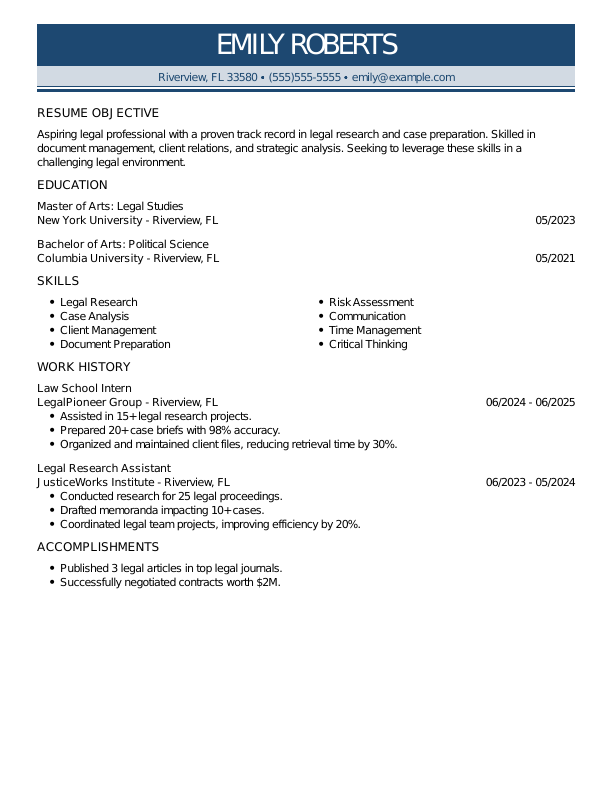
 Free
FreeLaw School Entry-Level Resume
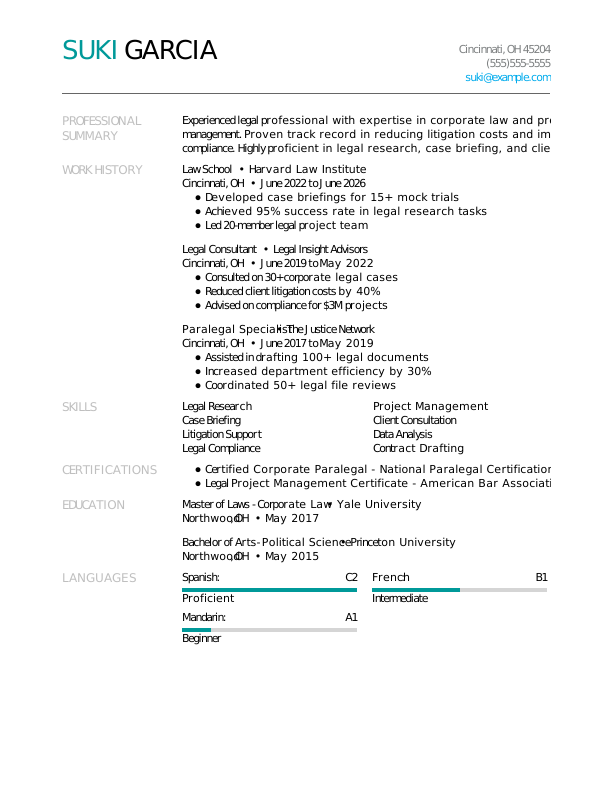
Law School Mid-Level Resume
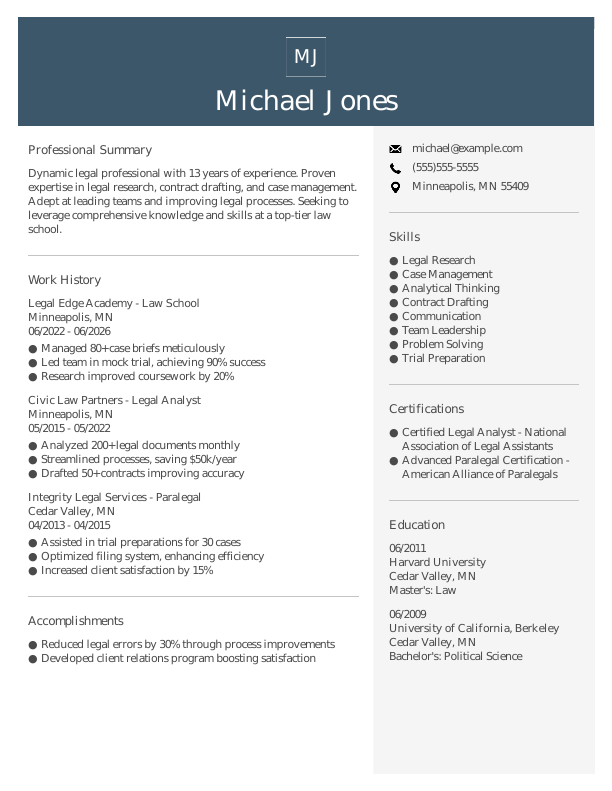
Law School Experienced Resume

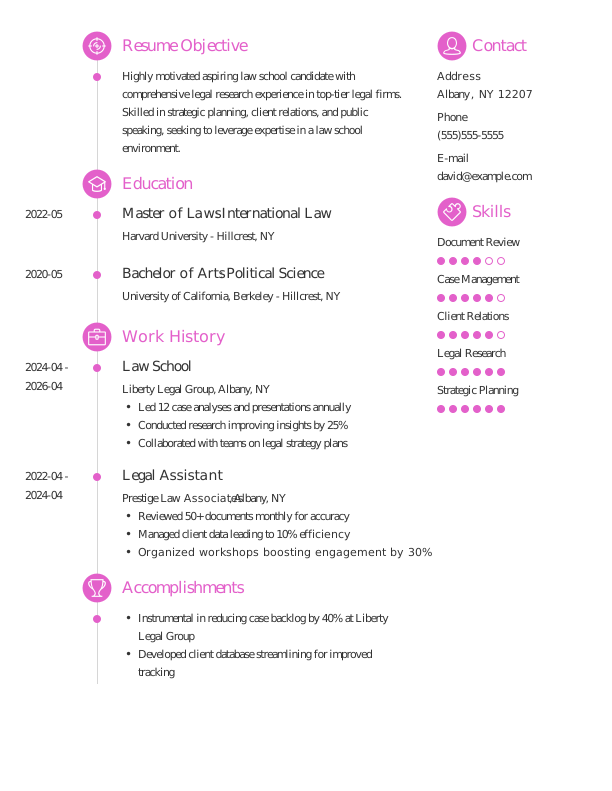
Law School Modern Resume
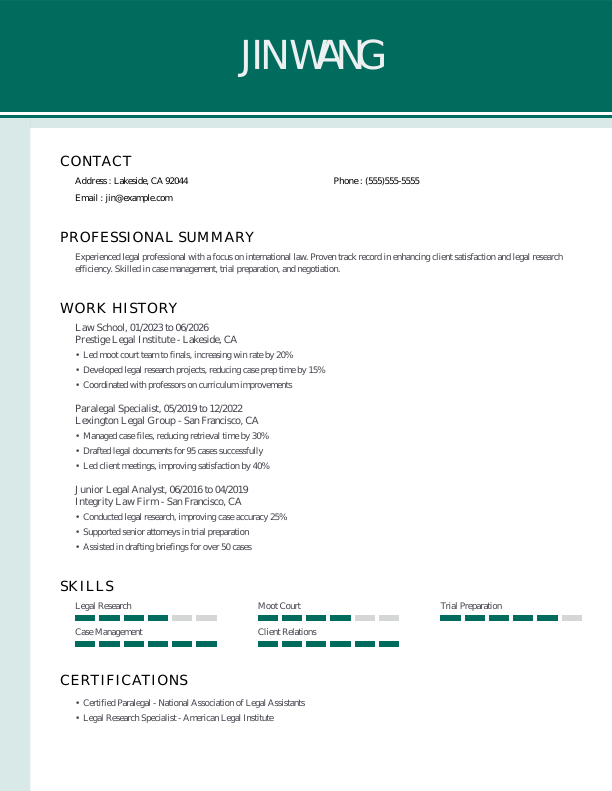

Law School Creative Resume
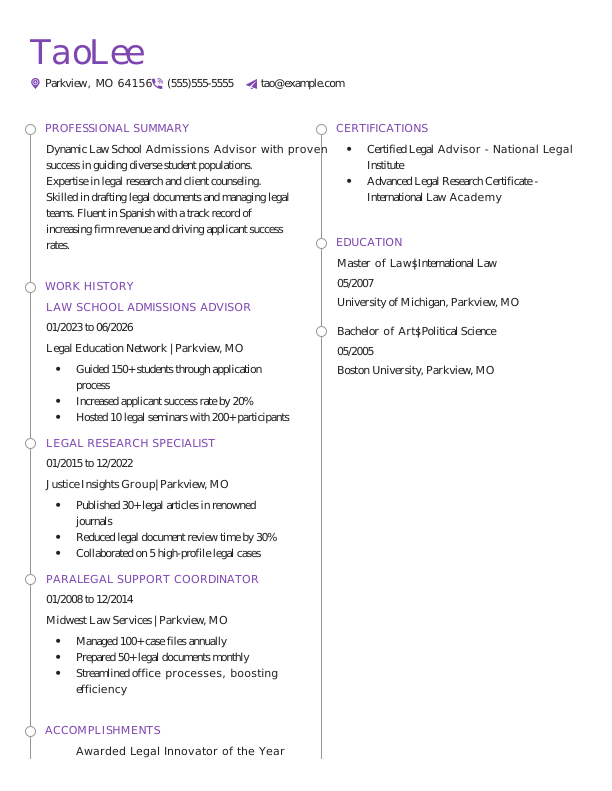

Law School Traditional Resume
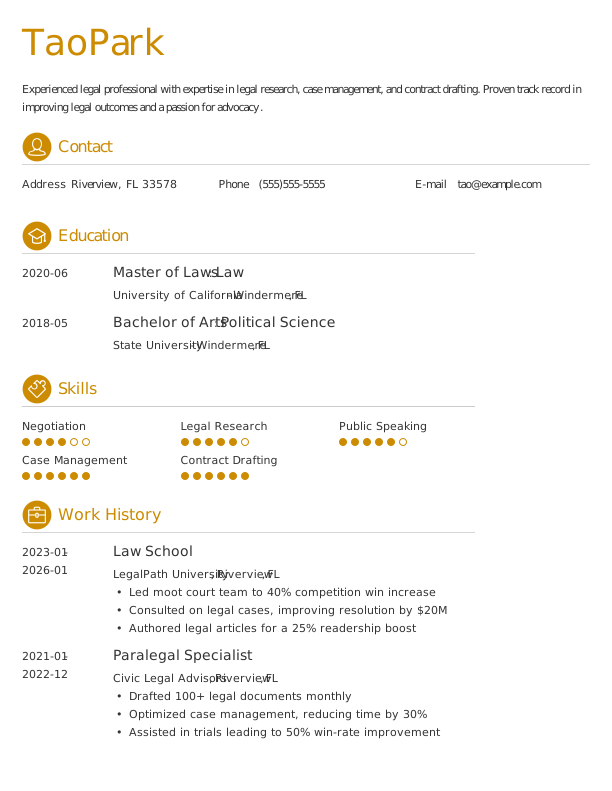

Law School Simple CV Example
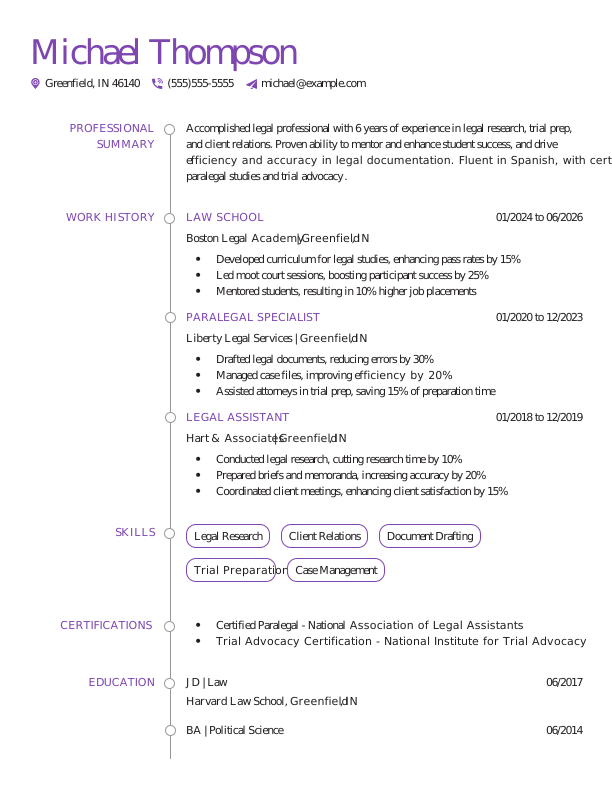

Law School CV Format
Browse Free Resume Templates
- Accounts Payable
- Adjunct Professor
- Artist
- Auto Mechanic
- Baker
- Business Development Manager
- Business
- Certified Nursing Assistant
- Classic & Traditional
- Cleaner
- College Student
- Concierge
- Construction Worker
- Corporate
- Creative & Unique
- Custodian
- Customer Service
- Dental Assistant
- Direct Support Professional
- Entry-Level
- Flight Attendant
- Hospitality & Food Service
- Front Desk Receptionist
- Healthcare
- High School
- Housekeeping
- Hvac Technician
- Inventory Manager
- Logistics
- Maintenance
- Management
- Modern
- Mortgage Loan Processor
- Pet Sitter
- Phlebotomist
- Production
- Rbt
- Restaurant Server
- Sales
- Security Services
- Simple & Basic
- Social Work
- Teacher
- Technology
Resume Examples for Law School
Resumes and CVs for law school applicants vary significantly based on experience level and specialization. Explore templates tailored for each stage of your legal career and use try out Monster’s Resume Builder to create one that suits your needs.
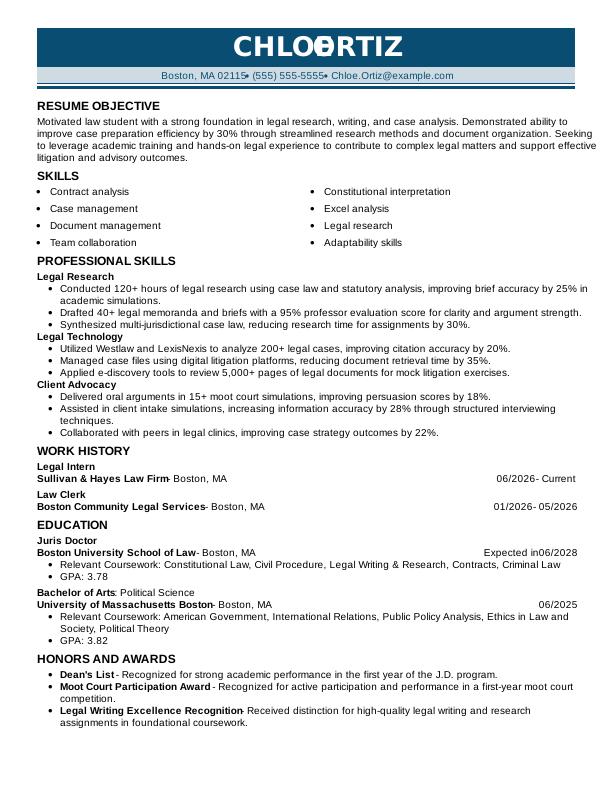
Law Student Resume
Built for law students and aspiring attorneys seeking guidance on writing a resume with no experience, this example highlights legal research, writing, internships, and academic achievements to support internships, clerkships, and entry-level legal positions.
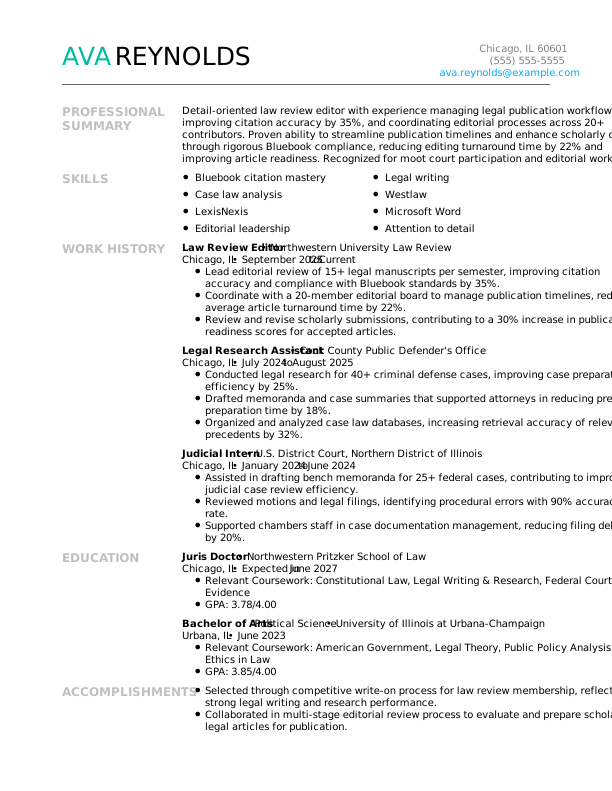
Law Review Editor Resume
Designed for law review editors and legal professionals, this resume showcases editorial leadership, legal writing, research, and publication experience while highlighting precision and collaboration.
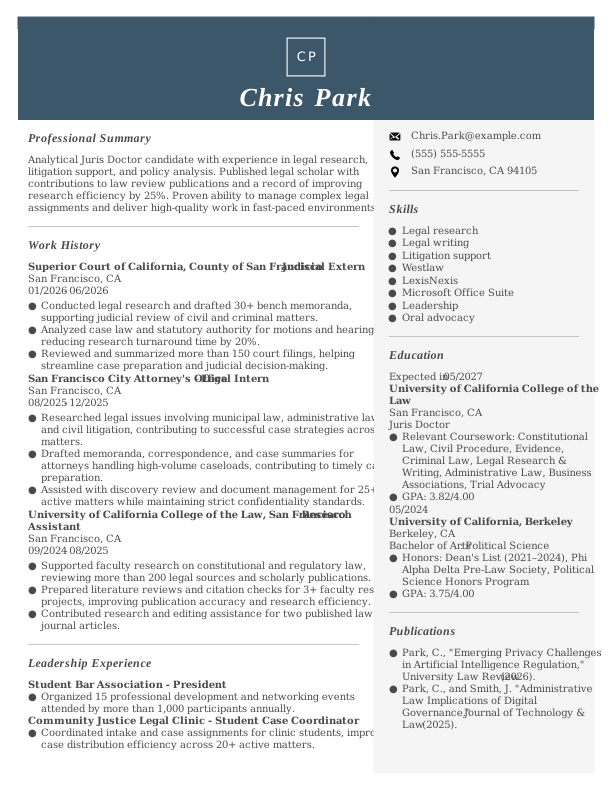
Juris Doctor Candidate Resume
Created for Juris Doctor candidates, this resume highlights legal research, publications, leadership, and hands-on experience to support academic, judicial, and competitive legal career opportunities.
Law School Resume Template (Text)
Use this customizable template of a law school resume to copy, paste, and adjust directly in your document.
Li Brown
Southgate, MI 48203
(555)555-5555
Li.Brown@example.com
Professional Summary
Results-driven legal professional with 5+ years in legal assistance. Proven track record of improving litigation success rates and efficiency. Adept in legal research, case management, and client relations.
Work Experience
Legal Case Manager
Urban Legal Insights – Southgate, MI
January 2023 – June 2026
- Managed 500+ case files with 98% accuracy
- Led moot court team to national finals
- Drafted briefs improving litigation rate by 20%
Legal Assistant
Greenfield Law Partners – Southgate, MI
January 2021 – December 2022
- Reduced filing errors by 25% over 1 year
- Assisted in research boosting case outcomes
- Prepared 300 legal documents monthly
Paralegal
Harbor Legal Associates – Southgate, MI
January 2019 – December 2020
- Increased client retention by 15%
- Organized wins in regional legal contests
- Analyzed data enhancing case efficiency
Education
Master of Laws in International Law
Yale Law School, New Haven, CT
May 2018
Bachelor of Arts in Political Science
University of California, Berkeley, Berkeley, CA
May 2017
Certifications
- Certified Legal Assistant – National Association of Legal Assistants
- Professional Paralegal – American Alliance of Paralegals
Skills
- Legal Research
- Case Management
- Document Drafting
- Client Relations
- Conflict Resolution
- Time Management
- Analytical Thinking
- Litigation Strategy
How to Write a Law School Resume
As a law student, knowing how to build an effective resume means mixing your legal education and experiences with a format that clearly showcases your qualifications.
Use the guidance below to emphasize your strengths and tailor your resume for the specific legal positions you’re pursuing.
1. Contact Info
Your contact information should be clear, professional, and easy to find at the top of your resume.
Make sure to include:
- Full name
- Phone number
- Professional email address
- City and state (ZIP code is optional)
- LinkedIn profile or personal portfolio (if relevant)
 PRO TIP
Avoid including personal information such as your Social Security number, date of birth, or any irrelevant details not requested by the employer.
2. Resume Profile
A resume profile is a brief, compelling introduction (two to four sentences) that highlights your key qualifications and character. It serves as a persuasive pitch to hiring managers, designed to capture their interest and motivate them to explore your resume further.
Typically located at the top of your resume, this profile can be formatted as either a summary or an objective, depending on your focus. Each option has its unique aim: understanding these differences will help you choose the right approach for your situation:
- A resume summary highlights your most relevant legal experience, skills, and accomplishments. It’s ideal for job seekers with work history or transferable experience who wish to showcase their impact in the field of law.
- A resume objective is a forward-looking statement that emphasizes your career aspirations and what you aim to accomplish. It’s particularly useful for recent law school graduates, professionals shifting into legal roles, or those with limited experience in the field.
Let’s take a look at an example of each to see how a resume summary and a resume objective differ:
Law school resume summary example:
Dedicated law school graduate with over 6 years of experience in legal research, case analysis, and trial preparation within various legal environments, including public interest and corporate law. Proficient in legal writing, client counseling, and negotiation strategies. Acknowledged for strong advocacy skills and commitment to upholding justice.
Law school resume objective example:
Recent law school graduate ready to launch a career in a dynamic legal environment. Committed to justice and advocacy, aiming to leverage strong analytical skills and effective communication abilities at a law firm or public interest organization.
3. Work Experience
The work experience section of your resume is a foundational element for admission. Law schools assess your professional background to gauge the influence you’ve had, not just the positions you’ve held.
Your legal internships and related experiences provide evidence of your readiness for rigorous academic challenges in the field of law.
The work experience section should contain:
- Job title
- Employer name and location
- Dates of employment (month/year)
- 3–5 bullet points describing your relevant responsibilities and achievements
Tailor your content to reflect the specific legal role or area of law you’re pursuing. Start each bullet point with an action verb (like “Researched,” “Drafted,” “Negotiated”) to emphasize your contributions and skills.
Incorporate measurable data when possible. Specific metrics or outcomes can demonstrate your effectiveness and help set you apart in a competitive field, showcasing your unique achievements.
In general, consider following the format of:
[action verb] + [responsibility] = [result/achievement]
For example:
Conducted legal research and drafted memoranda for cases involving over 50 clients, contributing to a successful outcome in 80% of litigated matters.
Note that you can also flip the result/achievement with the responsibility:
Secured a favorable settlement in 75% of cases by leveraging strong negotiation skills and thorough case preparation.
With these techniques in mind, your resume bullets may look something like:
- Conducted research on case law and legal precedents for 15+ complex cases, contributing to successful litigation outcomes.
- Drafted legal documents and contracts for clients, reducing turnaround time by 20%.
- Participated in moot court competitions, honing advocacy skills and improving public speaking abilities.
- Collaborated with faculty and peers on a legal journal publication, improving writing and analytical skills.
- Mentored first-year law students through study groups, fostering a supportive academic environment.
4. Skills
The skills section provides a concise overview of essential legal abilities relevant to law school. This allows recruiters and hiring managers to quickly evaluate qualifications. Skills can be grouped into three categories:
- Soft skills are interpersonal abilities that significantly influence how well law students collaborate and interact with peers, professors, and clients.
- Hard skills are specific, measurable abilities gained through education, training, or experience.
- Technical skills refer to the specific knowledge and abilities required to perform tasks in a particular field.
5 Soft Skills for Your Resume or CV
- Critical thinking
- Effective communication
- Negotiation skills
- Research skill
- Persuasive writing
5 Hard Skills for Your Resume or CV
- Legal research and writing
- Contract drafting (Westlaw, LexisNexis)
- Case analysis
- Negotiation techniques
- Litigation support (eDiscovery tools)
In general, focus on including a diverse range of relevant skills that correspond with the job requirements to showcase your full potential. Find additional law-related skills examples further down the page.
PRO TIP
If you’re an entry-level law school graduate, consider positioning your skills section prominently after your summary to highlight your qualifications. For those with more experience, it’s best to place this section lower on the resume, weaving relevant skills throughout your work history for a cohesive narrative.
5. Education
Understanding how to list education on your resume is important for showcasing your qualifications clearly. Begin with your most recent or relevant law degree, including the degree type and school name.
If you’re a recent graduate, think about adding details such as your graduation year, GPA (if it’s 3.5 or higher), any honors received, or coursework relevant to law studies.
Law school resume education section example:
Juris Doctor (JD)
Harvard Law School, Cambridge, MA
Graduated: 2024 | Cum Laude
PRO TIP
If you’re progressing from an Associate Degree in Criminal Justice to a Juris Doctor (JD), or have earned another relevant degree, list both in reverse-chronological order on your resume.
6. Certifications
Listing certifications on your resume improves your profile by highlighting specialized skills that can make up for limited practical experience. Although not always a standard part of resumes, this section is valuable for many law professionals. Employers frequently require specific credentials for roles in areas such as criminal law or corporate compliance.
Concentrate on including only those certifications that directly support your qualifications for the job you’re pursuing. Make sure to keep your credentials current and format them clearly so they stand out to potential employers.
Law school certification examples:
- Juris Doctor (JD) | American Bar Association | Expires: 05/2028
- Certified Legal Manager (CLM) | Association of Legal Administrators | Expires: 09/2027
- Legal Project Management Certificate | International Institute of Legal Project Management | Expires: 01/2028
- Mediation Certification | National Association for Conflict Resolution | Expires: 11/2027
Start Building Your Job-Winning Resume
Use Your Existing Resume
Import your current resume to transfer your information to one of our professional templates.
Create a New Resume
Start fresh with a template that catches your eye and follow the prompts to add your details.
Tailor Your Work History to Beat the ATS
To create an effective work history, tailor it to the specific legal position you’re applying for by using relevant keywords and phrases. Begin by thoroughly analyzing the job description. Identify commonly mentioned skills, areas of law, or certifications and reflect those elements in your experience descriptions where applicable.
This approach also contributes to creating an ATS-friendly resume that applicant tracking systems (ATS) can easily scan.
Key Takeaways
- Tailor your resume to the law school’s criteria. Align your experiences and skills with their language for both ATS and admissions committee reviewers.
- Highlight quantifiable achievements. Beyond responsibilities, showcase impact through metrics (e.g., case wins, research contributions, leadership roles) to differentiate yourself.
- Select the optimal format for your experience level. New graduates might consider functional or hybrid layouts, while seasoned professionals often use reverse-chronological resumes.
More Resume & CV Examples
- Academic
- Admissions Counselor
- Associate Attorney
- Attorney
- Compliance Manager
- Compliance Officer
- Contract Specialist
- General Counsel
- Grad School
- Harvard
- Higher Ed
- In House Counsel
- Instructional Designer
- Internship
- Lab Assistant
- Law Clerk
- Lawyer
- Legal Assistant
- Legal
- Legal Secretary
- Litigation Paralegal
- Marine Biologist
- MBA
- Mentor
- Notary
- Nursing Student
- Paralegal
- Personal Injury Paralegal
- Professor
- Real Estate Attorney
- Regulatory Affairs
- Research Associate
- Research Scientist
- Scholarship
- Student Athlete
- Summer Job
- Teen
- Freshers
Frequently Asked Questions
Last Update:
What resume format should I use for my law school resume?
There are three primary resume formats to consider when applying for law school. Your choice should reflect your experience level and the aspects you wish to highlight about your academic journey and achievements:
- Chronological: The most popular format, a chronological resume emphasizes your work experience by outlining responsibilities and achievements in reverse order. This approach is particularly effective for job seekers with a relevant job history that reinforces their qualifications and demonstrates their consistent career progression.
- Functional: Also referred to as a skills-based resume, the functional resume emphasizes a summary of qualifications and an expanded skills section, minimizing focus on work history. This format is particularly useful for job seekers without relevant experience in law or those transitioning from different fields.
- Combination: A combination resume integrates chronological and functional elements, showcasing both skills and work experience. This format benefits law school job seekers by allowing them to highlight relevant legal abilities alongside their academic achievements, demonstrating both their competencies and progress in the field of law.
Should I include a cover letter with my resume?
Yes, you should include a cover letter with your law school application. A well-crafted cover letter allows you to express your passion for the legal field and explain how your unique experiences improve your candidacy. It provides an opportunity to showcase qualities that might not be highlighted in your transcripts or resume, making your application more compelling.
If you’re feeling unsure about writing a cover letter, don’t hesitate to seek guidance. Numerous resources can help you navigate this process, such as guides on how to write a cover letter, examples tailored specifically for law school applications, and various formats that cater to different styles and preferences. These tools can clarify what admissions committees typically look for.
To simplify the process, using a cover letter generator can make things easier by offering structured templates and personalized suggestions based on your background and aspirations in law.
How long should a law school resume be?
For most professionals with less than 10 years of experience, a one-page resume is ideal. This format allows you to showcase your education, relevant skills, and early career achievements while keeping the content focused and compelling. Highlighting internships or volunteer work can also add value without overcrowding your resume.
If you have more than 10 years of experience or hold specialized roles, you may extend your resume to two pages. Ensure that each section remains relevant and concise, detailing significant accomplishments and advanced skills that directly relate to your career goals.
What keywords should I include on my law school resume to pass applicant tracking systems (ATS)?
To improve your resume for ATS, prioritize including keywords and phrases directly from the job posting. Look for specific terms related to law, such as “litigation,” “contract negotiation,” or “legal research.” Incorporating these relevant keywords can significantly improve your chances of getting noticed.
Additionally, don’t forget to list any relevant qualifications, like your state bar admission and certifications in areas like mediation or intellectual property law. Mentioning familiarity with legal software such as Clio or LexisNexis also showcases your expertise and readiness for the role. Tailoring your resume with these details will make you a stronger job seeker.

Toni Frana is a Certified Professional Resume Writer (CPRW), member of the Professional Association of Resume Writers & Career Coaches, and career expert who empowers job seekers to take control of their career paths using Monster’s comprehensive job search and resume tools.
See More From Toni FranaExplore Related Career Advice

How to Write a Functional Resume (Formatting Tips, Template, & Examples)

Updated:
Aug 7, 2026
|

17 min read


Functional vs Chronological Resume: Which Format Is Right for You?
Updated:
Aug 3, 2026
|
15 min read

100+ Resume Adjectives to Help You Write a Stronger Resume in 2026 (With Examples)
Updated:
Jul 30, 2026
|
12 min read




How to Explain Employment Gaps: Examples for Resumes, Interviews, & More
Updated:
Jul 17, 2026
|
20 min read