
Free Product Owner Resume Templates & Examples
A product owner resume should demonstrate your ability to define product vision, manage backlogs, and collaborate with development teams. Browse the examples below to find one that balances strategic and tactical product skills.
Real-World Resumes That Get Results
 Free
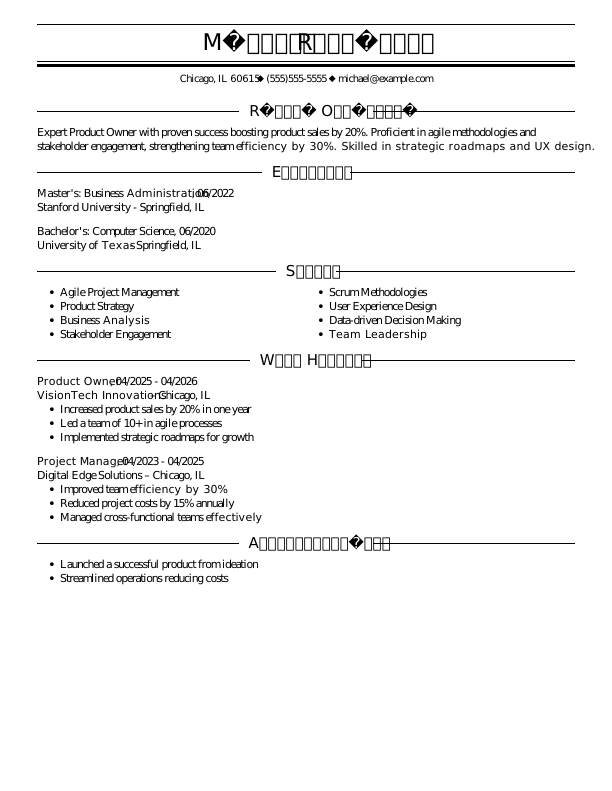
FreeProduct Owner Entry-Level Resume
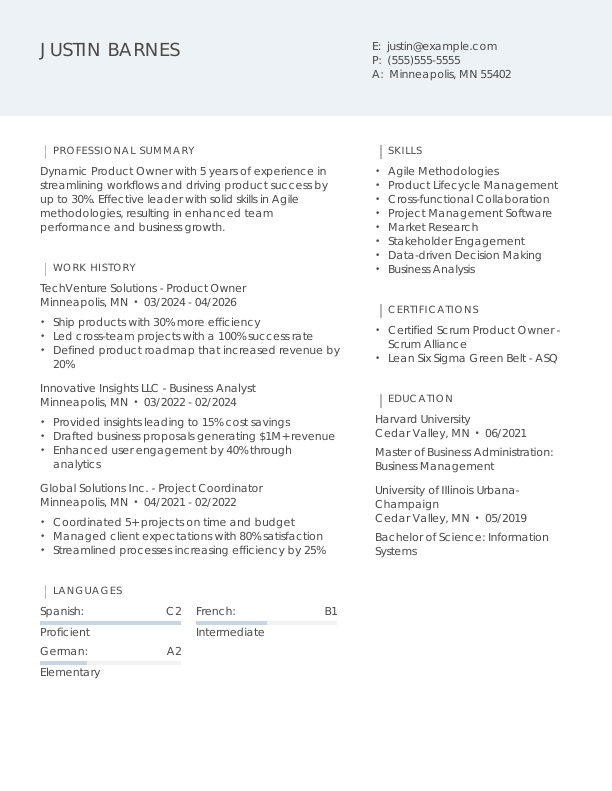
Product Owner Mid-Level Resume
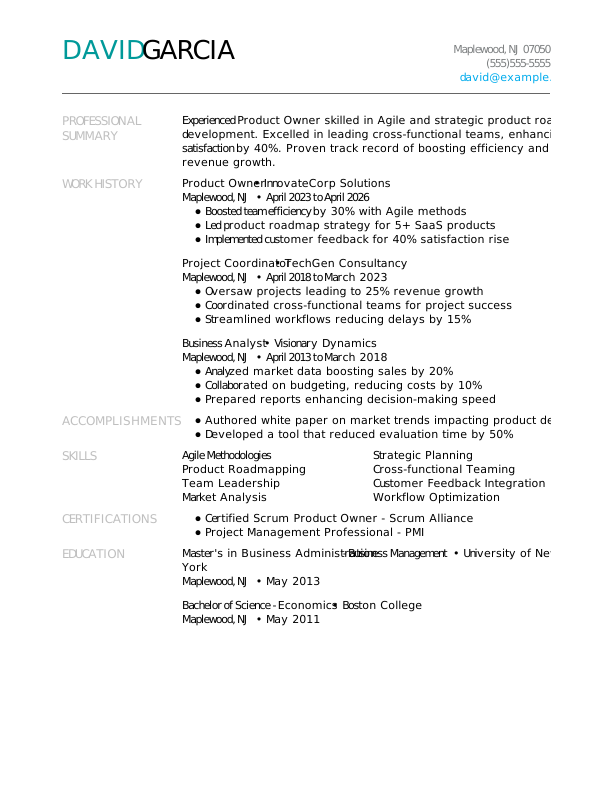
Product Owner Experienced Resume
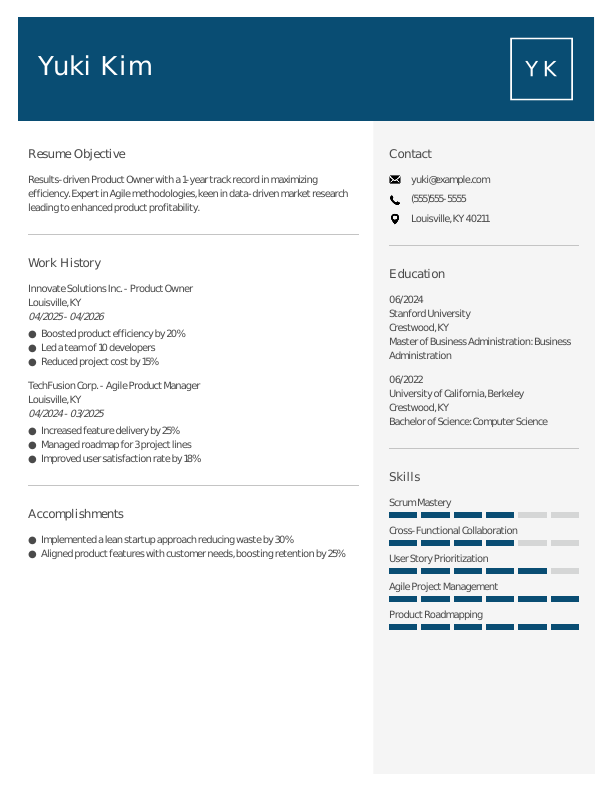
Product Owner Entry-Level Resume 1
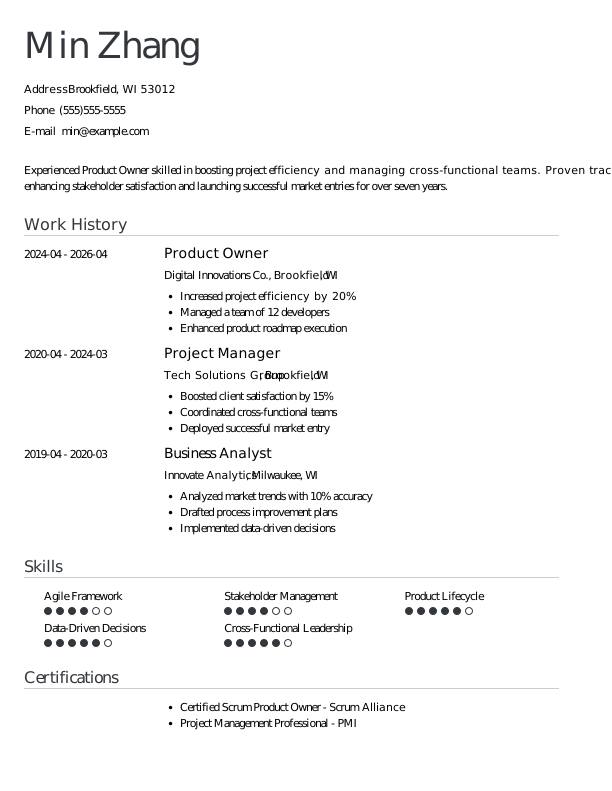

Product Owner Mid-Level Resume 1
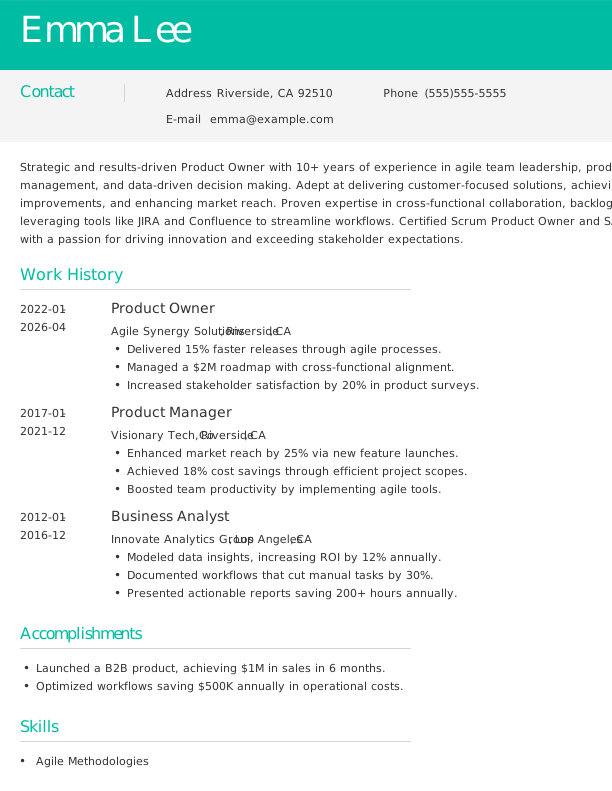

Product Owner Experienced Resume 1
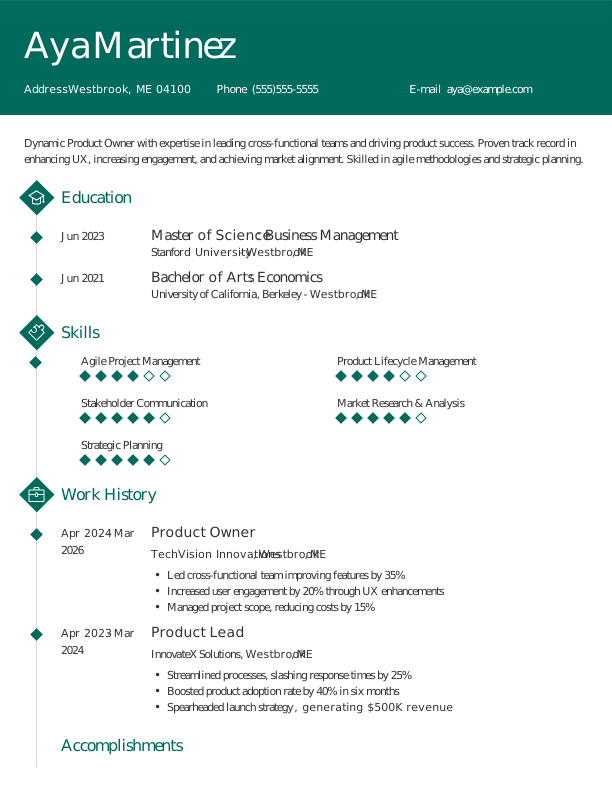

Product Owner Entry-Level Resume 2
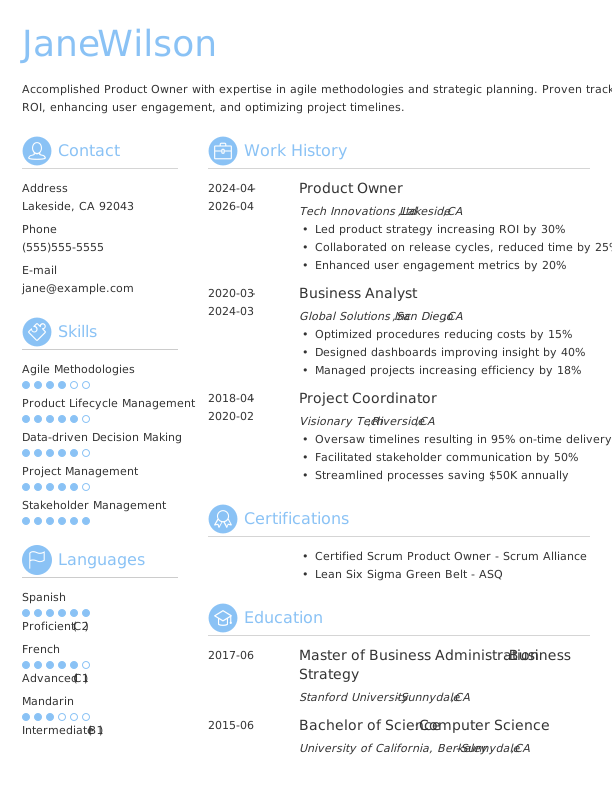
Product Owner Mid-Level Resume 2
Browse Free Resume Templates
- Accounts Payable
- Adjunct Professor
- Artist
- Auto Mechanic
- Baker
- Business Development Manager
- Business
- Certified Nursing Assistant
- Classic & Traditional
- Cleaner
- College Student
- Concierge
- Construction Worker
- Corporate
- Creative & Unique
- Custodian
- Customer Service
- Dental Assistant
- Direct Support Professional
- Entry-Level
- Flight Attendant
- Hospitality & Food Service
- Front Desk Receptionist
- Healthcare
- High School
- Housekeeping
- Hvac Technician
- Inventory Manager
- Logistics
- Maintenance
- Management
- Modern
- Mortgage Loan Processor
- Pet Sitter
- Phlebotomist
- Production
- Rbt
- Restaurant Server
- Sales
- Security Services
- Simple & Basic
- Social Work
- Teacher
- Technology
Resume Examples for Product Owners
Product owner resumes should reflect your backlog management experience and your ability to define product vision. Explore our templates, or build a product-focused resume from scratch.
Entry-Level Product Owner Resume
This template works well for those transitioning into a product owner role from a business analyst or project coordinator position. It helps you write a product owner resume by highlighting your requirements gathering, backlog contribution, and any user story writing experience.

Mid-Career Product Owner Resume
A smart choice for mid-level professionals looking to advance their careers, this template effectively showcases recent achievements and prepares them for specialized roles or leadership opportunities.

Experienced Product Owner Resume
An ideal choice for seasoned professionals with over 10 years of experience, this template supports applicants pursuing senior-level product ownership roles or leadership positions in tech-driven environments.

Product Owner Resume Template (Text)
Here is a text-based product owner resume, ready to copy and personalize. The format balances product vision with backlog management and cross-functional collaboration.
Ming Park
Maplewood, NJ 07040
Professional Summary
Dynamic Product Owner with 9 years in agile environments. Proven success in elevating product performance, enhancing user engagement, and driving market growth.
Work Experience
April 2022 – March 2026
Innovate Solutions Inc. – Maplewood, NJ
Product Owner
- Improved product ROI by 25% through agile practices
- Coordinated a team of 8 to launch 10+ successful features
- Reduced time-to-market by 30% with user-focused strategies
March 2017 – March 2022
TechWave Labs – Maplewood, NJ
Digital Product Manager
- Increased user engagement by 40% through UX enhancements
- Led cross-functional teams to deliver 3 major updates
- Streamlined processes, saving $200k annually
March 2013 – February 2017
FutureTech Innovations – Maplewood, NJ
Product Development Specialist
- Boosted product adoption rate by 50% in six months
- Managed user feedback loop enhancing satisfaction ratings
- Optimized launch cycles reducing delays by 20%
Education
June 2012
Stanford University Maplewood, NJ
Master of Business Administration Product Management
June 2010
University of California, Berkeley Maplewood, NJ
Bachelor of Science Computer Science
Certifications
- Certified Scrum Product Owner (CSPO) – Scrum Alliance
- PMP Certification – Project Management Institute
Skills
- Agile Methodologies
- Market Analysis
- Stakeholder Engagement
- Product Roadmapping
- Cross-Functional Leadership
- Data-Driven Decision Making
- User Experience Design
- Project Lifecycle Management
How to Write a Product Owner Resume
As a product owner, knowing how to write a resume involves showcasing your skills in managing product development and demonstrating relevant experience in agile environments. Use the guidance below to highlight your strengths and customize your resume for the specific roles you’re targeting.
1. Contact Info
Your contact information should be clearly presented, professional, and prominently placed at the top of your resume.
Include the following essential information:
- Full name
- Phone number
- Professional email address
- City and state (ZIP code is optional)
- LinkedIn profile (strongly recommended for product owners, as recruiters frequently use it to verify experience and certifications)
- Link to a portfolio, case studies, or product work samples if you have them
 PRO TIP
Avoid including personal information such as age, gender, or non-professional social media profiles unless specifically requested by the employer. If you link to your LinkedIn or portfolio, make sure both are up to date and reflect the same experience.
2. Resume Profile
A resume profile is a concise introductory section typically consisting of 2-4 sentences, designed to summarize your key qualifications and career highlights. It serves as an engaging pitch to potential employers, prompting them to delve deeper into your resume.
This profile appears at the top of your resume and can take the form of either a summary or an objective, each with distinct purposes. Understanding these differences will help you craft a more targeted profile:
- A resume summary highlights essential experience, skills, and achievements relevant to driving product vision and strategy. This approach is particularly beneficial for applicants with a track record or transferable expertise who want to illustrate their impact as an effective product owner.
- A resume objective highlights your career aspirations and what you aim to accomplish in your next role. This is particularly beneficial for recent graduates, individuals transitioning careers, or those with limited experience looking to enter specific fields like technology or marketing.
The following examples showcase the differences between a resume summary and a resume objective.
Product owner resume summary example:
Strategic product owner with over 6 years of experience in agile environments, driving product vision and roadmap execution. Proficient in stakeholder management, user story creation, and backlog prioritization. Acknowledged for delivering successful projects on time and improving customer satisfaction through innovative solutions.
Product owner resume objective example:
Recent graduate with a degree in Business Administration eager to launch a career as a Product Owner in an innovative tech environment. Driven by a passion for agile methodologies and user-centric design, ready to contribute strong analytical skills and collaborative spirit to a dynamic software development team.
3. Work Experience
The work experience on your resume plays a significant role in showcasing your qualifications. Employers examine your history to understand the impact you’ve made in previous roles, focusing beyond the titles you’ve held.
This section of your application highlights how your distinct background and accomplishments make you a strong contender for the product owner position.
The work experience section should contain:
- Job title
- Employer name and location
- Dates of employment (month/year)
- 3–5 bullet points outlining product development responsibilities and stakeholder collaboration achievements
Tailor your work experience bullet points to the job description by incorporating industry-specific terminology relevant to product ownership. Start each point with strong action verbs such as “Developed,” “Prioritized,” or “Facilitated” to convey your contributions clearly.
Use quantifiable metrics to emphasize your achievements, as numbers can illustrate your impact effectively. Highlighting specific results, like increasing customer satisfaction by 30%, helps set you apart from other job seekers and showcases your value.
In general, consider following the format of:
[action verb] + [responsibility] = [result/achievement]
For example:
Develop and prioritize product backlog for a software application, leading to a 30% increase in user engagement within six months through targeted feature releases.
Note that you can also flip the result/achievement with the responsibility:
Achieved a 40% improvement in project delivery timelines by implementing agile methodologies across cross-functional teams.
With these techniques in mind, your resume bullets may look something like:
- Facilitated agile ceremonies for a cross-functional team of 10, improving project delivery speed by 25%.
- Prioritized product backlog based on stakeholder feedback, increasing user satisfaction ratings by 15%.
- Collaborated with UX designers and developers to launch two major product features within a three-month timeframe.
- Mentored junior product owners on best practices in roadmap creation and stakeholder engagement.
- Used JIRA for tracking project progress and maintaining transparency across the team.
4. Skills
The skills section provides a concise overview of your abilities as a product owner, showcasing your expertise in guiding product development. This ATS-friendly resume format allows recruiters to quickly assess your qualifications and fit for the role. Skills can be grouped into three categories: technical competencies, leadership qualities, and stakeholder management.
- Soft skills are personal qualities that influence how well a product owner collaborates with teams and stakeholders.
- Hard skills are specific, quantifiable abilities acquired through education, training, or experience.
- Technical skills encompass the abilities required to use specific tools and technologies in a profession.
5 Soft Skills for Your Resume or CV
- Stakeholder engagement
- Agile project management
- Strategic vision development
- Team leadership skills
- User-focused design
5 Hard Skills for Your Resume or CV
- Agile methodologies (Scrum, Kanban)
- User story mapping
- Product backlog management
- Stakeholder communication tools (Jira, Trello)
- Data analysis and reporting (Google Analytics, Tableau)
In general, aim to include a thoughtful mix of skills that directly relate to the job description to showcase your potential contributions. For additional examples of relevant skills for product owners, please explore the resources available.
PRO TIP
If you’re a newer product owner, consider placing your skills section higher on the resume right after your summary. For those with more experience, it’s better to position this section lower and weave your skills into your work history for a more cohesive narrative.
5. Education
Understanding how to list education on your resume is important for showcasing your qualifications. Start with your most recent or relevant degree, clearly stating the degree type and the institution’s name.
If you recently graduated, consider adding details like your graduation year, GPA (if it’s 3.5 or above), any honors received, or relevant coursework that highlights your expertise.
Product owner resume education section example:
Bachelor of Business Administration (BBA)
University of California, Berkeley, Berkeley, CA
Graduated: 2024 | Graduated with Honors
PRO TIP
When listing multiple degrees on your resume, always arrange them in reverse-chronological order, starting with the highest degree first, such as Bachelor of Business Administration (BBA) followed by Associate Degree in Project Management.
6. Certifications
Certifications highlight your expertise and confirm you possess the latest skills employers seek. While not always featured on a resume, this section is important for many professionals, particularly in fields like IT or healthcare. Specific credentials are often mandatory for specialized positions such as cybersecurity analysts or pediatric nurses.
Present your relevant certifications and licenses that bolster your application. Ensure these are current and neatly organized to improve readability and make a strong impression.
Product owner certification examples:
- Certified Scrum Product Owner (CSPO) | Scrum Alliance | Expires: 03/2028
- Agile Certified Practitioner (PMI-ACP) | Project Management Institute | Expires: 11/2027
- Product Management Certificate | Cornell University | Expires: 05/2028
- Professional Scrum Master (PSM I) | Scrum.org | Expires: 09/2027
Start Building Your Job-Winning Resume
Use Your Existing Resume
Import your current resume to transfer your information to one of our professional templates.
Create a New Resume
Start fresh with a template that catches your eye and follow the prompts to add your details.
Tailor Your Work History to Beat the ATS
Your work experience section is the heart of your resume—it’s where you prove the impact you’ve made in past roles, not just the responsibilities you held. For product owners, this means going beyond listing day-to-day tasks and highlighting the outcomes of your work: features shipped, metrics moved, user problems solved, and business goals advanced.
To optimize your work history for a particular position, carefully tailor it to align with the job description. Start by dissecting the posting to identify key skills and qualifications that are emphasized. Look for recurring themes or requirements and ensure those elements are woven into your experience descriptions for maximum impact.
Key Takeaways
- Tailor your resume to the job description. Use specific terminology from the posting to resonate with both ATS and hiring managers.
- Highlight quantifiable achievements to demonstrate value. Include metrics (e.g., project delivery times, budget adherence, stakeholder satisfaction) that illustrate your impact.
- Select a resume format that matches your experience level. Newcomers might prefer a functional layout, while seasoned professionals often use reverse-chronological formats.
More Resume & CV Examples
- Agile Project Manager
- Ai Product Manager
- Aws Devops Engineer
- Chief Information Officer
- Computer
- Computer Science
- Computer Technician
- CTO
- Cyber Security
- Data Center Technician
- Database Administrator
- Digital Project Manager
- Epic Analyst
- Health Informatics
- Healthcare It
- Implementation Specialist
- It Help Desk
- It Manager
- It Project Manager
- IT
- It Support
- It Support Specialist
- It Technician
- Network Administrator
- Network Engineer
- Salesforce Administrator
- Service Desk Analyst
- Systems Administrator
- Technical Program Manager
- Technical Project Manager
- Technical Support Specialist
- IT Developer
Frequently Asked Questions
Last Update:
What resume format should I use for my product owner resume?
There are three primary resume formats to consider when applying for a product owner position. Your choice should reflect your experience level and the specific skills or accomplishments you wish to highlight:
- Chronological: The chronological resume is the most commonly used format, emphasizing your work history by detailing responsibilities and achievements. This structure is particularly beneficial for applicants whose relevant job backgrounds reinforce their qualifications, creating a strong narrative of professional progression and credibility.
- Functional: The functional resume, often referred to as a skills-based resume, prioritizes a summary of qualifications and an extensive skills section over chronological work history. This format is particularly beneficial for job seekers who may lack direct experience in the field or have gaps in their employment timeline.
- Combination: The combination resume format merges aspects of chronological and functional styles, showcasing both skills and work history. This approach allows professionals to highlight their abilities while illustrating career advancement, making it ideal for those transitioning into new roles or emphasizing diverse experiences.
Should I include a cover letter with my resume?
Yes, you should consider including a cover letter with your product owner application. A well-crafted cover letter not only complements your resume but also allows you to express your enthusiasm for the role and the company while showcasing relevant experiences that may not be immediately visible on your resume. This personal touch can make a significant difference, helping you stand out among job seekers who opt not to include one.
If you’re not sure how to write a cover letter, there are numerous resources available to assist you. You can find guides specifically for product owners, as well as examples that illustrate various approaches. Additionally, exploring different formats can help you choose one that best highlights your qualifications and fits the job requirements.
To simplify the process of creating a compelling cover letter, consider using a cover letter generator, which provides structure and tailored suggestions based on your specific job application needs.
How long should a product owner resume be?
For product owners with less than 10 years of experience, a one-page resume is typically adequate to showcase skills and relevant projects. Highlight key responsibilities, tools used (e.g., JIRA, Scrum), and any certifications that align with the role.
Conversely, those in senior or specialized positions may extend their resumes to two pages if they maintain focus on relevant accomplishments. Ensure that each item improves your professional narrative while avoiding filler language, thereby allowing potential employers to quickly assess your qualifications and impact.
What keywords should I include to pass applicant tracking systems (ATS)?
To optimize your resume for ATS, focus on incorporating keywords and phrases from the job description. These may include terms like “backlog management,” “stakeholder engagement,” or “agile methodologies.” By directly using these phrases, you increase your chances of catching the ATS’s attention.
Additionally, don’t forget to highlight relevant qualifications such as Certified Scrum Product Owner or Agile Certified Practitioner. Mention any tools you’re experienced with, like JIRA or Trello, as these can demonstrate your familiarity with industry standards and practices. This targeted approach will improve your visibility in the hiring process.
Should I include internships or freelance projects on my resume?
Yes, including internships or freelance projects is essential, especially if you lack full-time experience. These opportunities demonstrate your ability to manage tasks, collaborate with teams, and apply product ownership principles in real-life scenarios, making your application more appealing.

Toni Frana is a Certified Professional Resume Writer (CPRW), member of the Professional Association of Resume Writers & Career Coaches, and career expert who empowers job seekers to take control of their career paths using Monster’s comprehensive job search and resume tools.
See More From Toni FranaExplore Related Career Advice

How to Write a Functional Resume (Formatting Tips, Template, & Examples)

Updated:
Aug 7, 2026
|

17 min read


Functional vs Chronological Resume: Which Format Is Right for You?
Updated:
Aug 3, 2026
|
15 min read
100+ Resume Adjectives to Help You Write a Stronger Resume in 2026 (With Examples)
Updated:
Jul 30, 2026
|
12 min read




How to Explain Employment Gaps: Examples for Resumes, Interviews, & More
Updated:
Jul 17, 2026
|
20 min read