
Free Stage Manager Resume Templates & Examples
A stage manager resume should reflect your production management skills, ability to coordinate rehearsals and performances, and experience working across theater departments. Browse the examples below to find one suited to performing arts roles.
Real-World Resumes That Get Results
 Free
FreeStage Manager Entry-Level Resume
Stage Manager Mid-Level Resume
Stage Manager Experienced Resume
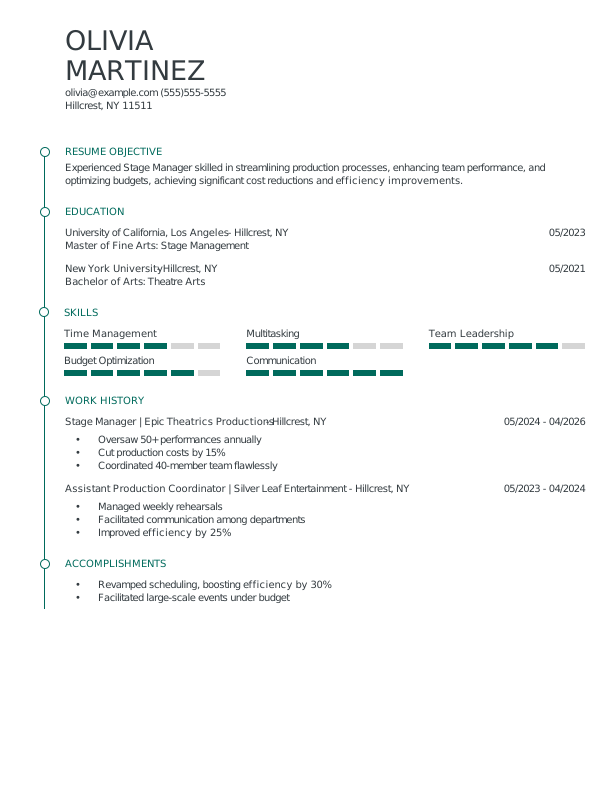
Stage Manager Entry-Level Resume 1
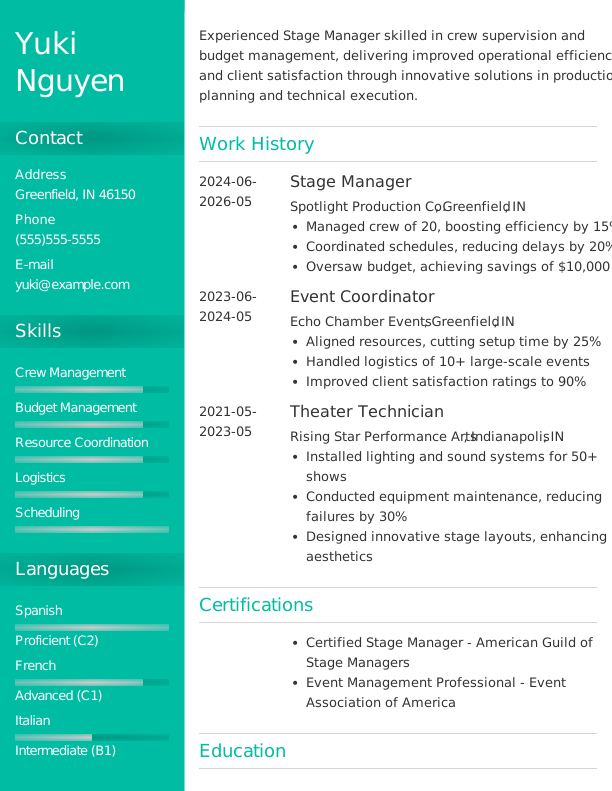

Stage Manager Mid-Level Resume 1
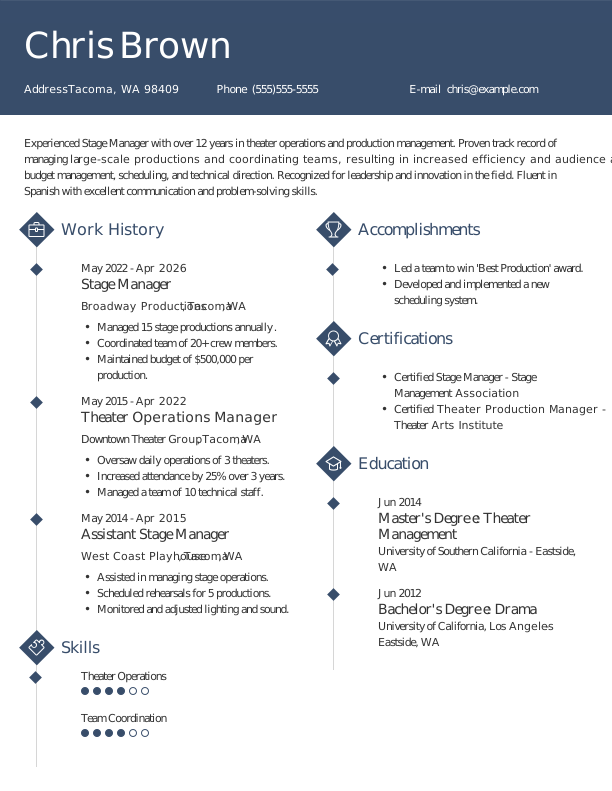

Stage Manager Experienced Resume 1
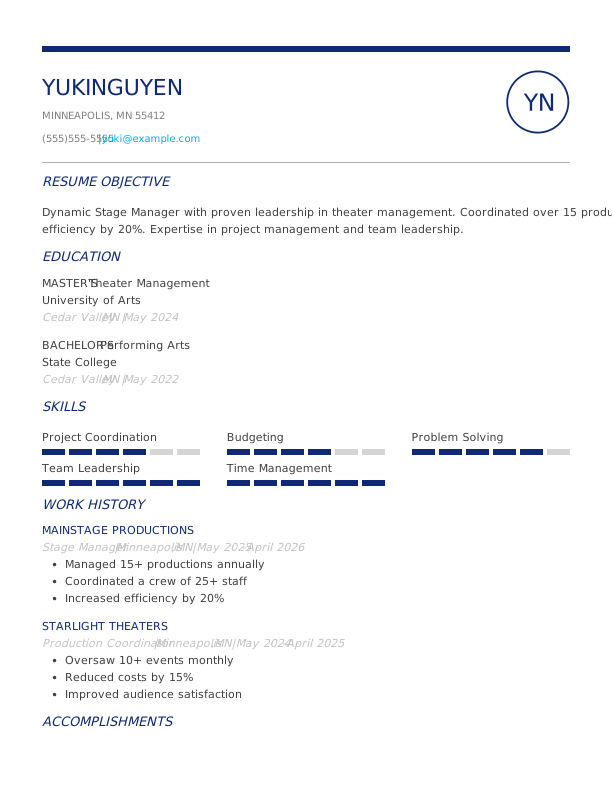

Stage Manager Entry-Level Resume 2

 Popular
Stage Manager Mid-Level Resume 2
Browse Free Resume Templates
- Accounts Payable
- Adjunct Professor
- Artist
- ATS-Friendly
- Auto Mechanic
- Baker
- Business Development Manager
- Business
- Certified Nursing Assistant
- Classic & Traditional
- Cleaner
- College Student
- Concierge
- Construction Worker
- Corporate
- Creative & Unique
- Custodian
- Customer Service
- Dental Assistant
- Direct Support Professional
- Entry-Level
- Flight Attendant
- Hospitality & Food Service
- Front Desk Receptionist
- Healthcare
- High School
- Housekeeping
- Hvac Technician
- Inventory Manager
- Logistics
- Maintenance
- Management
- Modern
- Mortgage Loan Processor
- Pet Sitter
- Phlebotomist
- Production
- RBT
- Restaurant Server
- Sales
- Security Services
- Simple & Basic
- Social Work
- Teacher
- Technology
Resume Examples for Stage Managers
Stage manager resumes should reflect your production credits and the scale of shows you have managed. Explore our templates to find one suited to performing arts roles.
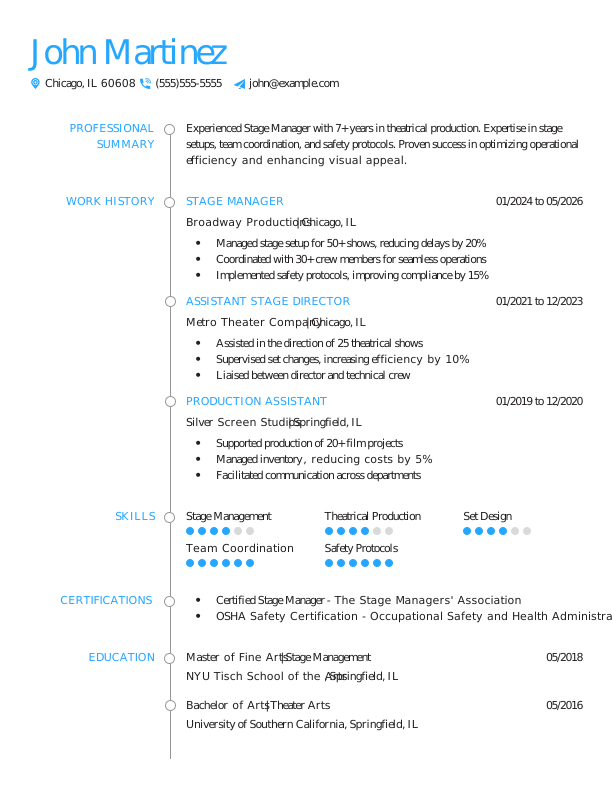
Entry-Level Stage Manager Resume
If you are entering stage management from an assistant or production crew role, this template helps you build a stage manager resume by highlighting your rehearsal coordination, cue calling, and department communication experience.
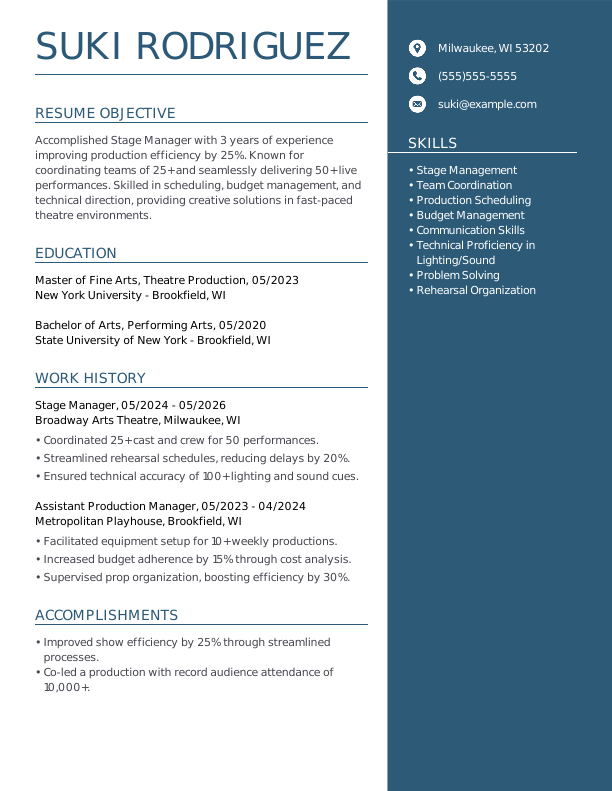
Mid-Career Stage Manager Resume
A smart choice for mid-level stage managers aiming to elevate their careers, this template effectively showcases relevant experience and achievements while positioning job seekers for advanced roles in theater production.
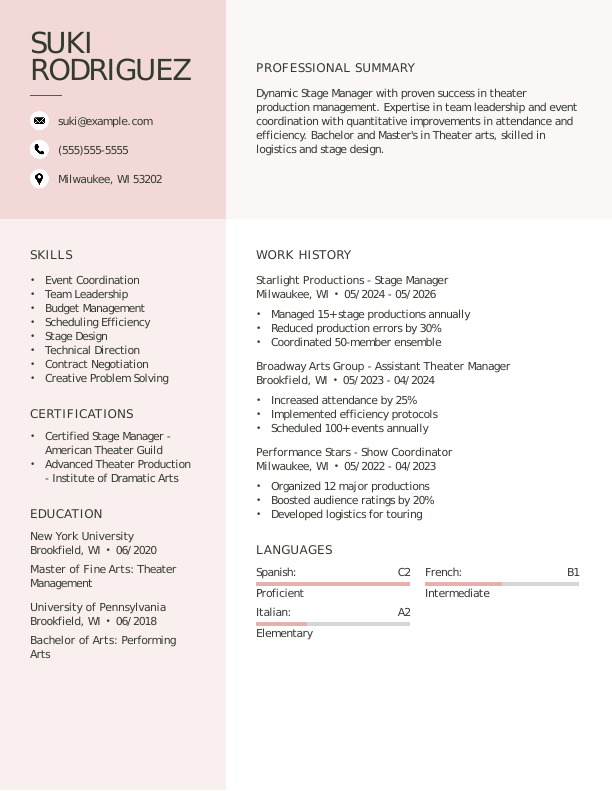
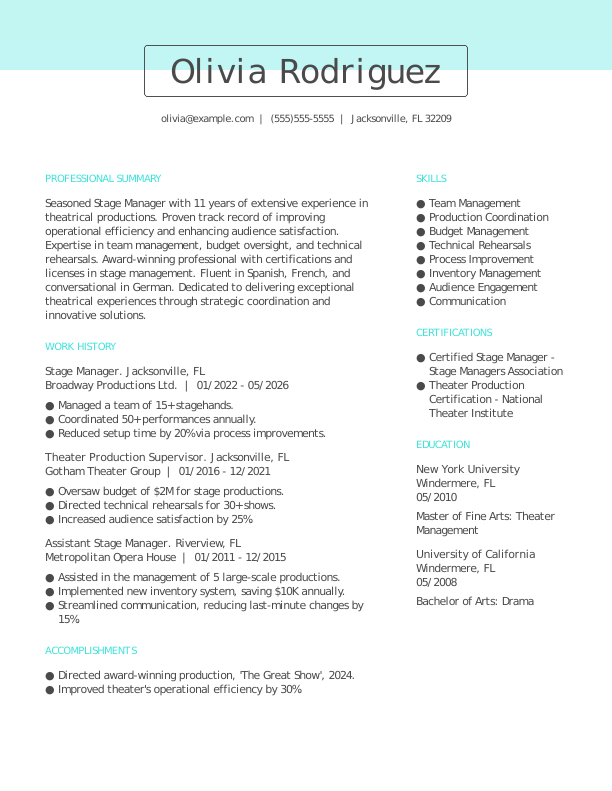
Experienced Stage Manager Resume
An ideal choice for seasoned stage managers with over 10 years of experience, this template supports professionals seeking leadership roles in high-profile theatrical productions.
Stage Manager Resume Template (Text)
Here is a ready-to-use text version of a stage manager resume. Copy it and fill in your production credits. For more performing arts formats, browse our collection of resume templates.
Hiro Lee
Eastside, WA 98003
Professional Summary
Proven expertise in stage management, enhancing production quality, team leadership skills, and cost-effective strategies for theatrical events. Successful history of boosting team collaboration and audience engagement.
Work Experience
March 2024 – March 2026
Broadway Productions Inc. – Eastside, WA
Stage Manager
- Managed 10+ theatrical productions efficiently
- Reduced production costs by 15% annually
- Increased team collaboration by 25%
March 2021 – February 2024
Creative Theatre Company – Eastside, WA
Production Manager
- Coordinated 12+ successful events yearly
- Improved setup time by 20 hours monthly
- Boosted audience attendance by 30%
March 2020 – February 2021
Arts & Events Ensemble – Spokane, WA
Event Coordinator
- Handled logistics for 20+ major events
- Cut event expenses by $10,000 yearly
- Enhanced patron satisfaction by 40%
Education
June 2019
University of California, Los Angeles Los Angeles, CA
Master of Fine Arts Theater Management
June 2017
New York University New York, NY
Bachelor of Arts Performing Arts
Certifications
- Certified Stage Management Professional – Stage Management Association
- Event Planning Specialist – Event Management Institute
Skills
- Team Leadership
- Budget Management
- Event Coordination
- Production Planning
- Communication
- Time Management
- Problem Solving
- Creative Thinking
How to Write a Stage Manager Resume
As a stage manager, understanding how to write a resume involves combining your organizational skills and production experience with a clear format that showcases your qualifications. Use the guidance below to emphasize your strengths and tailor your resume for the specific roles you’re pursuing.
1. Contact Info
Your contact information must be prominent, professional, and straightforward at the top of your resume.
Be sure to include:
- Full name
- Phone number
- Professional email address
- City and state (ZIP code is optional)
- LinkedIn profile or relevant portfolio (if applicable)
 PRO TIP
Skip including unnecessary personal details like your birthdate, Social Security number, or personal photos unless specifically requested by the employer.
2. Resume Profile
A resume profile is a brief introductory section (two to four sentences) that highlights your identity and key qualifications. It serves as a compelling pitch to hiring managers, designed to grab their attention and prompt them to delve deeper into your application.
Typically located at the top of your resume, the profile can take the form of either a summary or an objective, each serving unique purposes. Understanding these differences helps tailor your approach effectively:
- A resume summary showcases relevant experience, technical skills, and notable achievements in production management and coordination. This format is particularly beneficial for those with a background in theater or events who aim to highlight their contributions as an effective stage manager.
- A resume objective highlights your aspirations and outlines the goals you aim to achieve in your career. It’s especially beneficial for recent graduates, individuals switching careers, or those with limited experience, such as professionals moving into event management.
Let’s examine the differences between a resume summary and a resume objective in the following examples:
Stage manager resume summary example:
Dynamic stage manager with 6+ years of experience in live theater and events. Proficient in production coordination, team leadership, and technical direction. Acknowledged for improving performance delivery and creating seamless audience experiences through effective communication and careful planning.
Stage manager resume objective example:
Recent graduate with a Bachelor of Fine Arts in Theatre Production seeking to launch a career as a stage manager in a dynamic performance environment. Committed to fostering collaborative creativity and contributing excellent organizational skills and attention to detail within a theatrical company or production house.
3. Work Experience
The work experience on your resume is an important foundation for showcasing your qualifications. Employers examine not just the job titles you’ve held, but also the contributions you’ve made to understand your true impact.
Your background as a stage manager highlights your ability to coordinate complex productions, demonstrating that you’re well-equipped for the challenges of this dynamic role.
The work experience section should contain:
- Job title
- Employer name and location
- Dates of employment (month/year)
- 3–5 bullet points detailing your stage management duties and production achievements
Tailor your work experience bullet points to the stage manager role by using industry-specific terms. Begin each statement with an action verb like “Coordinated,” “Managed,” or “Supervised” for maximum impact.
Incorporate quantifiable data to improve your resume’s appeal. Highlighting specific accomplishments, such as boosting team efficiency by 20% or overseeing productions with audiences of over 1,000, showcases your value and sets you apart from other job seekers.
In general, consider following the format of:
[action verb] + [responsibility] = [result/achievement]
For example:
Coordinate and oversee the execution of live performances for 10+ productions annually, ensuring seamless transitions and adherence to schedules, resulting in a 95% on-time show performance rate.
Note that you can also flip the result/achievement with the responsibility:
Increased audience engagement by 30% through innovative staging techniques and effective collaboration with directors.
Explore further down the page for additional work experience examples tailored for stage managers.
4. Skills
The skills section provides a concise overview of your stage management abilities, showcasing your expertise in organizing and executing productions. Using an ATS-friendly resume format helps hiring managers assess your qualifications at a glance.
Skills can be categorized into three key areas:
- Soft skills are personal qualities that influence how well individuals collaborate in the fast-paced world of theater. For stage managers, key soft skills include communication, problem-solving, leadership, and adaptability.
- Hard skills are specific, quantifiable abilities gained through education, training, or experience. For stage managers, examples include coordinating rehearsals, managing technical equipment, and overseeing set design.
- Technical skills encompass the practical abilities required to handle specific tools and systems in a profession. In stage management, this includes expertise in lighting control boards, sound mixing software, and stage design applications.
In general, aim to include a diverse mix of relevant skills that correspond with the job specifications to showcase your potential. For more examples of industry-specific skills, explore additional skill suggestions listed further down the page.
PRO TIP
If you’re a newer stage manager, consider placing your skills section higher on the resume, right after your summary. If you have more experience, it’s better to position this section lower, weaving your skills into your work history for a cohesive presentation.
5. Education
Understanding how to list education on your resume is important for highlighting your qualifications. Start by listing your most recent or relevant degree, including the type of degree and the institution’s name.
If you have recently graduated, consider adding your graduation year, GPA (if it’s 3.5 or higher), any honors received, and relevant coursework to improve your profile.
Stage manager resume education section example:
Bachelor of Fine Arts in Theatre Production
University of California, Los Angeles, Los Angeles, CA
Graduated: 2023 | Cum Laude
PRO TIP
When listing multiple degrees on your resume, always display them in reverse-chronological order, starting with the highest degree first, such as Bachelor of Fine Arts in Stage Management, followed by Associate Degree in Theater Production.
6. Certifications
Certifications illustrate your qualifications and keep your skills relevant in the fast-paced world of stage management. While not always included on a traditional resume, this section is important for professionals in the industry. Employers often seek specific credentials for roles like production manager or technical director, highlighting the need for relevant certifications.
Highlight any certifications that directly relate to stage management and support your application. Remember to keep these credentials updated and present them in a clear format to improve your profile.
Stage manager certification examples:
- Stage Manager Certification | National Association of Theatre Managers | Expires: 01/2028
- Event Safety Management Certificate | Event Safety Alliance | Expires: 11/2027
- Technical Theatre Specialist Certification | Theatre Arts Guild | Expires: 03/2028
- First Aid/CPR/AED Certification | American Red Cross | Expires: 08/2027
Start Building Your Job-Winning Resume
Use Your Existing Resume
Import your current resume to transfer your information to one of our professional templates.
Create a New Resume
Start fresh with a template that catches your eye and follow the prompts to add your details.
Tailor Your Work History to Beat the ATS
Your work experience is more than just a collection of previous positions. It’s an opportunity to highlight the tangible contributions you’ve made in your role, showcasing specific achievements that resonate with potential employers. This strategy not only improves your narrative but also results in a resume that is easily scanned by applicant tracking systems (ATS).
To create a compelling work history, tailor your descriptions to align with the job you’re targeting. Begin by carefully analyzing the job listing for keywords and essential skills mentioned throughout. By pinpointing these repeated elements, you can effectively incorporate them into your experience descriptions, making your application stand out.
Popular Resume Bullets for Stage Managers
These examples are pulled from our most-used entries in the resume builder—based on what hiring managers respond to most.
- Coordinated stage productions for over 50 performances, improving audience engagement by 20%.
- Managed technical rehearsals and ensured seamless transitions between scenes, reducing downtime by 30%.
- Collaborated with directors and designers to align vision and execution, fostering a cohesive creative environment.
- Oversaw equipment inventory and maintenance, leading to a 15% reduction in rental costs.
- Mentored a team of junior stagehands, improving their skills and boosting overall production efficiency.
Example of Skills for Stage Managers
Including the right skills for your resume shows employers and ATS that you possess the essential abilities needed for a stage manager. Since resumes are often scanned quickly, ensure your skills align closely with the job description and remain focused and relevant.
The skills listed below highlight what is valued in stage management today. These capabilities often appear in successful job seeker resumes and resonate well with hiring managers in the industry.
5 Soft Skills for Your Resume or CV
- Effective communication
- Team leadership skills
- Crisis management ability
- Attention to detail
- Time management skill
5 Hard Skills for Your Resume or CV
- Stage setup and breakdown
- Lighting design (ETC, Martin)
- Sound mixing (Midas, Yamaha)
- Inventory management
- Rehearsal coordination
Key Takeaways
- Tailor your resume to the job description. Use specific terms from the posting to highlight your relevant skills and experiences for both ATS and hiring managers.
- Showcase quantifiable achievements. Include metrics like production budgets managed, crew sizes, or number of performances coordinated (e.g., reduced setup time by 20%, managed a team of 15).
- Select the right format based on your experience level. Entry-level stage managers might opt for a functional format, while seasoned professionals usually prefer reverse-chronological layouts.
More Resume & CV Examples
- Acting Resume for Beginners
- Animator
- Audio Engineer
- Entertainment
- Event Coordinator
- Event Planner
- Film Industry Internship
- Film Production
- Makeup Artist
- Model
- Production Assistant
- Video Editor
- Videographer
- Sample resume for
Frequently Asked Questions
Last Update:
What resume format should I use for my stage manager resume?
When creating a resume for a stage manager position, it’s best to understand that there are three primary formats available. Your choice should align with your experience level and highlight the skills or achievements you wish to showcase:
- Chronological: A chronological resume is the most widely used format, highlighting your work experience alongside your responsibilities and accomplishments. This structure benefits job seekers with a relevant job history that strengthens their qualifications and improves the credibility of their professional profile.
- Functional: The functional resume, often referred to as a skills-based resume, highlights your qualifications and an extensive skills section. This format shifts the focus away from work history, making it ideal for individuals with limited relevant experience or noticeable gaps in employment. Emphasizing what you can bring to the table over where you’ve worked is its key advantage.
- Combination: A combination resume merges elements of chronological and functional formats, showcasing both work experience and skills. This format is beneficial for professionals because it allows them to emphasize their abilities while illustrating career growth, making it ideal for those transitioning into new fields.
Should I include a cover letter with my resume?
Yes, you should include a cover letter with your application for a stage manager position. A well-crafted cover letter allows you to express your enthusiasm for the role and the production company while highlighting your organizational skills and experience managing performances that may not be fully captured in your resume. It demonstrates to hiring managers that you’ve personalized your application, which can give you an advantage over applicants who do not include this essential component.
If you’re apprehensive about writing a cover letter, there are many resources available to guide you. You can find articles detailing how to write a cover letter specifically for stage management, as well as examples showcasing successful letters from other applicants. Exploring various formats will also help you determine which one best presents your unique qualifications and experiences.
To make the writing process easier, consider using a cover letter generator, which can assist in crafting a tailored document by providing structure and suggestions based on your specific job application.
How long should a stage manager resume be?
For stage managers with less than 10 years of experience, a one-page resume is typically ideal to showcase relevant skills and experiences. Highlight significant productions, technical expertise, and any certifications that improve your candidacy. A focused format aids in clear communication.
Conversely, those in senior or specialized roles may extend their resumes to two pages if the content remains relevant and organized. Emphasize leadership experiences, project management skills, and unique contributions while ensuring every detail supports your qualifications without unnecessary elaboration.
What keywords should I include to pass applicant tracking systems (ATS)?
To improve your resume for ATS screening as a stage manager, focus on including keywords and phrases directly from the job posting. Terms like “production scheduling,” “crew coordination,” and “event logistics” are important. These specific words help demonstrate that you have the experience sought after by employers.
Don’t forget to mention relevant certifications, such as Stage Management Professional Certification or Technical Theatre Credentials. Highlight any technical tools you’re proficient in, like Vectorworks or QLab, to showcase your qualifications further. Tailoring your resume this way can significantly boost your chances of catching an employer’s attention.
Should I include volunteer stage management or community events on my resume?
Yes, particularly if you’re early in your career. Including volunteer experience displays your practical skills and commitment to the craft, making you stand out even without extensive formal work as a stage manager.

Kirsten Chorpenning is a career advice writer who empowers job seekers to take control of their career paths using Monster’s comprehensive job search and resume tools. She specializes in helping job seekers find rewarding jobs in today’s dynamic work environment.Holding a bachelor’s degree in psychology with a minor in writing, Kirsten combines academic knowledge with five years of career industry experience to provide practical job search guidance. She focuses on the nuances of the modern job market and effective strategies for job applications. Her work, which focuses on providing actionable advice on how to secure interviews and achieve long-term career success, has been featured in Forbes, Money Talks News, MSN, and FlexJobs.
See More From Kirsten ChorpenningExplore Related Career Advice





Canadian Resume Format Guide: How to Write a Canadian Resume (With Examples)
Updated:
May 8, 2026
|

12 min read


How to List Multiple Positions at the Same Company on Resumes: 3 Methods
Updated:
May 7, 2026
|
12 min read

Extracurricular Activities for Resumes: 10+ Examples & How to Include Them
Updated:
May 7, 2026
|
14 min read