

Free HR Generalist Cover Letter Templates & Examples
Boost your interview odds with our professionally designed HR generalist cover letter templates. These free cover letter templates include practical writing tips and guidance to help you highlight your qualifications, demonstrate human resources strengths, and stand out to hiring managers and HR directors.
Real-World Cover Letters That Get Results
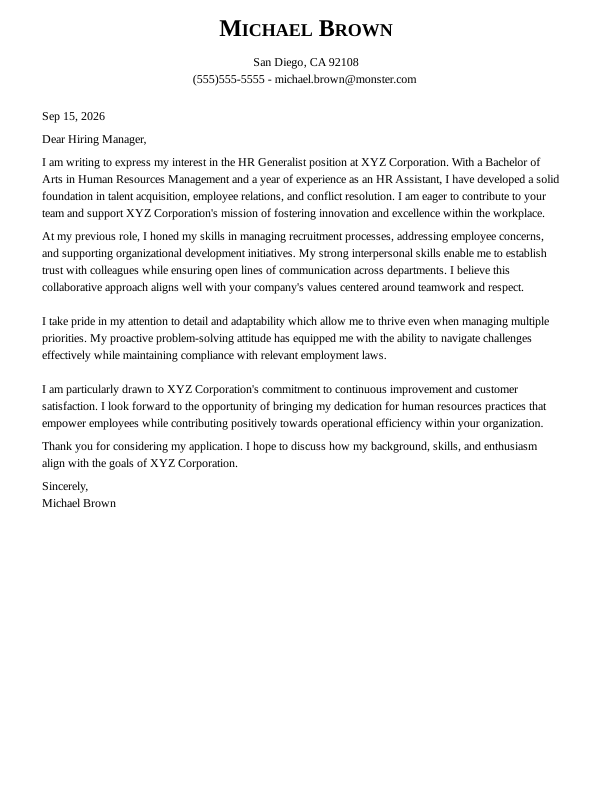
 Free
FreeHR Generalist Entry-Level Cover Letter
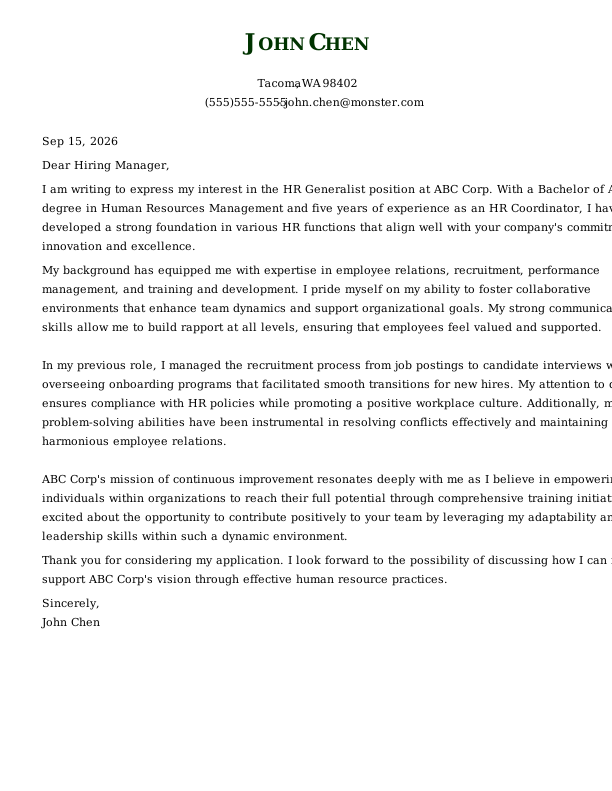
HR Generalist Mid-Level Cover Letter
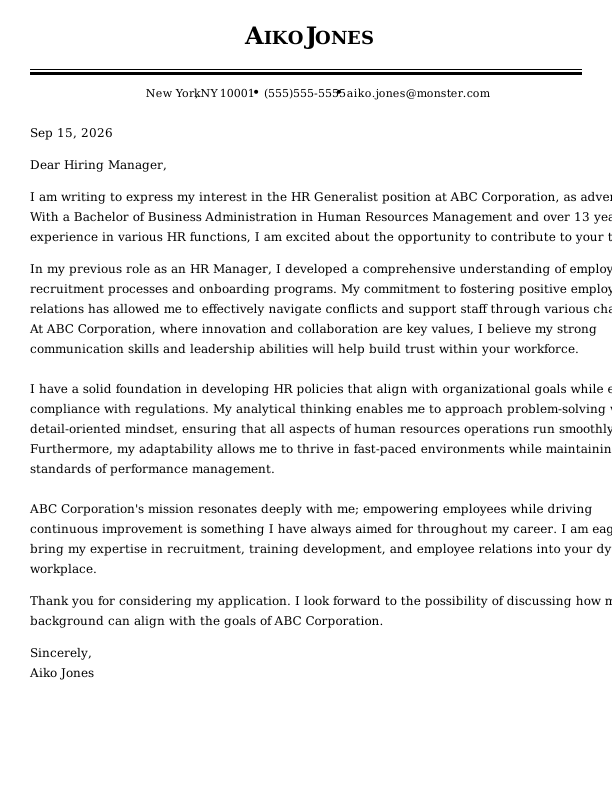
HR Generalist Experienced Cover Letter
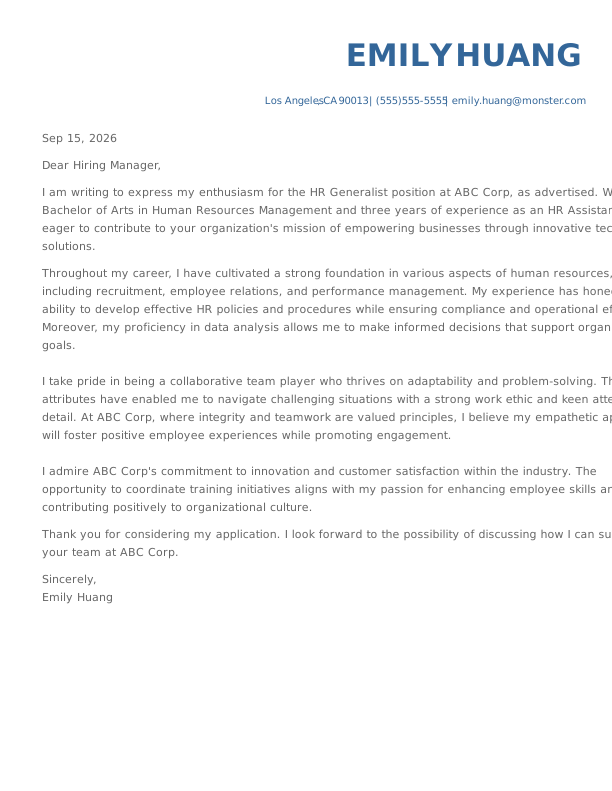
HR Generalist Entry-Level Cover Letter
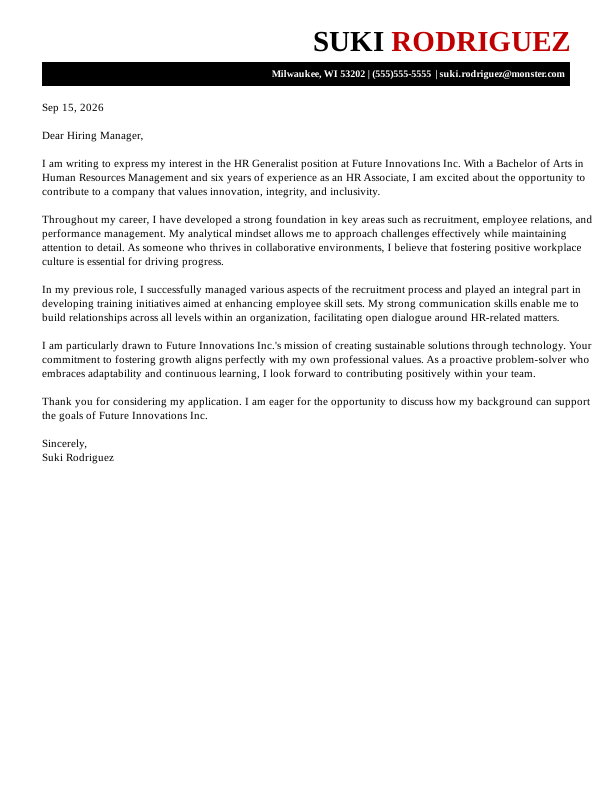
HR Generalist Mid-Level Cover Letter
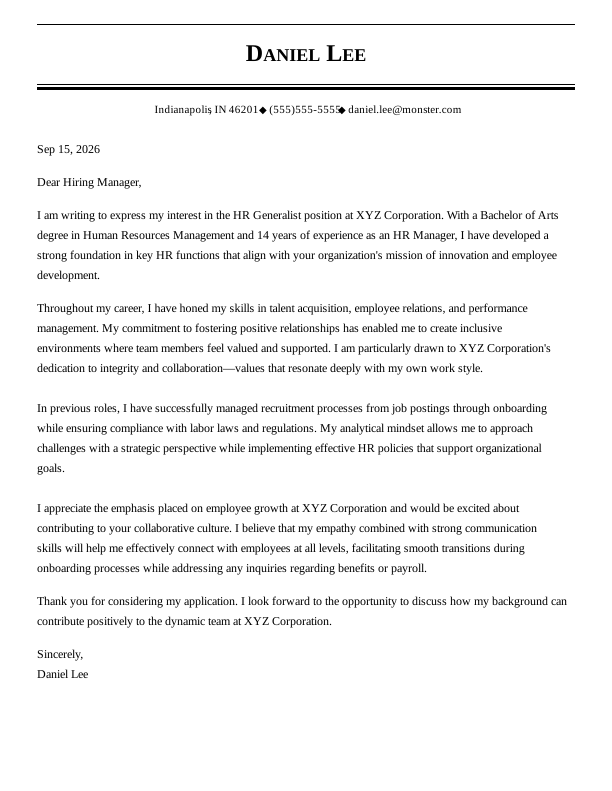
HR Generalist Experienced Cover Letter
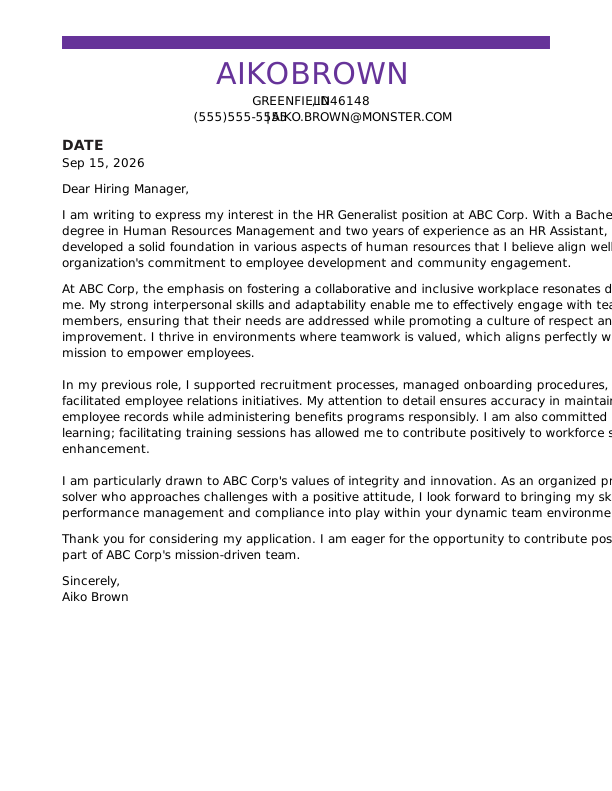
HR Generalist Entry-Level Cover Letter
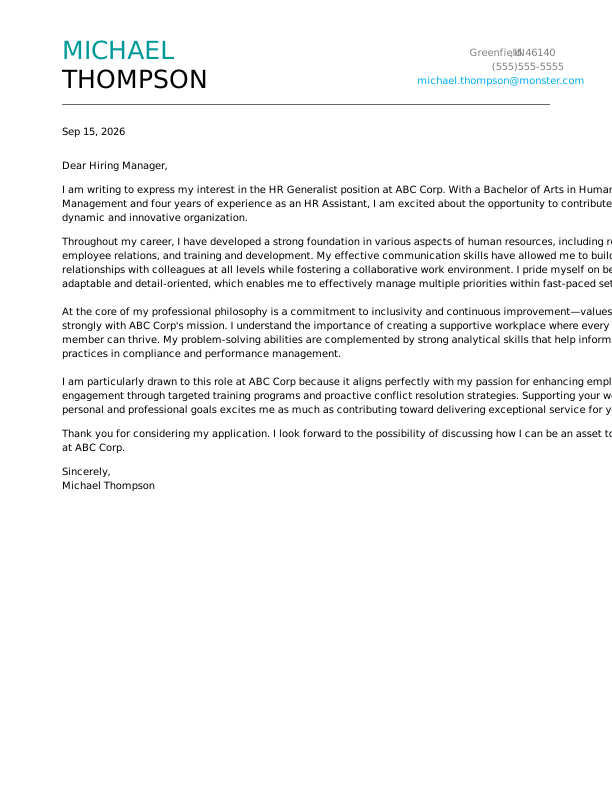
HR Generalist Mid-Level Cover Letter
Browse Free Cover Letter Templates
- Account Manager
- Accounts Payable
- Administrative Assistant
- Admissions Counselor
- Artist
- Babysitter
- Barista
- Bartender
- Bookkeeper
- Brand Ambassador
- Business Analyst
- Caregiver
- Chef
- Civil Engineering
- Computer Science
- Custodian
- Customer Service
- Dental Assistant
- Dental Hygienist
- Electrical Engineering
- Emt
- Engineering
- Event Coordinator
- Executive Assistant
- Finance
- Financial Analyst
- Firefighter
- Flight Attendant
- Graphic Designer
- Hair Stylist
- Healthcare
- Investment Banking
- It
- Janitor
- Journalism
- Lab Technician
- Law Clerk
- Lawyer
- Librarian
- Logistics
- Manager
- Marketing Manager
- Massage Therapist
- Mechanic
- Mechanical Engineer
- Medical Assistant
- Non Profit
- Nursing
- Occupational Therapy
- Office Manager
- Paralegal
- Personal Trainer
- Pharmacy Technician
- Photographer
- Physician Assistant
- Pilot
- Police Officer
- Project Manager
- Property Manager
- Psychology
- Receptionist
- Research Assistant
- Restaurant Manager
- Retail
- Sales
- Security Officer
- Social Work
- Software Engineer
- Teacher
- Teaching Assistant
- Truck Driver
- Vet Tech
- Veterinary Assistant
- Web Developer
- Welder
Cover Letter Examples for HR Generalists
HR generalist cover letters evolve across career stages, highlighting different levels of employee relations, talent acquisition, and HR policy compliance. Use these templates to align your onboarding workflows, performance management skills, and HRIS administration capabilities with your current career stage.
Entry-Level HR Generalist Cover Letter
Perfect for recent graduates starting a cover letter with no experience, and career changers moving into HR generalist work from another field, this template helps you present your skills clearly and confidently.
Mid-Career HR Generalist Cover Letter
A good fit for HR generalists with established industry experience, this template highlights professional growth and helps position you for senior HR specialist roles, talent management positions, or HR lead responsibilities.
Experienced HR Generalist Cover Letter
Best for HR generalists with 10+ years of experience, this template helps seasoned job seekers pursue senior HR manager positions, people operations leadership, or HR director roles.
HR Generalist Cover Letter Template (Text)
Use this editable text version of an HR generalist cover letter to copy, paste, and customize directly in your document.
Jackson Highes
Hillcrest, NY 11507
(555)555-5555
jackson.highes@monster.com
Sep 15, 2026
Dear Hiring Manager,
I am writing to express my interest in the HR generalist position at ABC Corp, as advertised. With a Bachelor of Arts in Human Resources and seven years of experience as an HR specialist, I have developed a comprehensive skill set that aligns well with your company’s commitment to fostering an inclusive and collaborative workplace.
Throughout my career, I have honed my abilities in recruitment, employee relations, and performance management. I take pride in promoting a positive workplace culture where employees feel valued and supported. My strong communication skills allow me to build meaningful relationships with team members at all levels, facilitating effective conflict resolution and enhancing overall employee satisfaction.
I am particularly drawn to ABC Corp’s mission of empowering employees through innovation and professional growth. My detail-oriented approach ensures accuracy in HR processes while my analytical mindset enables me to proactively address challenges that may arise within the workforce.
As someone who thrives in collaborative environments, I believe that teamwork is essential for achieving organizational goals. I am eager to contribute my experience in talent acquisition and training initiatives while aligning HR policies with the values upheld by your organization.
Thank you for considering my application. I look forward to the opportunity to discuss how my background can support ABC Corp’s objectives and contribute positively to your team.
Sincerely,
Jackson Highes
How to Write an HR Generalist Cover Letter
Writing a strong HR generalist cover letter means pairing your human resources credentials with clear storytelling that demonstrates your ability to manage employee relations, coordinate talent acquisition, and enforce labor law compliance. Follow the steps below to highlight your qualifications and customize your letter for each target corporate HR team, nonprofit organization, or growing business enterprise.
1. Research & Prepare
Before you write your cover letter, research the company, its workplace culture, and its current human resources initiatives. Learning whether an organization prioritizes rapid talent acquisition, employee retention programs, or HRIS system integration helps you connect your HR generalist background directly to its operational demands.
Review the job description for required certifications (such as SHRM-CP, SHRM-SCP, or PHR) and HRIS platforms (such as Workday, BambooHR, or ADP). Check the company website and culture updates to understand its employee engagement policies, then review LinkedIn profiles of HR directors or people operations leads to align your background with their priorities.
2. Hook the Reader
Your opening paragraph sets the tone for your entire cover letter. A strong opener grabs the HR manager or talent acquisition leader’s attention by demonstrating genuine knowledge of the organization, your HR focus, and what you bring to the department on day one.
Try referencing a specific employee development program, culture initiative, or recruitment campaign from the employer and connecting it to your background. You can also open with a specific metric, such as how you reduced time-to-fill averages or improved onboarding retention percentages, or highlight a direct recommendation from a senior HR executive who can vouch for your compliance discipline and employee relations skills.
3. Tell Your Professional Story
Your cover letter should do more than restate your resume bullet points. Use the main body to share a concise example that illustrates how you conduct employee investigations, build onboarding frameworks, and guide managers through performance improvement plans.
Quantify your HR accomplishments wherever possible. Mention specific metrics such as reducing time-to-fill averages by 25%, cutting employee relations case resolution timelines from 30 days to 18, raising retention rates by 5%, or managing orientation for 50+ new hires per quarter. Highlight how your human resources management supported organizational goals.
4. Showcase Your Skills
Matching your technical HR skills to the exact requirements in a job posting helps hiring managers picture you supporting their workforce on day one. Connecting your labor law knowledge, HRIS proficiency, and conflict resolution techniques to what the organization needs shows your readiness to take on assigned HR operations.
For example, if the role emphasizes employee relations, describe how you coached managers through policy enforcement, conducted neutral workplace investigations, and resolved personnel issues. If the posting stresses onboarding and benefits administration, share how you structured new hire checklists, coordinated open enrollment windows, and maintained audit-ready employee files.
5. Explain Any Special Circumstances
If you have an employment gap, are attempting to transition into HR generalist work from talent acquisition or administrative support, or recently relocated, address it early and briefly. Share the reason directly, then pivot to what you have gained or are building, such as completed SHRM study modules, updated labor law coursework, or refreshed HRIS certifications.
For instance, you can mention how a break spent completing advanced human resources or labor relations modules sharpened your policy compliance and employee communication skills. When attempting a career shift into HR generalist work, explain how your prior background—such as recruitment, payroll processing, or office management—strengthens your interview techniques, data tracking, and employee engagement habits. If you have relocated, mention your knowledge of state and local labor laws, remote workflow tools, and immediate schedule availability.
6. End With a Professional Goodbye
Close your cover letter by reaffirming your interest in the position, thanking the selection team for its time, and inviting a conversation about how your human resources background fits the department’s operational requirements. Keep the tone concise, confident, and focused on workforce support and regulatory compliance.
Wrap up with a clear statement, such as: “I welcome the opportunity to discuss how my human resources experience, policy guidance skills, and onboarding support can strengthen your HR operations.” Then, end with a professional sign-off like “Sincerely” or “Best regards.”
4 Tips for Formatting Your Cover Letter
Use clear spacing, simple headings, and consistent fonts to format your cover letter. Proper formatting keeps your document professional and easy to read. These tips apply whether you are stepping into your first HR generalist role or bringing years of human resources experience.

Keep It to One Page
HR directors and talent acquisition managers review many applications, so keep your cover letter to a single page. Target 250 to 400 words across three to four focused paragraphs to share your most relevant HR skills and operational accomplishments.

Use a Professional Font & Layout
Choose a clear font such as Arial, Calibri, Times New Roman, or Helvetica in 10 to 12 pt with one-inch margins. Keeping formatting consistent with your resume creates a clean, cohesive application package that is easy to scan on screens and corporate job portals.

Address the Hiring Manager Directly
Try to find the name of the HR director, people operations lead, or talent acquisition manager by reviewing the job posting, corporate directory, or LinkedIn. If you cannot find a specific name, address your letter to “Dear HR Team” or “Dear Hiring Manager,” avoiding outdated phrasing like “To Whom It May Concern.”

Save & Send as a PDF
Save your cover letter as a PDF to preserve your layout across different operating systems and devices. Use a professional file name that includes your name and the words “cover letter,” such as “Jane_Smith_cover_letter.pdf.”
Key Takeaways
- Tailor each letter to the specific company, workforce size, and HR focus. Reference its onboarding processes, culture initiatives, or recruitment goals so reviewers quickly recognize your fit.
- Lead with a compelling opener and support it with concrete achievements. Include measurable details like time-to-fill reductions, turnover decreases, onboarding totals, or audit compliance scores.
- Keep formatting clean and consistent with your resume. Use identical fonts, header styles, and line spacing so HR evaluation teams can scan key credentials effortlessly.
Browse Monster’s Resume Templates
Monster also has hundreds of ATS-friendly resume templates for all career levels and industries. Create a matching resume to help you land the interview.
- Assistant Project Manager
- Associate Product Manager
- Benefits Specialist
- Business Administration
- Business Development
- Business Management
- Business Manager
- Business Operations
- Business Owner
- Business
- Ceo
- Change Manager
- Chief Of Staff
- Ciso
- Community Outreach Coordinator
- Coo
- Corporate Trainer
- Director Of Operations
- Director
- Entrepreneur
- Executive Director
- Executive Manager
- Executive Recruiter
- Executive
- Freelance
- General Manager
- Healthcare Management
- Hr Analyst
- Hr Business Partner
- Hr Consultant
- Hr Coordinator
- Hr Director
- Hr Manager
- Hr Specialist
- Managing Director
- Onboarding Specialist
- Operations Manager
- Program Coordinator
- Program Director
- Program Manager
- Project Coordinator
- Project Manager
- Recruiter
- Recruiting Coordinator
- Recruitment Coordinator
- Regional Manager
- Risk Management
- Senior Manager
- Senior Program Manager
- Senior Project Manager
- Senior Recruiter
- Small Business Owner
- Supervisor
- Talent Acquisition Specialist
- Team Leader
- Technical Recruiter
- Training Manager
- Vice President
Frequently Asked Questions
Last Update:
Do I really need a cover letter?
Yes, including a cover letter adds valuable context that your resume cannot fully capture, demonstrating professional written communication, interpersonal tact, and genuine alignment with the company’s workforce goals.
A cover letter is especially valuable when explaining an employment gap, transitioning across HR specialties, or applying to an organization with specific cultural goals. It provides space to convey your HR philosophy and commitment to employee development.
How long should my cover letter be?
An HR generalist cover letter should fit on a single page, ideally between 250 and 400 words. HR directors spend limited time reviewing each submission, making conciseness essential.
Focus on quality over length by selecting your most relevant employee relations wins, talent acquisition experience, and HRIS proficiencies. Organize your text into three to four well-structured paragraphs to keep your key qualifications scannable.
Should my cover letter match my resume?
Yes, your cover letter should match your HR generalist resume’s visual design. Use the same fonts, colors, and header style so your application package looks cohesive and intentional.
Keep the formatting consistent while using the text to tell a deeper story. For an HR generalist role, expand on your human resources background by adding context your resume cannot show, such as strategies used to resolve complex employee relations cases, executing onboarding overhauls, and why you want to support this specific HR team.
What should I include in my cover letter header?
Your HR generalist cover letter header should include your full name, phone number, professional email, city and state, and LinkedIn profile (if applicable). Add the date and the recipient’s information below your contact details, matching this header style to your resume for visual consistency.
How do I write a cover letter for an internal HR generalist position?
When writing a cover letter for an internal job, use your knowledge of company policies, employee relations patterns, and HR workflows to show what you’ve handled in your current role. Highlight specific contributions like case resolution support, onboarding improvements, or benefits updates, then explain how the new role helps you grow while meeting the team’s needs. Follow the same formal application steps as other job seekers.

Toni Frana is a Certified Professional Resume Writer (CPRW), member of the Professional Association of Resume Writers & Career Coaches, and career expert who empowers job seekers to take control of their career paths using Monster’s comprehensive job search and resume tools.
See More From Toni FranaExplore Related Career Advice







How to Write a Cover Letter for Internal Positions or Promotions (Examples & Tips)

Updated:
Apr 23, 2026
|

19 min read


Cover Letter vs Resume: What’s the Difference & Do You Need Both?

Updated:
Apr 23, 2026
|
18 min read