

Free Human Resources Cover Letter Templates & Examples
A great human resources cover letter shows you can support employees while keeping company processes compliant and organized. Use our free examples and writing guide to highlight your recruiting background, employee relations skills, and policy experience.
Real-World Cover Letters That Get Results
 Free
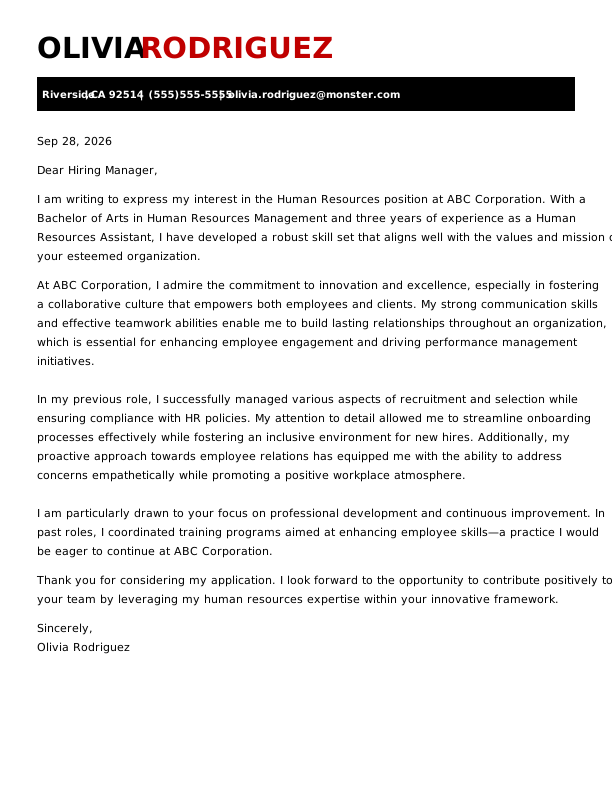
FreeHuman Resources Entry-Level Cover Letter
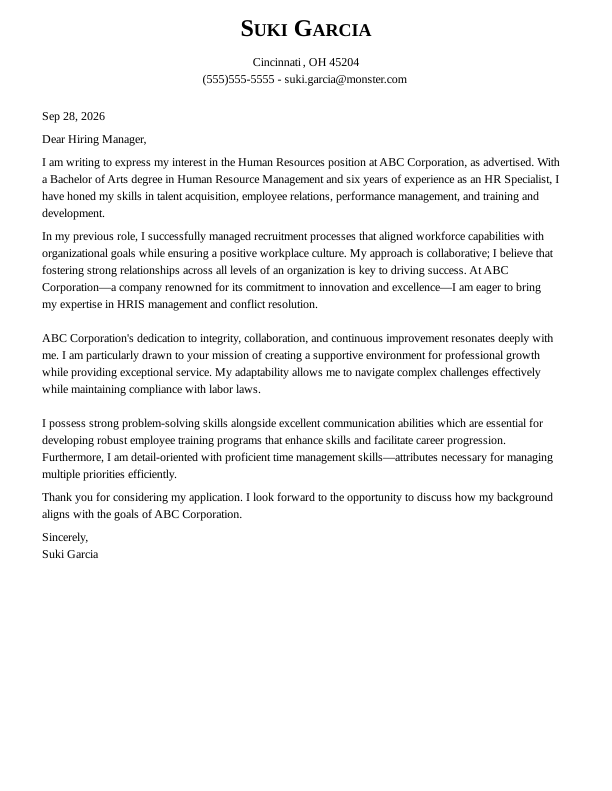
Human Resources Mid-Level Cover Letter
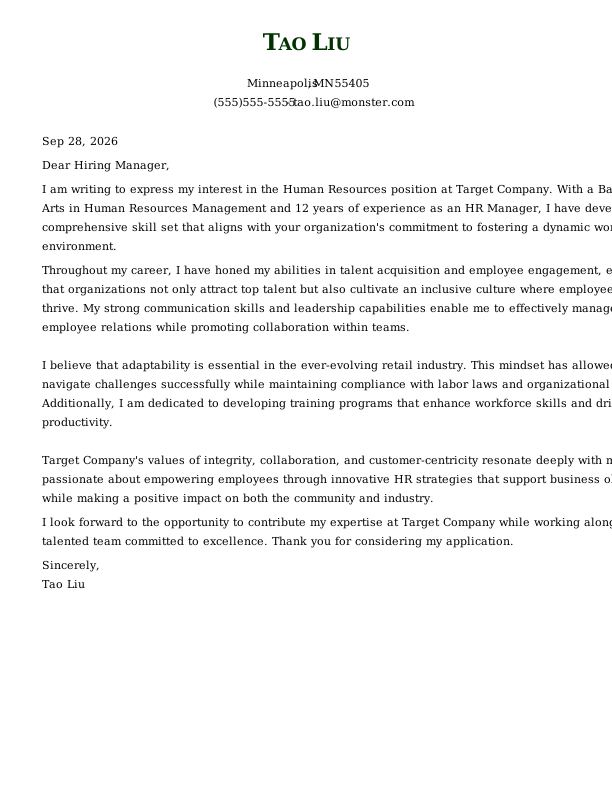
Human Resources Experienced Cover Letter
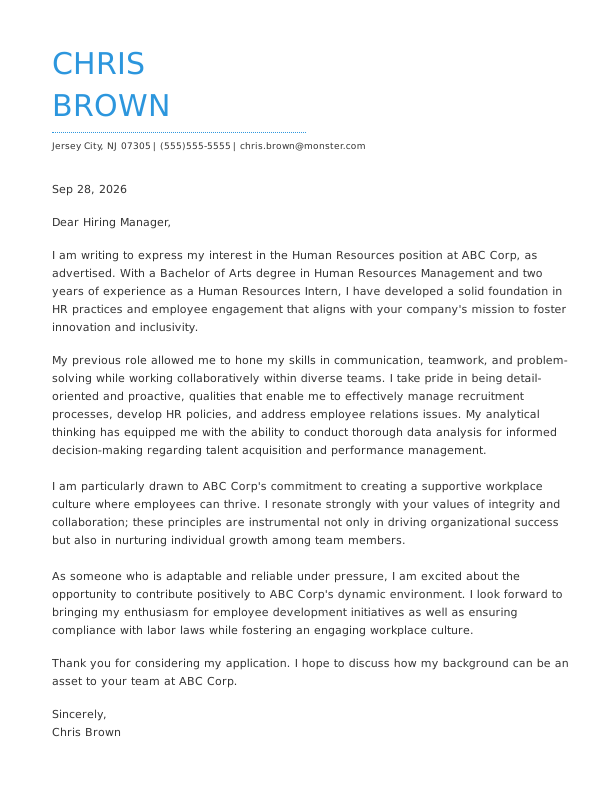
Human Resources Entry-Level Cover Letter
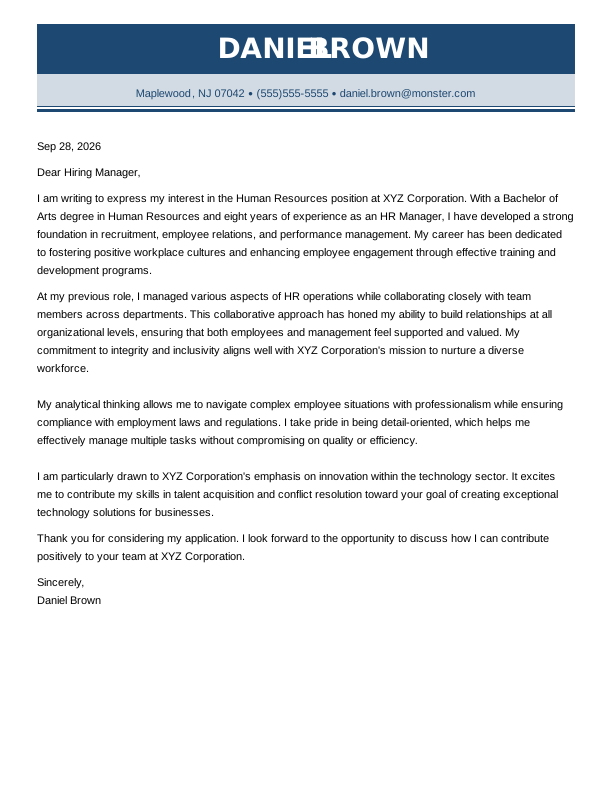
Human Resources Mid-Level Cover Letter
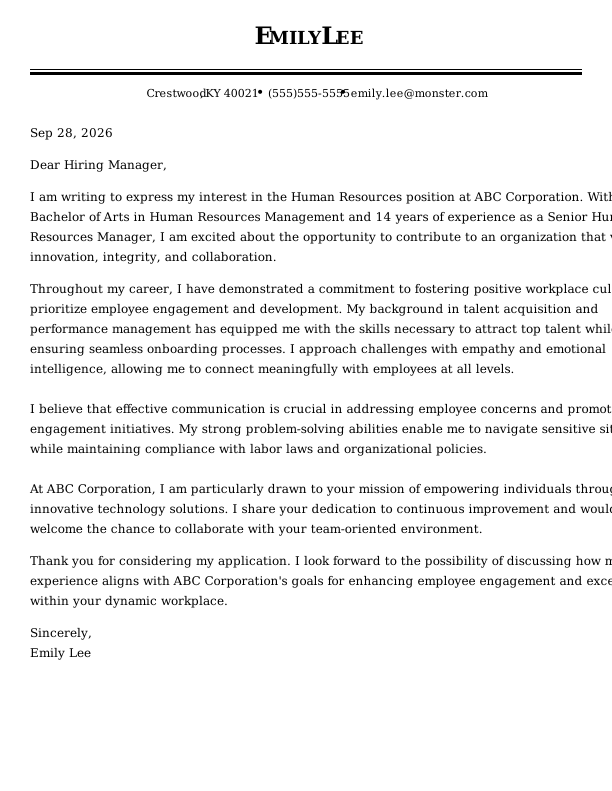
Human Resources Experienced Cover Letter
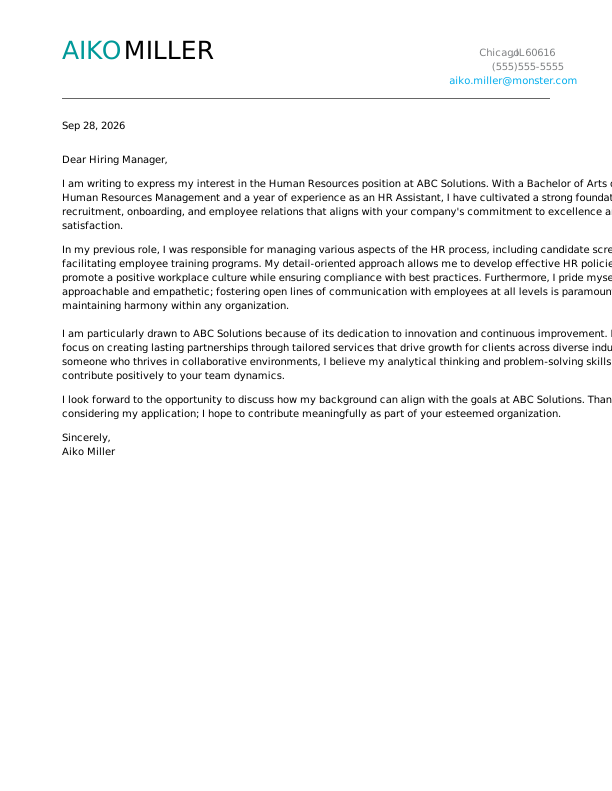
Human Resources Entry-Level Cover Letter
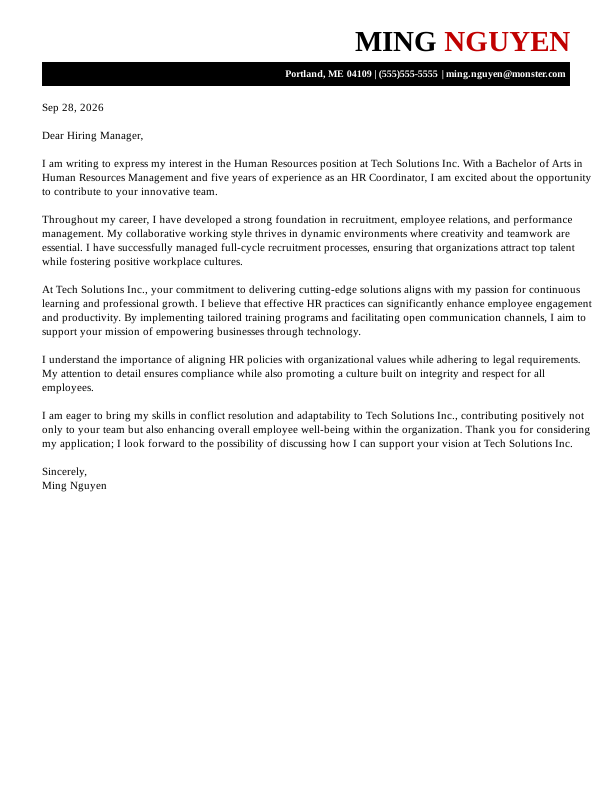
Human Resources Mid-Level Cover Letter
Browse Free Cover Letter Templates
- Academic
- Account Manager
- Accountant
- Accounts Payable
- Administrative Assistant
- Admissions Counselor
- Architecture
- Artist
- Assistant Principal
- Babysitter
- Barista
- Bartender
- Bookkeeper
- Brand Ambassador
- Business Analyst
- Business
- Caregiver
- Chef
- Civil Engineering
- Computer Science
- Construction
- Consulting
- Copywriter
- Cosmetology
- Custodian
- Customer Service
- Customer Service Representative
- Data Analyst
- Data Entry
- Dental Assistant
- Dental Hygienist
- Digital Marketing
- Electrical Engineering
- Emt
- Engineering
- Esthetician
- Event Coordinator
- Executive Assistant
- Finance
- Financial Analyst
- Firefighter
- Flight Attendant
- Graphic Designer
- Hair Stylist
- Healthcare
- Hr Generalist
- Investment Banking
- It
- Janitor
- Journalism
- Lab Technician
- Law Clerk
- Lawyer
- Librarian
- Logistics
- Makeup Artist
- Manager
- Marketing Coordinator
- Marketing
- Marketing Manager
- Massage Therapist
- Mechanic
- Mechanical Engineer
- Medical Assistant
- Non Profit
- Nursing
- Occupational Therapy
- Office Assistant
- Office Manager
- Operations Manager
- Paralegal
- Personal Trainer
- Pharmacist
- Pharmacy Technician
- Photographer
- Physician Assistant
- Pilot
- Police Officer
- Program Manager
- Project Manager
- Property Manager
- Psychology
- Receptionist
- Research Assistant
- Restaurant Manager
- Retail
- Sales
- Sales Manager
- School Counselor
- Security Officer
- Social Work
- Software Engineer
- Special Education Teacher
- Substitute Teacher
- Teacher
- Teaching Assistant
- Truck Driver
- Vet Tech
- Veterinary Assistant
- Web Developer
Cover Letter Examples for Human Resources Professionals
Cover letter requirements evolve as a human resources career progresses, especially from training and recruiting support to broader employee relations and program leadership. Choose the template that matches your experience level so you can highlight the right skills, certifications, and outcomes for your stage.
Entry-Level Human Resources Cover Letter
Perfect for recent graduates and career changers, this entry-level template helps you showcase transferable skills in communication, onboarding, and recruiting to prove you are ready for a human resources role.
Mid-Career Human Resources Cover Letter
Designed for HR professionals with a few years of experience, this template highlights your ability to manage employee relations, oversee talent acquisition pipelines, and partner with managers on performance reviews.
Experienced Human Resources Cover Letter
Ideal for senior HR managers and leaders, this template focuses on driving talent strategy, maintaining labor law compliance, and leading company-wide training and engagement initiatives.
Human Resources Cover Letter Template (Text)
Copy this human resources cover letter template into your document, then personalize it with your recruiting metrics, HR certifications, and the company name you’re targeting.
Ming Williams
Northwood, OH 43625
(555)555-5555
ming.williams@monster.com
Sep 28, 2026
Dear Hiring Manager,
I am writing to express my interest in the human resources role at ABC Corp, as advertised. With a Bachelor of Arts in Human Resources Management and four years of experience as an HR coordinator, I am excited about the opportunity to contribute to your innovative team.
My background has equipped me with a solid foundation in talent acquisition, employee relations, and performance management. I have developed and implemented HR policies that align with organizational goals while fostering a positive workplace culture. My commitment to supporting employee growth mirrors ABC Corp’s dedication to creating an inclusive environment where talent thrives.
Collaboration is at the heart of my working style. I believe that effective communication and interpersonal skills are essential for addressing employee concerns and enhancing engagement across diverse teams. My ability to remain adaptable under pressure allows me to navigate complex situations proactively, ensuring compliance with labor laws while maintaining accurate records.
I am particularly drawn to ABC Corp’s mission of delivering exceptional value through integrity and innovation. I share your values and look forward to contributing my attention to detail and problem-solving skills towards fostering a supportive work environment that drives sustainable growth.
Thank you for considering my application. I would welcome the chance to discuss how my experiences align with the goals of your team at ABC Corp.
Sincerely,
Ming Williams
How to Write a Human Resources Cover Letter
Writing a great cover letter for a human resources job means turning your real-world experience into clear proof of how you handle people and processes. You want to show how you manage recruiting, resolve workplace concerns, and keep the organization compliant with labor laws. Follow these simple steps to build a cover letter that highlights your strengths and catches the hiring manager’s eye.
1. Research & Prepare
Before you start writing, take time to learn what the company’s HR team is prioritizing right now, such as rapid hiring, employee retention, or policy updates. Checking the software systems they use and the operational challenges they face helps you tailor your letter to match their exact needs.
Here are a few practical ways to gather useful details before you write:
- Scan the job posting for specific HRIS or applicant tracking software like Workday, ADP, or Greenhouse.
- Review the company’s website or public announcements to learn about recent growth goals or cultural initiatives.
- Check industry news to understand current workforce trends or compliance priorities affecting the employer.
2. Hook the Reader
Skip generic opening lines like “I am writing to apply for this position.” Instead, start with a line that highlights your hands-on HR experience, showing right away that you know how to manage recruiting goals, system updates, or employee relations.
You can frame your opening line in a few different ways:
- Focus on recruiting results: “I reduced time-to-fill by 18% during my last hiring push by updating interview scorecards and fixing bottlenecks in our tracking software.”
- Focus on employee relations: “After coaching managers through 14 team conflicts, I reduced repeat disciplinary issues by standardizing investigation guidelines and escalation steps.”
- Focus on systems and compliance: “I led a major data cleanup that reconciled 2,400 employee records across our HR software systems while updating handbook policies for leave compliance.”
3. Tell Your Professional Story
Your resume lists your job titles, but your cover letter lets you explain how your decisions improved day-to-day operations. Using clear, concrete numbers helps the hiring team picture the scope of your work and proves your value.
Use these examples for highlighting your results:
- Reduced average hiring time from 45 days down to 32 days by streamlining screening workflows and interview schedules across three departments.
- Increased new-hire retention by 12% over 12 months after introducing a structured onboarding checklist and weekly check-ins for 60 new employees.
- Processed a biweekly payroll of $2.4M while cutting open HR support tickets from 95 down to 28 across two quarters.
4. Showcase Your Skills
Rather than stating that you have strong communication skills, describe a specific situation where you solved a problem or guided a process. Pick a key requirement from the job posting and explain how you handled it step by step.
Here are a few simple ways to demonstrate core HR skills in action:
- Employee relations: “When a workplace conflict escalated, I met with both managers separately to hear their concerns, documented clear next steps, and held a follow-up meeting to ensure alignment.”
- HRIS reporting: “I pulled leave data directly from Workday to correct eligibility mismatches and clearly explained the adjustments to our payroll team.”
- Compliance documentation: “I reviewed employee accommodation requests for completeness, caught missing forms early, and followed up promptly to ensure we stayed within legal timelines.”
5. Explain Any Special Circumstances
If you have an employment gap, a career transition, or a recent move, address it in one or two plain sentences. Hiring managers care most about active certifications, up-to-date knowledge of employment law, and current tool experience.
These brief examples show how to address unique situations naturally:
- “After taking time off for family caregiving, I kept my skills fresh by completing HR certification modules and volunteering with a local nonprofit to write job descriptions.”
- “I am transitioning from a recruiting coordinator to an HR generalist role by earning my HR certification and gaining hands-on experience with Workday onboarding tools.”
- “Since relocating to Austin, I have updated my knowledge of state-specific leave policies while keeping my professional HR credentials active.”
6. End With a Professional Goodbye
Close your cover letter with a polite thank you and a clear suggestion for a next step. Keeping your sign-off brief ensures your message stays direct and professional.
Wrap up your letter with a practical closing like this:
“I would welcome the opportunity to discuss how I manage employee relations cases while maintaining strict confidentiality. Thank you for your time and consideration.”
Finish with a classic sign-off like “Sincerely” or “Best regards,” followed by your full name.
4 Tips for Formatting Your Cover Letter
Clean formatting and clear visual organization are essential when applying for human resources roles. HR hiring managers often scan applications between meetings, so an easy-to-read layout ensures they spot your certifications, recruiting metrics, and policy experience right away.
Follow these simple guidelines on layout, bullet points, and file formats to structure a standout cover letter.

Address the Hiring Manager Directly
Check the job posting, company directory, or LinkedIn to find the name of the HR director or recruiter managing the hire. Using their direct name shows attention to detail. If you cannot find a specific name after checking, use “Dear Hiring Manager” or “To the Human Resources Team” rather than outdated options like “To Whom It May Concern.”

Match Your Header to Your Resume
Use the same name, contact details, and header styling on both your cover letter and your resume. Keeping your contact block identical across both documents creates a cohesive application package and helps hiring managers instantly confirm your information during review.

Balance Spacing & Margins
Set your line spacing to 1.15 and leave a blank line between paragraphs to keep your text readable and uncluttered. Apply uniform margins between 0.75 and 1 inch so your cover letter looks balanced on screen and prints neatly for interview files.

Save & Send as a PDF
Always export your cover letter as a PDF before submitting it online. A PDF preserves your formatting, margins, and fonts across different computers and applicant tracking systems. Save your file using a clean naming format like Firstname_Lastname_Cover_Letter.pdf.
Top-Paying States for Human Resources Roles
Knowing what human resources professionals earn can help you compare offers, plan your next move, and negotiate with confidence. Salary information below is based on the U.S. Bureau of Labor Statistics (BLS) and reflects the most recent nationwide averages for HR roles.
Keep in mind that your actual pay can vary based on location, years of experience, and how specialized your work is, such as recruiting, benefits, or employee relations. Company size and industry also matter. Time in HR leadership or additional certifications may further affect outcomes.
| Alabama | $121,520 |
| Alaska | $126,300 |
| Arizona | $144,640 |
| Arkansas | $119,000 |
| California | $198,850 |
| Connecticut | $165,510 |
| Delaware | $154,060 |
| District of Columbia | $179,990 |
| Florida | $139,050 |
| Georgia | $168,980 |
| Hawaii | $124,490 |
| Idaho | $128,320 |
| Illinois | $151,940 |
| Indiana | $145,540 |
| Iowa | $132,140 |
| Kansas | $137,650 |
| Kentucky | $122,370 |
| Louisiana | $117,300 |
| Maine | $129,110 |
| Maryland | $158,850 |
| Massachusetts | $195,340 |
| Michigan | $146,330 |
| Minnesota | $158,880 |
| Mississippi | $124,030 |
| Missouri | $136,320 |
| Montana | $119,690 |
| Nebraska | $135,160 |
| Nevada | $120,000 |
| New Hampshire | $141,010 |
| New Jersey | $179,340 |
| New Mexico | $126,500 |
| New York | $192,040 |
| North Carolina | $150,520 |
| North Dakota | $134,940 |
| Ohio | $141,690 |
| Oklahoma | $124,500 |
| Oregon | $150,730 |
| Pennsylvania | $147,290 |
| Rhode Island | $173,920 |
| South Carolina | $130,970 |
| South Dakota | $119,110 |
| Tennessee | $137,410 |
| Texas | $145,970 |
| Utah | $137,930 |
| Vermont | $138,030 |
| Virginia | $169,190 |
| Washington | $190,520 |
| West Virginia | $120,400 |
| Wisconsin | $148,000 |
| Wyoming | $126,420 |
| Guam | $81,710 |
| Puerto Rico | $85,820 |
| Virgin Islands | $85,430 |
Key Takeaways
- Highlight your experience with structured hiring, policy compliance, and employee relations to show you can manage core HR functions.
- Include concrete numbers like reduced hiring times, retention gains, or payroll volumes to prove the business impact of your work.
- Tailor your letter to match the organizational setting, whether that means corporate compliance, high-volume staffing, or nonprofit culture building.
Browse Monster’s Resume Templates
Monster also has hundreds of ATS-friendly resume templates for all career levels and industries. Create a matching resume to help you land the interview.
- Assistant Project Manager
- Associate Product Manager
- Benefits Specialist
- Business Administration
- Business Development
- Business Management
- Business Manager
- Business Operations
- Business Owner
- Business
- Ceo
- Change Manager
- Chief Of Staff
- Ciso
- Community Outreach Coordinator
- Coo
- Corporate Trainer
- Director Of Operations
- Director
- Entrepreneur
- Executive Director
- Executive Manager
- Executive Recruiter
- Executive
- Freelance
- General Manager
- Healthcare Management
- Hr Analyst
- Hr Business Partner
- Hr Consultant
- Hr Coordinator
- Hr Director
- Hr Manager
- Hr Specialist
- Managing Director
- Onboarding Specialist
- Operations Manager
- Program Coordinator
- Program Director
- Program Manager
- Project Coordinator
- Project Manager
- Recruiter
- Recruiting Coordinator
- Recruitment Coordinator
- Regional Manager
- Risk Management
- Senior Manager
- Senior Program Manager
- Senior Project Manager
- Senior Recruiter
- Small Business Owner
- Supervisor
- Talent Acquisition Specialist
- Team Leader
- Technical Recruiter
- Training Manager
- Vice President
Frequently Asked Questions
Last Update:
Do I really need a cover letter?
Yes, submitting a cover letter is strongly recommended for human resources roles, even when listed as optional. A resume details your job history and software skills, but a cover letter lets you explain your approach to employee relations, policy enforcement, and team guidance. It also gives you space to explain a career transition, address an employment gap, or show genuine enthusiasm for joining the company.
How long should my cover letter be?
Keep your HR cover letter to a single page, aiming for 250 to 400 words. Hiring managers review many applications while managing daily operational demands, so concise writing helps your top qualifications stand out. Focus on three to four brief paragraphs that highlight your relevant HR experience, certifications, and measurable achievements.
Should my cover letter match my resume?
Yes, your cover letter should match your resume’s visual design so your application looks unified. Use the same font style, colors, and contact header across both pages. While the visual style should match, the text should expand on one or two specific accomplishments—such as leading an onboarding project or fixing a software workflow—rather than repeating your resume bullet points.
How do I address my cover letter if I don’t know the hiring manager’s name?
Spend a few minutes checking the job posting, company careers page, or LinkedIn for the name of the HR director, talent acquisition lead, or recruiter. If you cannot locate a specific name after searching, use a professional greeting like “Dear Hiring Manager” or “Dear Human Resources Team.” Avoid using outdated phrases like “To Whom It May Concern.
Can I use AI to write my cover letter?
ou can use AI tools to draft an outline, structure your thoughts, or overcome writer’s block, but you should always rewrite the text in your own voice. HR managers quickly recognize generic AI phrasing. Be sure to add personal details, such as a policy change you led or a hiring goal you reached, so your letter feels authentic and credible.

Megan Dawkins is a career industry editor who empowers job seekers to take control of their career paths using Monster’s comprehensive job search and resume tools. She specializes in helping job seekers navigate the flexible job market.
See More From Megan DawkinsExplore Related Career Advice






How to Write a Cover Letter for Internal Positions or Promotions (Examples & Tips)

Updated:
Apr 23, 2026
|
19 min read


Cover Letter vs Resume: What’s the Difference & Do You Need Both?

Updated:
Apr 23, 2026
|
18 min read