

Free Program Manager Cover Letter Templates & Examples
A strong program manager cover letter shows you can align cross-functional stakeholders, manage budgets and timelines, and deliver measurable outcomes across complex initiatives. Our free cover letter examples and step-by-step guidance help you write a targeted application that highlights your leadership and strategic planning skills for hiring managers.
Real-World Cover Letters That Get Results
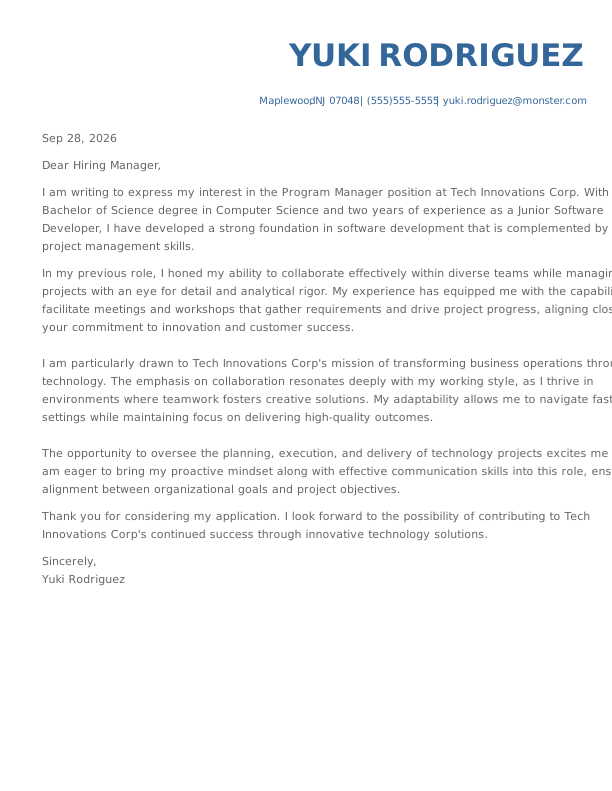
 Free
FreeProgram Manager Entry-Level Cover Letter
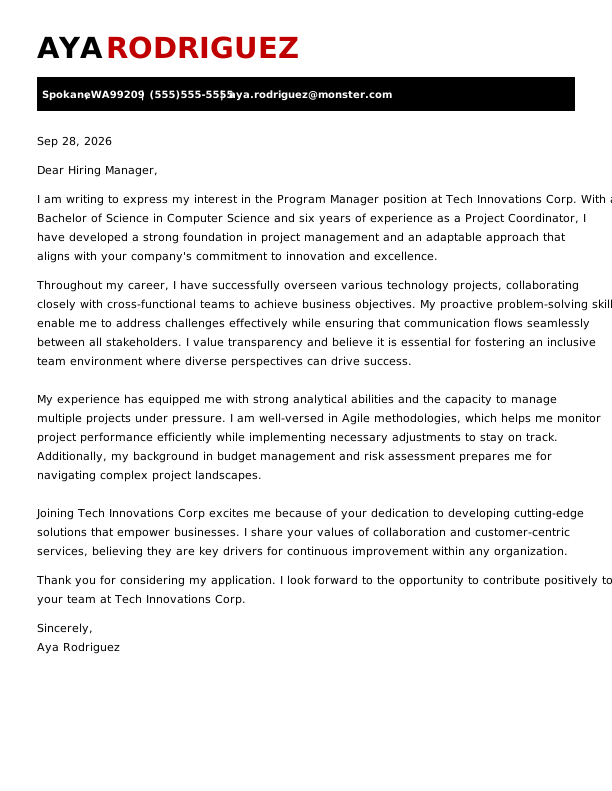
Program Manager Mid-Level Cover Letter
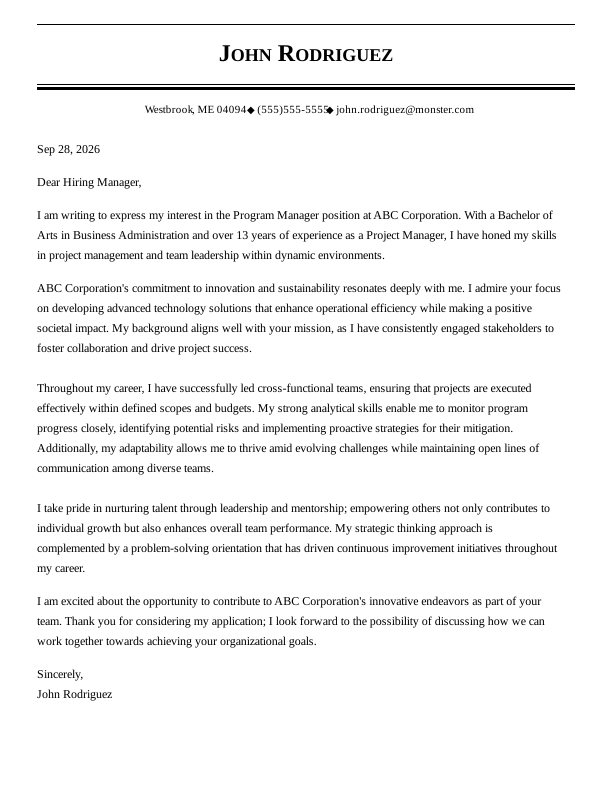
Program Manager Experienced Cover Letter
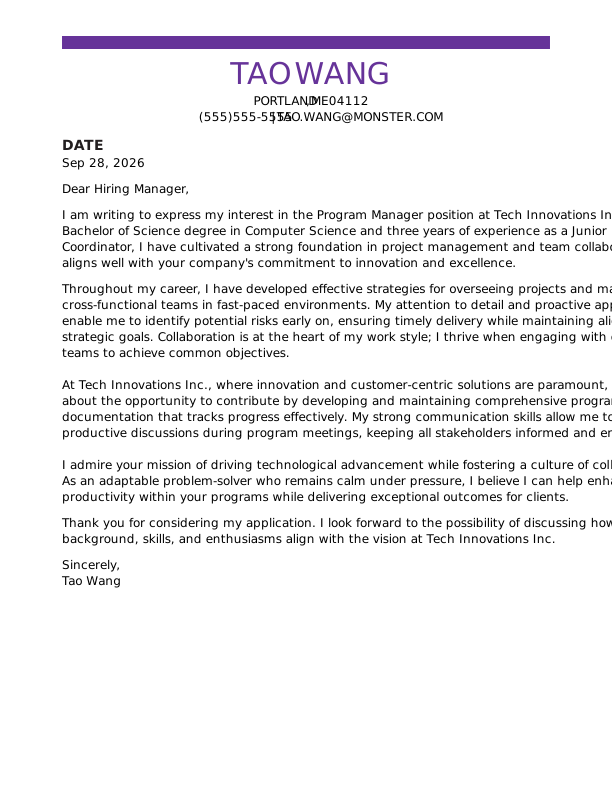
Program Manager Entry-Level Cover Letter
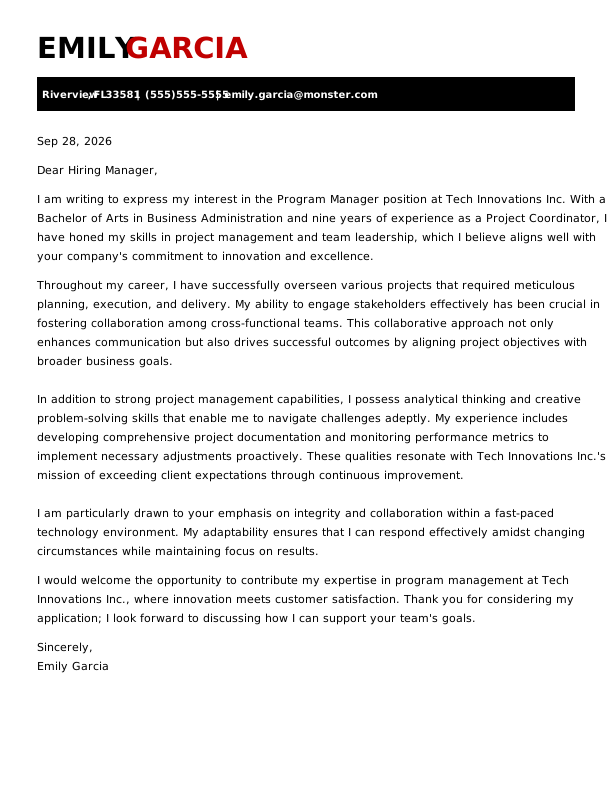
Program Manager Mid-Level Cover Letter
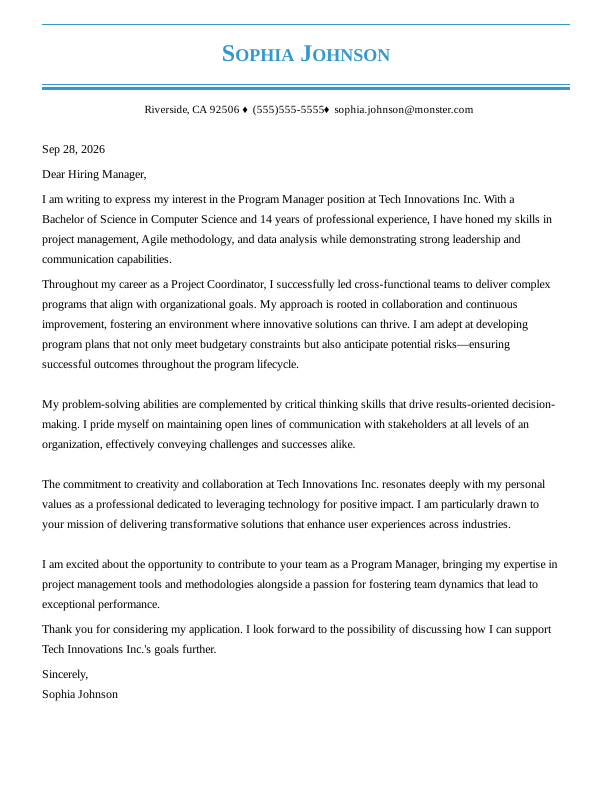
Program Manager Experienced Cover Letter
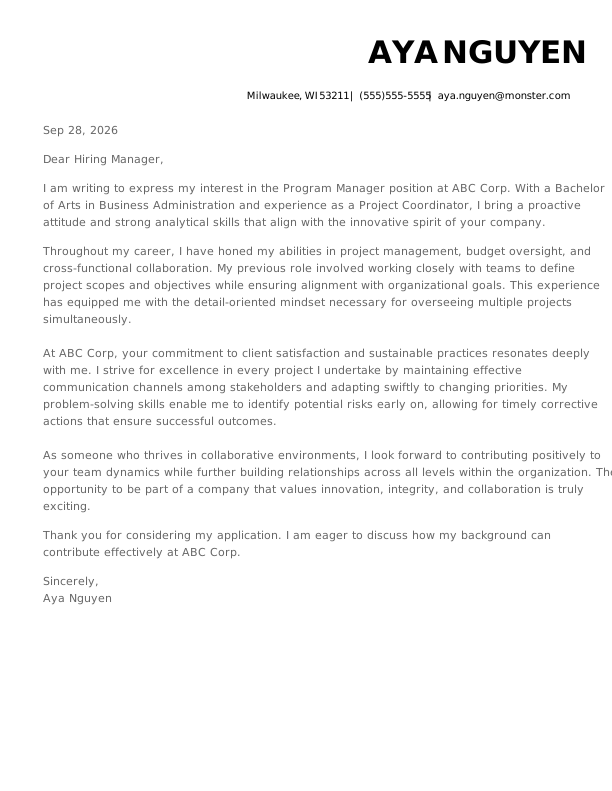
Program Manager Entry-Level Cover Letter
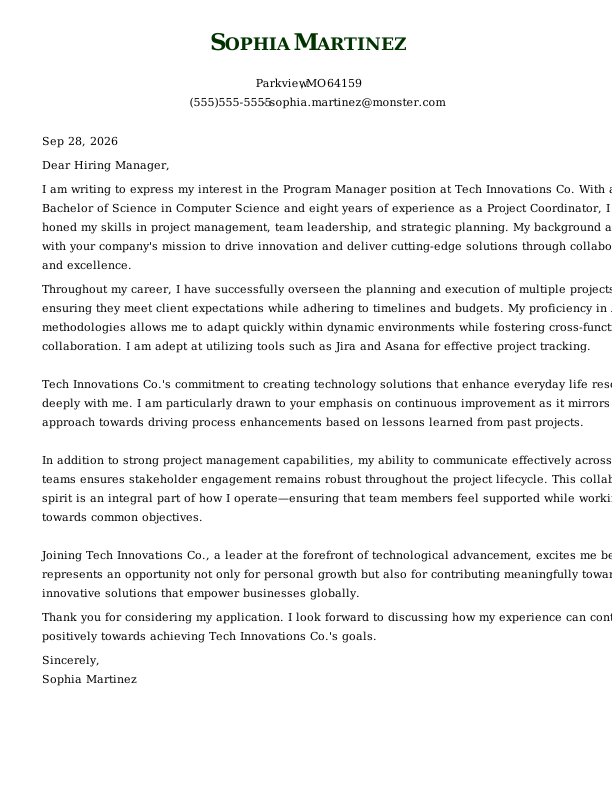
Program Manager Mid-Level Cover Letter
Browse Free Cover Letter Templates
- Academic
- Account Manager
- Accountant
- Accounts Payable
- Administrative Assistant
- Admissions Counselor
- Architecture
- Artist
- Assistant Principal
- Babysitter
- Barista
- Bartender
- Bookkeeper
- Brand Ambassador
- Business Analyst
- Business
- Caregiver
- Chef
- Civil Engineering
- Computer Science
- Construction
- Consulting
- Copywriter
- Cosmetology
- Custodian
- Customer Service
- Customer Service Representative
- Data Analyst
- Data Entry
- Dental Assistant
- Dental Hygienist
- Digital Marketing
- Electrical Engineering
- Emt
- Engineering
- Esthetician
- Event Coordinator
- Executive Assistant
- Finance
- Financial Analyst
- Firefighter
- Flight Attendant
- Graphic Designer
- Hair Stylist
- Healthcare
- Hr Generalist
- Investment Banking
- It
- Janitor
- Journalism
- Lab Technician
- Law Clerk
- Lawyer
- Librarian
- Logistics
- Makeup Artist
- Manager
- Marketing Coordinator
- Marketing
- Marketing Manager
- Massage Therapist
- Mechanic
- Mechanical Engineer
- Medical Assistant
- Non Profit
- Nursing
- Occupational Therapy
- Office Assistant
- Office Manager
- Operations Manager
- Paralegal
- Personal Trainer
- Pharmacist
- Pharmacy Technician
- Photographer
- Physician Assistant
- Pilot
- Police Officer
- Project Manager
- Property Manager
- Psychology
- Receptionist
- Research Assistant
- Restaurant Manager
- Retail
- Sales
- Sales Manager
- School Counselor
- Security Officer
- Social Work
- Software Engineer
- Special Education Teacher
- Substitute Teacher
- Teacher
- Teaching Assistant
- Truck Driver
- Vet Tech
- Veterinary Assistant
- Web Developer
Cover Letter Examples for Program Managers
Cover letter requirements shift as a program manager grows from coordinating early deliverables to leading cross-functional portfolios. Choose the template that matches your experience level so you can spotlight the right skills, training, and results for your stage.
Entry-Level Program Manager Cover Letter
Built for recent graduates and career changers transitioning into program management roles, this template helps you frame your technical education, communication strengths, and transferable project coordination skills.
Mid-Career Program Manager Cover Letter
Tailored for program managers several years into their career, this template emphasizes stakeholder leadership, cross-functional execution, risk assessment, and Agile project delivery.
Experienced Program Manager Cover Letter
Designed for seasoned program managers, this template highlights strategic planning, cross-functional team leadership, scope and budget oversight, and talent mentorship.
Program Manager Cover Letter Template (Text)
Use this adaptable text template of a program manager cover letter to copy, paste, and personalize in your document or file.
Daniel Rodriguez
Los Angeles, CA 90011
(555)555-5555
daniel.rodriguez@monster.com
Sep 28, 2026
Dear Hiring Manager,
I am writing to express my interest in the program manager position at Tech Innovations Inc. With a Bachelor of Arts in Business Administration and five years of experience as a project coordinator, I am excited about the opportunity to contribute to your forward-thinking team.
Throughout my career, I have honed my skills in project management, team leadership, and stakeholder engagement. My experience has equipped me with a solid understanding of managing projects that align with strategic goals while fostering collaboration among diverse teams. I pride myself on being detail-oriented and adaptable, traits that have served me well when working under pressure.
At Tech Innovations Inc., your commitment to innovation and sustainability resonates deeply with my values. I share your belief that technology should enhance everyday life while remaining mindful of its environmental impact. My collaborative working style complements this mission, enabling me to facilitate open communication among stakeholders and team members alike.
I am particularly drawn to the dynamic environment at Tech Innovations Inc., where creativity is not only encouraged but essential for success. As you seek a candidate who embodies a results-oriented mindset with strong problem-solving skills, I believe my background equips me well for navigating complex challenges within the technology sector.
Thank you for considering my application. I look forward to the opportunity to discuss how I can contribute effectively as part of your esteemed organization.
Sincerely,
Daniel Rodriguez
How to Write a Program Manager Cover Letter
Writing a strong program manager cover letter means turning your experience with timelines, budgets, and stakeholder updates into clear examples. Hiring managers want to see how you take high-level goals and turn them into steady, organized progress. Use the steps below to shape your experience for the exact job you want.
1. Research & Prepare
Before you write, take time to learn how the target team runs its programs day to day. Tailoring your letter to its current priorities shows that you know what it takes to jump right in.
Check these places for useful details:
- The job posting: Look for required tools like Jira or MS Project, along with the management style and certifications they expect.
- Company reports and news: Read recent updates to see which big programs and projects the company is prioritizing right now.
- Industry updates: Look at current standards to make sure your terminology around risk and project tracking matches what leaders expect today.
2. Hook the Reader
Grab the hiring manager’s attention right away with a real program achievement instead of a generic opening line. Skip stock phrases like “I am writing to apply for the program manager role.” Instead, share a quick detail about your scope or speed.
Here are three strong ways to start:
- Delivery metrics: “I cut onboarding time for our health record rollout from six weeks to four weeks by tightening our launch plan and tracking daily progress.”
- Governance and risk: “I led a quarterly steering committee that cut active risks from 18 to seven by setting up a clear heatmap and quick escalation rules for IT owners.”
- Stakeholder alignment: “After leading a complex data migration with product and security teams, I set up shared decision logs that kept our releases on schedule.”
3. Tell Your Professional Story
Your resume lists your past job titles, but your cover letter shows how you kept work moving when timelines and budgets got tight. Using clear numbers gives proof of your impact in a way plain descriptions cannot.
Consider formatting your achievements like these:
- Reduced overall project delivery time by 22% after setting up a simple risk log and running weekly reviews across 12 active projects.
- Managed a $3.1 million program budget while keeping spending within 3% of our forecast through regular vendor reviews.
- Coordinated onboarding for 18 cross-functional team members, cutting handoff issues from 14 per month down to six by updating our training guides.
4. Showcase Your Skills
Skip broad claims about being a great leader and describe specific moments where you solved problems or kept teams on track. Showing how you handle real challenges gives hiring managers confidence in your work.
Try framing your strengths through everyday scenarios like these:
- Project planning: Explain how you built a launch roadmap in Jira and adjusted team handoffs during weekly check-ins as new constraints came up.
- Risk management: Describe a time extra requests threatened your deadline, showing how you logged the risk and got stakeholders to agree on tradeoffs before moving forward.
- Stakeholder communication: Share how you ran weekly update calls that translated technical issues into simple choices for business leaders.
5. Explain Any Special Circumstances
If you have an employment gap, a career change, or a recent move, address it directly in one or two plain sentences. Giving simple context keeps the focus on your current skills and readiness to work.
Use these examples to guide your explanation:
- “During a six-month caregiving break, I kept my skills sharp by leading sprint planning and weekly risk reviews for private consulting clients.”
- “I am moving from product operations into program management, using my PMI-ACP training to run team releases with Agile roadmaps.”
- “Following my move to Seattle, I updated my authorization details and continued managing remote vendor onboarding using MS Project Online.”
6. End With a Professional Goodbye
Finish your cover letter with a clear, polite next step that invites the reader to connect. Keep your closing direct, avoiding vague lines like “I look forward to hearing from you.”
Suggest a practical topic for an interview, such as talking through upcoming roadmaps or sharing ways to manage team scope. Add a brief thank-you, and close with a simple sign-off like “Sincerely” or “Best regards.”
4 Tips for Formatting Your Cover Letter
When you apply for a program manager role, clean formatting helps a hiring manager quickly evaluate your experience, timeline management, and project outcomes. Taking time to present a clear, organized document shows the same attention to detail you bring to managing complex projects, making a great impression during a quick scan.

Address the Hiring Manager Directly
Check the job posting, the company’s leadership page, or LinkedIn to find the person managing the hiring process. Addressing the recipient by name shows extra effort, but if you cannot find a specific contact, “Dear Hiring Manager” or “Dear Program Management Team” works well.

Match Your Header to Your Resume
Use the exact same name, contact details, fonts, and layout on your cover letter as you do on your resume. Keeping your styling consistent across both documents creates a clean, connected look that is easy for recruiters to recognize.

Use Bullet Points for Key Achievements
Highlight three or four major project wins using bullet points, focusing on numbers like cost savings, schedule adherence, or risk reduction. Bulleted lists break up dense text so busy readers can spot your top results right away.

Balance Spacing & Margins
Set your line spacing between 1.0 and 1.15, leaving a blank line between paragraphs to keep the text from looking crowded. Use standard margins between 0.75 and 1 inch so your letter looks neat on screens and in print.
Key Takeaways
- Prove your ability to handle delivery by sharing an example where you adjusted a project plan after a risk popped up and still met your deadline.
- Back up your operational impact with clear numbers like budget variance, schedule adherence rates, and on-time decision turnaround.
- Tailor your highlights to match what the company cares about most, whether that means grant compliance for a nonprofit, cross-department coordination for healthcare, or product adoption for tech.
Browse Monster’s Resume Templates
Monster also has hundreds of ATS-friendly resume templates for all career levels and industries. Create a matching resume to help you land the interview.
- Assistant Project Manager
- Associate Product Manager
- Benefits Specialist
- Business Administration
- Business Development
- Business Management
- Business Manager
- Business Operations
- Business Owner
- Business
- Ceo
- Change Manager
- Chief Of Staff
- Ciso
- Community Outreach Coordinator
- Coo
- Corporate Trainer
- Director Of Operations
- Director
- Entrepreneur
- Executive Director
- Executive Manager
- Executive Recruiter
- Executive
- Freelance
- General Manager
- Healthcare Management
- Hr Analyst
- Hr Business Partner
- Hr Consultant
- Hr Coordinator
- Hr Director
- Hr Manager
- Hr Specialist
- Managing Director
- Onboarding Specialist
- Operations Manager
- Program Coordinator
- Program Director
- Program Manager
- Project Coordinator
- Project Manager
- Recruiter
- Recruiting Coordinator
- Recruitment Coordinator
- Regional Manager
- Risk Management
- Senior Manager
- Senior Program Manager
- Senior Project Manager
- Senior Recruiter
- Small Business Owner
- Supervisor
- Talent Acquisition Specialist
- Team Leader
- Technical Recruiter
- Training Manager
- Vice President
Frequently Asked Questions
Last Update:
Do I really need a cover letter?
Including a cover letter gives you a big advantage because it explains the story behind your decisions in ways a resume simply cannot. It is also a great place to explain a career pivot, address an employment gap, or share why you want to work for this specific company.
How long should my cover letter be?
Keep your cover letter to one page, aiming for 250 to 400 words across three or four short paragraphs. Hiring managers read quickly, so staying concise keeps your best results front and center.
Should my cover letter match my resume?
Your cover letter should match your resume’s header, fonts, and general look so your application feels complete. For the text itself, use the letter to expand on a key achievement or explain a big decision rather than repeating the same bullet points from your resume.
Should I mention salary expectations in my cover letter?
Only bring up salary if the job posting specifically asks for it. If you need to include a number, share a flexible pay range based on local market research and mention that you are open to discussing the full benefits package.
How do I write a cover letter for an internal position?
When applying internally, focus on your experience with the company’s internal tools, workflows, and communication channels. Highlight recent achievements where you improved project handoffs or decision times, and follow the formal application process.

Elizabeth Muenzen is a Certified Professional Resume Writer (CPRW) and member of the Professional Association of Resume Writers & Career Coaches who empowers job seekers to take control of their career paths using Monster’s comprehensive job search and resume tools.
See More From Elizabeth MuenzenExplore Related Career Advice







How to Write a Cover Letter for Internal Positions or Promotions (Examples & Tips)

Updated:
Apr 23, 2026
|
19 min read


Cover Letter vs Resume: What’s the Difference & Do You Need Both?
Updated:
Apr 23, 2026
|
18 min read