
Free Entry-Level Nurse Resume Templates & Examples
Elevate your job search with expertly designed entry-level nurse resume templates that will help you secure more interviews. These free resume templates come with valuable writing tips to help you create a standout resume that showcases your qualifications to potential employers.
Real-World Resumes That Get Results
 Free
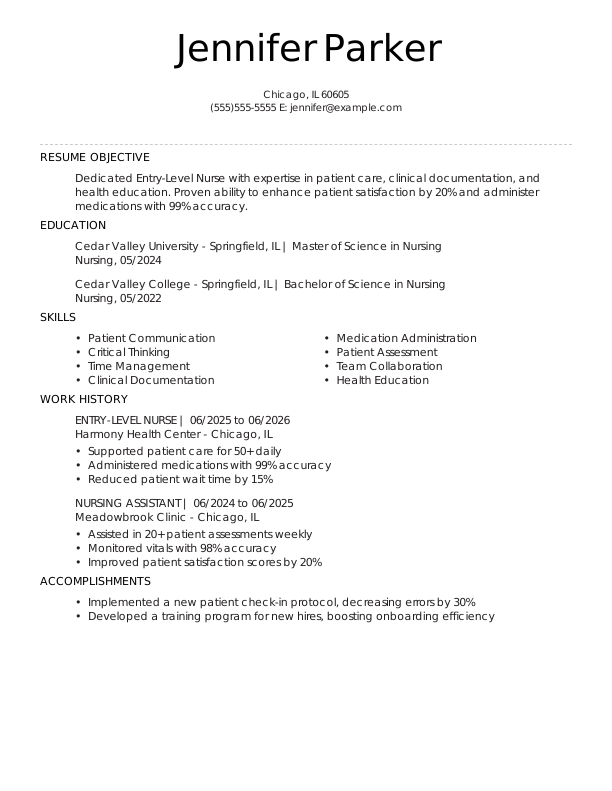
FreeEntry-Level Nurse Entry-Level Resume
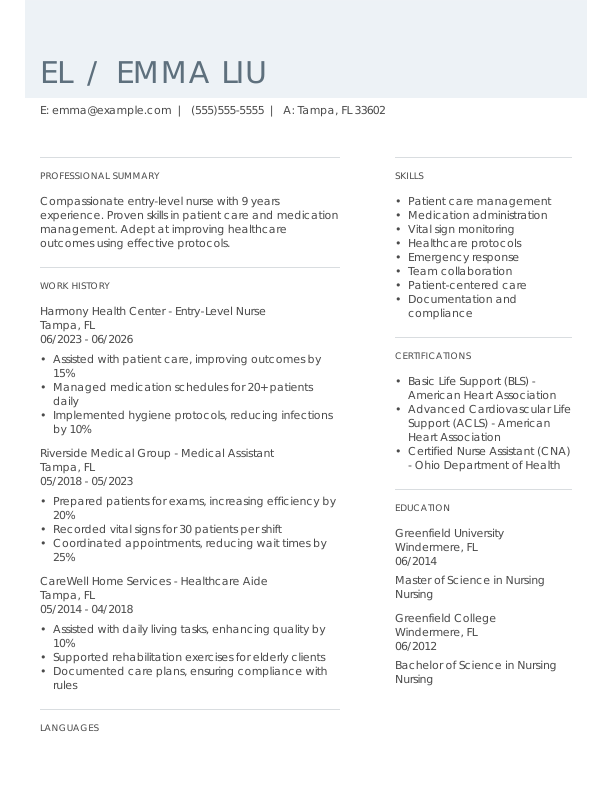
Entry-Level Nurse Mid-Level Resume
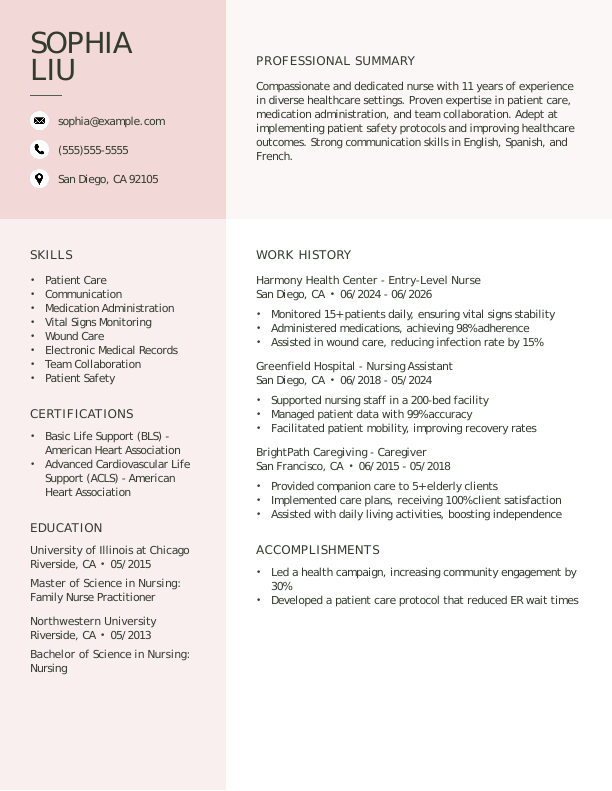
Entry-Level Nurse Experienced Resume
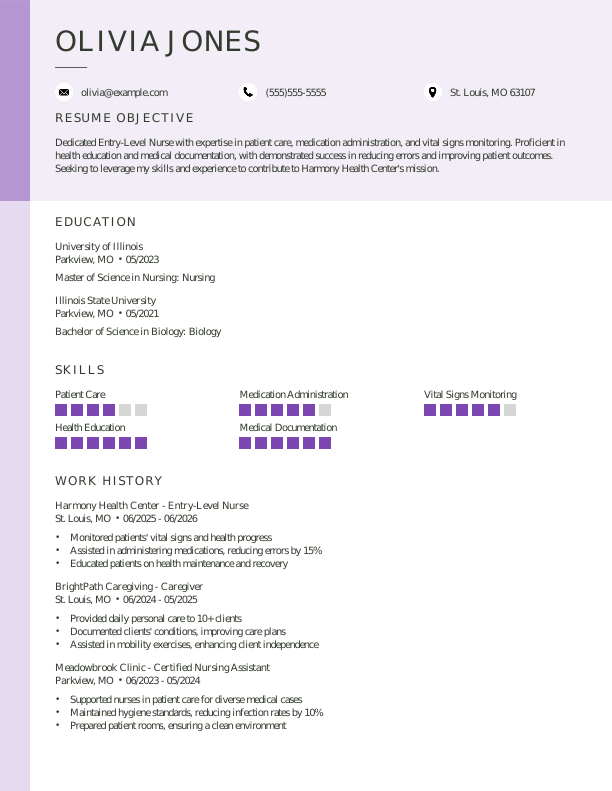

Entry-Level Nurse Modern Resume
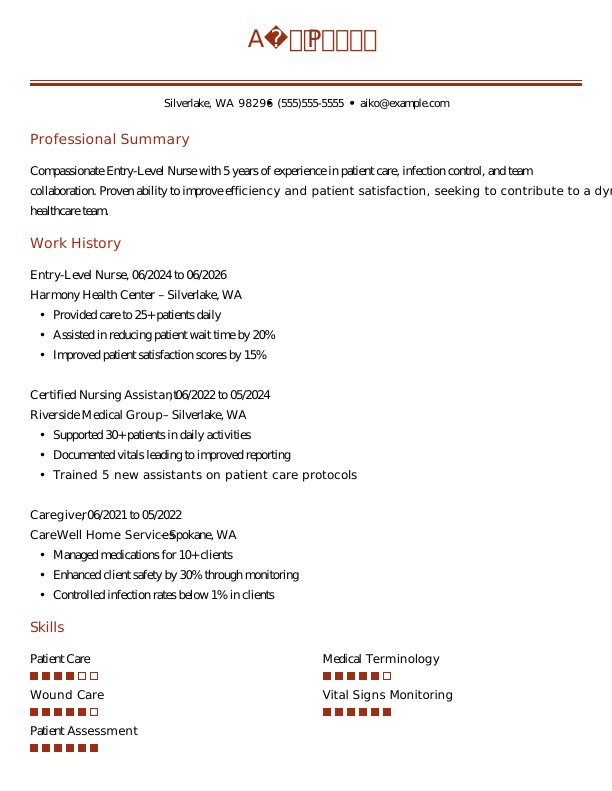

Entry-Level Nurse Creative Resume
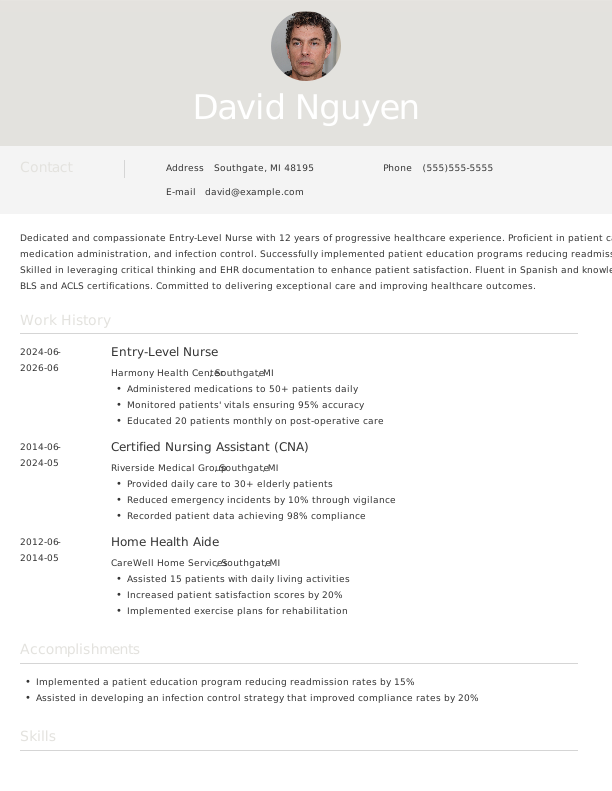

Entry-Level Nurse Traditional Resume
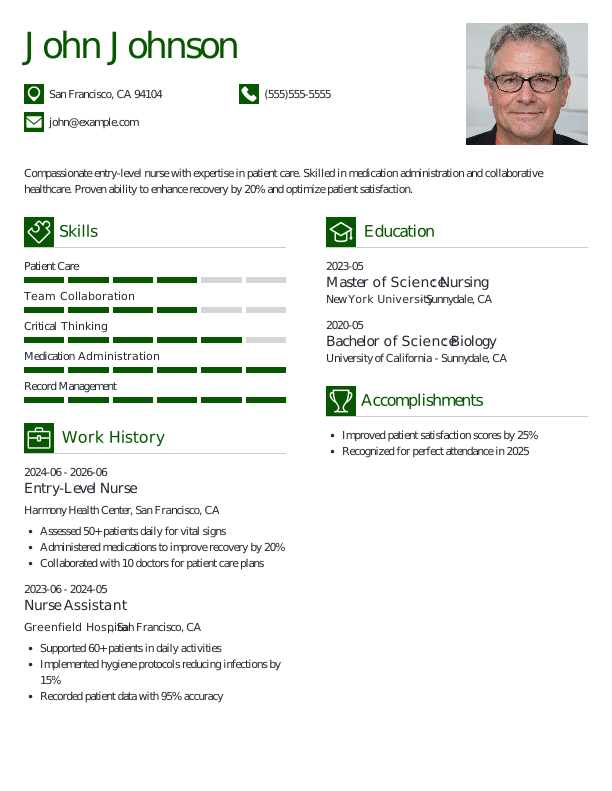
Entry-Level Nurse Simple CV Example
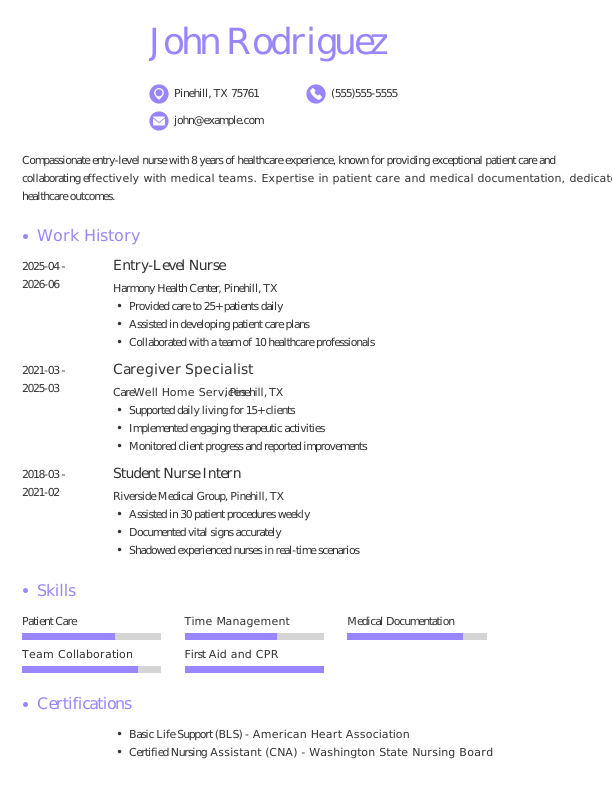

Entry-Level Nurse CV Format
Browse Free Resume Templates
- Accounts Payable
- Adjunct Professor
- Artist
- Auto Mechanic
- Baker
- Business Development Manager
- Business
- Certified Nursing Assistant
- Classic & Traditional
- Cleaner
- College Student
- Concierge
- Construction Worker
- Corporate
- Creative & Unique
- Custodian
- Customer Service
- Dental Assistant
- Direct Support Professional
- Entry-Level
- Flight Attendant
- Hospitality & Food Service
- Front Desk Receptionist
- Healthcare
- High School
- Housekeeping
- Hvac Technician
- Inventory Manager
- Logistics
- Maintenance
- Management
- Modern
- Mortgage Loan Processor
- Pet Sitter
- Phlebotomist
- Production
- RBT
- Restaurant Server
- Sales
- Security Services
- Simple & Basic
- Social Work
- Teacher
- Technology
Resume Examples for Entry-Level Nurses
Explore resume examples designed for new nurses and recent graduates, then use our Resume Builder to create a resume that showcases your qualifications and readiness to provide quality patient care.
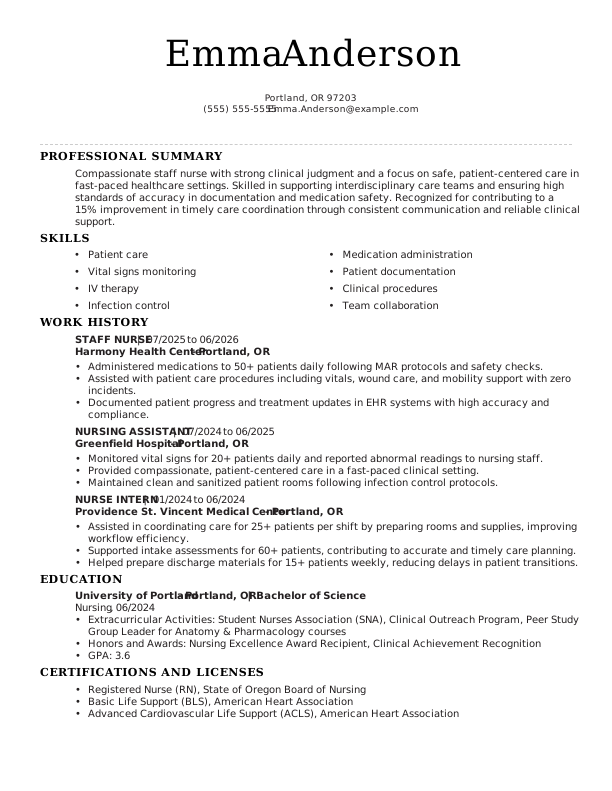
Entry-Level Staff Nurse Resume
This template is ideal for recent graduates crafting a resume with no experience and is also suitable for those transitioning into nursing from different careers.
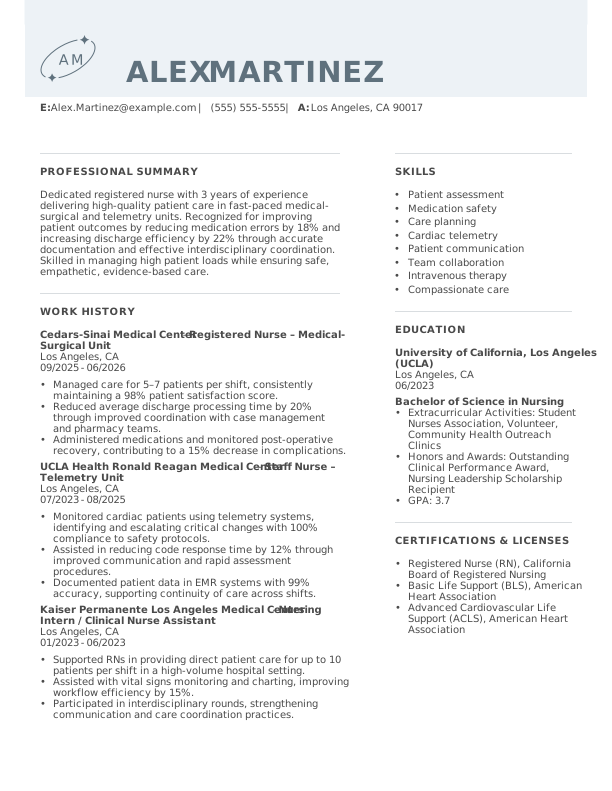
Entry-Level Registered Nurse Resume
A good fit for entry-level nurses eager to showcase their recent experiences, this template highlights foundational skills and supports growth into more specialized nursing roles.
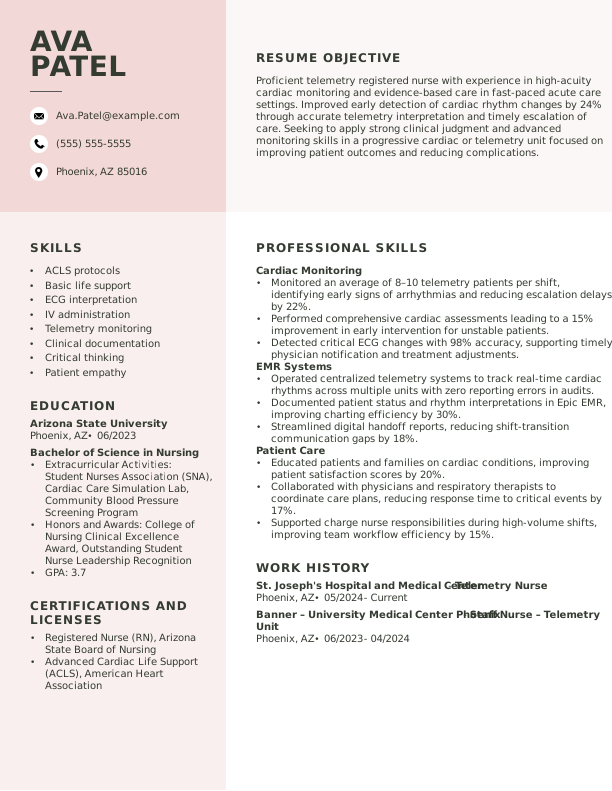
Entry-Level Telemetry Nurse Resume
An ideal choice for recent graduates and aspiring nurses, this template showcases applicants eager to start their nursing careers while emphasizing essential skills and patient care experience.
Entry-Level Nurse Resume Template (Text)
Use this customizable text format of an entry-level nurse resume to easily copy, edit, and personalize directly in your document.
Emma Anderson
Portland, OR 97203
(555) 555-5555
Emma.Anderson@example.com
Professional Summary
Compassionate staff nurse with strong clinical judgment and a focus on safe, patient-centered care in fast-paced healthcare settings. Skilled in supporting interdisciplinary care teams and ensuring high standards of accuracy in documentation and medication safety. Recognized for contributing to a 15% improvement in timely care coordination through consistent communication and reliable clinical support.
SKILLS
- Patient care
- Medication administration
- Vital signs monitoring
- Patient documentation
- IV therapy
- Clinical procedures
- Infection control
- Team collaboration
Work History
July 2025 – June 2026
Harmony Health Center – Portland, OR
Staff Nurse
- Administered medications to 50+ patients daily following MAR protocols and safety checks.
- Assisted with patient care procedures, including vitals, wound care, and mobility support, with zero incidents.
- Documented patient progress and treatment updates in EHR systems with high accuracy and compliance.
July 2024 – June 2025
Greenfield Hospital – Portland, OR
Nursing Assistant
- Monitored vital signs for 20+ patients daily and reported abnormal readings to nursing staff.
- Provided compassionate, patient-centered care in a fast-paced clinical setting.
- Maintained clean and sanitized patient rooms following infection control protocols.
January 2024 – June 2024
Providence St. Vincent Medical Center – Portland, OR
Nurse Intern
- Assisted in coordinating care for 25+ patients per shift by preparing rooms and supplies, improving workflow efficiency.
- Supported intake assessments for 60+ patients, contributing to accurate and timely care planning.
- Helped prepare discharge materials for 15+ patients weekly, reducing delays in patient transitions.
Education
June 2024
University of Portland, Portland, OR
Bachelor of Science in Nursing
- Extracurricular Activities: Student Nurses Association (SNA), Clinical Outreach Program, Peer Study Group Leader for Anatomy & Pharmacology courses
- Honors and Awards: Nursing Excellence Award Recipient, Clinical Achievement Recognition
- GPA: 3.6
Certifications and Licenses
- Registered Nurse (RN), State of Oregon Board of Nursing
- Basic Life Support (BLS), American Heart Association
- Advanced Cardiovascular Life Support (ACLS), American Heart Association
How to Write an Entry-Level Nurse Resume
As an entry-level nurse, writing a resume involves showcasing your clinical skills and relevant experience in a clear format that grabs attention. Use the guidance below to emphasize your strengths and tailor your resume for the specific nursing roles you’re applying for.
1. Contact Info
Your contact information should be clear, professional, and easy to find at the top of your resume.
Make sure to include:
- Full name
- Phone number
- Professional email address
- City and state (ZIP code is optional)
- LinkedIn profile or personal portfolio (if relevant)
- RN license number and state (if applicable)
 PRO TIP
Avoid listing personal details such as age, religious beliefs, or Social Security numbers on your resume unless requested by the employer.
2. Resume Profile
A resume profile is a brief introductory section (two to four sentences) that highlights your key qualifications and experiences. It serves as a compelling pitch to hiring managers, designed to grab their attention and prompt them to explore your resume further.
Located at the top of your resume, the profile can take the form of either a summary or an objective, each serving unique purposes. Understanding these differences will help you choose which one best fits your career goals:
- A resume summary emphasizes your key qualifications, skills, and achievements in nursing by showcasing relevant clinical experience and patient care abilities. This format is particularly beneficial for those with previous healthcare roles or comparable backgrounds looking to demonstrate their contributions to patient outcomes as an entry-level nurse.
- A resume objective highlights your future aspirations and outlines what you aim to accomplish in your career. It’s particularly helpful for recent nursing graduates, individuals transitioning into healthcare, or those with minimal experience seeking to enter the nursing field.
Let’s take a look at an example of each to see how a resume summary and a resume objective differ:
Entry-level nurse resume summary example:
Dedicated entry-level nurse with extensive clinical training in diverse healthcare environments, including outpatient clinics and community health settings. Proficient in patient assessment, care coordination, and health promotion initiatives. Commended for providing compassionate care that improves patient satisfaction and supports positive health outcomes.
Entry-level nurse resume objective example:
Recent ADN graduate and certified nursing assistant excited to launch a career in a fast-paced hospital setting. Committed to compassionate patient care and looking to leverage strong teamwork abilities and adaptability to improve the quality of service in a healthcare environment.
3. Work Experience
The work experience on your resume is a critical foundation for your nursing career. Employers assess your job history to understand not just where you’ve worked, but how you’ve contributed to patient care and outcomes.
Your clinical experiences showcase how your background and skills qualify you for the entry-level nurse position.
The work experience section should contain:
- Job title
- Employer name and location
- Dates of employment (month/year)
- Three to five bullet points describing your relevant responsibilities and achievements
Tailor your content to match the entry-level nursing position you’re pursuing. Begin each bullet point with an action verb (like “Assisted,” “Administered,” “Monitored”) to create a strong impression of your responsibilities.
Incorporate quantifiable information or metrics whenever possible. Specific numbers and achievements illustrate your value as an applicant, helping you stand out in a competitive job market.
In general, consider following the format of:
[action verb] + [responsibility] = [result/achievement]
For example:
Administered medications and provided direct care to 15+ patients daily in a busy outpatient clinic, ensuring compliance with treatment plans and achieving a 95% patient satisfaction score.
Note that you can also flip the result/achievement with the responsibility:
Achieved a 20% increase in patient follow-up adherence through effective education and communication strategies.
Explore more examples of work experience bullet points for entry-level nurses further down the page.
4. Skills
The skills section provides a concise overview of your abilities as an entry-level nurse. This allows recruiters to evaluate your qualifications quickly. Skills can be categorized into three distinct groups:
- Soft skills are personal qualities that shape how nurses interact with patients and team members. Key examples include compassion, active listening, adaptability, and collaboration, which are essential for building trust, ensuring effective communication, and fostering a supportive healthcare environment.
- Hard skills are specific, quantifiable abilities that individuals acquire through education, training, or practical experience. For an entry-level nurse, examples include taking vital signs, administering injections, and performing basic patient assessments.
- Technical skills are the specific abilities needed to perform tasks using tools and technology. In nursing, this includes skill with Patient Management Systems, medication dispensing software, and diagnostic imaging equipment.
Aim to include a balanced mix of relevant skills that align with the job description to demonstrate your potential as an entry-level nurse. See below for more examples of skills for an entry-level nurse resume.
PRO TIP
If you’re an entry-level nurse, consider placing your skills section directly after your resume summary to highlight your clinical abilities, certifications, and patient care strengths early in the resume. This helps employers quickly identify your qualifications, especially when you have limited professional nursing experience.
5. Education
Understanding how to list education on your resume is important for showcasing your qualifications. Start with your most recent or relevant nursing degree, clearly stating the degree type and the name of the institution.
If you’re a recent graduate, consider including your graduation year, GPA (if it’s 3.5 or higher), any honors received, and relevant coursework to improve your application.
Entry-level nurse resume education section example:
Associate Degree in Nursing (ADN)
Community College of Philadelphia, Philadelphia, PA
Graduated: 2023 | Graduated with Distinction
PRO TIP
If you’re progressing from an Associate Degree in Nursing (ADN) to a Bachelor of Science in Nursing (BSN), or have earned another relevant degree, list them both in reverse-chronological order.
6. Certifications
Including listing certifications on your resume highlights essential skills when you have limited clinical experience. Employers often require specific credentials for specialized roles, such as Pediatric Advanced Life Support (PALS) for pediatric care or Basic Life Support (BLS) for critical situations.
Be sure to include only relevant certifications that improve your candidacy for the job you seek. Keeping these certifications current and clearly formatted will help ensure they stand out to potential employers.
Entry-level nurse certification examples:
- Basic Life Support (BLS) | American Heart Association | Expires: 05/2027
- Advanced Cardiovascular Life Support (ACLS) | American Heart Association | Expires: 06/2027
- Pediatric Advanced Life Support (PALS) | American Heart Association | Expires: 03/2028
Start Building Your Job-Winning Resume
Use Your Existing Resume
Import your current resume to transfer your information to one of our professional templates.
Create a New Resume
Start fresh with a template that catches your eye and follow the prompts to add your details.
Tailor Your Work History to Beat the ATS
Your work experience is more than a list of job titles. It’s a chance to show the measurable impact you’ve had on patients, teams, and healthcare outcomes.
Including this information helps you create an ATS-friendly resume that can be easily scanned by applicant tracking systems (ATS).
A strong work history should be tailored to the job you’re applying for, using keywords and phrasing that match the employer’s needs. Start by reviewing the job description carefully. Look for repeated skills, certifications, or patient populations mentioned, and then reflect those elements if possible.
Popular Resume Bullets for Entry-Level Nurses
These examples are pulled from our most-used entries in the resume builder—based on what hiring managers respond to most.
- Administered medications and monitored for adverse reactions across a 30-bed med-surg unit, reducing medication errors by 15%.
- Coordinated discharge planning and follow-up care for 20+ patients per week, improving patient satisfaction scores by 10%.
- Served as preceptor for new graduate nurses, facilitating onboarding and improving retention within the department.
- Used the Epic EMR system to document patient progress and support interdisciplinary communication.
- Led daily rounds with physicians and care teams to ensure continuity of care for post-operative patients.
Example of Skills for Entry-Level Nurses
Including the right skills for your resume demonstrates to employers and ATS that you possess the essential abilities needed for nursing.
Since recruiters often scan resumes, it’s important to keep your skills section focused, relevant, and aligned with the job description.
The skills listed reflect what is currently valued in nursing. These competencies are commonly found in successful nursing resumes and resonate well with healthcare hiring managers.
5 Soft Skills for Your Resume
- Effective communication
- Empathy and compassion
- Teamwork and collaboration
- Time management skills
- Attention to detail
5 Hard Skills for Your Resume
- Vital sign monitoring
- Medication dosage calculation (Alaris, BD)
- Basic life support (BLS) certification
- Patient education and counseling
- Charting software skills (Athenahealth, Practice Fusion)
Key Takeaways
- Tailor your resume to the job listing. Use the specific terms from the description to resonate with both ATS and hiring managers.
- Highlight quantifiable accomplishments to demonstrate value. Consider metrics like patient care hours, improvement in patient satisfaction scores, or teamwork contributions (e.g., organized health fairs).
- Even without extensive work history, highlighting hands-on training, relevant accomplishments, and nursing-specific qualifications can help you stand out to employers and showcase your potential.
More Resume & CV Examples
- Aesthetic Nurse
- Dialysis Nurse
- Director Of Nursing
- Er Nurse
- Family Nurse Practitioner
- Home Health Nurse
- Hospice Nurse
- Icu Nurse
- Labor And Delivery Nurse
- Licensed Practical Nurse
- LVN
- Mds Coordinator
- Med-surg Nurse
- New Grad Nurse
- Nurse Assistant
- Nurse Case Manager
- Nurse Educator
- Nurse Manager
- Nurse Practitioner
- Nursing Home
- Nursing Instructor
- Nursing
- Nursing Student
- Oncology Nurse
- Operating Room Nurse
- Pacu Nurse
- Pediatric Nurse
- Psychiatric Nurse Practitioner
- Psychiatric Nurse
- Registered Nurse
- Travel Nursing
- Travel Rn
- Utilization Review Nurse
- Travel Nurse
Frequently Asked Questions
Last Update:
What resume format should I use for my entry-level nurse resume?
Choosing the right resume format is key when applying for an entry-level nurse position. There are three main formats to consider, and your decision should be based on your experience level and what you wish to highlight:
- Chronological: The most popular format, a chronological resume highlights your work experience, focusing on your responsibilities and achievements. This format is particularly beneficial for entry-level nurses with relevant job history that reinforces their qualifications and demonstrates growth in the healthcare field.
- Functional: Also known as a skills-based resume, the functional resume emphasizes a qualifications summary and an expanded skills section to showcase your nursing abilities. By minimizing focus on work history, this format is helpful for entry-level nurses or those without relevant experience in the healthcare field.
- Combination: A combination resume integrates elements from both chronological and functional formats, featuring a skills section along with work experience. This format helps entry-level nurses emphasize their competencies and relevant clinical experiences while showcasing their professional growth in the healthcare field.
Should I include a cover letter with my resume?
Yes, you should include a cover letter with your nursing job application. A thoughtfully crafted cover letter complements your resume by allowing you to express your passion for nursing and detail specific experiences that showcase your skills. It demonstrates to potential employers that you’re genuinely interested in the position and have invested time into your application.
Using a cover letter generator can be an excellent option. These tools provide guidance and suggestions based on the specifics of the job you’re applying for, making it easier to create a polished document quickly.
What keywords should I include to pass ATS?
To improve your resume for ATS screening, focus on incorporating keywords and phrases from the job posting. For an entry-level nursing position, use terms like patient care, medication administration, and vital signs monitoring to showcase your suitability for the role. These specific phrases demonstrate your understanding of essential nursing responsibilities.
Additionally, highlight relevant certifications such as BLS or CPR and any technical tools you’re familiar with, like EMR systems or charting software. This inclusion not only aligns your resume with the job requirements but also showcases your preparedness to step into the role confidently.
Should I include volunteer nursing experience or internships?
Yes, especially if you’re an entry-level nurse. Including volunteer experiences and internships demonstrates your commitment to patient care and showcases practical skills gained outside of formal employment, helping you stand out when full-time nursing roles are limited.

Elizabeth Muenzen is a Certified Professional Resume Writer (CPRW) and member of the Professional Association of Resume Writers & Career Coaches who empowers job seekers to take control of their career paths using Monster’s comprehensive job search and resume tools.
See More From Elizabeth MuenzenExplore Related Career Advice

How to Write a Functional Resume (Formatting Tips, Template, & Examples)

Updated:
Aug 7, 2026
|

17 min read