

Free Registered Nurse Cover Letter Templates & Examples
A strong registered nurse cover letter shows patient-centered clinical care and safety-focused teamwork, especially during busy shifts. Our free cover letter examples and guidance help you write a clear, confident introduction that highlights your skills for hiring managers.
Real-World Cover Letters That Get Results
 Free
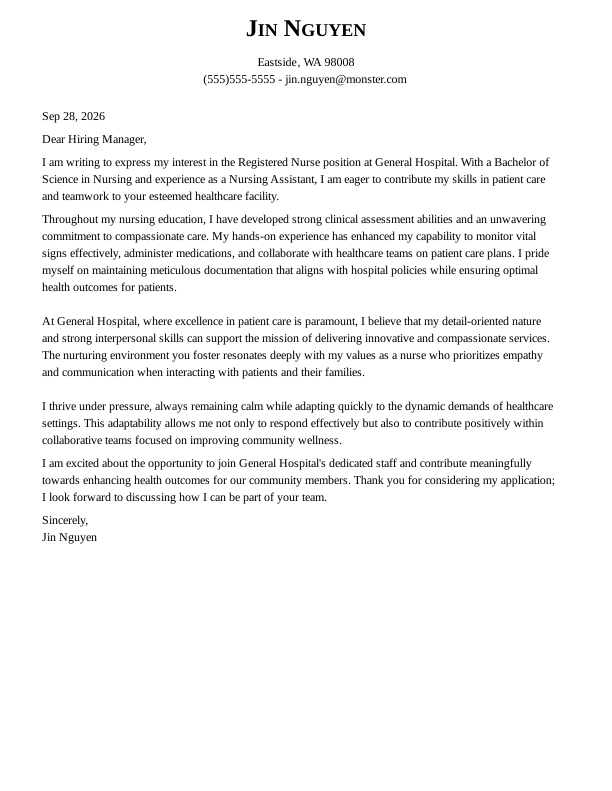
FreeRegistered Nurse Entry-Level Cover Letter
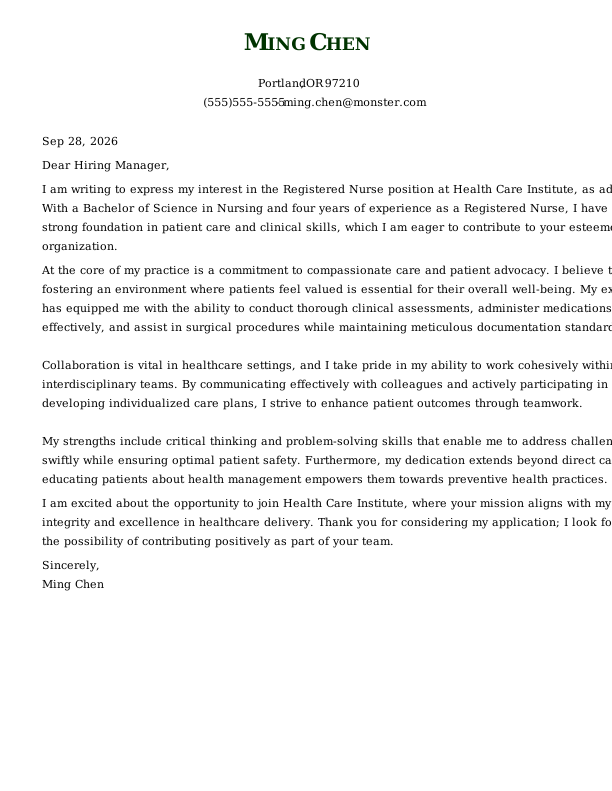
Registered Nurse Mid-Level Cover Letter
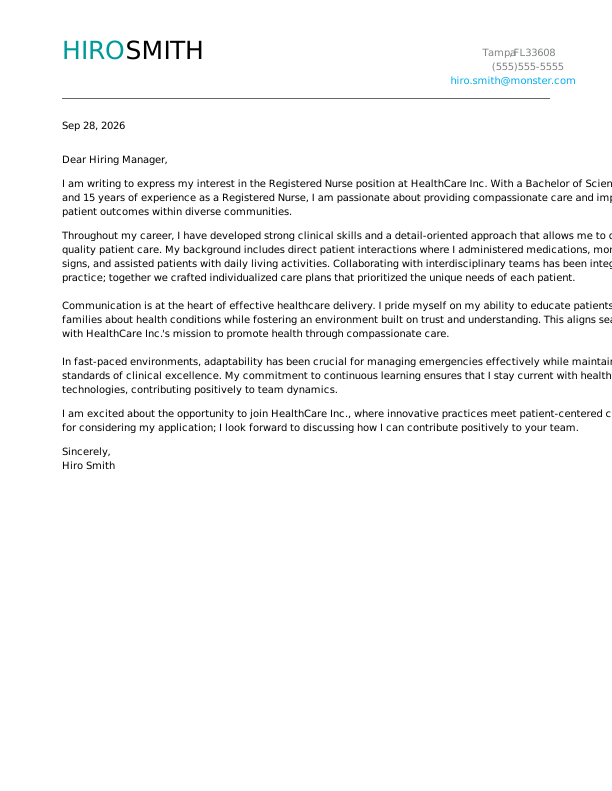
Registered Nurse Experienced Cover Letter
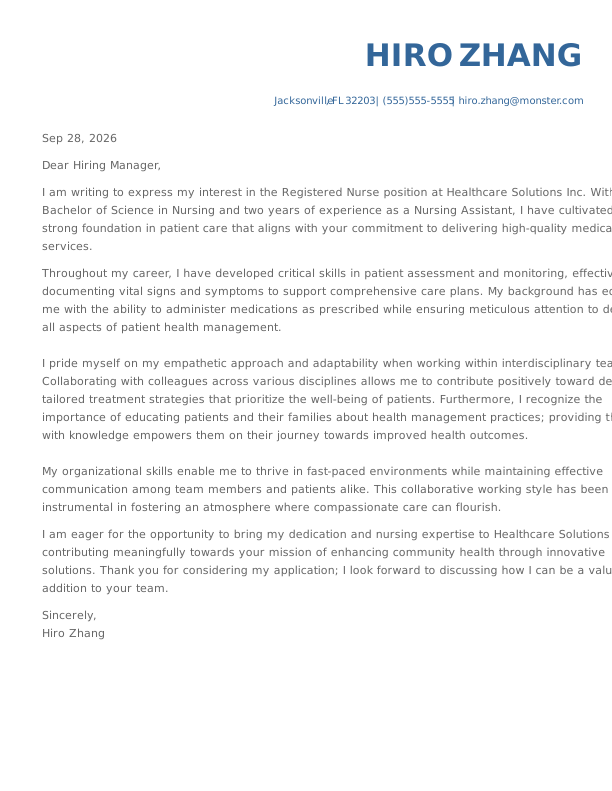
Registered Nurse Entry-Level Cover Letter
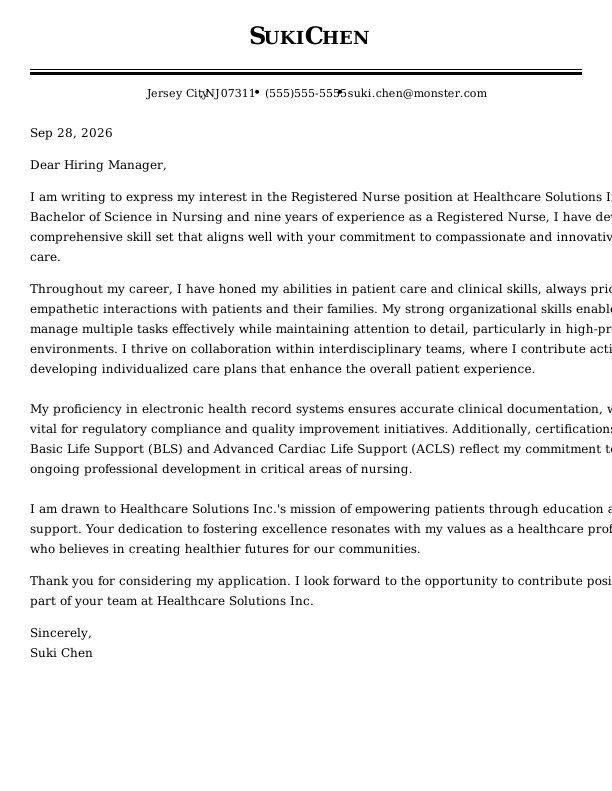
Registered Nurse Mid-Level Cover Letter
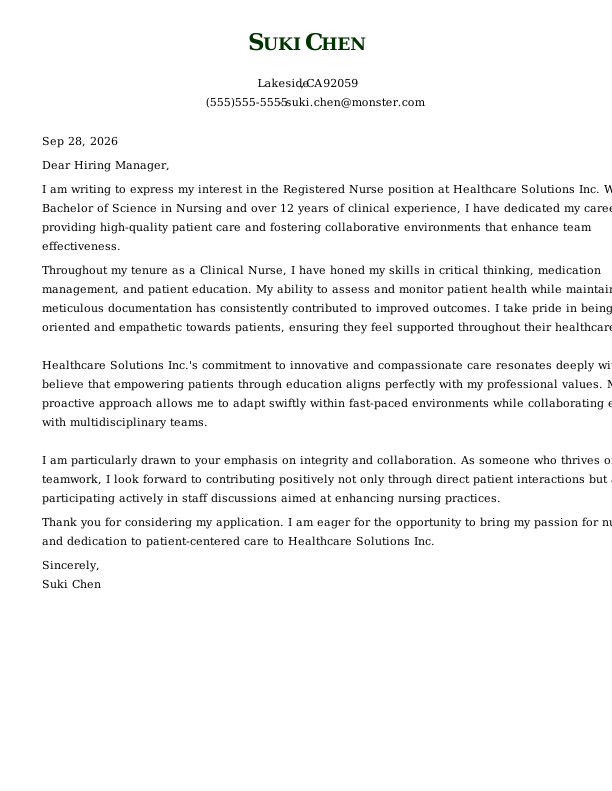
Registered Nurse Experienced Cover Letter
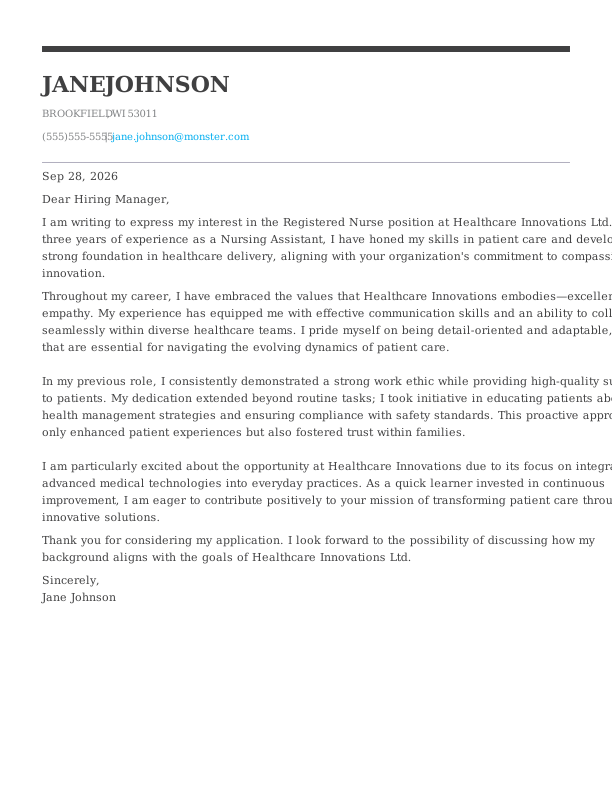
Registered Nurse Entry-Level Cover Letter
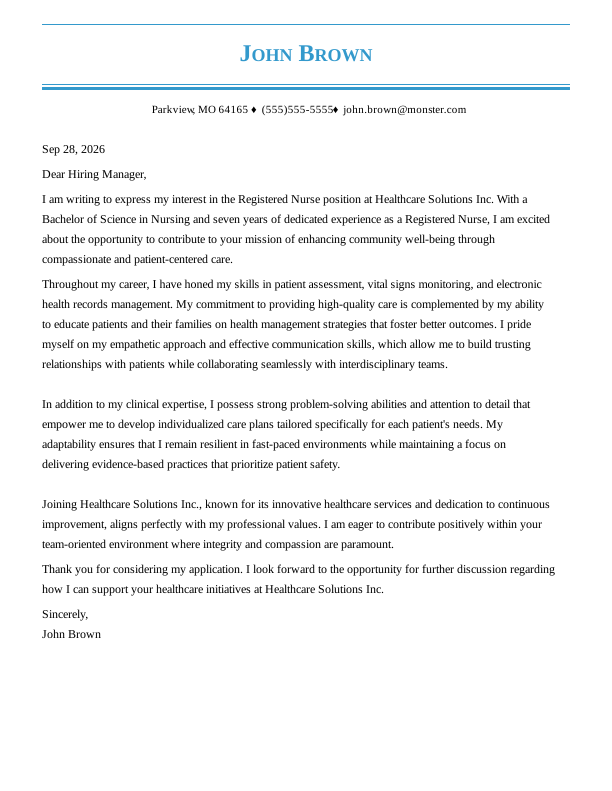
Registered Nurse Mid-Level Cover Letter
Browse Free Cover Letter Templates
- Academic
- Account Manager
- Accountant
- Accounts Payable
- Administrative Assistant
- Admissions Counselor
- Architecture
- Artist
- Assistant Principal
- Babysitter
- Barista
- Bartender
- Bookkeeper
- Brand Ambassador
- Business Analyst
- Business
- Caregiver
- Chef
- Civil Engineering
- Computer Science
- Construction
- Consulting
- Copywriter
- Cosmetology
- Custodian
- Customer Service
- Customer Service Representative
- Data Analyst
- Data Entry
- Dental Assistant
- Dental Hygienist
- Digital Marketing
- Electrical Engineering
- Emt
- Engineering
- Esthetician
- Event Coordinator
- Executive Assistant
- Finance
- Financial Analyst
- Firefighter
- Flight Attendant
- Graphic Designer
- Hair Stylist
- Healthcare
- Hr Generalist
- Investment Banking
- It
- Janitor
- Journalism
- Lab Technician
- Law Clerk
- Lawyer
- Librarian
- Logistics
- Makeup Artist
- Manager
- Marketing Coordinator
- Marketing
- Marketing Manager
- Massage Therapist
- Mechanic
- Mechanical Engineer
- Medical Assistant
- Non Profit
- Nursing
- Occupational Therapy
- Office Assistant
- Office Manager
- Operations Manager
- Paralegal
- Personal Trainer
- Pharmacist
- Pharmacy Technician
- Photographer
- Physician Assistant
- Pilot
- Police Officer
- Program Manager
- Project Manager
- Property Manager
- Psychology
- Receptionist
- Research Assistant
- Restaurant Manager
- Retail
- Sales
- Sales Manager
- School Counselor
- Security Officer
- Social Work
- Software Engineer
- Special Education Teacher
- Substitute Teacher
- Teacher
- Teaching Assistant
- Truck Driver
- Vet Tech
- Veterinary Assistant
- Web Developer
Cover Letter Examples for Registered Nurses
Cover letter expectations for a registered nurse change as your career progresses, from new graduate clinical training to broader unit responsibilities. Choose the template that matches your experience level so you can highlight the right skills, certifications, and patient care or leadership accomplishments.
Entry-Level Registered Nurse Cover Letter
Designed for recent graduates and career changers transitioning into registered nurse roles, this template is ready for candidates with no to limited experience to personalize.
Mid-Career Registered Nurse Cover Letter
Tailored for registered nurses a few years into practice, this template emphasizes charge responsibilities, mentoring new staff, and unit quality improvement work.
Experienced Registered Nurse Cover Letter
Best suited for registered nurses with close to a decade of experience, this template fits clinicians who oversee care coordination and drive quality improvements.
Registered Nurse Cover Letter Template (Text)
Copy the registered nurse cover letter text, paste it into your document, and swap in your certifications, patient-care metrics, and facility name.
Olivia Martinez
Cincinnati, OH 45202
(555)555-5555
olivia.martinez@monster.com
Sep 28, 2026
Dear Hiring Manager,
I am writing to express my interest in the registered nurse position at Healthcare Solutions Inc. With a BS in nursing and six years of experience as a staff nurse, I bring strong clinical skills and a collaborative working style that aligns well with your company’s mission to enhance patient health through dedicated service.
Throughout my career, I have consistently demonstrated compassion and empathy in providing exceptional patient care. My ability to communicate effectively with patients and their families has been instrumental in educating them about health conditions, treatment options, and preventive care strategies. As someone who thrives on collaboration, I have worked closely with multidisciplinary teams to develop individualized care plans that address each patient’s unique needs.
Detail-oriented and resilient by nature, I excel at maintaining accurate patient records while ensuring compliance with regulatory standards. My proficiency with EMR systems further supports my commitment to comprehensive documentation. Additionally, my advocacy skills ensure that patients’ voices are heard within the healthcare setting.
Healthcare Solutions Inc.’s dedication to innovative healthcare services resonates deeply with me. As an RN licensed professional holding Basic Life Support certification—and actively pursuing Advanced Cardiovascular Life Support certification—I am prepared to contribute meaningfully from day one.
Thank you for considering my application. I look forward to the opportunity of contributing positively as part of your team while continuing my professional growth within an organization renowned for its excellence in service delivery.
Sincerely,
Olivia Martinez
How to Write a Registered Nurse Cover Letter
As a registered nurse, writing a cover letter starts with turning your patient-care examples into clear notes you can reference, like shift experience, documentation habits, and care coordination.
Follow the steps below to tailor your letter to the specific registered nurse job you’re applying for.
1. Research & Prepare
Before you start writing, learn how the hospital runs daily nursing operations, looking for things like tools used and unit focus. For example:
- Scan the job posting for the exact EHR and documentation tools they require.
- Read the facility’s most recent quality and safety report for top performance goals you can address.
- Review the state board of nursing site for RN licensure requirements that you can confirm in your application.
Including specific details about the facility in your cover letter can show you’ve done your research and aren’t just submitting a generic application.
2. Hook the Reader
Most cover letters start with “I’m a registered nurse applying for your position.” The hiring manager already knows that, so it gives them no reason to keep reading. Instead, use your first sentence or two to show what you’d bring to their unit, ideally with a number.
Here are three ways to do that, depending on what you’re proudest of:
- Lead with a result. “On my telemetry unit, I helped reduce fall risk by 18% in six months by tightening our hourly rounding documentation and using standardized orthostatic vitals.”
- Share how you’ve handled escalating issues. “In my last rotation, I used SBAR for every handoff and rapid response trigger, including when post-op vitals drift beyond ordered parameters, which cut time-to-intervention by about 20 minutes.”
- Lead with your teaching. “Your Magnet journey matters to me because I’ve precepted new grads using evidence-based practice workflow and tracked outcomes through an EBP dashboard.”
Pick the one that matches the job posting best, and swap in your real numbers.
3. Tell Your Professional Story
Your resume lists your roles, but your cover letter helps you show what patient care looked like in real moments. Numbers work better than phrases like “excellent bedside care” because they paint a clear picture for the next nurse manager.
Cite one concrete detail or skill and tie it to a specific outcome. For example:
- Reduced average call light response time from 14 minutes to 6 minutes by triaging requests and standardizing rounding on a 32-bed unit.
- Cut central line dressing-related charting errors by 22% after leading weekly competency refreshers for night shift RNs.
- Managed an average of 4 ventilated patients per shift while coordinating care plans for 18 family members over two-week ICU stays.
4. Showcase Your Skills
You should replace generic claims like “I’m a great nurse” with one clear moment tied to what the posting asks for. Pick a requirement, then describe what you did at the bedside when it mattered most, such as during handoff, documentation, or patient education.
Here are some examples:
- EHR charting: “I documented vitals and reassessment in Epic right after giving PRN pain medication so the next shift could follow my clinical reasoning without guessing.”
- Clinical safety: “I paused before administering insulin because I double-checked the MAR order against the bedside blood glucose and patient wristband.”
- Patient communication: “I sat with a frightened family member and walked through discharge instructions step by step until they repeated back warning signs clearly.”
5. Explain Any Special Circumstances
If your work history includes an employment gap, career pivot, or relocation, be sure to explain what happened in one or two sentences. In a registered nurse cover letter, you’ll want to show that you’ve kept your license active and have performed recent clinical work.
Here are some ways you can explain your situation:
- After taking nine months off for caregiving, I kept my RN license active and completed ACLS renewal with an in-person skills check this spring.
- I am pivoting from med-surg into ICU care by finishing my preceptorship hours on a telemetry unit and completing the NIHSS certification within the last quarter.
- I relocated to Austin last month, and my Texas RN license is now active based on endorsement so I can start shifts without delay.
6. End With a Professional Goodbye
Your closing should do two things fast: prompt a specific next step and thank the reader. Keep it short so busy hiring managers can scan it. Avoid the stock phrase “I look forward to hearing from you,” because it’s vague and doesn’t tell them what you want to discuss.
In your last lines, use wording like “I’d welcome the chance to walk you through how my med-surg bedside experience supports your fall-risk prevention workflow.” Then add “Thank you for your time.” Finish with “Sincerely.”
4 Tips for Formatting Your Cover Letter
When you apply as a registered nurse, your letter gets scanned fast, so clean formatting helps the hiring manager spot your licenses, unit experience, and shift readiness before they move on. The same expectations hold whether you’re applying as a new grad RN or for an experienced charge nurse role.

Use a Professional Font & Layout
Use Arial, Calibri, Georgia, or Times New Roman at 10–12 pt to keep your registered nurse cover letter readable for both screen review and print. Set 1-inch margins to ensure clean spacing and keep your content on one page.

Address the Hiring Manager Directly
Look for the nurse manager or recruiter’s name in the job posting, the hospital staff directory, or LinkedIn before you choose a greeting. If you can’t find a name, “Dear Hiring Manager” or “To the Hiring Team” both work well, but you should skip “To Whom It May Concern” because it reads as dated.

Match Your Header to Your Resume
Copy your resume header exactly on your registered nurse cover letter, keeping your name, credentials, contact details, and typography the same. Ensuring consistency across your application package tells hiring managers you pay attention to detail, a critical skill in patient care settings.

Use Bullet Points for Key Achievements
Use three to four bullets to spotlight your patient satisfaction outcomes, RN caseload managed, and any fall or infection reduction you achieved. This makes it easier for hiring managers to identify and compare your skills against other applicants when skimming your letter.
Top-Paying States for Registered Nurse Roles
Knowing what registered nurses earn can help you compare offers, plan your next move, and negotiate with confidence. Salary ranges vary by region and employer type, so the same job title can pay differently in different settings. The U.S. Bureau of Labor Statistics (BLS) provides nationwide data that reflects current averages for registered nurses.
Keep in mind that your experience level, certifications, and clinical speciality, such as ICU or labor and delivery, can impact salary. Work schedules and shift differentials may also affect your take-home earnings.
| Alabama | $74,970 |
| Alaska | $112,040 |
| Arizona | $95,230 |
| Arkansas | $77,720 |
| California | $148,330 |
| Connecticut | $103,670 |
| Delaware | $95,450 |
| District of Columbia | $109,240 |
| Florida | $88,200 |
| Georgia | $91,960 |
| Hawaii | $123,720 |
| Idaho | $89,770 |
| Illinois | $91,130 |
| Indiana | $85,850 |
| Iowa | $77,780 |
| Kansas | $79,430 |
| Kentucky | $83,900 |
| Louisiana | $84,110 |
| Maine | $87,440 |
| Maryland | $96,650 |
| Massachusetts | $112,610 |
| Michigan | $90,580 |
| Minnesota | $99,460 |
| Mississippi | $79,470 |
| Missouri | $81,950 |
| Montana | $88,480 |
| Nebraska | $82,890 |
| Nevada | $102,280 |
| New Hampshire | $94,620 |
| New Jersey | $106,990 |
| New Mexico | $94,360 |
| New York | $110,490 |
| North Carolina | $86,270 |
| North Dakota | $81,900 |
| Ohio | $86,110 |
| Oklahoma | $85,800 |
| Oregon | $120,470 |
| Pennsylvania | $90,830 |
| Rhode Island | $99,770 |
| South Carolina | $84,930 |
| South Dakota | $72,210 |
| Tennessee | $82,010 |
| Texas | $91,690 |
| Utah | $88,240 |
| Vermont | $92,710 |
| Virginia | $90,930 |
| Washington | $115,740 |
| West Virginia | $80,650 |
| Wisconsin | $90,450 |
| Wyoming | $88,020 |
| Puerto Rico | $41,470 |
| Virgin Islands | $73,280 |
Key Takeaways
- Highlight your specific clinical setting and patient acuity in your summary so employers immediately see your specialized expertise.
- Use concrete numbers like patient ratios, bed counts, and shift metrics to prove the real value of your experience.
- Put your licenses and top certifications near the top of your page where hiring managers can spot them in a quick scan.
Browse Monster’s Resume Templates
Monster also has hundreds of ATS-friendly resume templates for all career levels and industries. Create a matching resume to help you land the interview.
- Aesthetic Nurse
- Certified Nursing Assistant
- Dialysis Nurse
- Director Of Nursing
- Entry-Level Nurse
- Er Nurse
- Family Nurse Practitioner
- Home Health Nurse
- Hospice Nurse
- Icu Nurse
- Labor And Delivery Nurse
- Licensed Practical Nurse
- Lvn
- Mds Coordinator
- Med-Surg Nurse
- New Grad Nurse
- Nurse Case Manager
- Nurse Educator
- Nurse Manager
- Nurse Practitioner
- Nursing Home
- Nursing Instructor
- Nursing
- Nursing Student
- Oncology Nurse
- Operating Room Nurse
- Pacu Nurse
- Pediatric Nurse
- Psychiatric Nurse Practitioner
- Psychiatric Nurse
- Registered Nurse
- Travel Nursing
- Travel Rn
- Utilization Review Nurse
Frequently Asked Questions
Last Update:
Do I really need a cover letter?
Yes, registered nurse roles are best served with a cover letter, even when it’s listed as optional. A resume can show credentials and dates, but it cannot provide clinical context or the professional reasoning behind your choices. Submitting a letter also signals genuine initiative and interest in the position.
A cover letter is especially useful for explaining a career transition, an employment gap, or why you want to work at this facility. For a registered nurse, you can highlight enthusiasm for core duties like patient advocacy during rapid changes in condition.
How long should my cover letter be?
A registered nurse cover letter should stay within one page, targeting 250–400 words. Hiring managers often review applications quickly, so concise messaging helps you stand out.
Focus on quality over quantity by using three to four short paragraphs. Highlight only your most relevant achievements or certifications, and keep each paragraph tight and specific.
Should my cover letter match my resume?
Yes on formatting, no on repetition. A registered nurse cover letter should match your resume’s formatting with the same font, header layout, and contact block so it reads as one cohesive application package.
The content should complement rather than duplicate your resume bullets. Use the letter to expand on a key accomplishment or explain what draws you to this organization and how you plan to contribute once you’re in its care environment.
How do I write a cover letter for an internal position?
To write a cover letter for an internal nursing position, highlight your deep familiarity with the facility’s culture, patient care standards, and team dynamics. Emphasize your recent clinical accomplishments on your current unit, and clearly explain how transitioning to this new role allows you to deliver even greater value to the organization.

Kirsten Chorpenning is a career advice writer who empowers job seekers to take control of their career paths using Monster’s comprehensive job search and resume tools. She specializes in helping job seekers find rewarding jobs in today’s dynamic work environment.
See More From Kirsten ChorpenningExplore Related Career Advice







How to Write a Cover Letter for Internal Positions or Promotions (Examples & Tips)
Updated:
Apr 23, 2026
|
19 min read


Cover Letter vs Resume: What’s the Difference & Do You Need Both?

Updated:
Apr 23, 2026
|
18 min read