

Free Lab Technician Cover Letter Templates & Examples
Boost your interview odds with our expertly designed lab technician cover letter templates. These free templates include clear writing tips and practical guidance that help you highlight your laboratory experience, technical skills, attention to detail, and ability to follow accurate testing and safety procedures.
Real-World Cover Letters That Get Results
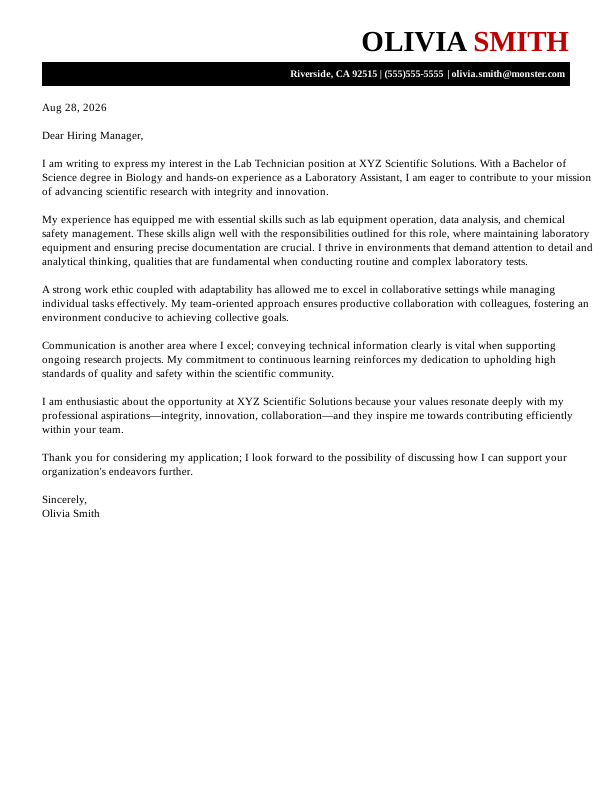
 Free
FreeLab Technician Entry-Level Cover Letter
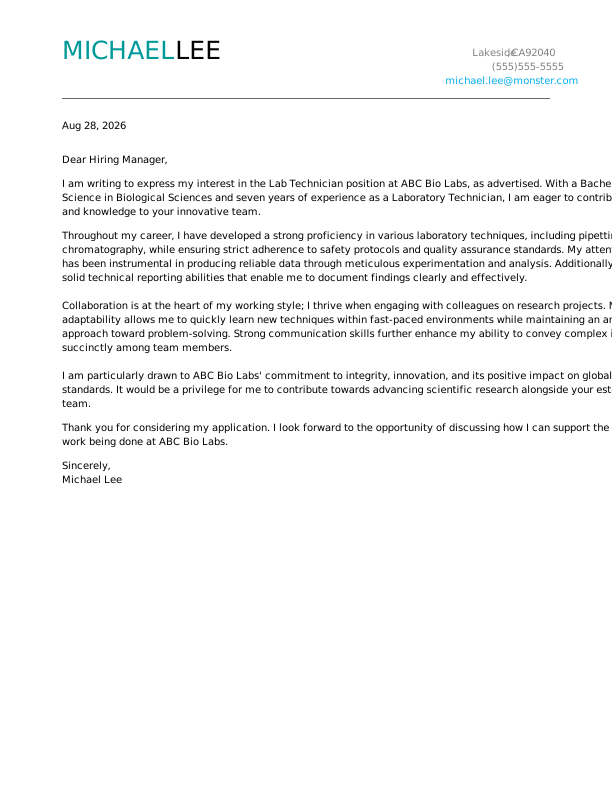
Lab Technician Mid-Level Cover Letter
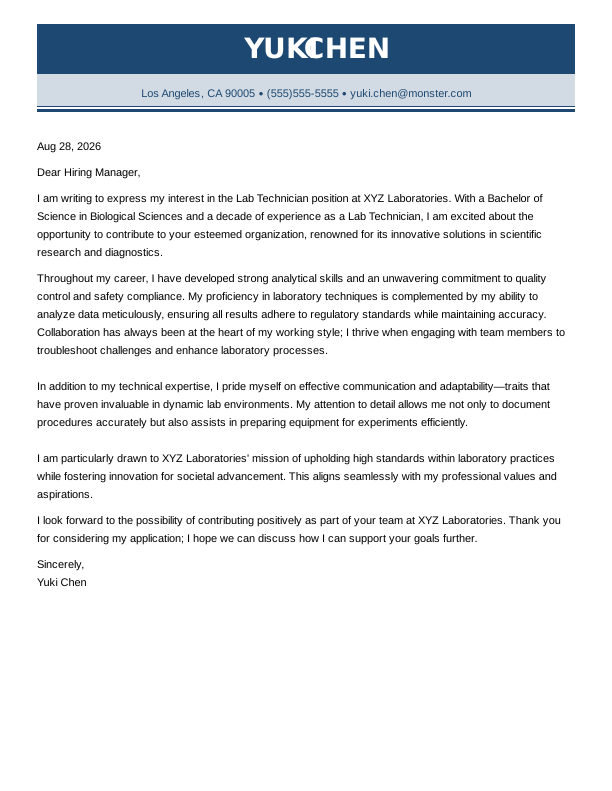
Lab Technician Experienced Cover Letter
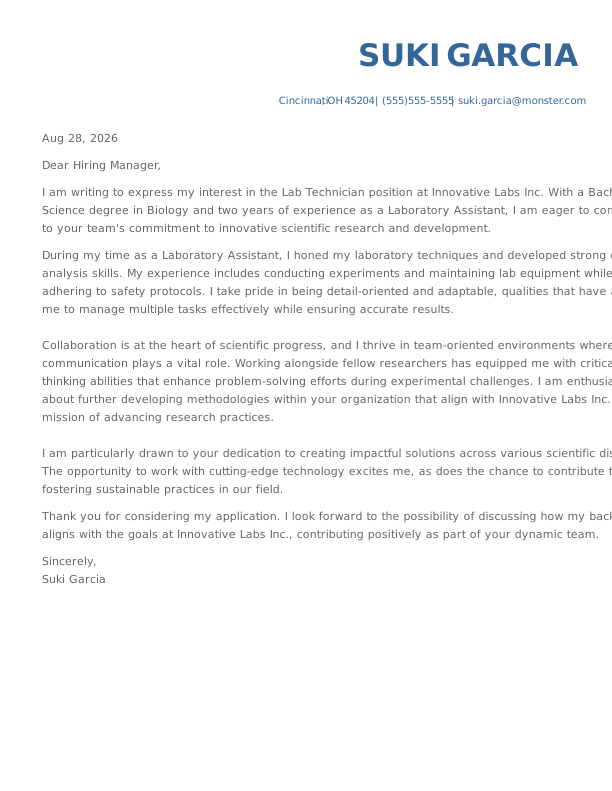
Lab Technician Entry-Level Cover Letter
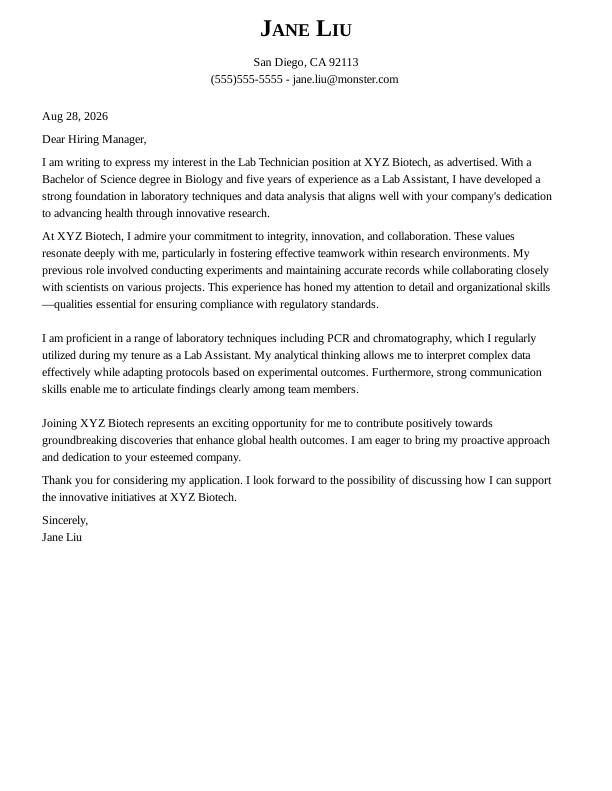
Lab Technician Mid-Level Cover Letter
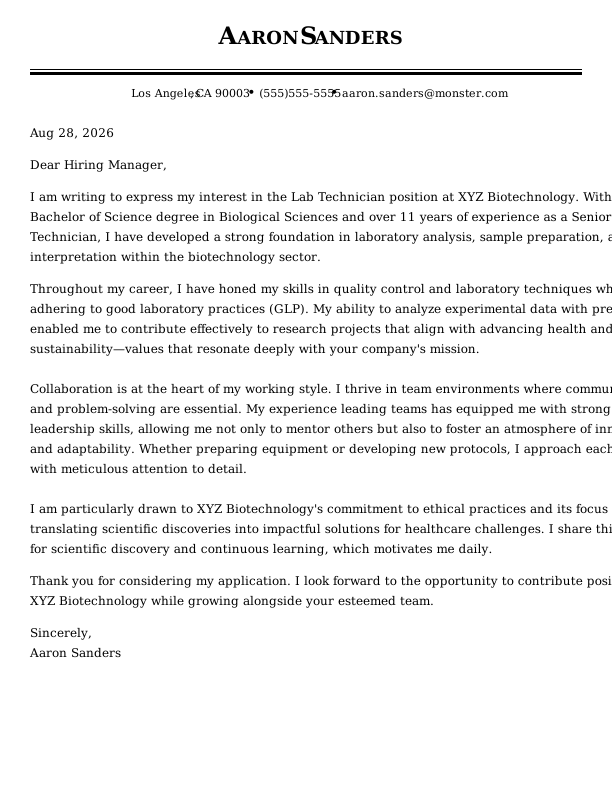
Lab Technician Experienced Cover Letter
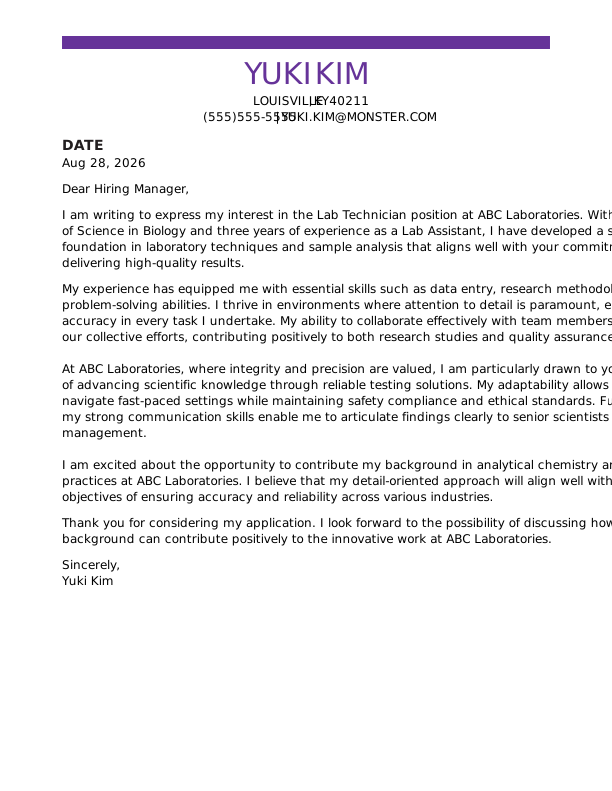
Lab Technician Entry-Level Cover Letter
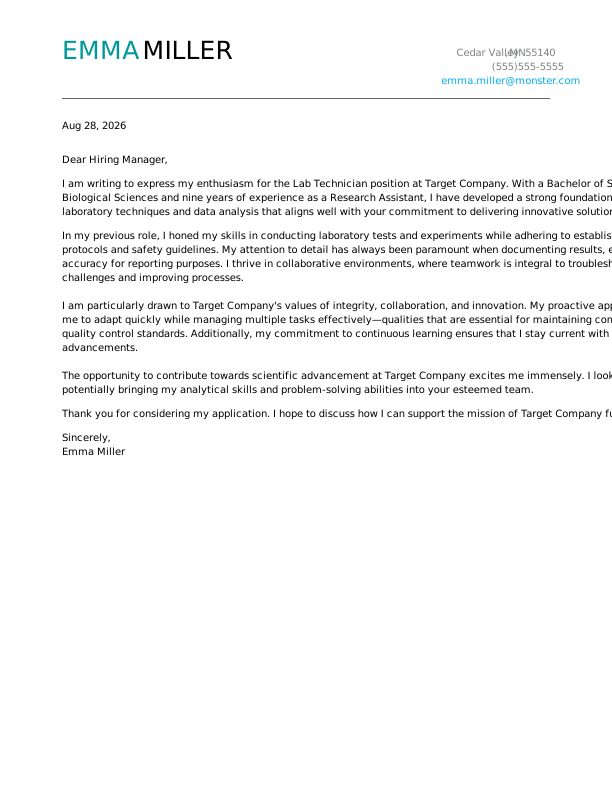
Lab Technician Mid-Level Cover Letter
Browse Free Cover Letter Templates
- Account Manager
- Accounts Payable
- Administrative Assistant
- Admissions Counselor
- Artist
- Babysitter
- Barista
- Bartender
- Bookkeeper
- Brand Ambassador
- Business Analyst
- Caregiver
- Chef
- Civil Engineering
- Computer Science
- Custodian
- Customer Service
- Dental Assistant
- Electrical Engineering
- Emt
- Engineering
- Event Coordinator
- Executive Assistant
- Finance
- Financial Analyst
- Firefighter
- Flight Attendant
- Graphic Designer
- Hair Stylist
- Healthcare
- Investment Banking
- It
- Janitor
- Journalism
- Law Clerk
- Lawyer
- Librarian
- Logistics
- Manager
- Marketing Manager
- Massage Therapist
- Mechanic
- Mechanical Engineer
- Medical Assistant
- Non Profit
- Nursing
- Office Manager
- Paralegal
- Personal Trainer
- Pharmacy Technician
- Photographer
- Physician Assistant
- Pilot
- Police Officer
- Project Manager
- Property Manager
- Receptionist
- Research Assistant
- Retail
- Sales
- Security Officer
- Social Work
- Software Engineer
- Teacher
- Teaching Assistant
- Truck Driver
- Vet Tech
- Veterinary Assistant
- Web Developer
- Welder
Cover Letter Examples for Lab Technicians
A lab technician cover letter for an entry-level role often highlights training and hands-on lab work, while a mid-career or experienced version spotlights repeatable results. Use these templates for each career stage so your cover letter matches the responsibilities you will take on.
Entry-Level Lab Technician Cover Letter
Perfect for recent graduates seeking a cover letter with no experience, this template also helps career changers shift into lab technician work from other fields, while clearly showing how they handle safety, basic testing tasks, and accurate recordkeeping in a lab setting.
Mid-Career Lab Technician Cover Letter
A good fit for lab technicians with a few years of hands-on experience, this template helps highlight career growth and supports moving into advanced testing, specialized methods, or team lead responsibilities.
Experienced Lab Technician Cover Letter
Best for lab technicians with 10+ years of experience, this template helps job seekers pursue senior roles in diagnostics or laboratory leadership, guiding them toward advanced responsibilities and team oversight.
Lab Technician Cover Letter Template (Text)
Use this adaptable text template for a lab technician cover letter to copy, paste, and customize in your document file.
Aya Martinez
Westbrook, ME 04100
(555)555-5555
aya.martinez@monster.com
Aug 28, 2026
Dear Hiring Manager,
I am writing to express my interest in the lab technician position at Life Sciences Corp, as advertised. With a Bachelor of Science in Biological Sciences and eight years of experience as a laboratory technician, I have developed a strong foundation in laboratory techniques and data analysis that aligns with the innovative work being conducted at your organization.
Throughout my career, I have been committed to excellence in research and development. My background has equipped me with extensive skills in operating laboratory equipment and adhering to Good Laboratory Practices (GLP). I pride myself on being detail-oriented and adaptable, always striving for accuracy while maintaining an organized lab environment.
Collaboration is integral to scientific progress, which is why I value teamwork highly. My ability to communicate effectively with colleagues has fostered productive partnerships that drive project milestones forward. By actively engaging with cross-functional teams, I contribute positively to our collective goals while ensuring compliance with regulatory standards.
I am particularly drawn to Life Sciences Corp’s mission of improving health outcomes through scientific innovation. The values of integrity and collaboration resonate deeply with me, motivating my desire to contribute meaningfully toward impactful healthcare solutions.
I look forward to the opportunity to discuss how my experience can benefit your team at Life Sciences Corp. Thank you for considering my application; I am excited about the possibility of contributing to your important work.
Sincerely,
Aya Martinez
How to Write a Lab Technician Cover Letter
For a lab technician, understanding how to write a cover letter means showing strong fit through clear personalization, tight storytelling around experiments or tests you supported, and evidence of relevant skills like sample handling, documentation accuracy, and quality control. Apply the recommendations that follow by highlighting your most relevant training and measurable achievements and tailoring your letter to each target role’s methods, instruments, and compliance needs.
1. Research & Prepare
Before you write your cover letter, research the lab, the team you will support, and the hiring manager’s background. For a lab technician role, look into the lab’s testing focus, such as microbiology, hematology, or quality control, and how it handles safety and documentation.
Review the job posting for required certifications and methods used, then scan the company website and recent news for projects or audits. Check LinkedIn profiles of the hiring manager and relevant staff to learn what they value in day-to-day work. Use these details to tailor your examples of specimen handling, instrument care, QC checks, and recordkeeping so your letter reads specific to their lab.
2. Hook the Reader
A strong cover letter opening matters because it sets the tone and earns attention in the first few lines. Instead of repeating your job title, connect your lab experience to what the employer needs, using a specific detail that shows you understand its work.
Try opening with a brief win, like improving sample turnaround by tightening labeling and documentation. Or reference a company initiative you follow, such as expanding molecular testing or quality systems. You can also start with a referral from a supervisor or colleague who saw your bench skills and careful troubleshooting firsthand.
3. Tell Your Professional Story
In your lab technician cover letter, go beyond repeating your resume. Share a short story with specific examples and measurable results that show how you improved testing quality, supported clinicians, or strengthened lab workflows.
Quantify what you do. For example, mention reducing sample rejection rates by 15% through better labeling checks, cutting turnaround time by 20% during peak hours, or maintaining QC pass rates at 98% to 100%. You can also describe mentoring new techs and tracking skills after training.
4. Showcase Your Skills
Match your lab skills to what the posting calls for, because employers want proof that you can handle their daily workflow. Instead of listing credentials, tie your experience to specific requirements like specimen handling, quality control, and accurate reporting.
For example, if the role mentions chain of custody and labeling, describe how you prepared samples, verified identifiers against orders, and documented every step in the log. If they ask for QC or instrument support, share a time you ran controls on analyzers like Abbott or Roche systems and flagged out-of-range results to maintain reliable results.
5. Explain Any Special Circumstances
If you have an employment gap, a career shift, or you relocated, address it early in your cover letter with a clear, honest sentence. Keep the focus on what changed and what you gained during that time. Highlight skills you built and how they support the role you want now.
For a lab technician path, you can note that time away strengthened your attention to detail through training or hands-on work, like maintaining instruments or organizing sample logs. If you moved from one specialty to another, explain how you learned new testing procedures and improved documentation habits using SOPs and calibration records.
6. End With a Professional Goodbye
Close your cover letter by reaffirming your interest in the lab technician role and thanking the reader for their time. Invite next steps by asking to discuss how your hands-on experience with sample handling, testing workflows, and documentation supports accurate results. Keep it direct and confident.
Finish with a tailored call to action, such as, “I welcome the opportunity to discuss how my attention to detail and lab safety practices can support your team’s daily testing needs.” Then use a professional sign-off, like “Sincerely” or “Best regards.”
4 Tips for Formatting Your Cover Letter
Proper cover letter formatting helps you look professional and makes your message easy to read. Use clear spacing and simple headings so the hiring manager can scan quickly, regardless of industry or experience level. Keep sentences direct and remove filler adverbs that add no specific meaning.

Keep It to One Page
Hiring managers review many applications each day, so keep your cover letter to one page and make it easy to scan. Target 250–400 words or three to four focused paragraphs that highlight your most relevant lab technician qualifications, such as laboratory techniques, testing experience, and safety practices.

Use a Professional Font & Layout
Choose a professional font such as Arial, Calibri, Times New Roman, or Helvetica in 10 to 12 pt. Use standard one-inch margins and keep spacing consistent so your cover letter matches your resume layout and your technical skills and laboratory experience are easy to review.

Address the Hiring Manager Directly
When you write a lab technician cover letter, try to address the hiring manager by name by scanning the job posting, checking the company website, and searching LinkedIn. If you cannot find a name after reaching out to the company’s HR or main contact, use “Dear Hiring Manager” or “To the Hiring Team” and skip “To Whom It May Concern,” which feels outdated in healthcare.

Save & Send as a PDF
Save your cover letter as a PDF to preserve formatting across devices and systems. Use a professional file name that includes your name and the words “cover letter,” such as “Jane_Smith_cover letter.pdf.”
Key Takeaways
- Personalize each letter for the specific lab and role. Mention the instruments, testing areas, or quality standards the lab uses so it’s clear you understand its workflow.
- Lead with a strong opening and support it with quantifiable work. Include measurable outcomes like error rate reductions, faster turnaround times, or successful instrument calibration and documentation.
- Keep formatting clean and consistent with your resume. Use the same headings, font, and spacing so reviewers can scan key skills like specimen handling and QA easily.
Browse Monster’s Resume Templates
Monster also has hundreds of ATS-friendly resume templates for all career levels and industries. Create a matching resume to help you land the interview.
- Cardiac Sonographer
- Caregiver
- Caretaker
- Certified Medical Assistant
- Chiropractic Assistant
- Clinical Data Specialist
- Clinical Research Associate
- Dietitian
- Direct Support Professional
- Ekg Technician
- Health Information Technician
- Healthcare Administration
- Healthcare
- Healthcare Support
- Healthcare Technology
- Home Health Care
- Lab Technician
- Lactation Consultant
- Medical Administrative Assistant
- Medical Assistant
- Medical Billing
- Medical Coder
- Medical Courier
- Medical Interpreter
- Medical Office Manager
- Medical Office
- Medical Receptionist
- Medical
- Medical School
- Medical Science Liaison
- Medical Scribe
- Medical Secretary
- Medical Technologist
- Medical Transcriptionist
- Mri Technologist
- Ophthalmic Technician
- Optician
- Patient Access Representative
- Patient Care Coordinator
- Patient Care Technician
- Patient Service Representative
- Patient Transporter
- Phlebotomist
- Physical Therapist Assistant
- Private Caregiver
- Radiologic Technologist
- Sonographer
- Surgical Tech
- Unit Secretary
Frequently Asked Questions
Last Update:
Do I really need a cover letter?
Yes, you should include a cover letter even when it’s optional. It adds context your resume can’t cover and signals initiative and genuine interest in the lab technician role.
It helps most when you explain a career change, an employment gap, or why you want to work for that specific organization. You can also highlight your attention to detail and show real enthusiasm for accurate testing and safe lab practices.
How long should my cover letter be?
Cover letters should stay one page maximum and run 250–400 words. Hiring managers spend limited time reviewing each application, so every line must earn its place.
Focus on quality over quantity by sharing only the most relevant lab technician experience and achievements. Structure your letter as three to four concise paragraphs that clearly support your fit for the role.
Should my cover letter match my resume?
Yes, your cover letter should match your resume’s design. Use the same fonts, colors, and header style so your application package looks cohesive and intentional.
However, the content should complement rather than duplicate your resume. For a lab technician role, expand on key lab work, explain why you want this position, and add context about methods, experiments, quality checks, or results that bullet points cannot fully show.
What should I include in my cover letter header?
Your cover letter header should list your full name, phone number, professional email, and city/state. Add the date and the recipient’s name, title, and organization below your contact details. Match this header style to your resume for consistency.
How do I write a cover letter for an internal lab technician position?
When writing a cover letter for an internal job, use your institutional knowledge of the lab’s workflows, instruments, and safety standards. Highlight specific tasks you’ve handled, improvements you’ve made, and results from your current role, then explain how the move supports your growth. Still follow the formal internal application process and submit any required materials on time.

Elizabeth Muenzen is a Certified Professional Resume Writer (CPRW) and member of the Professional Association of Resume Writers & Career Coaches who empowers job seekers to take control of their career paths using Monster’s comprehensive job search and resume tools.
See More From Elizabeth MuenzenExplore Related Career Advice







How to Write a Cover Letter for Internal Positions or Promotions (Examples & Tips)

Updated:
Apr 23, 2026
|

19 min read


Cover Letter vs Resume: What’s the Difference & Do You Need Both?
Updated:
Apr 23, 2026
|
18 min read