


Free Phlebotomist Cover Letter Templates & Examples
A strong phlebotomist cover letter shows you can draw blood safely and accurately while keeping patients comfortable. Our free cover letter examples and step-by-step writing advice help you highlight your venipuncture, specimen handling, and safety-standard experience so hiring managers trust your skills right away.
Real-World Cover Letters That Get Results
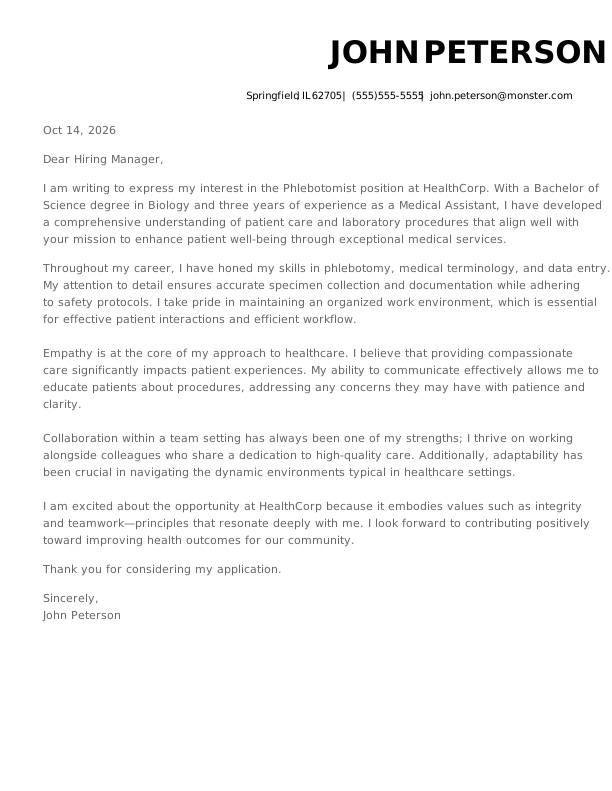
 Free
Phlebotomist Entry-Level Cover Letter
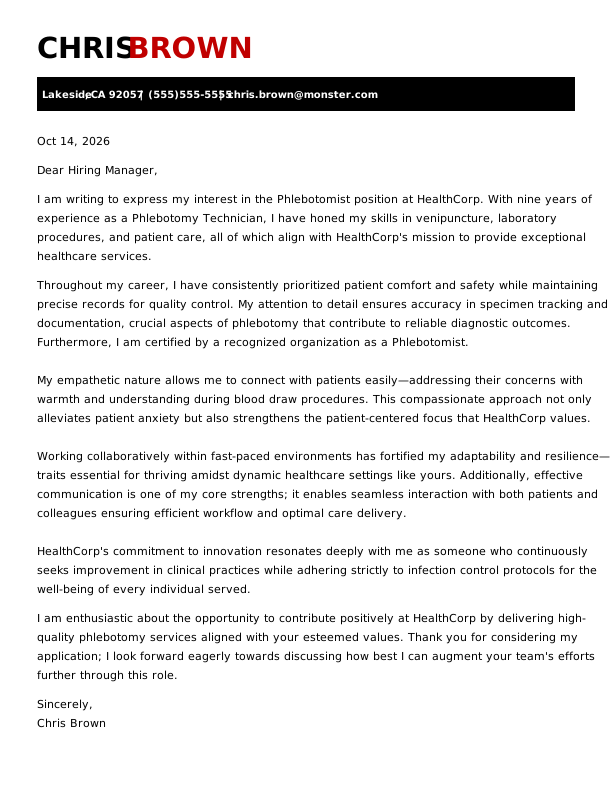
Phlebotomist Mid-Level Cover Letter
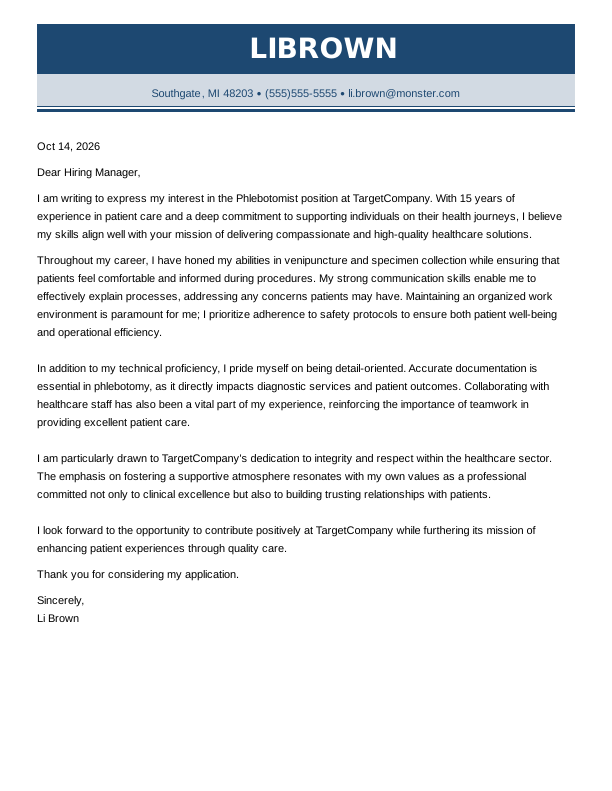
Phlebotomist Experienced Cover Letter
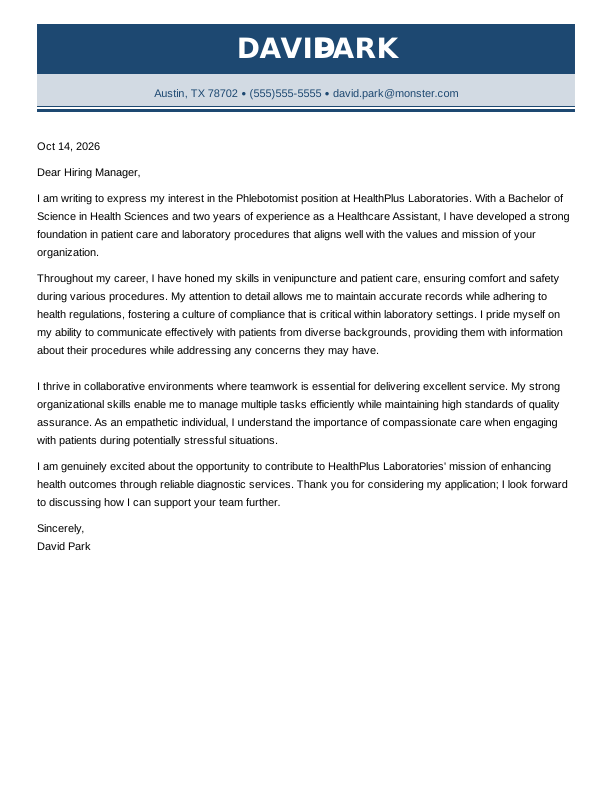
Phlebotomist Entry-Level Cover Letter
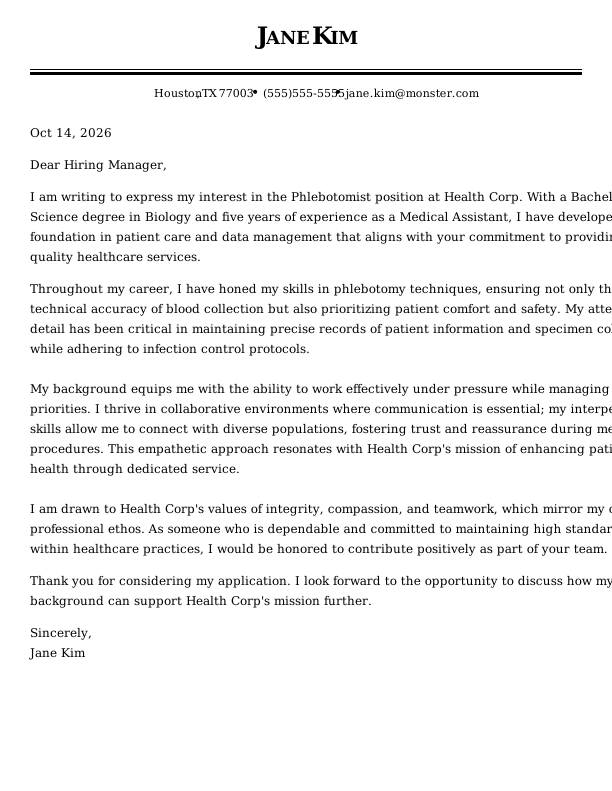
Phlebotomist Mid-Level Cover Letter
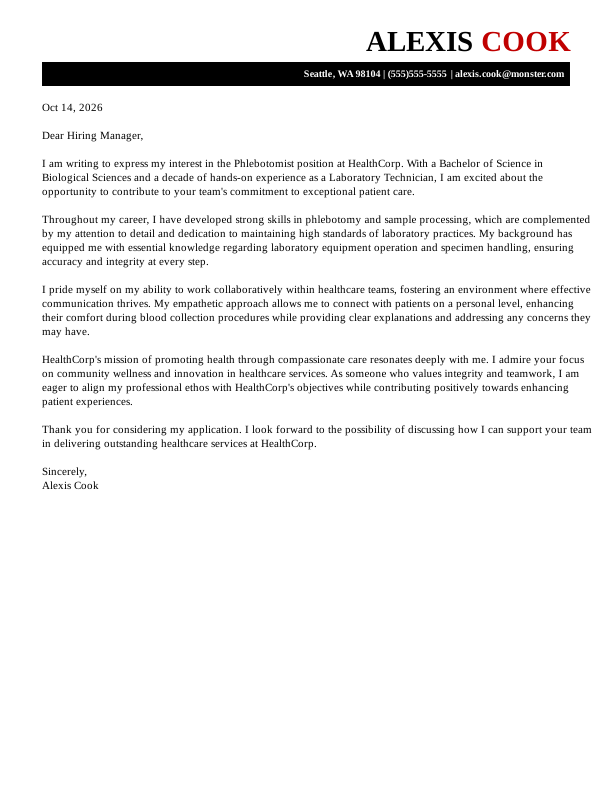
Phlebotomist Experienced Cover Letter
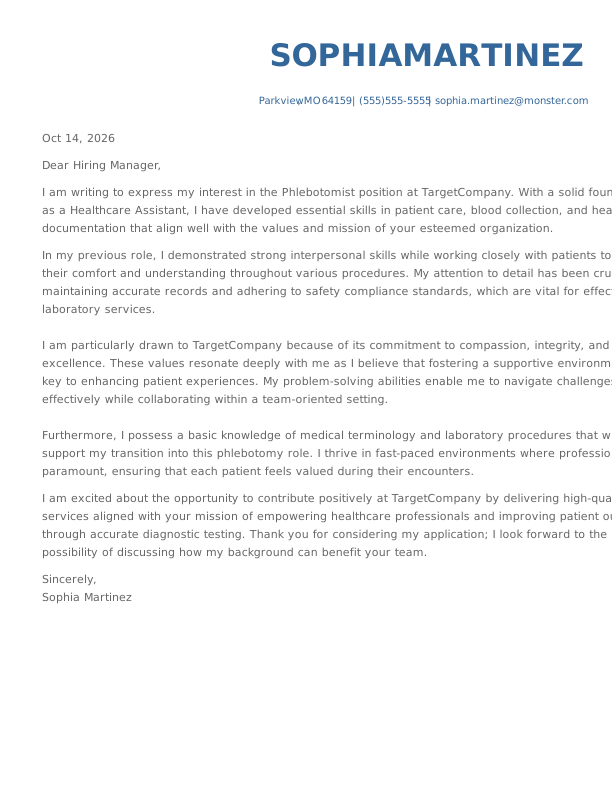
Phlebotomist Entry-Level Cover Letter
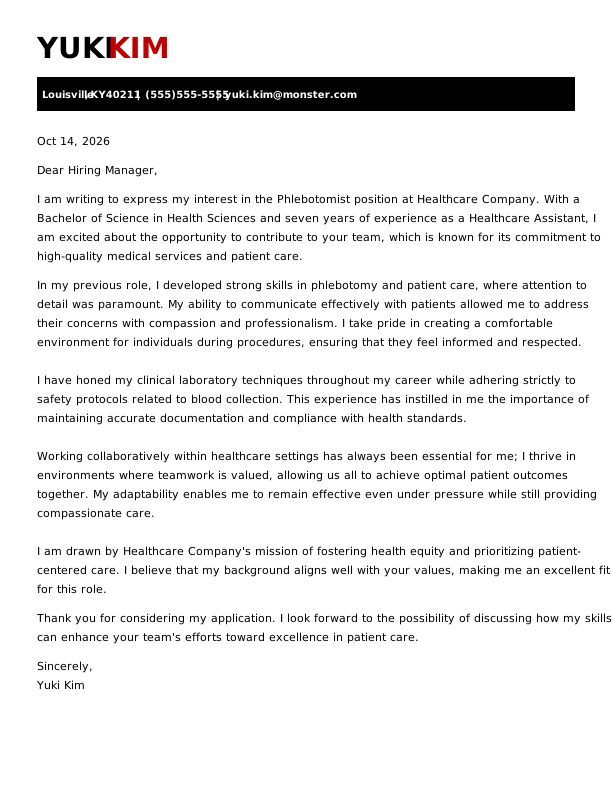
Phlebotomist Mid-Level Cover Letter
Browse Free Cover Letter Templates
- Academic
- Account Manager
- Accountant
- Accounts Payable
- Administrative Assistant
- Admissions Counselor
- Architecture
- Artist
- Assistant Principal
- Babysitter
- Barista
- Bartender
- Bookkeeper
- Brand Ambassador
- Business Analyst
- Business
- Caregiver
- Chef
- Civil Engineering
- Computer Science
- Construction
- Consulting
- Copywriter
- Cosmetology
- Custodian
- Customer Service
- Customer Service Representative
- Data Analyst
- Data Entry
- Dental Assistant
- Dental Hygienist
- Digital Marketing
- Electrical Engineering
- Emt
- Engineering
- Esthetician
- Event Coordinator
- Executive Assistant
- Finance
- Financial Analyst
- Firefighter
- Flight Attendant
- Graphic Designer
- Hair Stylist
- Healthcare
- Hr Generalist
- Investment Banking
- It
- Janitor
- Journalism
- Lab Technician
- Law Clerk
- Lawyer
- Librarian
- Logistics
- Makeup Artist
- Manager
- Marketing Coordinator
- Marketing
- Marketing Manager
- Massage Therapist
- Mechanic
- Mechanical Engineer
- Medical Assistant
- Non Profit
- Nursing
- Occupational Therapy
- Office Assistant
- Office Manager
- Operations Manager
- Paralegal
- Personal Trainer
- Pharmacist
- Pharmacy Technician
- Photographer
- Physician Assistant
- Pilot
- Police Officer
- Program Manager
- Project Manager
- Property Manager
- Psychology
- Receptionist
- Research Assistant
- Restaurant Manager
- Retail
- Sales
- Sales Manager
- School Counselor
- Security Officer
- Social Work
- Software Engineer
- Special Education Teacher
- Starbucks
- Substitute Teacher
- Teacher
- Teaching Assistant
- Truck Driver
- Vet Tech
- Veterinary Assistant
Cover Letter Examples for Phlebotomists
Cover letter expectations change as you gain experience—from basic specimen collection to complex patient needs. Choose a template that fits your career stage to highlight the right skills, training, and achievements, such as successful draws, accuracy rates, or workflow improvements.
Entry-Level Phlebotomist Cover Letter
Designed for recent graduates and career changers moving into phlebotomist roles, this no-experience cover letter template helps you confidently highlight transferable patient-care strengths.
Mid-Career Phlebotomist Cover Letter
Tailored for phlebotomists a few years into practice, this template emphasizes specimen accuracy, ownership of infection control, and mentoring or charge-coverage responsibilities.
Experienced Phlebotomist Cover Letter
Best suited to phlebotomists with nearly a decade of experience, this template fits clinicians who oversee specimen quality, lead cross-team workflows, and stay current with advanced certifications.
Phlebotomist Cover Letter Template (Text)
Copy this phlebotomist cover letter text, paste it into your document, and swap in your certification details and lab experience for the job you want.
John Garcia
Detroit, MI 48213
(555)555-5555
john.garcia@monster.com
Oct 14, 2026
Dear Hiring Manager,
I am writing to express my interest in the Phlebotomist position. With four years of experience in patient care and laboratory procedures, I have developed a strong foundation in the essential skills required for this role, including phlebotomy and data management.
Throughout my career, I have consistently demonstrated a commitment to delivering high-quality patient care. My attention to detail has been crucial in ensuring accurate sample collection and handling, minimizing errors that could affect patient outcomes. I thrive in collaborative environments where teamwork is valued; working alongside healthcare professionals has enhanced my ability to contribute effectively while maintaining a focus on providing compassionate support to patients.
In addition to my technical skills, I pride myself on being organized and methodical. This approach not only helps me manage data efficiently but also ensures that all laboratory procedures are followed rigorously. My experiences have taught me the importance of creating an atmosphere where patients feel at ease during what can often be a stressful process.
I am excited about the opportunity to bring my background in phlebotomy and passion for patient care to your team. Your organization’s commitment to excellence aligns with my professional values, and I look forward to potentially collaborating with dedicated colleagues who share this vision.
Thank you for considering my application. I hope to discuss how my experience can contribute positively at your facility.
Sincerely,
John Garcia
How to Write a Phlebotomist Cover Letter
Writing a strong phlebotomist cover letter means turning your daily specimen collection, labeling, and patient safety work into clear examples. Use the steps below to shape your details for a specific role and make them easy for the hiring team to scan.
1. Research & Prepare
Before you write, research how the employer operates day to day. Check which lab information system they use and whether they focus on turnaround times, specimen accuracy, or patient care. Here’s how to prepare your research before drafting:
- Pull the required certifications and any stated specimen handling tools from the job posting.
- Review the hospital’s lab services page for their testing turnaround goals and collection protocols.
- Use your state’s licensing or regulatory board site to confirm current phlebotomy training and scope requirements.
2. Hook the Reader
Your opening line needs to show how you handle high-volume draws, patient comfort, and specimen quality. Skip basic boilerplate text and focus on concrete daily results with these proven opening approaches:
- High-volume accuracy: “On a busy med-surg shift, I complete 25 to 30 successful draws per day with fewer than 2 hemolyzed specimens by using correct tourniquet timing and immediate tube mixing.”
- Patient comfort focus: “During my last onboarding class, I used a distraction script and warm-site prep for difficult sticks, improving first-attempt success from 78% to 90% over three months under my lead phlebotomist.
- Specimen workflow discipline: “I follow CLIA-focused labeling and chain-of-custody steps, including barcode verification before centrifugation, so results stay audit-ready for the lab director on duty.”
3. Tell Your Professional Story
Your cover letter will show how you prevented problems and delivered quality blood draws. Metrics help supervisors picture your performance clearly, so consider highlighting achievements like these in your letter:
- Collected 10 to 14 specimens per hour while maintaining a 99% successful first-attempt rate for routine lab draws.
- Reduced specimen rejection rates from 3.2% to 1.1% by confirming patient identifiers and tube types before collection.
- Saved about 30 minutes per shift by streamlining requisition checks and prioritizing STAT orders in the queue.
4. Showcase Your Skills
Replace generic buzzwords with quick snapshots from your actual routine. Match one key requirement from the job posting to a specific skill you’ve applied on the floor, using these concise examples as inspiration:
- Specimen handling: “I labeled tubes at the bedside right after collection and checked the patient identifiers again before sending them to the lab.”
- Infection control: “I sanitized my station between patients, changed gloves on schedule, and disposed of sharps immediately after use.”
- Patient communication: “When a patient was nervous about pain, I explained each step before I started and asked how they wanted me to manage their comfort during the draw.”
5. Explain Any Special Circumstances
Explain any gap, pivot, or relocation in one or two plain sentences so it doesn’t distract from your clinical abilities. Show active credentials and recent specimen collection work using lead-ins like these:
- “After a nine-month break for caregiving, I completed my annual phlebotomy refresher, and I’ve been drawing specimens in a hospital lab since April using proper tube verification and ID checks.”
- “I’m pivoting from retail to healthcare after completing my CPT program. I’m now working part-time in an outpatient draw station where I practice order reviews, venipunctures, and capillary collections.”
- “I relocated from Texas to Washington in August, updated my state requirements for phlebotomy certification, and have been collecting blood samples at a community clinic while maintaining current CPR training.”
6. End With a Professional Goodbye
Close your cover letter by suggesting a clear next step and thanking the reader. Skip generic phrasing like “I look forward to hearing from you,” and try a tailored closing structure like this:
“I’d be glad to discuss how I handle patient comfort during difficult draws and follow your lab’s specimen collection standards.” Then add “Thank you for your time.” Finish with “Best regards.”
4 Tips for Formatting Your Cover Letter
Hiring managers often scan phlebotomist letters in under a minute for practical proof like certifications, specimen handling experience, and safety habits. Good formatting helps them spot your strengths quickly, whether you’re applying for an entry-level position or a lead phlebotomist role.

Use a Professional Font & Layout
Use clean fonts like Arial, Calibri, Georgia, or Helvetica at 10–12 pt so your text stays readable for busy lab supervisors. Keep one-inch margins and match your resume header design exactly to maintain a professional look.

Address the Hiring Manager Directly
Look for the lab manager or phlebotomy supervisor name in the posting or clinic directory. If you can’t find a specific contact, “Dear Hiring Manager” works well, but skip outdated greetings like “To Whom It May Concern.”

Use Bullet Points for Key Achievements
Use three or four bullet points to feature key achievements like first-attempt success rates, daily specimen counts, and turnaround times. Clean bulleted lines make your core qualifications stand out instantly during quick scans.

Balance Spacing & Margins
Use single to 1.15 line spacing with a blank line between paragraphs so the text doesn’t look crowded. Set clean margins between 0.75 and one inch to keep your letter visually balanced on screen or printed.
Top-Paying States for Phlebotomist Roles
Knowing what phlebotomists earn can help you compare offers and plan your next steps with confidence. Salary ranges are shaped by factors like where you work, your experience level, and the type of setting, such as hospitals, clinics, or outpatient labs. The U.S. Bureau of Labor Statistics (BLS) provides nationwide salary data that can serve as a useful benchmark when evaluating pay. Keep in mind that shift differentials, certifications, and the specific services you support may also affect what you take home.
| Alabama | $35,760 |
| Alaska | $49,720 |
| Arizona | $45,930 |
| Arkansas | $36,850 |
| California | $55,360 |
| Connecticut | $47,120 |
| Delaware | $46,170 |
| District of Columbia | $49,410 |
| Florida | $40,570 |
| Georgia | $43,700 |
| Hawaii | $48,210 |
| Idaho | $42,750 |
| Illinois | $45,090 |
| Indiana | $39,370 |
| Iowa | $40,060 |
| Kansas | $40,800 |
| Kentucky | $39,880 |
| Louisiana | $36,360 |
| Maine | $41,100 |
| Maryland | $49,590 |
| Massachusetts | $50,660 |
| Michigan | $42,350 |
| Minnesota | $45,810 |
| Mississippi | $36,240 |
| Missouri | $41,330 |
| Montana | $45,370 |
| Nebraska | $39,270 |
| Nevada | $44,390 |
| New Hampshire | $46,130 |
| New Jersey | $47,400 |
| New Mexico | $40,610 |
| New York | $50,860 |
| North Carolina | $41,240 |
| North Dakota | $48,330 |
| Ohio | $41,250 |
| Oklahoma | $41,040 |
| Oregon | $48,620 |
| Pennsylvania | $42,390 |
| Rhode Island | $48,820 |
| South Carolina | $40,190 |
| South Dakota | $38,390 |
| Tennessee | $39,520 |
| Texas | $42,290 |
| Utah | $39,470 |
| Vermont | $42,420 |
| Virginia | $44,840 |
| Washington | $50,910 |
| West Virginia | $38,980 |
| Wisconsin | $44,210 |
| Wyoming | $40,960 |
| Puerto Rico | $26,950 |
Key Takeaways
- Focus on patient comfort and successful draws by sharing a specific moment where you put an anxious patient at ease or adjusted your technique for a difficult stick.
- Include concrete numbers—like first-attempt success rates, low hemolysis percentages, or daily specimen volumes—to demonstrate your consistency.
- Tailor your tone to the setting: hospital labs value speed and chain of custody, outpatient clinics prioritize patient flow, and mobile units focus on scheduling reliability.
More Cover Letter Examples
- Certified Nursing Assistant
- LVN
- Medical
- Medical Receptionist
- Medical Scribe
- Nurse Practitioner
- Nursing Student
- Registered Nurse
Browse Monster’s Resume Templates
Monster also has hundreds of ATS-friendly resume templates for all career levels and industries. Create a matching resume to help you land the interview.
- Cardiac Sonographer
- Caregiver
- Caretaker
- Certified Medical Assistant
- Chiropractic Assistant
- Clinical Data Specialist
- Clinical Research Associate
- Dietitian
- Direct Support Professional
- Ekg Technician
- Health Information Technician
- Healthcare Administration
- Healthcare
- Healthcare Support
- Healthcare Technology
- Home Health Care
- Lab Technician
- Lactation Consultant
- Medical Administrative Assistant
- Medical Assistant
- Medical Billing
- Medical Coder
- Medical Courier
- Medical Interpreter
- Medical Office Manager
- Medical Office
- Medical Receptionist
- Medical
- Medical School
- Medical Science Liaison
- Medical Scribe
- Medical Secretary
- Medical Technologist
- Medical Transcriptionist
- Mri Technologist
- Ophthalmic Technician
- Optician
- Patient Access Representative
- Patient Care Coordinator
- Patient Care Technician
- Patient Service Representative
- Patient Transporter
- Phlebotomist
- Physical Therapist Assistant
- Private Caregiver
- Radiologic Technologist
- Sonographer
- Surgical Tech
- Unit Secretary
Frequently Asked Questions
Last Update:
Do I really need a cover letter?
Writing a phlebotomist cover letter is recommended because it demonstrates your clinical strengths beyond a resume. While your resume lists credentials, a cover letter shows how you put anxious patients at ease, maintain safety protocols, and manage busy draw schedules. It is particularly helpful for explaining career transitions, employment gaps, or your specific interest in a lab’s team environment while highlighting your chairside care skills.
How long should my cover letter be?
Your phlebotomist cover letter length should stay within one page and target 250 to 400 words total. Hiring managers review applications quickly, so concise phrasing ensures your core qualifications stand out immediately. You should organize your text into three or four short paragraphs that focus on top clinical achievements, high first-attempt draw rates, strong patient communication skills, safety credentials, and relevant laboratory certifications.
Should my cover letter match my resume?
Matching your phlebotomist cover letter to your resume’s visual style creates a polished, cohesive application package. Use identical fonts, margins, and header formatting across both documents for consistency. The content shouldn’t simply repeat your resume line for line. Instead, use your letter to expand on key accomplishments, explain what draws you to the facility’s clinical team, and highlight your specific patient care approach.
Can I use AI to write my cover letter?
Using AI to draft your phlebotomist cover letter can help you outline ideas and structure paragraphs quickly. You’ll still need to personalize the draft with authentic details about your clinical experience. Treat AI text as a starting point, then refine it with specific details like specimen types handled, difficult draw techniques, and quality improvements. Personal details show genuine interest that generic AI-generated drafts cannot match.
How do I write a cover letter for an internal position?
Writing a cover letter for an internal phlebotomist position requires focusing on your familiarity with facility protocols and team workflows. Highlight unit specimen handling, coordination with nursing staff on timed draws, and recent accomplishments like cutting STAT lab turnaround times by 15 percent. Emphasize your readiness to mentor new staff, support quality audits, and fulfill all internal application steps to demonstrate your value to the organization.

Toni Frana is a Certified Professional Resume Writer (CPRW), member of the Professional Association of Resume Writers & Career Coaches, and career expert who empowers job seekers to take control of their career paths using Monster’s comprehensive job search and resume tools.
See More From Toni FranaExplore Related Career Advice







How to Write a Cover Letter for Internal Positions or Promotions (Examples & Tips)

Updated:
Apr 23, 2026
|
19 min read


Cover Letter vs Resume: What’s the Difference & Do You Need Both?

Updated:
Apr 23, 2026
|
18 min read