

Free Medical Receptionist Cover Letter Templates & Examples
A strong medical receptionist cover letter shows you can manage front-desk workflows with empathy while keeping scheduling on track. Our examples and step-by-step advice help you highlight your skills and experience so hiring managers see your professionalism right away.
Real-World Cover Letters That Get Results
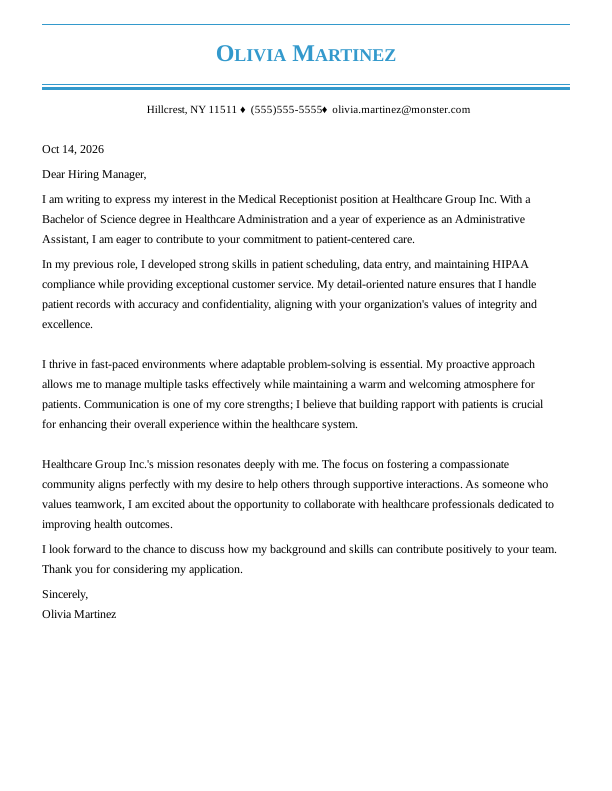
 Free
Medical Receptionist Entry-Level Cover Letter
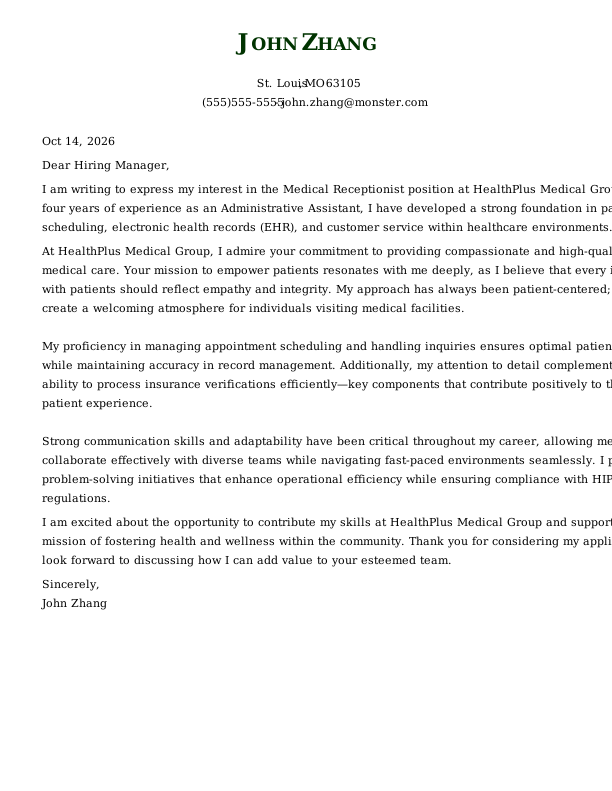
Medical Receptionist Mid-Level Cover Letter
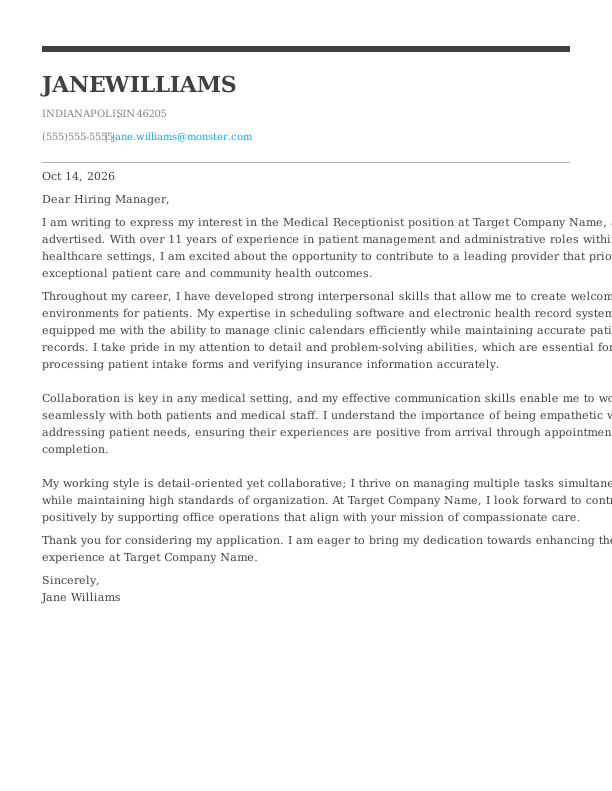
Medical Receptionist Experienced Cover Letter
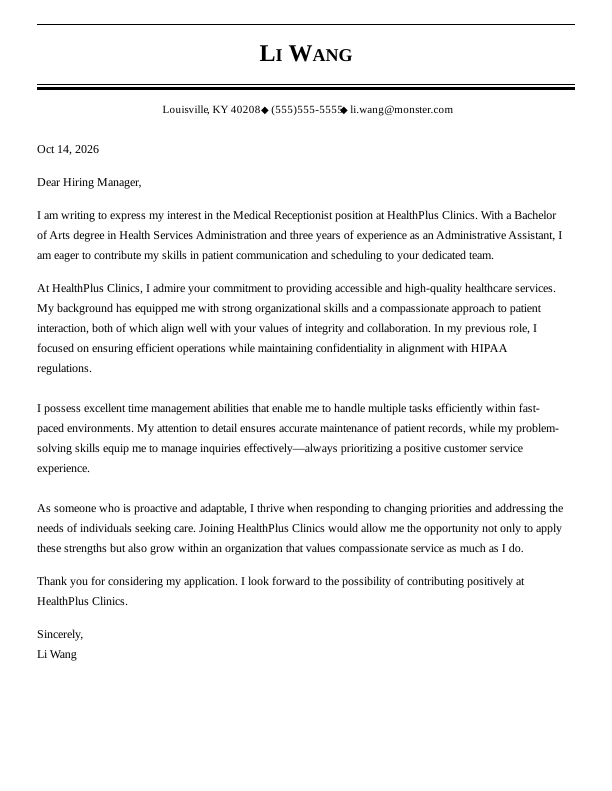
Medical Receptionist Entry-Level Cover Letter
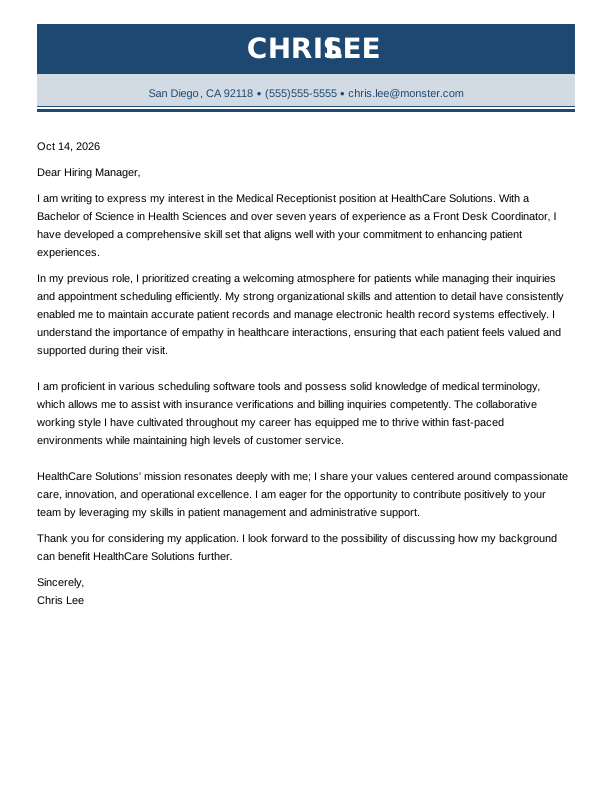
Medical Receptionist Mid-Level Cover Letter
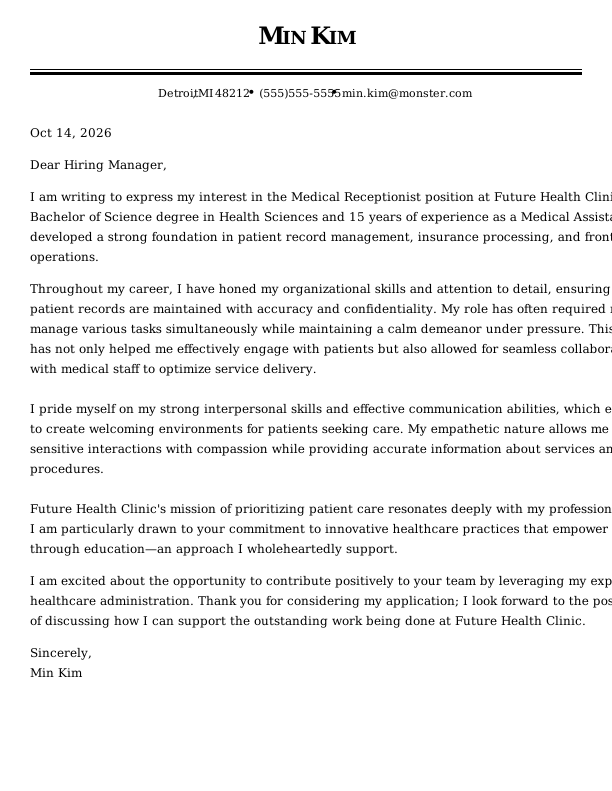
Medical Receptionist Experienced Cover Letter
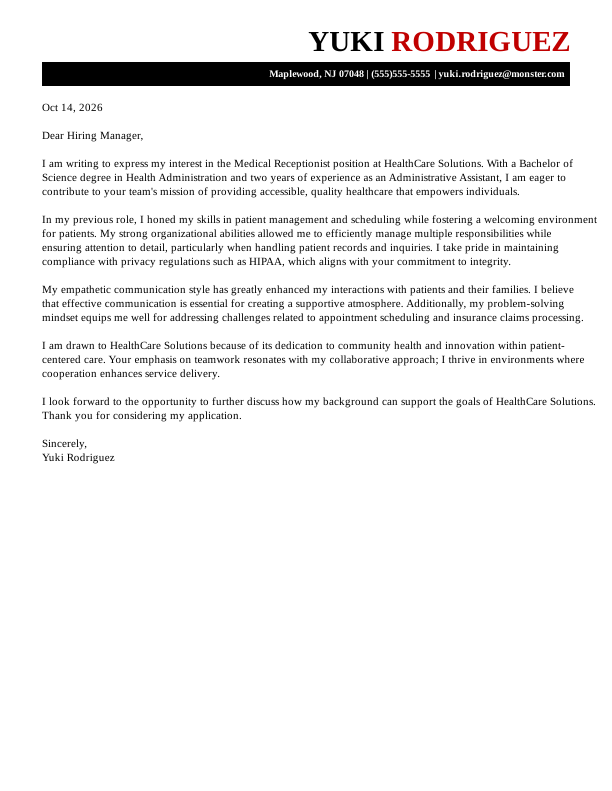
Medical Receptionist Entry-Level Cover Letter
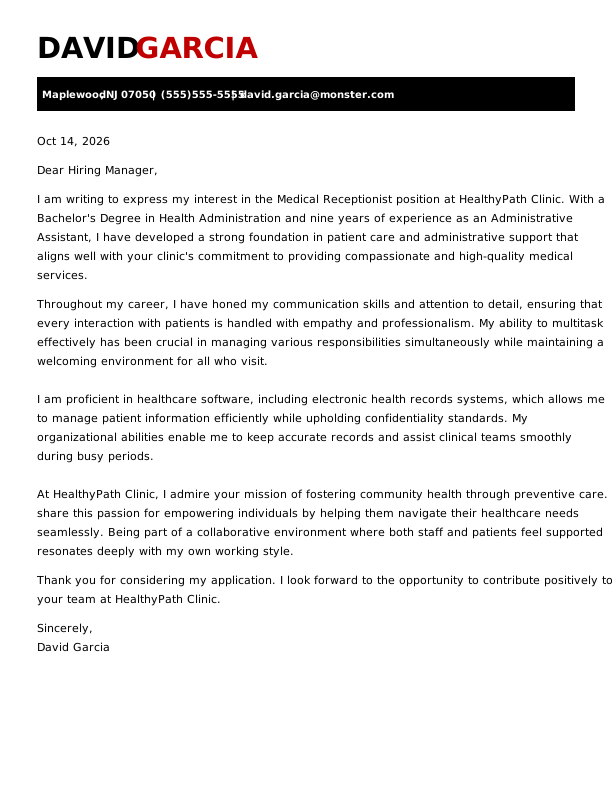
Medical Receptionist Mid-Level Cover Letter
Browse Free Cover Letter Templates
- Academic
- Account Manager
- Accountant
- Accounts Payable
- Administrative Assistant
- Admissions Counselor
- Architecture
- Artist
- Assistant Principal
- Babysitter
- Barista
- Bartender
- Bookkeeper
- Brand Ambassador
- Business Analyst
- Business
- Caregiver
- Chef
- Civil Engineering
- Computer Science
- Construction
- Consulting
- Copywriter
- Cosmetology
- Custodian
- Customer Service
- Customer Service Representative
- Data Analyst
- Data Entry
- Dental Assistant
- Dental Hygienist
- Digital Marketing
- Electrical Engineering
- Emt
- Engineering
- Esthetician
- Event Coordinator
- Executive Assistant
- Finance
- Financial Analyst
- Firefighter
- Flight Attendant
- Graphic Designer
- Hair Stylist
- Healthcare
- Hr Generalist
- Investment Banking
- It
- Janitor
- Journalism
- Lab Technician
- Law Clerk
- Lawyer
- Librarian
- Logistics
- Makeup Artist
- Manager
- Marketing Coordinator
- Marketing
- Marketing Manager
- Massage Therapist
- Mechanic
- Mechanical Engineer
- Medical Assistant
- Non Profit
- Nursing
- Occupational Therapy
- Office Assistant
- Office Manager
- Operations Manager
- Paralegal
- Personal Trainer
- Pharmacist
- Pharmacy Technician
- Photographer
- Physician Assistant
- Pilot
- Police Officer
- Program Manager
- Project Manager
- Property Manager
- Psychology
- Receptionist
- Research Assistant
- Restaurant Manager
- Retail
- Sales
- Sales Manager
- School Counselor
- Security Officer
- Social Work
- Software Engineer
- Special Education Teacher
- Substitute Teacher
- Teacher
- Teaching Assistant
- Truck Driver
- Vet Tech
- Veterinary Assistant
- Web Developer
Cover Letter Examples for Medical Receptionists
Cover letter expectations for a medical receptionist change as you gain experience, especially around scheduling complexity and patient communication. Choose the template that matches your career stage so you can highlight the right skills, training, and accomplishments for your level.
Entry-Level Medical Receptionist Cover Letter
Built for recent graduates and career changers, this entry-level template helps you present your foundational skills, coursework, and enthusiasm for supporting a fast-paced medical front desk.
Mid-Career Medical Receptionist Cover Letter
Geared toward professionals with a few years of experience, this mid-level template helps you showcase your proven track record in patient intake, schedule management, and keeping daily clinic operations running smoothly.
Experienced Medical Receptionist Cover Letter
Designed for seasoned professionals, this template highlights your deep industry knowledge, leadership skills, and ability to optimize front-desk workflows across complex healthcare environments.
Medical Receptionist Cover Letter Template (Text)
Copy this medical receptionist cover letter text into your document and customize it with your scheduling experience, patient check-in metrics, and the clinic name.
Sophia Singh
Los Angeles, CA 90008
(555)555-5555
sophia.singh@monster.com
Oct 14, 2026
Dear Hiring Manager,
I am writing to express my interest in the medical receptionist position at Healthcare Solutions Inc. With a Bachelor of Science degree in Healthcare Administration and five years of experience as an administrative assistant, I am eager to contribute to your team and support your mission of delivering compassionate, patient-centered care.
Throughout my career, I have honed a diverse skill set that aligns well with the demands of a medical office environment. My expertise in patient scheduling and office management has equipped me with the ability to maintain an organized workflow while ensuring that patients feel welcomed and valued from their first interaction. My strong communication skills enable me to effectively address inquiries regarding services and appointments while maintaining confidentiality and compliance with HIPAA regulations.
I pride myself on being detail-oriented and adaptable, which allows me to efficiently manage multiple tasks without compromising quality. Collaborating with healthcare professionals is something I thrive on; I believe teamwork is essential for enhancing patient care outcomes. Additionally, my proactive approach ensures that challenges are addressed promptly, fostering a positive atmosphere for both staff and patients.
I am genuinely excited about the opportunity at Healthcare Solutions Inc., where integrity, teamwork, and excellence resonate deeply with my own values. I look forward to potentially discussing how I can contribute to your esteemed organization by enhancing patient experiences through effective administrative support.
Thank you for considering my application.
Sincerely,
Sophia Singh
How to Write a Medical Receptionist Cover Letter
Writing a cover letter for a medical receptionist role means showing a practice that you understand its front-desk operations, software systems, and patient care values. Follow these steps to organize your experience and write a targeted, compelling letter.
1. Research & Prepare
Before writing, research how the practice operates so you can tailor your letter to its daily workflow. Take time to explore these key resources to gather helpful context:
- Review the job posting carefully to identify specific electronic health record (EHR) software and scheduling tools used by the facility.
- Visit the practice website to learn about its core values, patient care priorities, and specialized services.
- Look up local or state healthcare guidelines to confirm standard expectations for patient privacy and administrative compliance.
2. Hook the Reader
Start with a strong opening line that immediately highlights your front-desk experience and administrative value. Moving beyond generic intros helps you catch the reader’s attention right away. Consider these strong opening approaches for your opening paragraph:
- Highlight check-in efficiency: “At my previous clinic, I streamlined patient check-in procedures, reducing average wait times from 15 minutes to under 10 minutes.”
- Focus on insurance and scheduling accuracy: “Over the past three years, I managed high-volume patient scheduling while maintaining a 99% accuracy rate in insurance eligibility verification.”
- Showcase rapid symptom escalation: “In my previous role, I effectively managed front-desk triage by immediately directing urgent patient concerns to nursing staff according to practice protocol.”
3. Tell Your Professional Story
Use the body of your letter to detail key career moments where your administrative skills made a measurable difference. Sharing specific figures gives the hiring manager a clear picture of your actual impact. Review these examples of detailed achievement statements:
- Decreased overall patient wait times by 20% by introducing a simplified digital intake form for incoming visitors.
- Handled an average of 50 patient calls daily while maintaining precise scheduling entries across multiple provider calendars.
- Reduced scheduling errors by 15% through meticulous daily reviews of provider appointment logs and patient records.
4. Showcase Your Skills
Connect your core competencies directly to the specific job requirements listed in the posting. Instead of simply listing your qualities, explain how you apply them during a typical shift. Use these examples to guide how you describe your day-to-day skills:
- EHR and scheduling management: “I regularly update patient records and coordinate appointment calendars using top EHR platforms, ensuring records remain complete and accurate.”
- Front-desk communication: “When patients arrive feeling anxious or frustrated, I listen attentively and provide clear, reassuring information to help put them at ease.”
- Privacy compliance: “I strictly follow HIPAA guidelines during every phone interaction and record update to keep patient information entirely confidential.”
5. Explain Any Special Circumstances
If you are returning to work, changing careers, or relocating, use a brief statement to address your timeline clearly. Explaining your background helps employers understand your current focus and readiness to work. Here are a few ways to explain common career situations:
- Career break: “After taking time off for caregiving, I maintained my administrative skills by volunteering at a community clinic and completing updated HIPAA compliance training.”
- Career transition: “Transitioning from customer service to medical reception, I recently completed training in EHR software and medical terminology to prepare for front-desk responsibilities.”
- Relocation: “Having recently relocated to the area, I am eager to apply my five years of front-desk medical experience to serve patients in this community.”
6. End With a Professional Goodbye
Wrap up your letter with a polite call to action and a standard formal closing. Keeping your ending concise and professional leaves a great final impression.
You might write: “I would welcome the opportunity to discuss how my front-desk experience and dedication to patient care can support your team. Thank you for your time and consideration.”
Then close with “Sincerely,” followed by your name.
4 Tips for Formatting Your Cover Letter
A well-formatted cover letter ensures a busy hiring manager can read your key qualifications quickly and easily. When front-desk supervisors scan applications between patient check-ins and phone calls, clean layout choices help your top achievements stand out immediately.

Keep It to One Page
Because hiring managers often review applications while managing daily clinic tasks, keep your cover letter one-page long. Aim for 250 to 400 words split across three to four short paragraphs, focusing on your communication skills, software experience, and key accomplishments.

Match Your Header to Your Resume
Use the same header style on both your cover letter and resume. Matching your name, contact details, and layout creates a polished, cohesive presentation that makes your application look organized and professional.

Balance Spacing & Margins
Set your line spacing between 1.0 and 1.15, leaving a blank line between each paragraph to improve readability. Keep your margins between 0.75 inches and 1 inch so your text looks balanced on the page whether it is viewed on a screen or printed out.

Save & Send as a PDF
Save your completed cover letter as a PDF to preserve your layout, fonts, and spacing across different computers or applicant tracking systems. Use a simple, recognizable file name like Firstname_Lastname_Cover_Letter.pdf so the hiring manager can locate your document easily.
Key Takeaways
- Highlight your ability to manage front-desk workflows calmly and accurately by sharing a specific example of past success.
- Include clear metrics like average patient wait times or daily call volumes to demonstrate your administrative impact.
- Tailor your experience to match the specific needs of the practice, whether it is an urgent care center, a specialty clinic, or a general family practice.
More Cover Letter Examples
Browse Monster’s Resume Templates
Monster also has hundreds of ATS-friendly resume templates for all career levels and industries. Create a matching resume to help you land the interview.
- Cardiac Sonographer
- Caregiver
- Caretaker
- Certified Medical Assistant
- Chiropractic Assistant
- Clinical Data Specialist
- Clinical Research Associate
- Dietitian
- Direct Support Professional
- Ekg Technician
- Health Information Technician
- Healthcare Administration
- Healthcare
- Healthcare Support
- Healthcare Technology
- Home Health Care
- Lab Technician
- Lactation Consultant
- Medical Administrative Assistant
- Medical Assistant
- Medical Billing
- Medical Coder
- Medical Courier
- Medical Interpreter
- Medical Office Manager
- Medical Office
- Medical Receptionist
- Medical
- Medical School
- Medical Science Liaison
- Medical Scribe
- Medical Secretary
- Medical Technologist
- Medical Transcriptionist
- Mri Technologist
- Ophthalmic Technician
- Optician
- Patient Access Representative
- Patient Care Coordinator
- Patient Care Technician
- Patient Service Representative
- Patient Transporter
- Phlebotomist
- Physical Therapist Assistant
- Private Caregiver
- Radiologic Technologist
- Sonographer
- Surgical Tech
- Unit Secretary
Frequently Asked Questions
Last Update:
Do I really need a cover letter?
Yes, you need a cover letter for every job application. Cover letters allow you to explain your passion for patient care beyond simple resume bullet points. While your resume outlines your past duties, a cover letter shows how your communication skills and front-desk experience will directly benefit the practice’s daily operations.
How long should my cover letter be?
A medical receptionist cover letter should be between 250 and 400 words and fit neatly on a single page. Keeping your writing concise ensures a busy hiring manager can review your key accomplishments, software skills, and patient care strengths in less than a minute.
Should my cover letter match my resume?
Your cover letter should match your resume in visual style, using identical fonts, margins, and header designs. While the visual elements match, the text should expand on your background rather than repeat your resume line by line, giving extra context to your main career highlights.
How do I address my cover letter if I don’t know the hiring manager’s name?
If you do not know the hiring manager’s name, try checking the job posting or practice website for the office manager or front-desk supervisor. If you still cannot find a specific name, opening with “Dear Hiring Manager” or “Dear Patient Services Team” keeps your salutation professional and respectful.
What should I include in my cover letter header?
Your cover letter header should include your full name, phone number, professional email address, and location, followed by the date and recipient details. Including the office manager’s name, title, and facility address ensures your document looks like an official, well-prepared business letter.

Toni Frana is a Certified Professional Resume Writer (CPRW), member of the Professional Association of Resume Writers & Career Coaches, and career expert who empowers job seekers to take control of their career paths using Monster’s comprehensive job search and resume tools.
See More From Toni FranaExplore Related Career Advice







How to Write a Cover Letter for Internal Positions or Promotions (Examples & Tips)

Updated:
Apr 23, 2026
|
19 min read


Cover Letter vs Resume: What’s the Difference & Do You Need Both?

Updated:
Apr 23, 2026
|
18 min read