

Free Caregiver Cover Letter Templates & Examples
Get more interviews with our expertly designed caregiver cover letter templates. These free templates offer tailored guidance to help you highlight your compassionate care skills, daily assistance experience, and support strengths to make a meaningful impression on hiring teams.
Real-World Cover Letters That Get Results
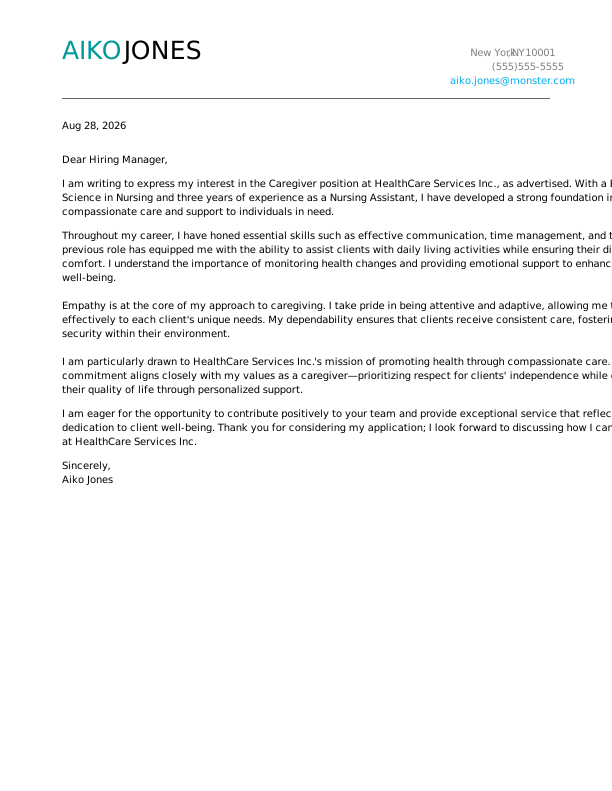
 Free
FreeCaregiver Entry-Level Cover Letter
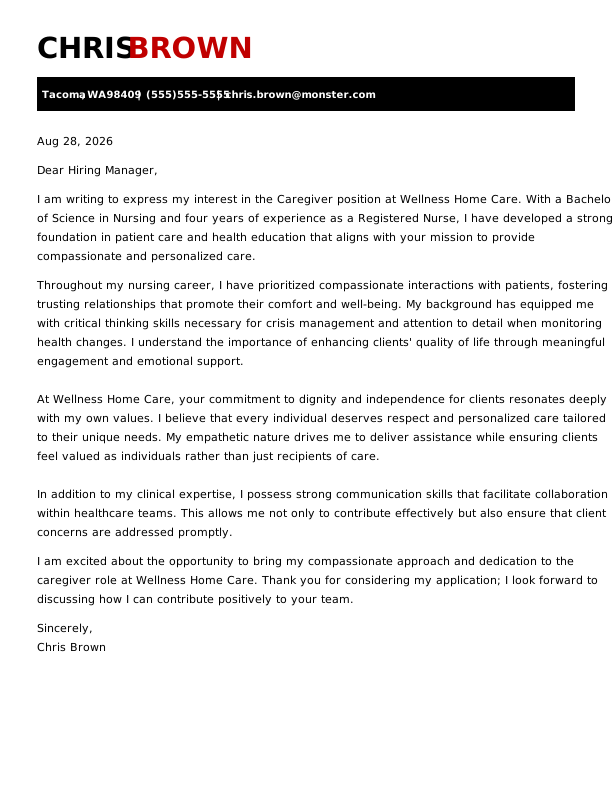
Caregiver Mid-Level Cover Letter
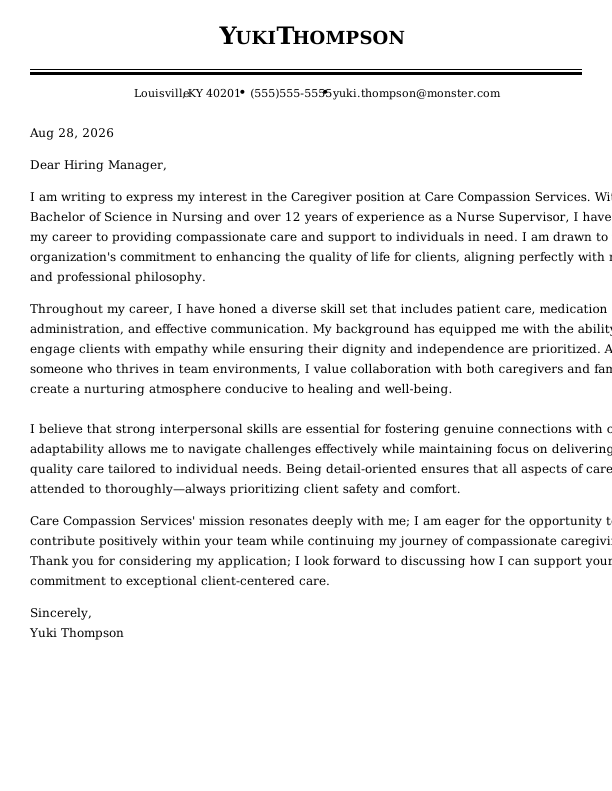
Caregiver Experienced Cover Letter
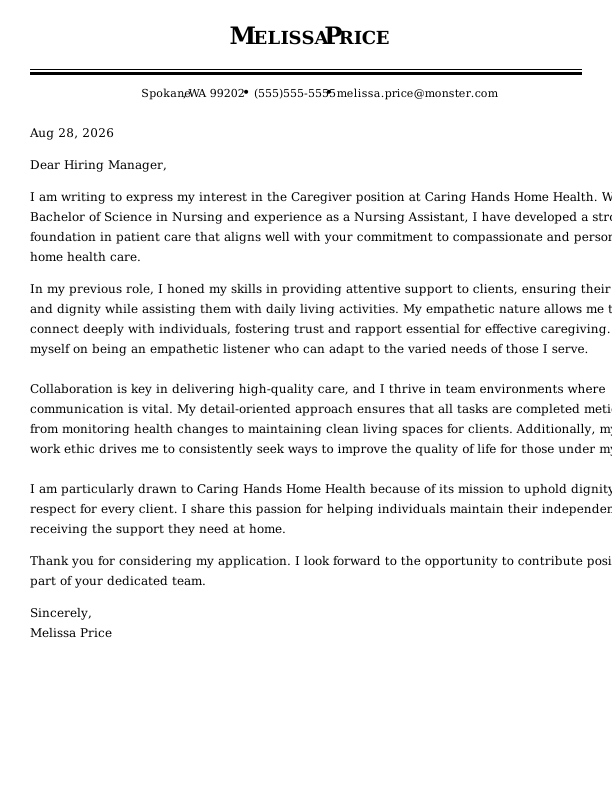
Caregiver Entry-Level Cover Letter
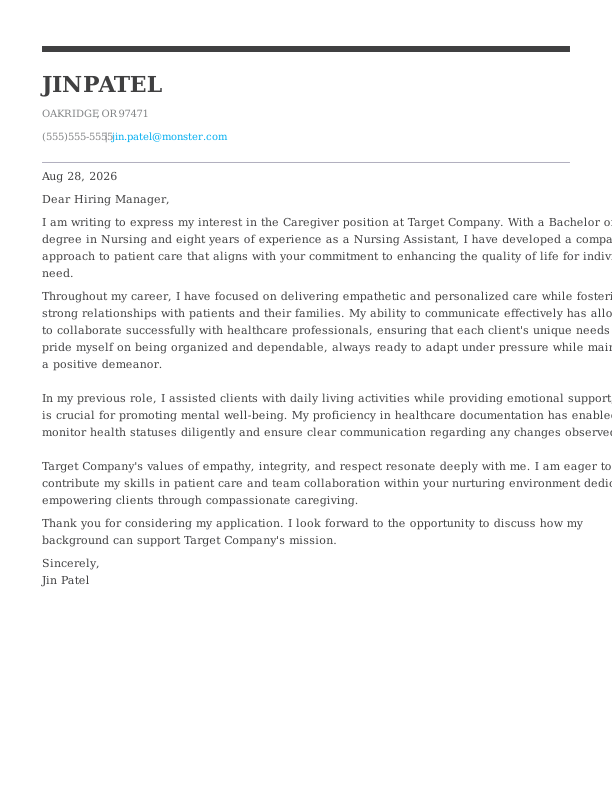
Caregiver Mid-Level Cover Letter
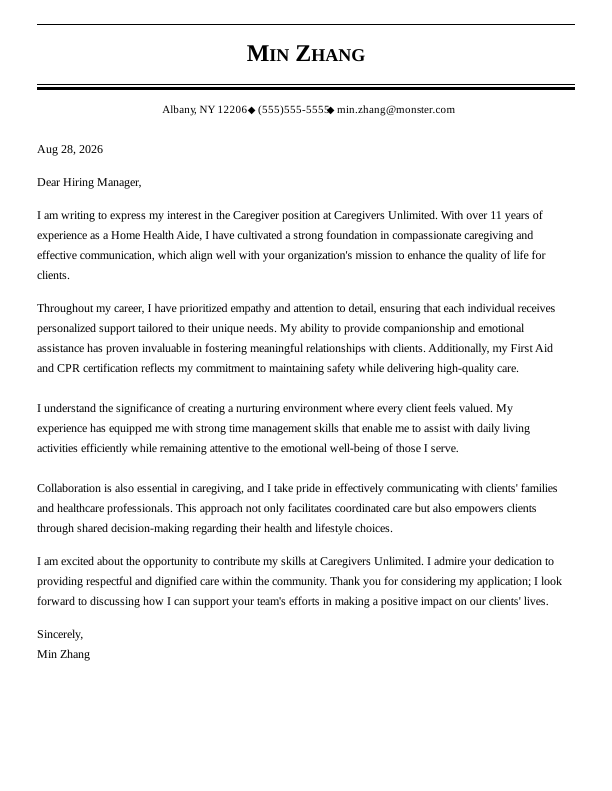
Caregiver Experienced Cover Letter
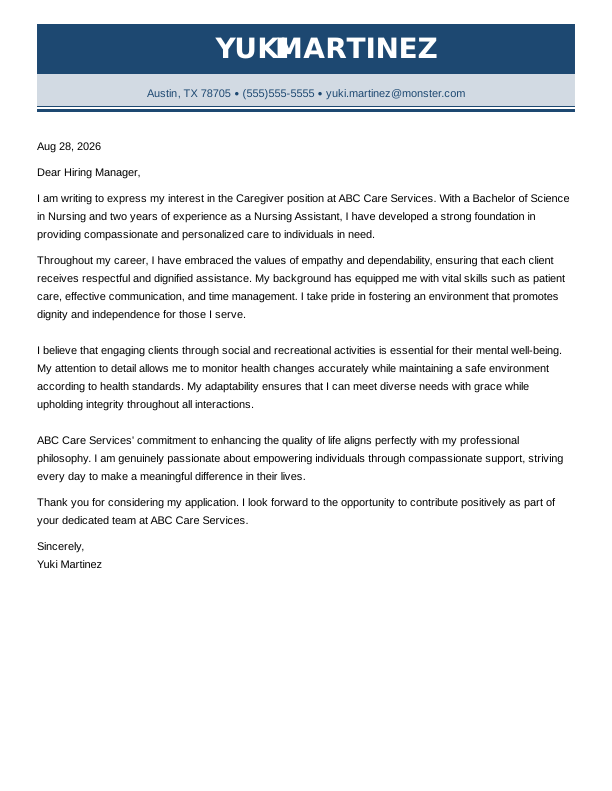
Caregiver Entry-Level Cover Letter
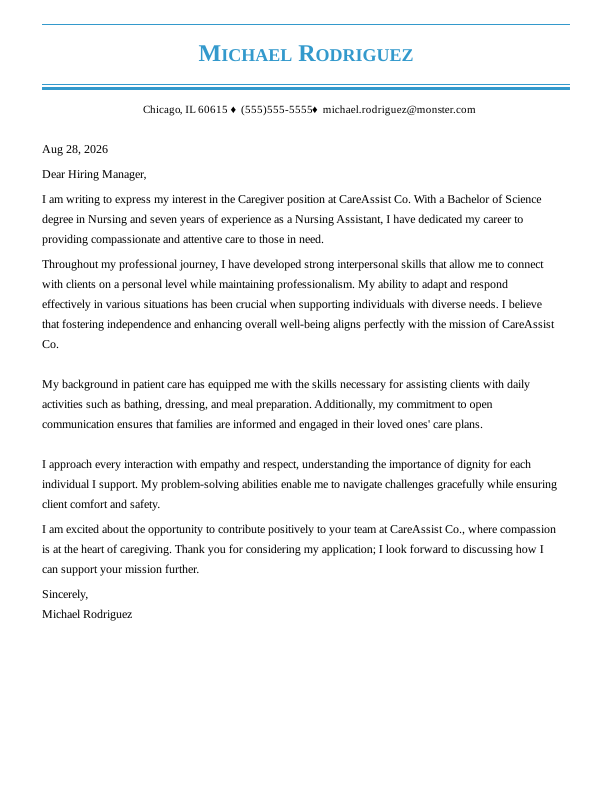
Caregiver Mid-Level Cover Letter
Browse Free Cover Letter Templates
- Account Manager
- Accounts Payable
- Administrative Assistant
- Admissions Counselor
- Artist
- Babysitter
- Barista
- Bartender
- Bookkeeper
- Brand Ambassador
- Business Analyst
- Chef
- Civil Engineering
- Computer Science
- Custodian
- Customer Service
- Dental Assistant
- Electrical Engineering
- Emt
- Engineering
- Event Coordinator
- Executive Assistant
- Finance
- Financial Analyst
- Firefighter
- Flight Attendant
- Graphic Designer
- Hair Stylist
- Healthcare
- Investment Banking
- It
- Janitor
- Journalism
- Lab Technician
- Law Clerk
- Lawyer
- Librarian
- Logistics
- Manager
- Marketing Manager
- Massage Therapist
- Mechanic
- Mechanical Engineer
- Medical Assistant
- Non Profit
- Nursing
- Office Manager
- Paralegal
- Personal Trainer
- Pharmacy Technician
- Photographer
- Physician Assistant
- Pilot
- Police Officer
- Project Manager
- Property Manager
- Receptionist
- Research Assistant
- Retail
- Sales
- Security Officer
- Social Work
- Software Engineer
- Teacher
- Teaching Assistant
- Truck Driver
- Vet Tech
- Veterinary Assistant
- Web Developer
- Welder
Cover Letter Examples for Caregivers
Caregiver cover letters change by career stage, so tailor your achievements and core strengths to entry-level, mid-career, or experienced roles. Use these templates to highlight relevant skills, hands-on care, and positive outcomes in a clear, practical way.
Entry-Level Caregiver Cover Letter
Perfect for recent graduates writing cover letter with no experience who need help getting started, this template also supports career changers moving into caregiving from another field.
Mid-Career Caregiver Cover Letter
An excellent choice for experienced caregivers who want to grow into specialized client support or team leadership, this template spotlights hands-on care, communication, and steady progression in patient comfort and safety.
Experienced Caregiver Cover Letter
Best for caregivers with 10+ years of experience, this template helps you pursue senior leadership or advanced care roles while guiding your cover letter toward impact and compassion.
Caregiver Cover Letter Template (Text)
Use this adaptable text template for a caregiver cover letter to copy, paste, and customize directly in your document.
Chris Johnson
Los Angeles, CA 90010
(555)555-5555
chris.johnson@monster.com
Aug 28, 2026
Dear Hiring Manager,
I am writing to express my interest in the caregiver position at Compassionate Care Services. With a Bachelor of Science in Nursing and six years of experience as a nursing assistant, I have developed strong interpersonal skills and a compassionate approach to patient care that aligns well with your mission to enhance the quality of life for clients.
Throughout my career, I have prioritized building trusting relationships with those in my care, ensuring they feel respected and understood. My experience has equipped me with the ability to handle emergencies calmly, always focusing on maintaining a safe and comfortable environment for clients. I believe that effective communication is vital in caregiving; it fosters connection and allows me to provide tailored support that meets individual needs.
I take pride in my attention to detail, which enables me to monitor changes in health or behavior accurately. Collaborating with family members and healthcare professionals has been an integral part of my role, allowing for holistic support for each client.
Compassionate Care Services’ commitment to personalized attention resonates deeply with me. I am eager to contribute my skills in patient care, time management, and problem-solving within your collaborative team environment. Together, we can make meaningful differences in the lives of those we serve.
Thank you for considering my application. I look forward to the opportunity to discuss how I can contribute positively as part of your dedicated team.
Sincerely,
Chris Johnson
How to Write a Caregiver Cover Letter
For a caregiver, writing a strong cover letter means showing fit through personal storytelling, specific examples of compassionate support, and clear links between your caregiving skills and the needs of the person or family you’ll serve. Use the guidance below to highlight your qualifications and customize your letter for each target role by referencing relevant experience, availability, and any specialized care you’ve provided.
1. Research & Prepare
Before you write a caregiver cover letter, research the care setting, the client population, and the team culture. Look for details on daily routines, safety expectations, and communication style so you can match your experience to the role and the people the organization serves.
Review the job posting for required certifications and shifts, then check the company website for services and values. Read recent news for program updates and scan LinkedIn profiles of hiring staff to learn their background. Using these specifics helps you personalize your letter with clear examples of how you support clients.
2. Hook the Reader
Your cover letter opening sets the tone and helps a hiring manager picture you in the role right away. A strong opener avoids clichés by naming what you bring, showing care, and referencing details that match the organization’s needs.
For a caregiver position, try one of these openings:
- Mention a specific moment when you supported comfort and dignity during daily care.
- Reference a program or type of client your target employer serves, then connect it to your experience with similar routines.
- Start with a brief story about building trust with a client who needed extra patience and consistency.
3. Tell Your Professional Story
In your caregiver cover letter, go beyond restating your resume. Tell a clear story with specific moments and measurable results that show how you supported clients and improved daily care.
Quantify what you did. For example, mention reducing missed medication doses by 30%, improving meal intake from 60% to 80%, or helping clients complete therapy exercises by tracking adherence for 10+ sessions. Share one brief scenario, then add the metric to show the outcome.
4. Showcase Your Skills
When you apply for a caregiver role, match your experience to what the job posting asks for. Use the requirements as a checklist and show how your care approach supports real needs like safety, comfort, and reliable daily routines.
For example, if the posting mentions fall prevention or medication reminders, explain how you’ve assisted with mobility support and helped clients follow prescribed schedules using clear check-ins. If it highlights companionship or dementia care, mention how you’ve used calm communication, tracked changes in mood or appetite, and shared observations with family or the care team to guide next steps.
5. Explain Any Special Circumstances
If you have an employment gap, a career change, or a recent relocation, address it early in your cover letter with short, honest context. Focus on what you gained during that time, such as new routines, stronger communication, or updated training. Keep the tone positive and connect your experience to the role you want now.
For instance, you can say you took time off to care for a family member and learned how to track symptoms, manage medication schedules, and handle daily comfort needs with patience. If you’re shifting from one setting to another, such as home care to facility work, show how managing tight medication and care schedules on your own built the reliability needed for a multi-patient facility floor.
6. End With a Professional Goodbye
Close your cover letter by restating your interest in the caregiver position and thanking the reader for their time. In two to three sentences, invite the hiring team to discuss how your experience supports daily care needs and a respectful, supportive environment. Ask for an interview or a chance to talk further.
End with a tailored call to action like, “I welcome the opportunity to discuss how my compassionate caregiving and attention to patient comfort can support your clients.” Use professional sign-offs such as “Sincerely” or “Best regards.”
4 Tips for Formatting Your Cover Letter
Use clear spacing, simple headings, and short paragraphs to make your caregiver cover letter professional and easy to scan. Keep your formatting consistent so hiring managers can quickly find your strongest caregiving qualifications and experience.

Keep It to One Page
Hiring managers have busy schedules, and they appreciate concise cover letters that stay on one page. Target 250–400 words in three to four focused paragraphs that showcase your strongest caregiving qualifications, hands-on experience, and client support skills.

Use a Professional Font & Layout
Choose a readable font such as Arial, Calibri, Times New Roman, or Georgia in 10–12 pt. Use one-inch margins and keep your formatting consistent with your resume so your application looks polished and cohesive.

Address the Hiring Manager Directly
Whenever possible, address the hiring manager by name for a caregiver position. Check the job posting, company website, or LinkedIn, or call or email the facility to find the right contact. If you cannot find a name, use “Dear Hiring Manager” or “To the Hiring Team.” Avoid “To Whom It May Concern,” which can feel outdated in healthcare settings.

Save & Send as a PDF
Save your cover letter as a PDF to preserve your formatting when you submit it. Use a clear file name that includes your name and “cover letter,” such as Jordan_Lee_Cover Letter.pdf.
Key Takeaways
- Personalize each letter for the specific client or agency. Mention the setting, care needs, and schedule so they can see you understand what matters most.
- Lead with a strong opening and support it with measurable outcomes. Include examples like improved meal adherence, fewer missed appointments, or consistent assistance that helped maintain comfort and safety.
- Keep formatting clean and consistent with your resume. Use the same headings and dates so the application is easy to scan at a glance.
Browse Monster’s Resume Templates
Monster also has hundreds of ATS-friendly resume templates for all career levels and industries. Create a matching resume to help you land the interview.
- Cardiac Sonographer
- Caregiver
- Caretaker
- Certified Medical Assistant
- Chiropractic Assistant
- Clinical Data Specialist
- Clinical Research Associate
- Dietitian
- Direct Support Professional
- Ekg Technician
- Health Information Technician
- Healthcare Administration
- Healthcare
- Healthcare Support
- Healthcare Technology
- Home Health Care
- Lab Technician
- Lactation Consultant
- Medical Administrative Assistant
- Medical Assistant
- Medical Billing
- Medical Coder
- Medical Courier
- Medical Interpreter
- Medical Office Manager
- Medical Office
- Medical Receptionist
- Medical
- Medical School
- Medical Science Liaison
- Medical Scribe
- Medical Secretary
- Medical Technologist
- Medical Transcriptionist
- Mri Technologist
- Ophthalmic Technician
- Optician
- Patient Access Representative
- Patient Care Coordinator
- Patient Care Technician
- Patient Service Representative
- Patient Transporter
- Phlebotomist
- Physical Therapist Assistant
- Private Caregiver
- Radiologic Technologist
- Sonographer
- Surgical Tech
- Unit Secretary
Frequently Asked Questions
Last Update:
Do I really need a cover letter?
Yes, include a cover letter even if the posting says it’s optional. It lets you add context your resume cannot, and it signals initiative and real interest in a caregiver role.
A cover letter matters most when you’re changing careers, have employment gaps, or want to work for a specific agency or facility. It also gives you space to show your personality and genuine enthusiasm for patient comfort and support.
How long should my cover letter be?
Caregiver cover letters should stay within one page maximum, and typically run 250–400 words. Hiring managers review many applications and have limited time for each submission.
Focus on quality over quantity by sharing only the most relevant experiences and achievements. Structure your letter in three to four concise paragraphs that clearly support your application.
Should my cover letter match my resume?
Yes, your cover letter should match your resume’s visual design. Use the same fonts, colors, and header style so the application package looks cohesive and intentional.
However, let the content complement your resume instead of repeating it. For a caregiver role, expand on key experiences with clients, describe what you learned from specific situations, and share why this work matters to you in ways bullet points cannot show.
Can I use AI to write my cover letter?
AI tools can help you draft a caregiver cover letter, find a clear structure, and break through writer’s block. They can prompt ideas for key skills and duties, but your own unique experience must drive the final message.
Use AI as a starting point, then edit heavily to add your own voice, specific patient or client examples, and real enthusiasm for the role. Hiring managers often spot generic AI-generated content, so read every line and make it sound like you.
What should I include in my cover letter header as a caregiver?
Your cover letter header should include your full name, phone number, professional email, city/state, and LinkedIn profile (if applicable). Add the date and the recipient’s information below your contact details. Match this header style to your resume so hiring managers can scan it quickly.

Megan Dawkins is a career industry editor who empowers job seekers to take control of their career paths using Monster’s comprehensive job search and resume tools. She specializes in helping job seekers navigate the flexible job market.
See More From Megan DawkinsExplore Related Career Advice







How to Write a Cover Letter for Internal Positions or Promotions (Examples & Tips)

Updated:
Apr 23, 2026
|

19 min read


Cover Letter vs Resume: What’s the Difference & Do You Need Both?

Updated:
Apr 23, 2026
|
18 min read