

Free Healthcare Cover Letter Templates & Examples
Use these professionally designed cover letter templates to help you secure more interviews. Discover writing tips and guidance to help you highlight qualifications, show strengths, and appeal directly to hiring managers.
Real-World Cover Letters That Get Results
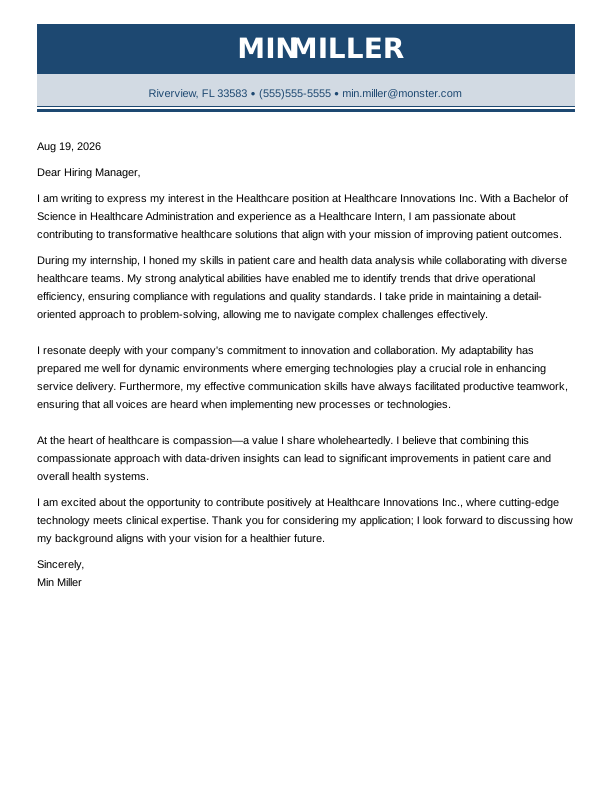
 Free
FreeHealthcare Entry-Level Cover Letter
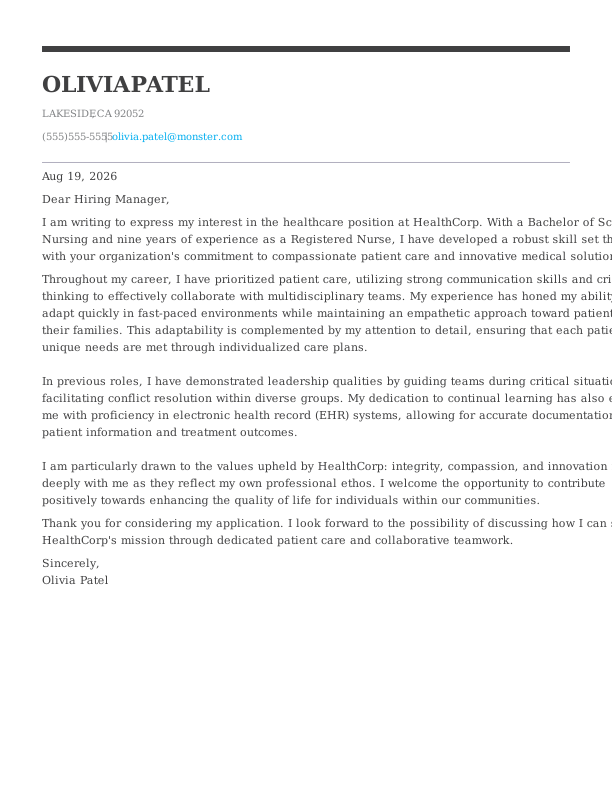
Healthcare Mid-Level Cover Letter
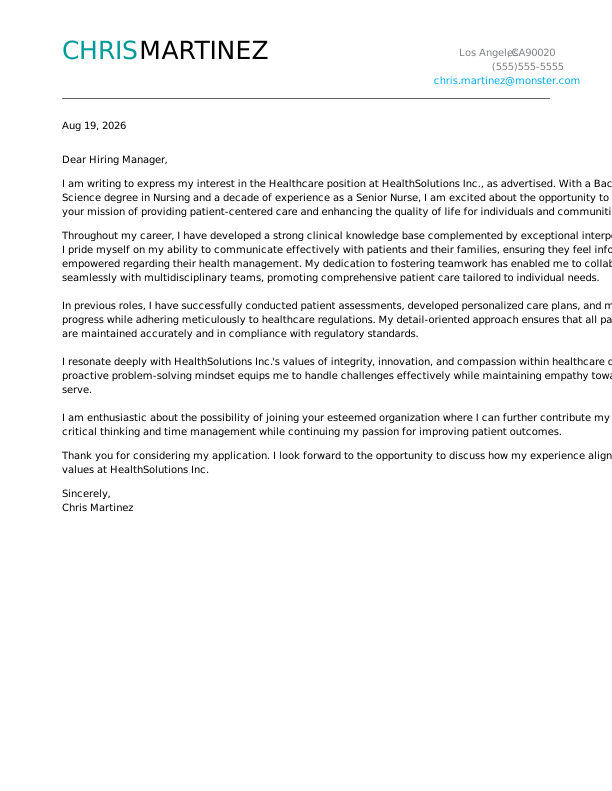
Healthcare Experienced Cover Letter
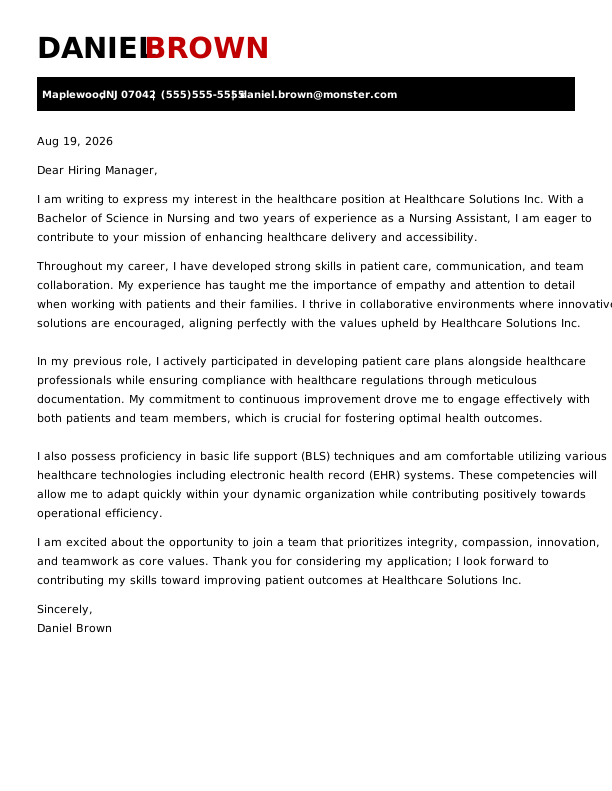
Healthcare Entry-Level Cover Letter
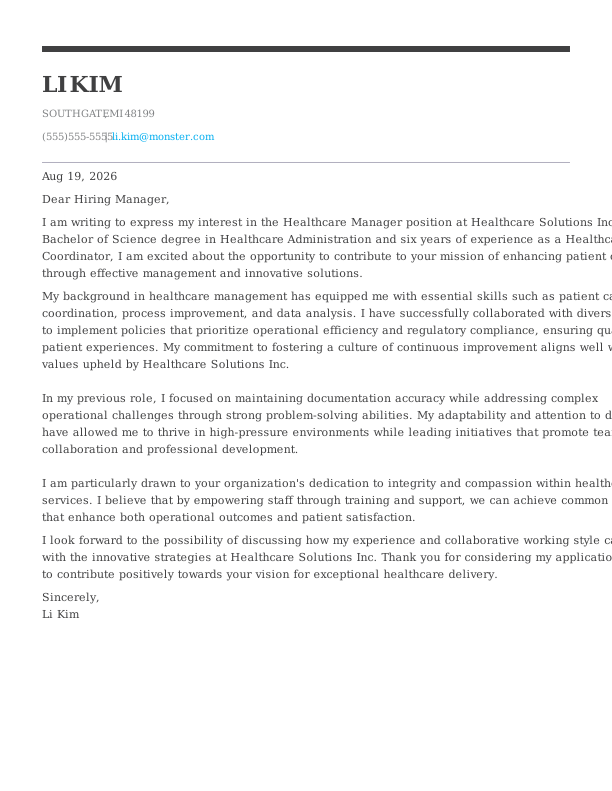
Healthcare Mid-Level Cover Letter
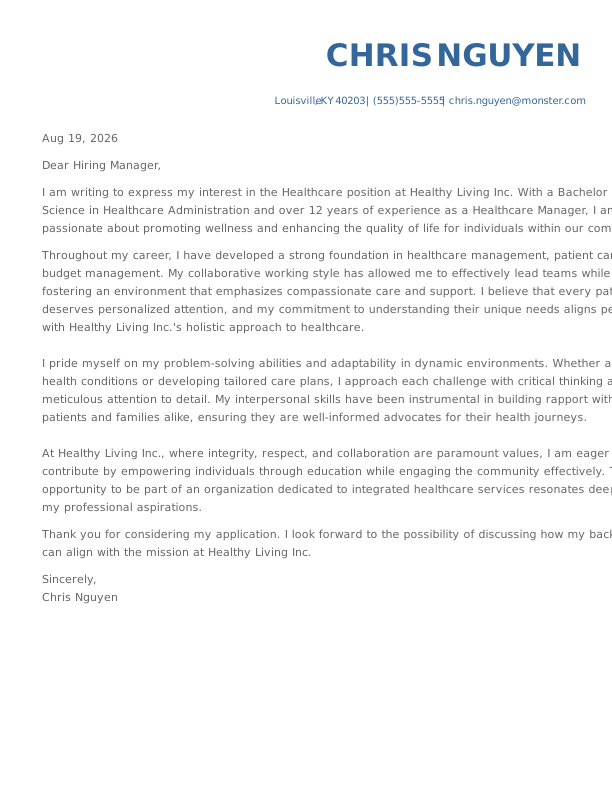
Healthcare Experienced Cover Letter
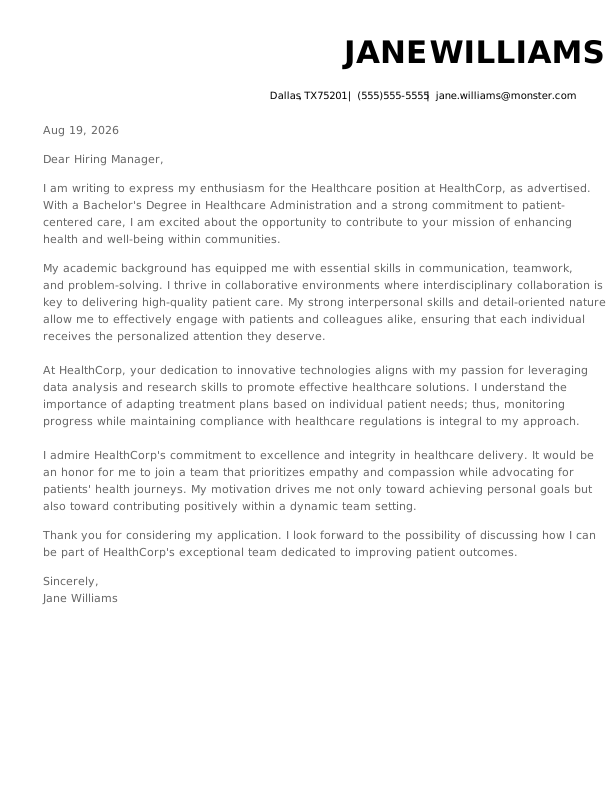
Healthcare Entry-Level Cover Letter
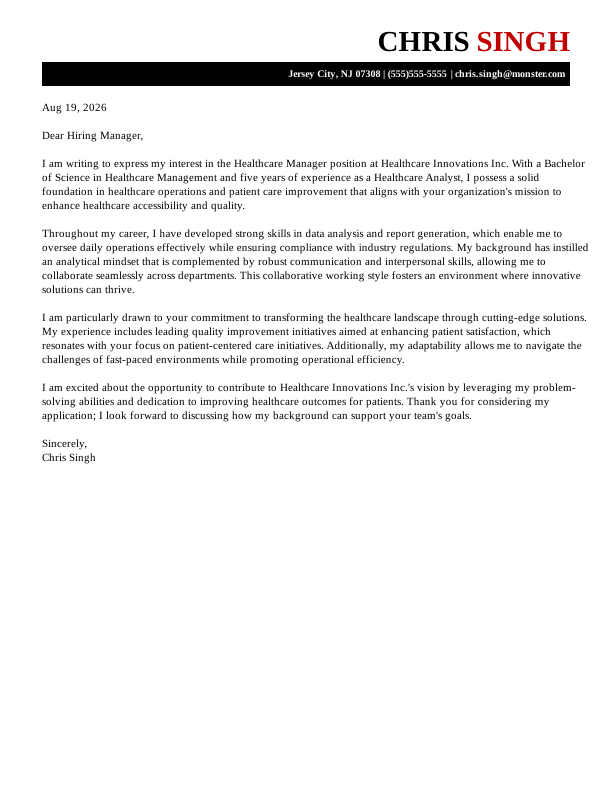
Healthcare Mid-Level Cover Letter
Browse Free Cover Letter Templates
- Account Manager
- Accounts Payable
- Administrative Assistant
- Admissions Counselor
- Artist
- Babysitter
- Barista
- Bartender
- Bookkeeper
- Brand Ambassador
- Business Analyst
- Caregiver
- Chef
- Civil Engineering
- Computer Science
- Custodian
- Customer Service
- Dental Assistant
- Electrical Engineering
- Emt
- Engineering
- Event Coordinator
- Executive Assistant
- Finance
- Financial Analyst
- Firefighter
- Flight Attendant
- Graphic Designer
- Hair Stylist
- Investment Banking
- It
- Janitor
- Journalism
- Lab Technician
- Law Clerk
- Lawyer
- Librarian
- Logistics
- Manager
- Marketing Manager
- Massage Therapist
- Mechanic
- Mechanical Engineer
- Medical Assistant
- Non Profit
- Nursing
- Office Manager
- Paralegal
- Personal Trainer
- Pharmacy Technician
- Photographer
- Physician Assistant
- Pilot
- Police Officer
- Project Manager
- Property Manager
- Receptionist
- Research Assistant
- Retail
- Sales
- Security Officer
- Social Work
- Software Engineer
- Teacher
- Teaching Assistant
- Truck Driver
- Vet Tech
- Veterinary Assistant
- Web Developer
- Welder
Cover Letter Examples for Healthcare
Cover letter templates for healthcare roles shift by career stage. Use entry-level, mid-career, and experienced examples to match how you present skills, clinical or operational experience, and key achievements for each level.
Entry-Level Healthcare Cover Letter
Perfect for recent graduates starting a cover letter with no experience in healthcare, this template also supports career changers transitioning into the healthcare field from other industries.
Mid-Career Healthcare Cover Letter
An excellent choice for experienced healthcare professionals, this template helps you highlight clinical growth and supports advancement into specialized practice or team leadership roles.
Experienced Healthcare Cover Letter
Best for healthcare professionals with 10+ years of experience, this template helps you pursue senior leadership roles and advanced clinical positions where you can guide teams and improve patient outcomes.
Healthcare Cover Letter Template (Text)
Use an adaptable text template for a healthcare cover letter to copy, paste, and customize in your document or file.
Sophia Chen
Maplewood, NJ 07045
(555)555-5555
sophia.chen@monster.com
Aug 19, 2026
Dear Hiring Manager,
I am writing to express my interest in the clinical operations manager position at HealthCorp. With a bachelor of science degree in healthcare administration and seven years of experience as a healthcare manager, I have developed a strong foundation in healthcare management, strategic planning, and patient care that aligns well with your mission to deliver innovative healthcare solutions.
Throughout my career, I have cultivated effective communication skills and a collaborative mindset that enables me to work seamlessly within interdisciplinary teams. I believe that teamwork is essential for developing individualized care plans that genuinely address patient needs while promoting wellness and managing chronic conditions. My ability to analyze data effectively has also played a key role in implementing quality improvement initiatives aimed at enhancing service delivery and patient satisfaction.
I appreciate HealthCorp’s commitment to compassionate care and continuous improvement. My approach mirrors these values; I strive for adaptability while remaining detail-oriented in all aspects of my work. Educating patients on health maintenance strategies is something I am passionate about, as it empowers them to take charge of their health journey.
I am excited about the opportunity to contribute positively to HealthCorp’s vision by fostering an environment where patients receive high-quality care tailored specifically for them. Thank you for considering my application; I look forward to the possibility of discussing how my background can support your team’s efforts.
Sincerely,
Sophia Chen
How to Write a Healthcare Cover Letter
In healthcare, knowing how to write a cover letter means showing fit through clear personalization, strong storytelling from your patient care experience, and evidence of relevant skills and outcomes.
Follow the steps below to highlight your qualifications and tailor or customize your letter for each target role, aligning your background with the specific setting, responsibilities, and priorities.
1. Research & Prepare
Before you write a healthcare cover letter, research the facility, the specific unit, and the hiring manager. Patient needs, care model, and staff workflow shape what you should highlight in your experience, from clinical skills to teamwork under pressure.
In addition:
- Review the job posting for required licenses and key duties.
- Visit the company website for mission and service lines.
- Scan recent news for initiatives or quality goals.
- Check LinkedIn profiles for the manager’s background.
Use what you learn to tailor examples and align your goals with the organization’s priorities.
2. Hook the Reader
Your cover letter opening matters because it sets the tone and earns the reader’s attention fast. A strong start shows you understand the healthcare mission, highlights a relevant strength, and hints at what you bring to patients and teams.
Try one of the following approaches:
- Reference a recent community health program by the organization and tie it to your experience in patient education.
- Open with a brief outcome, such as reducing wait times through clearer triage notes.
- Mention a clinician contact who recommended you, then connect that referral to the role’s focus on care coordination.
3. Tell Your Professional Story
Your cover letter should go beyond repeating your resume. Use a few specific moments that show how you improved patient care, supported teammates, and strengthened workflows, with measurable results that hiring managers can picture.
In healthcare, quantify what changed for patients and teams. For example, mention reducing readmissions by 10%, improving patient satisfaction from 85% to 92%, or cutting medication errors by 25%.
You can also describe mentoring new staff and tracking outcomes like faster onboarding or fewer charting discrepancies.
4. Showcase Your Skills
In healthcare roles, employers want proof that your skills solve the exact problems they face. Match your experience to the job posting by describing how you applied it with real patients, not just what tools or tasks you can handle.
For example, if the role highlights patient education, share a time you created clear instructions and follow-up check-ins that improved medication adherence. If the job posting mentions EHR documentation, point to your work in Epic or Cerner where you reduced charting errors and kept care plans up to date for clinicians and care teams.
5. Explain Any Special Circumstances
If you have career gaps, a recent relocation, or a shift in settings, use your cover letter to briefly and transparently frame the transition as a strength.
- Navigating career gaps: Keep explanations concise, then quickly pivot to productive activities during your time off. Highlight relevant updates like renewing BLS certifications, doing clinical refreshers, shadowing in a new unit, volunteering, or earning new credentials.
- Transitioning settings or specialties: Show how changing environments builds adaptable skills. If shifting from inpatient to outpatient, emphasize your new grasp of chronic-care workflows and team follow-up routines. If moving between clinical specialties, focus on core transferable priorities like documentation accuracy, patient education, and a focus on patient care.
6. End With a Professional Goodbye
Close your cover letter by reaffirming your interest in the healthcare role and inviting the next step. In two to three sentences, thank the reader for their time, and ask to discuss how your background supports patient outcomes. Keep it direct and confident.
End with a tailored line such as, “I welcome the opportunity to discuss how my clinical skills, patient communication, and attention to safety can support your care team.” Then, sign off with phrases like “Sincerely” or “Best regards.”
4 Tips for Formatting Your Cover Letter
Clean, structured formatting creates a strong first impression and helps busy nurse managers, medical directors, and clinical recruiters scan your credentials quickly. Keep your layout polished and professional with these key guidelines:

Keep It to One Page
Clinical hiring managers review dozens of applications between patient rounds and shifts. Keep your letter to 250–400 words across three to four concise paragraphs focused on your most relevant clinical skills, certifications, and measurable outcomes.

Use a Professional Font & Layout
Use standard fonts like Arial, Calibri, or Times New Roman (10–12 pt) with 1-inch margins. Ensure medical credentials, licenses, and key software skills (like Epic or Cerner) stand out clearly without dense blocks of text.

Address the Hiring Manager Directly
Address your letter directly to the nurse manager, department director, or clinical recruiter by name. If the contact isn’t listed, use professional role-based greetings like “Dear Clinical Operations Hiring Team” or “Dear Nurse Unit Manager” rather than outdated phrases like “To Whom It May Concern.”

Save & Send as a PDF
Preserve your formatting across hospital system HR portals by saving as a PDF. Title your file professionally using your name and primary credential—for example, “Jordan_Lee_RN_Cover_Letter.pdf.”
Top-Paying States for Healthcare Roles
Knowing how healthcare salaries vary helps you evaluate job offers, negotiate compensation, and make better career decisions. The salary data below comes from the U.S. Bureau of Labor Statistics and reflects current national averages across healthcare occupations.
Keep in mind that location, years of experience, relevant credentials, and specialization can all influence your actual pay. For example, clinicians working in hospitals or specialty care settings often earn more than those in outpatient clinics, and advanced roles such as ICU nursing or surgical technologist positions tend to come with higher compensation.
| Alabama | $99,720 |
| Alaska | $118,710 |
| Arizona | $107,930 |
| Arkansas | $88,900 |
| California | $131,360 |
| Connecticut | $123,650 |
| Delaware | $108,220 |
| District of Columbia | $151,100 |
| Florida | $99,500 |
| Georgia | $128,800 |
| Hawaii | $122,130 |
| Idaho | $94,920 |
| Illinois | $102,010 |
| Indiana | $98,930 |
| Iowa | $92,830 |
| Kansas | $94,010 |
| Kentucky | $98,400 |
| Louisiana | $97,350 |
| Maine | $165,770 |
| Maryland | $158,810 |
| Massachusetts | $116,930 |
| Michigan | $99,600 |
| Minnesota | $116,320 |
| Mississippi | $107,990 |
| Missouri | $145,520 |
| Montana | $151,130 |
| Nebraska | $137,110 |
| Nevada | $111,830 |
| New Hampshire | $110,760 |
| New Jersey | $114,490 |
| New Mexico | $104,680 |
| New York | $135,440 |
| North Carolina | $136,370 |
| North Dakota | $99,120 |
| Ohio | $111,170 |
| Oklahoma | $89,550 |
| Oregon | $127,540 |
| Pennsylvania | $100,700 |
| Rhode Island | $114,350 |
| South Carolina | $95,450 |
| South Dakota | $90,910 |
| Tennessee | $103,480 |
| Texas | $119,490 |
| Utah | $127,880 |
| Vermont | $108,140 |
| Virginia | $132,630 |
| Washington | $126,600 |
| West Virginia | $111,500 |
| Wisconsin | $157,390 |
| Wyoming | $106,240 |
| Guam | $81,440 |
| Puerto Rico | $107,110 |
| Virgin Islands | $84,010 |
Key Takeaways
- Tailor your letter to the specific care setting, aligning your background with the facility’s unit type, patient population, and clinical workflows.
- Highlight measurable achievements—such as improvements in HCAHPS scores, reductions in wait times or readmissions, and lower charting discrepancy rates—to prove your clinical impact.
- Match your cover letter’s header and typography directly to your resume, keeping the length to one page with key licenses and certifications easy for recruiters to spot.
Browse Monster’s Resume Templates
Monster also has hundreds of ATS-friendly resume templates for all career levels and industries. Create a matching resume to help you land the interview.
- Cardiac Sonographer
- Caregiver
- Caretaker
- Certified Medical Assistant
- Chiropractic Assistant
- Clinical Data Specialist
- Clinical Research Associate
- Dietitian
- Direct Support Professional
- Ekg Technician
- Health Information Technician
- Healthcare Administration
- Healthcare
- Healthcare Support
- Healthcare Technology
- Home Health Care
- Lab Technician
- Lactation Consultant
- Medical Administrative Assistant
- Medical Assistant
- Medical Billing
- Medical Coder
- Medical Courier
- Medical Interpreter
- Medical Office Manager
- Medical Office
- Medical Receptionist
- Medical
- Medical School
- Medical Science Liaison
- Medical Scribe
- Medical Secretary
- Medical Technologist
- Medical Transcriptionist
- Mri Technologist
- Ophthalmic Technician
- Optician
- Patient Access Representative
- Patient Care Coordinator
- Patient Care Technician
- Patient Service Representative
- Patient Transporter
- Phlebotomist
- Physical Therapist Assistant
- Private Caregiver
- Radiologic Technologist
- Sonographer
- Surgical Tech
- Unit Secretary
Frequently Asked Questions
Last Update:
Do I really need a cover letter?
Yes, you should include a cover letter when applying for healthcare roles, even when it’s marked optional. It gives context your resume can’t capture and signals initiative and genuine interest in the position.
A cover letter matters most when you’re explaining a career change, addressing an employment gap, or highlighting why you want to work for that specific organization. It also lets you show personality, enthusiasm for patient care, and clear communication.
How long should my cover letter be?
Healthcare cover letters shouldn’t be longer than one page, or roughly 250–400 words across no more than four paragraphs. Hiring managers review many applications and have limited time for each.
Focus on quality over quantity by sharing only your most relevant clinical experience and achievements.
Should my cover letter match my resume?
Yes, your healthcare cover letter should match your healthcare resume’s visual design. Use the same fonts, colors, and header style so the application package looks cohesive and intentional.
Keep the formatting consistent while letting the content complement rather than duplicate your resume. Expand on key experience, share why you want this role in healthcare, and add context for projects or patient care details that bullet points cannot fully show.
What should I include in my cover letter header?
Your healthcare cover letter header should include your full name, phone number, professional email, city/state, and LinkedIn profile (if applicable). Add the date and the recipient’s information below your contact details. Match this header style to your resume for consistency.
How do I write a cover letter for an internal healthcare position?
When writing a cover letter for an internal healthcare position, use your familiarity with the unit, patient population, and care standards to highlight specific contributions from your current role. Explain how the new job supports your professional growth while strengthening patient care and teamwork. Follow the organization’s formal application process and submit all required materials on time.

Toni Frana is a Certified Professional Resume Writer (CPRW), member of the Professional Association of Resume Writers & Career Coaches, and career expert who empowers job seekers to take control of their career paths using Monster’s comprehensive job search and resume tools.
See More From Toni FranaExplore Related Career Advice







How to Write a Cover Letter for Internal Positions or Promotions (Examples & Tips)

Updated:
Apr 23, 2026
|

19 min read


Cover Letter vs Resume: What’s the Difference & Do You Need Both?

Updated:
Apr 23, 2026
|
18 min read