
Free Screenwriter Resume Templates & Examples
Land more interviews by using expertly crafted screenwriter resume templates designed to showcase your storytelling skills and creativity. These free resume templates, along with valuable writing tips, will help you create a standout resume or CV that captures the attention of hiring managers.
Real-World Resumes That Get Results
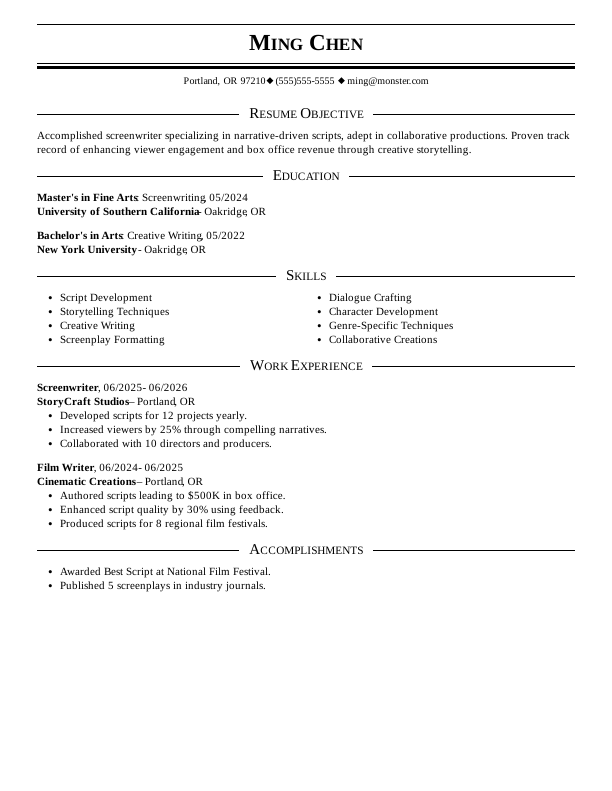
 Free
FreeScreenwriter Entry-Level Resume
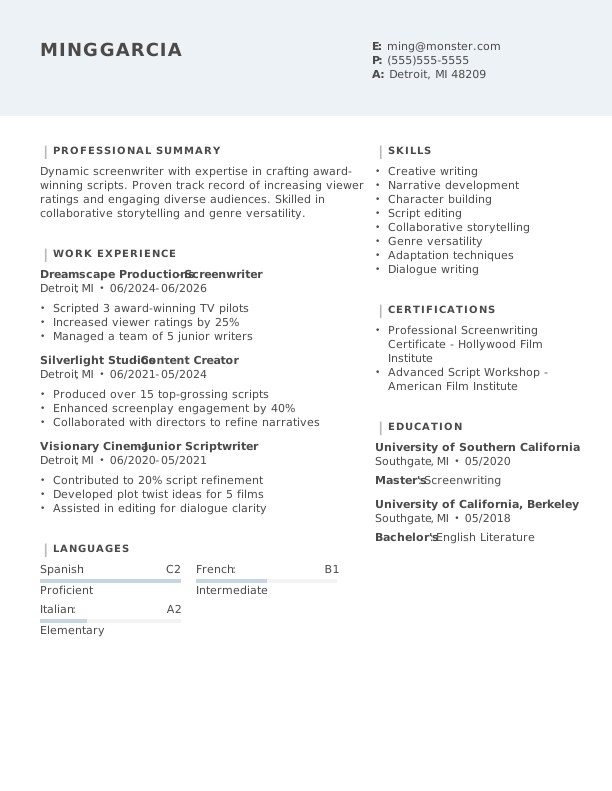
Screenwriter Mid-Level Resume
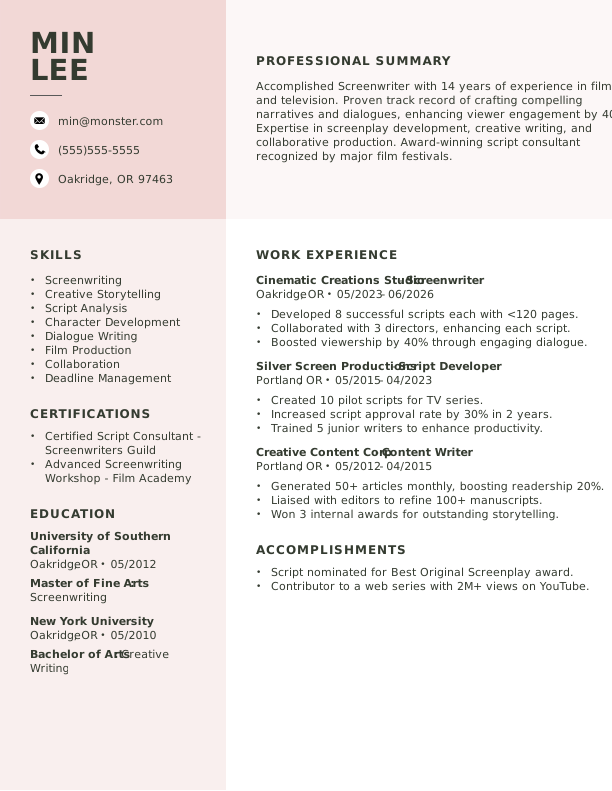
Screenwriter Experienced Resume
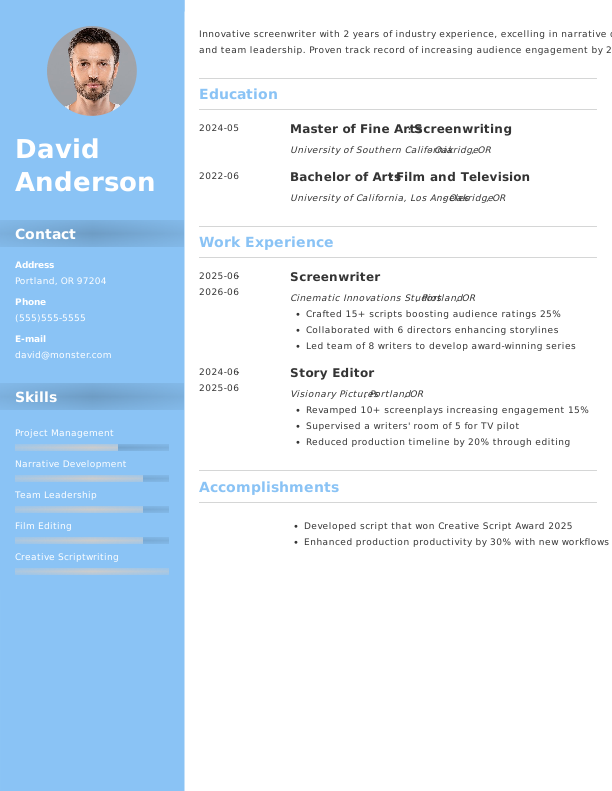
Screenwriter Modern Resume
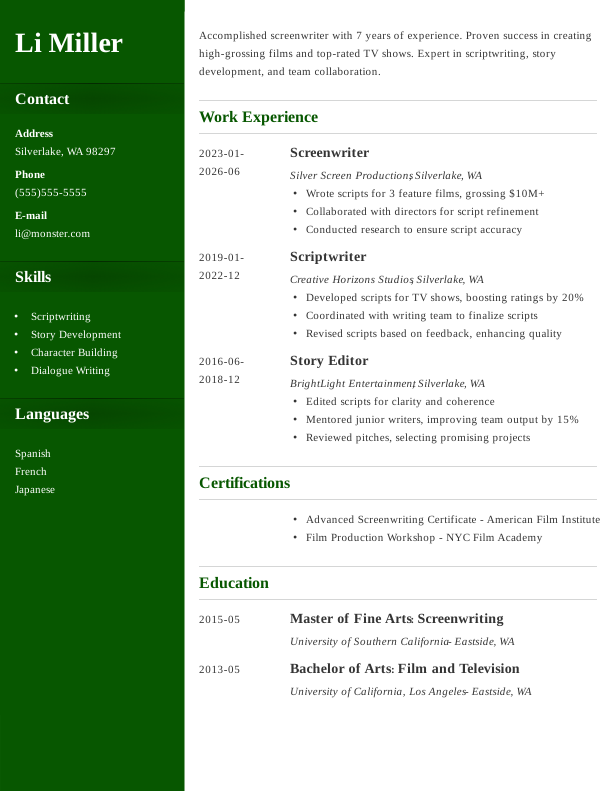
Screenwriter Creative Resume
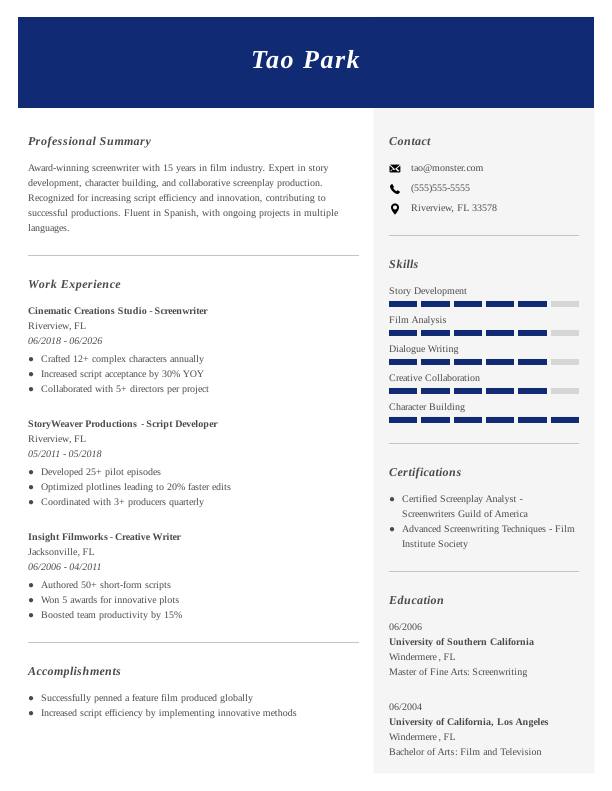
Screenwriter Traditional Resume
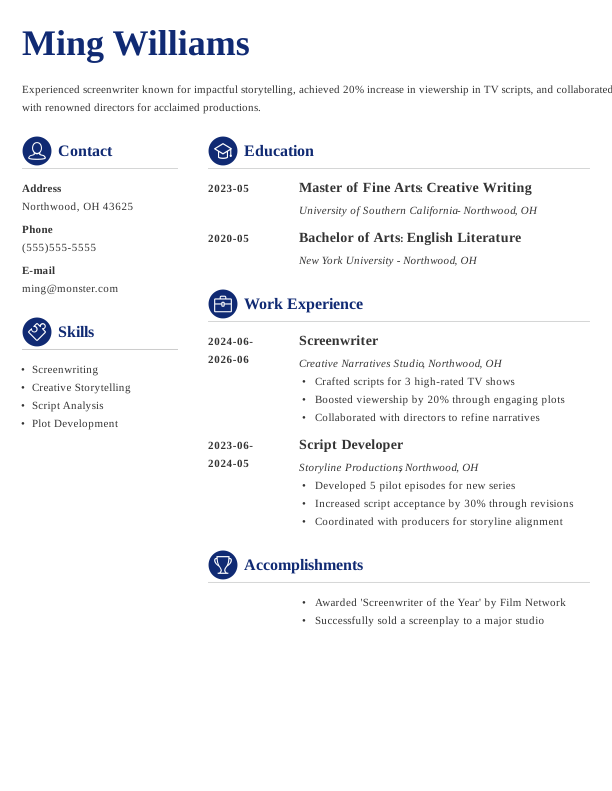
Screenwriter Simple CV Example
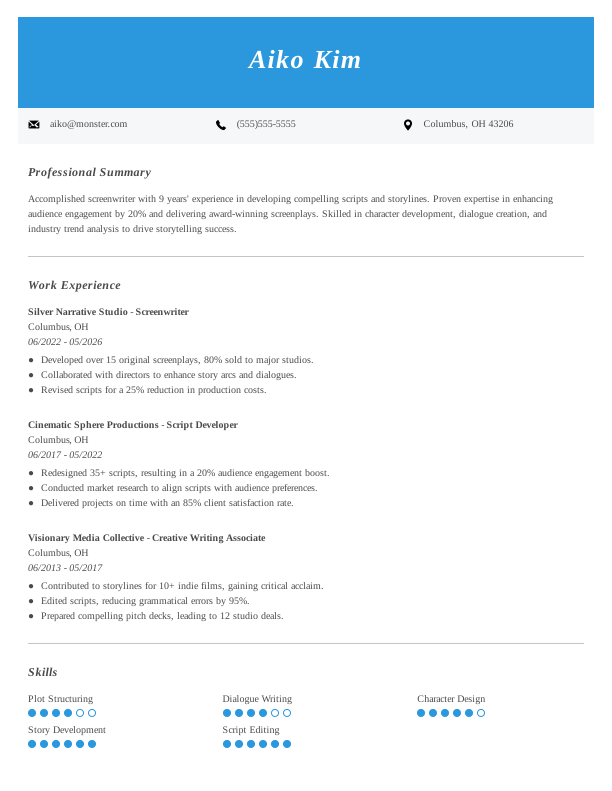

Screenwriter CV Format
Browse Free Resume Templates
- Accounts Payable
- Adjunct Professor
- Artist
- Auto Mechanic
- Baker
- Business Development Manager
- Business
- Certified Nursing Assistant
- Classic & Traditional
- Cleaner
- College Student
- Concierge
- Construction Worker
- Corporate
- Creative & Unique
- Custodian
- Customer Service
- Dental Assistant
- Direct Support Professional
- Entry-Level
- Flight Attendant
- Hospitality & Food Service
- Front Desk Receptionist
- Healthcare
- High School
- Housekeeping
- Hvac Technician
- Hybrid
- Inventory Manager
- Logistics
- Maintenance
- Management
- Modern
- Mortgage Loan Processor
- Pet Sitter
- Phlebotomist
- Production
- Rbt
- Sales
- Security Services
- Restaurant Server
- Simple & Basic
- Social Work
- Teacher
- Technology
Resume Examples for Screenwriters
A screenwriter’s resume or CV varies significantly based on experience level, from aspiring writers to established professionals. Explore the key elements for each stage and use our Resume Builder to create your own tailored document.
Entry-Level Screenwriter Resume
Ideal for recent graduates, this resume with no experience template is also perfect for individuals transitioning into screenwriting from other creative fields.
Mid-Career Screenwriter Resume
A good fit for screenwriters with several completed projects, this template highlights recent scripts and supports growth into more prominent or specialized writing roles.
Experienced Screenwriter Resume
An ideal choice for seasoned screenwriters with over 10 years of experience, this template highlights professionals seeking prominent roles in film and television production.
Screenwriter Resume Template (Text)
Use this customizable text format for a screenwriter resume to copy, edit, and tailor directly in your document.
Sophia Smith
Jacksonville, FL 32207
Professional Summary
Award-winning Screenwriter skilled in crafting engaging scripts. Proven track record in boosting viewership and enhancing narrative depth. Expert in creative storytelling and character development.
Work Experience
June 2024 – June 2026
Sunset Scripts – Jacksonville, FL
Screenwriter
- Developed scripts for 5 major film projects.
- Increased engagement by 30% through innovative plots.
- Collaborated with directors to refine dialogues.
June 2022 – May 2024
Cinematic Creations – Jacksonville, FL
Scriptwriter
- Crafted episodes for award-winning TV series.
- Boosted viewership by 20% with compelling story arcs.
- Enhanced characters’ depth through unique dialogues.
June 2021 – May 2022
Writer’s Haven – Jacksonville, FL
Story Editor
- Reviewed 50+ scripts for narrative consistency.
- Optimized plot structure, increasing intrigue by 40%.
- Coordinated with writers for thematic alignment.
Education
May 2020
University of Southern California Los Angeles, CA
Master of Fine Arts Screenwriting
May 2018
New York University New York, NY
Bachelor of Arts Film and Television
Certifications
- Certified Scriptwriter – International Screenwriters Association
- Advanced Screenwriting Techniques – Screenwriting Institute
Skills
- Creative storytelling
- Character development
- Dialogue writing
- Plot structuring
- Script analysis
- Collaboration
- Project management
- Narrative consistency
How to Write a Screenwriter Resume
As a screenwriter, knowing how to write a resume involves showcasing your unique storytelling abilities, relevant projects, and an engaging format that captures attention. Use the guidance below to emphasize your strengths and tailor your resume for the specific writing roles you’re pursuing.
1. Contact Info
Your contact information should be prominently placed at the top of your resume to ensure clarity and professionalism.
Include the following essential information:
- Full name
- Phone number
- Professional email address
- City and state (ZIP code is optional)
- LinkedIn profile or personal portfolio (if relevant)
 PRO TIP
Avoid including irrelevant personal information such as your age, religion, or social media links unless specifically requested by the employer.
2. Resume Profile
A resume profile is a concise introduction, typically spanning two to four sentences, that highlights your key qualifications and acts as an engaging pitch for hiring managers. Its purpose is to capture attention and entice readers to explore your resume further.
This profile is prominently positioned at the top of your resume and can be formatted as either a summary or an objective, each serving distinct purposes. Understanding these differences will help you choose the best option for your career goals:
- A resume summary highlights key experiences, skills, and achievements relevant to storytelling and character development. This format is particularly valuable for those with a background in writing or related fields aiming to showcase their creative contributions as screenwriters.
- A resume objective highlights your future aspirations and the specific goals you aim to achieve in your career. It’s especially useful for recent graduates, individuals transitioning careers, or those with limited experience, like film school alumni or aspiring content creators.
Let’s take a look at an example of each to see how a resume summary and a resume objective differ:
Screenwriter resume summary example:
Creative screenwriter with 6+ years of experience in dynamic film production environments, including independent and studio projects. Proficient in script development, character creation, and storytelling techniques. Acclaimed for crafting compelling narratives that resonate with audiences and improve project success.
Screenwriter resume objective example:
Recent graduate with a bachelor’s degree in screenwriting excited to launch a career in the film and television industry. Committed to storytelling that resonates with audiences and eager to contribute creativity and collaboration skills to a dynamic production company or creative studio.
3. Work Experience
The work experience on your resume is an important aspect of your storytelling ability. Employers assess your writing history to gauge not just where you’ve worked, but how your narratives have resonated with audiences.
Your diverse projects showcase how your screenwriting background qualifies you for the role, highlighting your creativity and collaboration in developing compelling scripts.
The work experience section should contain:
- Job title
- Employer name and location
- Dates of employment (month/year)
- 3–5 bullet points describing your relevant responsibilities and achievements
Tailor your content to reflect the specific screenwriting role you’re targeting. Start each bullet point with an action verb (like “Wrote,” “Developed,” “Drafted”) to create a strong statement that highlights your contributions.
Incorporate quantifiable achievements whenever possible. Specific metrics, such as audience ratings or script sales, provide compelling evidence of your success and help differentiate you from other job seekers in the industry.
In general, consider following the format of:
[action verb] + [responsibility] = [result/achievement]
For example:
Wrote and developed 5 original screenplays, resulting in 2 productions and a collective audience reach of over 1 million viewers.
Note that you can also flip the result/achievement with the responsibility:
Secured 3 industry awards for best screenplay through innovative storytelling and character development.
With these techniques in mind, your resume bullets may look something like:
- Developed and completed six feature-length screenplays, garnering interest from three major production companies.
- Collaborated with directors and producers to refine scripts for a short film festival, leading to a 20% increase in audience engagement.
- Mentored aspiring writers in workshops, improving their storytelling skills and boosting submission rates by 30%.
- Used Final Draft software to streamline the writing process and maintain industry-standard formatting.
- Conducted research on target demographics for five projects, resulting in tailored narratives that improved pitch success rates.
4. Skills
The skills section provides a concise overview of the professional abilities essential for a screenwriter. This allows recruiters and hiring managers to quickly assess qualifications.
Skills can be grouped into three categories:
- Soft skills are personal qualities that influence how well screenwriters collaborate with directors, producers, and actors.
- Hard skills are specific, quantifiable abilities acquired through education, training, or experience.
- Technical skills refer to the specific abilities required to perform particular tasks in a profession.
5 Soft Skills for Your Resume or CV
- Receptivity to feedback
- Clear communication and pitching
- Collaboration with directors
- Conflict Resolution
- Negotiation
5 Hard Skills for Your Resume or CV
- Script development
- Character arc creation
- Dialogue writing
- Screenplay formatting (Final Draft)
- Storyboarding techniques
In general, aim to showcase a diverse range of relevant skills that align with the screenplay requirements to illustrate your creative capabilities.
PRO TIP
If you’re a newer screenwriter, consider placing your skills section higher on the resume right after your summary. If you have more experience, position this section lower in your document and incorporate your skills throughout your work history to showcase their relevance.
5. Education
Understanding how to list education on your resume is important for making a strong impression. Begin by listing your most recent or relevant degree, clearly stating the degree type and the name of the institution.
If you’re a recent graduate, consider including your graduation year, GPA (if it’s 3.5 or above), any honors received, and relevant coursework to highlight your academic achievements.
Screenwriter resume education section example:
Bachelor of Fine Arts in Screenwriting (BFA)
University of Southern California, Los Angeles, CA
Graduated: 2024 | Cum Laude
PRO TIP
If you’re progressing from an Associate Degree in Screenwriting to a Bachelor of Fine Arts in Screenwriting, or have completed another relevant degree, list both in reverse-chronological order.
6. Certifications
Listing certifications on your resume can help offset limited experience by demonstrating your commitment to professional development. While this section may not always appear in a traditional resume, it’s valuable for most screenwriters seeking to stand out. Many production companies require specific credentials for specialized roles, such as those in screenwriting.
Include only relevant certifications and credentials that bolster your candidacy. Remember to keep them current and format them clearly for easy readability.
Screenwriter certification examples:
- Certificate in Screenwriting | University of California, Los Angeles | Expires: 06/2028
- Script Coverage Certification | Script University | Expires: 04/2027
- Advanced Screenwriting Workshop Certificate | New York Film Academy | Expires: 11/2028
- Screenwriting Fundamentals Certification | MasterClass | Expires: 09/2027
Start Building Your Job-Winning Resume
Use Your Existing Resume
Import your current resume to transfer your information to one of our professional templates.
Create a New Resume
Start fresh with a template that catches your eye and follow the prompts to add your details.
Tailor Your Work History to Beat the ATS
Your work experience is more than a list of job titles. It’s an opportunity to demonstrate the measurable impact you’ve made on scripts, character development, and audience engagement. This approach also leads to creating an ATS-friendly resume that applicant tracking systems (ATS) can easily scan.
To make your work history compelling, tailor it to the screenwriting position you’re targeting using relevant keywords and industry language. Begin by analyzing the job description in detail. Identify recurring themes, genres, or skills mentioned and aim to reflect those elements in your experience descriptions whenever possible.
Key Takeaways
- Tailor your resume to the specific project or job listing. Use terminology from the script or production company to resonate with ATS and hiring managers.
- Highlight quantifiable successes that showcase your writing impact. Include metrics like audience engagement rates, awards won, or box office numbers to differentiate yourself.
- Select a format that reflects your career stage. Emerging writers might opt for a functional layout, while seasoned professionals typically use a chronological format to emphasize their extensive portfolio.
More Resume & CV Examples
- Animator
- Assistant Editor
- Audio Engineer
- Cinematographer
- Content Creator
- Content Writer
- Copywriter
- Creative Director
- Editing
- Entertainment
- Event Coordinator
- Event Planner
- Event Planning
- Film Director
- Film Industry Internship
- Film Production
- Freelance Writer
- Journalist
- Makeup Artist
- Media Planner
- Media
- Medical Writer
- Model
- Music Producer
- Photographer
- Production Assistant
- Proofreader
- Public Affairs
- Sound Designer
- Stage Manager
- Technical Writer
- Translator
- Ux Writer
- Video Editor
- Videographer
- Voice Actor
- Writer
Cover Letters for Your Resume
Browse our library of cover letter examples to complete your application. A resume will have a better chance of getting noticed.
Frequently Asked Questions
Last Update:
What resume format should I use for my screenwriter resume?
There are three main resume formats to consider when applying for a screenwriter position. Your choice should reflect your experience level and highlight the aspects of your work that best showcase your talent and creativity:
- Chronological: The most popular format, a chronological resume highlights your work experience by detailing your responsibilities and achievements. This makes it an excellent choice for screenwriters with a consistent job history that reinforces their qualifications and showcases their growth in the industry.
- Functional: Also known as a skills-based resume, this format emphasizes a summary of qualifications and an expanded skills section to showcase your writing talents. By downplaying work history, it becomes beneficial for aspiring screenwriters with limited relevant experience or those transitioning into the film industry.
- Combination: A combination resume integrates chronological and functional formats, showcasing a detailed skills section along with employment history. This format benefits screenwriters by highlighting their creative abilities and project experiences, making it ideal for those advancing in the industry or shifting to new writing genres.
Should I include a cover letter with my resume?
Yes, you should definitely include a cover letter with your screenwriting applications. A compelling cover letter allows you to articulate your passion for storytelling and the unique vision you bring to a project, complementing the skills outlined in your resume. It gives you the chance to connect more personally with potential employers and demonstrate your enthusiasm for their specific projects.
If you’re feeling uncertain about how to craft an effective cover letter, don’t worry. There are numerous resources available, from guides on how to write a cover letter tailored for screenwriters to examples that showcase successful approaches in the industry. Exploring various formats can also help you find one that resonates with your style and experience.
For those looking for convenience, tools like a cover letter generator can assist in producing a polished document quickly while offering helpful prompts based on the role you’re applying for.
What keywords should I include to pass applicant tracking systems (ATS)?
To improve your chances of passing ATS, focus on using keywords and phrases directly from the job posting. Look for terms related to screenwriting such as “script development,” “story structure,” or “character arcs.” Incorporating these specific words into your resume can help align your experience with what hiring managers are seeking.
Additionally, include relevant skills and certifications that showcase your capabilities. For instance, mentioning skill in Final Draft or Celtx software can set you apart. Highlight any workshops or courses you’ve completed in screenwriting to demonstrate your commitment and expertise in the field.
Should I include personal scripts or short films?
Yes, especially if you’re early in your screenwriting career. Including personal scripts and short films demonstrates your storytelling skills and creativity, helping you stand out when formal writing credits are limited.

Vicki Salemi is a nationally recognized career expert who helps professionals navigate the hiring landscape and find the right fit on Monster. With over 15 years of experience in corporate recruiting and HR, she offers expert guidance on job search strategies, interview preparation, and career development to help candidates land their next role.
See More From Vicki SalemiExplore Related Career Advice


How to Put Transferable Skills on Your Resume: 120 Skills, Examples, & Tips

Updated:
Aug 27, 2026
|

16 min read


How to Write a Functional Resume (Formatting Tips, Template, & Examples)
Updated:
Aug 7, 2026
|
17 min read


Functional vs Chronological Resume: Which Format Is Right for You?
Updated:
Aug 3, 2026
|
16 min read

100+ Resume Adjectives to Help You Write a Stronger Resume in 2026 (With Examples)
Updated:
Jul 30, 2026
|
12 min read