

Free Copywriter Cover Letter Templates & Examples
A strong copywriter cover letter shows you can turn research into clear, persuasive messaging and manage projects from concept to final copy. Our free cover letter examples and step-by-step advice help you showcase your writing results, brand voice, and teamwork so hiring managers see your value right away.
Real-World Cover Letters That Get Results
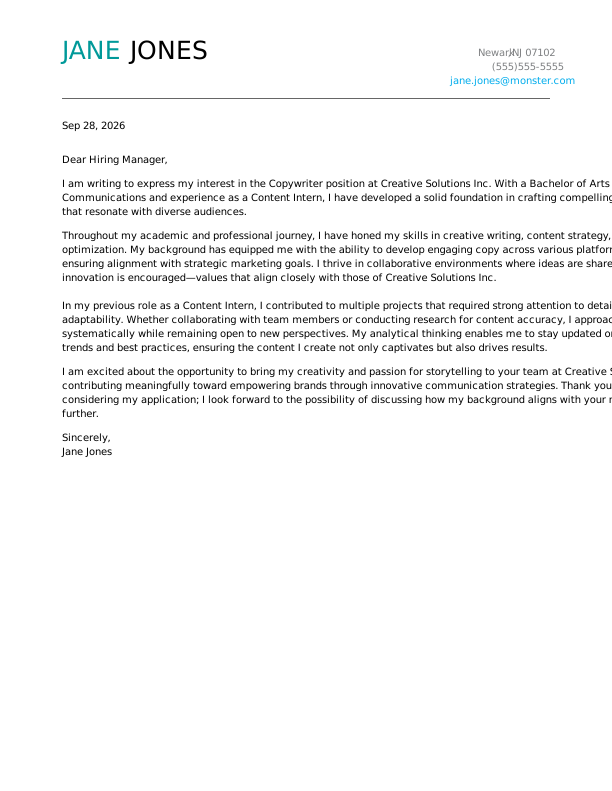
 Free
FreeCopywriter Entry-Level Cover Letter
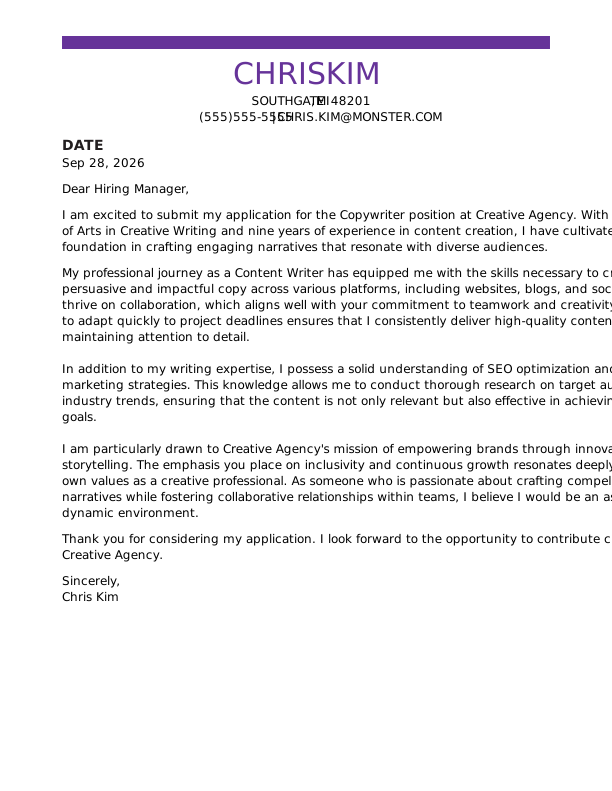
Copywriter Mid-Level Cover Letter
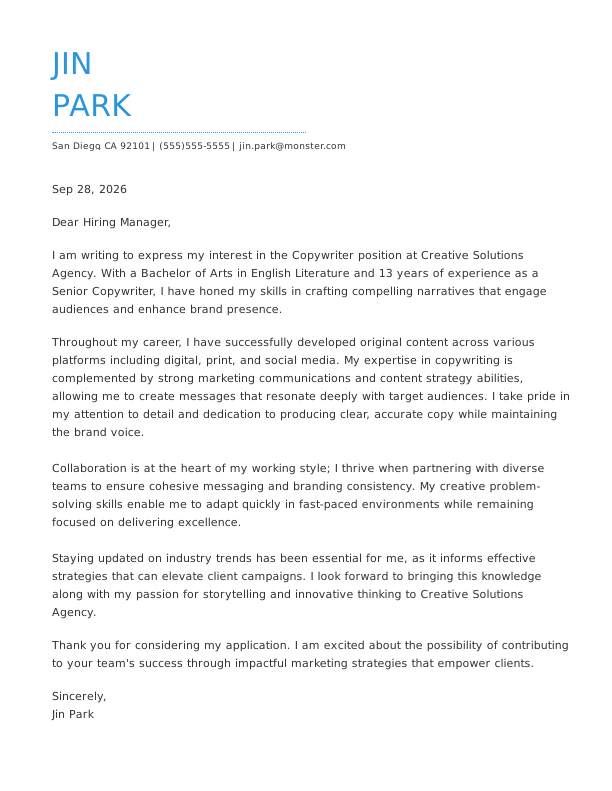
Copywriter Experienced Cover Letter
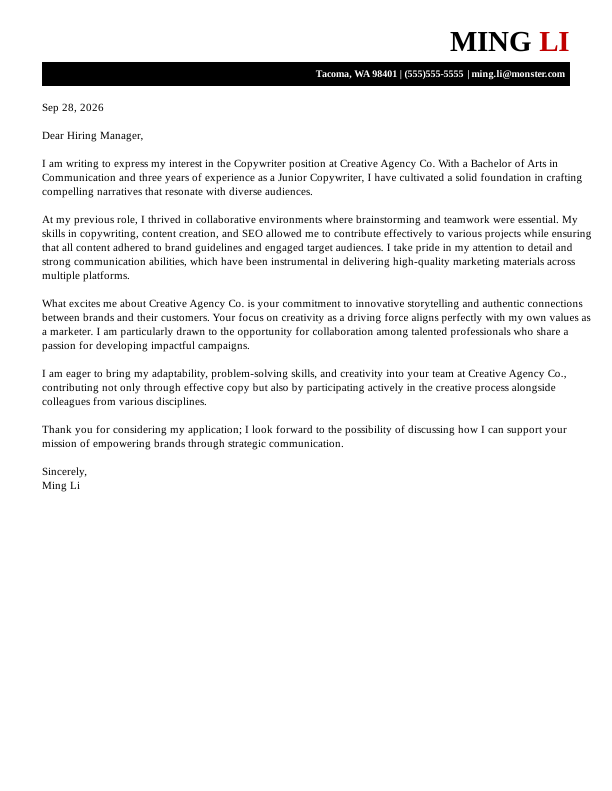
Copywriter Entry-Level Cover Letter
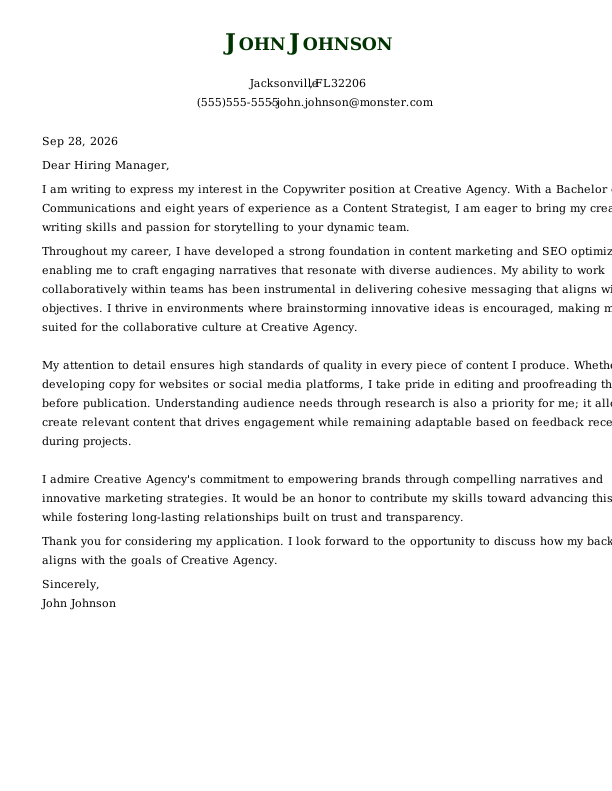
Copywriter Mid-Level Cover Letter
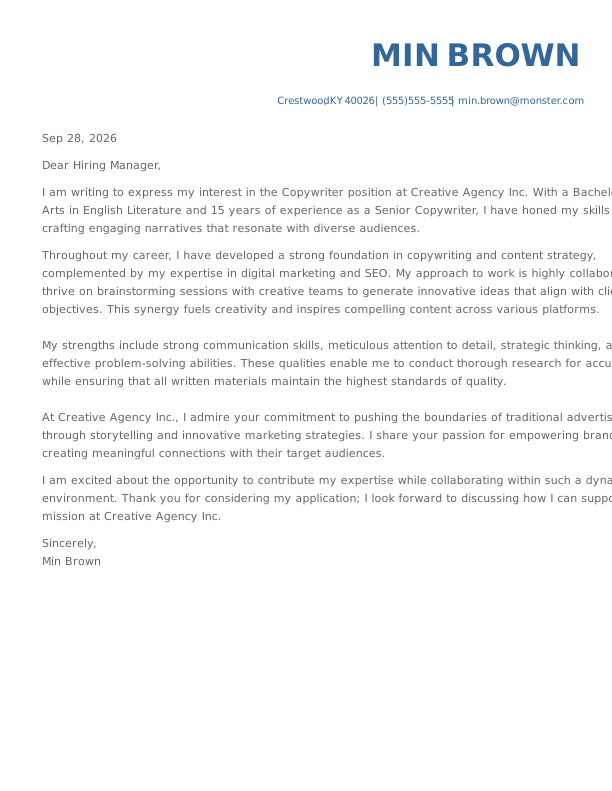
Copywriter Experienced Cover Letter
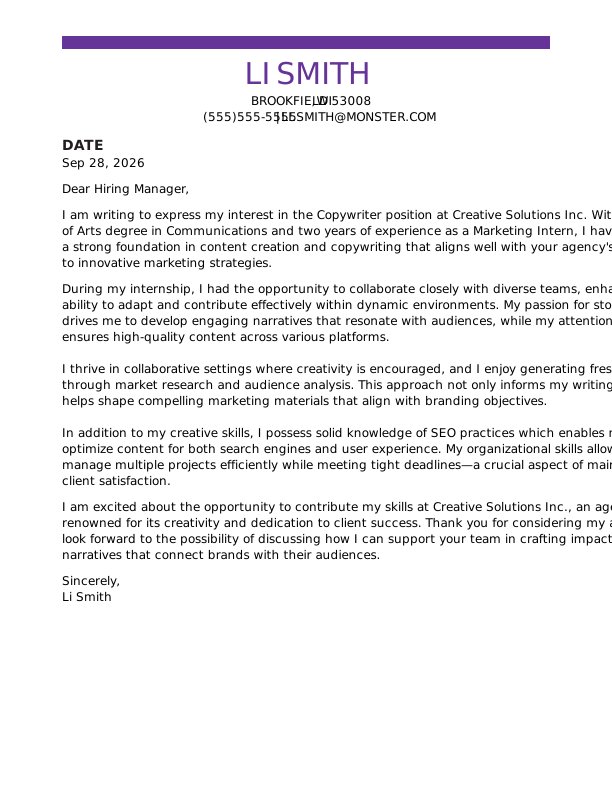
Copywriter Entry-Level Cover Letter
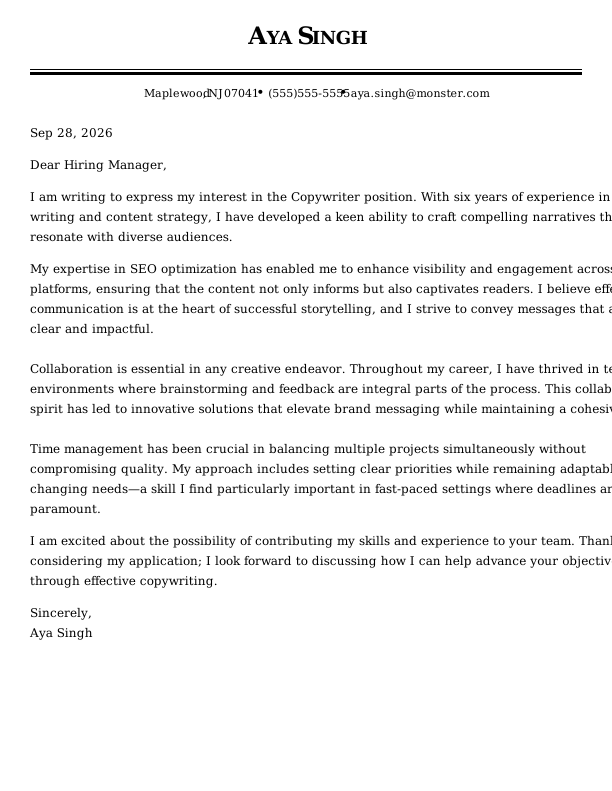
Copywriter Mid-Level Cover Letter
Browse Free Cover Letter Templates
- Academic
- Account Manager
- Accountant
- Accounts Payable
- Administrative Assistant
- Admissions Counselor
- Architecture
- Artist
- Assistant Principal
- Babysitter
- Barista
- Bartender
- Bookkeeper
- Brand Ambassador
- Business Analyst
- Business
- Caregiver
- Chef
- Civil Engineering
- Computer Science
- Construction
- Consulting
- Cosmetology
- Custodian
- Customer Service
- Customer Service Representative
- Data Analyst
- Data Entry
- Dental Assistant
- Dental Hygienist
- Digital Marketing
- Electrical Engineering
- Emt
- Engineering
- Esthetician
- Event Coordinator
- Executive Assistant
- Finance
- Financial Analyst
- Firefighter
- Flight Attendant
- Graphic Designer
- Hair Stylist
- Healthcare
- Hr Generalist
- Investment Banking
- It
- Janitor
- Journalism
- Lab Technician
- Law Clerk
- Lawyer
- Librarian
- Logistics
- Makeup Artist
- Manager
- Marketing Coordinator
- Marketing
- Marketing Manager
- Massage Therapist
- Mechanic
- Mechanical Engineer
- Medical Assistant
- Non Profit
- Nursing
- Occupational Therapy
- Office Assistant
- Office Manager
- Operations Manager
- Paralegal
- Personal Trainer
- Pharmacist
- Pharmacy Technician
- Photographer
- Physician Assistant
- Pilot
- Police Officer
- Program Manager
- Project Manager
- Property Manager
- Psychology
- Receptionist
- Research Assistant
- Restaurant Manager
- Retail
- Sales
- Sales Manager
- School Counselor
- Security Officer
- Social Work
- Software Engineer
- Special Education Teacher
- Substitute Teacher
- Teacher
- Teaching Assistant
- Truck Driver
- Vet Tech
- Veterinary Assistant
- Web Developer
Cover Letter Examples for Copywriters
Cover letter requirements evolve as a copywriter moves from early assignments to managing campaigns and mentoring others. Choose the template that matches your career stage so you can highlight the writing work, brand voice training, and results you want to be judged on.
Entry-Level Copywriter Cover Letter
Built for recent graduates and career changers with no copywriting experience, this template helps you confidently present your education, experience, and storytelling strengths.
Mid-Career Copywriter Cover Letter
Tailored for copywriters with a few years of experience under their belt, this template emphasizes channel ownership, campaign messaging, and data-driven results.
Experienced Copywriter Cover Letter
Designed for senior copywriters and content leaders, this template highlights strategic brand oversight, cross-functional messaging, and team mentorship.
Copywriter Cover Letter Template (Text)
Copy this copywriter cover letter template into your document and customize it by swapping in your portfolio links, measurable campaign results, or target brand names.
Aiko Wang
San Diego, CA 92114
(555)555-5555
aiko.wang@monster.com
Sep 28, 2026
Dear Hiring Manager,
I am writing to express my interest in the copywriter position at Creative Agency. With a Bachelor of Arts in English Literature and seven years of experience as a marketing associate, I have honed my skills in SEO writing, content strategy, and digital marketing while fostering a collaborative spirit that aligns well with your team’s commitment to creativity and client success.
At my previous role, I developed engaging content across various platforms, including websites and social media. This experience enabled me to refine my creative thinking and problem-solving abilities while ensuring clarity and consistency in all written materials. My strong attention to detail has always been pivotal in editing copy for accuracy and relevance, allowing me to maintain the brand voice effectively.
I am particularly drawn to Creative Agency’s mission of crafting compelling narratives that resonate with audiences. The opportunity to collaborate closely with designers, marketers, and clients excites me as it aligns perfectly with my working style; I thrive when exchanging ideas within a dynamic team environment.
Staying updated on industry trends is essential for effective copywriting. I continuously seek out best practices that enhance audience engagement while ensuring the content remains authentic—a value that resonates deeply with your agency’s philosophy.
I would welcome the chance to contribute my skills toward elevating your clients’ presence through impactful storytelling. Thank you for considering my application; I look forward to the possibility of discussing this exciting opportunity further.
Sincerely,
Aiko Wang
How to Write a Copywriter Cover Letter
Writing a strong copywriter cover letter means showing how your words drive real results for brands. Hiring managers want to see that you can write for specific audiences, adapt to different brand voices, and meet tight deadlines. Use the steps below to shape your experience for the job you want.
1. Research & Prepare
Before you start writing, take time to study the company’s brand voice and current marketing channels. Showing that you understand its tone and audience helps you write a letter that hits the right mark.
Try these simple research steps:
- The job posting: Look for required writing samples, target channels, and specific tools like content management systems or email platforms.
- Company content: Read through the company blog, social feeds, and recent news releases to catch recurring messaging themes and tone.
- SEO standards: Check basic search guidelines so you can mention how you write for both human readers and search engines.
2. Hook the Reader
Grab the hiring manager’s attention right away with a concrete writing result instead of a standard opening line. Skip generic phrases like “I am writing to apply for the copywriter role.” Instead, share a quick detail about your performance or craft.
Here are three strong ways to start:
- Campaign performance snapshot: “I wrote and A/B tested 14 landing page variants for a product launch, raising demo conversions from 2.1x to 3.4x in six weeks.”
- Audience-first messaging: “I rewrote our customer onboarding emails using plain-language guidelines, boosting user activation by 9 percentage points.”
- Brand voice and governance: “I updated our brand style guide and trained three freelance writers to ensure every asset met our tone standards before publication.”
3. Tell Your Professional Story
Your resume outlines your former job titles, but your cover letter shows what your words actually accomplished. Using clear numbers gives proof of your impact in a way that plain statements cannot match.
Consider formatting your achievements like these:
- Increased email click-through rates by 22% after testing three subject lines and tightening call-to-action language across six weekly sends.
- Reduced cost per acquisition by 14% by updating landing page headlines and benefit bullet points for paid search campaigns.
- Boosted trial sign-ups from 1,050 to 1,380 per month after rewriting onboarding emails into a five-message sequence.
4. Showcase Your Skills
Skip broad claims about having a “great voice” and describe specific moments where your writing solved a problem or clarified a message. Showing how you handle real creative challenges gives hiring managers confidence in your skills.
Try framing your strengths through everyday scenarios like these:
- Brand voice: Detail a time you rewrote a technical landing page into a friendly, approachable brand tone that sales reps could easily share.
- SEO research: Explain how you used search data to find key customer phrases, then updated headings and meta descriptions without losing the core message.
- Stakeholder collaboration: Describe how you resolved a messaging disagreement between project leads by drafting two clear options with quick explanations for each.
5. Explain Any Special Circumstances
If you have an employment gap, a career change, or a recent move, address it directly in one or two simple sentences. Keeping your explanation brief ensures the reader stays focused on your writing samples and current skills.
Use these examples to guide your narrative:
- “During a six-month break between freelance projects, I wrote landing page copy for a startup and refined the drafts through peer reviews.”
- “I am moving from customer support into copywriting, applying my deep understanding of user questions to write clear messaging tests and portfolio pieces.”
- “Following my move to Austin, I refreshed my online portfolio and published three new search-optimized blog drafts.”
6. End With a Professional Goodbye
Finish your letter with a clear, polite call to action that invites the hiring manager to connect. Keep your closing direct and active, avoiding overused lines like “I look forward to hearing from you.”
Suggest a practical topic for an interview, such as discussing ideas to refresh landing page copy for higher conversions. Add a quick thank-you, and close with a simple sign-off like “Sincerely” or “Best regards.”
4 Tips for Formatting Your Cover Letter
When you apply for a copywriting role, clean formatting helps a hiring manager quickly evaluate your writing style, organization, and attention to detail. Taking the time to present an easy-to-read document makes a great first impression during a fast scan and proves that you value clear communication.

Keep It to One Page
Keep your cover letter to one single page, aiming for 250 to 400 words across three or four short paragraphs. A concise layout shows that you know how to edit your own work and convey key ideas efficiently.

Address the Hiring Manager Directly
Check the job posting, company website, or LinkedIn to find the name of the hiring manager, editor, or creative lead. Using a specific name shows good research habits, but if you cannot find one, “Dear Hiring Manager” or “Dear Creative Team” works well.

Balance Spacing & Margins
Set your line spacing between 1.0 and 1.15, and leave a blank line between paragraphs so your text does not look crowded. Use standard margins between 0.75 and 1 inch so your page looks balanced on screens and printed paper.

Save & Send as a PDF
Save your cover letter as a PDF file to keep your layout, fonts, and spacing intact across different devices and applicant tracking systems. Use a clear file name like “Firstname_Lastname_Cover_Letter.pdf” so it is easy for recruiters to save and find.
Key Takeaways
- Prove your messaging skills by sharing a specific headline or email rewrite you produced and describing the result it achieved.
- Back up your creative work with clear performance numbers like open rates, click-through rates, or conversion lifts.
- Match your examples to what the employer values most, whether that means brand voice consistency, direct response conversions, or fast agency turnarounds.
Browse Monster’s Resume Templates
Monster also has hundreds of ATS-friendly resume templates for all career levels and industries. Create a matching resume to help you land the interview.
Frequently Asked Questions
Last Update:
Do I really need a cover letter?
Yes, sending a cover letter gives you a big advantage because it shows your writing style in action before anyone even opens your portfolio. It is also the perfect place to explain a career change, address an employment gap, or share why you love this specific brand.
How long should my cover letter be?
Keep your cover letter to one page, aiming for 250 to 400 words across three or four short paragraphs. Hiring managers scan quickly, so concise, punchy writing stands out best.
Should my cover letter match my resume?
Your cover letter should match your resume’s header, fonts, and overall design so your application looks like a complete package. For the text, use your letter to tell the story behind a specific writing project rather than repeating your resume bullet points.
Can I use AI to write my cover letter?
You can use AI to brainstorm ideas or build a quick outline, but you should rewrite the final text yourself. Hiring managers easily spot generic phrases, so adding your real voice, personal story, and specific project details is essential.
What should I include in my cover letter header?
Include your full name, phone number, email address, location, date, and recipient details. Matching the layout and fonts to your resume header gives your application a clean, professional look.

Toni Frana is a Certified Professional Resume Writer (CPRW), member of the Professional Association of Resume Writers & Career Coaches, and career expert who empowers job seekers to take control of their career paths using Monster’s comprehensive job search and resume tools.
See More From Toni FranaExplore Related Career Advice






How to Write a Cover Letter for Internal Positions or Promotions (Examples & Tips)

Updated:
Apr 23, 2026
|
19 min read


Cover Letter vs Resume: What’s the Difference & Do You Need Both?

Updated:
Apr 23, 2026
|
18 min read