
Free Medical School Resume Templates & Examples
Elevate your chances of landing interviews with our expertly crafted medical school resume templates. These free resume templates include valuable writing tips that will guide you in creating a standout resume or CV, showcasing your qualifications to potential employers.
Real-World Resumes That Get Results
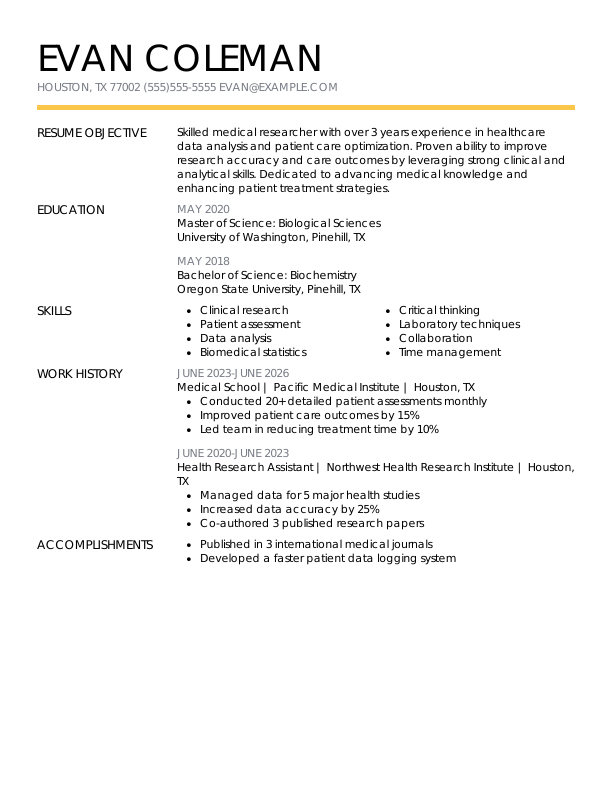
 Free
FreeMedical School Entry-Level Resume
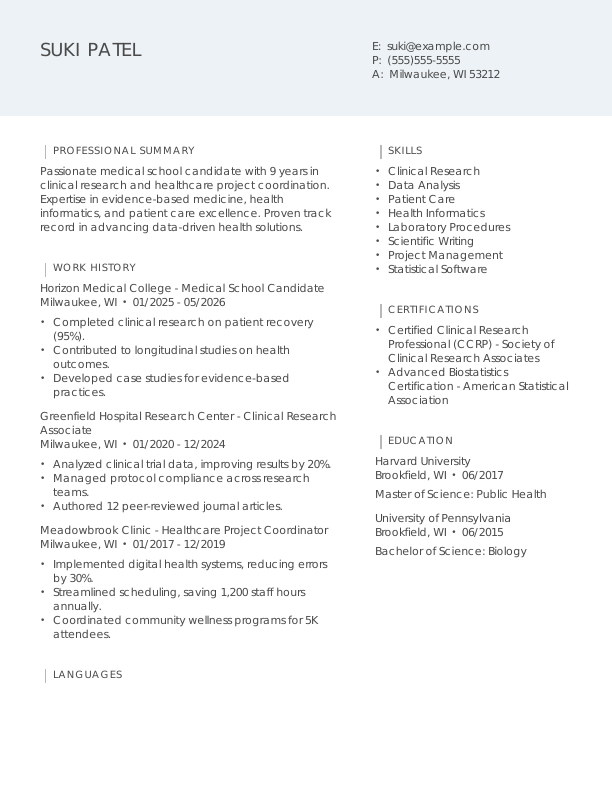
Medical School Mid-Level Resume
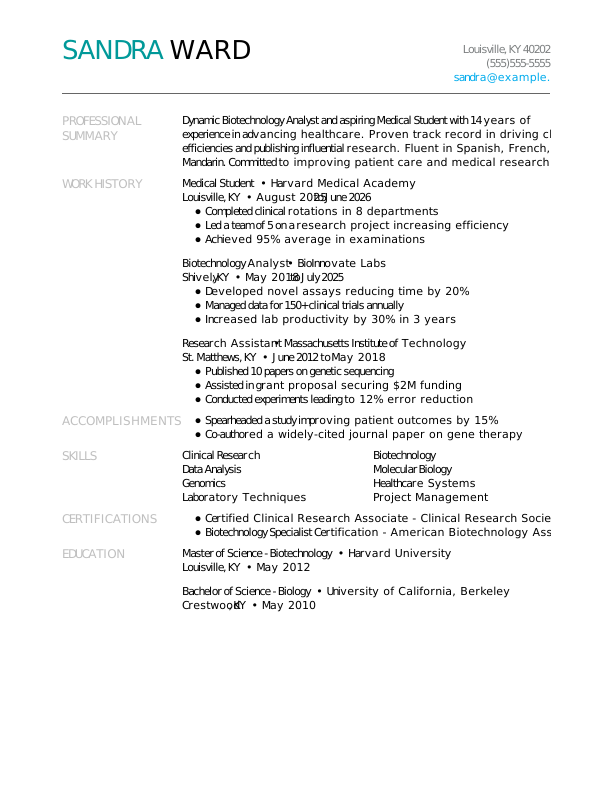
Medical School Experienced Resume
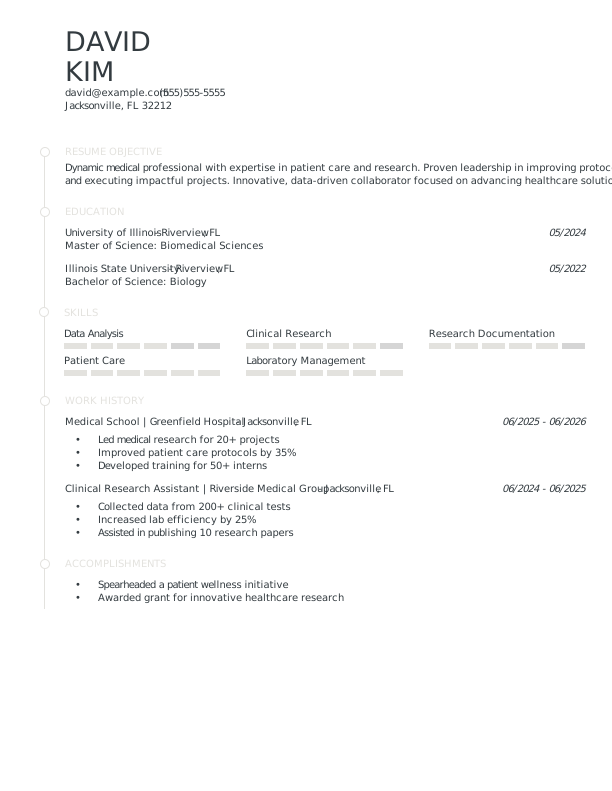
Medical School Modern Resume
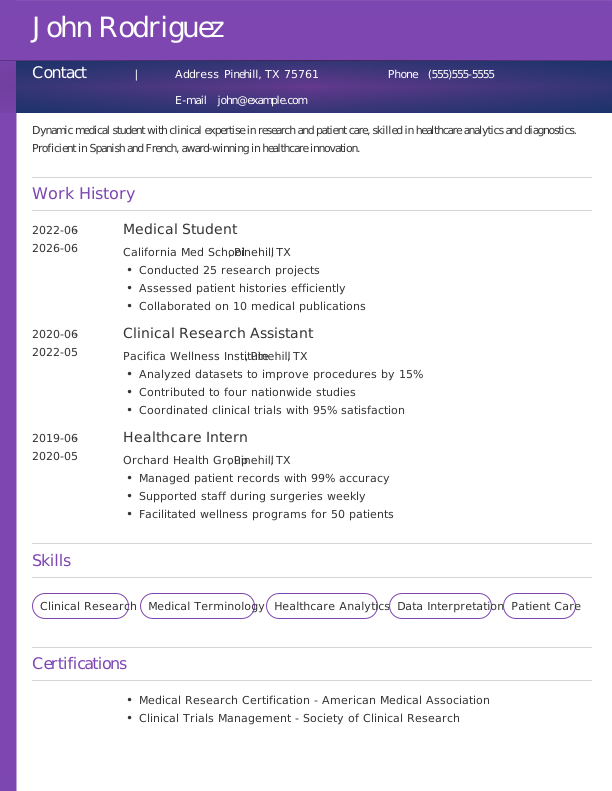

Medical School Creative Resume
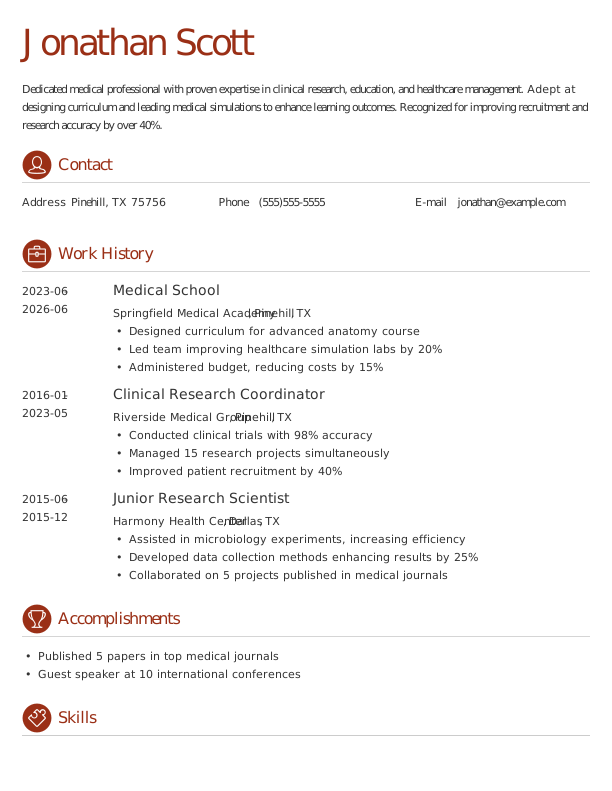

Medical School Traditional Resume
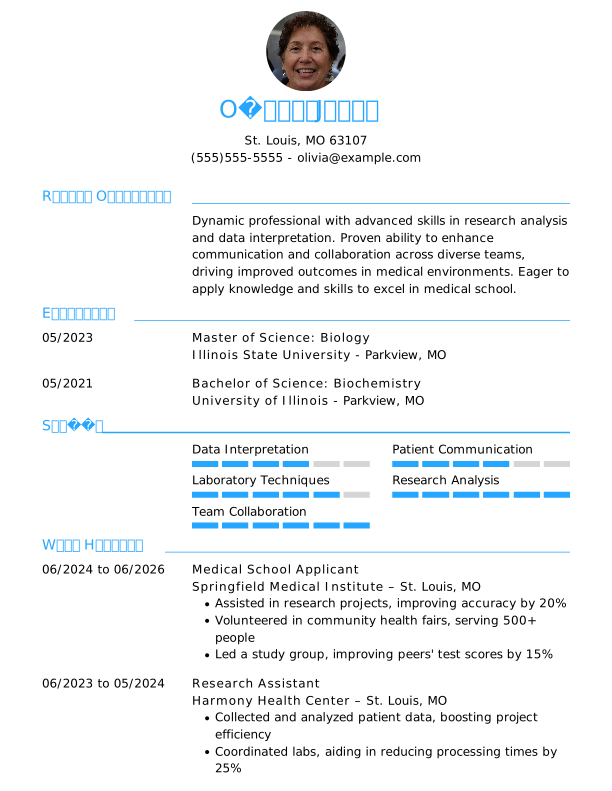

Medical School Simple CV Example
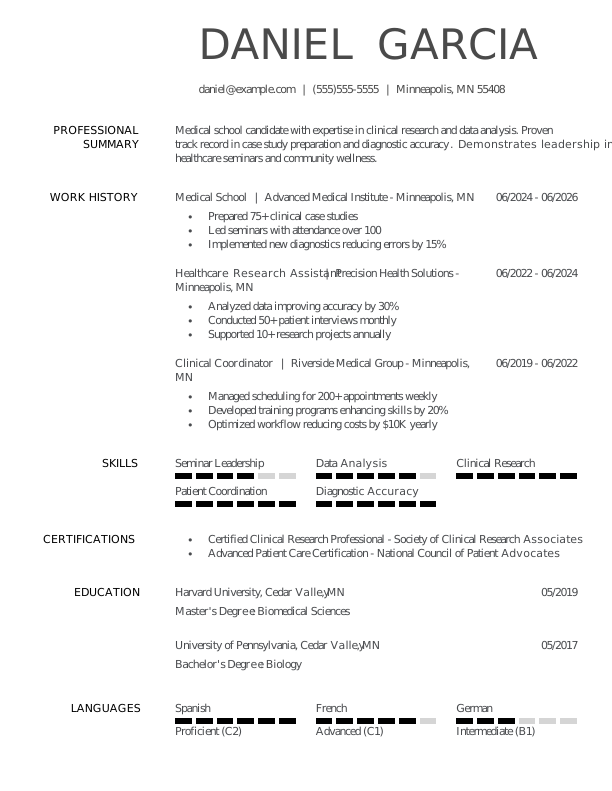
Medical School CV Format
Browse Free Resume Templates
- Accounts Payable
- Adjunct Professor
- Artist
- Auto Mechanic
- Baker
- Business Development Manager
- Business
- Certified Nursing Assistant
- Classic & Traditional
- Cleaner
- College Student
- Concierge
- Construction Worker
- Corporate
- Creative & Unique
- Custodian
- Customer Service
- Dental Assistant
- Direct Support Professional
- Entry-Level
- Flight Attendant
- Hospitality & Food Service
- Front Desk Receptionist
- Healthcare
- High School
- Housekeeping
- Hvac Technician
- Hybrid
- Inventory Manager
- Logistics
- Maintenance
- Management
- Modern
- Mortgage Loan Processor
- Pet Sitter
- Phlebotomist
- Production
- Rbt
- Sales
- Security Services
- Restaurant Server
- Simple & Basic
- Social Work
- Teacher
- Technology
Resume Examples for Medical School
A medical school resume or CV varies significantly based on your experience level and context. Explore what to include in various cases and browse our customizable resume templates to create your own tailored document.
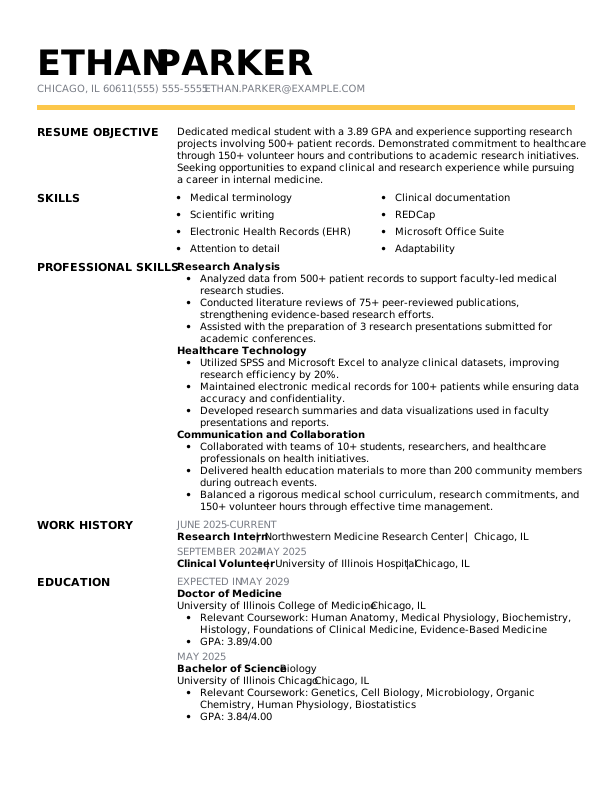
Medical Student Resume
Designed for medical students who need a resume with no experience, this resume highlights clinical experience, research, volunteer work, and academic achievements to support internships, clerkships, and future residency applications.
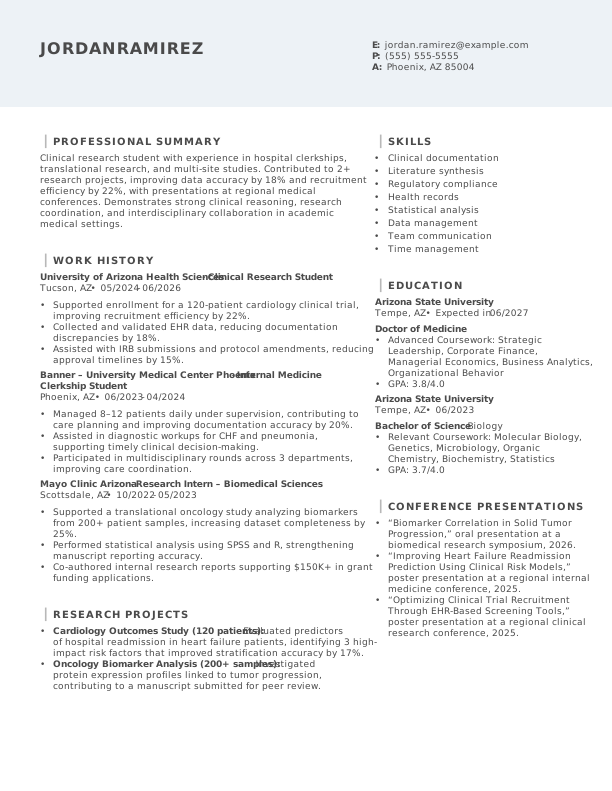
Clinical Research Student Resume
Built for medical research students, this resume showcases clinical research, data analysis, publications, and project experience while demonstrating scientific expertise and interdisciplinary collaboration.
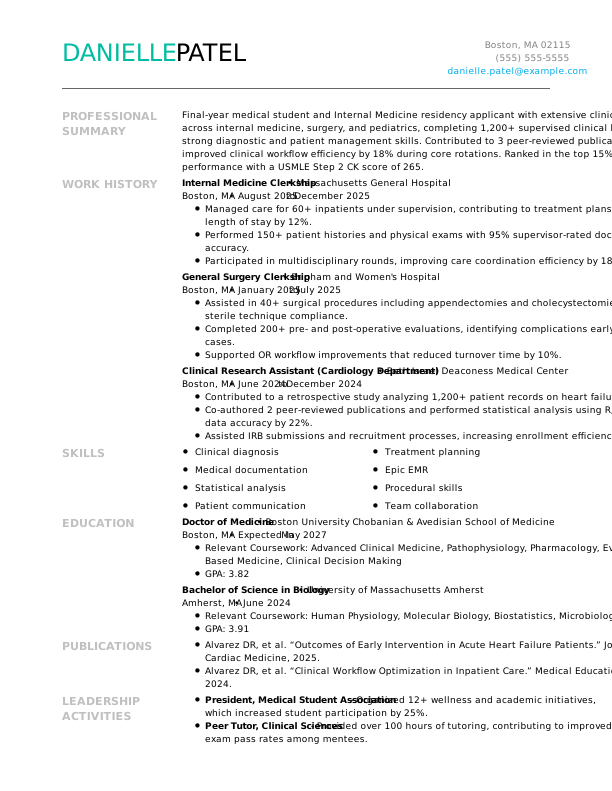
Residency Applicant Resume
Created for residency applicants, this resume emphasizes clinical rotations, research, leadership, and patient care experience to strengthen applications for competitive residency programs.
Medical School Resume Template (Text)
Use this customizable text format of a medical school resume to copy, edit, and personalize directly in your document or file.
Olivia Nguyen
Detroit, MI 48208
(555)555-5555
Olivia.Nguyen@example.com
Professional Summary
Dedicated medical researcher with expertise in clinical trials and healthcare analytics, leveraging data-driven approaches; proven track record of enhancing patient care and operational efficiency.
Work Experience
Medical Research Fellow
MediPath Institute – Detroit, MI
June 2025 – June 2026
- Led research increasing patient outcomes by 15%
- Developed curriculum enhancing student enrollment by 20%
- Collaborated with faculty publishing 10 studies
Clinical Research Coordinator
Pioneer Health Studies – Detroit, MI
June 2023 – May 2025
- Facilitated trials reducing costs by $50,000
- Managed team achieving 98% participant retention
- Implemented protocol improving data accuracy by 40%
Healthcare Analyst
Innovations – Detroit, MI
June 2020 – May 2023
- Conducted analysis boosting efficiency by 30%
- Presented findings decreasing error rate by 70%
- Trained staff enhancing productivity by 25%
Education
Master of Medical Science in Medical Research
Harvard Medical School, Cambridge, MA
May 2020
Bachelor of Science in Biology, Biochemistry Concentration
University of California, Berkeley, Berkeley, CA
May 2018
Certifications
- Certified Clinical Research Professional – Society of Clinical Research Associates
- Biostatistics Certificate – American Statistical Association
- Healthcare Analytics – Healthcare Information and Management Systems Society
Skills
- Medical Research Analysis
- Clinical Coordination
- Biostatistical Analysis
- Project Management
- Data Interpretation
- Stakeholder Communication
- Scientific Writing
- Problem Solving
How to Write a Medical School Resume
As a medical school applicant, knowing how to write a resume involves showcasing your academic achievements, relevant experience, and personal qualities in a clear format that highlights your suitability for the program.
Use the guidance below to emphasize your strengths and tailor your resume for each school’s unique requirements.
1. Contact Info
Your contact information should be clear, professional, and easy to find at the top of your resume.
Make sure to include:
- Full name
- Phone number
- Professional email address
- City and state (ZIP code is optional)
- LinkedIn profile or personal portfolio (if relevant)
 PRO TIP
Avoid including personal information such as your Social Security number, religious affiliation, or salary history unless the employer specifically requests it.
2. Resume Profile
A resume profile serves as a brief introduction, typically comprising two to four sentences, that encapsulates your identity and key qualifications. This section acts as an engaging pitch for hiring managers, enticing them to explore your resume further and learn more about your potential fit for the position.
Positioned at the top of your resume, the profile can be formatted as either a summary or an objective, each tailored for specific purposes. Understanding these distinctions is important for crafting a compelling profile:
- A resume summary highlights key achievements, relevant skills, and professional experiences that match the demands of the medical field. This format is especially useful for those with prior healthcare experience or transferable skills who aim to showcase their contributions in a competitive environment.
- A resume objective highlights your aspirations and outlines the career goals you wish to pursue. It’s particularly useful for recent medical school graduates, individuals shifting from other fields, or those with limited clinical experience aiming to make a strong impression in healthcare settings.
Let’s take a look at an example of each to see how a resume summary and a resume objective differ:
Medical school resume summary example:
Dedicated medical student with 6+ years of diverse healthcare experience, including internships in outpatient clinics and community health initiatives. Proficient in patient assessment, clinical research, and team-based care. Commended for exceptional communication skills and a commitment to advancing patient-centered health solutions.
Medical school resume objective example:
Recent MD graduate committed to launching a medical career in a dynamic healthcare environment. Dedicated to advancing patient well-being and ready to bring strong analytical abilities and teamwork skills to a hospital or outpatient facility.
3. Work Experience
The work experience on your resume forms an important foundation for your candidacy. Employers assess your background to gauge not just where you’ve studied, but how you’ve contributed to healthcare environments.
Your clinical rotations and hands-on experience highlight how your medical training prepares you for the challenges of a residency program.
The work experience section should contain:
- Job title
- Employer name and location
- Dates of employment (month/year)
- 3–5 bullet points describing your relevant responsibilities and achievements
Tailor your content to reflect the specific medical field you’re pursuing. Start each bullet point with an action verb (like “Assisted,” “Diagnosed,” “Collaborated”) to create compelling statements that highlight your experiences.
Incorporate quantifiable achievements or metrics whenever possible. Specific numbers, such as patient outcomes or research results, clearly demonstrate your contributions and help distinguish you from other job seekers in a competitive environment.
In general, consider following the format of:
[action verb] + [responsibility] = [result/achievement]
For example:
Conducted over 200 patient assessments and developed treatment plans during clinical rotations, achieving a 95% success rate in diagnostic accuracy.
Note that you can also flip the result/achievement with the responsibility:
Achieved a 15% improvement in patient outcomes through evidence-based practice and collaborative care strategies.
With these techniques in mind, your resume bullets may look something like:
- Administered medications and monitored for adverse reactions across a 30-bed med-surg unit, reducing medication errors by 15%.
- Coordinated discharge planning and follow-up care for 20+ patients per week, improving patient satisfaction scores by 10%.
- Served as preceptor for new graduate nurses, facilitating onboarding and improving retention within the department.
- Used Epic EMR system to document patient progress and support interdisciplinary communication.
- Led daily rounds with physicians and care teams to ensure continuity of care for post-operative patients.
4. Skills
The skills section provides a concise overview of your professional abilities relevant to medical school. This allows recruiters and hiring managers to quickly assess your qualifications.
Skills can be categorized into three distinct groups:
- Soft skills are personal qualities that influence your interactions and collaborations with others.
- Hard skills are specific, quantifiable abilities that individuals gain through education, training, or hands-on experience.
- Technical skills are the practical abilities required to perform specific tasks in a profession.
5 Soft Skills for Your Resume or CV
- Empathy in patient care
- Effective communication skills
- Teamwork in clinical settings
- Critical thinking under pressure
- Cultural competency
5 Hard Skills for Your Resume or CV
- Clinical reasoning and diagnosis
- Surgical techniques (laparoscopic, robotic)
- Radiology interpretation (CT, MRI)
- Pharmacology knowledge (drug interactions, contraindications)
- Medical research methodologies
In general, aspiring medical professionals should showcase a diverse range of relevant skills that align with the demands of medical school to illustrate their preparedness.
PRO TIP
If you’re an entry-level medical professional, place your skills section higher on the resume, right after your summary. If you have more experience, position this section lower by integrating your skills into your work history for a seamless presentation of your expertise.
5. Education
Understanding how to list education on your resume is essential for showcasing your qualifications. Begin with your most recent or relevant degree, clearly stating the degree type and institution name.
If you’re a recent graduate, consider adding optional details such as your graduation year, GPA (if it’s 3.5 or higher), any honors received, or noteworthy coursework to improve your profile.
Medical school resume education section example:
Doctor of Medicine (MD)
Harvard Medical School, Cambridge, MA
Graduated: 2024 | Cum Laude
PRO TIP
If you’re progressing from an Associate Degree in Health Sciences to a Doctor of Medicine (MD), or have earned another relevant degree, list them both in reverse-chronological order.
6. Certifications
Listing certifications on your resume is essential, particularly if you have limited clinical experience. Although this section isn’t always in a traditional resume, it holds significant value for most healthcare professionals. Employers often look for specific credentials for specialized roles, like CPR certification for emergency medicine or ACLS for critical care positions.
Include only relevant certifications that improve your qualifications for the job you’re pursuing. Keeping your certifications current and clearly formatted will help you stand out to potential employers.
Medical school certification examples:
- Doctor of Medicine (MD) Degree, Harvard Medical School | Harvard University | Expires: 05/2028
- Basic Life Support (BLS) | American Heart Association | Expires: 09/2027
- Advanced Cardiovascular Life Support (ACLS) | American Heart Association | Expires: 10/2027
- Pediatric Advanced Life Support (PALS) | American Heart Association | Expires: 04/2028
Start Building Your Job-Winning Resume
Use Your Existing Resume
Import your current resume to transfer your information to one of our professional templates.
Create a New Resume
Start fresh with a template that catches your eye and follow the prompts to add your details.
Tailor Your Work History to Beat the ATS
A strong work history should be tailored to the job you’re applying for, using keywords and phrasing that match what the employer needs.
Start by reviewing the job description carefully. Look for repeated skills, certifications, or patient populations mentioned, and then reflect those elements when possible.
Including this information can also lead to a more ATS-friendly resume that applicant tracking systems (ATS) can easily scan.
Key Takeaways
- Tailor your resume to each application. Use specific language from the job description to resonate with both ATS and hiring committees.
- Highlight quantifiable successes. Include metrics that reflect your academic achievements or volunteer experiences (e.g., GPA, research publications, hours volunteered).
- Select an appropriate format based on your background. Recent graduates might prefer a functional layout, while those with more experience should consider a reverse-chronological format.
More Resume & CV Examples
- Academic
- Admissions Counselor
- Chiropractor
- Doctor
- Epidemiologist
- Esthetician
- Grad School
- Harvard
- Higher Ed
- History
- Home Health Aide
- Instructional Designer
- Internship
- Lab Assistant
- Marine Biologist
- MBA
- Mental Health Counselor
- Mentor
- Nursing Student
- Optometrist
- Pediatrician
- Physician Assistant
- Physician
- Professor
- Psychiatrist
- Radiation Therapist
- Research Associate
- Research
- Research Scientist
- Respiratory Therapist
- Scholarship
- Student Athlete
- Summer Job
- Teen
Cover Letters for Your Resume
Browse our library of cover letter examples to complete your application. A resume will have a better chance of getting noticed.
Frequently Asked Questions
Last Update:
What resume format should I use for my medical school resume?
There are three main resume formats to consider when applying to medical school. The format you select should align with your experience level and the aspects of your background you wish to highlight:
- Chronological: The most popular format, a chronological resume emphasizes your work experience by detailing your responsibilities and achievements in reverse order. This makes it an excellent choice for applicants with a relevant job history that reinforces their qualifications and demonstrates their consistent growth in the medical field.
- Functional: Also known as a skills-based resume, the functional resume emphasizes a qualifications summary and an expanded skills section to highlight relevant abilities. This format minimizes focus on work history, making it a practical choice for applicants lacking direct experience or facing employment gaps.
- Combination: A combination resume integrates chronological and functional formats, showcasing both skills and work experience. This structure allows medical school applicants to emphasize their clinical competencies alongside their educational background, making it an effective choice for those who want to demonstrate both abilities and career development.
Should I include a cover letter with my resume?
Yes, you should include a cover letter with your medical school application. A well-crafted cover letter allows you to express your passion for medicine and provide insights into experiences that may not be evident in your transcripts or CV. It demonstrates to admissions committees that you’re dedicated and have put thought into your application rather than submitting a one-size-fits-all document.
If you’re feeling unsure about how to write a cover letter, don’t let that hold you back. There are numerous resources available, such as guides on writing effective cover letters, examples tailored for medical school applications, and various formats to help showcase your journey in healthcare. These tools can help make the writing process clearer and more manageable.
For those looking to simplify the task, using a cover letter generator can be beneficial in creating a professional document quickly by offering structured templates and suggestions based on your unique background in medicine.
What keywords should I include to pass applicant tracking systems (ATS)?
To ensure your resume passes ATS screening, focus on incorporating keywords and phrases from the job posting. If the listing mentions essential skills like clinical research, patient assessment, or medical imaging, be sure to include those terms in your document. This alignment shows you meet the requirements.
Additionally, list any relevant certifications such as BLS, ACLS, or USMLE and mention technical tools you’re familiar with, like Epic or Meditech. These details will demonstrate your qualifications and improve your chances of being noticed by hiring managers.
Should I include research projects or volunteer work in healthcare on my medical school resume?
Yes, especially if you have limited formal clinical experience. Including research projects and volunteer work demonstrates your commitment to the medical field and showcases relevant skills that can improve your application when traditional medical experiences are lacking.

Megan Dawkins is a career industry editor who empowers job seekers to take control of their career paths using Monster’s comprehensive job search and resume tools. She specializes in helping job seekers navigate the flexible job market.
See More From Megan DawkinsExplore Related Career Advice


How to Put Transferable Skills on Your Resume: 120 Skills, Examples, & Tips

Updated:
Aug 27, 2026
|

16 min read


How to Write a Functional Resume (Formatting Tips, Template, & Examples)
Updated:
Aug 7, 2026
|
17 min read


Functional vs Chronological Resume: Which Format Is Right for You?
Updated:
Aug 3, 2026
|
16 min read
100+ Resume Adjectives to Help You Write a Stronger Resume in 2026 (With Examples)
Updated:
Jul 30, 2026
|
12 min read