

Free Social Work Cover Letter Templates & Examples
Get more interviews with our expertly designed social work cover letter templates. Designed specifically for human services professionals, these free templates offer tailored guidance to help you craft an impactful letter that translates your field experience, clinical skills, and commitment to client advocacy into a compelling narrative for prospective agencies.
Real-World Cover Letters That Get Results
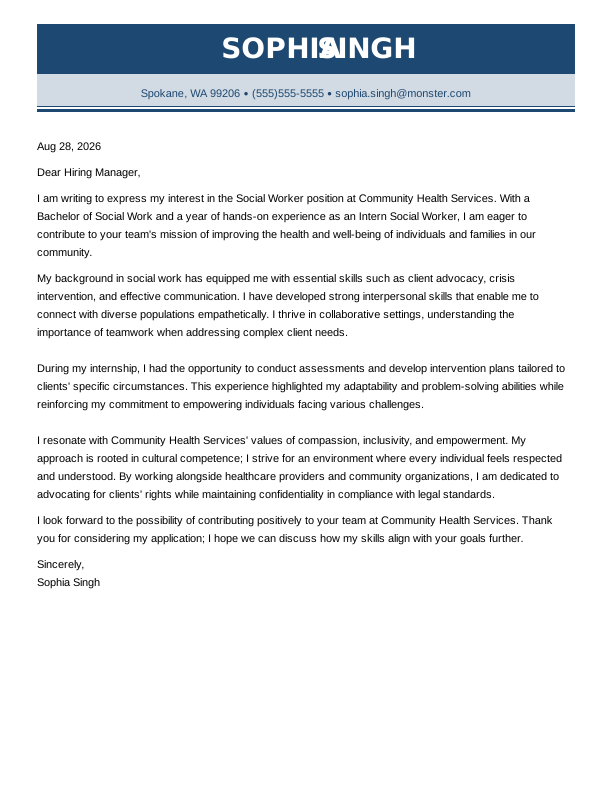
 Free
FreeSocial Work Entry-Level Cover Letter
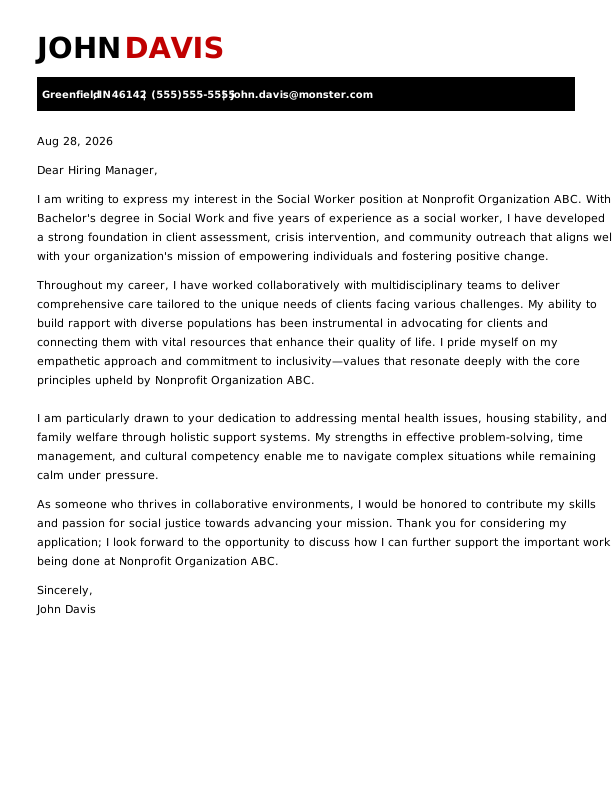
Social Work Mid-Level Cover Letter
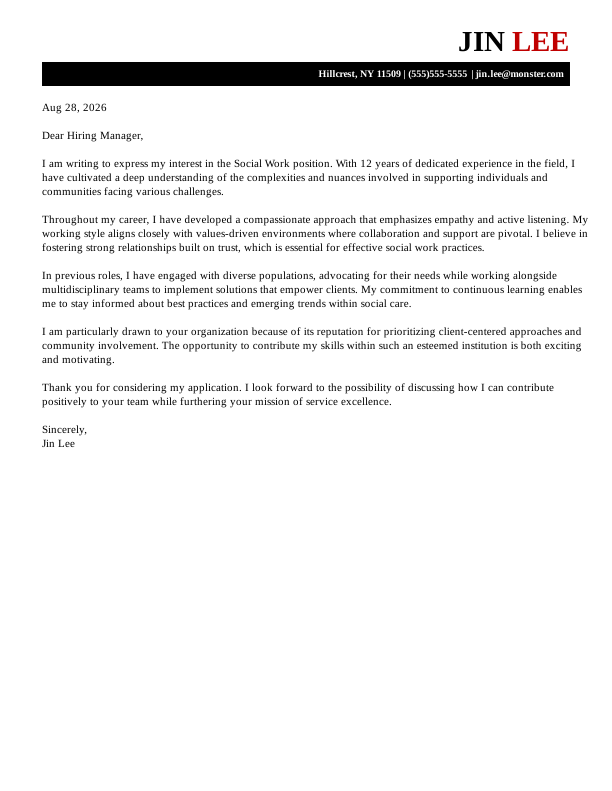
Social Work Experienced Cover Letter
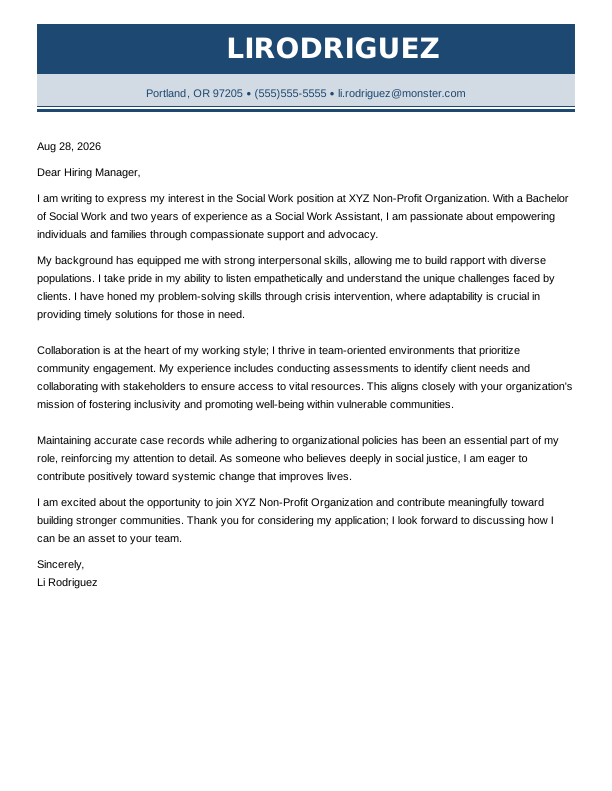
Social Work Entry-Level Cover Letter
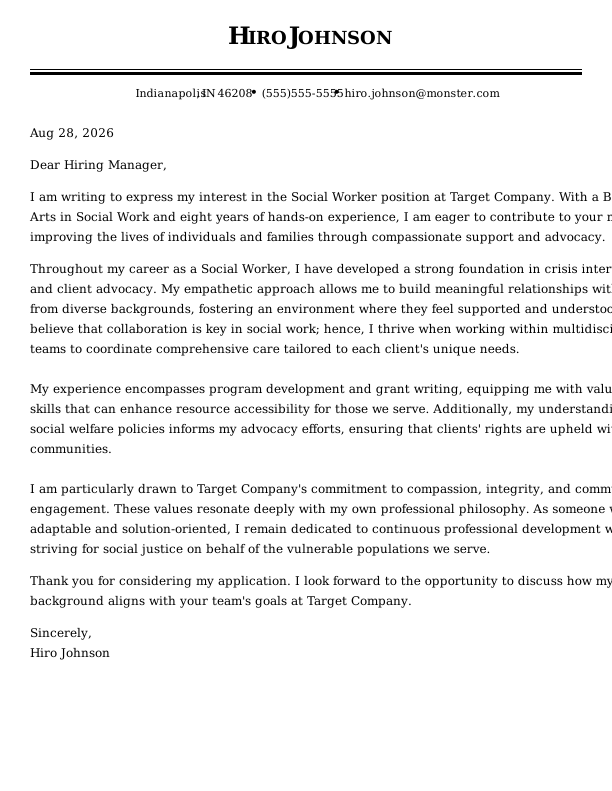
Social Work Mid-Level Cover Letter
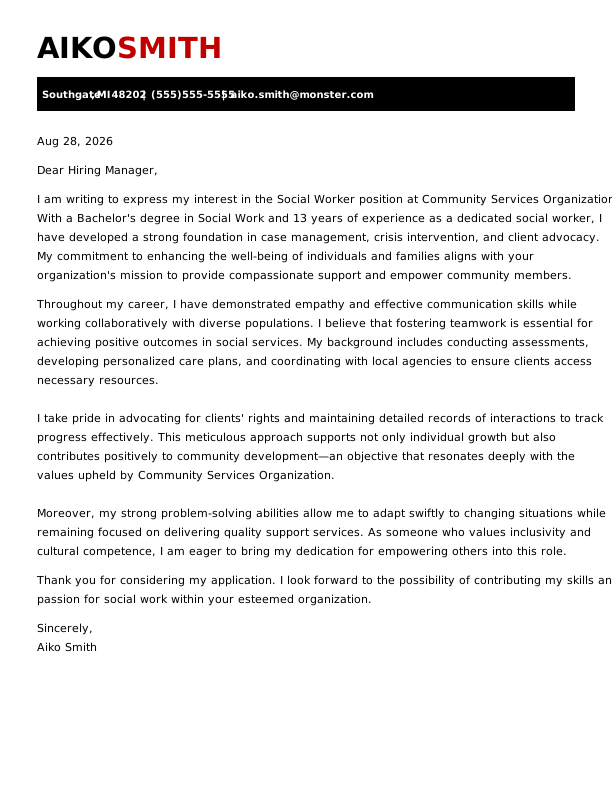
Social Work Experienced Cover Letter
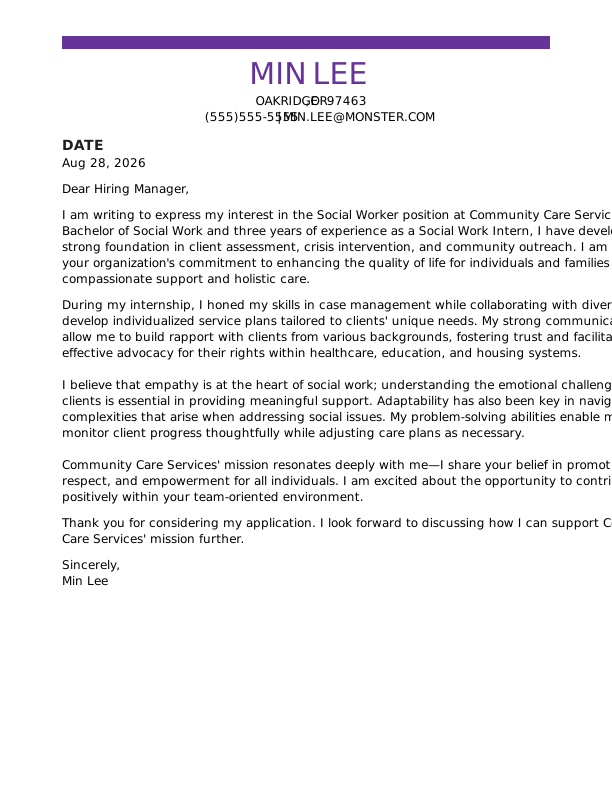
Social Work Entry-Level Cover Letter
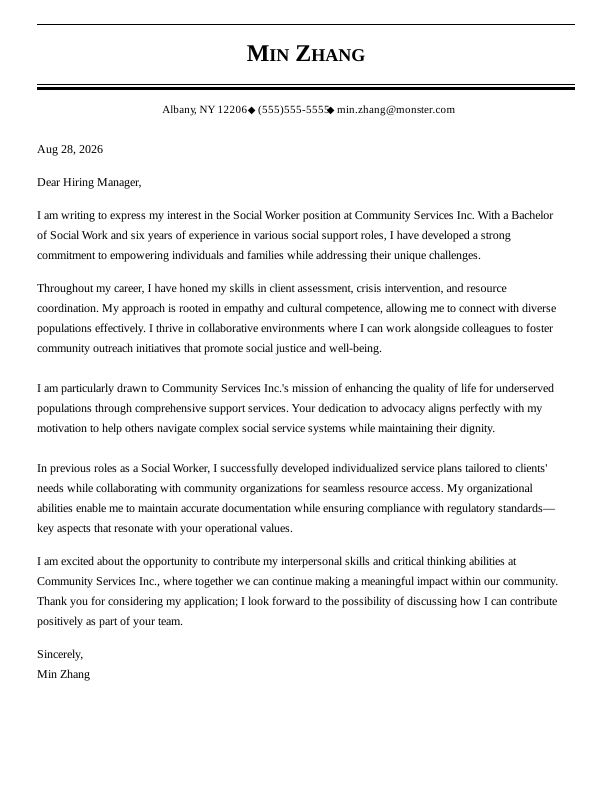
Social Work Mid-Level Cover Letter
Browse Free Cover Letter Templates
- Account Manager
- Accounts Payable
- Administrative Assistant
- Admissions Counselor
- Artist
- Babysitter
- Barista
- Bartender
- Bookkeeper
- Brand Ambassador
- Business Analyst
- Caregiver
- Chef
- Civil Engineering
- Computer Science
- Custodian
- Customer Service
- Dental Assistant
- Electrical Engineering
- Emt
- Engineering
- Event Coordinator
- Executive Assistant
- Finance
- Financial Analyst
- Firefighter
- Flight Attendant
- Graphic Designer
- Hair Stylist
- Healthcare
- Investment Banking
- It
- Janitor
- Journalism
- Lab Technician
- Law Clerk
- Lawyer
- Librarian
- Logistics
- Manager
- Marketing Manager
- Massage Therapist
- Mechanic
- Mechanical Engineer
- Medical Assistant
- Non Profit
- Nursing
- Office Manager
- Paralegal
- Personal Trainer
- Pharmacy Technician
- Photographer
- Physician Assistant
- Pilot
- Police Officer
- Project Manager
- Property Manager
- Receptionist
- Research Assistant
- Retail
- Sales
- Security Officer
- Software Engineer
- Teacher
- Teaching Assistant
- Truck Driver
- Vet Tech
- Veterinary Assistant
- Web Developer
- Welder
Cover Letter Examples for Social Workers
Cover letters for social work vary by experience level. Use templates for entry-level, mid-career, and experienced roles to highlight the experience, skills, and outcomes that fit each level.
Entry-Level Social Work Cover Letter
Perfect for recent graduates starting a cover letter with no experience, this template also supports career changers moving into social work from another field.
Mid-Career Social Work Cover Letter
A good fit for mid-level social workers with several years of client work, this template spotlights career growth and positions you for advancement into specialized practice, program leadership, or advocacy roles.
Experienced Social Work Cover Letter
Best for social work professionals with 10+ years of experience, this template helps job seekers pursue leadership roles in case management, program direction, or advanced community services.
Social Work Cover Letter Template (Text)
Use this editable text version of a social work cover letter template to copy, paste, and customize in your document.
Sophia Singh
Springfield, IL 62708
(555)555-5555
sophia.singh@monster.com
Aug 28, 2026
Dear Hiring Manager,
I am writing to express my interest in the social worker position at Community Wellness Center. With a bachelor’s degree in social work and seven years of dedicated experience as a social worker, I am passionate about empowering individuals and families to enhance their quality of life within our community.
Throughout my career, I have honed my skills in client advocacy, crisis intervention, and case management, which are essential for supporting clients facing various challenges. My approach is rooted in empathy and resilience, allowing me to connect with diverse populations and understand their unique needs. I believe that fostering strong interpersonal relationships is crucial for effective collaboration with clients and community organizations alike.
In previous roles, I have been committed to conducting thorough assessments that lead to personalized intervention plans aimed at promoting mental health and well-being. My organizational skills ensure meticulous documentation while maintaining compliance with regulatory standards. Additionally, my problem-solving abilities enable me to remain calm under pressure while advocating for clients’ rights and facilitating access to necessary resources.
I am particularly drawn to Community Wellness Center’s mission of compassion, inclusivity, and empowerment. Aligning with your values motivates me further to contribute positively toward enhancing the lives of those we serve.
Thank you for considering my application. I look forward to the opportunity to discuss how my background can align with the goals of your organization.
Sincerely,
Sophia Singh
How to Write a Social Work Cover Letter
For social work, knowing how to write a cover letter means showing your fit through personalization, client-centered storytelling, and clear examples of relevant skills and achievements. Apply the recommendations that follow by highlighting your qualifications and customizing your letter for each target role, including the agency’s mission and the populations you’ve served.
1. Research & Prepare
Before you write your cover letter for a social work role, research the organization and the people it serves. Learn how its services support clients, families, or communities and what challenges they prioritize, like housing stability, crisis intervention, or behavioral healthcare. Also review the hiring manager’s background so you can align your experience with their focus.
Read the job description closely for required credentials and casework experience. Then check the company website, recent news or program updates, and relevant LinkedIn profiles to spot key values and current initiatives. Use what you find to tailor your examples and show why you fit the specific caseload and team.
2. Hook the Reader
Your opening matters because it sets the tone and earns the reader’s attention fast. A strong start shows you understand the organization, highlights your real-world experience, and makes your motivation feel personal instead of generic.
Consider the following openings:
- Mention a program or policy from the agency that matches your interests, such as in housing stability or youth support.
- Reference a specific case outcome, like helping a client secure benefits after barriers to access.
- Connect your background to the company’s mission. For instance, you can cite how you’ve collaborated with schools, shelters, or courts.
3. Tell Your Professional Story
In your cover letter, go beyond repeating your resume. Tell a brief story with specific moments and measurable results that show how you helped clients and improved outcomes. Hiring teams should be able to picture your impact, not just your responsibilities.
For social work roles, quantify what changed after your support. For example, cite caseloads you managed, like 30 to 40 clients, or note reductions in missed appointments by 25%. You can also share outcomes such as connecting families to services within two weeks or improving housing stability rates by 15%.
4. Showcase Your Skills
In social work, employers want proof that your experience matches their clients and program needs. Instead of listing skills, connect each one to what the posting asks for, then point to how you used it in real cases.
For example, if the role highlights crisis intervention, describe a time you stabilized a client by assessing risk, coordinating with emergency supports, and documenting next steps. If the job posting mentions case management or documentation systems, share how you tracked goals in EHR notes or care plans and updated service referrals based on progress and barriers.
5. Explain Any Special Circumstances
If you have employment gaps, changed specialties, or relocated, address them early in your cover letter. Share a brief, honest reason and then pivot to what you gained during that time, such as new skills, steady volunteer work, or updated training. Keep it forward-looking so the reader sees continuity in your goals.
For social work roles, you can mention a gap spent caregiving that strengthened your patience and trauma-informed communication. If you shifted from school-based work to community mental health, describe how you learned case management practices and built stronger referral networks. If you moved cities, note local volunteer experience or familiarity with nearby resources like shelters and support groups.
6. End With a Professional Goodbye
Close your cover letter by restating your interest in the social work role and inviting next steps. In two to three sentences, ask to discuss how your experience supports clients and strengthens services, then thank the hiring manager for their time and consideration.
End with a tailored call to action like, “I welcome the opportunity to discuss how my case management skills and advocacy for client well-being can support your team.” Use sign-offs such as “Sincerely” or “Best regards.”
4 Tips for Formatting Your Cover Letter
Proper formatting helps you look professional and ensures your cover letter reads clearly from the first line. Use clean spacing, simple headings, and short paragraphs so your message stays easy to scan. These tips apply whether you have years of experience or you’re just starting out.

Keep It to One Page
Hiring managers work through many applications, so keep your cover letter concise and to one page. Target 250–400 words or three to four focused paragraphs that highlight your most relevant social work experience, client support skills, and qualifications.

Use a Professional Font & Layout
Choose professional fonts like Arial, Calibri, Times New Roman, or Georgia in 10–12 pt for easy reading. Use one-inch margins and keep formatting consistent with your resume so your social work cover letter looks polished and cohesive.

Address the Hiring Manager Directly
When you write a social work cover letter, try to address the hiring manager by name by checking the job posting, the organization’s website, and LinkedIn, or by calling and asking who reviews applications. If you cannot find a name, use “Dear Hiring Manager” or “To the Hiring Team,” and skip “To Whom It May Concern,” which can feel outdated in today’s nonprofit and community settings.

Save & Send as a PDF
Save your cover letter as a PDF to preserve formatting across devices and systems. Name the file with your name and the words “cover letter,” for example “Taylor_Jones_cover letter.pdf.”
Top-Paying States for Social Work Roles
Knowing what social workers earn across the country helps you evaluate job offers, negotiate fair compensation, and make informed career decisions. The salary data below comes from the U.S. Bureau of Labor Statistics (BLS) and reflects recent national averages for social work roles.
Keep in mind that actual pay can vary based on location, years of experience, relevant credentials like LMSW or LCSW, and the setting you serve. Social workers in hospitals, behavioral health systems, or substance use programs often earn more than those in community agencies, and specialized roles such as child welfare or crisis intervention can command higher salaries.
| Alabama | $85,850 |
| Alaska | $79,450 |
| Arizona | $75,830 |
| Arkansas | $70,590 |
| California | $130,330 |
| Connecticut | $89,470 |
| Delaware | $86,780 |
| District of Columbia | $106,090 |
| Florida | $69,730 |
| Georgia | $87,770 |
| Hawaii | $118,510 |
| Idaho | $71,370 |
| Illinois | $78,460 |
| Indiana | $79,080 |
| Iowa | $83,570 |
| Kansas | $91,840 |
| Kentucky | $76,490 |
| Louisiana | $70,720 |
| Maine | $86,780 |
| Maryland | $96,790 |
| Massachusetts | $97,140 |
| Michigan | $80,400 |
| Minnesota | $78,900 |
| Mississippi | $80,110 |
| Missouri | $71,830 |
| Montana | $60,720 |
| Nebraska | $71,880 |
| Nevada | $104,180 |
| New Hampshire | $102,090 |
| New Jersey | $87,110 |
| New Mexico | $74,630 |
| New York | $105,750 |
| North Carolina | $72,690 |
| North Dakota | $76,760 |
| Ohio | $67,090 |
| Oklahoma | $95,330 |
| Oregon | $84,830 |
| Pennsylvania | $82,010 |
| Rhode Island | $102,910 |
| South Carolina | $99,670 |
| South Dakota | $86,180 |
| Tennessee | $70,020 |
| Texas | $89,280 |
| Utah | $74,820 |
| Vermont | $81,580 |
| Virginia | $81,620 |
| Washington | $91,410 |
| West Virginia | $73,510 |
| Wisconsin | $76,830 |
| Wyoming | $81,940 |
| Guam | $59,900 |
| Puerto Rico | $94,870 |
| Virgin Islands | $62,390 |
Key Takeaways
- Personalize each letter for the specific role and agency. Reference the population you’ll serve, relevant programs, and how your experience supports the organization’s mission and service model.
- Lead with a strong hook and measurable outcomes. Include numbers like caseload size, referral success rates, reduced crises, or improved client engagement when you can.
- Keep formatting clean and consistent with your resume. Use the same headings, spacing, and contact details so reviewers can scan quickly.
Browse Monster’s Resume Templates
Monster also has hundreds of ATS-friendly resume templates for all career levels and industries. Create a matching resume to help you land the interview.
Frequently Asked Questions
Last Update:
Do I really need a cover letter?
Yes, you should include a cover letter even when it’s listed as optional. It adds context your resume can’t provide and shows initiative and genuine interest in the position.
A cover letter is especially helpful when you need to explain a career change, employment gap, or interest in a specific organization. It also gives you an opportunity to highlight your personality, commitment to clients, and approach to support and advocacy while demonstrating clear communication skills.
How long should my cover letter be?
A social work cover letter should stay within one page and 250–400 words. Hiring managers spend limited time reviewing each application, so keep your message tight.
Focus on quality over quantity by sharing only the most relevant experiences and achievements. Aim for three to four concise paragraphs that give each section a clear purpose.
Should my cover letter match my resume?
Yes, your cover letter should match your resume’s visual design. Use the same fonts, colors, and header style so your application package looks cohesive and intentional.
However, let the content complement rather than duplicate your resume. Expand on social work experience with brief context about clients or programs, explain why you want the role, and highlight outcomes or lessons that bullet points cannot fully show.
Can I use AI to write my cover letter?
AI tools are great for brainstorming ideas, organizing your thoughts, building a solid structure, and overcoming writer’s block when drafting a social work cover letter. However, your personal story and the specific requirements of the role must drive the final message.
Treat AI as a starting point, then edit thoroughly to infuse your unique voice, specific client or program achievements, and genuine enthusiasm for the organization. Hiring managers easily spot generic, AI-generated text, so refine every paragraph to ensure it feels authentically yours.
How do I write a cover letter for an internal social work position?
When writing a cover letter for an internal job, use your knowledge of agency policies, local resources, and the clients you already serve. Highlight measurable contributions such as case management outcomes, successful service coordination, or improved documentation, and explain how the new role supports your professional growth while strengthening client support. Follow the formal application steps and submit all required materials.

Megan Dawkins is a career industry editor who empowers job seekers to take control of their career paths using Monster’s comprehensive job search and resume tools. She specializes in helping job seekers navigate the flexible job market.
See More From Megan DawkinsExplore Related Career Advice







How to Write a Cover Letter for Internal Positions or Promotions (Examples & Tips)

Updated:
Apr 23, 2026
|

19 min read


Cover Letter vs Resume: What’s the Difference & Do You Need Both?

Updated:
Apr 23, 2026
|
18 min read