

Free Vet Tech Cover Letter Templates & Examples
Boost your interview odds with our professionally designed vet tech cover letter templates. These free cover letter templates include clear writing tips and guidance to help you highlight your qualifications, demonstrate hands-on clinical skills, and stand out to animal clinic hiring managers.
Real-World Cover Letters That Get Results
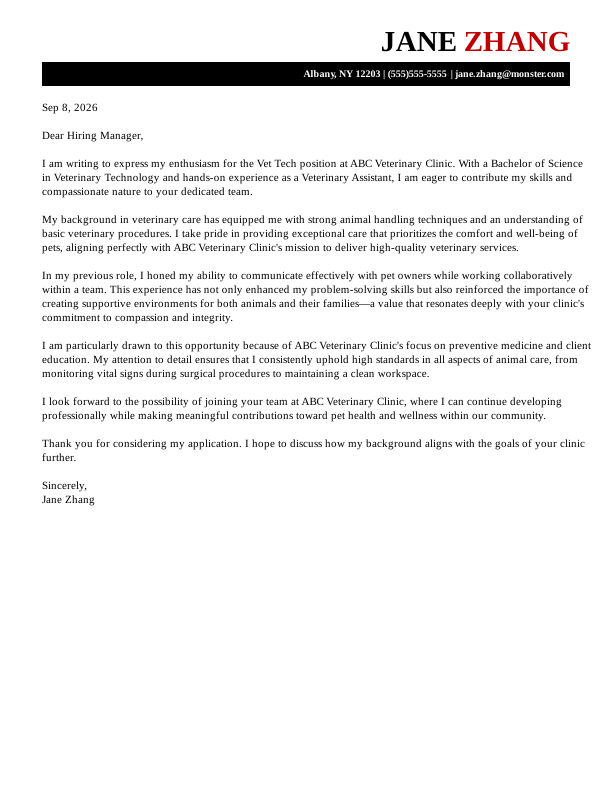
 Free
FreeVet Tech Entry-Level Cover Letter
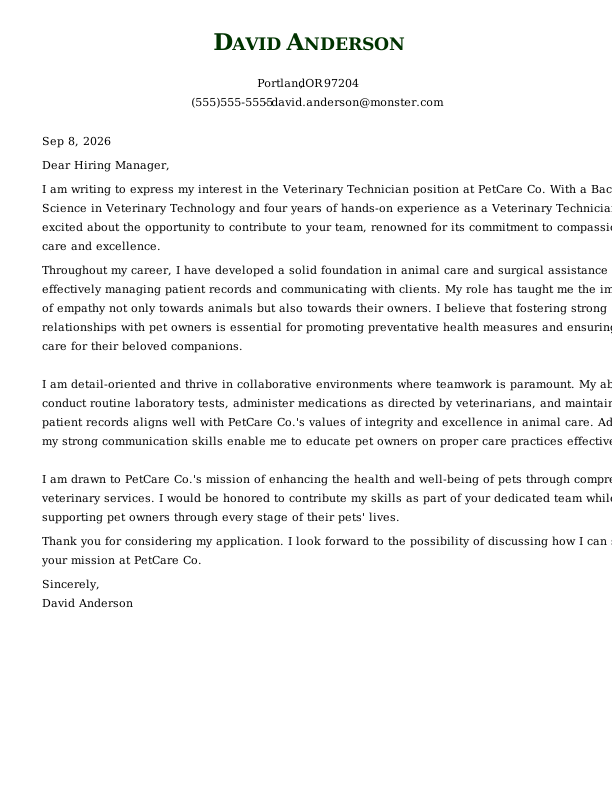
Vet Tech Mid-Level Cover Letter
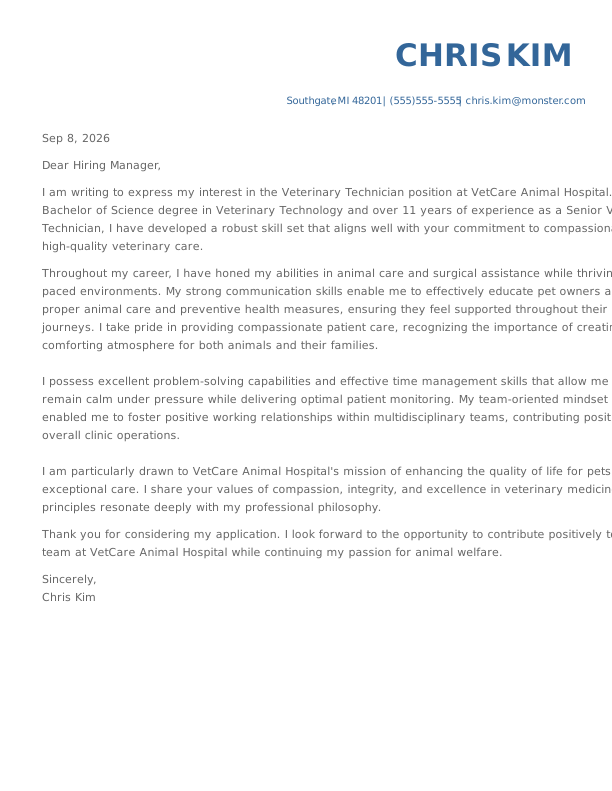
Vet Tech Experienced Cover Letter
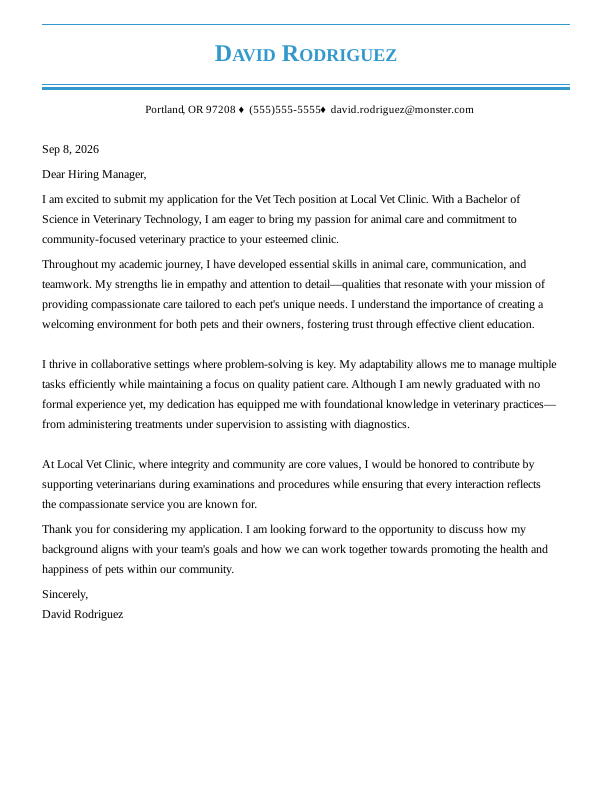
Vet Tech Entry-Level Cover Letter
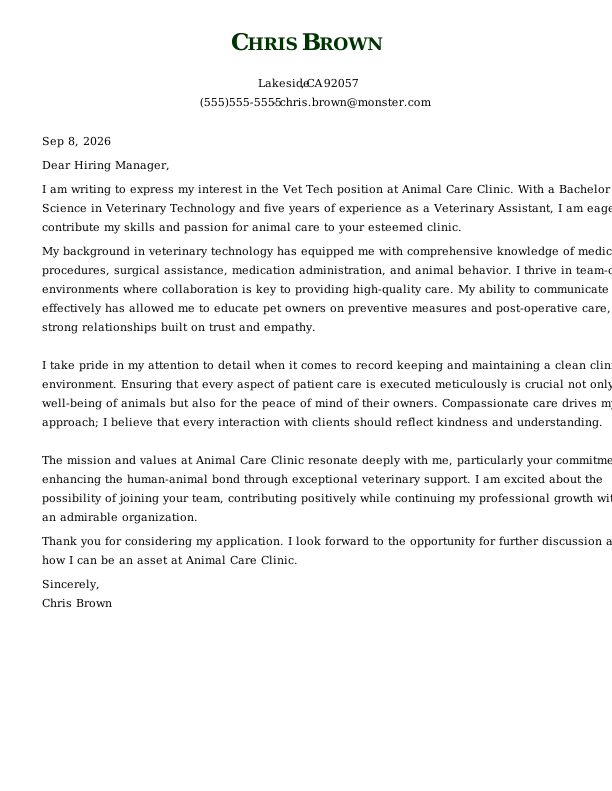
Vet Tech Mid-Level Cover Letter
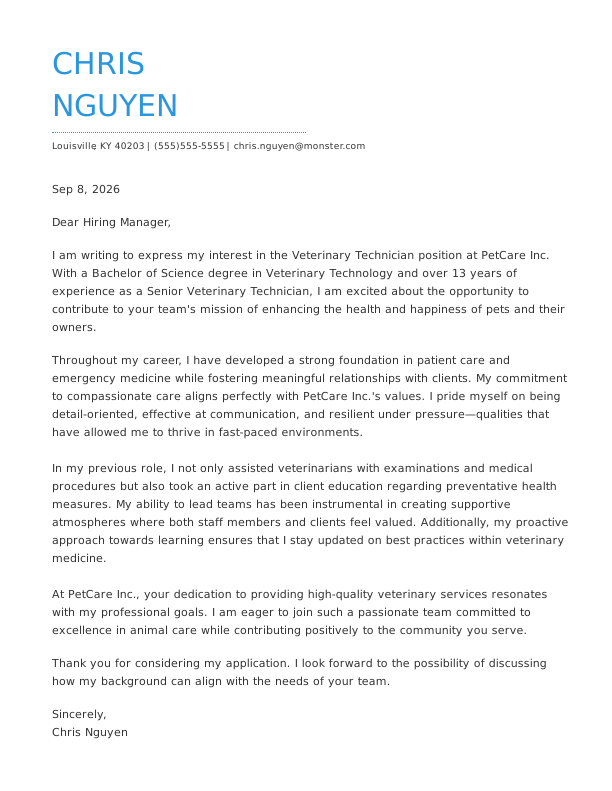
Vet Tech Experienced Cover Letter
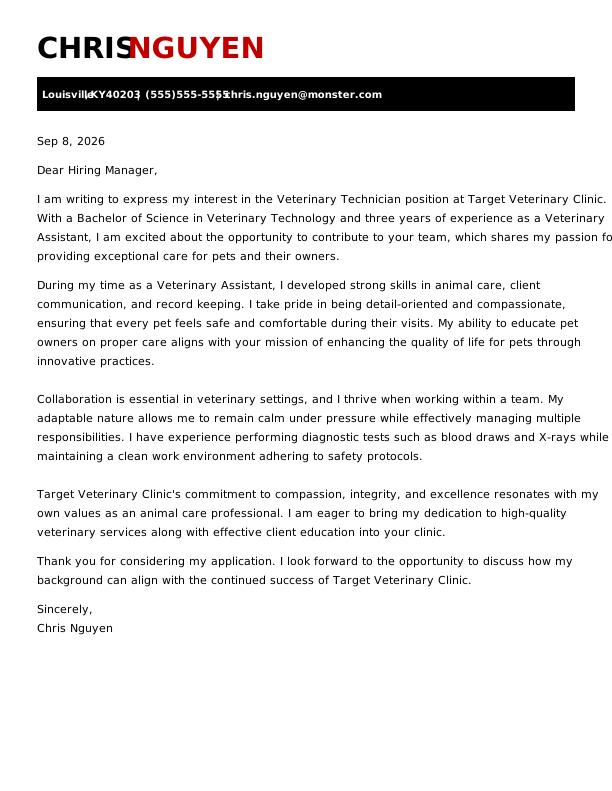
Vet Tech Entry-Level Cover Letter
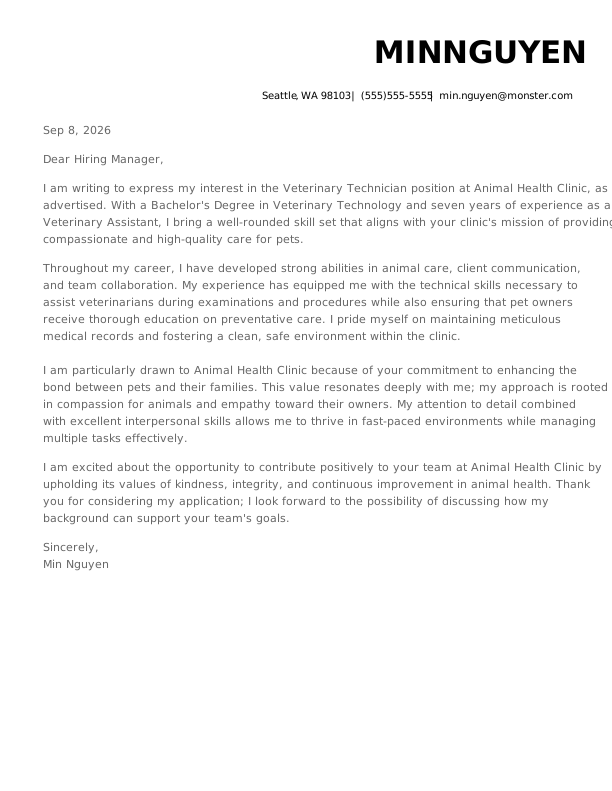
Vet Tech Mid-Level Cover Letter
Browse Free Cover Letter Templates
- Account Manager
- Accounts Payable
- Administrative Assistant
- Admissions Counselor
- Artist
- Babysitter
- Barista
- Bartender
- Bookkeeper
- Brand Ambassador
- Business Analyst
- Caregiver
- Chef
- Civil Engineering
- Computer Science
- Custodian
- Customer Service
- Dental Assistant
- Electrical Engineering
- Emt
- Engineering
- Event Coordinator
- Executive Assistant
- Finance
- Financial Analyst
- Firefighter
- Flight Attendant
- Graphic Designer
- Hair Stylist
- Healthcare
- Investment Banking
- It
- Janitor
- Journalism
- Lab Technician
- Law Clerk
- Lawyer
- Librarian
- Logistics
- Manager
- Marketing Manager
- Massage Therapist
- Mechanic
- Mechanical Engineer
- Medical Assistant
- Non Profit
- Nursing
- Office Manager
- Paralegal
- Personal Trainer
- Pharmacy Technician
- Photographer
- Physician Assistant
- Pilot
- Police Officer
- Project Manager
- Property Manager
- Receptionist
- Research Assistant
- Retail
- Sales
- Security Officer
- Social Work
- Software Engineer
- Teacher
- Teaching Assistant
- Truck Driver
- Veterinary Assistant
- Web Developer
- Welder
Cover Letter Examples for Vet Techs
Vet tech cover letters evolve across career stages, highlighting different levels of patient restraint, surgical assistance, and laboratory diagnostics. Use these templates to align your clinical care skills, anesthesia monitoring, and client communication with your current career stage.
Entry-Level Vet Tech Cover Letter
Great for recent graduates writing a cover letter with no experience, this template also supports career changers transitioning into vet tech from another field.
Mid-Career Vet Tech Cover Letter
A good fit for experienced vet techs, this template spotlights hands-on patient care and client support while positioning you for growth into advanced clinical duties, specialty medicine, or team leadership.
Experienced Vet Tech Cover Letter
Best for vet techs with 10+ years of experience, this template helps you pursue senior technician, lead support, or clinic operations leadership roles.
Vet Tech Cover Letter Template (Text)
Use this editable text version of a cover letter template to copy, paste, and customize in your document for a vet tech position.
Aya Nguyen
Portland, OR 97207
(555)555-5555
aya.nguyen@monster.com
Sep 8, 2026
Dear Hiring Manager,
I am writing to express my interest in the veterinary technician position at Animal Health Services. With a Bachelor of Science in Veterinary Technology and six years of experience as a veterinary assistant, I have developed a strong foundation in animal care and veterinary procedures that align with your commitment to compassionate and innovative veterinary services.
Throughout my career, I have honed my skills in patient communication and team collaboration, ensuring that both animals and their owners receive the highest level of support. My detail-oriented nature allows me to conduct thorough examinations while effectively monitoring animal health status. I believe that educating pet owners about proper care is vital for promoting long-term health, which resonates with your mission at Animal Health Services.
I pride myself on being compassionate and empathetic towards both pets and their owners. Working collaboratively within a team has always been essential to me; I thrive in environments where open communication fosters positive outcomes for our furry patients. My problem-solving abilities enable me to remain calm under pressure while maintaining an organized workspace adhering to safety protocols.
I am excited about the opportunity to contribute to your esteemed organization, enhancing the lives of pets through high-quality care. Thank you for considering my application; I look forward to the possibility of discussing how my background can benefit Animal Health Services.
Sincerely,
Aya Nguyen
How to Write a Vet Tech Cover Letter
Writing a strong vet tech cover letter means pairing your veterinary technology credentials with clear storytelling that demonstrates your ability to assist veterinarians, monitor anesthesia, execute lab diagnostics, and guide pet owners through care plans. Follow the steps below to highlight your qualifications and customize your letter for each target animal hospital, specialty emergency clinic, or private practice.
1. Research & Prepare
Before you write your cover letter, research the clinic, its primary patient focus (such as small animal, equine, or exotic care), and its specific clinical services. Learning whether an organization specializes in high-volume emergency triage, dental prophylaxis, or orthopedic surgery helps you connect your clinical background directly to its operational demands.
Review the job description for required credentials (such as RVT, CVT, or LVT state licensure) and specific diagnostic software or lab equipment. Check the clinic website and recent community updates to understand its care philosophy, then review LinkedIn profiles of practice managers or medical directors to align your background with their priorities.
2. Hook the Reader
Your cover letter opening paragraph sets the tone for what follows. A strong opener grabs the practice manager or head veterinarian’s attention by demonstrating genuine knowledge of the clinic, your technical specialization, and what you bring to the treatment floor on day one.
Try referencing a specific care protocol, Fear Free certification model, or community outreach program from the clinic and connecting it to your clinical background. You can also open with a specific metric, such as your surgical prep efficiency or diagnostic turnaround speed, or highlight a direct recommendation from a supervising veterinarian who can vouch for your anesthesia monitoring precision and handling composure.
3. Tell Your Professional Story
Your cover letter should do more than restate your resume bullet points. Use the main body to share a concise example that illustrates how you handle emergency triage, calculate pharmaceutical dosages, and assist in complex surgical suites under active clinic conditions.
Quantify your technical accomplishments wherever possible. Mention specific metrics such as reducing kennel wait times by 15%, improving patient recovery log compliance to 95%, or maintaining an accurate lab sample tracking record across high-volume shifts. Highlight how your attentive monitoring supported positive patient outcomes.
4. Showcase Your Skills
Matching your technical veterinary skills to the exact requirements in a job posting helps practice managers picture you running treatment stations on day one. Connecting your safe animal restraint techniques, diagnostic equipment operation, and charting habits to what the clinic needs shows your readiness to join its medical staff.
For example, if the role emphasizes surgical support, describe how you prepped sterile fields, placed IV catheters, monitored vital signs under anesthesia, and managed post-operative recovery. If the posting stresses client education, share how you explained medication schedules, demonstrated wound care techniques, and addressed owner concerns after major procedures.
5. Explain Any Special Circumstances
If you have an employment gap, are attempting to transition into veterinary technology from another field, or recently relocated, address it early and briefly. Share the reason directly, then pivot to what you have gained or are building, such as completed VTNE certification modules, laboratory software training, or updated state license transfers.
For instance, you can mention how a break spent completing continuing education units or volunteering at a specialized animal rescue sharpened your diagnostic processing and emergency handling skills. When attempting a career shift into vet tech work, explain how your prior background—such as human medical assisting, laboratory science, or pharmacy support—strengthens your pharmaceutical calculations, patient monitoring, and clinical documentation. If you have relocated, mention your active state license transfer status, knowledge of local emergency referral networks, and immediate shift availability.
6. End With a Professional Goodbye
Close your cover letter by reaffirming your interest in the position, thanking the selection team for its time, and inviting a conversation about how your clinical background fits the team’s practice requirements. Keep the tone concise, confident, and focused on patient welfare and clinical reliability.
Wrap up with a clear statement, such as: “I welcome the opportunity to discuss how my clinical experience, anesthesia monitoring skills, and client communication can support your veterinary team.” Then, end with a professional sign-off like “Sincerely” or “Best regards.”
4 Tips for Formatting Your Cover Letter
Use clear spacing, simple headings, and consistent fonts to format your cover letter. Proper formatting keeps your document professional and easy to read. These tips apply whether you are stepping into your first licensed vet tech role or bring years of experience in veterinary care.

Keep It to One Page
Practice managers and medical directors review many applications, so keep your cover letter to a single page. Target 250 to 400 words across three to four focused paragraphs to share your most relevant technical skills and clinical accomplishments.

Use a Professional Font & Layout
Choose a clear font such as Arial, Calibri, Times New Roman, or Georgia in 10 to 12 pt with one-inch margins. Keeping formatting consistent with your resume creates a clean, cohesive application package that is easy to scan.

Address the Hiring Manager Directly
Try to find the name of the practice manager, medical director, or lead technician supervisor by reviewing the job posting, clinic directory, or LinkedIn.
If you cannot find a specific name, address your letter to “Dear Hiring Manager” or “To the Hiring Team,” avoiding outdated phrasing like “To Whom It May Concern.”

Save & Send as a PDF
Save your cover letter as a PDF to preserve your layout across different operating systems and devices. Use a professional file name that includes your name and the words “cover letter,” such as “Sam_Lee_cover_letter.pdf.”
Key Takeaways
- Tailor each letter to the specific clinic, service specialization, and patient population. Reference the clinic’s treatment focus, diagnostic tools, or care philosophy so reviewers quickly recognize your fit.
- Lead with a compelling opener and support it with concrete achievements. Include measurable details like patient triage volumes, recovery tracking compliance rates, surgical assistance counts, or lab processing accuracy.
- Keep formatting clean and consistent with your resume. Use identical fonts, header styles, and line spacing so veterinary evaluation teams can scan key credentials effortlessly.
Browse Monster’s Resume Templates
Monster also has hundreds of ATS-friendly resume templates for all career levels and industries. Create a matching resume to help you land the interview.
Frequently Asked Questions
Last Update:
Do I really need a cover letter?
Yes, including a cover letter adds valuable context that your resume cannot fully capture, demonstrating professional written communication, patient empathy, and genuine alignment with the clinic’s care standards.
A cover letter is especially valuable when explaining an employment gap, transitioning into clinical care from another field, or applying to a practice with specialized treatment focus. It provides space to convey your clinical philosophy and dedication to animal welfare.
How long should my cover letter be?
A vet tech cover letter should fit on a single page, ideally between 250 and 400 words. Practice managers spend limited time reviewing each submission, making conciseness essential.
Focus on quality over length by selecting your most relevant clinical credentials, surgical assistance achievements, and diagnostic laboratory experience. Organize your text into three to four well-structured paragraphs to keep your key qualifications scannable.
Should my cover letter match my resume?
Yes, your cover letter should match your vet tech resume’s visual design. Use the same fonts, colors, and header style so your application package looks cohesive and intentional.
Keep the formatting consistent while using the text to tell a deeper story. For a vet tech role, expand on your clinical background by adding context your resume cannot show, such as strategies used during emergency triage, managing complex anesthesia cases, and why you want to support this specific veterinary practice.
Can I use AI to write my cover letter?
AI tools like a cover letter generator can help you draft quickly, organize your ideas, and get past writer’s block. They can also suggest a clear structure, but your vet tech story still needs to drive the message.
Use AI as a starting point, then edit heavily with your own voice, specific patient or client examples, and real excitement for the clinic. Hiring managers often spot generic AI-generated content, so read every line and make it sound like you.
Should I mention salary expectations in my cover letter as a vet tech?
Only include salary expectations if the job posting explicitly requests them. When required, state a realistic range based on regional veterinary industry standards and your licensure level, noting that your rate remains open for discussion based on shift schedules, emergency on-call duties, and total benefits.

Kirsten Chorpenning is a career advice writer who empowers job seekers to take control of their career paths using Monster’s comprehensive job search and resume tools. She specializes in helping job seekers find rewarding jobs in today’s dynamic work environment.
See More From Kirsten ChorpenningExplore Related Career Advice







How to Write a Cover Letter for Internal Positions or Promotions (Examples & Tips)
Updated:
Apr 23, 2026
|

19 min read


Cover Letter vs Resume: What’s the Difference & Do You Need Both?

Updated:
Apr 23, 2026
|
18 min read