

Free Event Coordinator Cover Letter Templates & Examples
Land your next event coordinator role by showing you can handle the details that make or break an event. Our free templates help you translate vendor management, logistics, and on-the-day problem-solving into a cover letter hiring managers actually want to read.
Real-World Cover Letters That Get Results
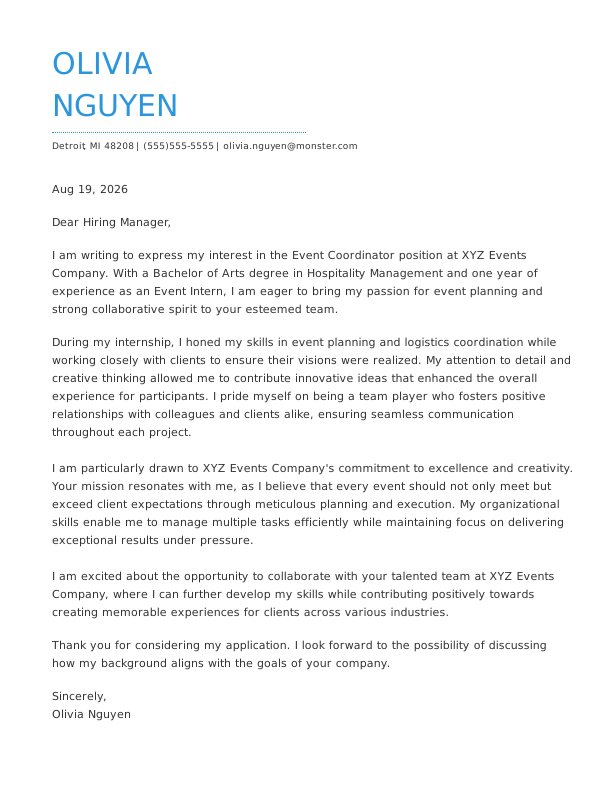
 Free
FreeEvent Coordinator Entry-Level Cover Letter
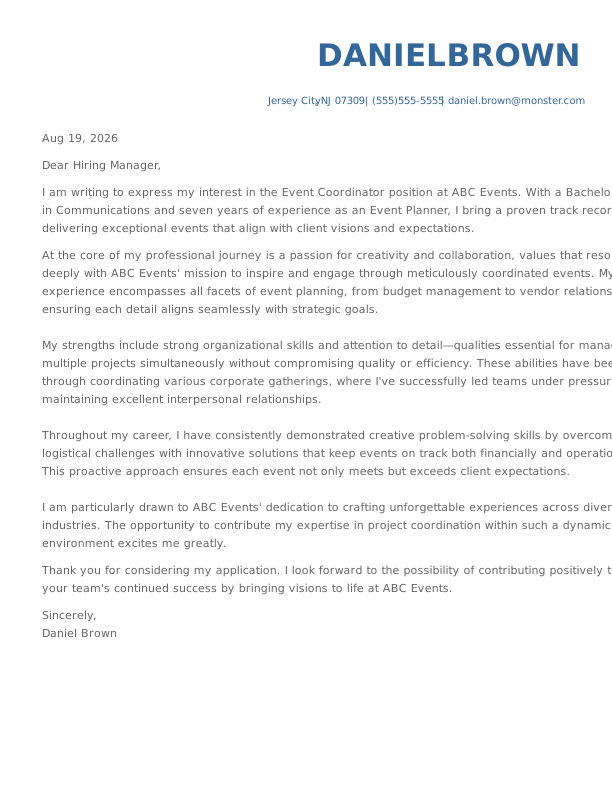
Event Coordinator Mid-Level Cover Letter
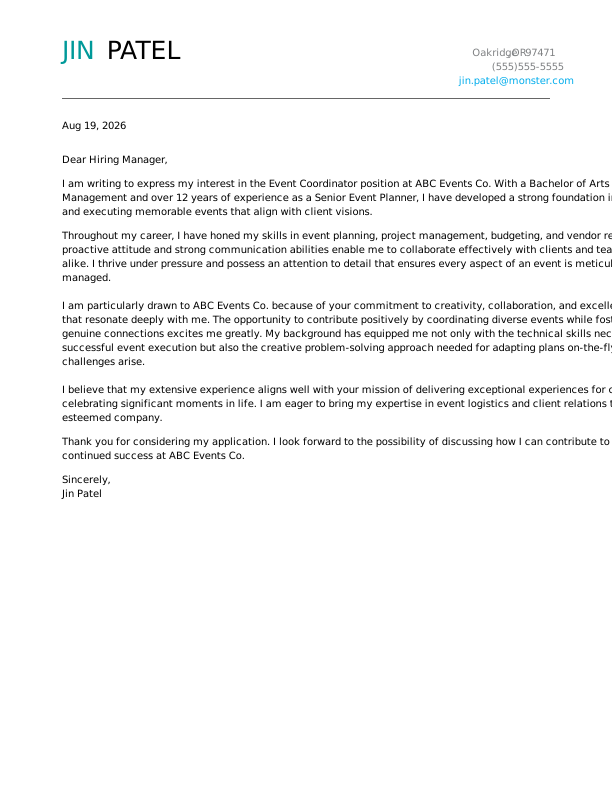
Event Coordinator Experienced Cover Letter
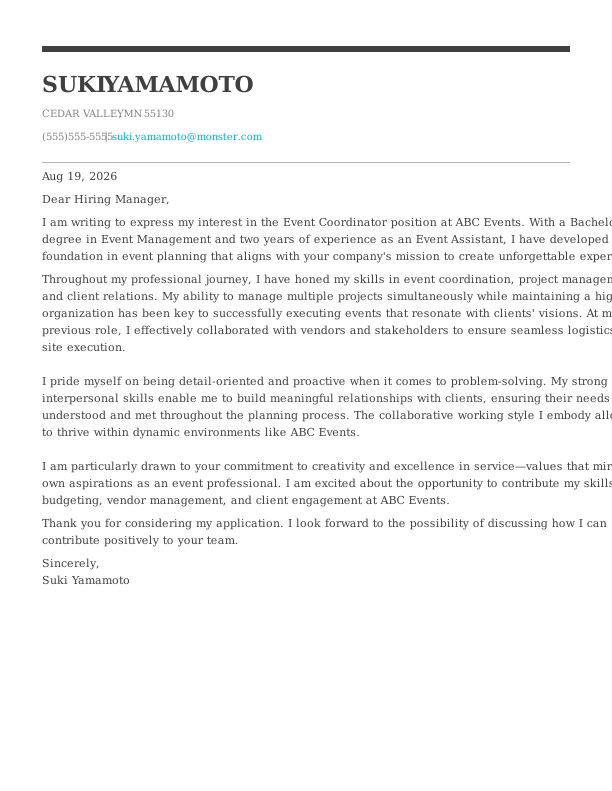
Event Coordinator Entry-Level Cover Letter
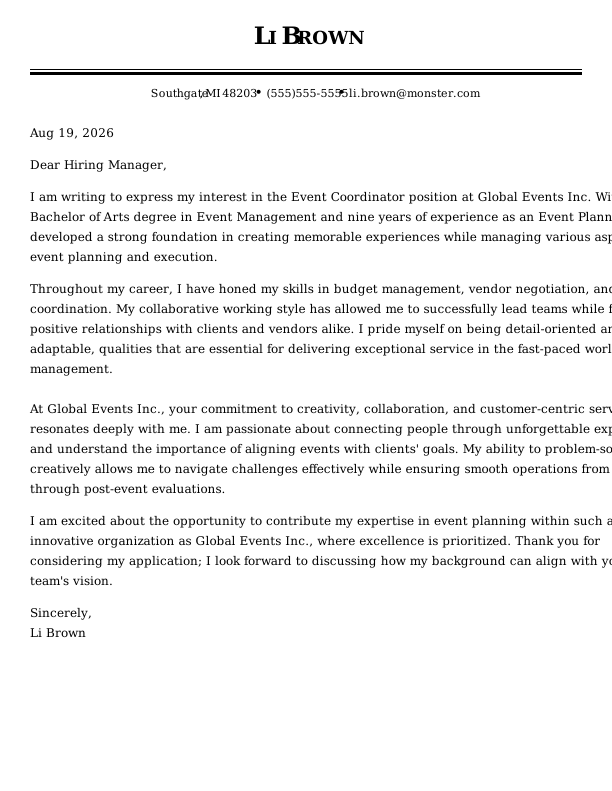
Event Coordinator Mid-Level Cover Letter
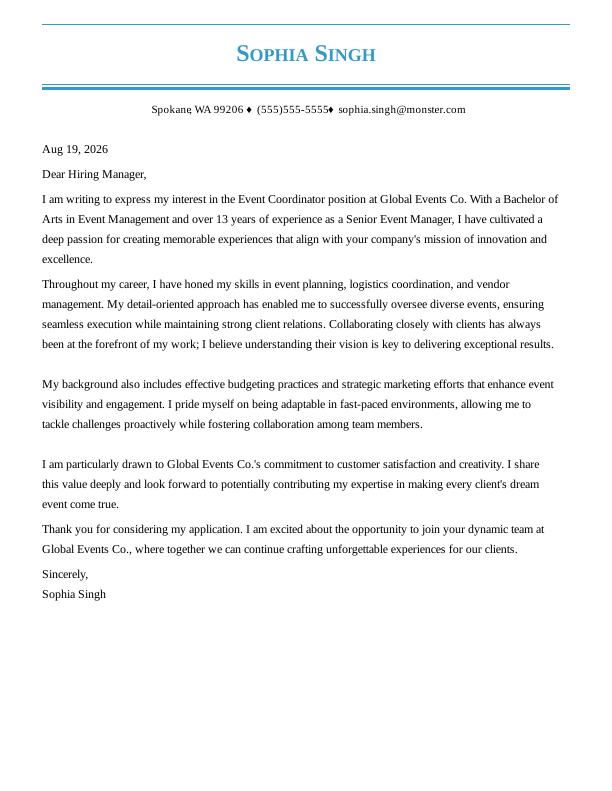
Event Coordinator Experienced Cover Letter
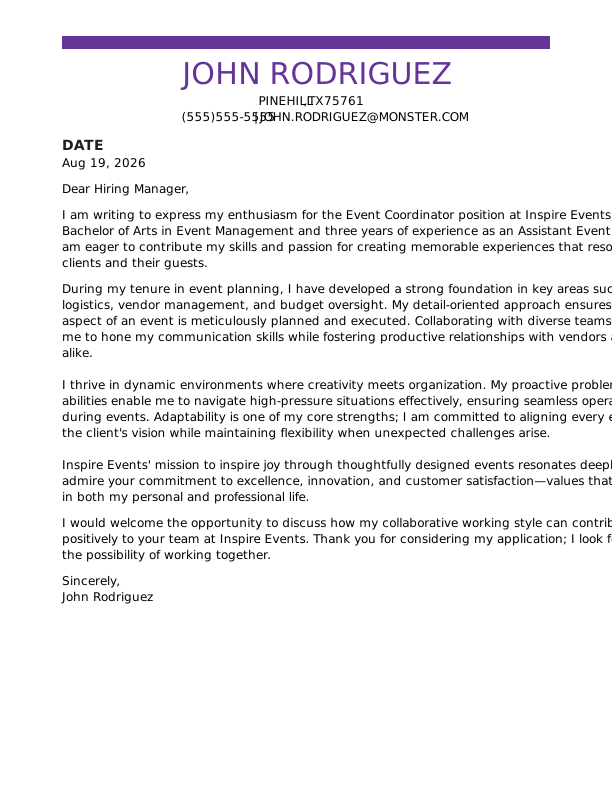
Event Coordinator Entry-Level Cover Letter
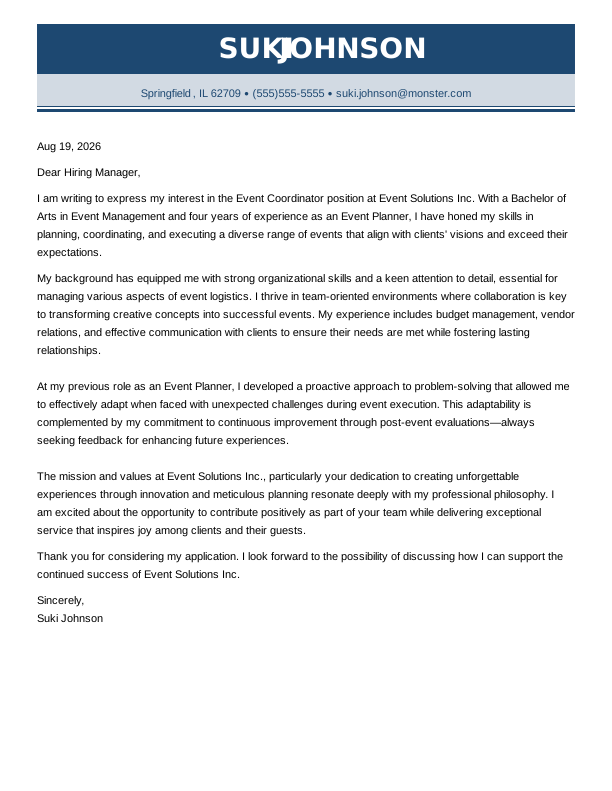
Event Coordinator Mid-Level Cover Letter
Browse Free Cover Letter Templates
- Account Manager
- Accounts Payable
- Administrative Assistant
- Admissions Counselor
- Artist
- Babysitter
- Barista
- Bartender
- Bookkeeper
- Brand Ambassador
- Business Analyst
- Caregiver
- Chef
- Civil Engineering
- Computer Science
- Custodian
- Customer Service
- Dental Assistant
- Electrical Engineering
- Emt
- Engineering
- Executive Assistant
- Finance
- Financial Analyst
- Firefighter
- Flight Attendant
- Graphic Designer
- Hair Stylist
- Healthcare
- Investment Banking
- It
- Janitor
- Journalism
- Lab Technician
- Law Clerk
- Lawyer
- Librarian
- Logistics
- Manager
- Marketing Manager
- Massage Therapist
- Mechanic
- Mechanical Engineer
- Medical Assistant
- Non Profit
- Nursing
- Office Manager
- Paralegal
- Personal Trainer
- Pharmacy Technician
- Photographer
- Physician Assistant
- Pilot
- Police Officer
- Project Manager
- Property Manager
- Receptionist
- Research Assistant
- Retail
- Sales
- Security Officer
- Social Work
- Software Engineer
- Teacher
- Teaching Assistant
- Truck Driver
- Vet Tech
- Veterinary Assistant
- Web Developer
- Welder
Cover Letter Examples for Event Coordinators
An event coordinator cover letter changes by career stage. Someone applying with an internship writes a different letter than someone who’s run a dozen galas.
Use the templates below to match your experience level and shape your focus around planning work, leadership, and measurable outcomes.
Entry-Level Event Coordinator Cover Letter
No full-time event experience yet? This template works for recent graduates and career changers moving into event coordination from another field.
Mid-Career Event Coordinator Cover Letter
A good fit for event coordinators with several years of planning experience, this template spotlights career growth and helps you move into senior coordination, team leadership, or niche event specialization.
Experienced Event Coordinator Cover Letter
Best for event coordinators with 10+ years of experience, this template supports professionals who coordinate complex logistics, lead teams, and manage budgets while elevating client experiences through strong vendor and stakeholder management. It’s built for senior event leadership and advanced planning roles.
Event Coordinator Cover Letter Template (Text)
Copy, edit, and personalize this adaptable event coordinator cover letter template in your own document.
Tao Lee
Tampa, FL 33601
(555)555-5555
tao.lee@monster.com
Aug 19, 2026
Dear Hiring Manager,
I am writing to express my interest in the Event Coordinator position at Target Company. With a Bachelor of Arts in Event Management and five years of experience as an Event Coordinator, I have cultivated a strong foundation in planning and executing memorable events that resonate with audiences.
My background includes extensive experience in logistics coordination, budget management, and vendor negotiation. I have successfully collaborated with clients to understand their objectives and develop tailored plans that ensure each event aligns seamlessly with their vision. My organizational skills enable me to manage multiple projects simultaneously while maintaining a keen attention to detail.
Throughout my career, I have fostered positive relationships with clients and team members alike, recognizing the value of collaboration in creating exceptional experiences. My adaptability allows me to thrive in fast-paced environments where quick problem-solving is essential for on-site operations.
At Target Company, I admire your commitment to innovation and excellence within the event management industry. Your mission aligns perfectly with my passion for delivering outstanding event experiences that inspire engagement while upholding professionalism across all interactions.
I am excited about the opportunity to contribute my skills and enthusiasm for event planning at Target Company. Thank you for considering my application; I look forward to discussing how I can support your team further.
Sincerely,
Tao Lee
How to Write a Event Coordinator Cover Letter
Writing an event coordinator cover letter means proving fit through personalization, vivid storytelling about past events, and clear evidence of skills like vendor coordination, scheduling, and guest experience. The steps below help you highlight your most relevant achievements and tailor each letter to the specific role you want.
1. Research & Prepare
Before you write, research the company, the events they run, and the hiring manager’s background. This helps you match your planning style to their audience, vendor network, and logistics expectations.
Review the job description for budget, timeline, and venue or sponsorship duties. Check the company website and recent news for upcoming programs and themes, and use LinkedIn to see how the hiring manager leads teams or manages stakeholders. Use what you find to tailor your examples of guest management, run-of-show coordination, and problem-solving.
2. Hook the Reader
Recruiters skim first, so your opening needs to earn a second look fast. A strong hook shows you understand the organization’s events and audience, not just the job title.
A few ways in:
- Mention who referred you, or share genuine enthusiasm for the organization’s mission and community impact
- Reference a recent conference or fundraiser by name and tie it to your experience with timelines, vendor coordination, or attendee support
- Open with a quick win, like managing a venue change under a tight deadline, then connect it to the company’s upcoming event goals
3. Tell Your Professional Story
Go beyond repeating your resume. Use a short story with specific moments and measurable outcomes that show how you shaped events, supported stakeholders, and kept details on track. Hiring managers want proof, not promises.
Quantify wins where you can: reducing setup time by 20%, improving attendance by 15% through targeted outreach, or cutting vendor miscommunications to zero with tighter timelines and checklists. Mention how you handled a high-pressure change, such as rescheduling for a last-minute venue update while keeping the agenda within a five-minute window.
4. Showcase Your Skills
Match your skills to the job posting by pointing to the exact outcomes it cares about, like vendor coordination, schedule accuracy, and attendee experience. Hiring managers want proof you can turn requirements into real plans, not just a list of strengths.
For example, if the role calls for managing timelines and budgets, describe how you built run-of-show schedules and tracked costs during a conference or fundraiser. If it mentions vendor outreach and logistics, share a time you confirmed AV delivery, handled last-minute changes on-site, and kept stakeholders updated with clear checklists.
5. Explain Any Special Circumstances
If you have an employment gap, a career change, or a relocation, address it early and briefly. State the reason in plain language, then pivot to what you learned or improved during that time.
If you took time off for family responsibilities, mention how you managed schedules, budgets, and last-minute changes under pressure. If you moved from another industry, connect your experience planning projects or customer experiences to vendor coordination and guest communication. If you relocated, note how quickly you built local relationships and got familiar with venues and event timelines.
6. End With a Professional Goodbye
Close by restating your interest in the role and what draws you to planning memorable experiences. Thank the reader for their time.
Add a forward-looking line, such as: “I welcome the opportunity to discuss how my logistics experience can support your next event from planning through wrap-up.” Then use a professional sign-off like “Sincerely” or “Best regards.”
4 Tips for Formatting Your Cover Letter
A well-formatted cover letter makes a strong first impression and keeps your message easy to read. Use clear headings, short paragraphs, and consistent spacing so the hiring manager can scan quickly. These tips apply whether you’re experienced or new to the field.

Keep It to One Page
Hiring managers handle many applications, so keep your letter to one page. Target 250–400 words in three to four focused paragraphs that highlight your strongest event coordination qualifications.

Use a Professional Font & Layout
Choose a clean font like Arial, Calibri, Times New Roman, or Helvetica in 10–12 pt. Use 1-inch margins and keep spacing and section headings consistent with your resume for a coordinated look.

Address Hiring Manager Directly
Try to find the hiring manager’s name in the job description, on the company website, or via LinkedIn. If you still can’t locate it, use “Dear Hiring Manager” or “To the Hiring Team,” and skip “To Whom It May Concern,” since it feels outdated.

Save & Send As PDF
Save your cover letter as a PDF to preserve formatting across devices and systems. Use a professional file name that includes your name and the words “cover letter,” such as “Jane_Smith_cover_letter.pdf.”
Key Takeaways
- Personalize each letter for the specific event and company. Mention the type of events you’ve supported and match your experience to their audience, venue, and goals.
- Lead with a strong hook and quantifiable wins. Share numbers like attendee counts, budget size, on-time setup rates, or reductions in vendor issues.
- Keep formatting clean and consistent with your resume. Use the same headings, font, and spacing so hiring managers can scan quickly.
Browse Monster’s Resume Templates
Monster also has hundreds of ATS-friendly resume templates for all career levels and industries. Create a matching resume to help you land the interview.
- Animator
- Audio Engineer
- Cinematographer
- Entertainment
- Event Coordinator
- Event Planner
- Event Planning
- Film Director
- Film Industry Internship
- Film Production
- Makeup Artist
- Media Planner
- Media
- Model
- Music Producer
- Production Assistant
- Public Affairs
- Sound Designer
- Stage Manager
- Video Editor
- Videographer
- Voice Actor
- Film Industry Internship
Frequently Asked Questions
Last Update:
Do I really need a cover letter?
Yes, include a cover letter even when it’s listed as optional. It adds context your resume can’t, and signals initiative and real interest in the role.
A cover letter helps most when you’re explaining a career shift, an employment gap, or why you want to work at that specific company. It also lets you show your personality and energy for planning details, coordinating people, and delivering smooth events.
How long should my cover letter be?
Cover letters should stay to one page, typically 250–400 words. Hiring managers spend limited time on each application and scan for key details.
Focus on quality over quantity by including only the most relevant information, structured in three to four concise paragraphs that each serve a clear purpose.
Should my cover letter match my resume?
Yes, your cover letter should match your resume’s visual design. Use the same fonts, colors, and header style so your application looks cohesive and intentional.
The content, though, should complement your resume, not duplicate it. For an event coordinator role, expand on key experience with planning timelines, vendor coordination, attendee communication, and post-event follow-up, the kind of context bullet points can’t fully show.
Can I use AI to write my cover letter?
AI tools can help you draft quickly, organize your ideas, and get past writer’s block, including a clear structure for an event coordinator role. Still, personalization matters if you want to stand out.
Use AI as a starting point, then edit heavily to add your voice and specific details from past events. Include examples of your planning work and real enthusiasm for the organization. Hiring managers often spot generic AI content, so tailor every paragraph rather than sending it as-is.
What should I include in my cover letter header?
Your event coordinator cover letter header should list your full name, phone number, professional email, city/state, and LinkedIn profile if you have one. Add the date and the recipient’s information below your contact details. Match this header formatting to your resume for consistency.

Elizabeth Muenzen is a Certified Professional Resume Writer (CPRW) and member of the Professional Association of Resume Writers & Career Coaches who empowers job seekers to take control of their career paths using Monster’s comprehensive job search and resume tools.
See More From Elizabeth MuenzenExplore Related Career Advice







How to Write a Cover Letter for Internal Positions or Promotions (Examples & Tips)

Updated:
Apr 23, 2026
|

19 min read


Cover Letter vs Resume: What’s the Difference & Do You Need Both?
Updated:
Apr 23, 2026
|
18 min read