

Free Data Analyst Cover Letter Templates & Examples
Boost your interview odds with our professionally designed data analyst cover letter templates. These free cover letter templates include practical writing tips and guidance to help you highlight your qualifications, showcase analytical strengths, and stand out to hiring managers.
Real-World Cover Letters That Get Results
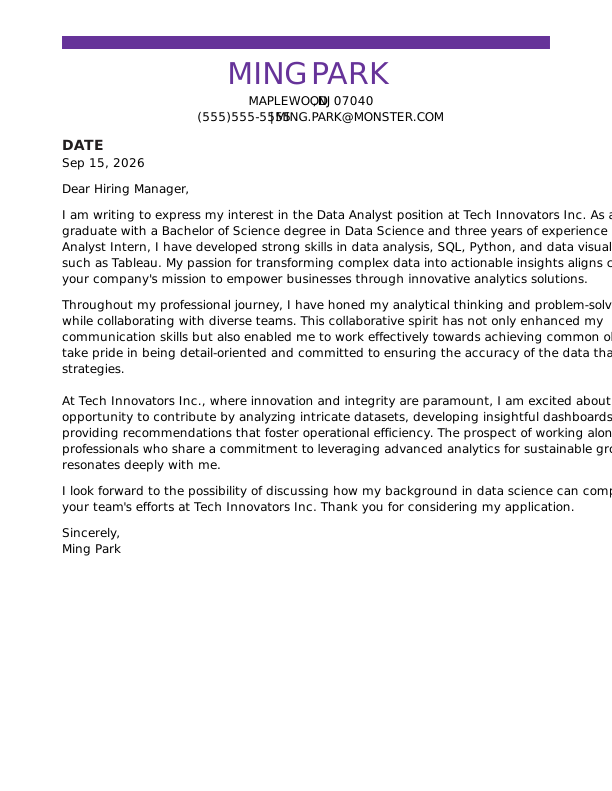
 Free
FreeData Analyst Entry-Level Cover Letter
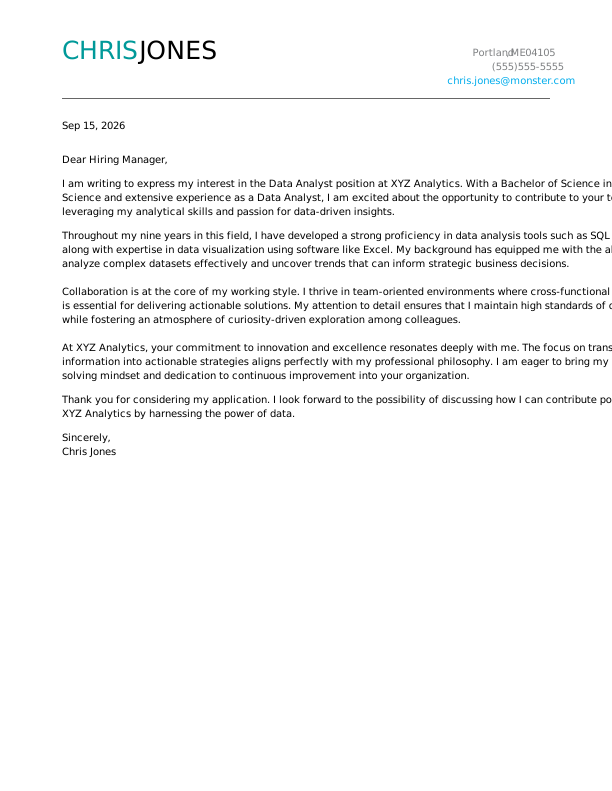
Data Analyst Mid-Level Cover Letter
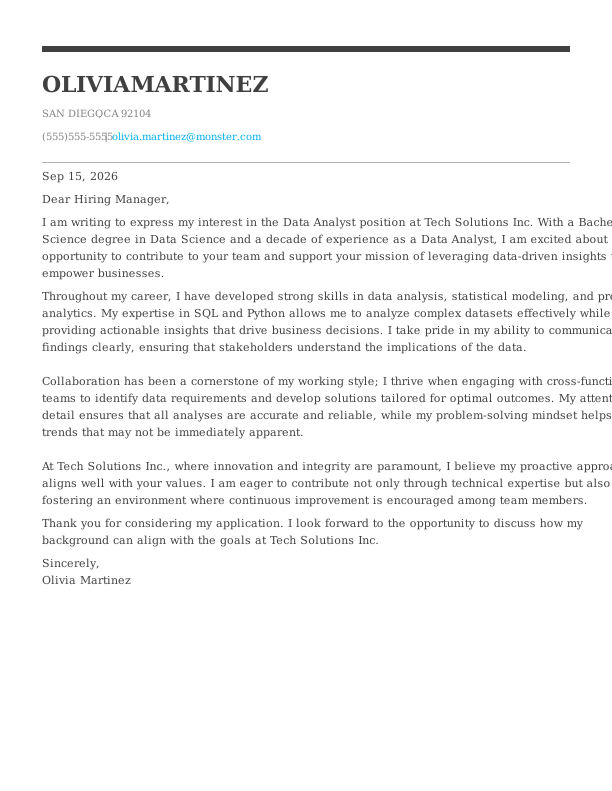
Data Analyst Experienced Cover Letter
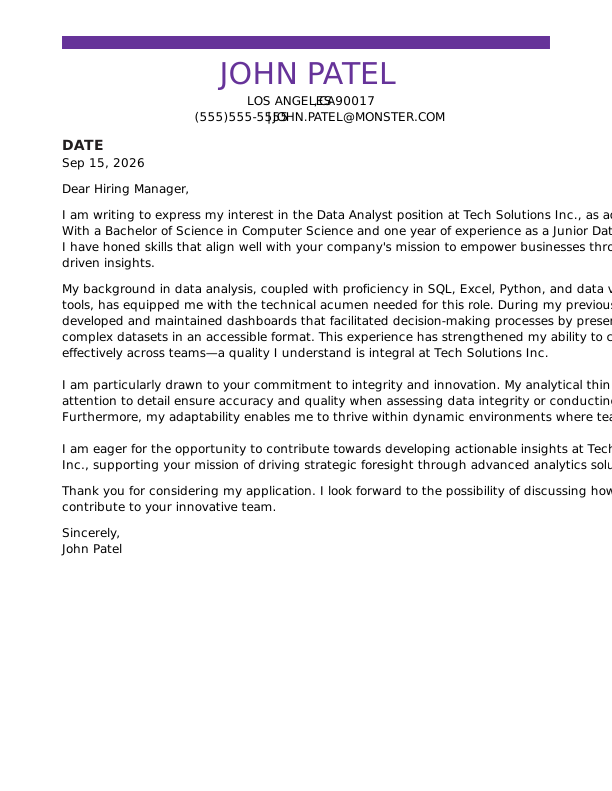
Data Analyst Entry-Level Cover Letter
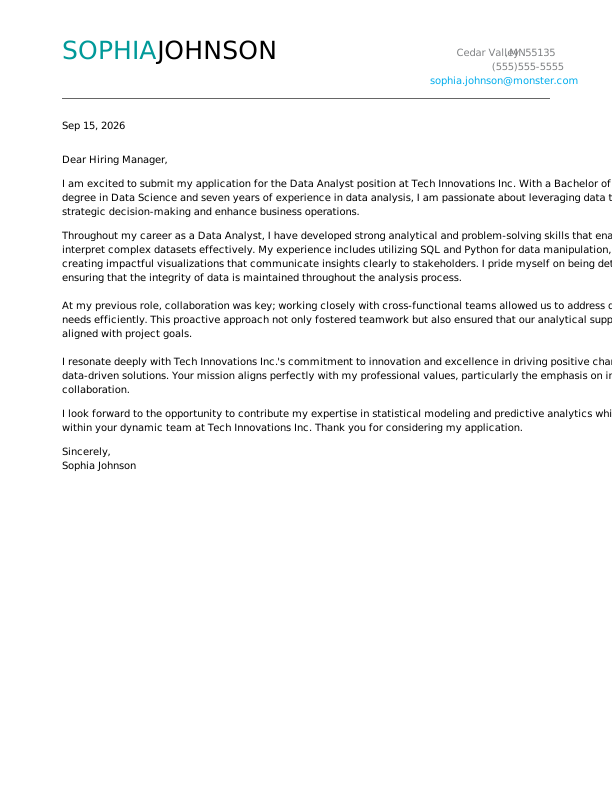
Data Analyst Mid-Level Cover Letter
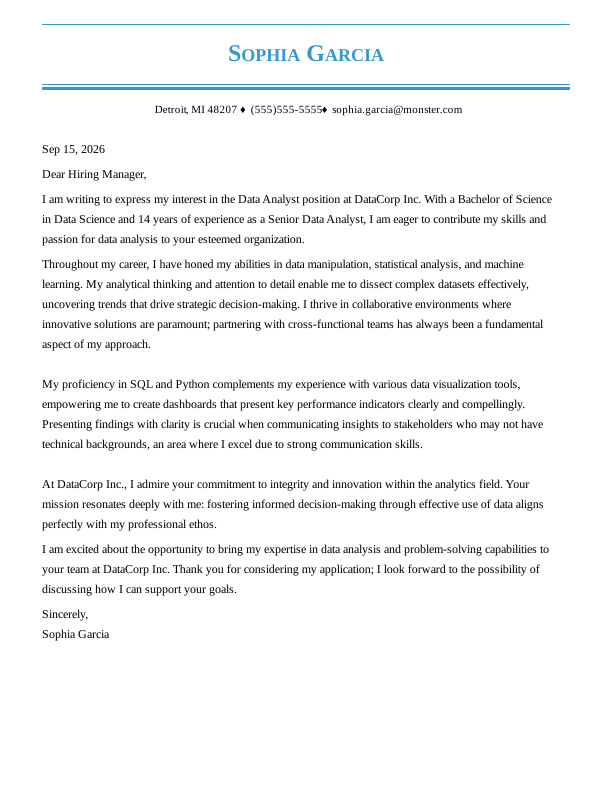
Data Analyst Experienced Cover Letter
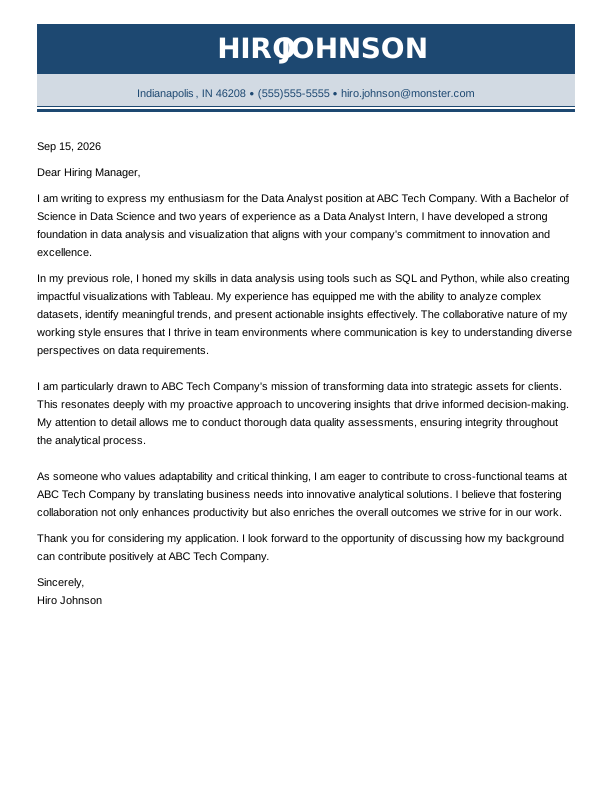
Data Analyst Entry-Level Cover Letter
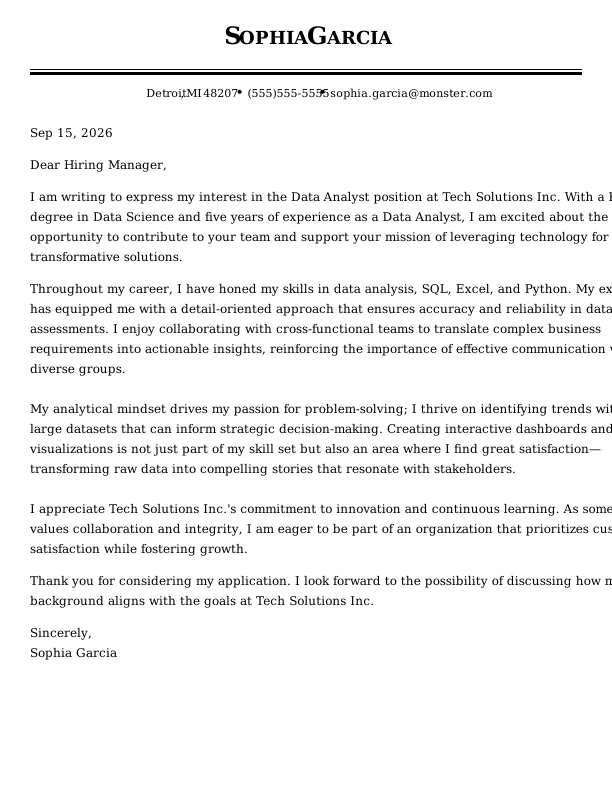
Data Analyst Mid-Level Cover Letter
Browse Free Cover Letter Templates
- Academic
- Account Manager
- Accountant
- Accounts Payable
- Administrative Assistant
- Admissions Counselor
- Architecture
- Artist
- Assistant Principal
- Babysitter
- Barista
- Bartender
- Bookkeeper
- Brand Ambassador
- Business Analyst
- Business
- Caregiver
- Chef
- Civil Engineering
- Computer Science
- Construction
- Consulting
- Cosmetology
- Custodian
- Customer Service
- Dental Assistant
- Dental Hygienist
- Electrical Engineering
- Emt
- Engineering
- Esthetician
- Event Coordinator
- Executive Assistant
- Finance
- Financial Analyst
- Firefighter
- Flight Attendant
- Graphic Designer
- Hair Stylist
- Healthcare
- Hr Generalist
- Investment Banking
- It
- Janitor
- Journalism
- Lab Technician
- Law Clerk
- Lawyer
- Librarian
- Logistics
- Makeup Artist
- Manager
- Marketing
- Marketing Manager
- Massage Therapist
- Mechanic
- Mechanical Engineer
- Medical Assistant
- Non Profit
- Nursing
- Occupational Therapy
- Office Manager
- Paralegal
- Personal Trainer
- Pharmacist
- Pharmacy Technician
- Photographer
- Physician Assistant
- Pilot
- Police Officer
- Project Manager
- Property Manager
- Psychology
- Receptionist
- Research Assistant
- Restaurant Manager
- Retail
- Sales
- Sales Manager
- School Counselor
- Security Officer
- Social Work
- Software Engineer
- Substitute Teacher
- Teacher
- Teaching Assistant
- Truck Driver
- Vet Tech
- Veterinary Assistant
- Web Developer
- Welder
Cover Letter Examples for Data Analysts
Data analyst cover letters change as you gain experience, highlighting different levels of responsibility, technical tools, and business impact. Use these templates to match your everyday analytics skills and professional background with your current career stage.
Entry-Level Data Analyst Cover Letter
Ideal for recent graduates starting a cover letter with no experience, this template also guides career changers moving into data analyst work from another field.
Mid-Career Data Analyst Cover Letter
A good fit for data analyst professionals with a few years of experience, this template highlights career growth and helps position you for advancement into senior analytics, specialization, or leadership.
Experienced Data Analyst Cover Letter
Best for data analysts with 10+ years of experience, this template helps you pursue senior leadership roles in analytics, advanced reporting, or data strategy.
Data Analyst Cover Letter Template (Text)
Use this adaptable text template for a data analyst cover letter to copy, paste, and customize in your document.
Jin Rodriguez
Jacksonville, FL 32211
(555)555-5555
jin.rodriguez@monster.com
Sep 15, 2026
Dear Hiring Manager,
I am writing to express my interest in the data analyst position at Target Company Name. With a Bachelor of Science in Data Science and eight years of experience as a data analyst, I have developed a solid foundation in data analysis, statistical modeling, and data visualization. My passion for transforming complex datasets into actionable insights aligns well with your company’s commitment to leveraging innovative solutions in the data analytics industry.
In my previous role, I honed my skills in utilizing SQL and various business intelligence tools to analyze intricate datasets effectively. I take pride in my ability to prepare detailed reports and visualizations that communicate findings clearly and concisely to stakeholders. Collaboration is essential for success in this field; therefore, I thrive when working with cross-functional teams to define data requirements while ensuring integrity throughout our processes.
I am particularly drawn to Target Company Name’s emphasis on innovation and continuous improvement, as these values resonate with my own professional ethos. My strong analytical thinking abilities are complemented by effective communication skills that allow me to present complex information understandably. Additionally, I possess a proactive approach toward problem-solving that drives me continuously to learn and adapt within the ever-evolving landscape of data analytics.
Thank you for considering my application. I look forward to the opportunity to contribute positively to your team at Target Company Name while helping empower businesses through informed decision-making.
Sincerely,
Jin Rodriguez
How to Write a Data Analyst Cover Letter
Writing a strong data analyst cover letter means pairing your technical credentials with clear storytelling that demonstrates your ability to query datasets, build dashboards, and drive data-driven decision-making. Follow the steps below to highlight your qualifications and customize your letter for each target company, industry, or analytics team.
1. Research & Prepare
Before you write your cover letter, research the role, the hiring manager, and the target organization so you can align with the organization’s analytics goals and reporting needs. Look for details about its primary data sources, key metrics, business intelligence platforms, and reporting workflows.
Read the job posting carefully, then check the company website for core products, market focus, and analytics initiatives. Look at recent news for new launches or platform updates, and view LinkedIn profiles to learn about the hiring manager’s background. Use what you find to highlight relevant achievements and show how your analytical approach fits the organization’s priorities.
2. Hook the Reader
Your cover letter opening paragraph sets the tone for what follows. A strong opener grabs the analytics manager or hiring team’s attention by demonstrating genuine knowledge of the company, your technical focus, and what you bring to the team on day one.
Try referencing a recent company milestone, such as a new product launch or data architecture project, and connecting it to your background. You can also open with a specific metric, such as how you automated data pipelines to reduce reporting time by 40%, or highlight a direct recommendation from a colleague who can vouch for your technical skills.
3. Tell Your Professional Story
Your cover letter should do more than restate your resume bullet points. Use the main body to share a concise example that illustrates how you clean messy data, develop statistical models, and present insights to stakeholders.
Quantify your analytics accomplishments wherever possible. Mention specific metrics such as reducing monthly reporting processing time by 30% through automation, improving forecast accuracy from 72% to 85%, or identifying customer churn drivers that lifted retention by 6%. Highlight how your findings supported strategic choices.
4. Showcase Your Skills
Matching your technical data analysis skills to the exact requirements in a job posting helps hiring managers picture you managing their data pipelines on day one. Connecting your SQL querying habits, dashboard development skills, and statistical analysis methods to what the company needs shows your readiness to support business goals.
For example, if the role emphasizes SQL and dashboarding, describe how you queried complex tables, cleaned raw inputs, and built interactive dashboards in Tableau or Power BI. If the posting stresses A/B testing or predictive modeling, share how you evaluated experiment results and translated statistical findings into clear operational recommendations.
5. Explain Any Special Circumstances
If you have an employment gap, when attempting to transition into data analysis from another field, or if you recently relocated, address it early and briefly. Share the reason directly, then pivot to what you have gained or are building, such as completed SQL or Python certifications, updated data visualization portfolios, or refreshed statistical modeling training.
For instance, you can mention how you spent a gap completing advanced data analytics coursework or building public dataset projects, which sharpened your technical capabilities. When attempting a career shift into analytics, explain how your prior background—such as operations, finance, or customer service—strengthens your domain knowledge, problem-solving, and cross-functional communication habits. If you have relocated, mention your knowledge of local industry trends, active professional networks, and immediate schedule availability.
6. End With a Professional Goodbye
Close your cover letter by reaffirming your interest in the position, thanking the selection team for its time, and inviting a conversation about how your technical capabilities fit the company’s business goals. Keep the tone concise, confident, and focused on data integrity and actionable insights.
Wrap up with a clear statement, such as: “I welcome the opportunity to discuss how my reporting, SQL work, and dashboard insights can support your business goals.” Then, end with a professional sign-off like “Sincerely” or “Best regards.”
4 Tips for Formatting Your Cover Letter
Use clear spacing, simple headings, and consistent fonts to format your cover letter. Proper formatting keeps your document professional and easy to read. These tips apply whether you are stepping into your first data analyst role or bringing years of technical experience.

Keep It to One Page
Hiring managers review many applications, so keep your cover letter to a single page. Target 250 to 400 words across three to four focused paragraphs to share your most relevant technical skills and analytics accomplishments.

Use a Professional Font & Layout
Choose a clear font such as Arial, Calibri, or Times New Roman in 10 to 12 pt with one-inch margins. Keeping formatting consistent with your resume creates a clean, cohesive application package that is easy to scan on screens and corporate application portals.

Address the Hiring Manager Directly
Try to find the name of the analytics director, team lead, or recruiter by reviewing the job posting, corporate directory, or LinkedIn. If you cannot find a specific name, address your letter to “Dear Hiring Manager” or “Dear Selection Team,” avoiding outdated phrasing like “To Whom It May Concern.”

Save & Send as a PDF
Save your cover letter as a PDF to preserve formatting across devices and systems. Use a professional file name that includes your name and the words “cover letter,” such as “Taylor_Brown_cover letter.pdf.”
Key Takeaways
- Personalize each letter for the specific role and company. Reference the team’s domain and mention how your analytics approach supports its reporting or decision-making needs.
- Lead with a strong hook and include measurable results. Cite examples like improved forecast accuracy by X%, reduced manual reporting time by Y hours, or increased retention by Z%.
- Keep formatting clean and consistent with your resume. Use the same header, spacing, and section structure so your experience is easy to scan quickly.
Browse Monster’s Resume Templates
Monster also has hundreds of ATS-friendly resume templates for all career levels and industries. Create a matching resume to help you land the interview.
- Actuary
- Analyst
- Bioinformatics
- Biology
- Biostatistician
- Business Analyst
- Business Intelligence
- Chief Data Officer
- Clinical Data Manager
- Compensation Analyst
- Data Analyst
- Data Annotator
- Data Engineer
- Data Scientist
- Environmental Science
- Healthcare Data Analyst
- Hris Analyst
- Intelligence Analyst
- Math
- Physical Science
- Quantitative Analyst
- Quantitative Researcher
- Science
- Scientist
- Social Science
- Tableau Developer
Frequently Asked Questions
Last Update:
Do I really need a cover letter?
Yes, you should include a cover letter even when it’s marked optional. A resume lists your skills and results, but a cover letter adds context and shows initiative.
It matters most when you’re pivoting into data analysis, have an employment gap, or feel strongly about the specific company. You can also highlight how you think, what interests you in their work, and your enthusiasm for turning data into clear decisions.
How long should my cover letter be?
A data analyst cover letter should fit on a single page, ideally between 250 and 400 words. Hiring managers spend limited time reviewing each submission, making conciseness essential.
Focus on quality over length by selecting your most relevant analytics wins, technical tools, and dashboard projects. Organize your text into three to four well-structured paragraphs to keep your key qualifications scannable.
Should my cover letter match my resume?
Yes, your cover letter should match the design of your data analyst resume. Use the same fonts, colors, and header style so your application package looks cohesive and intentional.
Keep the formatting consistent while using the text to tell a deeper story. For a data analyst role, expand on your technical background by adding context your resume cannot show, such as choices made when structuring data queries, managing stakeholder requests, and why you want to support this specific analytics team.
Can I use AI to write my cover letter?
AI tools like a cover letter generator can help you draft quickly, organize your ideas, and push past writer’s block. They give you a useful structure, but personalization still matters if you want to stand out.
Use AI as your first draft, then revise heavily with your own voice and specific examples from your experience. Hiring managers often spot generic AI-generated content, so make sure each line reflects real interest and details that only you can provide.
Should a data analyst mention salary expectations in a cover letter?
Only include salary expectations if the job posting asks for them. If you must share numbers, use a range from your research and note that you’re flexible based on scope and responsibilities.

Megan Dawkins is a career industry editor who empowers job seekers to take control of their career paths using Monster’s comprehensive job search and resume tools. She specializes in helping job seekers navigate the flexible job market.
See More From Megan DawkinsExplore Related Career Advice







How to Write a Cover Letter for Internal Positions or Promotions (Examples & Tips)

Updated:
Apr 23, 2026
|

19 min read


Cover Letter vs Resume: What’s the Difference & Do You Need Both?

Updated:
Apr 23, 2026
|
18 min read