

Free Nonprofit Cover Letter Templates & Examples
Boost your interview chances with professionally designed nonprofit cover letter templates. Built for mission-driven roles, these free templates help you highlight donor wins, community impact, and dedication to the cause to impress search committees and hiring boards.
Real-World Cover Letters That Get Results
 Free
Free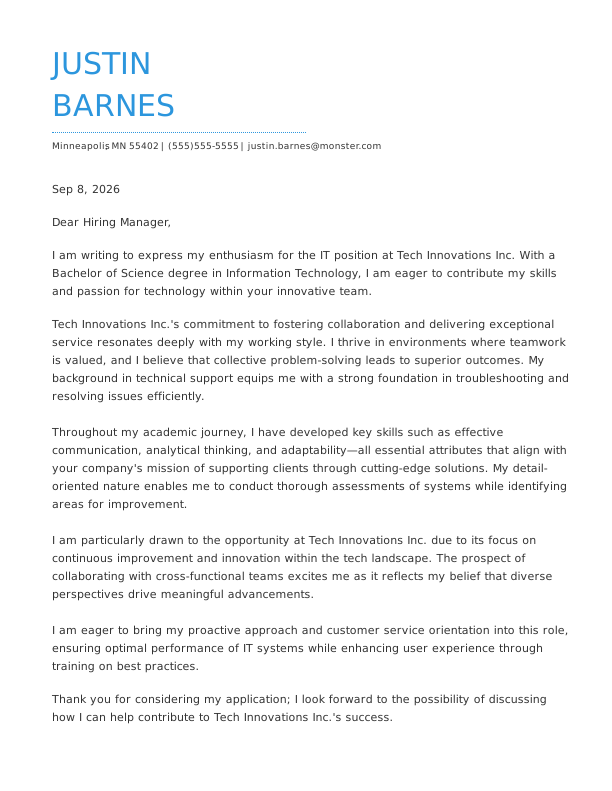
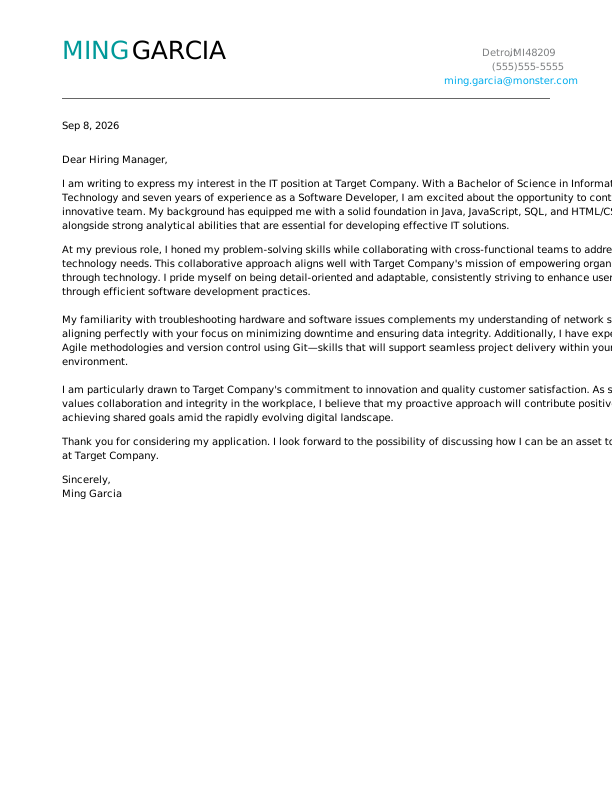
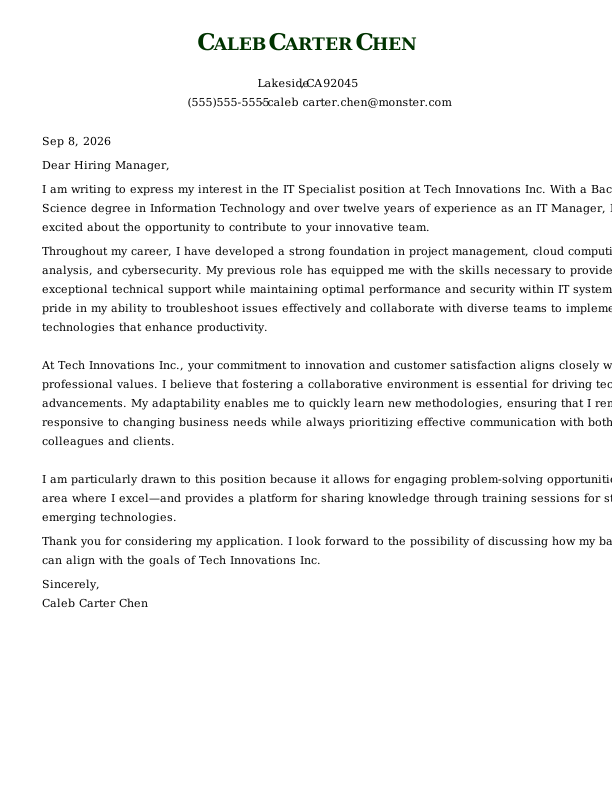
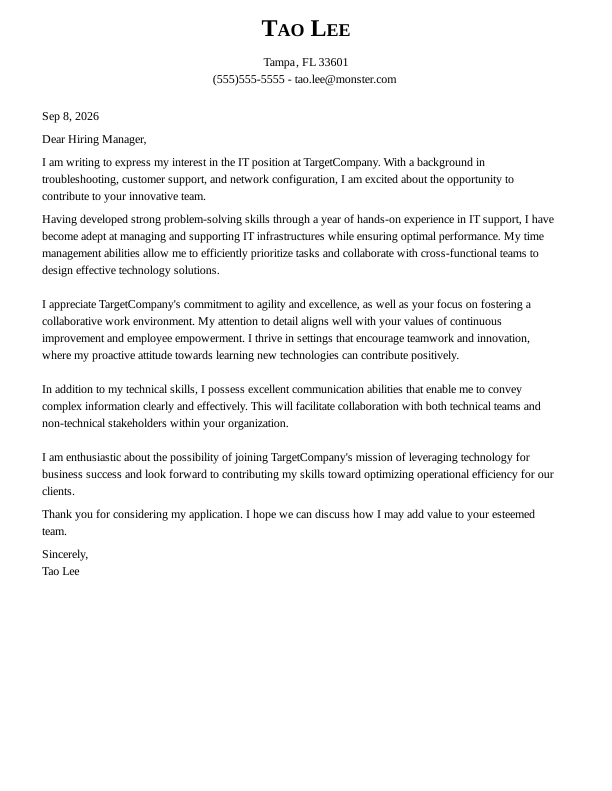
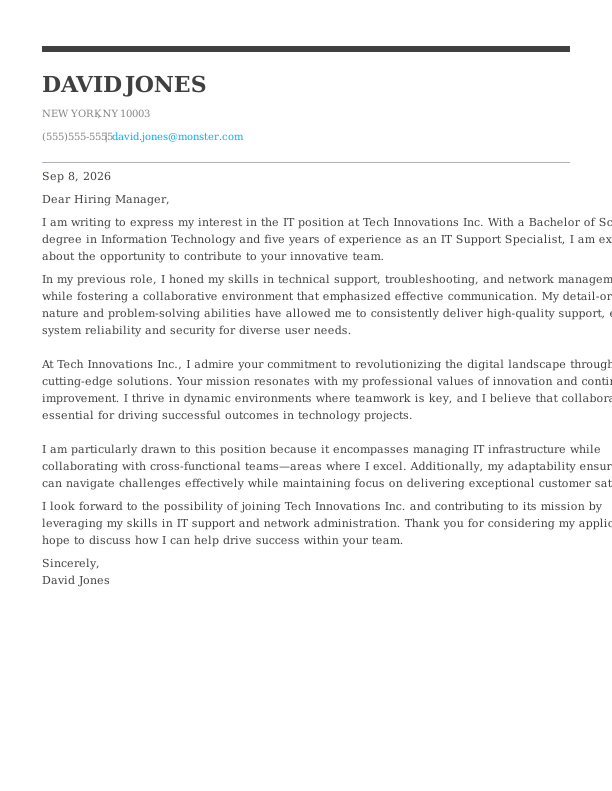
Browse Free Cover Letter Templates
- Account Manager
- Accounts Payable
- Administrative Assistant
- Admissions Counselor
- Artist
- Babysitter
- Barista
- Bartender
- Bookkeeper
- Brand Ambassador
- Business Analyst
- Caregiver
- Chef
- Civil Engineering
- Computer Science
- Custodian
- Customer Service
- Dental Assistant
- Electrical Engineering
- Emt
- Engineering
- Event Coordinator
- Executive Assistant
- Finance
- Financial Analyst
- Firefighter
- Flight Attendant
- Graphic Designer
- Hair Stylist
- Healthcare
- Investment Banking
- It
- Janitor
- Journalism
- Lab Technician
- Law Clerk
- Lawyer
- Librarian
- Logistics
- Manager
- Marketing Manager
- Massage Therapist
- Mechanic
- Mechanical Engineer
- Medical Assistant
- Nursing
- Office Manager
- Paralegal
- Personal Trainer
- Pharmacy Technician
- Photographer
- Physician Assistant
- Pilot
- Police Officer
- Project Manager
- Property Manager
- Receptionist
- Research Assistant
- Retail
- Sales
- Security Officer
- Social Work
- Software Engineer
- Teacher
- Teaching Assistant
- Truck Driver
- Vet Tech
- Veterinary Assistant
- Web Developer
- Welder
Cover Letter Examples for Nonprofit Roles
Nonprofit cover letters work best when tailored to your level of experience. Use these templates to match your career stage, highlight your most relevant achievements, and show how you can support the mission.
Entry-Level Nonprofit Cover Letter
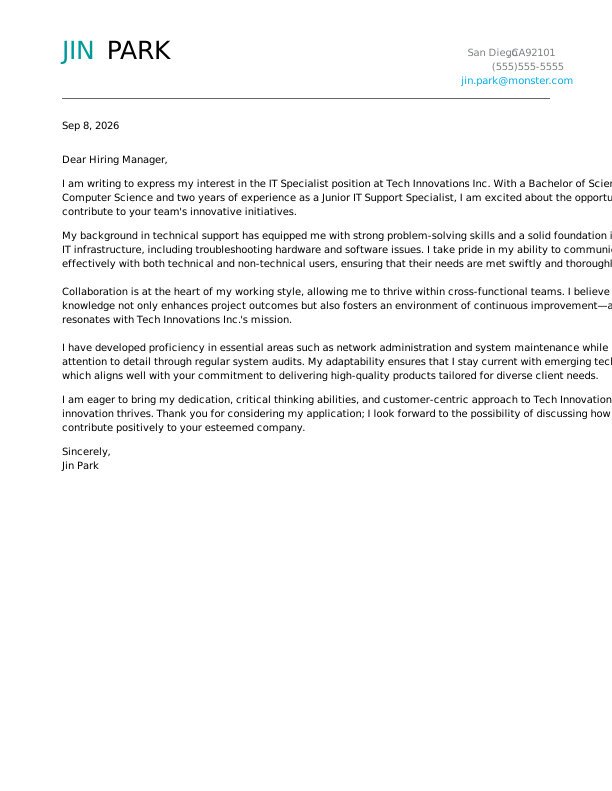
Perfect for recent graduates starting a cover letter with no experience in nonprofit work, this template also supports career changers moving into nonprofit roles from other fields, using clear language to highlight readiness and community-focused motivation.
Mid-Career Nonprofit Cover Letter
A good fit for nonprofit professionals with several years of program or fundraising experience, this template spotlights impact and helps position you for advancement into leadership or specialized strategy roles.
Experienced Nonprofit Cover Letter
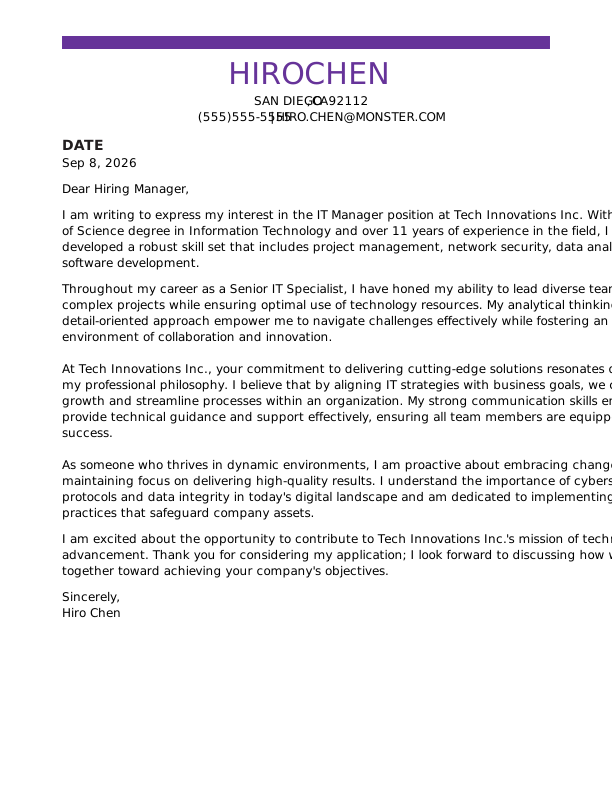
Best for nonprofit professionals with 10+ years of experience, this template helps applicants pursue leadership roles in program management, community impact, or development teams.
Nonprofit Cover Letter Template (Text)
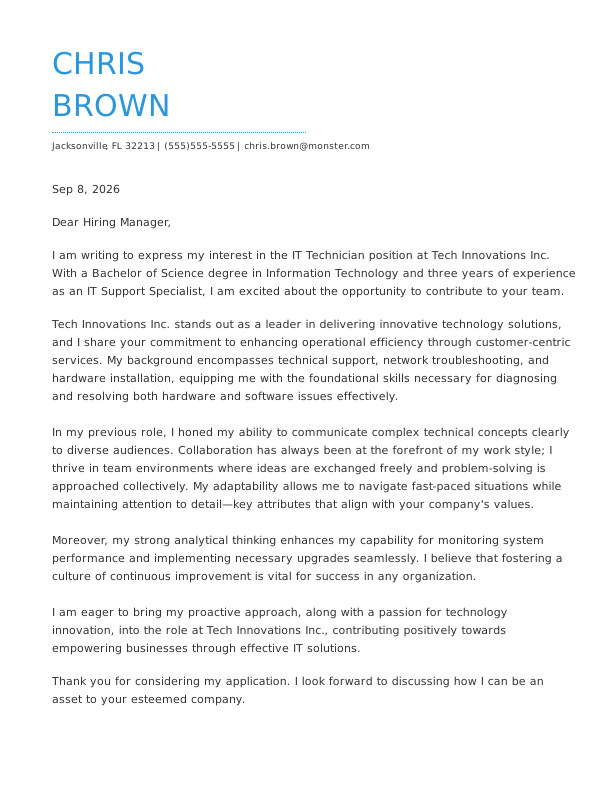
Use this adaptable text template of a nonprofit cover letter to copy, edit, and personalize directly in your document or file.
Hank Jones
Austin, TX 78708
(555)555-5555
hank.jones@monster.com
Aug 28, 2026
Dear Hiring Manager,
I am writing to express my interest in the position at Hope Foundation, as advertised. With a Bachelor of Arts in Social Work and eight years of experience in program management and community engagement, I am eager to contribute to your mission of creating sustainable change.
Throughout my career as a program coordinator, I have developed programs that empower individuals while fostering collaboration among diverse stakeholders. My strong interpersonal skills enable me to build rapport with clients and colleagues alike, enhancing our collective efforts towards impactful outreach initiatives. I understand the importance of effective communication in nonprofit work and strive to clearly convey ideas while actively listening to the needs of our community.
In addition, my analytical thinking and attention to detail have proven instrumental when monitoring program effectiveness and reporting outcomes. These skills complement my passion for social change, driving me to identify opportunities for improvement within existing frameworks. I am particularly drawn to Hope Foundation’s commitment to uplifting underserved populations through collaborative partnerships.
I would be honored to bring my expertise in budgeting, client advocacy, and partnership development into your organization’s ongoing efforts. The prospect of working alongside others who share a commitment toward equity resonates deeply with me.
Thank you for considering my application. I look forward to the possibility of discussing how my background can align with the goals at Hope Foundation.
Sincerely,
Hank Jones
How to Write a Nonprofit Cover Letter
For a nonprofit role, writing a strong cover letter means showing real mission fit through personalized examples, clear storytelling about impact, and direct proof of relevant skills and experience. Follow the steps below to highlight your qualifications and customize your letter for each target organization and position you apply to.
1. Research & Prepare
Before writing a nonprofit cover letter, research the organization’s mission, core programs, and community impact so your application aligns with its daily work. It is also helpful to learn about the team culture and who will be reviewing your application.
Start by carefully reviewing the job description, then check the nonprofit’s website for key initiatives, annual reports, and recent campaign updates. You can also search for news articles and look up the hiring manager and team members on LinkedIn. Use these insights to tailor your achievements to match the organization’s goals and values.
2. Hook the Reader
Your cover letter opener sets the tone, so skip generic introductions and dive straight into why you are a great fit. A strong start shows you understand the nonprofit’s mission and gives a clear, personal reason you care about its work.
You can open by highlighting a recent campaign or program you admire, or by mentioning a referral from a current staff or board member. Alternatively, lead with a concrete win from your past experience, such as raising donation totals or expanding outreach to underserved families.
3. Tell Your Professional Story
Your cover letter shouldn’t just repeat your resume. Instead, tell a short story with specific examples and real metrics to prove your impact.
In nonprofit hiring, numbers matter. Highlight results like boosting grant revenue by 15%, increasing volunteer retention to 75%, or cutting hotline response times by 20%. You can also share tangible achievements, such as forming key partnerships with local schools or leading a fundraising event that raised $25,000.
4. Showcase Your Skills
Instead of listing skills, match your experience to the nonprofit’s stated priorities from the job posting. Share how you used those skills in real programs so the reader can picture you doing the work on day one.
For example, if the organization needs grant writing or reporting, describe a time you turned program outcomes into clear narratives for funders. If it emphasizes community outreach, mention how you partnered with local leaders and tracked attendance or referral data to improve participation.
5. Explain Any Special Circumstances
If you have an employment gap, a career change, or a relocation, address it early and briefly. Share the reason honestly, then shift to what you gained during that time, like new skills, updated training, or volunteer experience. Keep the tone positive so the hiring manager sees continuity in your goals.
For a nonprofit role, frame caregiving or other time away as strengthening your empathy and reliability with clients and teams. If you pivoted from another field, connect your prior work to mission-driven outcomes such as grant reporting, community outreach, or program support. For relocation, mention local relationships you built through volunteering or networking that match the organization’s needs.
6. End With a Professional Goodbye
Close your cover letter by restating your interest in the nonprofit role and sharing what draws you to its mission. Invite next steps by asking for an interview or the chance to discuss how you can support programs and community outcomes. Thank the reader for their time and consideration.
End with a tailored line like, “I welcome the opportunity to discuss how my volunteer coordination and program support experience can strengthen your services.” Use professional sign-offs such as “Sincerely” or “Best regards.”
4 Tips for Formatting Your Cover Letter
Use clear cover letter formatting to help your message look professional and read easily. Choose simple spacing, consistent headings, and direct sentences so hiring managers can scan your key points quickly. These tips apply across industries and experience levels.

Keep It to One Page
Nonprofit hiring teams and board members often review dozens of applications. Keep your letter to one page (250–400 words across three to four focused paragraphs) to respect their time and quickly highlight your strongest, most relevant qualifications.

Use a Professional Font & Layout
Select a clean, accessible font like Arial, Calibri, Times New Roman, or Helvetica in 10 to 12 pt. Maintain standard one-inch margins and ensure your header and font match your nonprofit resume so your entire application package looks cohesive and is easy to read.

Save & Send as a PDF
Save your completed draft as a PDF to preserve your formatting across different operating systems and tracking tools. Name the file professionally using your full name and the role title (e.g., Jordan_Lee_Program_Manager_Cover_Letter.pdf).

Address the Hiring Manager Directly
Show your attention to detail by finding the specific point of contact on the job posting, organization website, or LinkedIn. If a specific name isn’t available, address the team directly (e.g., “Dear Search Committee” or “Dear Development Team”) rather than using outdated options like “To Whom It May Concern.”
Key Takeaways
- Personalize each letter for the specific organization and role. Reference the nonprofit’s mission, current programs, and community needs so your experience clearly connects.
- Lead with a strong hook and use quantifiable achievements. Include numbers like dollars raised, volunteer retention rates, program outcomes, or service metrics.
- Keep formatting clean and consistent with your resume. Use the same header, font, and spacing so your cover letter is easy to scan.
Browse Monster’s Resume Templates
Monster also has hundreds of ATS-friendly resume templates for all career levels and industries. Create a matching resume to help you land the interview.
Frequently Asked Questions
Last Update:
Do I really need a cover letter?
Yes, include a cover letter even when it’s marked optional. It adds context your resume cannot share and signals initiative and real interest in the nonprofit mission.
A cover letter matters most when you explain a career change, an employment gap, or why this specific organization fits your goals. It also lets you show personality and enthusiasm for the work and the people you will serve.
How long should my cover letter be?
A nonprofit cover letter should be one page maximum, typically 250–400 words. Hiring managers review many applications and spend limited time on each one.
Focus on quality over quantity by sharing only the most relevant experience and achievements. Structure your letter in three to four concise paragraphs so every section supports your fit for the role.
Should my cover letter match my resume?
Yes, your cover letter should match your resume’s visual design. Use the same fonts, colors, and header style so your application package looks cohesive and intentional.
Formatting should match, but the content should complement rather than duplicate your resume. Explain why you care about the mission, expand on key nonprofit work like programs or campaigns, and add context for outcomes that bullet points cannot capture.
How do I address my cover letter if I don’t know the hiring manager’s name?
Look for a real contact name before you send your nonprofit cover letter. Check LinkedIn, the organization’s website, or call and ask who handles volunteer or employee hiring for this role. If you can’t find a name, use a department-based greeting that matches the position.
If you need a generic line, choose “Dear Hiring Manager” or “Dear Development Team” when that fits the role. Avoid “To Whom It May Concern” and skip overly casual openings like “Hi,” so your cover letter stays professional.
Can I use AI to write my cover letter?
AI tools like a cover letter generator can help you draft faster, organize your thoughts, and beat writer’s block. However, while AI offers helpful structure and phrasing, true personalization is what makes your message resonate.
Use AI as a launching pad, but edit carefully to bring in your authentic voice, unique nonprofit experiences, and genuine connection to the mission. Hiring managers easily recognize generic AI content, so make sure every paragraph sounds like you.

Kirsten Chorpenning is a career advice writer who empowers job seekers to take control of their career paths using Monster’s comprehensive job search and resume tools. She specializes in helping job seekers find rewarding jobs in today’s dynamic work environment.
See More From Kirsten ChorpenningExplore Related Career Advice







How to Write a Cover Letter for Internal Positions or Promotions (Examples & Tips)
Updated:
Apr 23, 2026
|

19 min read


Cover Letter vs Resume: What’s the Difference & Do You Need Both?

Updated:
Apr 23, 2026
|
18 min read