

Free Dental Assistant Cover Letter Templates & Examples
Get more interviews with professionally designed dental assistant cover letter templates that help you present your experience clearly. These free templates include targeted tips to highlight your chairside skills, patient care, and clinical expertise to catch the eye of dental practice managers.
Real-World Cover Letters That Get Results
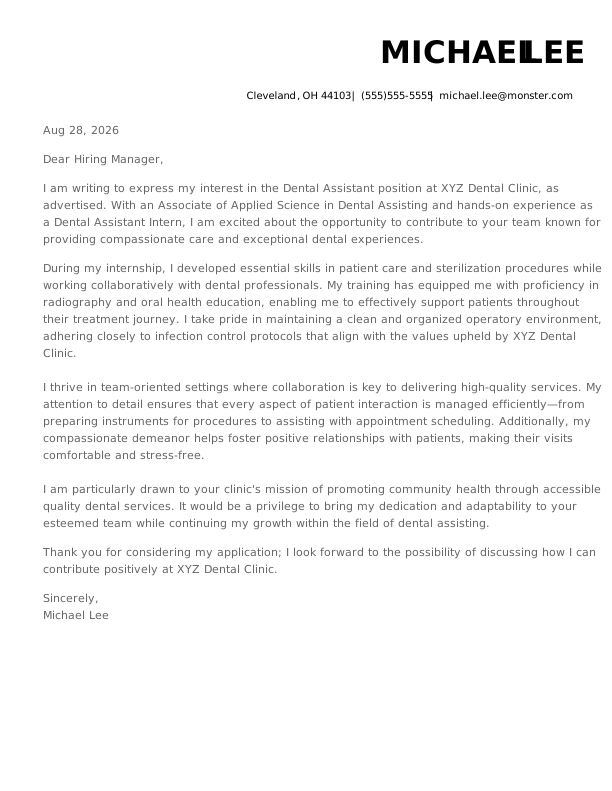
 Free
FreeDental Assistant Entry-Level Cover Letter
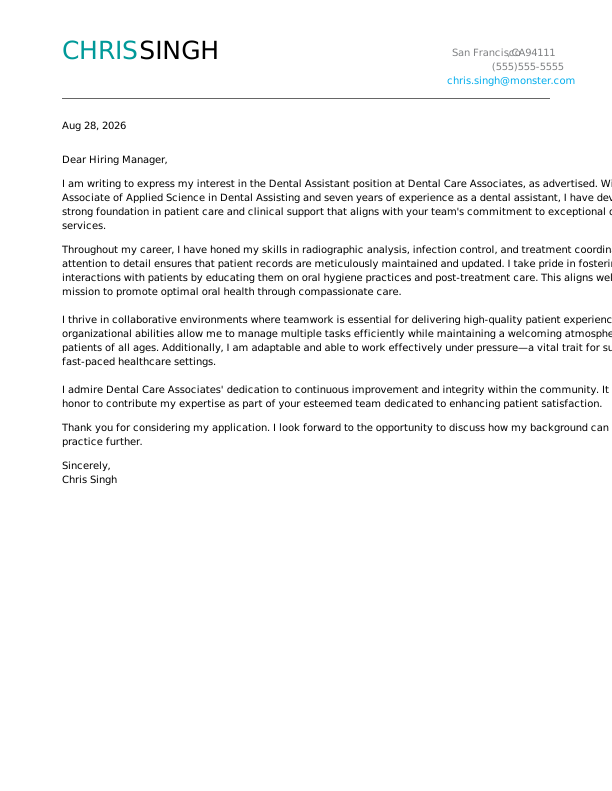
Dental Assistant Mid-Level Cover Letter
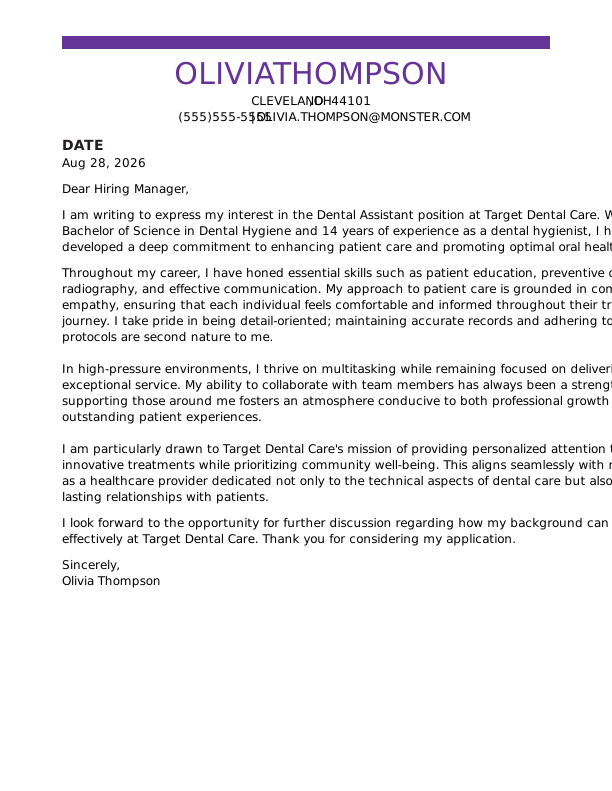
Dental Assistant Experienced Cover Letter
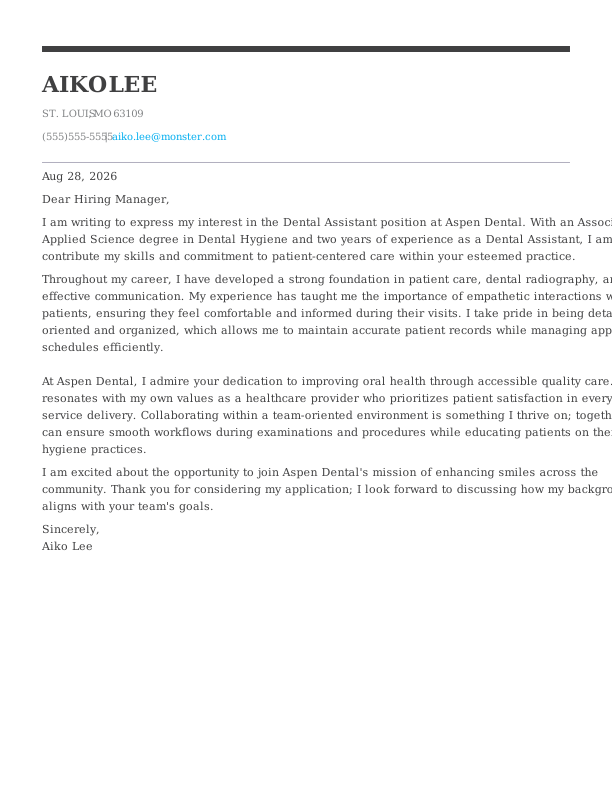
Dental Assistant Entry-Level Cover Letter
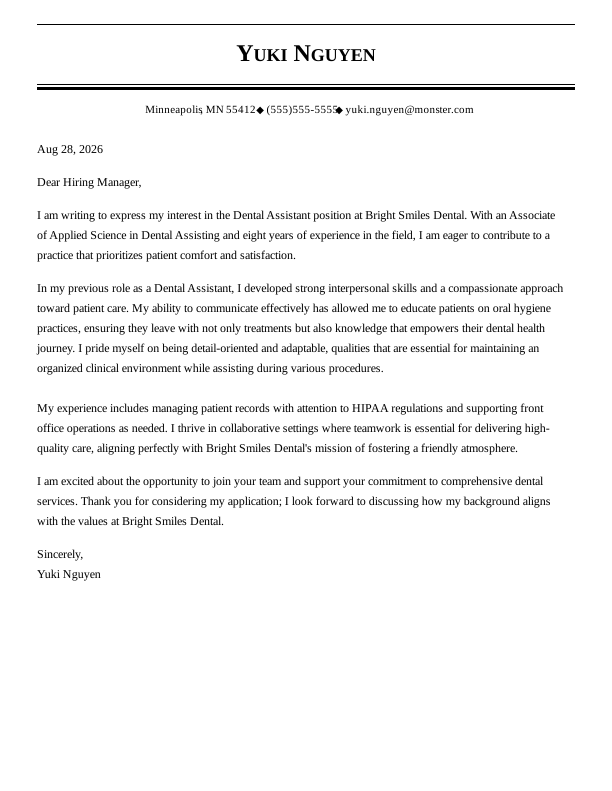
Dental Assistant Mid-Level Cover Letter
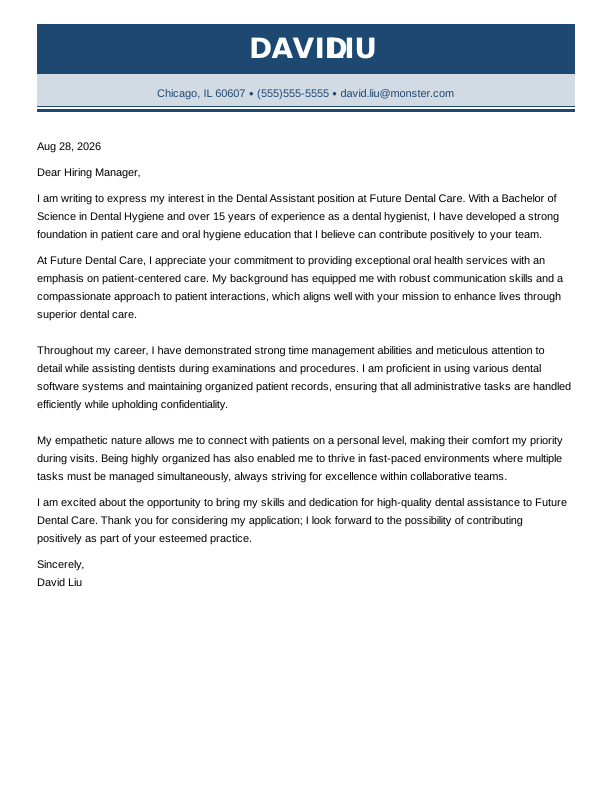
Dental Assistant Experienced Cover Letter
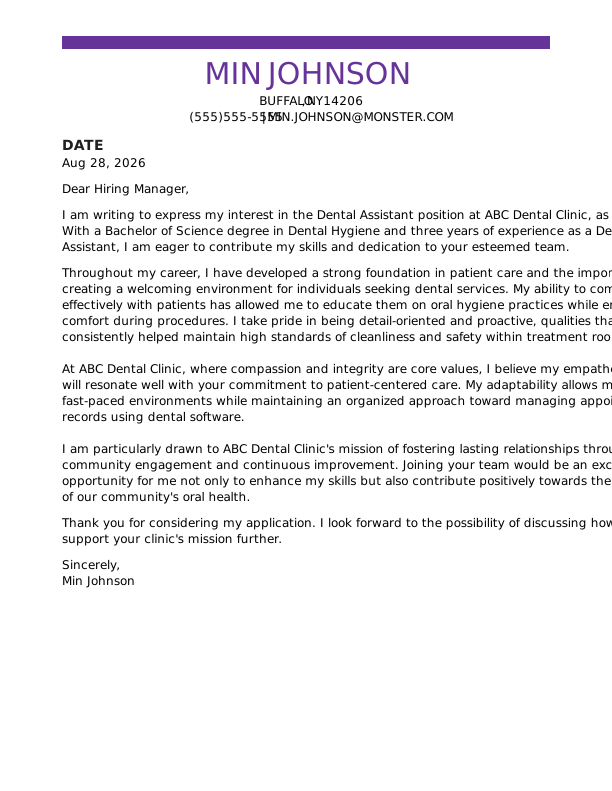
Dental Assistant Entry-Level Cover Letter
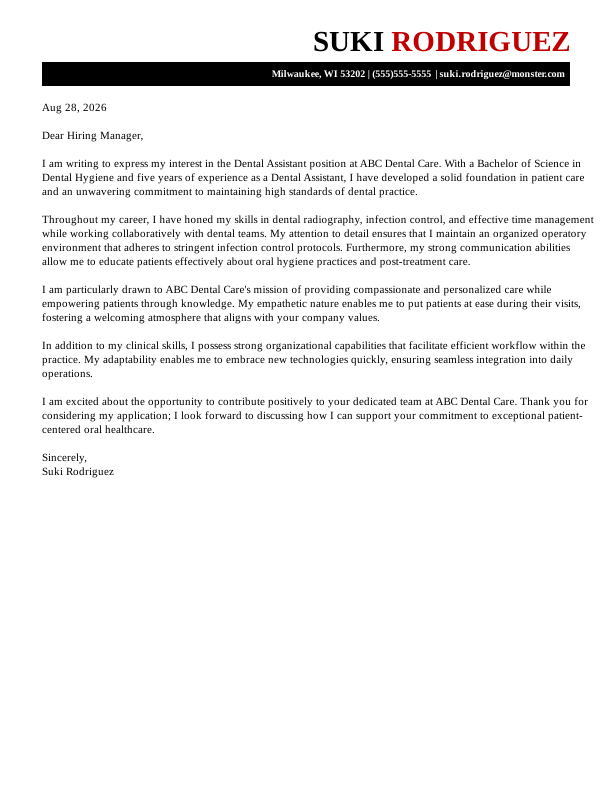
Dental Assistant Mid-Level Cover Letter
Browse Free Cover Letter Templates
- Account Manager
- Accounts Payable
- Administrative Assistant
- Admissions Counselor
- Artist
- Babysitter
- Barista
- Bartender
- Bookkeeper
- Brand Ambassador
- Business Analyst
- Caregiver
- Chef
- Civil Engineering
- Computer Science
- Custodian
- Customer Service
- Electrical Engineering
- Emt
- Engineering
- Event Coordinator
- Executive Assistant
- Finance
- Financial Analyst
- Firefighter
- Flight Attendant
- Graphic Designer
- Hair Stylist
- Healthcare
- Investment Banking
- It
- Janitor
- Journalism
- Lab Technician
- Law Clerk
- Lawyer
- Librarian
- Logistics
- Manager
- Marketing Manager
- Massage Therapist
- Mechanic
- Mechanical Engineer
- Medical Assistant
- Non Profit
- Nursing
- Office Manager
- Paralegal
- Personal Trainer
- Pharmacy Technician
- Photographer
- Physician Assistant
- Pilot
- Police Officer
- Project Manager
- Property Manager
- Receptionist
- Research Assistant
- Retail
- Sales
- Security Officer
- Social Work
- Software Engineer
- Teacher
- Teaching Assistant
- Truck Driver
- Vet Tech
- Veterinary Assistant
- Web Developer
- Welder
Cover Letter Examples for Dental Assistants
A dental assistant cover letter changes with your experience level. Compare entry-level, mid-career, and senior templates to see how to highlight your clinical training, chairside expertise, and patient care for your specific career stage.
Entry-Level Dental Assistant Cover Letter
Perfect for recent graduates who want to write a cover letter with no experience that explains how they will support chairside care, this template also helps career changers transitioning into dental assistant work from another field.
Mid-Career Dental Assistant Cover Letter
A good fit for dental assistants with several years of chairside experience, this template spotlights growth toward expanded responsibilities and specialization while presenting patient care strengths and clinical support skills.
Experienced Dental Assistant Cover Letter
Best for dental assistants with 10+ years of experience, this template helps applicants pursue senior chairside support, lead assistant duties, or advanced patient care coordination roles.
Dental Assistant Cover Letter Template (Text)
Use this editable text version of a dental assistant cover letter to copy, paste, and customize in your document.
Michael Jones
Minneapolis, MN 55409
(555)555-5555
michael.jones@monster.com
Aug 28, 2026
Dear Hiring Manager,
I am writing to express my interest in the dental assistant position at the Dental Office of Excellence. With a Bachelor of Science in Dental Hygiene and four years of experience as a dental assistant, I have developed a strong foundation in patient care and an unwavering commitment to enhancing the oral health of those I serve.
In my previous role, I honed my skills in dental radiography and sterilization techniques while collaborating closely with dentists to provide high-quality care. My detail-oriented approach ensures that all instruments and equipment are prepared meticulously, maintaining a clean and safe working environment for both staff and patients.
Communication is essential in fostering positive relationships with patients, and I pride myself on my strong interpersonal skills. My empathetic nature allows me to educate patients on oral hygiene effectively while ensuring they feel comfortable throughout their treatment journey. Additionally, my time management abilities enable me to efficiently manage patient records and scheduling, contributing to seamless office operations.
What excites me most about the opportunity at your practice is your dedication to providing exceptional care within a patient-centered environment. I share this commitment to excellence and integrity in every aspect of my work.
I am eager for the chance to bring my proactive attitude and collaborative spirit to your esteemed team at the Dental Office of Excellence. Thank you for considering my application; I look forward to discussing how I can contribute positively to your practice.
Sincerely,
Michael Jones
How to Write a Dental Assistant Cover Letter
For a dental assistant role, knowing how to write a cover letter means showing strong fit through personalized details, brief patient care storytelling, and clear proof of relevant skills like chairside support, sterilization, and X-ray or charting experience. Use the guidance below and highlight your qualifications while customizing your letter for each specific office by matching the job posting’s needs and naming the outcomes you delivered.
1. Research & Prepare
Before you write a cover letter as a dental assistant, research the dental practice and the team you will support. Learn their patient needs, services, and office culture so you can align your skills in chairside support, sterilization, and patient communication with what they value. If you know who leads hiring, you can speak to their priorities with clear examples.
Review the job posting for required certifications and preferred experience. Check the company website for services, safety standards, and any updates on technology or community outreach. Read recent news and scan LinkedIn profiles of the hiring manager or recruiter to personalize your letter with relevant details.
2. Hook the Reader
A strong cover letter opening matters because it sets the tone for how you support patients and your team. It works best when you sound like a real person, mention specific clinic priorities, and show you understand the day-to-day role.
Try openings that reference the practice’s focus on patient comfort, such as welcoming anxious patients while preparing exam rooms. Or lead with a quick win like keeping chairside flow smooth during busy mornings. You can also start by mentioning a recent change at the clinic you admire, then connect it to your experience with X-rays, scheduling, and sterilization routines.
3. Tell Your Professional Story
Your cover letter should go beyond restating your resume. Instead, tell a short story with specific examples and measurable results that show how you improved patient care and supported the team.
As a dental assistant, you can quantify achievements like preparing rooms for 25+ patients per day, tracking sterilization logs with 100% compliance, or reducing wait times by 15% through better charting and appointment flow. Mention moments such as calming anxious patients during procedures or mentoring new staff on X-ray setup and documentation to make your impact easy to picture.
4. Showcase Your Skills
Matching your dental assistant skills to the specific needs in the job posting helps hiring managers see your impact right away. Instead of listing duties, describe how you handled real patient flow, chairside tasks, and documentation based on what the clinic values.
For example, if the role mentions patient comfort and chairside support, share a time you explained procedures before treatment and prepared instruments to keep appointments moving. If the company asks for EHR or charting experience, mention your work entering medical histories, updating treatment notes, and verifying details in systems like Dentrix or Eaglesoft so clinicians had accurate records when making decisions.
5. Explain Any Special Circumstances
If you have an employment gap, a career change, or you relocated, address it early in your cover letter and keep it positive. Share a brief, honest reason and connect it to what you gained, like new routines, refreshed training, or patient-focused habits you built while away.
For example, if you took time off to care for a family member, mention how it strengthened your patience during dental visits and your attention to comfort. If you moved from general office support to dentistry, highlight how you learned chairside flow by assisting with X-rays, taking impressions, and preparing materials while staying calm during busy mornings.
6. End With a Professional Goodbye
Close your cover letter by restating your interest in the dental assistant position and your enthusiasm for supporting patients and the clinical team. Invite the reader to discuss how your skills and experience can contribute to the practice, such as through chairside support, sterilization, and patient care. Thank them for their time and consideration.
End with a tailored call to action, such as, “I welcome the opportunity to discuss how my patient-focused care and experience with dental office workflows can support your practice.” Then use a professional sign-off, such as “Sincerely” or “Best regards.”
4 Tips for Formatting Your Cover Letter
Use clear spacing, consistent fonts, and simple section headings so your cover letter reads fast. Proper formatting keeps your message professional and easy to scan for any hiring manager. These tips apply no matter your industry or experience level.

Keep It to One Page
Hiring managers handle many applications, so keep your cover letter to one page. Aim for 250–400 words in three to four focused paragraphs that highlight your strongest dental assistant qualifications, including relevant clinical experience, chairside skills, and patient care.

Use a Professional Font & Layout
Choose a clean, professional font such as Arial, Calibri, Times New Roman, or Helvetica in 10 to 12 pt. Use one-inch margins and keep formatting consistent with your resume so your dental assistant experience and qualifications are easy to scan.

Address the Hiring Manager Directly
When you write a cover letter for a dental assistant role, try to address the hiring manager by name. Look in the job posting, the dental practice or dental group website, and LinkedIn, or call and ask who reviews applications. If you cannot find a name, use “Dear Hiring Manager” or “To the Hiring Team,” and skip “To Whom It May Concern,” which can feel outdated.

Save & Send as a PDF
Save your cover letter as a PDF to preserve formatting across devices and systems. Use a professional file name that includes your name and the words “cover letter,” such as “Jane_Smith_cover_letter.pdf.”
Top-Paying States for Dental Assistant Roles
Knowing what dental assistant wages look like across the country helps you evaluate job offers, negotiate pay, and plan your next career move. The salary information below comes from the U.S. Bureau of Labor Statistics and reflects current national averages for dental assistants.
Keep in mind that your actual earnings can vary based on location, experience, certifications, and the type of practice you work in. Dental assistants in specialty offices such as orthodontics or oral surgery often earn more than those in general dentistry, and experienced team members who support chairside procedures may see higher pay.
| Alabama | $39,600 |
| Alaska | $54,720 |
| Arizona | $50,040 |
| Arkansas | $40,730 |
| California | $53,570 |
| Connecticut | $51,540 |
| Delaware | $47,110 |
| District of Columbia | $57,390 |
| Florida | $46,670 |
| Georgia | $45,510 |
| Hawaii | $42,130 |
| Idaho | $42,710 |
| Illinois | $47,170 |
| Indiana | $49,590 |
| Iowa | $49,020 |
| Kansas | $42,490 |
| Kentucky | $45,720 |
| Louisiana | $41,450 |
| Maine | $54,190 |
| Maryland | $50,410 |
| Massachusetts | $56,790 |
| Michigan | $45,990 |
| Minnesota | $63,680 |
| Mississippi | $40,160 |
| Missouri | $45,390 |
| Montana | $45,930 |
| Nebraska | $46,300 |
| Nevada | $47,320 |
| New Hampshire | $52,850 |
| New Jersey | $50,570 |
| New Mexico | $42,290 |
| New York | $49,850 |
| North Carolina | $49,270 |
| North Dakota | $54,720 |
| Ohio | $50,960 |
| Oklahoma | $42,980 |
| Oregon | $57,690 |
| Pennsylvania | $49,760 |
| Rhode Island | $51,700 |
| South Carolina | $45,890 |
| South Dakota | $49,080 |
| Tennessee | $46,680 |
| Texas | $42,520 |
| Utah | $40,260 |
| Vermont | $54,570 |
| Virginia | $47,900 |
| Washington | $56,140 |
| West Virginia | $39,280 |
| Wisconsin | $49,240 |
| Wyoming | $43,740 |
| Guam | $34,850 |
| Puerto Rico | $24,660 |
| Virgin Islands | $37,250 |
Key Takeaways
- Personalize each letter for the specific practice and role. Mention the types of patients you’ve supported and any experience with the practice’s preferred procedures, clinical services, or scheduling needs.
- Lead with a strong hook and include measurable wins. Note outcomes like improved appointment flow, reduced wait times, accurate patient records, strong sterilization compliance, or improved patient satisfaction.
- Keep formatting clean and consistent with your resume. Use the same headings, fonts, and spacing so your dental assistant credentials, clinical experience, and patient care skills are easy to scan at a glance.
Browse Monster’s Resume Templates
Monster also has hundreds of ATS-friendly resume templates for all career levels and industries. Create a matching resume to help you land the interview.
Frequently Asked Questions
Last Update:
Do I really need a cover letter?
Yes, include a cover letter even when the posting says it’s optional. It adds context a resume cannot and signals initiative and real interest in the dental assistant role.
A cover letter helps most when you need to explain a career change, an employment gap, or why you want to work for that specific practice. It also lets you show your personality, patient-focused attitude, and communication strengths.
How long should my cover letter be?
A dental assistant cover letter should stay one page maximum, typically 250–400 words. Hiring managers review many applications and spend limited time on each one.
Focus on quality over quantity by sharing only the most relevant experience and achievements. Structure your letter in three to four concise paragraphs so each section has a clear purpose.
Should my cover letter match my resume?
Yes, your cover letter should match your resume’s design. Use the same fonts, colors, and header style so the application package looks cohesive and intentional.
However, keep the content from repeating your dental assistant resume. Expand on hands-on chairside experience, patient communication, and any training you completed, like X-ray or sterilization procedures, to add context that bullet points cannot show.
What should I include in my cover letter header?
Your cover letter header should list your full name, phone number, professional email, city/state, and LinkedIn profile if you have one. Add the date and the recipient’s information below your contact details. Match this header style to your resume so the application looks consistent.
How do I write a cover letter for an internal dental assistant position?
When writing a cover letter for an internal job, use your experience with the clinic’s patients, scheduling flow, and sterilization standards to show what you’ve contributed so far. Mention skills you use daily, like chairside support and preparing instruments, then explain how the new role fits your growth goals. Follow the same formal application steps the clinic requires.

Elizabeth Muenzen is a Certified Professional Resume Writer (CPRW) and member of the Professional Association of Resume Writers & Career Coaches who empowers job seekers to take control of their career paths using Monster’s comprehensive job search and resume tools.
See More From Elizabeth MuenzenExplore Related Career Advice







How to Write a Cover Letter for Internal Positions or Promotions (Examples & Tips)

Updated:
Apr 23, 2026
|

19 min read


Cover Letter vs Resume: What’s the Difference & Do You Need Both?
Updated:
Apr 23, 2026
|
18 min read