

Free Chef Cover Letter Templates & Examples
Boost your interview odds with our professionally designed chef cover letter templates. These free cover letter templates include clear writing tips and guidance to help you highlight your qualifications, demonstrate culinary strengths, and stand out to employers and hiring managers.
Real-World Cover Letters That Get Results
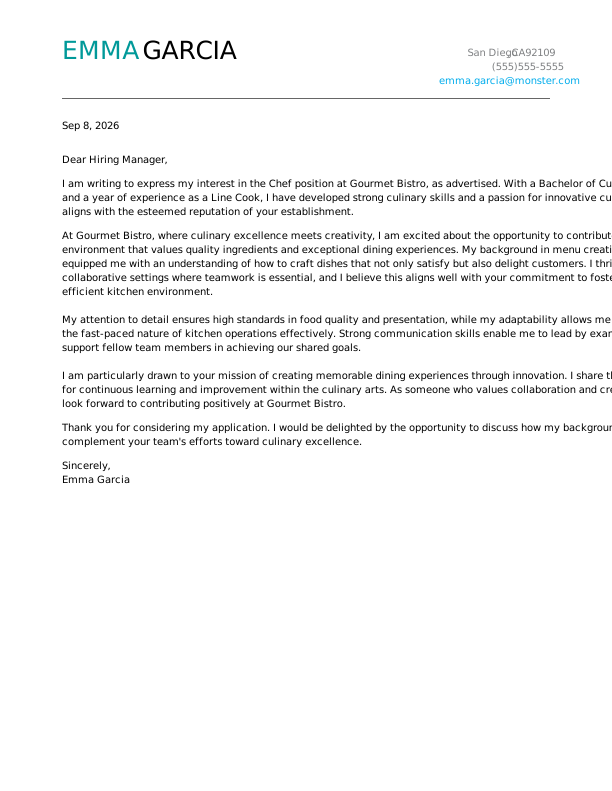
 Free
FreeChef Entry-Level Cover Letter
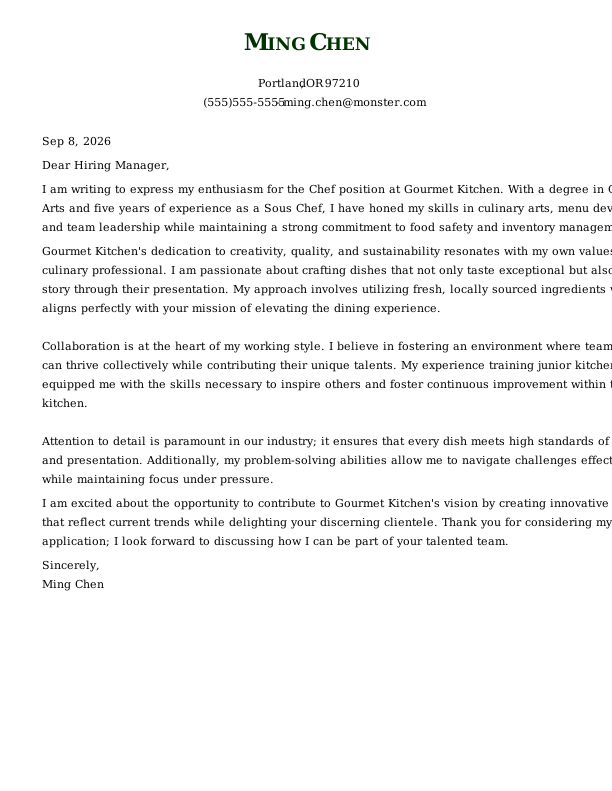
Chef Mid-Level Cover Letter
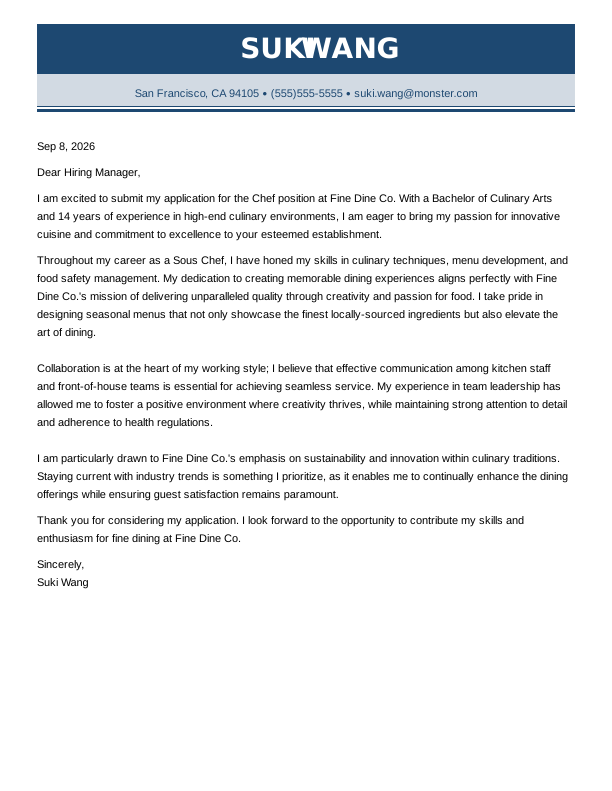
Chef Experienced Cover Letter
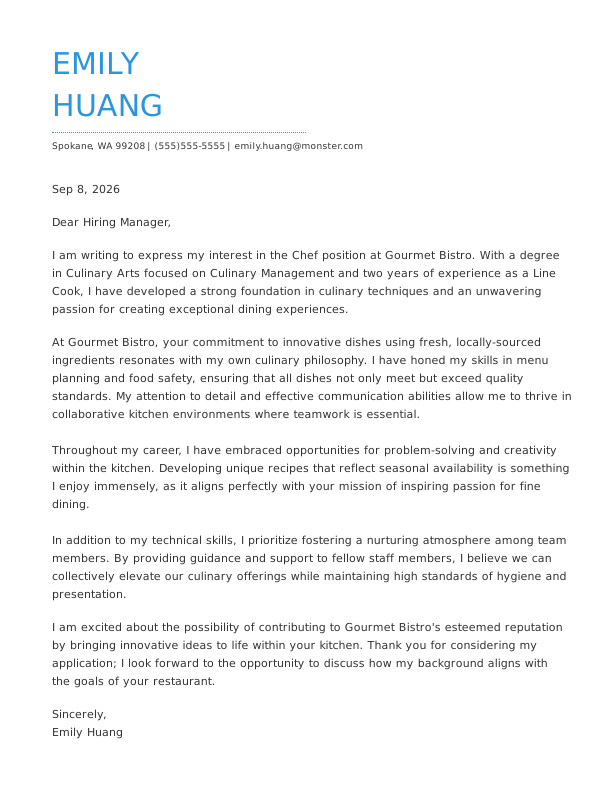
Chef Entry-Level Cover Letter
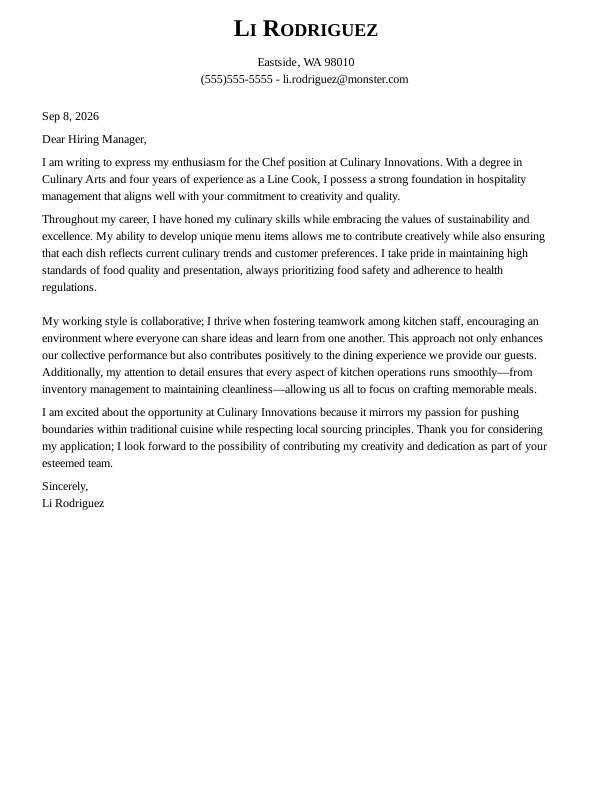
Chef Mid-Level Cover Letter
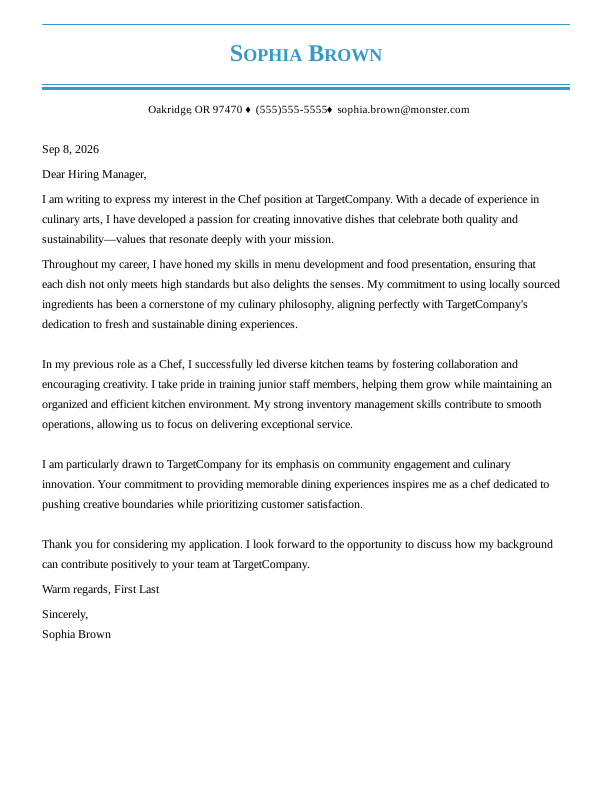
Chef Experienced Cover Letter
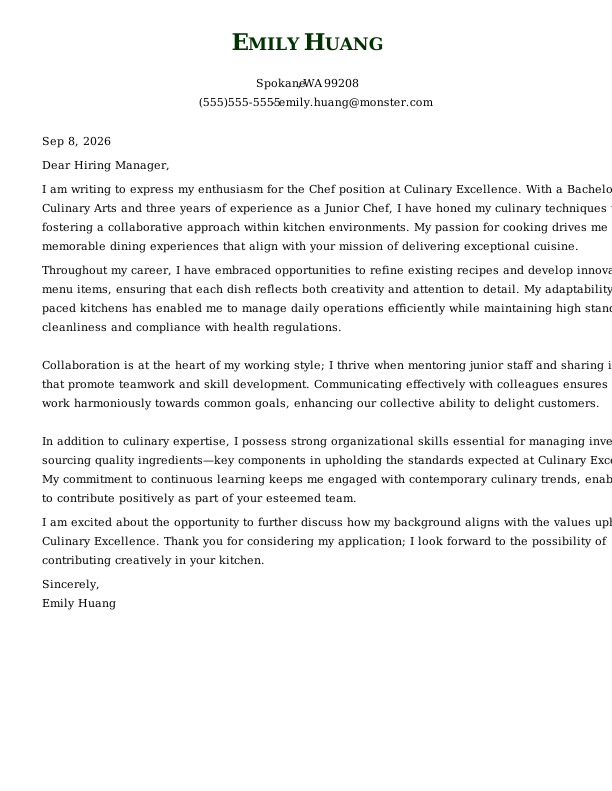
Chef Entry-Level Cover Letter
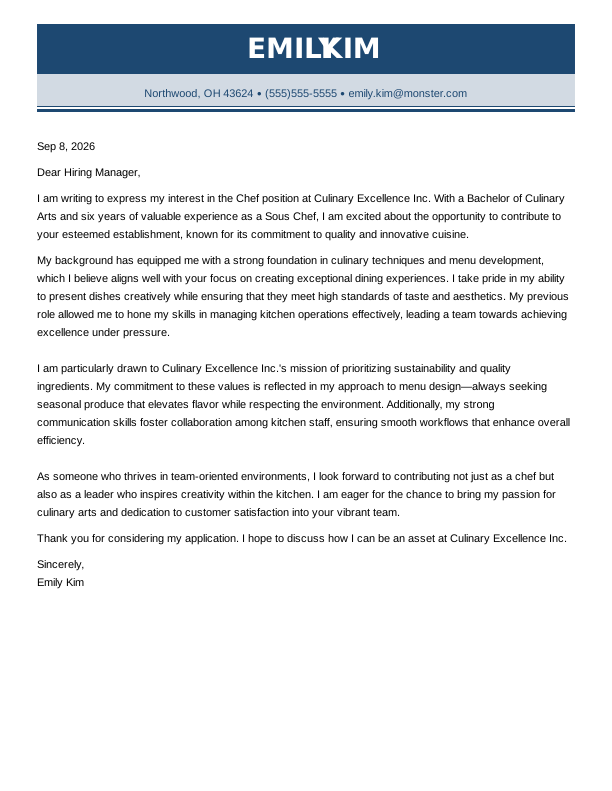
Chef Mid-Level Cover Letter
Browse Free Cover Letter Templates
- Account Manager
- Accounts Payable
- Administrative Assistant
- Admissions Counselor
- Artist
- Babysitter
- Barista
- Bartender
- Bookkeeper
- Brand Ambassador
- Business Analyst
- Caregiver
- Civil Engineering
- Computer Science
- Custodian
- Customer Service
- Dental Assistant
- Electrical Engineering
- Emt
- Engineering
- Event Coordinator
- Executive Assistant
- Finance
- Financial Analyst
- Firefighter
- Flight Attendant
- Graphic Designer
- Hair Stylist
- Healthcare
- Investment Banking
- It
- Janitor
- Journalism
- Lab Technician
- Law Clerk
- Lawyer
- Librarian
- Logistics
- Manager
- Marketing Manager
- Massage Therapist
- Mechanic
- Mechanical Engineer
- Medical Assistant
- Non Profit
- Nursing
- Office Manager
- Paralegal
- Personal Trainer
- Pharmacy Technician
- Photographer
- Physician Assistant
- Pilot
- Police Officer
- Project Manager
- Property Manager
- Receptionist
- Research Assistant
- Retail
- Sales
- Security Officer
- Social Work
- Software Engineer
- Teacher
- Teaching Assistant
- Truck Driver
- Vet Tech
- Veterinary Assistant
- Web Developer
- Welder
Cover Letter Examples for Chefs
Chef cover letters evolve across career stages, highlighting different levels of line preparation, menu development, and kitchen operations management. Use these templates to align your culinary skills, kitchen leadership, and food safety standards with your current career stage.
Entry-Level Chef Cover Letter
Perfect for recent graduates preparing a cover letter with no experience, this template also supports career changers moving into chef work from another field.
Mid-Career Chef Cover Letter
A good fit for experienced chefs moving beyond line work, this template highlights menu development and kitchen leadership while positioning you for advancement into sous chef, head chef, or specialized culinary roles.
Experienced Chef Cover Letter
Best for chefs with 10+ years of experience, this template helps applicants pursue executive chef leadership roles or advanced kitchen management positions.
Chef Cover Letter Template (Text)
Use this editable text version of a chef cover letter template to copy, paste, and customize directly in your document.
Tao Lee
Tampa, FL 33601
(555)555-5555
tao.lee@monster.com
Sep 8, 2026
Dear Hiring Manager,
I am writing to express my interest in the chef position at Culinary Delight Inc. With a degree in culinary arts and eight years of experience as a sous chef, I have honed my skills in creating innovative menus and overseeing kitchen operations that align with your company’s dedication to excellence and sustainability.
At the heart of my culinary practice is a commitment to crafting dishes with seasonal and locally sourced ingredients. My background in menu development allows me to create offerings that both reflect current trends and cater to customer preferences, ensuring a memorable dining experience for all guests. My time management abilities and attention to detail ensure that every meal is prepared with precision, even under pressure.
Leading a team is where I thrive, drawing on strong communication skills and an adaptable approach that fosters collaboration among staff members. This environment encourages creativity while maintaining high standards of food safety, sanitation, and quality control.
Culinary Delight Inc.’s mission resonates deeply with me as I strive not only for culinary excellence but also aim to inspire joy through food. The opportunity to contribute creatively within such an esteemed establishment excites me greatly.
Thank you for considering my application. I look forward to the possibility of contributing my passion for culinary arts at Culinary Delight Inc., working collaboratively towards crafting exceptional dining experiences.
Sincerely,
Tao Lee
How to Write a Chef Cover Letter
Writing a strong chef cover letter means pairing your culinary training with clear storytelling that demonstrates your ability to design menus, manage kitchen staff, and maintain food safety standards under pressure. Follow the steps below to highlight your qualifications and customize your letter for each target restaurant, hotel, or catering operation.
1. Research & Prepare
Before you write your cover letter, research the restaurant, its primary service style, and the specific culinary concept it features. Learning whether an organization operates a high-volume banquet kitchen, a fine-dining dining room, or a farm-to-table bistro helps you connect your culinary experience directly to its operational needs.
Review the job description for required culinary certifications (such as ServSafe Manager) and specific station proficiencies. Check the restaurant website and recent food press to understand its menu design, then review LinkedIn profiles of executive chefs or general managers to align your background with their expectations.
2. Hook the Reader
Your opening paragraph sets the tone for your entire cover letter. A strong opener grabs the executive chef or general manager’s attention by demonstrating genuine knowledge of the establishment, your cooking style, and what you bring to the kitchen brigade on day one.
Try referencing a specific signature dish, seasonal menu program, or local sourcing initiative from the restaurant and connecting it to your culinary background. You can also open with a specific metric, such as how you reduced ticket times or food waste percentages, or highlight a direct recommendation from a head chef or restaurateur who can vouch for your line control and leadership.
3. Tell Your Professional Story
Your cover letter should do more than restate your resume bullet points. Use the main body to share a concise example that illustrates how you run service lines, manage inventory ordering, and develop seasonal specials under active kitchen conditions.
Quantify your culinary accomplishments wherever possible. Mention specific metrics such as reducing food waste by 15%, increasing average ticket size by 10% through seasonal specials, or cutting prep times by 20% while maintaining food quality. Highlight how your kitchen leadership supported profitability and guest satisfaction.
4. Showcase Your Skills
Matching your technical culinary skills to the exact requirements in a job posting helps kitchen managers picture you leading their line on day one. Connecting your food safety knowledge and station management habits to what the establishment needs shows your readiness for duty.
For example, if the role emphasizes menu development and cost control, describe how you designed specials using sales data, calculated plate costs, and managed portioning to protect profit margins. If the posting stresses high-volume banquet prep or allergen handling, share how you scaled production schedules, trained prep cooks, and managed cross-contamination protocols.
5. Explain Any Special Circumstances
If you have an employment gap, are attempting to transition into chef work from another career field, or recently relocated, address it early and briefly. Share the reason directly, then pivot to what you have gained or are building, such as technical knife skills, ServSafe certifications, or culinary technique studies.
For instance, you can mention how a break spent refining knife techniques, mastering new food preservation methods, or studying regional cuisines sharpened your prep efficiency and culinary versatility. When attempting a career shift into chef work, explain how your prior background—such as event management, customer service, or nutrition—strengthens your organization, team communication, and understanding of dietary needs. If you have relocated, mention your knowledge of local food distributors, regional farm networks, and immediate shift availability.
6. End With a Professional Goodbye
Close your cover letter by reaffirming your interest in the position, thanking the hiring team for their time, and inviting a conversation about how your culinary background fits the team’s kitchen requirements. Keep the tone concise, confident, and focused on food quality, kitchen efficiency, and guest satisfaction.
Wrap up with a clear statement, such as: “I welcome the opportunity to discuss how my cooking experience, menu planning skills, and kitchen leadership can elevate your dining experience.” Then, end with a professional sign-off like “Sincerely” or “Best regards.”
4 Tips for Formatting Your Cover Letter
Use clear spacing, simple headings, and consistent fonts to format your cover letter. Proper formatting keeps your document professional and easy to read. These tips apply whether you are stepping into your first line cook position or bring years of executive chef experience.

Keep It to One Page
General managers and executive chefs review many applications, so keep your cover letter to a single page. Target 250 to 400 words across three to four focused paragraphs to share your most relevant culinary skills and kitchen accomplishments.

Use a Professional Font & Layout
Choose a clear font such as Arial, Calibri, Times New Roman, or Helvetica in 10 to 12 pt with one-inch margins. Keeping formatting consistent with your resume creates a clean, cohesive application package that is easy to scan.

Address the Hiring Manager Directly
Try to find the name of the executive chef, general manager, or culinary recruiter by reviewing the job posting, restaurant website, or LinkedIn.
If you cannot find a specific name, address your letter to “Dear Hiring Manager” or “To the Kitchen Team,” avoiding outdated phrasing like “To Whom It May Concern.”

Save & Send as a PDF
Save your cover letter as a PDF to preserve your layout across different operating systems and devices. Use a professional file name that includes your name and the words “cover letter,” such as “Tao_Lee_cover_letter.pdf.”
Top-Paying States for Chef Roles
Knowing what chefs earn across the country helps you evaluate job offers, negotiate compensation, and make clearer career decisions. The salary data below comes from the U.S. Bureau of Labor Statistics and reflects recent national averages for chefs.
Keep in mind that location, years of experience, food safety certifications, and cuisine specialization can all influence your actual pay. Chefs working in high-volume hotels or fine-dining restaurants often earn more than those in smaller dining rooms, and specialized roles like executive chef for corporate catering or head chef for luxury resorts typically command higher rates.
| Alabama | $63,800 |
| Alaska | $60,810 |
| Arizona | $65,930 |
| Arkansas | $56,450 |
| California | $71,350 |
| Connecticut | $71,630 |
| Delaware | $67,330 |
| District of Columbia | $79,090 |
| Florida | $62,540 |
| Georgia | $57,970 |
| Hawaii | $92,690 |
| Idaho | $54,940 |
| Illinois | $63,360 |
| Indiana | $60,190 |
| Iowa | $48,630 |
| Kansas | $60,920 |
| Kentucky | $51,800 |
| Louisiana | $44,940 |
| Maine | $57,550 |
| Maryland | $64,130 |
| Massachusetts | $75,900 |
| Michigan | $59,170 |
| Minnesota | $63,800 |
| Mississippi | $50,150 |
| Missouri | $62,180 |
| Montana | $58,090 |
| Nebraska | $66,690 |
| Nevada | $62,140 |
| New Hampshire | $61,370 |
| New Jersey | $75,020 |
| New Mexico | $60,750 |
| New York | $70,200 |
| North Carolina | $66,330 |
| North Dakota | $71,280 |
| Ohio | $60,700 |
| Oklahoma | $51,420 |
| Oregon | $63,720 |
| Pennsylvania | $62,500 |
| Rhode Island | $87,950 |
| South Carolina | $64,050 |
| South Dakota | $47,900 |
| Tennessee | $62,210 |
| Texas | $55,130 |
| Utah | $50,400 |
| Vermont | $68,650 |
| Virginia | $62,120 |
| Washington | $71,430 |
| West Virginia | $65,150 |
| Wisconsin | $62,300 |
| Wyoming | $69,510 |
| Guam | $44,800 |
| Puerto Rico | $35,780 |
| Virgin Islands | $67,990 |
Key Takeaways
- Tailor each letter to the specific kitchen, service pace, and restaurant concept. Reference the kitchen’s cuisine style, sourcing focus, or menu structure so reviewers quickly recognize your fit.
- Lead with a compelling opener and support it with concrete achievements. Include measurable details like food cost reductions, ticket time improvements, food waste cuts, or guest satisfaction gains.
- Keep formatting clean and consistent with your resume. Use identical fonts, header styles, and line spacing so hiring teams can scan key credentials effortlessly.
Browse Monster’s Resume Templates
Monster also has hundreds of ATS-friendly resume templates for all career levels and industries. Create a matching resume to help you land the interview.
- Agriculture
- Baker
- Banquet Server
- Bar Manager
- Barback
- Barista
- Bartender
- Busser
- Cake Decorator
- Catering
- Chef
- Cook
- Dietary Aide
- Dishwasher
- Executive Chef
- Fast Food
- Fine Dining Server
- Food And Beverage Director
- Food And Beverage Manager
- Food Runner
- Hostess
- Kitchen Manager
- Line Cook
- Mcdonald's
- Meat Cutter
- Pastry Chef
- Prep Cook
- Private Chef
- Restaurant General Manager
- Restaurant Manager
- Restaurant
- Restaurant Server
- Shift Leader
- Sommelier
- Sous Chef
- Starbucks
- Waiter
- Waitress
Frequently Asked Questions
Last Update:
Do I really need a cover letter?
Yes, including a cover letter adds valuable context that your resume cannot fully capture, demonstrating written communication abilities, kitchen passion, and genuine alignment with the restaurant’s culinary vision.
A cover letter is especially valuable when explaining an employment gap, transitioning into a new cuisine style, or applying to an establishment with specific farm-to-table values. It provides space to convey your cooking philosophy and kitchen management style.
How long should my cover letter be?
A chef cover letter should fit on a single page, ideally between 250 and 400 words. Executive chefs and general managers spend limited time reviewing each submission, making conciseness essential.
Focus on quality over length by selecting your most relevant culinary certifications, menu management wins, and station leadership accomplishments. Organize your text into three to four well-structured paragraphs to keep your key qualifications scannable.
Should my cover letter match my resume?
Yes, your cover letter should match your chef resume’s visual design. Use the same fonts, colors, and header style so your application package looks cohesive and intentional.
Keep the formatting consistent while using the text to tell a deeper story. For a chef role, expand on your kitchen experience by adding context your resume cannot show, such as strategies used to manage busy service rushes, menu creation workflows, and why you want to cook at this specific restaurant.
How do I address my cover letter if I don’t know the hiring manager’s name?
Try to find a specific contact by reviewing the restaurant website, social media pages, or calling the establishment directly. If you cannot locate a name, use a professional role-specific alternative like “Dear Hiring Manager” or “Dear Kitchen Team.” Avoid “To Whom It May Concern” and skip overly casual greetings like “Hi.”
Should I mention salary expectations in my cover letter as a chef?
Only include salary expectations if the job posting explicitly requests them. When required, state a realistic range based on regional hospitality standards and your experience level, noting that your rate remains flexible depending on the role, shift expectations, and total benefits.

Toni Frana is a Certified Professional Resume Writer (CPRW), member of the Professional Association of Resume Writers & Career Coaches, and career expert who empowers job seekers to take control of their career paths using Monster’s comprehensive job search and resume tools.
See More From Toni FranaExplore Related Career Advice






How to Write a Cover Letter for Internal Positions or Promotions (Examples & Tips)

Updated:
Apr 23, 2026
|

19 min read


Cover Letter vs Resume: What’s the Difference & Do You Need Both?

Updated:
Apr 23, 2026
|
18 min read