

Free Special Education Teacher Cover Letter Templates & Examples
A strong special education teacher cover letter shows you can support diverse learners through individualized instruction and compassionate classroom management. Our free cover letter templates and step-by-step guidance help you present your experience clearly so hiring managers see the impact you make from day one.
Real-World Cover Letters That Get Results
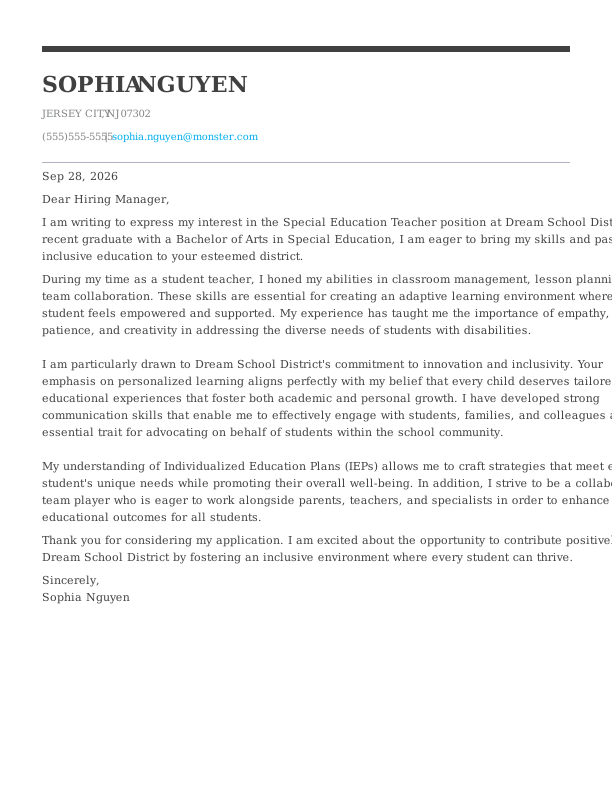
 Free
FreeSpecial Education Teacher Entry-Level Cover Letter
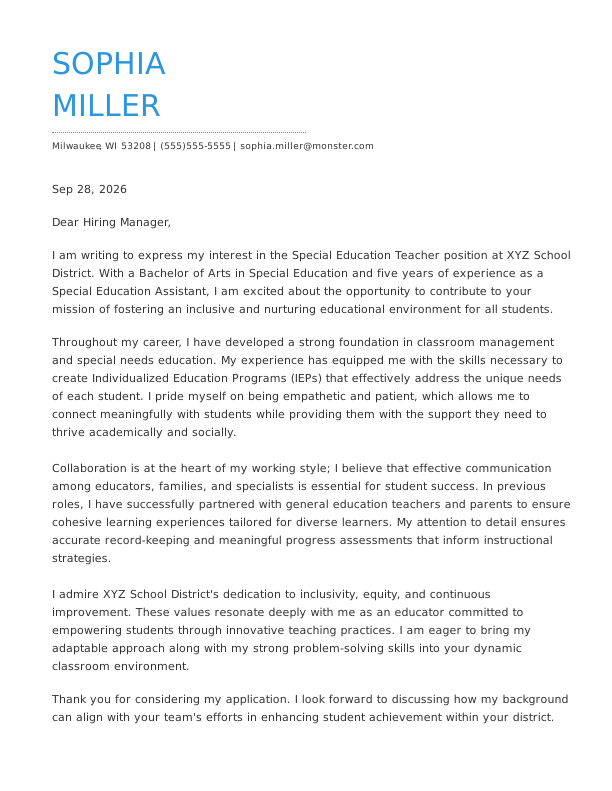
Special Education Teacher Mid-Level Cover Letter
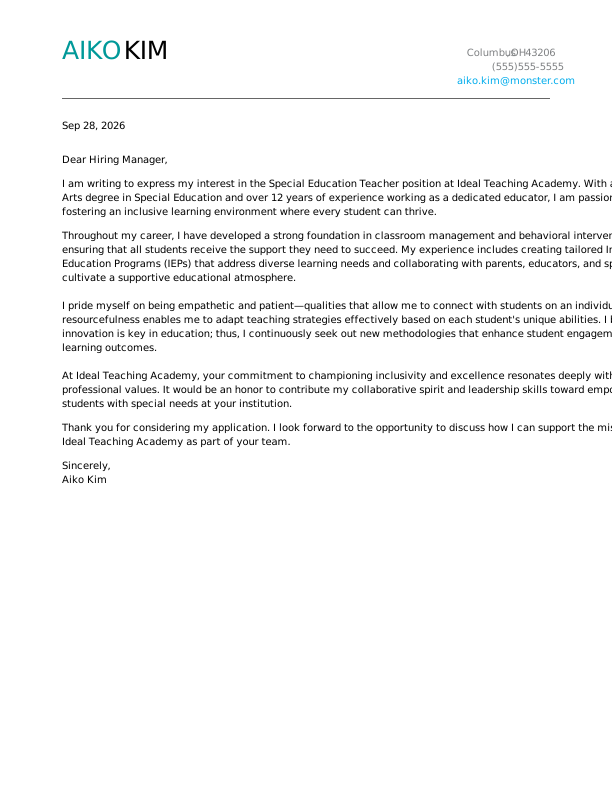
Special Education Teacher Experienced Cover Letter
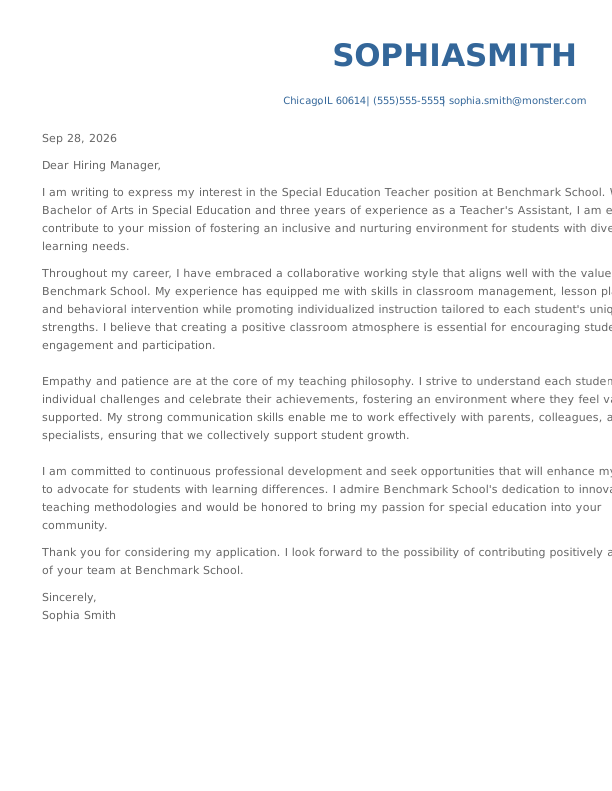
Special Education Teacher Entry-Level Cover Letter
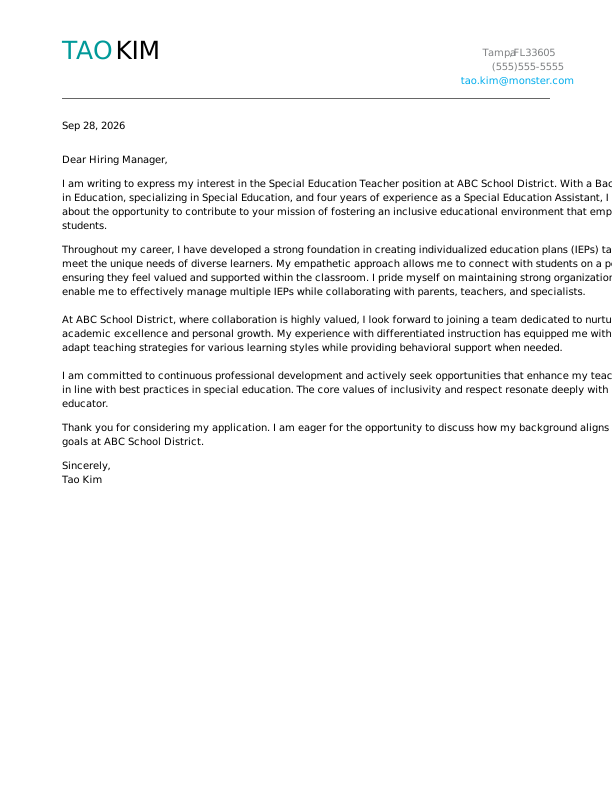
Special Education Teacher Mid-Level Cover Letter
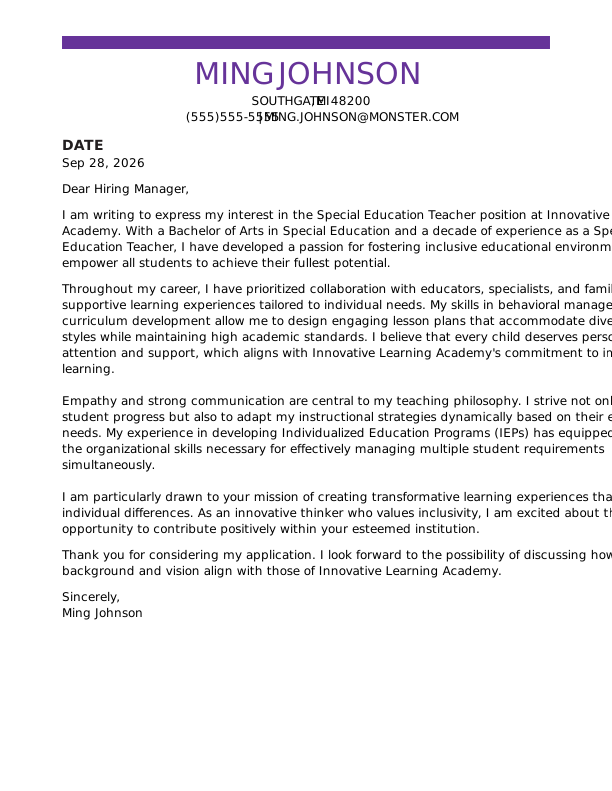
Special Education Teacher Experienced Cover Letter
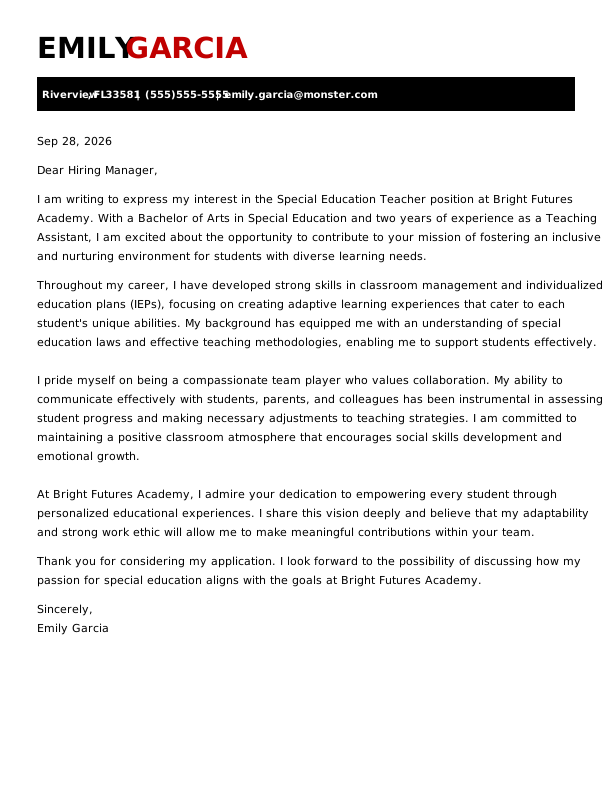
Special Education Teacher Entry-Level Cover Letter
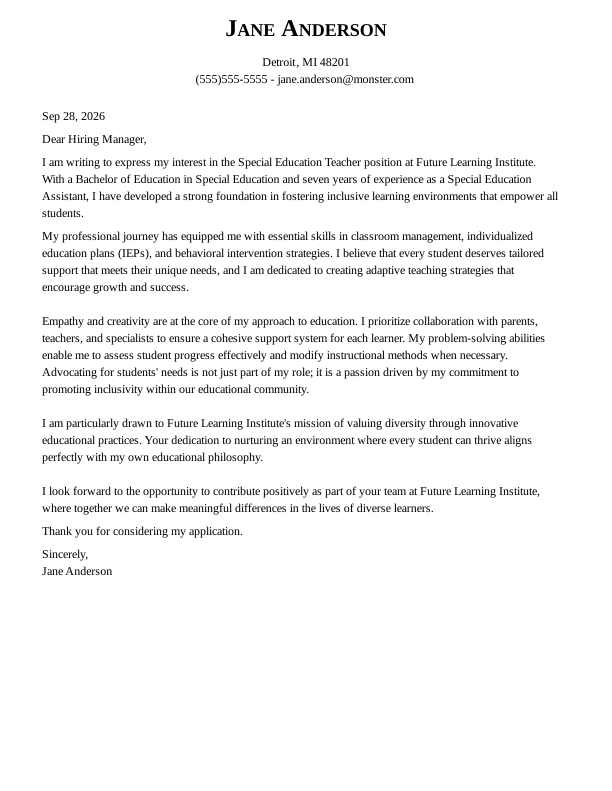
Special Education Teacher Mid-Level Cover Letter
Browse Free Cover Letter Templates
- Academic
- Account Manager
- Accountant
- Accounts Payable
- Administrative Assistant
- Admissions Counselor
- Architecture
- Artist
- Assistant Principal
- Babysitter
- Barista
- Bartender
- Bookkeeper
- Brand Ambassador
- Business Analyst
- Business
- Caregiver
- Chef
- Civil Engineering
- Computer Science
- Construction
- Consulting
- Copywriter
- Cosmetology
- Custodian
- Customer Service
- Customer Service Representative
- Data Analyst
- Data Entry
- Dental Assistant
- Dental Hygienist
- Digital Marketing
- Electrical Engineering
- Emt
- Engineering
- Esthetician
- Event Coordinator
- Executive Assistant
- Finance
- Financial Analyst
- Firefighter
- Flight Attendant
- Graphic Designer
- Hair Stylist
- Healthcare
- Hr Generalist
- Investment Banking
- It
- Janitor
- Journalism
- Lab Technician
- Law Clerk
- Lawyer
- Librarian
- Logistics
- Makeup Artist
- Manager
- Marketing Coordinator
- Marketing
- Marketing Manager
- Massage Therapist
- Mechanic
- Mechanical Engineer
- Medical Assistant
- Non Profit
- Nursing
- Occupational Therapy
- Office Assistant
- Office Manager
- Operations Manager
- Paralegal
- Personal Trainer
- Pharmacist
- Pharmacy Technician
- Photographer
- Physician Assistant
- Pilot
- Police Officer
- Program Manager
- Project Manager
- Property Manager
- Psychology
- Receptionist
- Research Assistant
- Restaurant Manager
- Retail
- Sales
- Sales Manager
- School Counselor
- Security Officer
- Social Work
- Software Engineer
- Substitute Teacher
- Teacher
- Teaching Assistant
- Truck Driver
- Vet Tech
- Veterinary Assistant
- Web Developer
Cover Letter Examples for Special Education Teachers
Cover letter requirements change as a special education teacher’s career progresses. Choose the template that matches your experience level so you can highlight the right classroom strategies, IEP work, and support outcomes for your stage.
Entry-Level Special Education Teacher Cover Letter
Ideal for recent graduates and career changers transitioning into special education teacher roles, this template supports a cover letter with no experience while highlighting transferable strengths.
Mid-Career Special Education Teacher Cover Letter
Tailored to special education teachers a few years beyond entry, this template emphasizes IEP ownership, collaboration with support teams, and leading classroom interventions.
Experienced Special Education Teacher Cover Letter
Best suited to special education teachers with close to a decade of classroom expertise, this template fits educators who lead IEP development, coordinate multidisciplinary support, and drive student progress through targeted interventions.
Special Education Teacher Cover Letter Template (Text)
Use this adaptable text template of a special education teacher cover letter to copy, paste, and personalize in your document or file.
Jin Williams
Indianapolis, IN 46206
(555)555-5555
jin.williams@monster.com
Sep 28, 2026
Dear Hiring Manager,
I am writing to express my interest in the special education teacher position at ABC School District. With a Bachelor of Arts in Education, specializing in special education, and nine years of experience as a dedicated educator, I am passionate about fostering inclusive learning environments that empower all students.
ABC School District’s commitment to nurturing diverse student populations aligns closely with my professional values. I have successfully developed and implemented individualized education plans (IEPs) that cater to the unique needs of my students, ensuring they receive tailored support for their learning journeys. My collaborative working style has allowed me to effectively partner with general education teachers, parents, and support staff to create cohesive educational experiences.
Throughout my career, I have prioritized communication and adaptability in my teaching approach. These skills enable me to assess student progress accurately while adjusting instructional methods as needed to maximize engagement and success. Additionally, I bring strong organizational abilities that facilitate the management of multiple priorities while maintaining detailed records of student performance.
Empathy is at the core of my teaching philosophy; it drives me to understand each student’s individual challenges and triumphs deeply. As an advocate for inclusion and differentiated instruction, I strive not only for academic excellence but also for social growth among learners with diverse needs.
I am excited about the opportunity to contribute positively to ABC School District’s mission by supporting every child’s potential through personalized education strategies. Thank you for considering my application; I look forward to discussing how I can be an asset to your team.
Sincerely,
Jin Williams
How to Write a Special Education Teacher Cover Letter
Writing a strong special education cover letter comes down to real evidence–think IEP milestones, progress notes, behavior plans, and family updates. Follow these quick steps to shape your story and tailor your application to a specific job posting.
1. Research & Prepare
Before you start writing, get a feel for what the school’s special education department values most in its day-to-day operations. Look into its preferred IEP tracking software, compliance standards, and inclusion practices so you can use its language and show you’re ready on day one.
Here are three quick ways to gather that background before you start writing:
- Scan the job posting: Look for required IEP software, data systems, or specific documentation tools.
- Check state guidelines: Review your state’s education department site for current compliance standards you can mention.
- Explore the school site: Look for updates on its current inclusion models, co-teaching setups, or behavior support programs.
2. Hook the Reader
Skip the standard “I am writing to apply for…” opening. Principal and hiring committees scan for immediate proof of classroom readiness, compliance knowledge, and teamwork, so open with a hook that shows your immediate value.
Depending on what the school prioritizes, try opening with one of these focus areas:
- Highlighting IEP success: “In my last 9-week cycle, I used daily BIP checklists to boost on-task behavior from 41% to 62% for two students sharing similar IEP goals.”
- Showing systems fluency: “I lead IEP meetings grounded in running records and ABLLS-R probes, seamlessly translating services into daily Google Classroom accommodation schedules.”
- Demonstrating collaboration: “When our general ed partners needed extra support, I co-planned weekly UDL lessons with our speech therapist and ran quick debriefs after class to adjust prompts.”
3. Tell Your Professional Story
While your resume lists your background, your letter explains what learning looks like in your classroom. Specific data points give context to your work.
Consider these examples of how to frame your everyday impact with concrete metrics:
- Increased reading goal attainment from 45% to 78% across 10 students in one semester using weekly skill checks.
- Cut behavioral incidents by 32% by establishing predictable visual schedules and teaching replacement behaviors in small groups.
- Managed 18 IEP caseloads while saving two hours of weekly prep time through a streamlined tracking template.
4. Showcase Your Skills
Rather than listing generic qualities like “patient” or “adaptable,” pick key requirements from the job ad and pair them with real classroom moments. Showing how you accommodated a lesson or partnered with a family leaves a lasting impression.
Here is how you can transform standard skill requirements into concrete classroom examples:
- IEP goal writing: “I translated reading diagnostic data into measurable, observable IEP goals tailored to each student’s specific learning pace.”
- Assistive technology: “I integrated Google Classroom text-to-speech tools on iPads, allowing students to access lesson directions independently.”
- Family communication: “When a student hit a skill plateau, I met with their parents to share our classroom strategies so we could reinforce the same routine at home.”
5. Explain Any Special Circumstances
If you have a career gap, major move, or are shifting roles, address it in one or two simple, forward-looking sentences. Focus on your active credentials and recent practice so the hiring team knows your skills are completely up to date.
Use these simple phrasing options to explain common transitions smoothly:
- Addressing a career pause: “After taking nine months off for family, I maintained my edge through a state reading intervention practicum and have been co-teaching in a K-5 self-contained room since January.”
- Pivoting subjects: “I am transitioning from general to special education to work directly with IEPs, having recently earned my SPED endorsement and trained on i-Ready progress monitoring.”
- Relocating: “I recently moved to Austin with an active Texas teaching license in hand, and I am already using Google Classroom to deliver daily accommodations.”
6. End With a Professional Goodbye
Wrap up with a brief, confident closing that invites conversation and thanks the hiring team. Avoid generic lines like “I look forward to hearing from you,” and instead mention a specific topic you’re excited to discuss in an interview.
Keep your sign-off clean and direct using this layout:
“I would welcome the opportunity to discuss how my approach to small-group instruction and family collaboration can support your students’ IEP goals. Thank you for your time and consideration.
Sincerely, [Your Name]”
4 Tips for Formatting Your Cover Letter
Hiring teams often scan cover letters in seconds, so your layout needs to highlight your license, caseload experience, and student outcomes right away. These simple rules apply whether you are stepping into your first classroom or applying for a lead teaching position.

Use a Professional Font & Layout
Stick to clean, readable fonts like Arial, Georgia, Helvetica, or Verdana at 10–12 pt with one-inch margins. Keeping your formatting simple and clean ensures busy administrators can easily read your letter on any device.

Address the Hiring Manager Directly
Check the job post, school website, or LinkedIn to find the name of the principal, special education director, or recruiter. If you can’t find a specific contact, use “Dear Hiring Manager” or “Dear Hiring Team,” and skip outdated phrases like “To Whom It May Concern.”

Match Your Header to Your Resume
Use the exact same header design, contact information, and typography on both your cover letter and resume. A matching set creates a polished, cohesive look that makes your application feel organized and professional.

Use Bullet Points for Key Achievements
Break up dense paragraphs with three or four bullet points to spotlight your best wins, such as IEP goal progress, reduced behavior incidents, or caseload management. Bullets draw the eye directly to your real-world impact.
Top-Paying States for Special Education Teacher Roles
Knowing what special education teachers earn can help you compare offers and plan your next move. Salary data below comes from the U.S. Bureau of Labor Statistics (BLS) and reflects the most recent nationwide averages for special education teachers.
Keep in mind that your actual pay can vary based on where you work, the grade levels you support, years of experience, and whether you hold additional credentials like specialized endorsements. Public school districts may offer different rates than private or charter schools. Your schedule and caseload size can also affect day-to-day workload more than base salary.
| Alabama | $60,250 |
| Alaska | $78,710 |
| Arizona | $70,340 |
| Arkansas | $60,210 |
| California | $101,330 |
| Connecticut | $84,850 |
| Delaware | $74,110 |
| District of Columbia | $94,490 |
| Florida | $63,220 |
| Georgia | $77,480 |
| Hawaii | $65,630 |
| Idaho | $67,090 |
| Illinois | $82,390 |
| Indiana | $64,000 |
| Iowa | $61,310 |
| Kansas | $63,120 |
| Kentucky | $64,630 |
| Louisiana | $58,760 |
| Maine | $65,490 |
| Maryland | $83,010 |
| Massachusetts | $86,210 |
| Michigan | $74,380 |
| Minnesota | $72,800 |
| Mississippi | $52,800 |
| Missouri | $57,160 |
| Montana | $64,180 |
| Nebraska | $63,300 |
| Nevada | $69,520 |
| New Hampshire | $72,970 |
| New Jersey | $94,410 |
| New Mexico | $87,940 |
| New York | $114,720 |
| North Carolina | $63,830 |
| North Dakota | $64,110 |
| Ohio | $70,700 |
| Oklahoma | $56,910 |
| Oregon | $85,910 |
| Pennsylvania | $76,390 |
| Rhode Island | $82,100 |
| South Carolina | $64,010 |
| South Dakota | $52,290 |
| Tennessee | $66,010 |
| Texas | $63,590 |
| Utah | $71,160 |
| Vermont | $70,490 |
| Virginia | $73,080 |
| Washington | $93,300 |
| West Virginia | $54,510 |
| Wisconsin | $66,860 |
| Wyoming | $66,020 |
| Puerto Rico | $55,040 |
Key Takeaways
- Prove your value immediately by opening with real data that shows your impact on IEP goal progress, behavioral improvements, or reading benchmarks.
- Customize your letter to the school’s priorities by mentioning its specific IEP software, compliance guidelines, or inclusion strategies.
- Keep your application polished and easy to skim by using bullet points for achievements and matching your letter’s design to your resume.
Browse Monster’s Resume Templates
Monster also has hundreds of ATS-friendly resume templates for all career levels and industries. Create a matching resume to help you land the interview.
- Art Teacher
- Dance Instructor
- Dance Teacher
- Education
- Elementary School Teacher
- English Teacher
- Esl Teacher
- Flight Instructor
- Kindergarten Teacher
- Math Teacher
- Music Teacher
- Physical Education Teacher
- Preschool Teacher
- Science Teacher
- Social Studies Teacher
- Spanish Teacher
- Special Education Teacher
- Substitute Teacher
- Teacher Assistant
- Teacher
Frequently Asked Questions
Last Update:
Do I really need a cover letter?
Yes. While a resume details your certifications and work history, a cover letter explains the human side of your teaching. It allows you to highlight your approach to IEP development, family collaboration, and student advocacy.
Writing a cover letter also gives you space to address special circumstances, like a career gap or subject transition, and lets you show genuine enthusiasm for a specific school’s community.
How long should my cover letter be?
Your cover letter should be three to four paragraphs and under one page, ideally between 250 and 400 words. Hiring managers skim applications quickly, so concise writing is key. This length gives you enough space to highlight your most impressive IEP outcomes, key teaching strategies, and passion for the district without overwhelming the reader or filling the page with fluff.
Should my cover letter match my resume?
Yes. Matching your cover letter to your resume creates a cohesive, professional application package. Use the same header, fonts, and contact information across both documents so they clearly belong together.
In the text itself, avoid simply repeating your resume bullets. Instead, use your cover letter to expand on a specific IEP success, explain your teaching philosophy, or detail why you want to join that particular school.
Should I mention salary expectations in my cover letter?
Only mention salary if the job posting explicitly requests it. In that case, provide a realistic, flexible range based on district pay scales and your experience level, noting that you are open to discussion. Leaving salary out of your cover letter keeps the focus where it belongs: on your classroom skills, IEP expertise, and enthusiasm for supporting students.
How do I write a cover letter for an internal position?
When applying internally, focus on your proven track record within the district. Highlight your familiarity with current school policies, existing IEP workflows, and established relationships with staff and families. Frame your experience as a seamless transition, showing how your familiarity with the community allows you to hit the ground running on day one. Be sure to keep your tone professional, expressing clear enthusiasm for taking on new responsibilities.

Vicki Salemi is a nationally recognized career expert who helps professionals navigate the hiring landscape and find the right fit on Monster. With over 15 years of experience in corporate recruiting and HR, she offers expert guidance on job search strategies, interview preparation, and career development to help candidates land their next role.
See More From Vicki SalemiExplore Related Career Advice







How to Write a Cover Letter for Internal Positions or Promotions (Examples & Tips)

Updated:
Apr 23, 2026
|
19 min read


Cover Letter vs Resume: What’s the Difference & Do You Need Both?

Updated:
Apr 23, 2026
|
18 min read