

Free Marketing Manager Cover Letter Templates & Examples
Boost your interview chances with professionally designed marketing manager cover letter templates. With these free templates, you will find targeted writing tips on how to quantify your campaign success, detail your multi-channel strategy, and demonstrate the ROI that catches the attention of hiring managers.
Real-World Cover Letters That Get Results
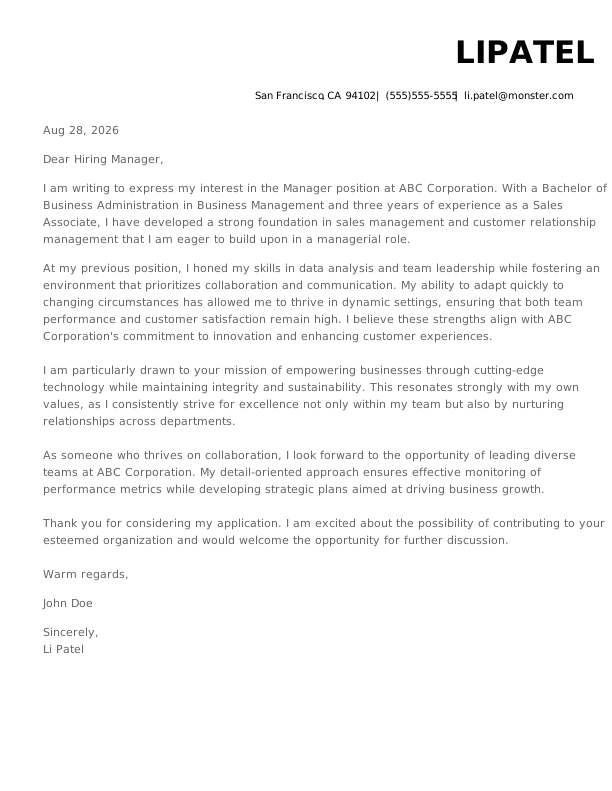
 Free
FreeManager Entry-Level Cover Letter
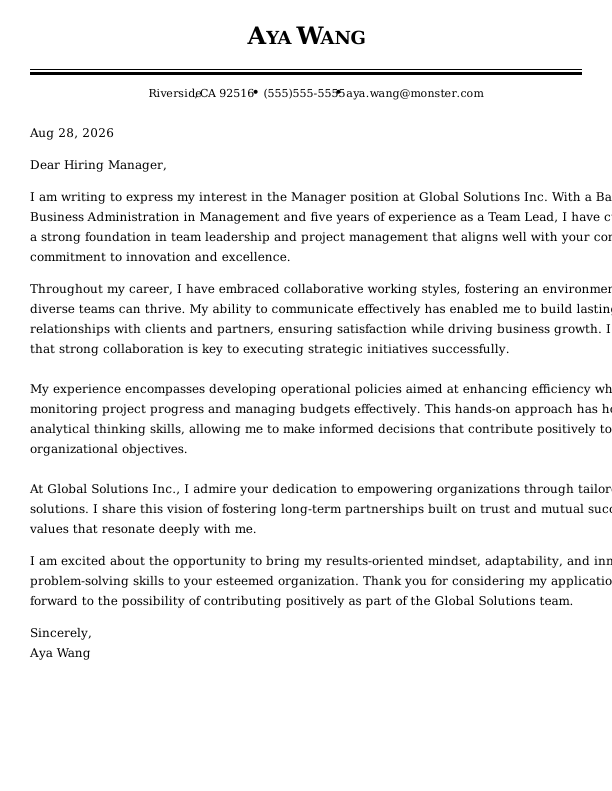
Manager Mid-Level Cover Letter
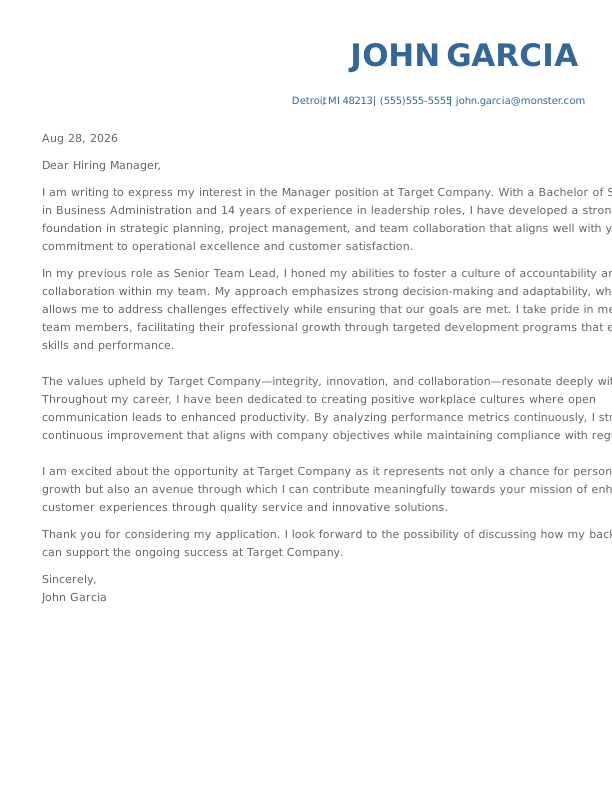
Manager Experienced Cover Letter
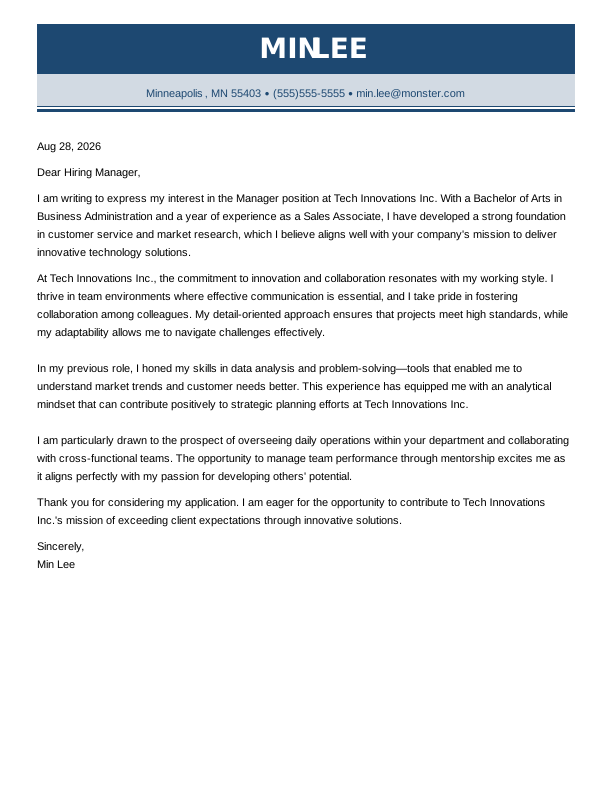
Manager Entry-Level Cover Letter
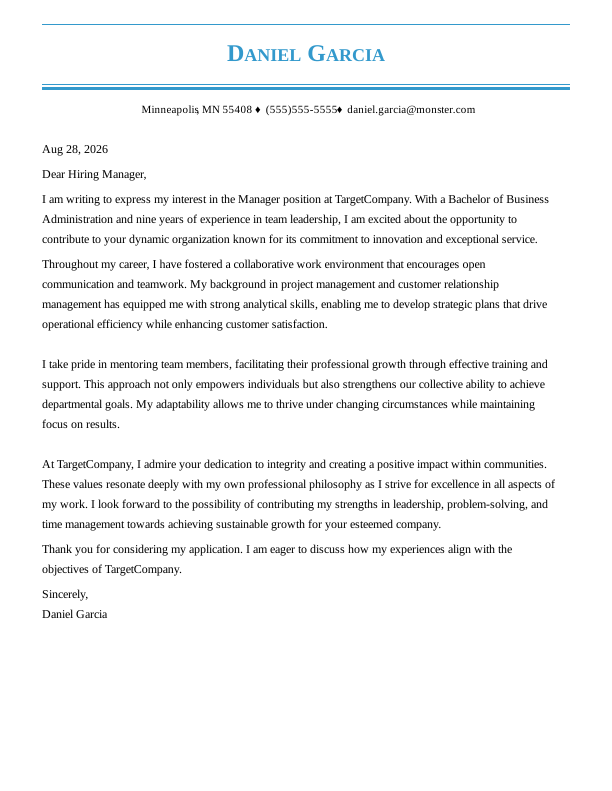
Manager Mid-Level Cover Letter
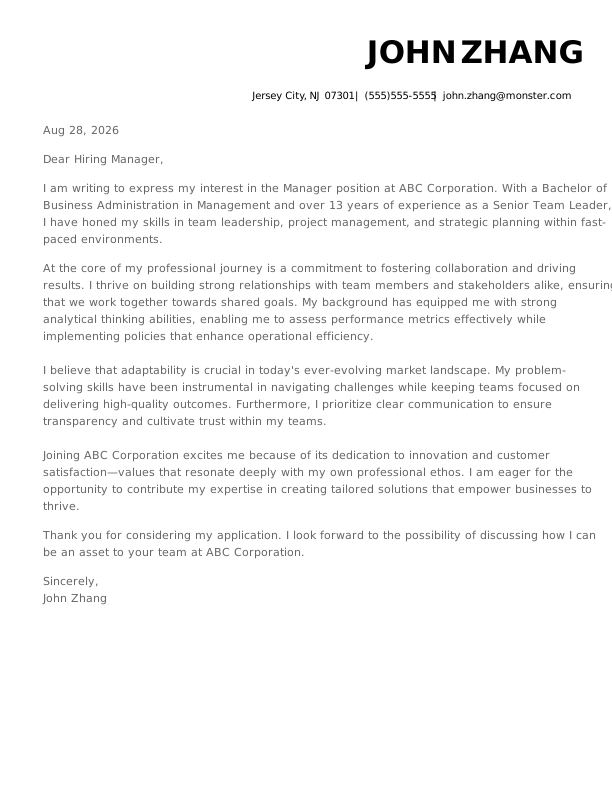
Manager Experienced Cover Letter
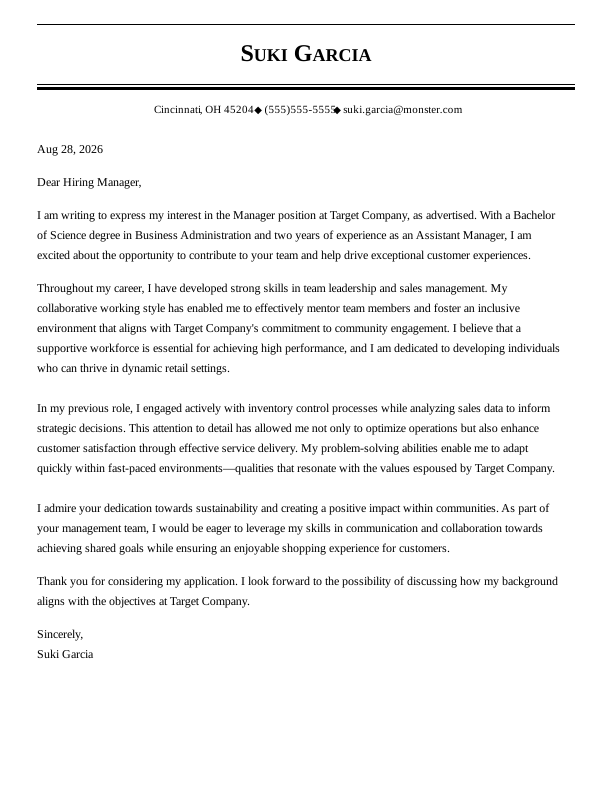
Manager Entry-Level Cover Letter
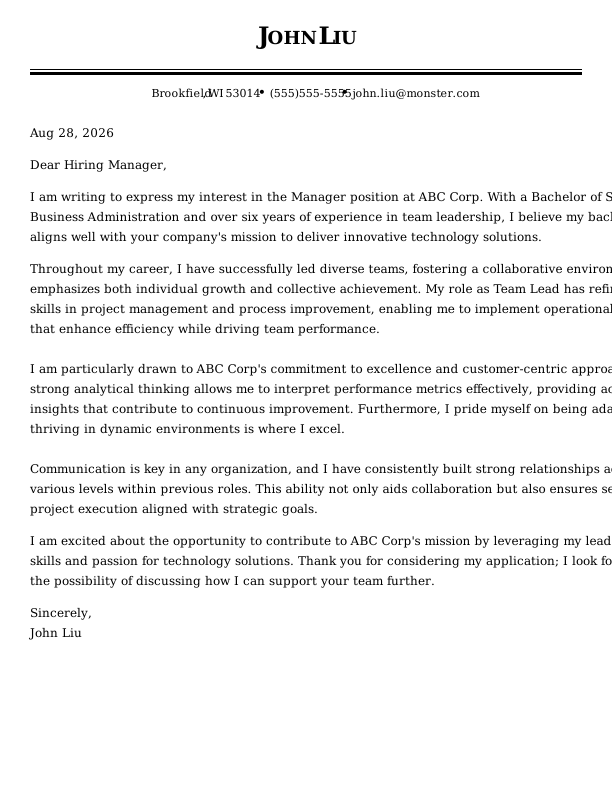
Manager Mid-Level Cover Letter
Browse Free Cover Letter Templates
- Account Manager
- Accounts Payable
- Administrative Assistant
- Admissions Counselor
- Artist
- Babysitter
- Barista
- Bartender
- Bookkeeper
- Brand Ambassador
- Business Analyst
- Caregiver
- Chef
- Civil Engineering
- Computer Science
- Custodian
- Customer Service
- Dental Assistant
- Electrical Engineering
- Emt
- Engineering
- Event Coordinator
- Executive Assistant
- Finance
- Financial Analyst
- Firefighter
- Flight Attendant
- Graphic Designer
- Hair Stylist
- Healthcare
- Investment Banking
- It
- Janitor
- Journalism
- Lab Technician
- Law Clerk
- Lawyer
- Librarian
- Logistics
- Manager
- Massage Therapist
- Mechanic
- Mechanical Engineer
- Medical Assistant
- Non Profit
- Nursing
- Office Manager
- Paralegal
- Personal Trainer
- Pharmacy Technician
- Photographer
- Physician Assistant
- Pilot
- Police Officer
- Project Manager
- Property Manager
- Receptionist
- Research Assistant
- Retail
- Sales
- Security Officer
- Social Work
- Software Engineer
- Teacher
- Teaching Assistant
- Truck Driver
- Vet Tech
- Veterinary Assistant
- Web Developer
- Welder
Cover Letter Examples for Marketing Managers
Marketing manager cover letters change across entry-level, mid-career, and experienced stages. Use the templates in this section to match your focus on projects, results, and leadership at each level.
Entry-Level Marketing Manager Cover Letter
Perfect for recent graduates writing a cover letter with no experience, this template also supports career changers moving into marketing manager roles from another industry.
Mid-Career Marketing Manager Cover Letter
A good fit for marketing managers with several years of experience, this template highlights campaign impact and supports your move into leadership or a more specialized marketing track.
Experienced Marketing Manager Cover Letter
Best for marketing managers with 10+ years of experience, this template helps job seekers pursue leadership roles and senior team or director-level opportunities.
Marketing Manager Cover Letter Template (Text)
Use an editable text cover letter template for a marketing manager role. Copy, paste, and customize it in your document file.
Cameron Henderson
St. Louis, MO 63102
(555)555-5555
cameron.henderson@monster.com
Aug 19, 2026
Dear Hiring Manager,
I am writing to express my enthusiasm for the marketing manager position at Innovative Marketing Solutions. With a Bachelor of Science in Marketing and four years of experience as a marketing coordinator, I am excited about the opportunity to contribute to your innovative team.
Throughout my career, I have honed my skills in social media management, content creation, and email marketing while developing strong analytical abilities that inform strategic decisions. My previous role allowed me to collaborate effectively with cross-functional teams, ensuring cohesive messaging across various channels. This collaborative approach aligns seamlessly with your company’s values of creativity and customer-centricity.
My adaptability in fast-paced environments has been essential in managing campaigns that not only engage audiences but also drive measurable results. I pride myself on my ability to communicate ideas clearly and inspire those around me—a quality I understand is vital for leading teams towards achieving shared goals.
At Innovative Marketing Solutions, where innovation is key, I am eager to leverage my background in digital marketing and brand development. I am particularly drawn to your commitment to delivering exceptional value through strategic partnerships; this resonates deeply with my belief in the power of collaboration.
I look forward to the possibility of discussing how my experiences can contribute positively to your team’s objectives. Thank you for considering my application.
Sincerely,
Cameron Henderson
How to Write a Marketing Manager Cover Letter
For a marketing manager, knowing how to write a cover letter means proving fit through tailored messaging, clear storytelling around campaigns or growth, and specific achievements that match the role. Follow the steps below and highlight your most relevant skills and results while customizing your letter for each target position and company.
1. Research & Prepare
Before you write your cover letter, research the company, the marketing manager role, and the hiring manager so your message matches their goals. Look for what the company sells, who it serves, and which channels or campaigns drive growth.
Review the job description for key skills like brand strategy, budget ownership, and campaign reporting. Check the company website and recent news for launches or pivots. Scan LinkedIn profiles of the hiring manager and team to learn their focus areas. This research helps you tailor your examples, align your priorities with theirs, and name specific initiatives you can support.
2. Hook the Reader
Your cover letter opening matters because it sets the tone and earns attention fast. A strong opener feels specific, shows you understand the company or mission, and hints at results you can bring to the marketing team.
Try referencing a recent campaign from the brand and what stood out to you, then connect it to how you’d build on that work. Or open with a measurable achievement like launching a lead-gen program that improved conversion rates.
3. Tell Your Professional Story
Your cover letter should do more than repeat your resume. It should tell a clear story about marketing work you led or improved, with specific examples and measurable results that hiring managers can picture.
Quantify impact with metrics like campaign ROAS, lead growth, conversion rate lift, email open or click-through rates, and brand lift from A/B tests. For example, describe how you turned customer insights into a landing page experiment that increased conversions by 18%, or how you optimized spend to raise ROAS from 2.1 to 3.4.
4. Showcase Your Skills
Don’t just list marketing skills. Map each one to what the employer needs in the job posting, then point to real work you did. When hiring managers see your experience tied to the company’s goals, they can picture you in the role faster.
For example, if the posting calls for campaign management and lead growth, describe a time you planned a multi-channel launch, set KPIs, and improved conversion rates. If it mentions CRM or attribution reporting, share how you used Salesforce or HubSpot data to refine targeting and tighten messaging across email and landing pages.
5. Explain Any Special Circumstances
If you have an employment gap, changed roles, or relocated, address it early and keep it straightforward. Share the reason briefly and focus on what you gained during that time, such as new skills, renewed goals, or industry insight. Honesty builds trust, and a positive frame shows you moved forward.
For a marketing manager example, if you took time off to care for family, mention how you stayed current by tracking campaign trends and refining your communication plan. If you shifted from sales to marketing, highlight how quota work sharpened your customer messaging and lead qualification. If you relocated, note local market research you completed and how it shaped your next campaign ideas.
6. End With a Professional Goodbye
Close your cover letter by restating your interest in the marketing manager role and highlighting what you want to discuss next. Invite the hiring manager to review your qualifications in more detail, and thank them for their time and consideration.
You can end with a cover letter closing like, “I welcome the opportunity to discuss how my campaign strategy, audience research, and performance reporting can support your brand growth.” Use professional sign-offs such as “Sincerely” or “Best regards.”
4 Tips for Formatting Your Cover Letter
Use clear formatting to help your cover letter look professional and read easily. Keep spacing consistent, use simple headings, and scan key details fast. These tips apply whether you switch industries or apply for your first role, regardless of experience level.

Keep It to One Page
Hiring managers stay busy, and they value concise cover letters that fit on one page. Target 250–400 words or three to four focused paragraphs to spotlight your strongest marketing qualifications.

Use a Professional Font & Layout
Choose a professional font such as Arial, Calibri, Times New Roman, or Helvetica in 10–12 pt for clear readability. Use standard one-inch margins and keep the layout consistent with your resume so the reader can scan and compare key details quickly.

Address the Hiring Manager Directly
When applying for a marketing manager role, address the hiring manager by name when you can by checking the job description, the company website, and LinkedIn. If you still cannot find a name after reaching out to the company, use “Dear Hiring Manager” or “To the Hiring Team,” and skip “To Whom It May Concern” since it feels outdated.

Save & Send as a PDF
Save your cover letter as a PDF to preserve formatting across devices and systems. Use a professional file name that includes your name and the words “cover letter,” like “Jane_Smith_cover_letter.pdf.”
Top-Paying States for Marketing Manager Roles
Knowing what a marketing manager earns across the country helps you evaluate job offers, negotiate compensation, and make informed career decisions. The data below comes from the U.S. Bureau of Labor Statistics (BLS) and reflects nationwide averages for marketing managers.
Keep in mind that location, experience, relevant certifications, and specialization can all influence your actual salary. Marketing managers in major metro areas or fast-growing industries like technology and finance often earn more, and specialists in digital growth, brand management, or product marketing typically command higher pay.
| Alabama | $130,660 |
| Alaska | $124,080 |
| Arizona | $151,660 |
| Arkansas | $135,600 |
| California | $206,150 |
| Connecticut | $171,640 |
| District of Columbia | $183,460 |
| Florida | $148,110 |
| Georgia | $168,230 |
| Hawaii | $130,100 |
| Idaho | $127,720 |
| Illinois | $158,900 |
| Indiana | $142,930 |
| Iowa | $137,990 |
| Kansas | $151,430 |
| Kentucky | $134,320 |
| Louisiana | $142,170 |
| Maryland | $161,450 |
| Massachusetts | $200,400 |
| Michigan | $146,830 |
| Minnesota | $171,860 |
| Mississippi | $114,550 |
| Missouri | $129,790 |
| Montana | $145,700 |
| Nebraska | $125,020 |
| Nevada | $130,210 |
| New Hampshire | $162,520 |
| New Jersey | $190,930 |
| New Mexico | $131,080 |
| New York | $195,720 |
| North Carolina | $162,740 |
| North Dakota | $132,020 |
| Ohio | $143,790 |
| Oklahoma | $138,830 |
| Oregon | $159,780 |
| Pennsylvania | $155,840 |
| Rhode Island | $174,690 |
| South Carolina | $137,140 |
| South Dakota | $161,010 |
| Tennessee | $143,250 |
| Texas | $153,550 |
| Utah | $147,100 |
| Vermont | $149,560 |
| Virginia | $188,500 |
| Washington | $184,580 |
| West Virginia | $122,210 |
| Wisconsin | $144,300 |
| Guam | $69,010 |
| Puerto Rico | $101,060 |
| Virgin Islands | $82,560 |
Key Takeaways
- Personalize each letter for the specific company and role. Reference their campaigns, target audience, or brand priorities so it’s clear you’ve done your homework.
- Lead with a strong hook and quantify your impact. Include metrics like pipeline growth, conversion rate lift, CAC reduction, or revenue influenced to make your value easy to verify.
- Keep formatting clean and consistent with your resume. Use the same fonts, headings, and spacing so recruiters can scan quickly.
Browse Monster’s Resume Templates
Monster also has hundreds of ATS-friendly resume templates for all career levels and industries. Create a matching resume to help you land the interview.
- Advertising Director
- Advertising
- Brand Ambassador
- Brand Manager
- Communications Coordinator
- Communications
- Communications Specialist
- Content Strategist
- Digital Marketing Manager
- Digital Marketing
- Digital Marketing Specialist
- Email Marketing
- Field Marketing Manager
- Influencer Marketing Manager
- Marketing Analyst
- Marketing Assistant
- Marketing Communications Manager
- Marketing Consultant
- Marketing Coordinator
- Marketing Data Analyst
- Marketing Intern
- Marketing Manager
- Marketing Project Manager
- Marketing
- Marketing Specialist
- Product Marketing Manager
- Public Relations
- Seo Analyst
- Seo
- Seo Specialist
- Social Media Coordinator
- Social Media Influencer
- Social Media Manager
- Social Media Marketing
Frequently Asked Questions
Last Update:
Do I really need a cover letter?
Yes, you should include a cover letter even when it’s marked optional. It adds context that a resume cannot capture and signals initiative and real interest in the marketing manager role.
A cover letter helps most when you explain a career shift, address employment gaps, or share why you want to work for that specific company. It also lets you show personality, enthusiasm, and strong communication through your own voice.
How long should my cover letter be?
Cover letters should stay within one page, typically 250–400 words. Hiring managers review many applications and spend limited time on each submission.
Focus on quality over quantity by sharing only the most relevant experience and achievements. Structure your letter in three to four concise paragraphs that each serve a clear purpose.
Should my cover letter match my resume?
Yes, your cover letter should match your resume’s visual design. Use the same fonts, colors, and header style so your application package looks cohesive and well-planned.
Keep the formatting consistent, but let the content add value beyond your bullets. For a marketing manager role, expand on campaigns you led, explain what you learned from results and customer feedback, and share why this position fits your goals.
Can I use AI to write my cover letter?
AI tools like a cover letter generator can help you draft quickly, organize your key points, and get past writer’s block. They give you a structure to work from, but personalization still matters if you want to stand out.
Use AI as your starting point, then edit heavily to add your marketing experience, specific campaign examples, and real excitement for the role. Hiring managers often spot generic AI-generated content, so make sure your final version sounds like you.
Should a marketing manager mention salary expectations in a cover letter?
Only include salary expectations if the job posting asks for them or your recruiter requests details. If you must share, use a flexible range tied to your research, and say you’re open to discussion based on scope and benefits.

Kirsten Chorpenning is a career advice writer who empowers job seekers to take control of their career paths using Monster’s comprehensive job search and resume tools. She specializes in helping job seekers find rewarding jobs in today’s dynamic work environment.
See More From Kirsten ChorpenningExplore Related Career Advice






How to Write a Cover Letter for Internal Positions or Promotions (Examples & Tips)
Updated:
Apr 23, 2026
|

19 min read


Cover Letter vs Resume: What’s the Difference & Do You Need Both?

Updated:
Apr 23, 2026
|
18 min read