

Free Business Analyst Cover Letter Templates & Examples
Boost your interview odds with professionally designed business analyst cover letter templates. Learn how to map your technical skills directly to business goals, quantify project impact, and present a compelling narrative that proves you can bridge the gap between business needs and IT solutions.
Real-World Cover Letters That Get Results
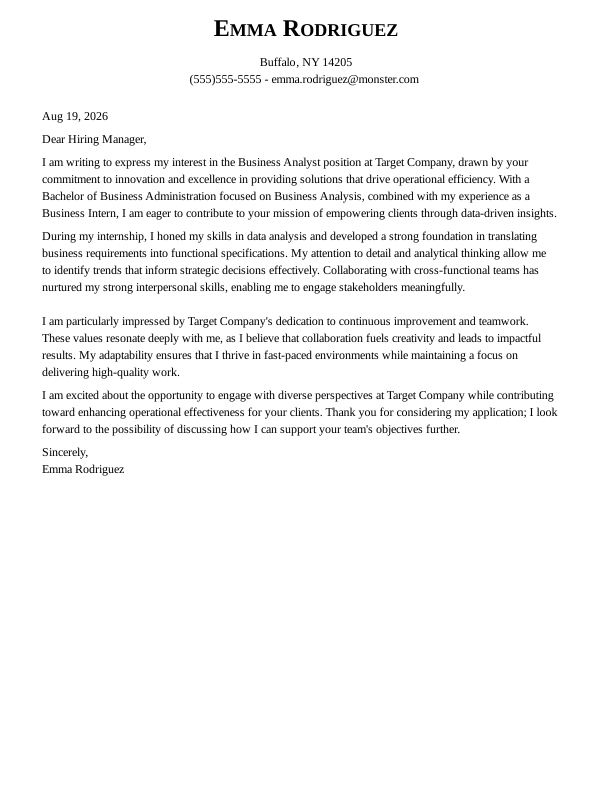
 Free
FreeBusiness Analyst Entry-Level Cover Letter
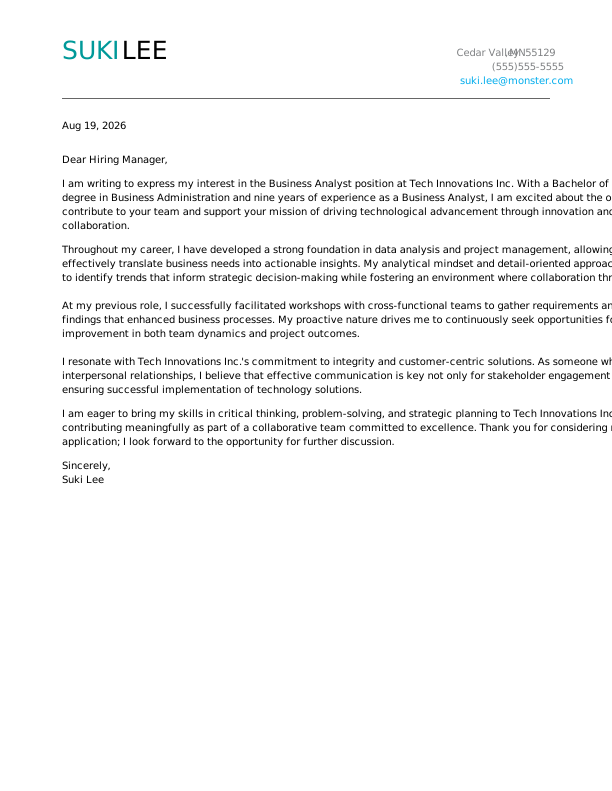
Business Analyst Mid-Level Cover Letter
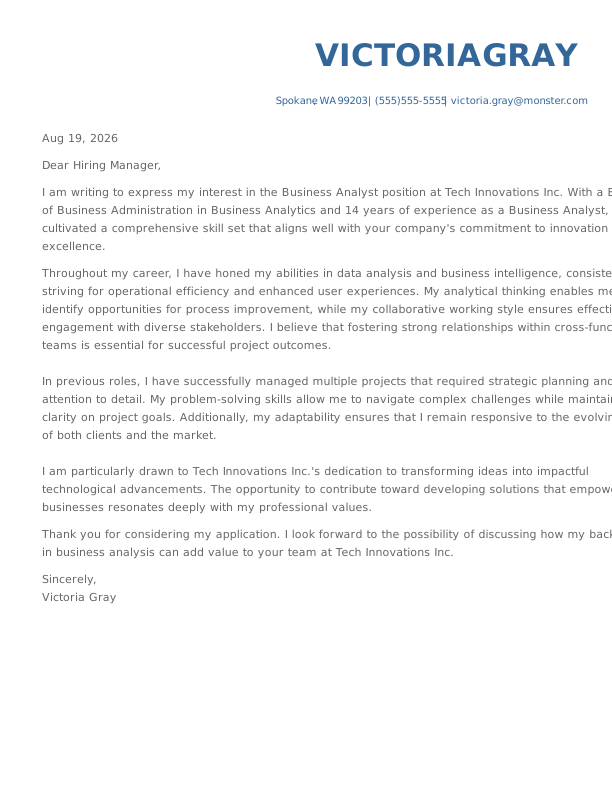
Business Analyst Experienced Cover Letter
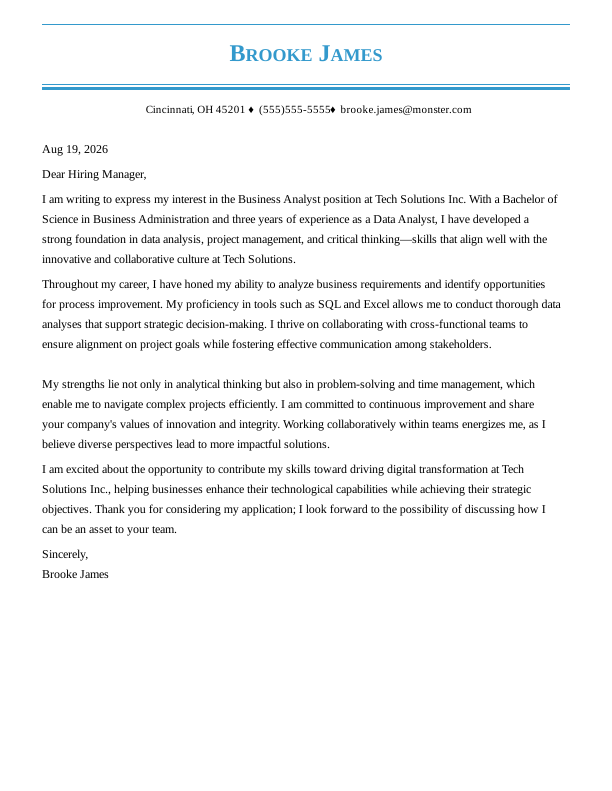
Business Analyst Entry-Level Cover Letter
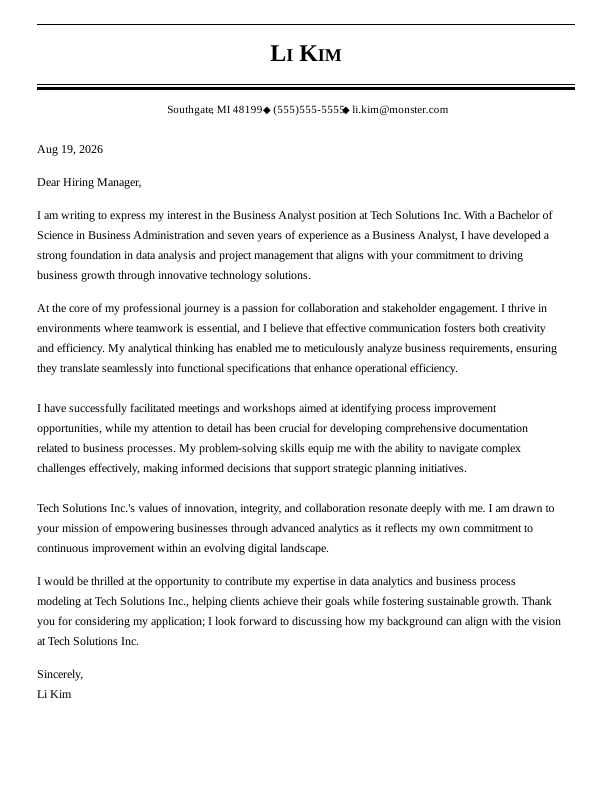
Business Analyst Mid-Level Cover Letter
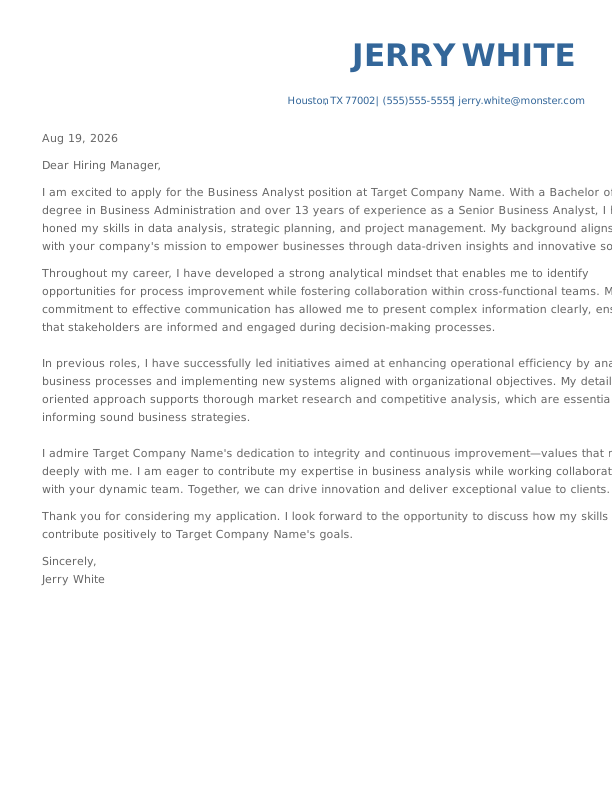
Business Analyst Experienced Cover Letter
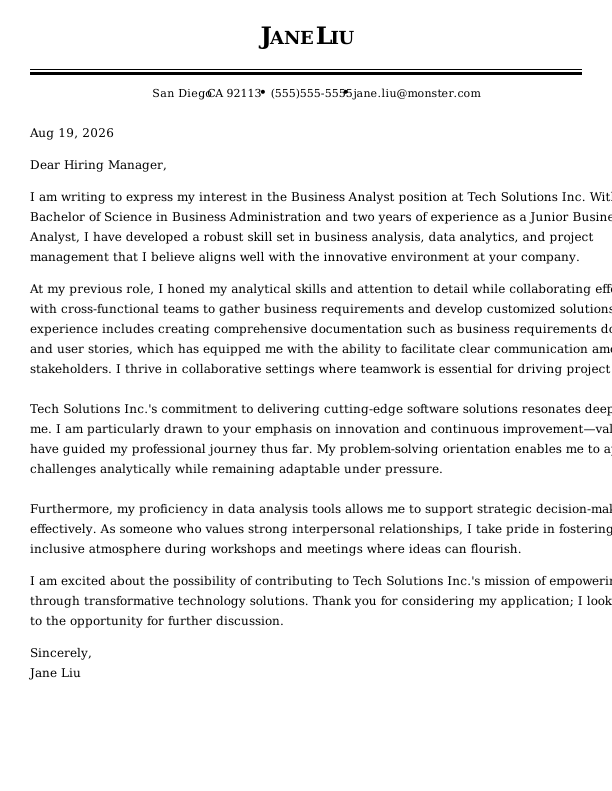
Business Analyst Entry-Level Cover Letter
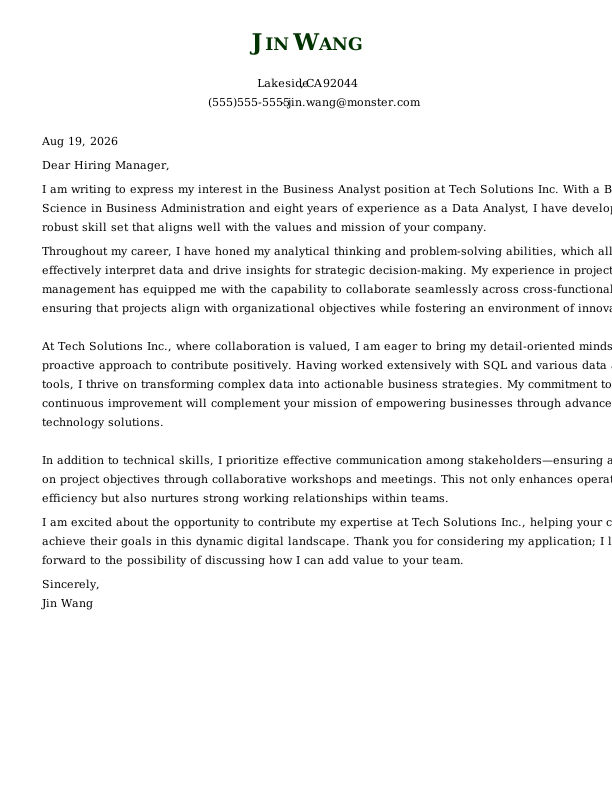
Business Analyst Mid-Level Cover Letter
Browse Free Cover Letter Templates
- Account Manager
- Accounts Payable
- Administrative Assistant
- Admissions Counselor
- Artist
- Babysitter
- Barista
- Bartender
- Bookkeeper
- Brand Ambassador
- Caregiver
- Chef
- Civil Engineering
- Computer Science
- Custodian
- Customer Service
- Dental Assistant
- Electrical Engineering
- Emt
- Engineering
- Event Coordinator
- Executive Assistant
- Finance
- Financial Analyst
- Firefighter
- Flight Attendant
- Graphic Designer
- Hair Stylist
- Healthcare
- Investment Banking
- It
- Janitor
- Journalism
- Lab Technician
- Law Clerk
- Lawyer
- Librarian
- Logistics
- Manager
- Marketing Manager
- Massage Therapist
- Mechanic
- Mechanical Engineer
- Medical Assistant
- Non Profit
- Nursing
- Office Manager
- Paralegal
- Personal Trainer
- Pharmacy Technician
- Photographer
- Physician Assistant
- Pilot
- Police Officer
- Project Manager
- Property Manager
- Receptionist
- Research Assistant
- Retail
- Sales
- Security Officer
- Social Work
- Software Engineer
- Teacher
- Teaching Assistant
- Truck Driver
- Vet Tech
- Veterinary Assistant
- Web Developer
- Welder
Cover Letter Examples for Business Analysts
A business analyst cover letter changes with your experience level, so match your details to the stage you’re targeting. Select the right template below to showcase the specific tools, project scale, and business value expected at your career level.
Entry-Level Business Analyst Cover Letter
Ideal for recent graduates writing a cover letter with no experience, this template also supports career changers transitioning into business analyst roles from other fields.
Mid-Career Business Analyst Cover Letter
Ideal for business analysts with several years of experience, this template highlights your core strengths in gathering requirements and data reporting. It also gives you a clear structure to showcase your growth toward senior analysis, domain specialization, or team leadership.
Experienced Business Analyst Cover Letter
A perfect fit for business analysts with 10+ years of experience, this template helps professionals pursue senior leadership or advanced roles like analytics director by guiding them to frame impact, stakeholder alignment, and process improvement.
Business Analyst Cover Letter Template (Text)
Use this adaptable text template for a business analyst cover letter. Copy, paste, and customize it in your document to match the role and highlight your most relevant experience.
Yuki Chen
Los Angeles, CA 90005
(555)555-5555
yuki.chen@monster.com
Aug 19, 2026
Dear Hiring Manager,
I am writing to express my interest in the business analyst position at Future Innovations Co. With a Bachelor of Business Administration in Business Analytics and six years of experience as a data analyst, I bring a strong foundation in data analysis and project management that aligns with your company’s mission to drive innovation and transform business operations.
Throughout my career, I have honed my analytical mindset and attention to detail, enabling me to identify opportunities for improvement and innovation effectively. My proficiency with tools such as Tableau and SQL has allowed me to provide actionable insights that guide strategic decision-making. Collaborating across teams is one of my strengths; I thrive when working alongside stakeholders to gather requirements and document functional specifications.
At Future Innovations Co., where creativity, collaboration, and customer-centricity are highly valued, I believe my adaptability will be an asset in navigating the dynamic environment you cultivate. My problem-solving skills have consistently contributed to successful project implementations by ensuring detailed documentation is maintained throughout all stages.
I am drawn to Future Innovations Co.’s commitment not only to technological excellence but also to its positive impact on communities. This resonates deeply with me as I seek opportunities where technology serves as a catalyst for growth while fostering meaningful client relationships.
Thank you for considering my application. I look forward to the possibility of contributing to your team’s efforts in developing transformative solutions that empower businesses worldwide.
Sincerely,
Yuki Chen
How to Write a Business Analyst Cover Letter
For a business analyst role, knowing how to write a cover letter means showing fit through clear personalization, tight storytelling about your work, and proof of relevant skills and achievements from past analyses.
Use the guidance below to highlight your qualifications and customize your letter for each target position by aligning examples with the job’s tools, metrics, and stakeholder needs.
1. Research & Prepare
Before you write your cover letter, research the company, the business analyst role, and the hiring manager. Look into the industry, key systems, and how the company measures performance so you can align your experience in requirements gathering, process mapping, and data analysis to real priorities.
Review the job description for tools and responsibilities, then scan the company website for its mission goals and recent initiatives. Read recent news and check LinkedIn profiles of team leaders to spot shared themes.
Use what you learn to tailor examples of stakeholder interviews, dashboard insights, or workflow improvements to that specific role.
2. Hook the Reader
Your cover letter opening sets expectations and earns attention fast. A strong start names the company, shows you understand its work, and hints at a measurable impact you can bring as a business analyst. Aim for specific details over generic enthusiasm so your reader immediately sees why you fit.
In your opening, consider including one of the following:
- A recent product or reporting initiative you noticed and how you would improve requirements or dashboards
- A project where you translated messy stakeholder needs into clear user stories or KPI definitions
- A short note about an industry trend the company is responding to and what analysis approach you would use
3. Tell Your Professional Story
In your cover letter, go beyond restating your resume. Use a short story with specific situations and measurable outcomes that show how you improved decisions, processes, or stakeholder alignment.
For a business analyst role, quantify impact with examples like:
- Cutting report turnaround time from five days to one day
- Reducing forecast error by 10%
- Translating requirements into user stories that helped deliver a feature on schedule
Mention what you gathered, how you analyzed it, and the result your team could measure.
4. Showcase Your Skills
Matching your business analyst skills to the job posting helps hiring teams see immediate value. Instead of listing tools, tie each strength to a requirement and name what you delivered.
For example, if the role asks for process mapping and requirements gathering, describe how you ran stakeholder interviews and translated needs into clear user stories or BRDs.
If the job posting mentions dashboards or KPIs, share how you cleaned source data, defined metrics like churn or conversion, and built reporting that guided decisions.
If EHR or CRM integration is required, point to work documenting workflows and supporting testing with end users.
5. Explain Any Special Circumstances
Address employment gaps, career changes, or relocations early in your cover letter, keep your explanation brief, and connect it directly to the strengths you gained. Being clear and honest builds immediate trust with hiring managers.
If you have an employment gap, focus on skill-building during your time away, such as mastering SQL, building advanced Excel models, or completing a business analysis certification.
For a career shift, highlight transferable strengths from your past experience, like how an operations background translated into process mapping, workflow optimization, and KPI tracking.
If you are relocating, show initiative by mentioning how you researched local industry trends and adapted your reporting style to fit regional market needs.
6. End With a Professional Goodbye
Close your cover letter by reiterating your interest in the business analyst role and inviting the next step. In two to three sentences, thank the reader for their time, express eagerness to discuss how your analysis and reporting work can support better decisions, and ask for an interview or follow-up conversation.
Then add a tailored line like, “I welcome the opportunity to discuss how my requirements gathering and data analysis experience can help your team improve processes,” as part of your cover letter closing.
Finish with a professional sign-off such as “Sincerely” or “Best regards.”
4 Tips for Formatting Your Cover Letter
Use clear formatting to make your cover letter professional and easy to read. Keep it simple, with consistent spacing and scannable sections, so the hiring manager can find key details fast. These tips apply across industries and experience levels.

Keep It to One Page
Hiring managers stay busy and value concise cover letters. Target a length of 250–400 words in three to four focused paragraphs that highlight your most relevant qualifications for the role.

Use a Professional Font & Layout
Choose a professional font such as Arial, Calibri, Helvetica, or Times New Roman in 10 to 12 pt. Use one-inch margins and keep formatting consistent with your resume so the layout stays clear and easy to scan.

Address the Hiring Manager Directly
When you write a business analyst cover letter, try to address the hiring manager by name by checking the job posting, the company’s website, and LinkedIn, or by calling and asking who reviews applications.
If you cannot find a name, use “Dear Hiring Manager” or “To the Hiring Team.” Avoid using “To Whom It May Concern,” which sounds outdated.

Save & Send as a PDF
Save your cover letter as a PDF to preserve formatting across devices and systems. Use a professional file name that includes your name and the words “cover letter,” such as “Jane_Smith_Cover_Letter.pdf.”
Key Takeaways
- Personalize each letter for the specific job and company by referencing its domain, current systems, or stated priorities so it’s clear you’ve done your homework.
- Lead with a strong hook and quantify impact. Include metrics like cycle time reduced, defects lowered, cost savings, or adoption improvements tied to requirements or analysis.
- Keep formatting clean and consistent with your resume. Use the same headings and spacing so recruiters can scan key details quickly.
Browse Monster’s Resume Templates
Monster also has hundreds of ATS-friendly resume templates for all career levels and industries. Create a matching resume to help you land the interview.
- Actuary
- Analyst
- Bioinformatics
- Biology
- Biostatistician
- Business Analyst
- Business Intelligence
- Chief Data Officer
- Clinical Data Manager
- Compensation Analyst
- Data Analyst
- Data Annotator
- Data Engineer
- Data Scientist
- Environmental Science
- Healthcare Data Analyst
- Hris Analyst
- Intelligence Analyst
- Math
- Physical Science
- Quantitative Analyst
- Quantitative Researcher
- Science
- Scientist
- Social Science
- Tableau Developer
Frequently Asked Questions
Last Update:
Do I really need a cover letter?
Yes, you should include a cover letter even if it’s marked optional. It adds context a business analyst resume cannot, and it signals initiative and real interest in the opportunity.
A cover letter helps most when you’re pivoting from one domain to another, covering an employment gap, or targeting a specific company. It also lets you show your communication style and enthusiasm for turning data into clear decisions.
How long should my cover letter be?
A business analyst cover letter should be one page, typically around 250–400 words. Hiring managers spend limited time on each application and need clear, quick details.
Focus on quality over quantity by including only the most relevant information from your analysis work. Use no more than four paragraphs that support your fit for the role.
Should my cover letter match my resume?
Yes, your cover letter should match your resume’s visual design. Use the same fonts, colors, and header style so your application package looks cohesive and intentional.
But don’t just repeat your resume. For a business analyst role, expand on how you gathered requirements, analyzed data, built dashboards or models, and drove decisions with stakeholders to add context that bullet points cannot fully show.
What should I include in my cover letter header?
Your cover letter header should list your full name, phone number, professional email, city/state, and LinkedIn profile (if applicable). Add the date and the recipient’s information below your contact details. Match this header style to your business analyst resume for consistency.
Should business analysts mention salary expectations in their cover letters?
Only include salary expectations if the job posting asks for them. If you must share a range, base it on recent market research and write that you’re flexible, such as, “My target range is $X to $Y, and I’m open to discussing fit based on scope.”

Toni Frana is a Certified Professional Resume Writer (CPRW), member of the Professional Association of Resume Writers & Career Coaches, and career expert who empowers job seekers to take control of their career paths using Monster’s comprehensive job search and resume tools.
See More From Toni FranaExplore Related Career Advice







How to Write a Cover Letter for Internal Positions or Promotions (Examples & Tips)

Updated:
Apr 23, 2026
|

19 min read


Cover Letter vs Resume: What’s the Difference & Do You Need Both?

Updated:
Apr 23, 2026
|
18 min read