

Free Psychology Cover Letter Templates & Examples
Help hiring managers see the clinician, researcher, or counselor behind your credentials. Our free psychology cover letter templates offer role-specific tips to help you translate coursework, clinical hours, or research experience into a letter that shows you’re ready for real patient work.
Real-World Cover Letters That Get Results
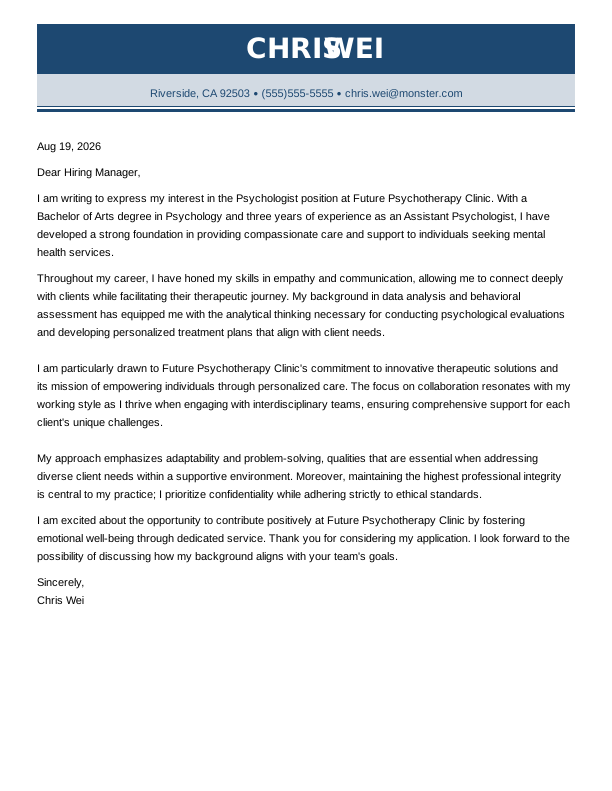
 Free
FreePsychology Entry-Level Cover Letter
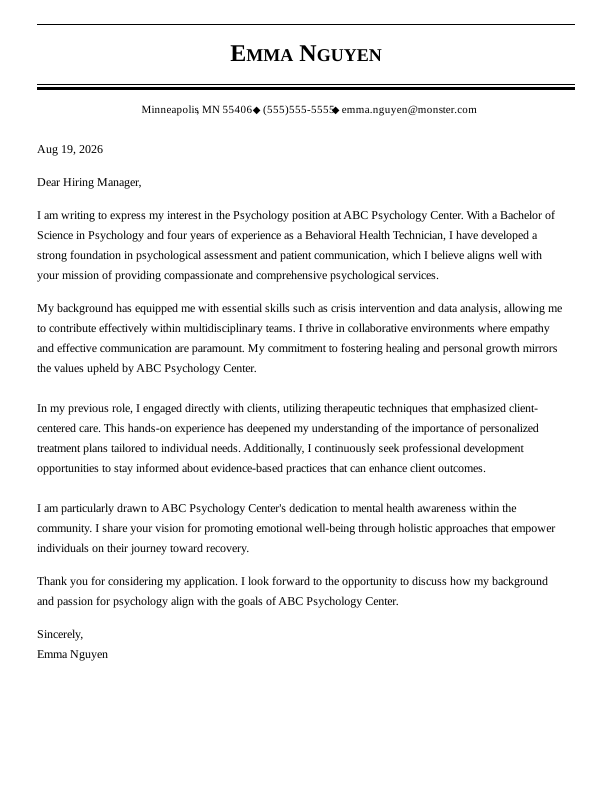
Psychology Mid-Level Cover Letter
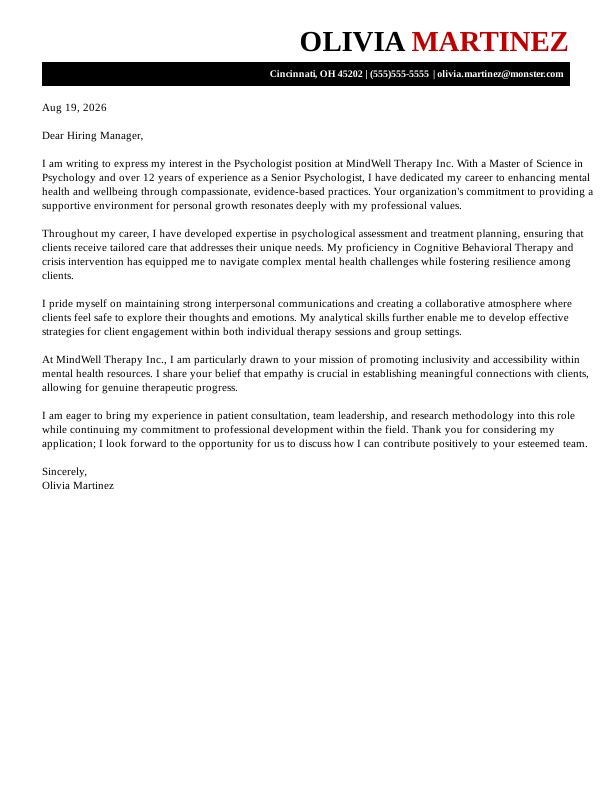
Psychology Experienced Cover Letter
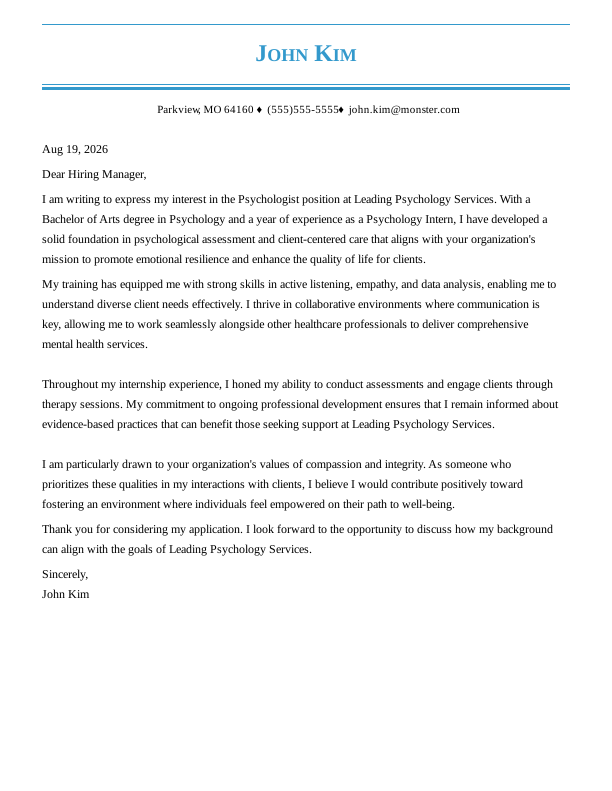
Psychology Entry-Level Cover Letter
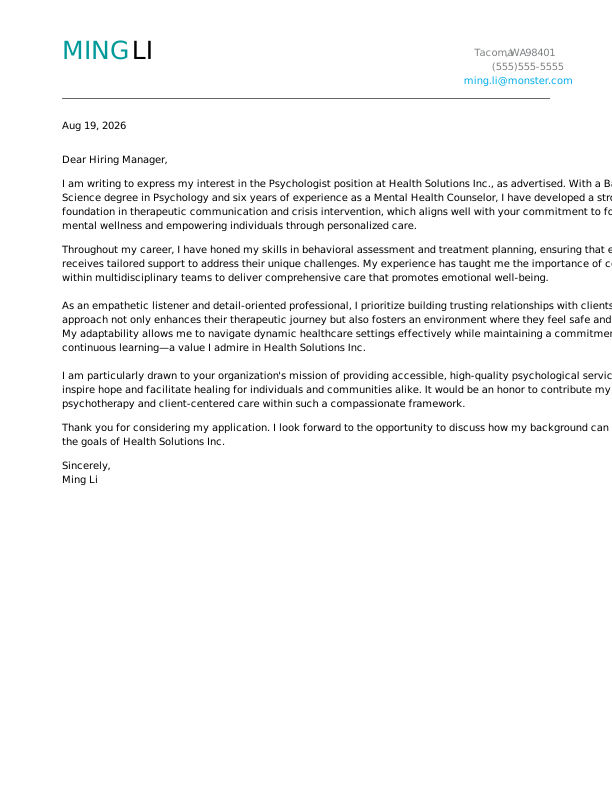
Psychology Mid-Level Cover Letter
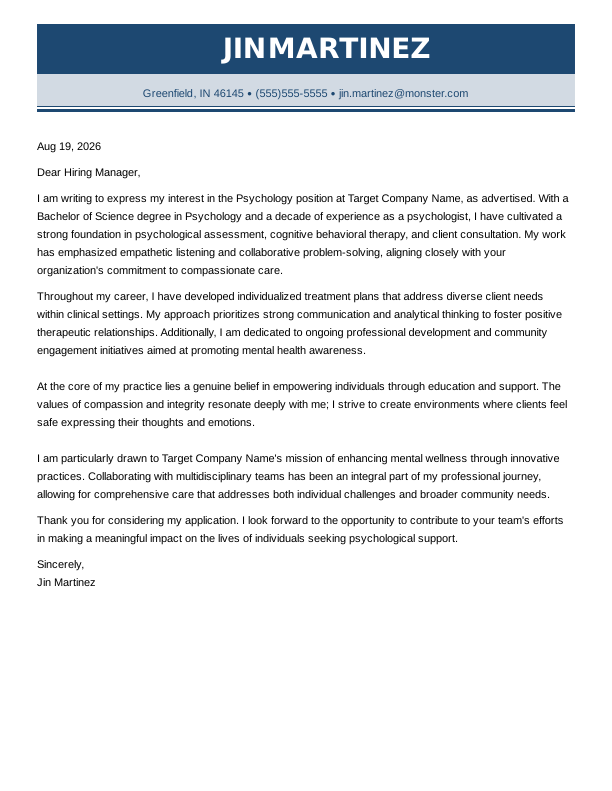
Psychology Experienced Cover Letter
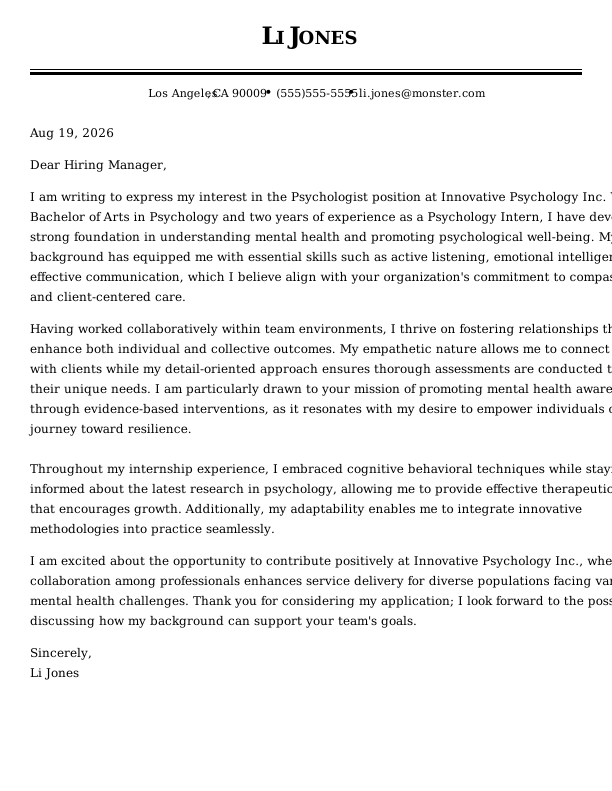
Psychology Entry-Level Cover Letter
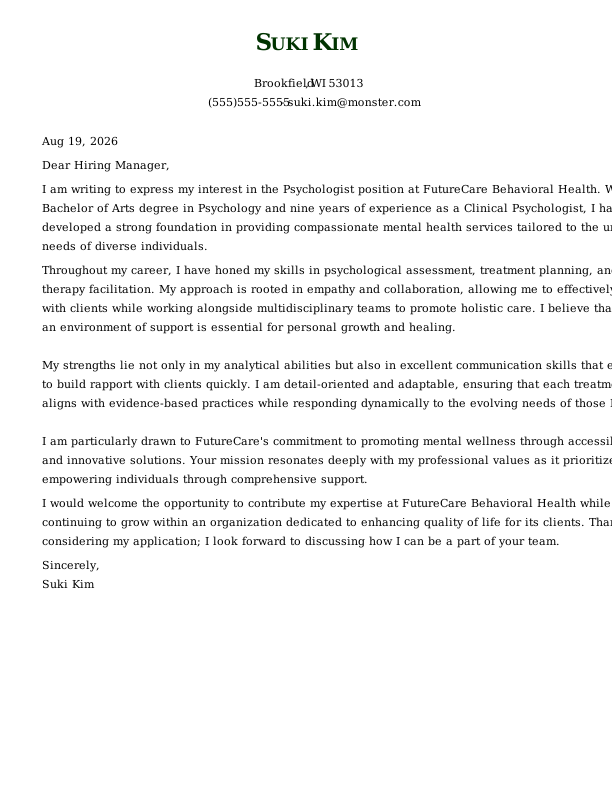
Psychology Mid-Level Cover Letter
Browse Free Cover Letter Templates
- Account Manager
- Accounts Payable
- Administrative Assistant
- Admissions Counselor
- Artist
- Babysitter
- Barista
- Bartender
- Bookkeeper
- Brand Ambassador
- Business Analyst
- Caregiver
- Chef
- Civil Engineering
- Computer Science
- Custodian
- Customer Service
- Dental Assistant
- Dental Hygienist
- Electrical Engineering
- Emt
- Engineering
- Event Coordinator
- Executive Assistant
- Finance
- Financial Analyst
- Firefighter
- Flight Attendant
- Graphic Designer
- Hair Stylist
- Healthcare
- Hr Generalist
- Investment Banking
- It
- Janitor
- Journalism
- Lab Technician
- Law Clerk
- Lawyer
- Librarian
- Logistics
- Manager
- Marketing Manager
- Massage Therapist
- Mechanic
- Mechanical Engineer
- Medical Assistant
- Non Profit
- Nursing
- Occupational Therapy
- Office Manager
- Paralegal
- Personal Trainer
- Pharmacy Technician
- Photographer
- Physician Assistant
- Pilot
- Police Officer
- Project Manager
- Property Manager
- Receptionist
- Research Assistant
- Restaurant Manager
- Retail
- Sales
- Security Officer
- Social Work
- Software Engineer
- Teacher
- Teaching Assistant
- Truck Driver
- Vet Tech
- Veterinary Assistant
- Web Developer
- Welder
Cover Letter Examples for Psychology Professionals
A cover letter for an entry-level counseling assistant looks very different from one for a licensed psychologist leading a practice. Use the templates below to match your career stage and highlight the right training, clinical work, and outcomes.
Entry-Level Psychology Cover Letter
Perfect for recent graduates with no professional experience, this template also supports career changers moving into psychology from another field and helps you present your goals clearly to hiring teams.
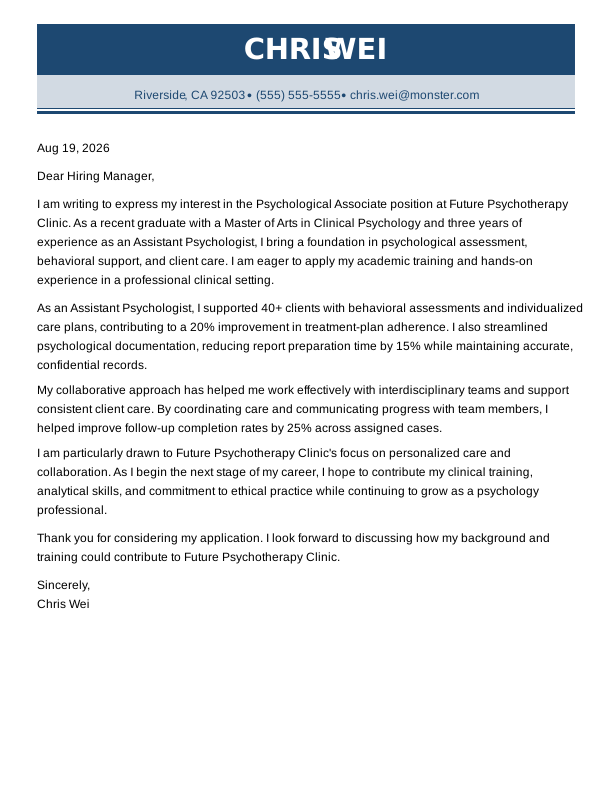
Mid-Career Psychology Cover Letter
A good fit for psychology professionals with hands-on clinical experience, this template spotlights career growth and supports your move into advanced roles, specialization, or team leadership by emphasizing assessments, client communication, and care planning.
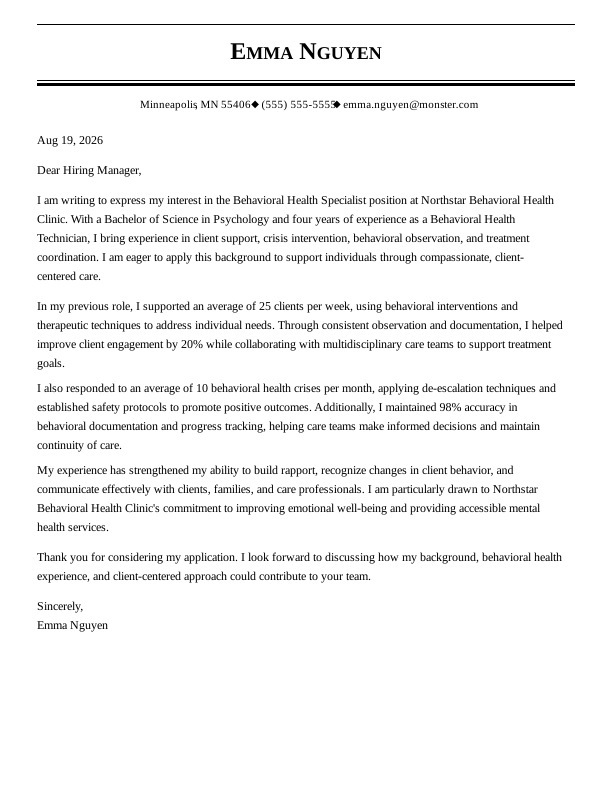
Experienced Psychology Cover Letter
An ideal choice for psychologists with 10+ years of experience, this template helps professionals pursue leadership roles or advanced clinical positions.
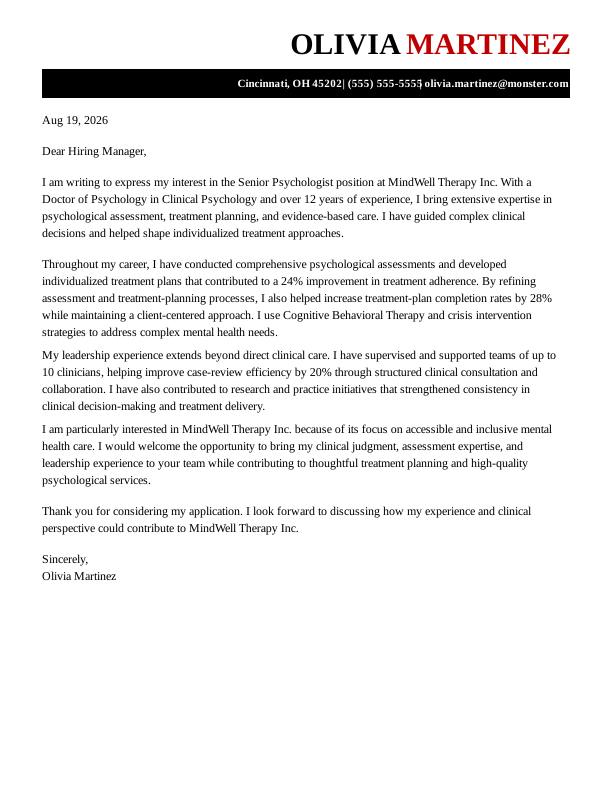
Psychology Cover Letter Template (Text)
Copy, edit, and personalize this easy-to-use psychology cover letter template in your own document.
Emily Wilson
Riverside, CA 92504
(555)555-5555
emily.wilson@monster.com
Aug 19, 2026
Dear Hiring Manager,
I am writing to express my strong interest in the behavioral health specialist position at Health Innovations Inc. As a graduate with a bachelor of arts in psychology and three years of hands-on experience supporting patient care in community mental health settings, I am excited about the opportunity to contribute to your team’s mission of providing compassionate, evidence-based care.
In my previous role as a behavioral health technician, I worked directly with multidisciplinary teams of psychologists, social workers, and clinical staff to support client treatment plans. My background includes facilitating psychoeducational groups, assisting with routine intake screenings, and utilizing de-escalation techniques during crisis situations. I pride myself on maintaining meticulous, HIPAA-compliant patient documentation and building rapport with diverse client populations to encourage active engagement in their care goals.
I admire Health Innovations Inc.’s commitment to holistic, community-centered mental health care. Your focus on supportive, individualized treatment aligns directly with my professional values. I am eager to bring my strong background in client advocacy, active listening, and behavioral observation to your outpatient programs, while continuing to grow under the guidance of your senior clinical staff.
My proactive approach ensures I manage daily client schedules efficiently, maintain clear communication across care teams, and provide reliable support in dynamic clinical environments.
Thank you for your time and consideration. I look forward to discussing how my academic background, clinical support experience, and passion for mental health advocacy can serve the clients and team at Health Innovations Inc.
Sincerely,
Emily Wilson
How to Write a Psychology Cover Letter
For psychology roles, writing a cover letter means weaving fit and purpose into your story: personalizing to the program or organization, highlighting relevant assessment, counseling, or research experience, and connecting your skills to measurable outcomes.
Use the guidance below to tailor your letter for each target role so hiring managers see exactly why you match their needs.
1. Research & Prepare
Before you write, research the organization, the role, and the hiring manager so your tone and experience match their real needs. Look for details about client populations, clinical settings, and treatment approaches so you can speak to how your training supports their work.
Review the job description line by line, then scan the company website and recent news for programs, priorities, and outcomes. Check relevant LinkedIn profiles to learn what the team values in collaboration and supervision, and use what you find to personalize your letter with specific examples instead of generic statements.
2. Hook the Reader
Your opening sets the tone and earns attention fast. A strong start avoids generic lines and instead shows what you care about, where your experience fits, and that you understand the role or organization.
A few ways in:
- Reference a clinic or research initiative you admire and tie it to your training in assessment or therapy
- Share a brief example of results you achieved, like improving engagement for clients who struggled with consistency
- Mention a supervisor or colleague who recommended the position, along with one detail that matches your approach to client-centered care
3. Tell Your Professional Story
Move past repeating your resume. Use a short story with concrete examples and measurable results so hiring managers can see the impact you made in real situations.
Quantify outcomes tied to people and practice. Mention how you:
- Reduced no-show rates by 15% through reminder calls
- Improved treatment engagement from 60% to 75%
- Tracked progress using PHQ-9 or GAD-7 scores, showing change over time
4. Showcase Your Skills
Match your skills directly to the specific needs in the job posting instead of simply listing them. Connect your psychology training and hands-on experience to real-world tasks, showing hiring managers how your background aligns with their daily operational requirements.
- For assessment and care coordination roles: If the role focuses on intakes or multidisciplinary care, detail how you conduct initial screenings, track progress metrics, and collaborate with clinicians to keep client goals on target.
- For client/patient support roles: If the job asks for patient education, describe how you create plain-language coping guides or psychoeducational materials for clients to review between sessions.
- For documentation and compliance roles: If the posting emphasizes EHR management, highlight your experience entering precise session notes, updating care plans, and maintaining HIPAA compliance.
5. Explain Any Special Circumstances
If you have an employment gap, changed specialties, or relocated, address it early and briefly. Share the reason honestly, then pivot to what you gained, such as new training, volunteer work, or skills that strengthen your clinical judgment.
You can frame a career break as time spent completing supervised hours, deepening assessment practice, or studying evidence-based treatments like CBT. If you switched from school psychology to clinical work, explain how your experience with behavior plans and family systems shaped your approach to case formulation. If you relocated, mention local coursework or networking that helped you understand the community’s needs.
6. End With a Professional Goodbye
Close by restating your interest in the role and what you want to contribute, such as client-centered care, research rigor, or program support. Thank the reader for their time.
Finish with a line like: “I welcome the opportunity to discuss how my clinical training and assessment skills can support your patients and team.” Then sign off with “Sincerely” or “Best regards.”
4 Tips for Formatting Your Cover Letter
Clinical supervisors and practice managers review numerous applications. Consistent spacing, professional fonts, and simple headings signal the same attention to detail you’ll bring to patient care.

Keep It to One Page
Aim for 250–400 words across three to four structured paragraphs that highlight key clinical competencies, therapeutic techniques, and client care experience, without adding fluff.

Use a Professional Font & Layout
Use standard fonts like Arial, Calibri, or Georgia in 10–12 pt with 1-inch margins. Make sure critical credentials, like state licenses, certifications, and specialized therapy training, are easy to spot.

Address the Hiring Manager Directly
Address your letter to the clinical director, practice manager, or head of the selection committee by name. If a name isn’t available, use titles like “Dear Clinical Selection Board” or “Dear Behavioral Health Hiring Team.” Avoid “To Whom It May Concern.”

Save & Send as a PDF
Preserve your formatting across healthcare application portals by exporting your cover letter as a PDF. Title the file with your name and primary credential, for example, “Emily_Wilson_LCSW_Cover_Letter.pdf.”
Top-Paying States for Psychology Roles
Researching psychology-related salaries helps you compare job offers, negotiate fair compensation, and plan career decisions with confidence. The salary data below comes from the U.S. Bureau of Labor Statistics (BLS).
Actual pay varies by location, years of experience, relevant credentials, and specialization area. Clinical psychologists often earn more than those in general research roles, and those working in hospitals or healthcare systems may command higher salaries than positions in community agencies or schools.
| Alabama | $81,200 |
| Alaska | $88,170 |
| Arizona | $85,490 |
| Arkansas | $66,580 |
| California | $121,250 |
| Connecticut | $101,380 |
| Delaware | $83,940 |
| District of Columbia | $93,800 |
| Florida | $83,400 |
| Georgia | $82,970 |
| Hawaii | $59,070 |
| Idaho | $76,610 |
| Illinois | $77,540 |
| Indiana | $83,840 |
| Iowa | $83,980 |
| Kansas | $91,460 |
| Kentucky | $77,210 |
| Louisiana | $87,400 |
| Maine | $81,700 |
| Maryland | $116,940 |
| Massachusetts | $97,240 |
| Michigan | $96,410 |
| Minnesota | $93,430 |
| Mississippi | $71,610 |
| Missouri | $85,470 |
| Montana | $85,550 |
| Nebraska | $88,200 |
| Nevada | $82,220 |
| New Hampshire | $95,380 |
| New Jersey | $101,130 |
| New Mexico | $86,080 |
| New York | $111,900 |
| North Carolina | $82,820 |
| North Dakota | $103,790 |
| Ohio | $74,280 |
| Oklahoma | $69,070 |
| Oregon | $108,920 |
| Pennsylvania | $83,420 |
| Rhode Island | $94,000 |
| South Carolina | $79,330 |
| South Dakota | $69,370 |
| Tennessee | $83,720 |
| Texas | $93,400 |
| Utah | $83,090 |
| Vermont | $87,370 |
| Virginia | $92,040 |
| Washington | $77,610 |
| West Virginia | $78,740 |
| Wisconsin | $82,580 |
| Puerto Rico | $66,630 |
Key Takeaways
- Tailor your letter to the clinic and population. Highlight your experience with specific patient demographics, care settings, and evidence-based treatments.
- Include measurable patient care metrics. Use concrete numbers, such as caseload volume handled, client retention rates, or measurable improvements in assessment scores (like PHQ-9 or GAD-7).
- Align your cover letter’s header, fonts, and spacing directly with your resume to present a cohesive, highly professional application package.
Browse Monster’s Resume Templates
Monster also has hundreds of ATS-friendly resume templates for all career levels and industries. Create a matching resume to help you land the interview.
Frequently Asked Questions
Last Update:
Do I really need a cover letter?
Yes, include a cover letter even when it’s optional. It provides context your resume can’t, and signals initiative and real interest in the position.
Cover letters matter most if you’re pivoting between specialties, have an employment gap, or want to explain why this specific organization fits your goals. A cover letter also gives you room to show your personality and enthusiasm for working with clients and teams.
How long should my cover letter be?
Cover letters should stay to one page, typically 250–400 words. Hiring managers spend limited time on each application, so keep your message clear and focused.
Prioritize quality over quantity by including only your most relevant experiences and achievements, structured in three to four concise paragraphs that each cover a distinct purpose.
Should my cover letter match my resume?
Yes, your cover letter should match your resume’s visual design. Use the same fonts, colors, and header style so your application looks cohesive and intentional.
Let the content complement your resume, not duplicate it. Expand on specific research or counseling experiences, explain why you want this role, and add context about projects, assessments, or campaigns that resume bullets can’t fully show.
Can I use AI to write my cover letter?
Yes, you can use AI tools as a starting point to outline your letter or get past writer’s block. Hiring managers can easily spot generic AI-generated text, though, so edit the draft carefully. Personalize every paragraph with your authentic voice, specific clinical or research experience, and a genuine explanation of why you want to join that organization.
What should I include in my cover letter header?
Your header should include your full name, phone number, professional email, city and state, and LinkedIn profile if you have one. Add the date and the recipient’s information below your contact details, and match the header style to your resume so both documents look consistent.

Kirsten Chorpenning is a career advice writer who empowers job seekers to take control of their career paths using Monster’s comprehensive job search and resume tools. She specializes in helping job seekers find rewarding jobs in today’s dynamic work environment.
See More From Kirsten ChorpenningExplore Related Career Advice







How to Write a Cover Letter for Internal Positions or Promotions (Examples & Tips)
Updated:
Apr 23, 2026
|

19 min read


Cover Letter vs Resume: What’s the Difference & Do You Need Both?

Updated:
Apr 23, 2026
|
18 min read