

Free Logistics Cover Letter Templates & Examples
Boost your interview chances with our professionally designed logistics cover letter templates. Tailored for supply chain professionals, these free templates offer practical tips to showcase your inventory control, route optimization, and vendor management skills directly to hiring managers.
Real-World Cover Letters That Get Results
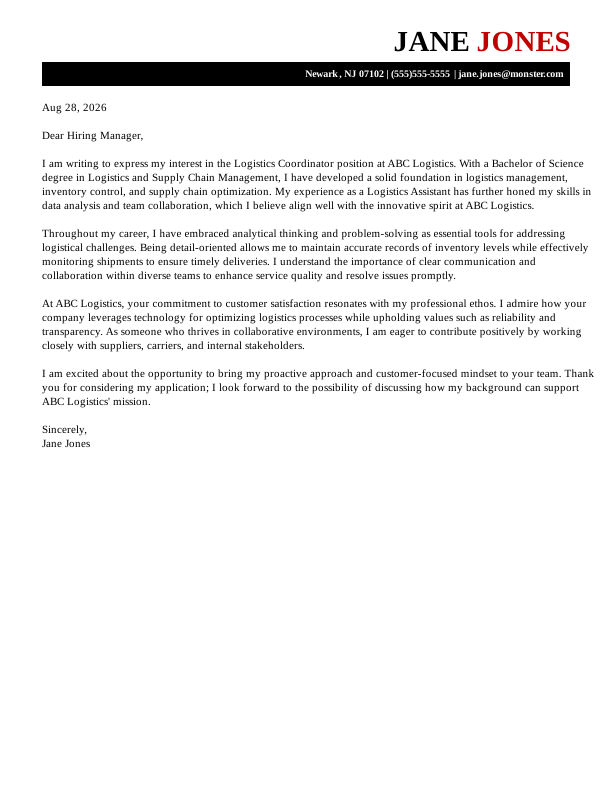
 Free
FreeLogistics Entry-Level Cover Letter
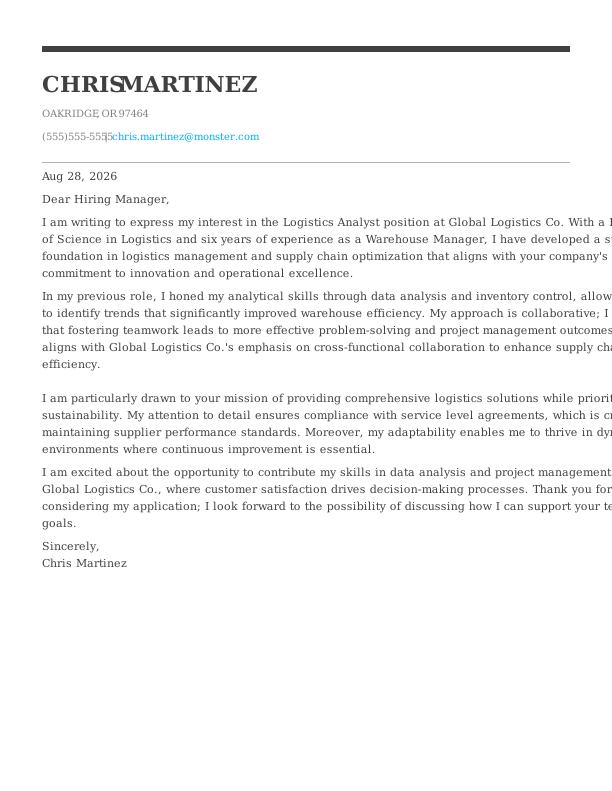
Logistics Mid-Level Cover Letter
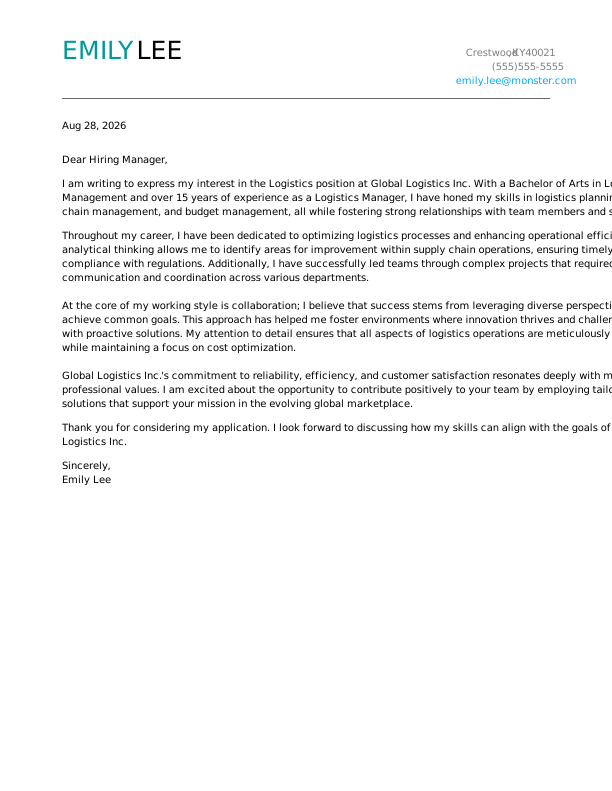
Logistics Experienced Cover Letter
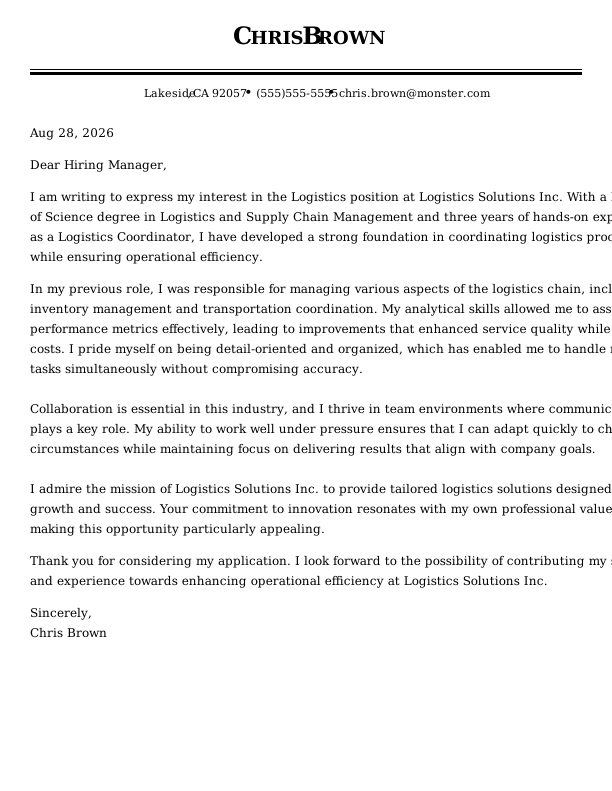
Logistics Entry-Level Cover Letter
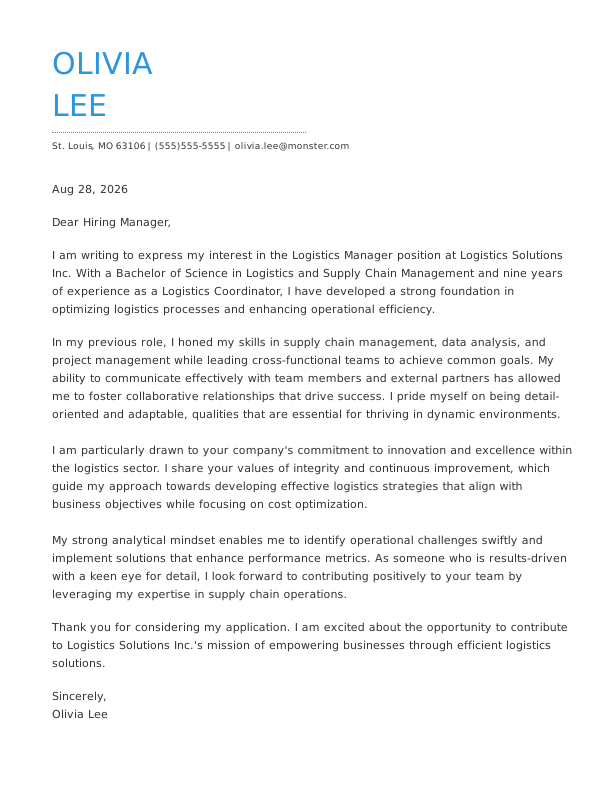
Logistics Mid-Level Cover Letter
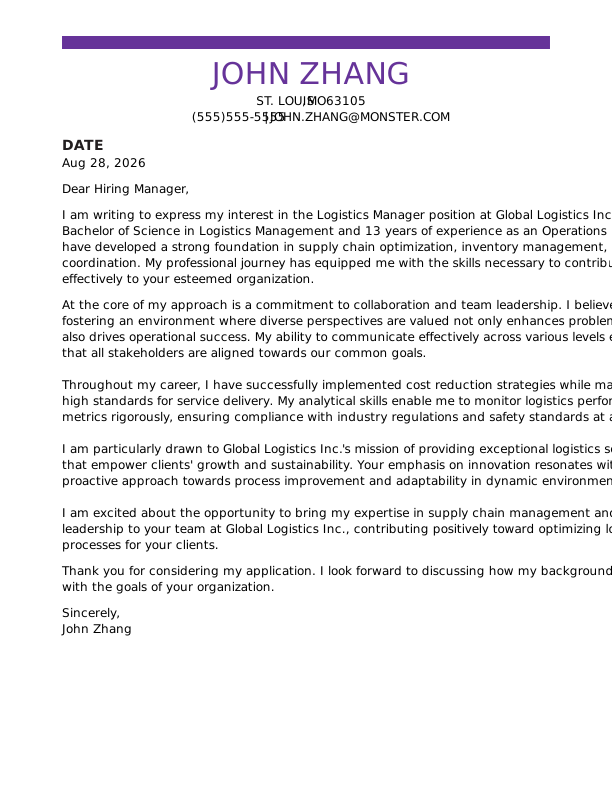
Logistics Experienced Cover Letter
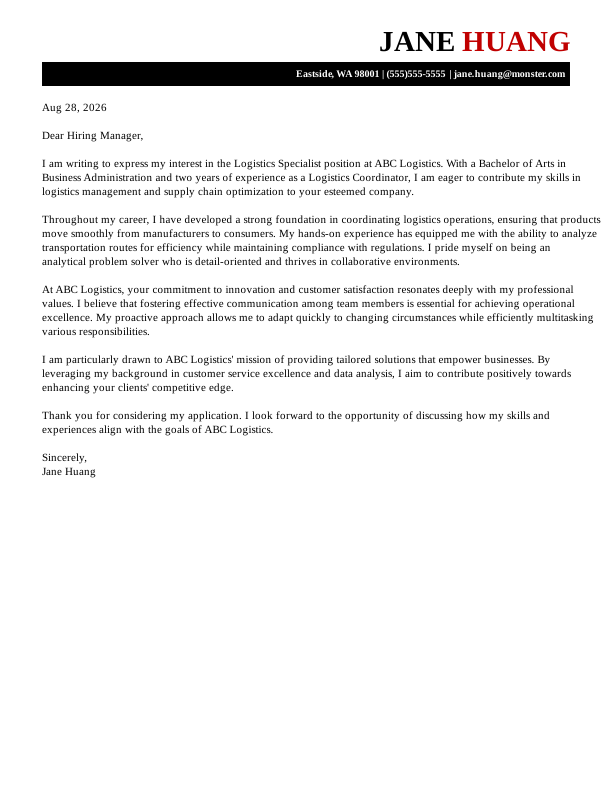
Logistics Entry-Level Cover Letter
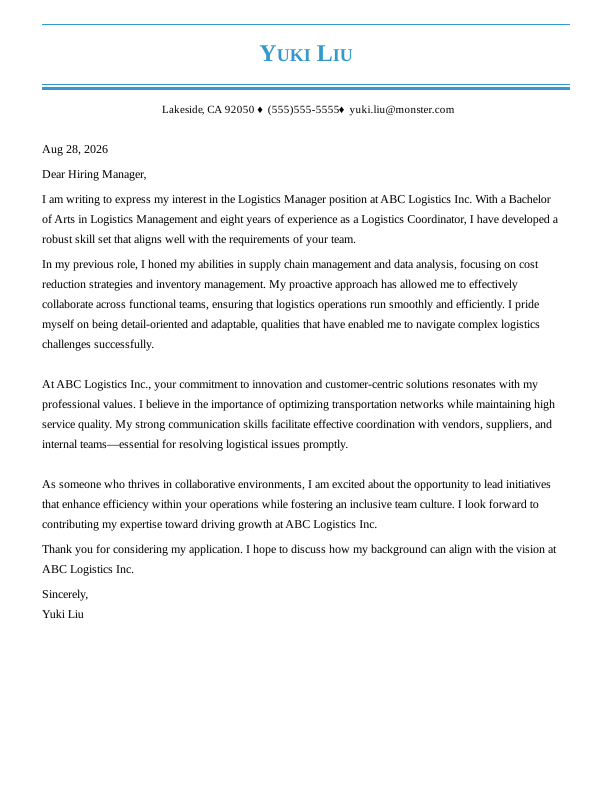
Logistics Mid-Level Cover Letter
Browse Free Cover Letter Templates
- Account Manager
- Accounts Payable
- Administrative Assistant
- Admissions Counselor
- Artist
- Babysitter
- Barista
- Bartender
- Bookkeeper
- Brand Ambassador
- Business Analyst
- Caregiver
- Chef
- Civil Engineering
- Computer Science
- Custodian
- Customer Service
- Dental Assistant
- Electrical Engineering
- Emt
- Engineering
- Event Coordinator
- Executive Assistant
- Finance
- Financial Analyst
- Firefighter
- Flight Attendant
- Graphic Designer
- Hair Stylist
- Healthcare
- Investment Banking
- It
- Janitor
- Journalism
- Lab Technician
- Law Clerk
- Lawyer
- Librarian
- Manager
- Marketing Manager
- Massage Therapist
- Mechanic
- Mechanical Engineer
- Medical Assistant
- Non Profit
- Nursing
- Office Manager
- Paralegal
- Personal Trainer
- Pharmacy Technician
- Photographer
- Physician Assistant
- Pilot
- Police Officer
- Project Manager
- Property Manager
- Receptionist
- Research Assistant
- Retail
- Sales
- Security Officer
- Social Work
- Software Engineer
- Teacher
- Teaching Assistant
- Truck Driver
- Vet Tech
- Veterinary Assistant
- Web Developer
- Welder
Cover Letter Examples for Logistics Roles
Logistics cover letters vary by career stage, so your approach should reflect your level of experience. Use entry-level templates to highlight training and early achievements, mid-career templates to showcase process improvements, and experienced templates to emphasize leadership and measurable results.
Entry-Level Logistics Cover Letter
Perfect for recent graduates starting a cover letter with no experience, this template also supports career changers moving into logistics from other fields.
Mid-Career Logistics Cover Letter
A good fit for logistics professionals with a few years of experience, this template spotlights career growth and helps position you for analyst advancement or process specialization.
Experienced Logistics Cover Letter
Best for logistics professionals with 10+ years of experience, this template helps job seekers pursue operations leadership, supply chain director roles, or senior management positions.
Logistics Cover Letter Template (Text)
Use this editable text cover letter template for a logistics role to copy, paste, and customize directly in your document.
Olivia Wang
Los Angeles, CA 90019
(555)555-5555
olivia.wang@monster.com
Aug 28, 2026
Dear Hiring Manager,
I am writing to express my interest in the logistics specialist position at Global Logistics Inc. With a Bachelor of Science in Logistics and five years of experience as a logistics coordinator, I am excited about the opportunity to contribute to your team and support your mission of delivering exceptional service and efficiency in logistics management.
Throughout my career, I have developed strong skills in logistics management, supply chain optimization, and data analysis. My attention to detail ensures that transportation processes are coordinated efficiently while maintaining compliance with shipping regulations. Collaborating closely with vendors and clients has honed my communication skills and fostered a customer-focused approach that aligns with the values upheld by Global Logistics Inc.
I thrive in collaborative environments where adaptability is essential. This working style has allowed me to effectively manage multiple tasks while remaining dependable under pressure. My analytical mindset empowers me to identify trends within logistics data, leading to actionable insights that drive improvements in both cost reduction and service enhancement.
I am particularly drawn to Global Logistics Inc.’s commitment to promoting sustainable practices within the industry. I believe that effective logistics solutions can play a significant role in enhancing customer experiences while also supporting broader environmental goals.
Thank you for considering my application. I look forward to the opportunity to discuss how my background and skills align with the needs of your team at Global Logistics Inc.
Sincerely,
Olivia Wang
How to Write a Logistics Cover Letter
For logistics roles, how to write a cover letter means showing fit through clear personalization, practical storytelling about real supply chain or distribution wins, and direct evidence of relevant skills and measurable achievements. Use the guidance below to highlight your qualifications and customize your letter for each target role by matching your experience to the specific responsibilities and priorities in the posting.
1. Research & Prepare
Before you write a logistics cover letter, research the company, the role, and the hiring manager so your experience matches their operations. Look into their supply chain scope, transportation lanes, warehouse or fulfillment model, and any recent changes in service levels or carriers.
Review the job description for required systems like WMS or TMS and for metrics such as OTIF and inventory accuracy. Then check the company website, recent news, and relevant LinkedIn profiles to learn who leads logistics initiatives. Use what you find to tailor your examples of cost control, shipment tracking, vendor coordination, or route planning to the company’s priorities.
2. Hook the Reader
Your cover letter opening sets the tone for everything that follows. A strong first paragraph hooks the reader by showing real fit, rather than just stating generic interest in the job.
Try starting with a concrete achievement, like how you improved on-time deliveries by fixing dock delays. You can also mention a specific detail about the company’s growth, or lead with a key skill the job demands, such as inventory accuracy, carrier negotiation, or shipment tracking tools.
3. Tell Your Professional Story
Your cover letter should add context to your resume by telling a story with specific, measurable outcomes. Instead of repeating job duties, describe what you changed and how it improved results for the team.
In logistics roles, quantify wins like cutting delivery delays by 15%, reducing warehouse errors from 3% to 1%, or lowering transportation costs by $25K per quarter. You can also share how you coordinated carriers to improve on-time performance, reduced backorders, or sped up order processing times with clear before-and-after figures.
4. Showcase Your Skills
Match your past work directly to what the employer asks for. Review the job posting’s main requirements, then show how your experience meets those specific needs rather than just listing your general skills.
For example, if the job asks for inventory control, describe how you used scanning tools and discrepancy reports to keep stock accurate. If it focuses on transportation planning, explain how you tracked delivery performance against SLAs and adjusted carrier routes when demand shifted. For roles requiring careful documentation, highlight how you kept accurate shipment logs to resolve issues faster.
5. Explain Any Special Circumstances
If you have an employment gap, a career shift, or a recent relocation, address it early and briefly. State the reason directly, then pivot to what you gained during that time, such as new skills, updated tools, or steadier availability.
For logistics roles, you can mention completing a certification during a break, applying planning skills from another industry, or highlighting how moving closer to a distribution hub makes you available for on-site shift coordination.
6. End With a Professional Goodbye
Close your cover letter by restating your interest in the logistics role, thanking the manager for their time, and inviting them to discuss how your experience fits their needs. Mention specific strengths you offer, such as managing shipments, coordinating carriers, or keeping deliveries on schedule.
Wrap up with a strong final statement, such as: “I welcome the opportunity to discuss how my supply chain coordination can support timely, accurate deliveries for your team.” Then, end with a professional sign-off like “Sincerely” or “Best regards.”
4 Tips for Formatting Your Cover Letter
Keep your cover letter short and easy to read by using standard spacing, simple headings, and consistent fonts. Proper formatting helps your message look professional and supports quick scanning for key supply chain qualifications. These tips work for any experience level, whether you are entering the field or managing operations.

Keep It to One Page
Hiring managers stay busy, so keep your cover letter concise and within one page. Target 250 to 400 words or three to four focused paragraphs that highlight your most relevant logistics experience, such as inventory control, route planning, or warehouse achievements.

Use a Professional Font & Layout
Use clear fonts like Arial, Calibri, Times New Roman, or Helvetica in a 10 to 12-point size. Set standard one-inch margins and keep spacing consistent so the cover letter matches your logistics resume layout.

Address the Hiring Manager Directly
Search the job posting, the company website, and LinkedIn to find the name of the hiring manager overseeing logistics or supply chain operations. If you cannot confirm a name after reaching out to the company, use “Dear Hiring Manager” or “To the Hiring Team,” and skip “To Whom It May Concern,” which feels outdated.

Save & Send as a PDF
Save your cover letter as a PDF to preserve formatting across devices and systems. Name the file with your name plus the words cover letter, such as “Jordan_Lee_cover_letter.pdf.”
Key Takeaways
- Personalize each cover letter for the specific job and company. Reference the company’s lanes, carriers, warehouse footprint, or service level targets so it’s clear you’ve done your homework.
- Lead with a strong hook and measurable achievements. Cite results like reduced transit time, fewer stockouts, lower cost per shipment, or improved on-time delivery rates.
- Keep formatting clean and consistent with your resume. Use the same headings and spacing so hiring managers can scan key details quickly.
Browse Monster’s Resume Templates
Monster also has hundreds of ATS-friendly resume templates for all career levels and industries. Create a matching resume to help you land the interview.
Frequently Asked Questions
Last Update:
Do I really need a cover letter?
Yes, you should include a cover letter even when it’s marked optional. It adds context your logistics resume cannot share and signals initiative and real interest in the role.
A cover letter matters most when you explain a career shift, address employment gaps, or highlight why you want to work for that specific company. It also lets you show your personality and enthusiasm for solving supply chain challenges.
How long should my cover letter be?
Cover letters should stay within one page, typically 250–400 words. Hiring managers spend limited time reviewing each application.
Focus on quality over quantity by sharing only the most relevant experience and achievements. Keep your letter to three to four concise paragraphs that each serve a clear purpose.
Should my cover letter match my resume?
Yes, your logistics cover letter should match your logistics resume’s visual design. Use the same fonts, colors, and header style so your application package looks cohesive.
The formatting should match, but the content should complement rather than duplicate your resume. Expand on key logistics experience with specific examples like process improvements, vendor or carrier coordination, and problem-solving that bullet points cannot fully show.
What should I include in my cover letter header?
Your cover letter header should include your full name, phone number, professional email, city/state, and LinkedIn profile (if applicable). Add the date and the recipient’s information below your contact details. Match this header style to your resume so your application stays consistent.
Should logistics job seekers mention salary expectations in their cover letters?
Only include salary expectations if the job posting asks for them. If the company requests it, share a research-based range and note that you’re flexible based on scope, shift requirements, and benefits.

Toni Frana is a Certified Professional Resume Writer (CPRW), member of the Professional Association of Resume Writers & Career Coaches, and career expert who empowers job seekers to take control of their career paths using Monster’s comprehensive job search and resume tools.
See More From Toni FranaExplore Related Career Advice






How to Write a Cover Letter for Internal Positions or Promotions (Examples & Tips)

Updated:
Apr 23, 2026
|

19 min read


Cover Letter vs Resume: What’s the Difference & Do You Need Both?

Updated:
Apr 23, 2026
|
18 min read