

Free Public Relations Cover Letter Templates & Examples
A strong public relations cover letter shows you can build trusted media relationships and communicate clearly during campaigns, press outreach, and crisis management. Our free templates and step-by-step tips help you highlight key storytelling wins to impress hiring managers.
Real-World Cover Letters That Get Results
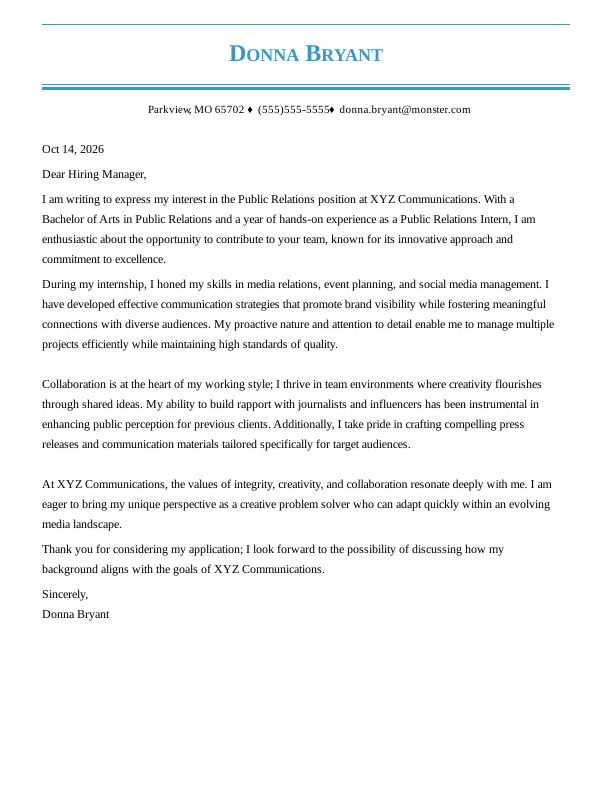
 Free
Public Relations Entry-Level Cover Letter
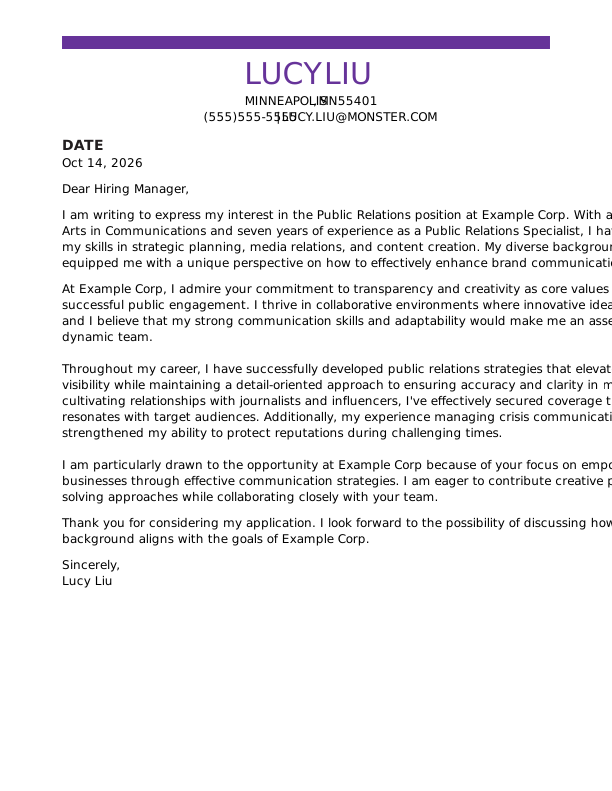
Public Relations Mid-Level Cover Letter
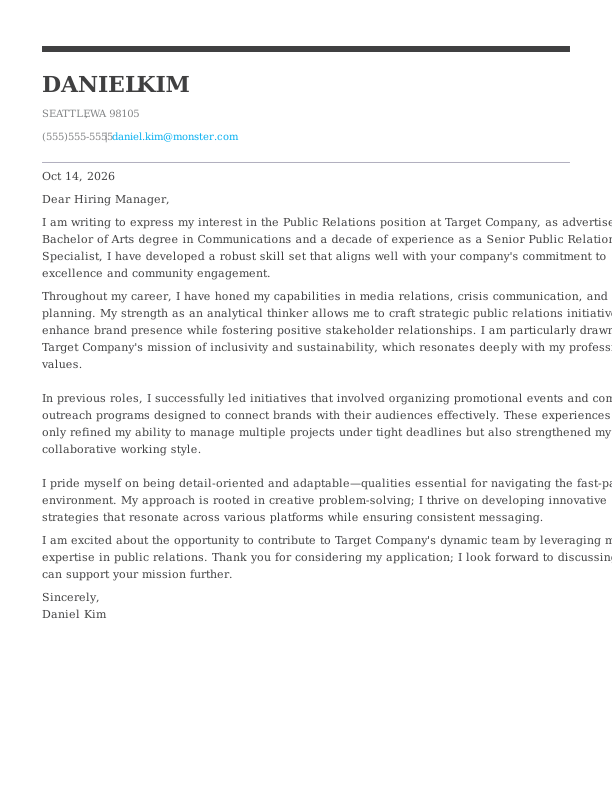
Public Relations Experienced Cover Letter
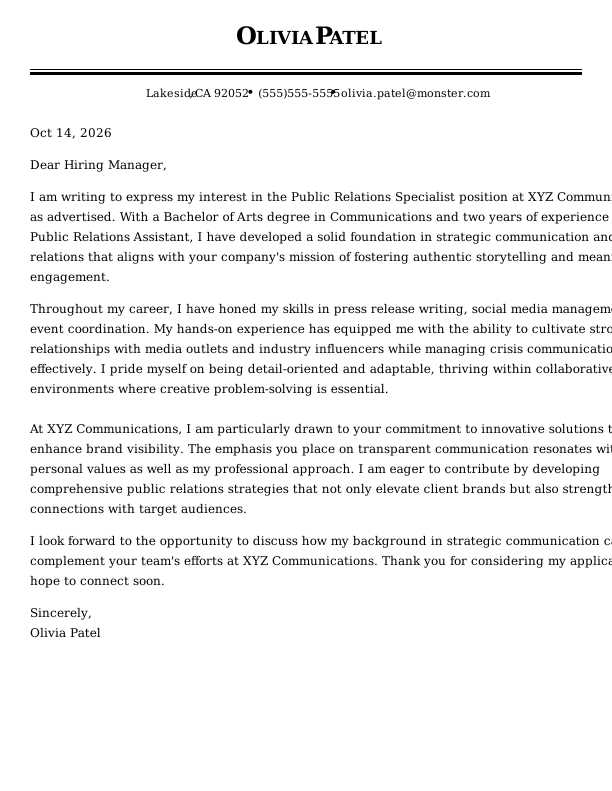
Public Relations Entry-Level Cover Letter
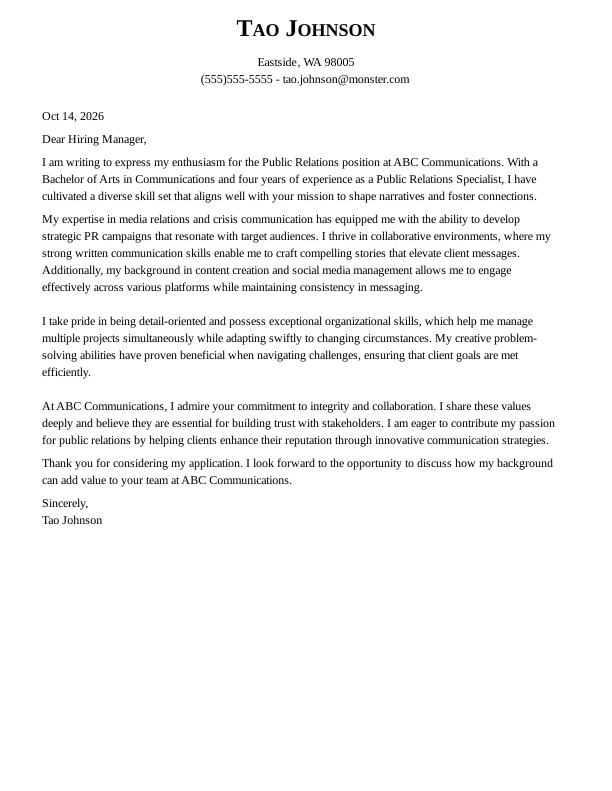
Public Relations Mid-Level Cover Letter
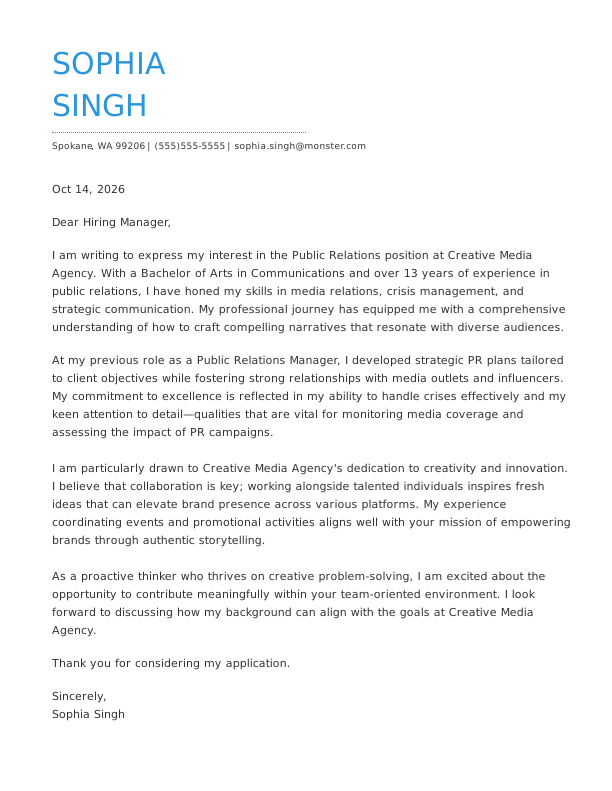
Public Relations Experienced Cover Letter
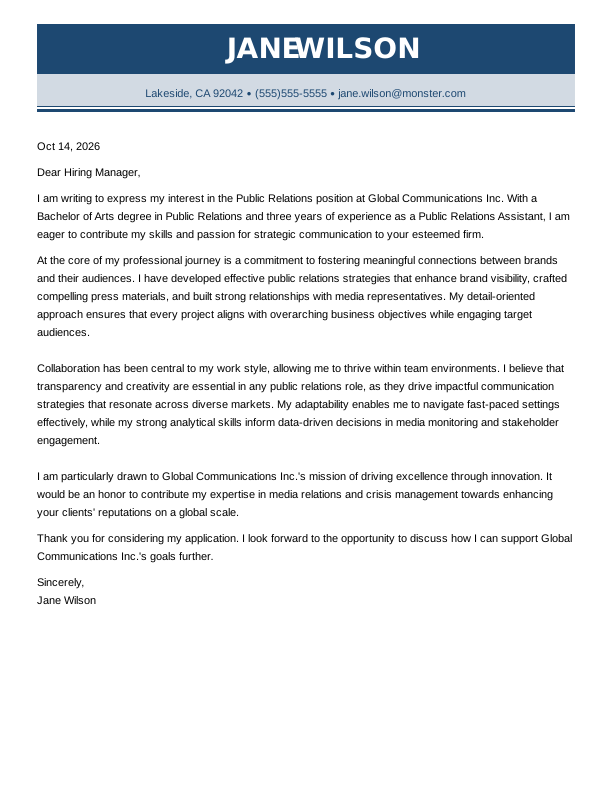
Public Relations Entry-Level Cover Letter
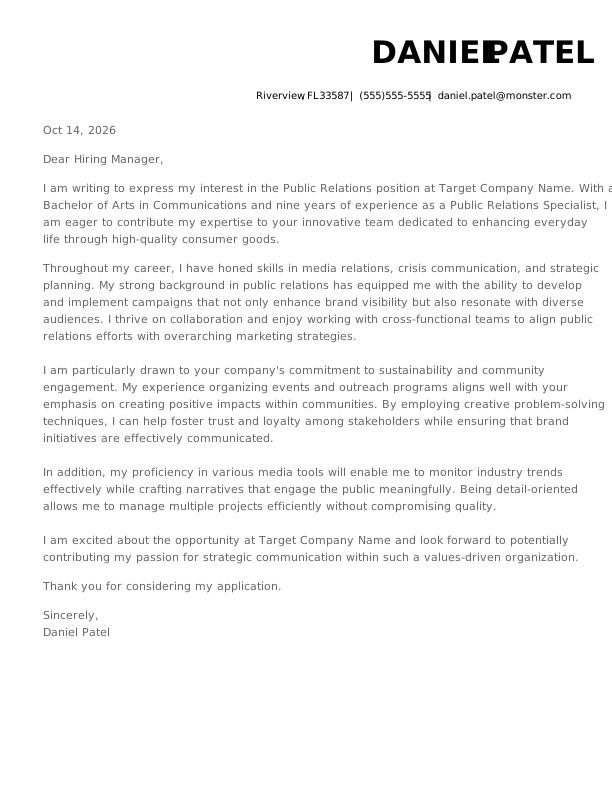
Public Relations Mid-Level Cover Letter
Browse Free Cover Letter Templates
- Academic
- Account Manager
- Accountant
- Accounts Payable
- Administrative Assistant
- Admissions Counselor
- Architecture
- Artist
- Assistant Principal
- Babysitter
- Barista
- Bartender
- Bookkeeper
- Brand Ambassador
- Business Analyst
- Business
- Caregiver
- Chef
- Civil Engineering
- Computer Science
- Construction
- Consulting
- Copywriter
- Cosmetology
- Custodian
- Customer Service
- Customer Service Representative
- Data Analyst
- Data Entry
- Dental Assistant
- Dental Hygienist
- Digital Marketing
- Electrical Engineering
- Emt
- Engineering
- Esthetician
- Event Coordinator
- Executive Assistant
- Finance
- Financial Analyst
- Firefighter
- Flight Attendant
- Graphic Designer
- Hair Stylist
- Healthcare
- Hr Generalist
- Investment Banking
- It
- Janitor
- Journalism
- Lab Technician
- Law Clerk
- Lawyer
- Librarian
- Logistics
- Makeup Artist
- Manager
- Marketing Coordinator
- Marketing
- Marketing Manager
- Massage Therapist
- Mechanic
- Mechanical Engineer
- Medical Assistant
- Non Profit
- Nursing
- Occupational Therapy
- Office Assistant
- Office Manager
- Operations Manager
- Paralegal
- Personal Trainer
- Pharmacist
- Pharmacy Technician
- Photographer
- Physician Assistant
- Pilot
- Police Officer
- Program Manager
- Project Manager
- Property Manager
- Psychology
- Receptionist
- Research Assistant
- Restaurant Manager
- Retail
- Sales
- Sales Manager
- School Counselor
- Security Officer
- Social Work
- Software Engineer
- Special Education Teacher
- Substitute Teacher
- Teacher
- Teaching Assistant
- Truck Driver
- Vet Tech
- Veterinary Assistant
- Web Developer
Cover Letter Examples for Public Relations Roles
Cover letter expectations change as a public relations career grows from entry-level support to mid-career campaign ownership and experienced leadership. Choose the template that matches your stage so you can spotlight the right experience, like press work, messaging strategy, or team management.
Entry-Level Public Relations Cover Letter
Designed for recent graduates and career changers, this template demonstrates how to present media relations coursework, internship projects, and communication skills with confidence when applying for initial public relations roles.
Mid-Career Public Relations Cover Letter
Tailored for candidates with several years of hands-on experience, this template shows how to highlight press outreach ownership, messaging strategy, and crisis communications support.
Experienced Public Relations Cover Letter
Ideal for senior specialists and communications directors, this template emphasizes strategic campaign planning, high-stakes crisis leadership, agency management, and brand reputation growth.
Public Relations Cover Letter Template (Text)
Copy this public relations cover letter template, paste it into your document, and swap in your earned media wins, campaign metrics, and target agency or client.
Emily Johnson
Cincinnati, OH 45206
(555)555-5555
emily.johnson@monster.com
Oct 14, 2026
Dear Hiring Manager,
I am writing to express my interest in the public relations position at Global Media Solutions. With a Bachelor of Arts in Communications and five years of experience as a communications specialist, I am eager to contribute my skills and passion for strategic storytelling to your esteemed firm.
At the core of my professional journey is a commitment to fostering meaningful connections through effective communication. My background in media relations, crisis management, and content creation has equipped me with the ability to enhance brand visibility while navigating complex narratives. I thrive in collaborative environments, where adaptability and creative problem-solving are essential for success.
Throughout my career, I have honed my ability to engage stakeholders effectively and develop comprehensive public relations strategies that resonate with diverse audiences. My experience includes preparing impactful press releases and coordinating events that not only boost visibility but also strengthen relationships with key media representatives.
I admire Global Media Solutions’ dedication to integrity, innovation, and collaboration within the communications industry. Your mission aligns perfectly with my values as I strive to deliver communication strategies that foster trust and elevate brand voices on a global scale.
I am excited about the opportunity to bring my strong analytical thinking skills and keen attention to detail into your team at Global Media Solutions. Thank you for considering my application; I look forward to discussing how we can work together towards achieving remarkable results for your clients.
Sincerely,
Emily Johnson
How to Write a Public Relations Cover Letter
Writing an effective public relations cover letter requires showing hiring managers that you understand media pitching, press-ready messaging, and crisis communication. Follow these steps to align your experience with a specific job posting.
1. Research & Prepare
Before writing, research the employer’s media presence, recent campaign announcements, and brand reputation priorities. Discovering whether the organization focuses on consumer tech press, corporate reputation management, or local community outreach allows you to highlight the exact communications skills that matter most to its leaders.
Gather actionable context by exploring these key information sources:
- Review the job description to identify preferred media databases, distribution platforms, or analytics software.
- Explore the company’s online newsroom and recent press releases to understand its core messaging pillars and campaign formats.
- Read recent news articles covering the organization to identify current narrative trends or potential public relations pressures.
2. Hook the Reader
Start your letter with an engaging opening line that demonstrates your ability to manage media inquiries and protect brand reputation. Avoid generic statements like “I am writing to apply for the open PR position.” Instead, capture the hiring manager’s attention by leading with a concrete accomplishment or media pitching win.
Choose an opening line tailored to your experience using these example approaches:
- Response turnaround: “I reduced our press office response time from 36 hours to 12 hours by creating a streamlined Q&A approval workflow with our legal team.”
- Campaign measurement: “In my last product campaign, I tracked earned media hits using custom links, driving a weekly traffic lift of 18% during launch week.”
- Stakeholder management: “When a major sponsor pulled out of our annual event, I coordinated emergency briefings and updated press materials to keep all media deliverables on schedule.”
3. Tell Your Professional Story
Use the body of your letter to give hiring managers a clear view of your PR impact during major campaigns. While your resume lists past positions and general duties, your cover letter explains how you craft pitches, handle press inquiries, and secure coverage. Using specific numbers makes your accomplishments far more compelling.
Incorporate concrete benchmarks like these to illustrate your impact:
- Generated 42 earned media placements across a 10-week product launch by coordinating 18 individual journalist briefings.
- Reduced crisis response time from six hours to 90 minutes by creating an on-call messaging playbook and approval process.
- Increased event attendance from 280 to 415 guests by managing a targeted press outreach campaign that converted email pitches into registrations.
4. Showcase Your Skills
Rather than using broad self-descriptors like “great communicator” or “expert networker,” illustrate how your skills resolve real public relations challenges. Showing the exact moments where your drafting skills, poise, or fast thinking protected a client’s brand builds trust with the employer.
Connect your practical abilities directly to daily PR needs using these examples:
- Press release drafting: “When our legal team flagged a sensitive claim, I rewrote the press release to ensure complete accuracy while keeping the story compelling for reporters.”
- Media relations: “When a reporter asked an unexpected question during an interview, I provided clear background information calmly and followed up promptly with approved details.”
- Crisis communications: “During a trending online customer issue, I coordinated rapid executive approvals and published a consistent statement that addressed concerns directly.”
5. Explain Any Special Circumstances
If you have an employment gap, are changing career paths, or recently relocated, address it briefly in one or two direct sentences. Focus your explanation on your current media contacts, active writing projects, and up-to-date software skills so the manager knows you are ready to manage press outreach right away.
Frame your circumstances clearly using these straightforward approaches:
- Addressing an employment gap: “Following a nine-month career break, I maintained my PR skills by drafting press releases and pitching story angles to local media outlets weekly.”
- Transitioning positions: “I am pivoting from journalism into public relations by applying my newsroom experience to proactive pitch strategies and media list building.”
- Handling relocation: “After moving to the area last fall, I updated my regional media contacts and began tracking local outlets to ensure a fast transition into this market.”
6. End With a Professional Goodbye
Conclude your letter with a polite, confident statement that invites the hiring manager to contact you for an interview. Keep your sign-off concise, thank the reader for their time, and express enthusiasm for discussing your media pitching experience in detail.
Structure your final paragraph using this clear approach:
- Offer a clear next step: “I would welcome the opportunity to discuss how my press outreach experience and crisis messaging skills can support your upcoming campaign goals.”
- Express gratitude: “Thank you for your time and consideration.”
- End with a clean sign-off: “Sincerely,” followed by your full name.
4 Tips for Formatting Your Cover Letter
When you apply for a public relations position, hiring managers often scan your application quickly between managing media requests and reviewing campaign copy. They look rapidly for campaign metrics, press contacts, and clear messaging skills. A clean presentation with consistent spacing and logical organization makes your top achievements easy to spot and proves that you take pride in producing polished, press-ready communications.

Keep It to One Page
Keep your cover letter to a single page, ideally between 250 and 400 words spread across three to four short paragraphs. Concise writing ensures that busy communications leads can easily evaluate your core strategy, key campaign outcomes, and pitching abilities without wasting time on fluff.

Use a Professional Font & Layout
Select standard, highly legible fonts such as Arial, Calibri, Georgia, or Helvetica in 10–12 pt size. Maintain clean 1-inch margins and use the exact same header design as your resume so your entire application package presents a unified, professional appearance.

Address the Hiring Manager Directly
Review the job posting, company site, or professional networking profiles to identify the specific communications director or PR lead. If you cannot find an individual name, address your letter to “Dear Hiring Manager” or “Dear Communications Team” rather than using outdated phrases.

Balance Spacing & Margins
Set line spacing between 1.0 and 1.15, leaving a full blank line between paragraphs to keep the layout clean and readable. Use uniform margins between 0.75 and 1 inch so your letter looks well-proportioned on screens and printed copies.
Top-Paying States for Public Relations Roles
Knowing what public relations professionals earn across the country helps you compare job offers and plan your next career move. Salary ranges can vary based on location, experience level, industry, and whether the role focuses on media relations, crisis communications, or corporate communications.
The data below is sourced from the U.S. Bureau of Labor Statistics (BLS) and reflects the most recent nationwide averages for public relations specialists. Remember that employer size and demand for specific skills can also affect outcomes. Use these figures as a baseline when negotiating.
| Alabama | $113,280 |
| Alaska | $117,250 |
| Arizona | $119,970 |
| Arkansas | $158,470 |
| California | $179,450 |
| Connecticut | $168,220 |
| Delaware | $160,060 |
| District of Columbia | $227,370 |
| Florida | $127,790 |
| Georgia | $153,520 |
| Hawaii | $124,400 |
| Idaho | $98,600 |
| Illinois | $132,740 |
| Indiana | $126,310 |
| Iowa | $120,840 |
| Kansas | $122,620 |
| Kentucky | $114,070 |
| Louisiana | $101,520 |
| Maine | $141,680 |
| Maryland | $163,110 |
| Massachusetts | $171,110 |
| Michigan | $127,700 |
| Minnesota | $127,940 |
| Mississippi | $106,160 |
| Missouri | $122,130 |
| Montana | $125,950 |
| Nebraska | $109,040 |
| Nevada | $128,130 |
| New Hampshire | $139,390 |
| New Jersey | $178,810 |
| New Mexico | $127,070 |
| New York | $214,930 |
| North Carolina | $148,810 |
| North Dakota | $108,470 |
| Ohio | $134,780 |
| Oklahoma | $98,760 |
| Oregon | $126,400 |
| Pennsylvania | $137,040 |
| Rhode Island | $164,920 |
| South Carolina | $113,470 |
| South Dakota | $66,580 |
| Tennessee | $121,610 |
| Texas | $134,110 |
| Utah | $143,230 |
| Vermont | $139,740 |
| Virginia | $190,250 |
| Washington | $172,600 |
| West Virginia | $105,330 |
| Wisconsin | $123,010 |
| Wyoming | $74,620 |
| Puerto Rico | $93,910 |
| Virgin Islands | $61,930 |
Key Takeaways
- Demonstrate your media judgment by sharing a specific example of securing press coverage or managing a sensitive story successfully.
- Include clear performance numbers such as earned media impressions, coverage volume, or response turnaround times to show your impact.
- Tailor your letter to the employer by focusing on donor trust for non-profits, brand risk management for corporate teams, or fast multi-client pitching for agencies.
More Cover Letter Examples
Browse Monster’s Resume Templates
Monster also has hundreds of ATS-friendly resume templates for all career levels and industries. Create a matching resume to help you land the interview.
- Advertising Director
- Advertising
- Brand Ambassador
- Brand Manager
- Communications Coordinator
- Communications
- Communications Specialist
- Content Strategist
- Digital Marketing Manager
- Digital Marketing
- Digital Marketing Specialist
- Email Marketing
- Field Marketing Manager
- Influencer Marketing Manager
- Marketing Analyst
- Marketing Assistant
- Marketing Communications Manager
- Marketing Consultant
- Marketing Coordinator
- Marketing Data Analyst
- Marketing Intern
- Marketing Manager
- Marketing Project Manager
- Marketing
- Marketing Specialist
- Product Marketing Manager
- Public Relations
- Seo Analyst
- Seo
- Seo Specialist
- Social Media Coordinator
- Social Media Influencer
- Social Media Manager
- Social Media Marketing
Frequently Asked Questions
Last Update:
Do I really need a cover letter?
Yes, submitting a cover letter with your public relations application is strongly recommended because it demonstrates your written storytelling skills in real time. While a resume lists past jobs, a cover letter shows how you build media pitches, manage press relations, and position brands. It also provides space to explain career transitions or highlight your interest in specific campaign goals.
How long should my cover letter be?
A public relations cover letter should stay within one page, targeting between 250 and 400 words. Hiring managers review applications quickly, so direct, concise writing works best. Divide your text into three or four short paragraphs that focus strictly on your media placement wins, campaign metrics, and crisis communication skills without adding extra clutter.
Should my cover letter match my resume?
Your public relations cover letter should match your resume’s visual formatting to create a polished, cohesive application package. Use the same font styles, margin sizes, color choices, and contact header across both documents. Instead of repeating your resume bullet points, use your cover letter to expand on a specific PR win or explain how your communications strategy aligns with the team’s needs.
How do I address my cover letter if I don’t know the hiring manager’s name?
When addressing a public relations cover letter without a contact name, search the job posting, company newsroom, or professional networks for the communications director or lead recruiter. If you cannot locate a specific name, address your letter to “Dear Hiring Manager” or “Dear Public Relations Team.” Avoid using “To Whom It May Concern,” as it sounds outdated.
How do I write a cover letter for an internal position?
To write an internal public relations cover letter, highlight your existing knowledge of the organization’s media approval workflows, briefing schedules, and brand messaging protocols. Mention how you successfully coordinated past announcements, reduced review turnaround times, or supported media pitches in your current role. Express your readiness to manage larger campaign calendars and mentor junior staff while completing all required internal application steps.

Kirsten Chorpenning is a career advice writer who empowers job seekers to take control of their career paths using Monster’s comprehensive job search and resume tools. She specializes in helping job seekers find rewarding jobs in today’s dynamic work environment.
See More From Kirsten ChorpenningExplore Related Career Advice






How to Write a Cover Letter for Internal Positions or Promotions (Examples & Tips)
Updated:
Apr 23, 2026
|
19 min read


Cover Letter vs Resume: What’s the Difference & Do You Need Both?

Updated:
Apr 23, 2026
|
18 min read