


Free Security Cover Letter Templates & Examples
A strong security cover letter shows you can protect people and property through reliable risk awareness and clear incident response. Our free cover letter examples and step-by-step guidance help you tailor your experience to the role, so hiring managers quickly see your strengths in safety, monitoring, and reporting.
Real-World Cover Letters That Get Results
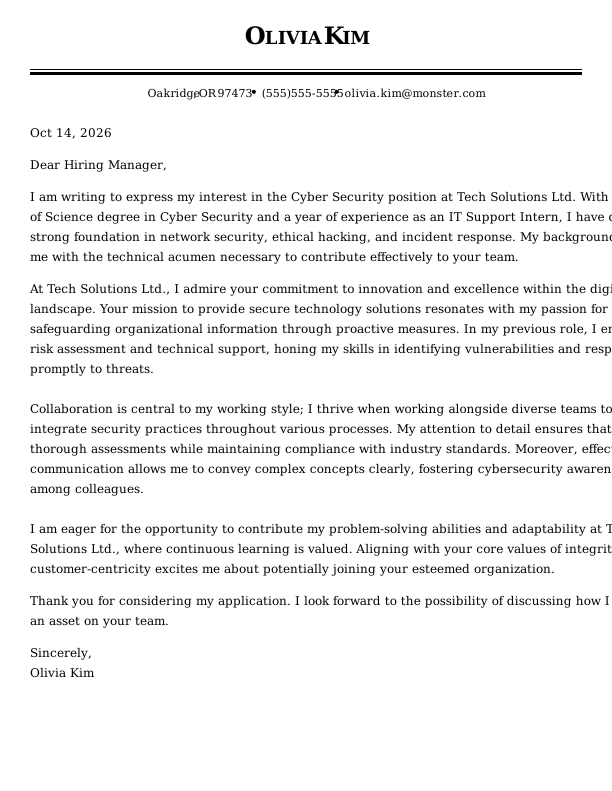
 Free
Security Entry-Level Cover Letter
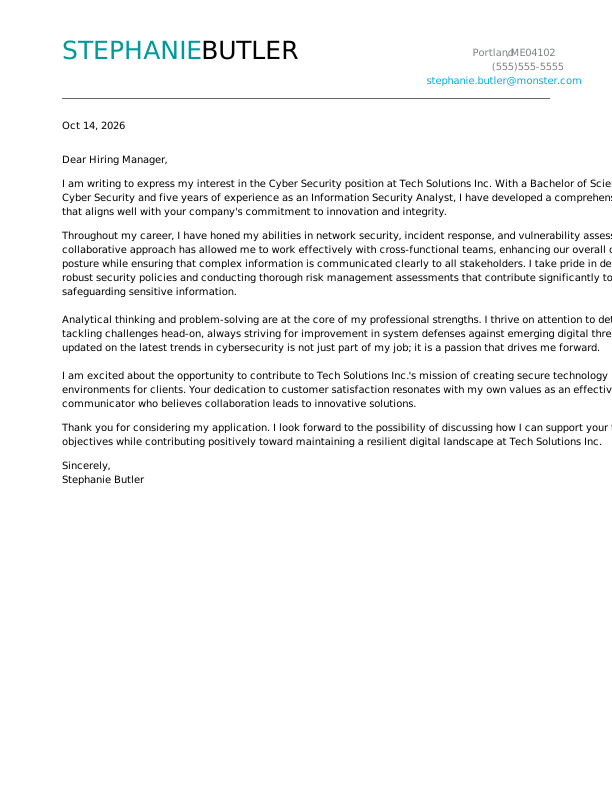
Security Mid-Level Cover Letter
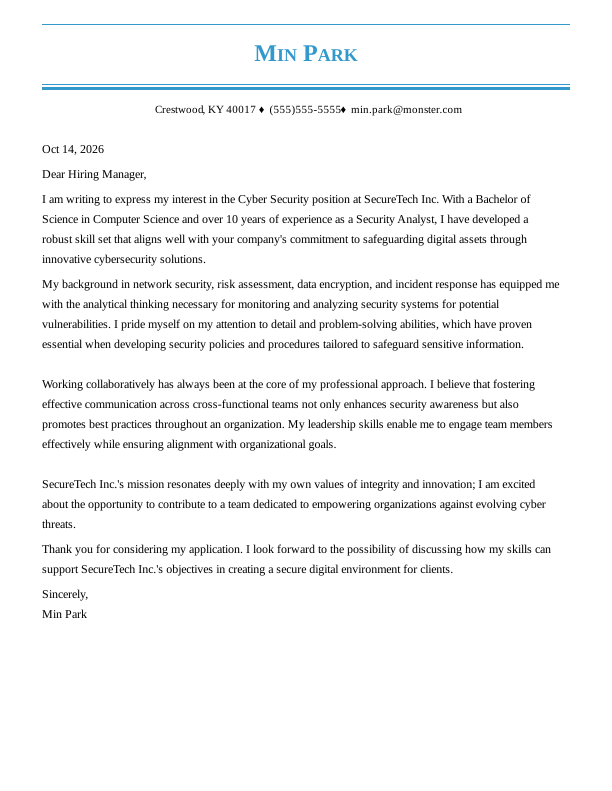
Security Experienced Cover Letter
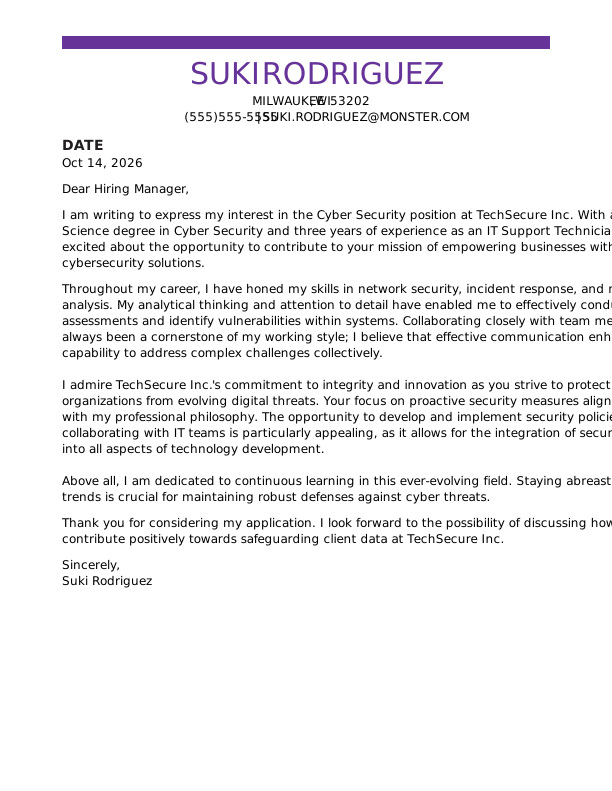
Security Entry-Level Cover Letter
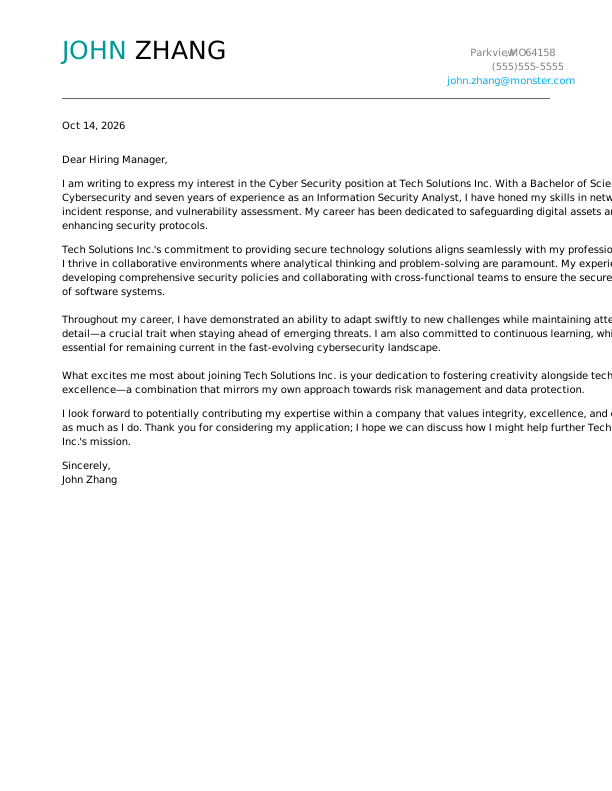
Security Mid-Level Cover Letter
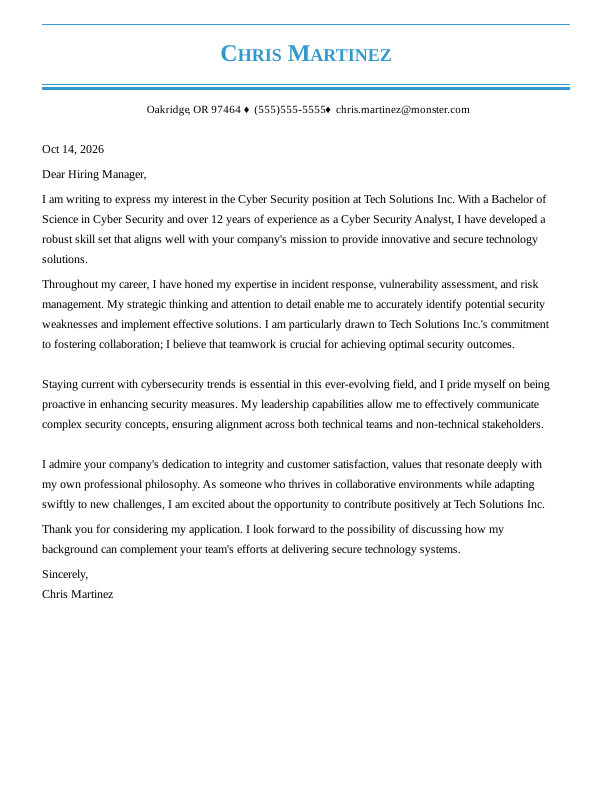
Security Experienced Cover Letter
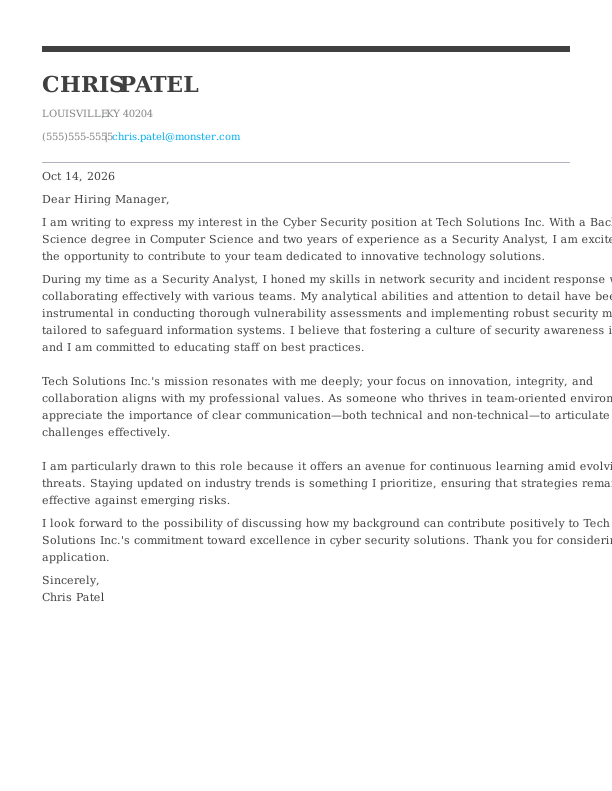
Security Entry-Level Cover Letter
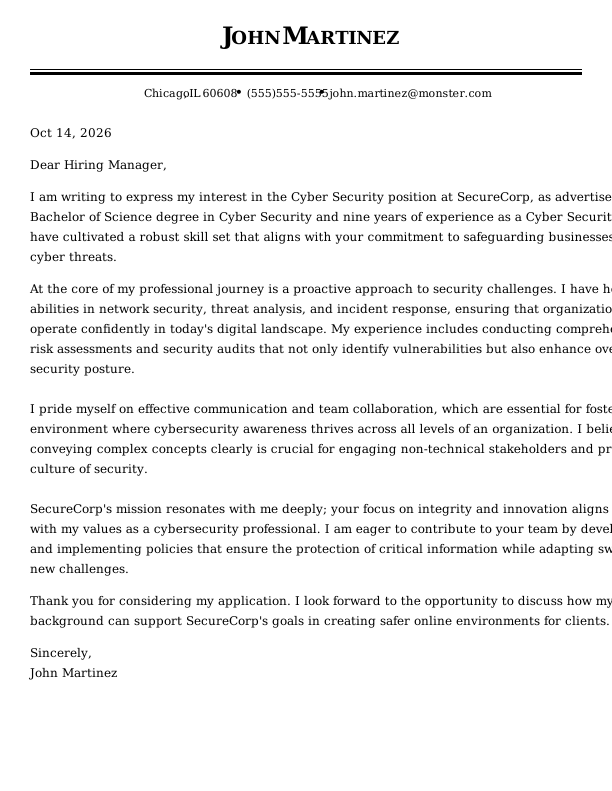
Security Mid-Level Cover Letter
Browse Free Cover Letter Templates
- Academic
- Account Manager
- Accountant
- Accounts Payable
- Administrative Assistant
- Admissions Counselor
- Architecture
- Artist
- Assistant Principal
- Babysitter
- Barista
- Bartender
- Bookkeeper
- Brand Ambassador
- Business Analyst
- Business
- Caregiver
- Chef
- Civil Engineering
- Computer Science
- Construction
- Consulting
- Copywriter
- Cosmetology
- Custodian
- Customer Service
- Customer Service Representative
- Data Analyst
- Data Entry
- Dental Assistant
- Dental Hygienist
- Digital Marketing
- Electrical Engineering
- Emt
- Engineering
- Esthetician
- Event Coordinator
- Executive Assistant
- Finance
- Financial Analyst
- Firefighter
- Flight Attendant
- Graphic Designer
- Hair Stylist
- Healthcare
- Hr Generalist
- Investment Banking
- It
- Janitor
- Journalism
- Lab Technician
- Law Clerk
- Lawyer
- Librarian
- Logistics
- Maintenance Worker
- Makeup Artist
- Manager
- Marketing Coordinator
- Marketing
- Marketing Manager
- Massage Therapist
- Mechanic
- Mechanical Engineer
- Medical Assistant
- Non Profit
- Nursing
- Occupational Therapy
- Office Assistant
- Office Manager
- Operations Manager
- Paralegal
- Personal Trainer
- Pharmacist
- Pharmacy Technician
- Photographer
- Physician Assistant
- Pilot
- Police Officer
- Program Manager
- Project Manager
- Property Manager
- Psychology
- Receptionist
- Research Assistant
- Restaurant Manager
- Retail
- Sales
- Sales Manager
- School Counselor
- Security Officer
- Social Work
- Software Engineer
- Special Education Teacher
- Starbucks
- Substitute Teacher
- Teacher
- Teaching Assistant
- Truck Driver
Cover Letter Examples for Security Roles
Cover letter requirements change as a security professional advances from entry-level tasks to broader risk and incident responsibilities. Choose the template that matches your career stage so you can highlight the right training, certifications, and accomplishments for your level.
Entry-Level Security Cover Letter
Designed for recent graduates or those pivoting to security from another field, this template shows how to present your foundational training, transferable skills, and enthusiasm for keeping environments safe.
Mid-Career Security Cover Letter
This template fits professionals with several years of hands-on security experience. It helps you spotlight independent problem solving, technical tool expertise, and your ability to manage day-to-day security workflows with minimal supervision.
Experienced Security Cover Letter
This template is built for seasoned professionals stepping into senior or managerial roles. It highlights high-level leadership, program oversight, operational planning, and cross-team coordination across complex environments.
Security Cover Letter Template (Text)
Paste this security cover letter template into your document, then customize it with your own incident response metrics, certifications, and target employer name.
Michael Kim
Crestwood, KY 40019
(555)555-5555
michael.kim@monster.com
Oct 26, 2026
Dear Hiring Manager,
I am writing to express my interest in the IT security specialist position at CyberTech Solutions. With a Bachelor of Science in Computer Science and five years of experience in IT security, I have honed my skills in network security, risk management, and incident response. I am excited about the opportunity to contribute to a company that values integrity and innovation while empowering clients against evolving digital threats.
My professional background has equipped me with a solid foundation in developing and implementing security protocols that safeguard sensitive information. I have effectively monitored security alerts, conducted regular audits, and collaborated with cross-functional teams to enhance overall cybersecurity posture. My analytical thinking and problem-solving abilities allow me to approach challenges proactively while maintaining attention to detail—a necessity in this complex field.
At CyberTech Solutions, your commitment to fostering cybersecurity awareness resonates with my passion for educating stakeholders about potential risks. Strong communication is vital in translating complex security concepts into actionable insights for non-technical audiences, which has been a hallmark of my previous roles.
As someone who thrives in collaborative environments, I am eager to bring my leadership skills and dedication to your team. I believe that working together is key not only for addressing immediate threats but also for cultivating a culture of continuous improvement within organizations.
Thank you for considering my application. I look forward to the possibility of discussing how I can contribute positively at CyberTech Solutions.
Sincerely,
Michael Kim
How to Write a Security Cover Letter
Writing a strong security cover letter is all about showing how you spot risks, keep people or systems safe, and handle unexpected issues calmly. While your resume lists your work history, your cover letter gives hiring managers a look at how you think and act on the job. Follow these six steps to build a persuasive letter tailored to any security role.
1. Research & Prepare
Before you begin writing, take time to understand the specific risks and daily challenges the employer faces. A physical facility team prioritizes site access and conflict de-escalation, while a digital defense team focuses on network monitoring and data protection. Knowing what matters most to the organization helps you pick the most relevant examples from your past work.
Use these research tactics to gather helpful background details before drafting:
- Read the job description closely to note specific platforms, reporting tools, or compliance standards the employer mentions.
- Check the company’s recent news, press releases, or public disclosures to see what safety or security initiatives it is currently focusing on.
- Look into common security challenges within its industry sector so you can address practical concerns right away.
2. Hook the Reader
Start with a strong opening line that immediately highlights your ability to protect assets and resolve problems. Generic statements like “I am applying for your security opening” miss a great chance to grab the reviewer’s attention. Instead, open with a concrete win that shows you understand the daily realities of security work.
Here are a few ways to start your letter with immediate impact:
- Incident management: “After streamlining our emergency response drill, our shift reduced average containment time from 35 minutes down to 14 minutes.”
- Access control: “During my last role, I audited on-site badge records and eliminated 40 unassigned administrative passes within my first month.”
- Team communication: “As the safety point of contact, I coordinated daily shift handoffs across 15 team members to ensure zero gaps in facility coverage.”
3. Tell Your Professional Story
Use the middle of your letter to share a brief story about how you handled real-world pressure. Rather than simply claiming you stay alert, walk the reader through a specific challenge you faced, the action you took, and the positive outcome you achieved. Concrete numbers and clear timelines make your past wins memorable.
Consider using measurable results like these to illustrate your story:
- Resolved security dispatch calls with an average response time under 4 minutes across a 50-acre corporate campus.
- Cut unauthorized facility access attempts by 45% over six months by redesigning entry checkpoint procedures.
- Supervised routine inspections across 20 site zones, identifying and correcting 18 safety hazards before daily audits.
4. Showcase Your Skills
Back up your technical and interpersonal strengths by describing moments where your quick thinking made a difference. When you explain the exact steps you took during an incident, hiring managers can clearly picture you protecting their own workplace.
Here is how you can describe common security strengths in action:
- Policy enforcement: “When a visitor requested entry without proper credentials, I held the checkpoint, verified their sponsor through official channels, and issued a temporary pass per protocol.”
- Surveillance and reporting: “While reviewing live camera feeds, I spotted an unsecured service entrance, dispatched an officer to secure the door, and logged the incident report within 15 minutes.”
- Conflict de-escalation: “I calmly addressed an agitated guest in the main lobby, listened to their concern, and guided them to a private office without interrupting front-desk operations.”
5. Explain Any Special Circumstances
If you have an employment gap, are switching industries, or have recently relocated, address it in one or two direct, upbeat sentences. In security, employers value dependability and up-to-date knowledge, so be sure to mention any active training, credentials, or practical experience that kept your abilities sharp.
Review these examples to see how to frame your situation simply:
- Career transition: “I am bringing five years of customer-facing hospitality experience into physical security, where my background in conflict de-escalation, situational awareness, and calm communication under pressure pairs directly with my state guard card and CPR training.”
- Work gap: “During my recent six-month career break, I kept my industry knowledge fresh by earning my CompTIA Security+ certification and completing 40 hours of hands-on lab exercises.”
- Relocation: “I recently relocated to Denver, have settled into my permanent housing, and am fully prepared to take on local shifts right away with an active state guard license.”
6. End With a Professional Goodbye
Wrap up your letter with a polite, confident close that suggests a clear next step. Express genuine enthusiasm for the position, state how you can help support its safety goals, and thank the hiring manager for their time.
A strong closing paragraph can be as simple as this:
“I would welcome the opportunity to discuss how my hands-on surveillance experience and dedication to safety can support your team. Thank you for your time and consideration.”
Sign off with a professional closing such as “Sincerely” or “Best regards,” followed by your full name.
4 Tips for Formatting Your Cover Letter
Hiring managers often review dozens of applications in a single sitting while managing urgent on-site safety matters or system alerts. A clean, well-spaced cover letter ensures your qualifications, certifications, and past accomplishments stand out within seconds. Clean formatting shows that you take pride in clear documentation and follow-through, qualities valued by security teams.

Keep It to One Page
Your security cover letter should fit comfortably on a single page, ideally between 250 and 400 words split across three or four short paragraphs. Security managers need to know right away whether you have the proper credentials and sound judgment for the role. Keeping your letter brief and focused shows you can communicate critical information without unnecessary clutter.

Address the Hiring Manager Directly
Whenever possible, address your letter to the specific person reviewing applications. Check the job listing, company directory, or professional networking pages for the hiring manager’s name. If you cannot locate a specific name after a quick search, use “Dear Hiring Manager” or “Dear Security Hiring Team.” Always avoid outdated, impersonal phrases like “To Whom It May Concern.”

Match Your Header to Your Resume
Use the exact same contact header, font style, and margin widths on both your cover letter and your resume. A matched layout ties your application materials together into a neat, professional package. It also makes it easy for the reviewer to quickly find your phone number, email address, and any active security licenses.

Save & Send as a PDF
Export your completed document as a PDF to lock in your layout, font formatting, and margins across all applicant tracking systems and operating platforms. Name the file cleanly, such as Firstname_Lastname_Cover_Letter.pdf, so recruiters can easily track and file your submission.
Top-Paying States for Security Roles
Knowing what security professionals earn can help you compare offers, plan your next move, and negotiate with confidence. The salary information below is based on data from the U.S. Bureau of Labor Statistics (BLS) and reflects nationwide averages for common security roles.
Keep in mind that pay can vary widely by location, experience level, and whether the work is for a corporate team, government agency, or contracted provider. Your specialty also matters, such as physical security versus cybersecurity, plus any relevant certifications or training.
| Alabama | $112,800 |
| Alaska | $111,900 |
| Arizona | $123,780 |
| Arkansas | $96,080 |
| California | $152,640 |
| Connecticut | $127,740 |
| Delaware | $130,860 |
| District of Columbia | $132,790 |
| Florida | $117,500 |
| Georgia | $126,380 |
| Hawaii | $128,310 |
| Idaho | $145,880 |
| Illinois | $119,540 |
| Indiana | $91,740 |
| Iowa | $116,710 |
| Kansas | $100,850 |
| Kentucky | $102,820 |
| Louisiana | $101,280 |
| Maine | $99,420 |
| Maryland | $145,450 |
| Massachusetts | $129,350 |
| Michigan | $107,630 |
| Minnesota | $126,150 |
| Mississippi | $89,910 |
| Missouri | $107,250 |
| Montana | $99,560 |
| Nebraska | $103,310 |
| Nevada | $111,340 |
| New Hampshire | $128,040 |
| New Jersey | $141,130 |
| New Mexico | $131,220 |
| New York | $139,540 |
| North Carolina | $122,310 |
| North Dakota | $101,200 |
| Ohio | $115,600 |
| Oklahoma | $92,390 |
| Oregon | $132,430 |
| Pennsylvania | $114,870 |
| Rhode Island | $117,010 |
| South Carolina | $57,610 |
| South Dakota | $104,120 |
| Tennessee | $111,840 |
| Texas | $126,800 |
| Utah | $101,430 |
| Vermont | $95,800 |
| Virginia | $136,680 |
| Washington | $144,140 |
| West Virginia | $103,770 |
| Wisconsin | $106,260 |
| Wyoming | $122,570 |
| Guam | $56,480 |
| Puerto Rico | $62,190 |
| Virgin Islands | $60,300 |
Key Takeaways
- Focus your cover letter on how you spot hazards, follow established protocols, and keep people and property safe.
- Support your past achievements with clear, measurable results like faster response times or reduced incident counts.
- Keep your formatting simple, organized, and strictly limited to a single page so busy hiring managers can review your background quickly.
More Cover Letter Examples
Browse Monster’s Resume Templates
Monster also has hundreds of ATS-friendly resume templates for all career levels and industries. Create a matching resume to help you land the interview.
Frequently Asked Questions
Last Update:
Do I really need a cover letter?
You should definitely include a cover letter with your application, even when the job posting lists it as optional. A resume shows your past work history and certifications, but a cover letter lets you explain the practical judgment behind your daily decisions. It gives you a great place to highlight your communication skills, explain an employment gap, and show genuine interest in helping that specific organization protect its environment.
How long should my cover letter be?
Your security cover letter should be one page long and stay between 250 and 400 words. Security supervisors often review applications quickly between active shifts, so keeping your text brief helps them digest your key qualifications right away. Organize your letter into three or four short paragraphs that focus on your strongest accomplishments, essential licenses, and readiness to handle routine safety duties.
Should my cover letter match my resume?
Yes, your cover letter should match your resume’s visual design to create a clean, unified presentation. Using the same font styles, margins, and contact header helps the hiring manager see your application as a complete, professional package. Just make sure the letter expands on the context behind a key win or protocol change rather than simply repeating the bullet points from your resume.
Can I use AI to write my cover letter?
Yes, you can use AI tools to help brainstorm ideas, organize your thoughts, or create a rough initial draft. However, you should always rewrite the text in your own words so it reflects your genuine voice and personal background. Hiring managers can easily spot generic AI phrasing, so make sure to add your real-world incident handling examples, specific safety tools, and personal achievements.
Should I mention salary expectations in my cover letter?
You should only mention your salary expectations in your cover letter if the job listing specifically asks for them. If the employer does require a number, provide a broad, realistic salary range based on current local market rates for similar security roles. State that you are flexible and look forward to discussing the total compensation package, including benefits, training opportunities, and shift differentials.

Toni Frana is a Certified Professional Resume Writer (CPRW), member of the Professional Association of Resume Writers & Career Coaches, and career expert who empowers job seekers to take control of their career paths using Monster’s comprehensive job search and resume tools.
See More From Toni FranaExplore Related Career Advice







How to Write a Cover Letter for Internal Positions or Promotions (Examples & Tips)

Updated:
Apr 23, 2026
|
19 min read


Cover Letter vs Resume: What’s the Difference & Do You Need Both?

Updated:
Apr 23, 2026
|
18 min read