


Free Volunteer Cover Letter Templates & Examples
A strong volunteer cover letter explains why you want to get involved and how your skills can support the organization’s work. Our cover letter examples and writing tips help you connect your experience, interests, and availability to the role’s requirements.
Real-World Cover Letters That Get Results
 Free
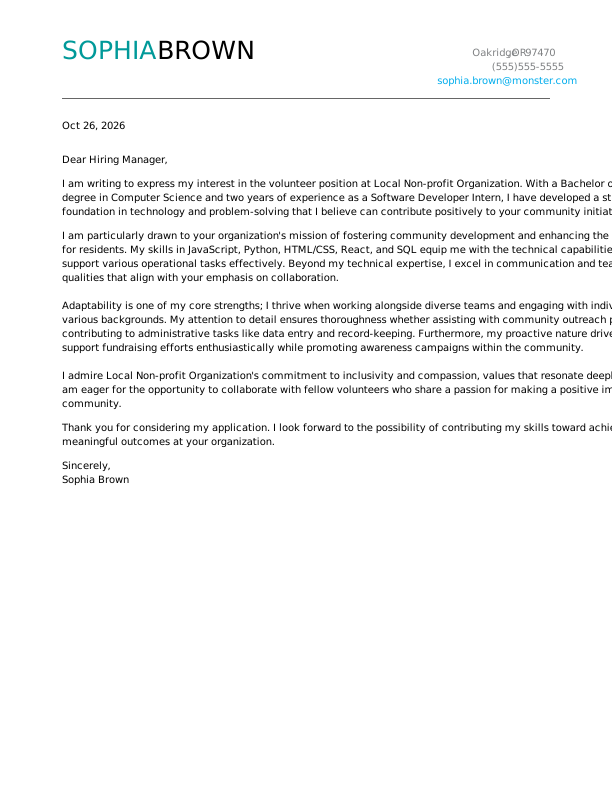
Volunteer Entry-Level Cover Letter
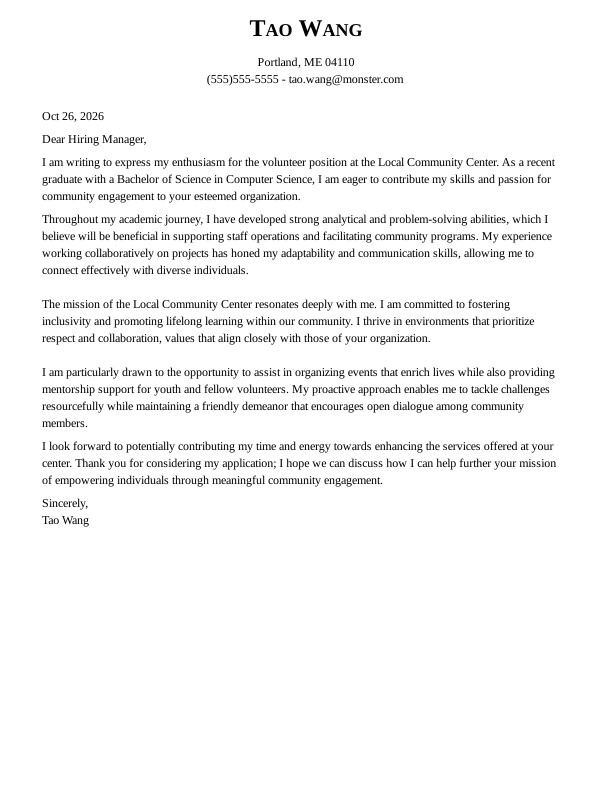
Volunteer Mid-Level Cover Letter
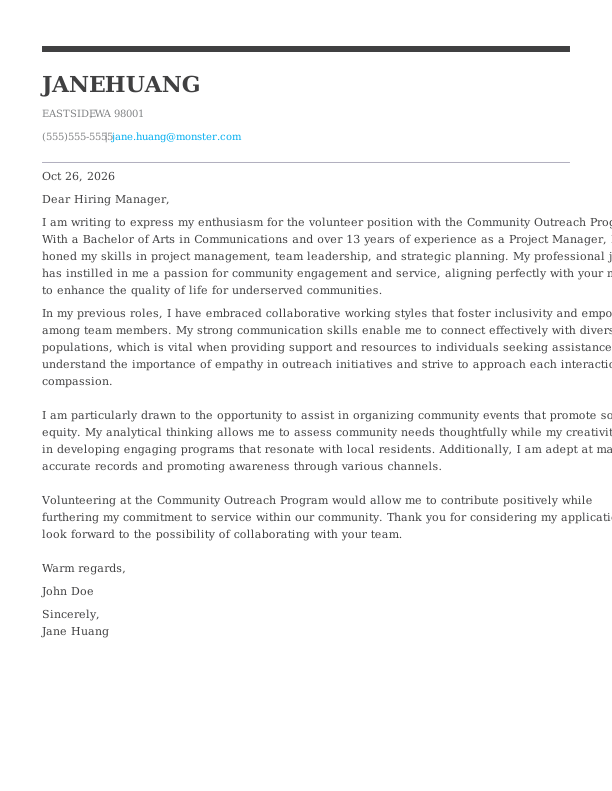
Volunteer Experienced Cover Letter
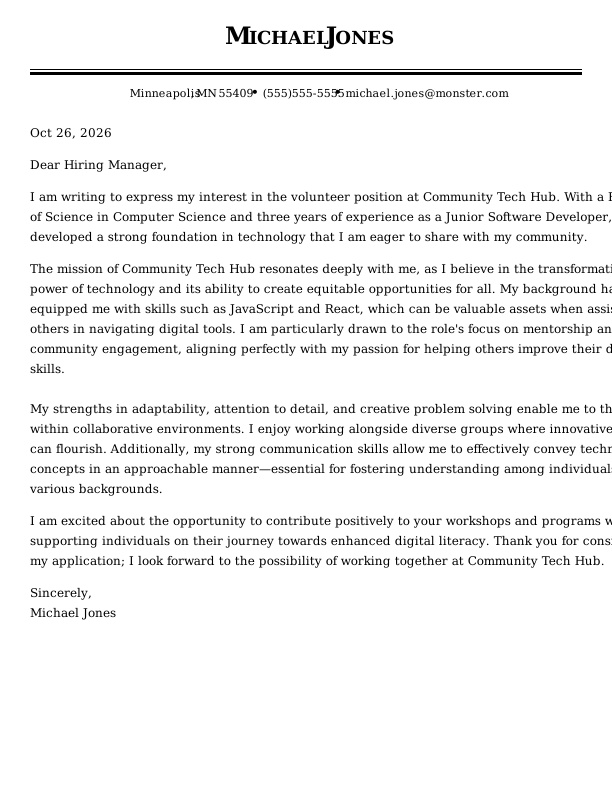
Volunteer Entry-Level Cover Letter
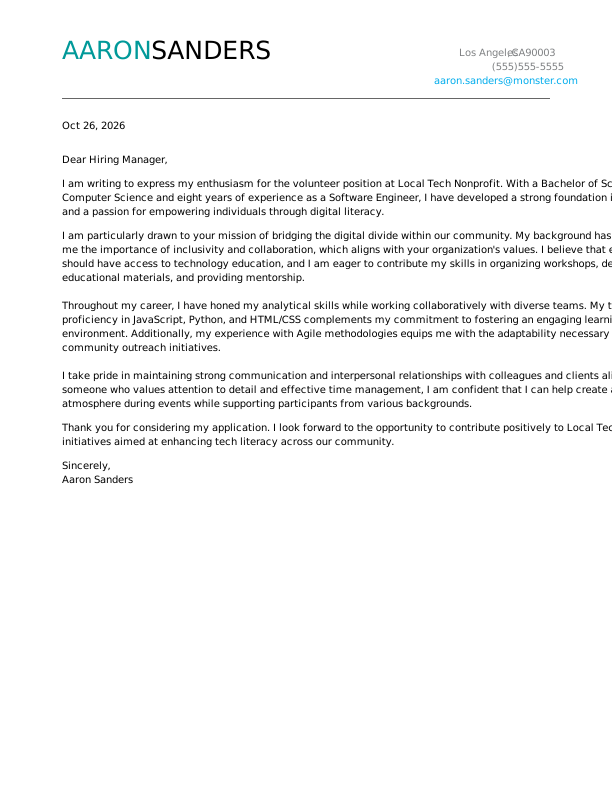
Volunteer Mid-Level Cover Letter
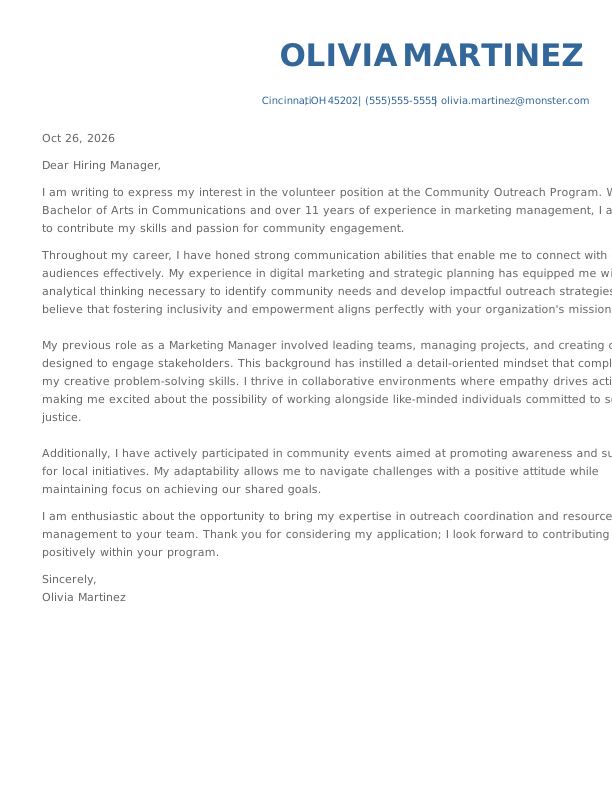
Volunteer Experienced Cover Letter
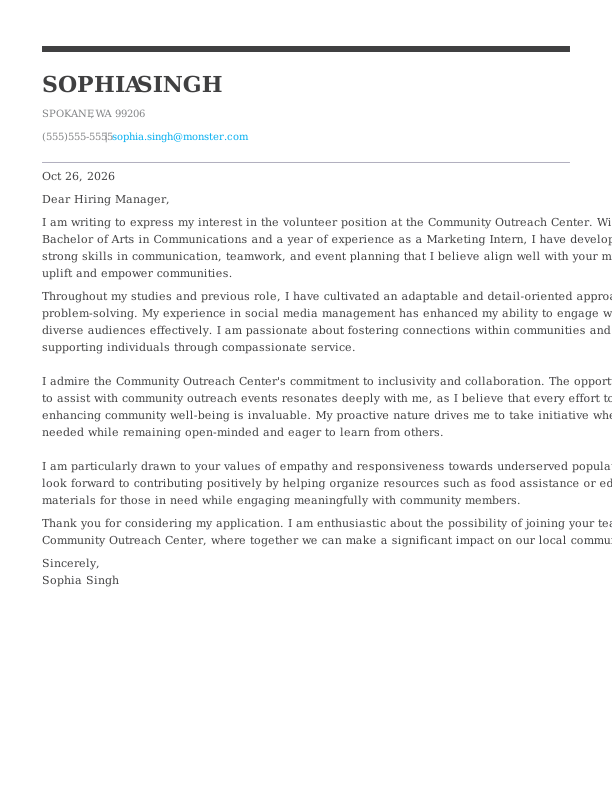
Volunteer Entry-Level Cover Letter
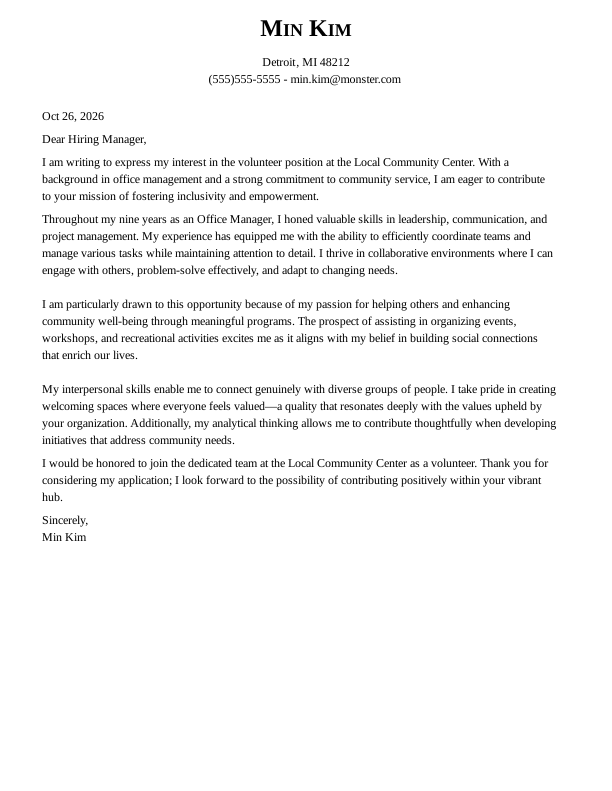
Volunteer Mid-Level Cover Letter
Browse Free Cover Letter Templates
- Academic
- Account Manager
- Accountant
- Accounts Payable
- Administrative Assistant
- Admissions Counselor
- Architecture
- Artist
- Assistant Principal
- Babysitter
- Barista
- Bartender
- Bookkeeper
- Brand Ambassador
- Business Analyst
- Business
- Caregiver
- Chef
- Civil Engineering
- Computer Science
- Construction
- Consulting
- Copywriter
- Cosmetology
- Custodian
- Customer Service
- Customer Service Representative
- Data Analyst
- Data Entry
- Dental Assistant
- Dental Hygienist
- Digital Marketing
- Electrical Engineering
- Emt
- Engineering
- Esthetician
- Event Coordinator
- Executive Assistant
- Fashion Designer
- Finance
- Financial Analyst
- Firefighter
- Flight Attendant
- Graphic Designer
- Hair Stylist
- Healthcare
- Hr Generalist
- Investment Banking
- It
- Janitor
- Journalism
- Lab Technician
- Law Clerk
- Lawyer
- Librarian
- Logistics
- Maintenance Worker
- Makeup Artist
- Manager
- Marketing Coordinator
- Marketing
- Marketing Manager
- Massage Therapist
- Mechanic
- Mechanical Engineer
- Medical Assistant
- Non Profit
- Nursing
- Occupational Therapy
- Office Assistant
- Office Manager
- Operations Manager
- Paralegal
- Personal Trainer
- Pharmacist
- Pharmacy Technician
- Photographer
- Physician Assistant
- Pilot
- Police Officer
- Program Manager
- Project Manager
- Property Manager
- Psychology
- Receptionist
- Research Assistant
- Restaurant Manager
- Retail
- Sales
- Sales Manager
- School Counselor
- Security
- Security Officer
- Social Work
- Software Engineer
- Special Education Teacher
- Starbucks
- Substitute Teacher
- Teacher
- Teaching Assistant
Cover Letter Examples for Volunteers
Cover letter expectations change as you gain experience and take on more volunteer responsibilities, from helping with daily tasks to coordinating activities and supporting others. Choose the template that matches your background to highlight relevant skills, training, and contributions from volunteering, employment, or education.
Entry-Level Volunteer Cover Letter
Designed for first-time volunteers and applicants bringing experience from another field, this example shows how to connect transferable skills and personal interests to a volunteer role.
Mid-Career Volunteer Cover Letter
For volunteers ready to take on more responsibility, this example offers a starting point for explaining how your skills and interests fit the organization’s programs.
Experienced Volunteer Cover Letter
Best suited for applicants with substantial professional or service experience, this example shows how to connect leadership, planning, and communication skills to community work.
Volunteer Cover Letter Template (Text)
Copy this volunteer cover letter template into your document, then replace your specific hours served and organization name to match the role you’re applying for.
Sophia Williams
Newark, NJ 07104
(555)555-5555
sophia.williams@monster.com
Oct 26, 2026
Dear Hiring Manager,
I am writing to express my enthusiasm for the volunteer position at the Community Outreach Organization. With a Bachelor of Arts in Communication and four years of experience as a Marketing Coordinator, I have developed a strong foundation in effective communication and collaboration, which I believe aligns well with your mission to foster positive change through community engagement.
Throughout my career, I have honed skills in social media management, content creation, and project coordination. My ability to engage diverse audiences has allowed me to successfully execute marketing strategies that resonate with various community members. I am particularly drawn to your organization’s commitment to inclusivity and social responsibility, values that deeply resonate with my own.
As someone who thrives in collaborative environments, I am eager to contribute my detail-oriented approach and creative problem-solving abilities. My experience working under pressure has equipped me with the adaptability needed for dynamic outreach initiatives. I look forward to engaging directly with community members and assisting them in accessing vital resources while supporting program activities alongside fellow volunteers.
I am passionate about empowering individuals within our neighborhoods and would be honored to play a role in enhancing community well-being through your programs. Thank you for considering my application; I hope to discuss how I can support the important work being done at the Community Outreach Organization.
Sincerely,
Sophia Williams
How to Write a Volunteer Cover Letter
To write a volunteer cover letter, turn your work, education, or service experience into clear examples of how you can help. Follow the steps below to connect your skills and interests to a specific opportunity and explain the commitment you can make.
1. Research & Prepare
Read the volunteer description and explore the organization’s website to understand its work and who it serves. Check the tasks, time commitment, and any training requirements before choosing examples from your background. If you haven’t volunteered before, consider relevant experience from employment, school, caregiving, or community activities.
Gather these details before drafting:
- Review the role’s duties, scheduling expectations, and application instructions.
- Read about the program you’d support and the people who use its services.
- Note any required orientation, screening, or training so you can address the requirements accurately.
2. Hook the Reader
Begin by explaining what interests you about the opportunity and what you can contribute. Mention a specific program or responsibility rather than relying only on a general desire to help. Depending on your background, you could draw on previous service, practical skills, or experience working with the people the program supports.
Consider an opening along these lines:
- First-time volunteer: “I’m interested in supporting your weekend food pantry and can bring the organization and customer service skills I’ve developed in retail.”
- Relevant experience: “After helping coordinate three neighborhood cleanups, I’d welcome the chance to support your park restoration events.”
- Transferable skills: “With experience maintaining records and scheduling appointments, I could help your community center keep registration and activity information organized.”
3. Tell Your Professional Story
Choose an example that helps the coordinator understand how you follow through on responsibilities. Explain what you did, who you worked with, and how your contribution helped. Include accurate numbers when they clarify the scale of the work, but don’t feel you need a large project or impressive total to show useful experience.
Adapt examples like these using your own details and figures:
- “Helped collect and sort 300 donated coats during a two-week neighborhood drive.”
- “Created a shared packing checklist that reduced setup time for weekly outreach events from 90 minutes to 60 minutes.”
- “Covered a regular Saturday registration shift for six months, welcoming participants and keeping attendance records.”
4. Showcase Your Skills
Match your skills to the tasks in the volunteer description and explain how you’ve used them. For a public-facing role, describe how you listen and communicate clearly. For administrative support, focus on organization or accurate records, and distinguish work you’ve already done from tasks you’d need training to handle.
These examples show how to make your skills specific:
- Scheduling support: “I confirmed event assignments with volunteers and told the coordinator about cancellations so coverage could be arranged.”
- Record-keeping: “I entered donation quantities in a spreadsheet after each collection and checked unclear entries with the organizer.”
- Participant support: “I listened to a visitor’s question, explained the registration steps, and referred questions outside my role to a staff member.”
5. Explain Any Special Circumstances
If you’re returning to volunteering, changing activities, or moving to the area, briefly explain what the coordinator needs to know. Focus on your availability and relevant skills rather than justifying a break. Be realistic about the schedule you can maintain, especially when the program asks for a recurring commitment.
For situations that need context, you could write:
- “After a break from volunteering, I’m ready to commit to one Saturday shift each month.”
- “I’m moving from event volunteering into administrative support, bringing experience organizing schedules and maintaining participant lists.”
- “I’m relocating in March, and I’ll be available to attend orientation and begin volunteering in April.”
6. End With a Professional Goodbye
Thank the coordinator and express interest in discussing how you could help. For example: “Thank you for considering my application. I’d welcome the chance to discuss your volunteer needs and how my skills and availability could support the program.” Finish with “Sincerely” or “Best regards,” followed by your full name.
4 Tips for Formatting Your Cover Letter
Organize your volunteer cover letter so the coordinator can quickly find your interests, relevant skills, and availability. Short paragraphs and consistent spacing make those details easier to scan. Keep the page readable whether the organization reviews applications online or prints them for program staff.

Use a Professional Font & Layout
Choose one readable font, such as Arial, Calibri, Georgia, or Verdana, at 10–12 points. Use 1-inch margins and leave a blank line between paragraphs. Aim for one page, trimming less relevant details instead of reducing the font size.

Address the Hiring Manager Directly
Look for the volunteer coordinator’s or program manager’s name in the posting or on the organization’s website. Use “Dear” followed by the person’s full name when you can verify the contact. Otherwise, “Dear Volunteer Coordinator” or “Dear Volunteer Team” works well.

Match Your Header to Your Resume
If you’re submitting a resume, use the same header, font, and contact details on both documents. Include your name, phone number, and email address so the coordinator can reach you about orientation, scheduling, or an interview.

Use Bullet Points for Key Achievements
Use two or three short bullets if you have several relevant contributions to highlight. You might describe a regular commitment, an event you helped organize, or records you maintained. Introduce the list with a sentence and explain your role without overstating the overall team result.
Key Takeaways
- Connect your interest in the organization’s work to specific tasks you can support with skills from volunteering, employment, education, or everyday responsibilities.
- Demonstrate dependability through examples of commitments you’ve kept, and be clear about the schedule you can realistically maintain.
- Describe your contribution with accurate details about activities, responsibilities, or results rather than relying on broad claims about wanting to help.
More Cover Letter Examples
Browse Monster’s Resume Templates
Monster also has hundreds of ATS-friendly resume templates for all career levels and industries. Create a matching resume to help you land the interview.
Frequently Asked Questions
Last Update:
Do I really need a cover letter?
A volunteer cover letter is highly recommended because it helps the coordinator understand why you’re interested and where you could contribute. Explain what draws you to the program, which skills relate to its activities, and what time you can offer. You don’t need previous volunteer experience; relevant examples from work, school, or community life can help explain your fit.
How long should my cover letter be?
Your volunteer cover letter should fit on one page, usually around 250–400 words. Use the space to explain your interest, describe relevant experience, and state your availability. If the opportunity involves straightforward duties and you have less to add, a shorter letter is fine. Follow any length or application instructions the organization provides rather than adding details to fill the page.
Should my cover letter match my resume?
Your volunteer cover letter should match your resume’s contact details and basic formatting if you’re submitting both. Use the letter to explain your interest in the organization and how your experience relates to its needs. For example, a resume might list customer service work, while the letter explains how that experience could help you welcome visitors or answer routine questions.
How do I address my cover letter if I don’t know the hiring manager’s name?
If you don’t know the contact’s name, address your volunteer cover letter to “Dear Volunteer Coordinator” or “Dear Volunteer Team.” First, check the opportunity listing and the organization’s staff page for a named person. You don’t need to guess or delay your application if no name appears; a role-based greeting suits an application to a volunteer program.
What should I include in my cover letter header?
Your volunteer cover letter header should include your full name, phone number, email address, and city and state. Choose contact details you check regularly so the coordinator can reach you about next steps. For a formal letter, add the date and available recipient information below the header, and use the same layout as your resume if you’re including one.

Megan Dawkins is a career industry editor who empowers job seekers to take control of their career paths using Monster’s comprehensive job search and resume tools. She specializes in helping job seekers navigate the flexible job market.
See More From Megan DawkinsExplore Related Career Advice







How to Write a Cover Letter for Internal Positions or Promotions (Examples & Tips)

Updated:
Apr 23, 2026
|
19 min read


Cover Letter vs Resume: What’s the Difference & Do You Need Both?

Updated:
Apr 23, 2026
|
18 min read