
Free Harvard Resume Templates & Examples
Applying to one of the world’s most competitive institutions takes a resume that matches the standard. These free Harvard resume and CV examples help you organize your academic achievements and leadership roles.
Real-World Resumes That Get Results
 Free
Free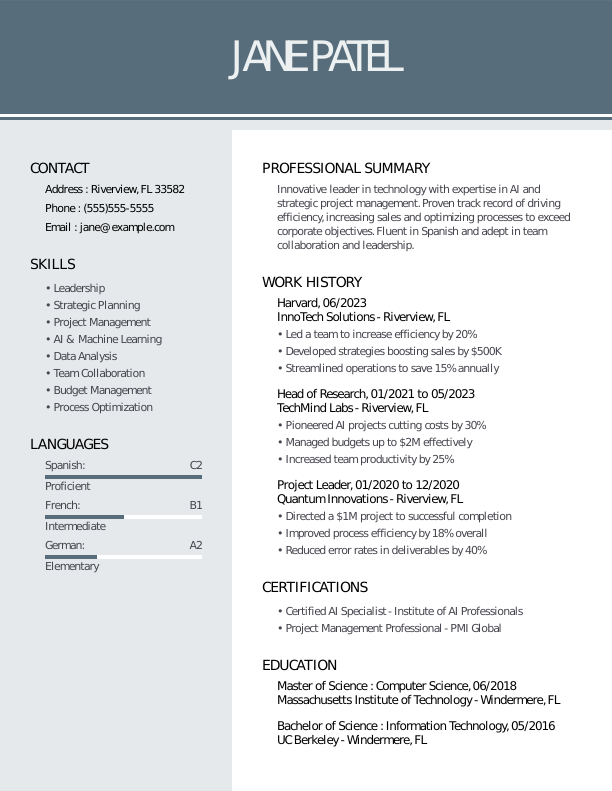



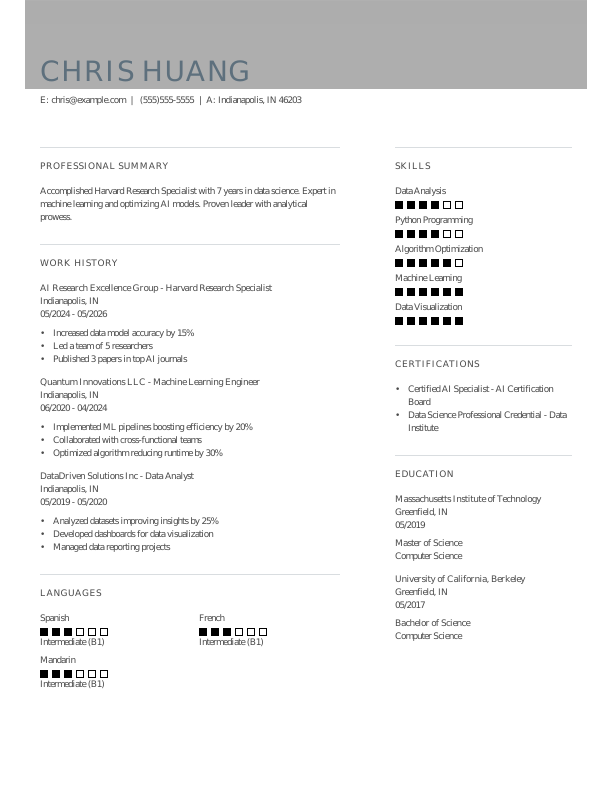

Browse Free Resume Templates
- Accounts Payable
- Adjunct Professor
- Artist
- Auto Mechanic
- Baker
- Business Development Manager
- Business
- Certified Nursing Assistant
- Classic & Traditional
- Cleaner
- College Student
- Concierge
- Construction Worker
- Corporate
- Creative & Unique
- Custodian
- Customer Service
- Dental Assistant
- Direct Support Professional
- Entry-Level
- Flight Attendant
- Hospitality & Food Service
- Front Desk Receptionist
- Healthcare
- High School
- Housekeeping
- Hvac Technician
- Hybrid
- Inventory Manager
- Logistics
- Maintenance
- Management
- Modern
- Mortgage Loan Processor
- Pet Sitter
- Phlebotomist
- Production
- Rbt
- Sales
- Security Services
- Restaurant Server
- Simple & Basic
- Social Work
- Teacher
- Technology
Resume Examples for Harvard
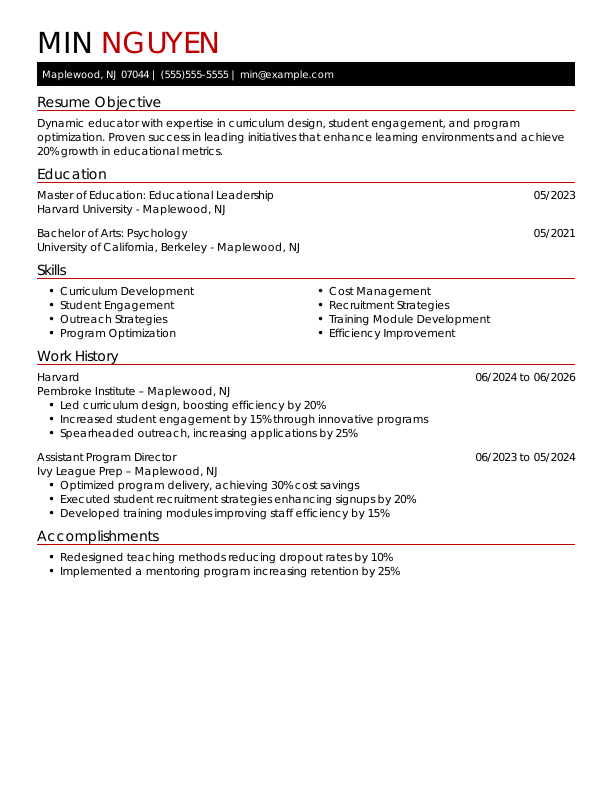
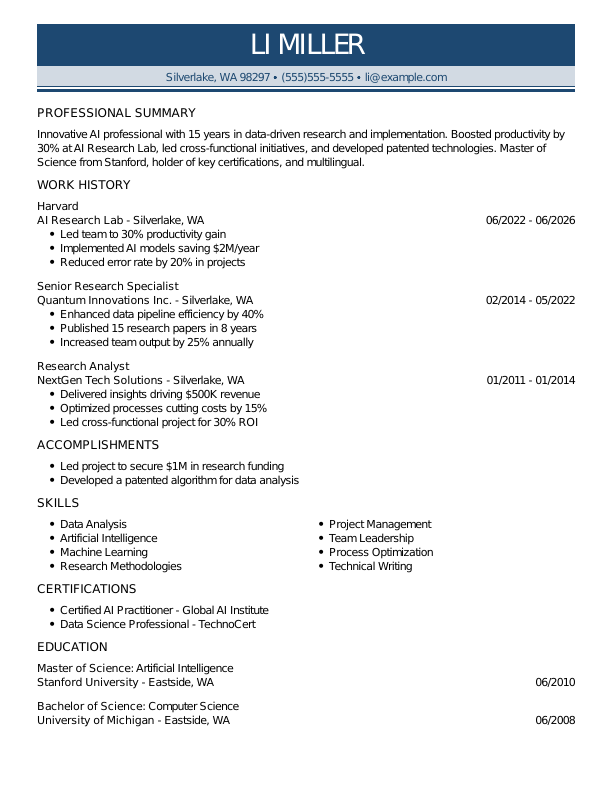
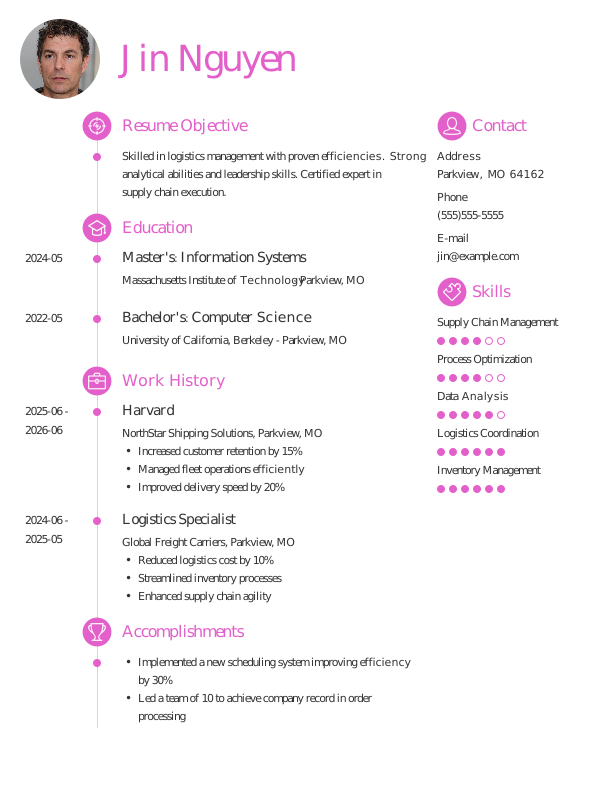
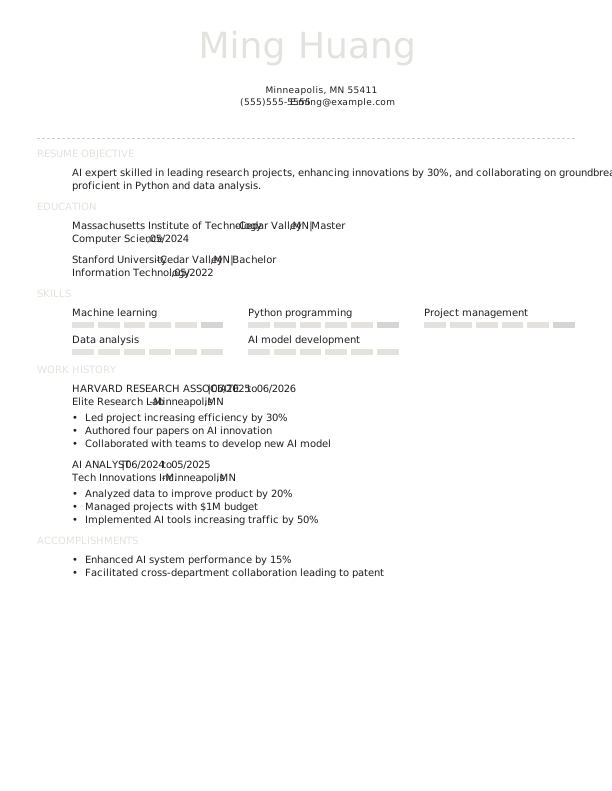
Resumes and CVs for roles at Harvard will differ based on your career stage and the role or program you’re applying for, from research assistant jobs to master’s program applications.
Explore tailored templates for various scenarios and use our Resume Builder to create your own!
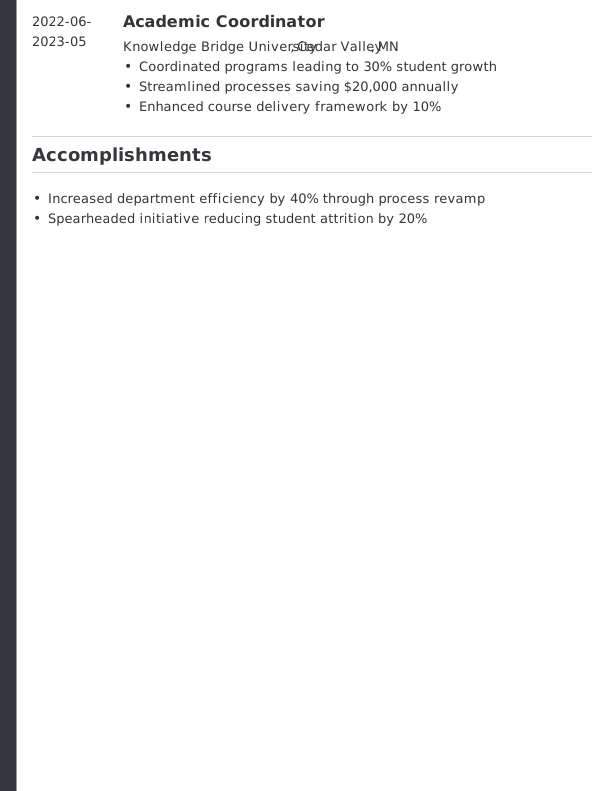
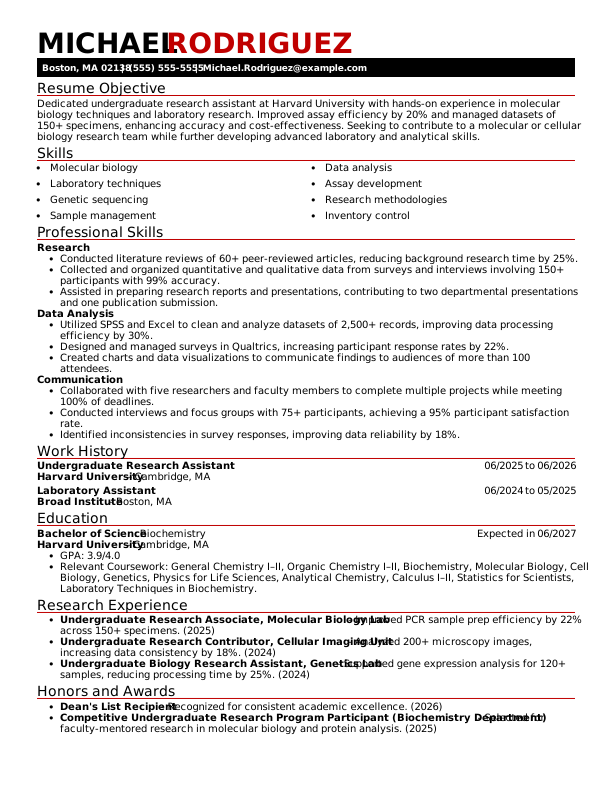
Undergraduate Research Assistant Resume
Designed for students and recent graduates, this resume emphasizes hands-on research experience, laboratory skills, coursework, and academic achievements to help you compete for undergraduate research opportunities.
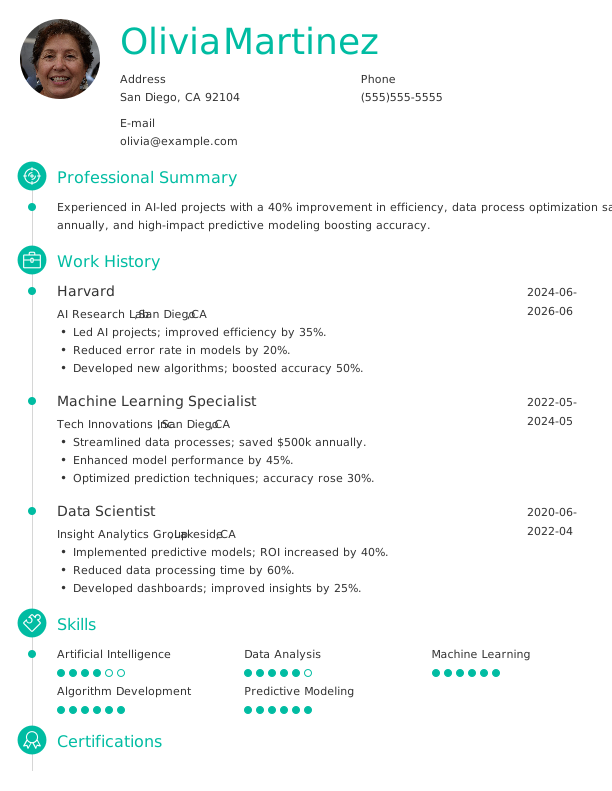
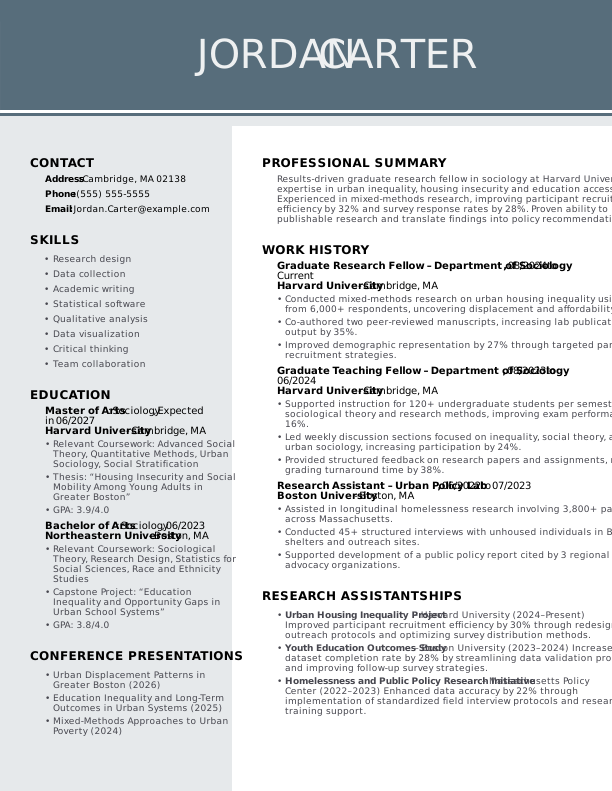
Graduate Research Fellow Resume
Built for graduate students and early career researchers, this resume highlights independent research, publications, presentations, and teaching experience while demonstrating growing expertise within a specialized field.
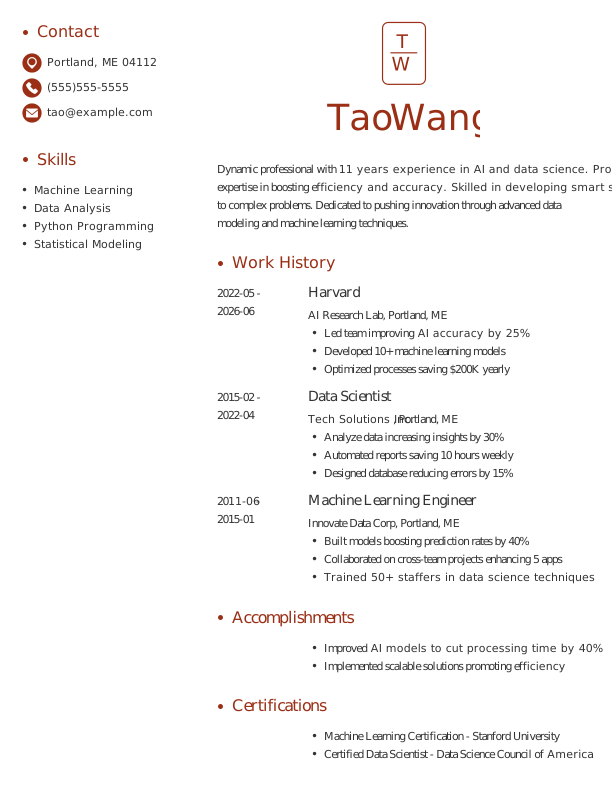
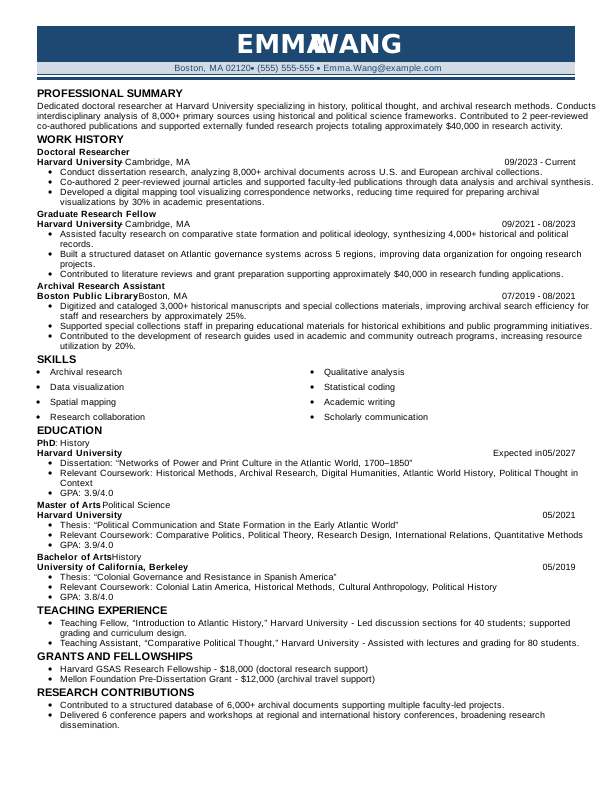
Doctoral Researcher Resume
Created for PhD candidates and doctoral researchers, this resume emphasizes advanced research, publications, grant work, teaching, and subject matter expertise for academic and research-focused careers.
Harvard Resume Template (Text)
Use this customizable text format of a Harvard resume to copy, edit, and personalize directly in your document or file.
Daniel Smith
San Diego, CA 92117
(555)555-5555
Daniel.Smith@example.com
Professional Summary
Experienced data professional with expertise in data analysis, machine learning, and project management. Proven track record in increasing efficiency and revenue.
Work Experience
Research Director
Innovative Solutions Co. – San Diego, CA
May 2023 – June 2026
- Led team to increase productivity by 25%
- Implemented cost-saving strategies, reducing expenses by $50K
- Developed client relationships, boosting satisfaction rates
Senior Research Analyst
DataInsight Group – San Diego, CA
March 2019 – April 2023
- Analyzed trends, enhancing decision-making by 30%
- Managed datasets, improving processing time by 40%
- Streamlined reporting procedures, increasing efficiency
Junior Data Scientist
TechNova Analytics – San Diego, CA
June 2018 – February 2019
- Collaborated on projects, yielding 10% revenue growth
- Automated tasks, enhancing accuracy by 15%
- Provided insights, boosting engagement by 20%
Education
Master of Science in Computer Science
Massachusetts Institute of Technology, Cambridge, MA
May 2018
Bachelor of Science in Information Technology
University of California, Berkley, Berkley, CA
June 2016
Certifications
- Data Science Professional – Tech Institute
- Advanced Analytics Certificate – Big Data Academy
Skills
- Data Analysis
- Machine Learning
- Project Management
- Statistical Modeling
- Data Visualization
- SQL
- Python
- Problem Solving
How to Write a Harvard Resume
As a Harvard graduate, understanding how to create a strong resume allows you to highlight your academic achievements and relevant experience. Use the guidance below to emphasize your strengths and tailor your resume to fit the roles you’re pursuing.
1. Contact Info
Your contact information should be clear, professional, and easy to find at the top of your resume.
Make sure to include:
- Full name
- Phone number
- Professional email address
- City and state (ZIP code is optional)
- LinkedIn profile or personal portfolio (if relevant)
 PRO TIP
Avoid including sensitive details such as your Social Security number, age, or religious affiliation on your resume unless explicitly requested by the employer.
2. Resume Profile
A resume profile is a brief section of two to four sentences that highlights your key qualifications and character. It serves as an enticing pitch to hiring managers, capturing their attention and encouraging them to explore your resume further.
This introduction sets the stage for a deeper look into your professional story.
Positioned at the top of your resume, the profile can be presented as either a summary or an objective, each offering distinct insights into your career goals and achievements. Here’s how they differ:
- A resume summary highlights your key experiences, skills, and achievements relevant to the field. This format perfectly suits individuals with established work histories or transferable skills who wish to emphasize their contributions as professionals in their respective industries.
- A resume objective is a forward-looking statement that highlights your career ambitions and desired achievements. It’s particularly helpful for recent grads, professionals transitioning into new fields, or those with limited experience, such as coding bootcamp graduates or individuals moving to marketing roles.
Let’s take a look at an example of each to see how a resume summary and a resume objective differ:
Harvard resume summary example:
Dedicated marketing professional with over 6 years of experience in dynamic agency environments, specializing in digital strategy and brand development. Proficient in SEO, data analysis, and content creation. Recognized for driving engagement and delivering measurable results that improve client satisfaction.
Harvard resume objective example:
Recent graduate with a bachelor’s degree in psychology excited to embark on a career in mental health support. Committed to fostering resilience and well-being, eager to bring empathy and strong problem-solving abilities to community services or therapeutic environments.
3. Work Experience
The work experience on your resume is an important aspect of your professional narrative. Employers assess your job history to discern the impact you’ve made within various roles, rather than focusing solely on titles and responsibilities.
Your previous experiences illustrate how you’re well-prepared for the challenges presented in your target role.
The work experience section should contain:
- Job title
- Employer name and location
- Dates of employment (month/year)
- 3–5 bullet points describing your relevant responsibilities and achievements
Tailor your content to align with the specific role you’re pursuing at Harvard. Start each bullet point with an action verb (like “Conducted,” “Facilitated,” “Collaborated”) to create a strong impression of your contributions.
Incorporate quantifiable data where possible. Specific metrics, such as program participation rates or funding increases, provide clear evidence of your impact and help distinguish you from other applicants in a competitive environment.
In general, consider following the format of:
[action verb] + [responsibility] = [result/achievement]
For example:
Led a team of 5 students to develop an innovative research project that secured $50,000 in funding, resulting in a published paper in a peer-reviewed journal.
Note that you can also flip the result/achievement with the responsibility:
Achieved a 30% increase in student engagement through the implementation of interactive learning strategies during seminars.
With these techniques in mind, your resume bullets may look something like:
- Supported academic, administrative, and program operations by coordinating schedules, communications, and project details across departments.
- Analyzed data, reports, and institutional records to identify trends, improve processes, and support decision-making.
- Managed complex calendars, meeting logistics, travel arrangements, and confidential communications for faculty or senior leadership.
- Collaborated with students, faculty, staff, and external partners to support events, programs, research, or department initiatives.
- Prepared reports, presentations, and written materials that communicated key updates, outcomes, and recommendations clearly.
4. Skills
The skills section provides a concise overview of your professional abilities as they relate to roles at Harvard. This allows recruiters and hiring managers to quickly assess your qualifications for the position.
Skills can be categorized into three distinct groups:
- Soft skills are interpersonal abilities that influence how well individuals collaborate in a professional setting, such as in healthcare.
- Hard skills are specific, quantifiable abilities that individuals gain through education, training, or direct experience.
- Technical skills refer to the specific knowledge and abilities required to perform specialized tasks.
5 Soft Skills for Your Resume or CV
- Effective communication
- Team leadership skills
- Conflict resolution ability
- Strategic thinking
- Emotional intelligence
5 Hard Skills for Your Resume or CV
- Research methodologies (qualitative, quantitative)
- Statistical analysis (SPSS, R)
- Data visualization (Tableau, Power BI)
- Academic writing and publishing
- Grant proposal development
In general, aim to incorporate a diverse set of relevant skills that align with the job requirements to demonstrate your full professional potential.
PRO TIP
If you’re an entry-level professional, place your skills section higher on the resume right after your summary. For those with more experience, consider moving this section lower and weave your skills into the descriptions of your work history.
5. Education
Understanding how to list education on your resume is important for presenting your credentials clearly. Begin with your most recent or relevant degree, including both the type of degree and the institution’s name.
If you have recently graduated, consider adding details such as your graduation year, GPA (if it’s 3.5 or above), any honors received, or relevant coursework that showcases your skills.
Harvard resume education section example:
Bachelor of Arts in Government
Harvard University, Cambridge, MA
Graduated: 2024 | Cum Laude
PRO TIP
If you’re progressing from an Associate Degree in Business to a Bachelor of Arts in Economics, or have earned another relevant degree, list them both in reverse-chronological order for clarity.
6. Certifications
Listing certifications on your resume highlights your qualifications and can help bridge the gap if you have limited experience. Although this section may not be standard in every resume, it’s important for many professionals in the field.
Employers often look for specific credentials, particularly for specialized positions such as project management or cybersecurity roles.
Include only certifications that directly support your application. Keep them updated and formatted clearly to improve readability and impact.
Harvard certification examples:
- Harvard Business School Online Certificate in Business Analytics | Harvard University | Expires: 12/2028
- Harvard Data Science Professional Certificate | Harvard University | Expires: 05/2027
- Harvard Leadership Principles Certificate | Harvard University | Expires: 06/2027
- Harvard Digital Marketing Strategy Certificate | Harvard University | Expires: 09/2028
Start Building Your Job-Winning Resume
Use Your Existing Resume
Import your current resume to transfer your information to one of our professional templates.
Create a New Resume
Start fresh with a template that catches your eye and follow the prompts to add your details.
Tailor Your Work History to Beat the ATS
To build a strong work history, tailor it to align with the specific position you’re targeting by incorporating relevant keywords and phrases.
Start by thoroughly analyzing the job description to identify repeated skills, qualifications, or experiences mentioned. Once identified, integrate those elements into your descriptions in a way that aligns with the role.
Taking this approach helps in creating an ATS-friendly resume that applicant tracking systems (ATS) can easily scan.
Key Takeaways
- Customize your resume for each application. Align your skills and experiences with the keywords from the program description to engage both ATS and admission officers.
- Highlight quantifiable experiences to demonstrate your contributions. Use metrics relevant to your field (e.g., research publications, GPA improvements, leadership roles) to improve your candidacy.
- Select a resume format that fits your academic background. Recent graduates might prefer a functional style, while those with more experience should consider a chronological layout.
More Resume & CV Examples
- Apple
- Government
- Grad School
- History
- Internship
- MBA
- Nursing Student
- Part Time
- Remote
- Research Associate
- Scholarship
- Student Athlete
- Summer Job
- Teen
Cover Letters for Your Resume
Browse our library of cover letter examples to complete your application. A resume will have a better chance of getting noticed.
- Academic
- Account Manager
- Accountant
- Accounts Payable
- Administrative Assistant
- Admissions Counselor
- Architecture
- Artist
- Assistant Principal
- Babysitter
- Barista
- Bartender
- Bookkeeper
- Brand Ambassador
- Business Analyst
- Business
- Caregiver
- Chef
- Civil Engineering
- Computer Science
- Construction
- Consulting
- Cosmetology
- Custodian
- Customer Service
- Data Analyst
- Dental Assistant
- Dental Hygienist
- Electrical Engineering
- Emt
- Engineering
- Esthetician
- Event Coordinator
- Executive Assistant
- Finance
- Financial Analyst
- Firefighter
- Flight Attendant
- Graphic Designer
- Hair Stylist
- Healthcare
- Hr Generalist
- Investment Banking
- It
- Janitor
- Journalism
- Lab Technician
- Law Clerk
- Lawyer
- Librarian
- Logistics
- Makeup Artist
- Manager
- Marketing
- Marketing Manager
- Massage Therapist
- Mechanic
- Mechanical Engineer
- Medical Assistant
- Non Profit
- Nursing
- Occupational Therapy
- Office Manager
- Paralegal
- Personal Trainer
- Pharmacist
- Pharmacy Technician
- Photographer
- Physician Assistant
- Pilot
- Police Officer
- Project Manager
- Property Manager
- Psychology
- Receptionist
- Research Assistant
- Restaurant Manager
- Retail
- Sales
- Sales Manager
- School Counselor
- Security Officer
- Social Work
- Software Engineer
- Substitute Teacher
- Teacher
- Teaching Assistant
- Truck Driver
- Vet Tech
- Veterinary Assistant
- Web Developer
- Welder
Frequently Asked Questions
Last Update:
What resume format should I use for my Harvard resume?
There are three main resume formats to consider when applying for a position. Your choice should reflect your level of experience and the aspects you wish to highlight:
- Chronological: The most popular format, a chronological resume highlights your work experience by detailing responsibilities and achievements in reverse order. This format is ideal for job seekers with relevant job history that reinforces their qualifications, making it a strong choice for those with a consistent career path.
- Functional: Also known as a skills-based resume, the functional resume focuses on qualifications and an expanded skills section to highlight your relevant abilities. This format minimizes emphasis on work history, making it especially useful for applicants without relevant experience or those transitioning into a new field.
- Combination: A combination resume integrates chronological and functional formats, featuring a skills section alongside detailed work experience. This structure allows professionals to present their competencies and career progression, making it beneficial for those seeking to emphasize both abilities and advancements in their field.
Should I include a cover letter with my resume?
Yes, you should include a cover letter with your job application for any position in academia. A well-crafted cover letter provides an opportunity to express your passion for the role and institution while highlighting relevant accomplishments that may not be evident on your CV. It demonstrates to hiring committees that you’ve invested time in tailoring your application, which can set you apart from other applicants who overlook this important component.
If you’re feeling uncertain about how to write a cover letter, don’t let that hold you back from including one. There are numerous resources available, such as guides on how to craft a compelling cover letter, examples tailored for academic positions, and various formats to help you choose the right structure for your experience and goals.
To simplify the writing process, consider using tools like a cover letter generator. These online platforms can assist in creating a polished cover letter by offering templates and personalized suggestions based on your unique qualifications and the specific job you’re applying for.
How long should a Harvard resume be?
Most resumes should be one page for professionals with less than 10 years of experience. This length allows you to present your relevant skills, education, and accomplishments concisely. Focus on key achievements and qualifications that align with the job description.
For those in senior or specialized roles, a two-page resume is acceptable if it stays focused and relevant. Highlight leadership experiences, advanced skills, and any significant contributions to past employers. Ensure every detail improves your candidacy without unnecessary fluff.
Should I include non-traditional educational experiences or online courses on my Harvard resume?
Yes, especially if you’re a recent graduate or transitioning careers. Listing relevant online courses and self-directed learning demonstrates your commitment to professional growth and helps you stand out when formal experience may be limited.

Vicki Salemi is a nationally recognized career expert who helps professionals navigate the hiring landscape and find the right fit on Monster. With over 15 years of experience in corporate recruiting and HR, she offers expert guidance on job search strategies, interview preparation, and career development to help candidates land their next role.
See More From Vicki SalemiExplore Related Career Advice


How to Put Transferable Skills on Your Resume: 120 Skills, Examples, & Tips

Updated:
Aug 27, 2026
|
16 min read


How to Write a Functional Resume (Formatting Tips, Template, & Examples)
Updated:
Aug 7, 2026
|
17 min read


Functional vs Chronological Resume: Which Format Is Right for You?
Updated:
Aug 3, 2026
|
16 min read

100+ Resume Adjectives to Help You Write a Stronger Resume in 2026 (With Examples)
Updated:
Jul 30, 2026
|
12 min read