


Free Cook Cover Letter Templates & Examples
A strong cook cover letter highlights your ability to prepare consistent dishes, follow food safety practices, and work with a kitchen team. Our cover letter examples and writing tips help you connect your cooking experience and training to the job’s requirements.
Real-World Cover Letters That Get Results
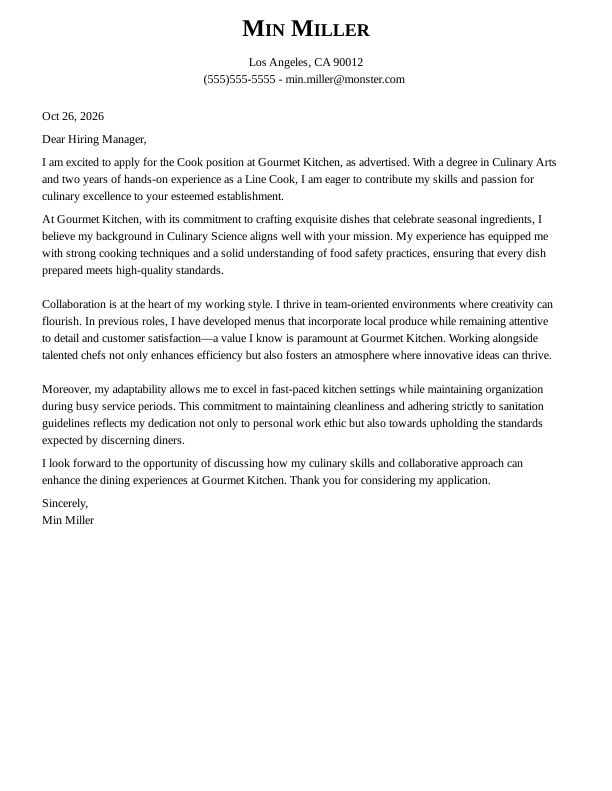
 Free
Cook Entry-Level Cover Letter
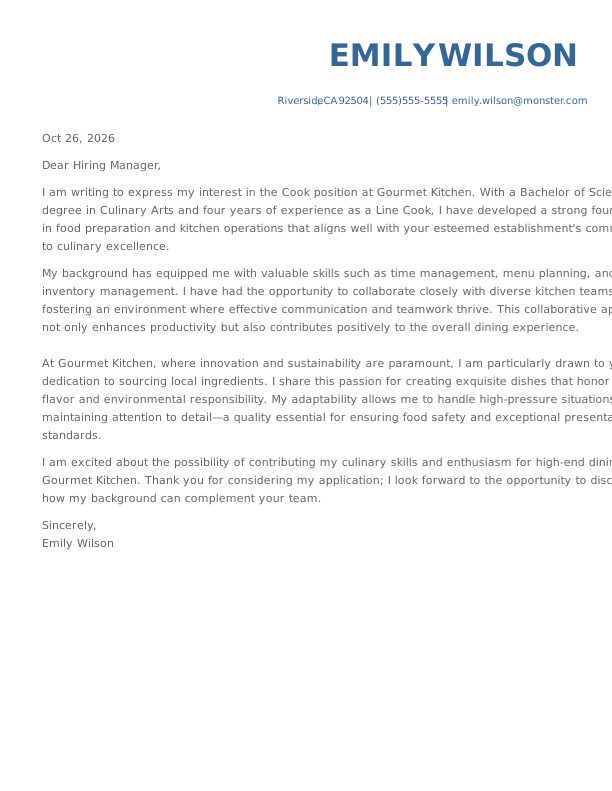
Cook Mid-Level Cover Letter
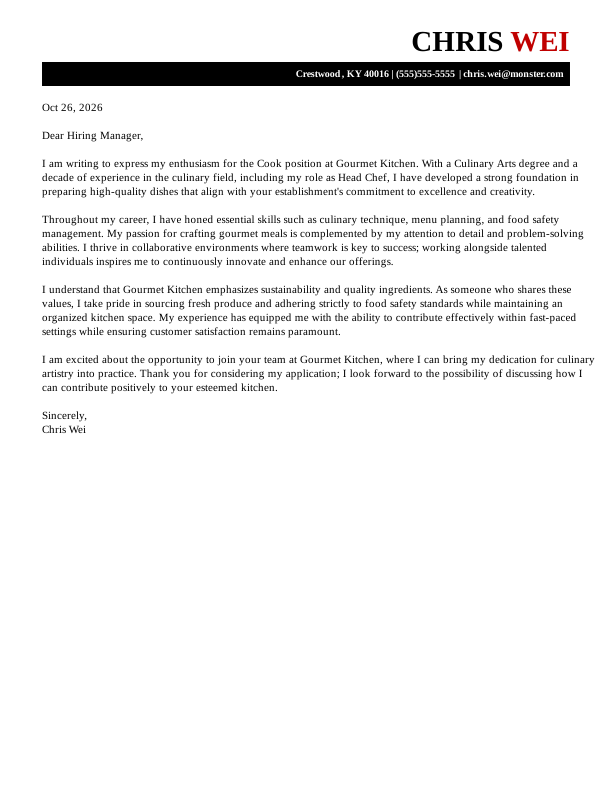
Cook Experienced Cover Letter
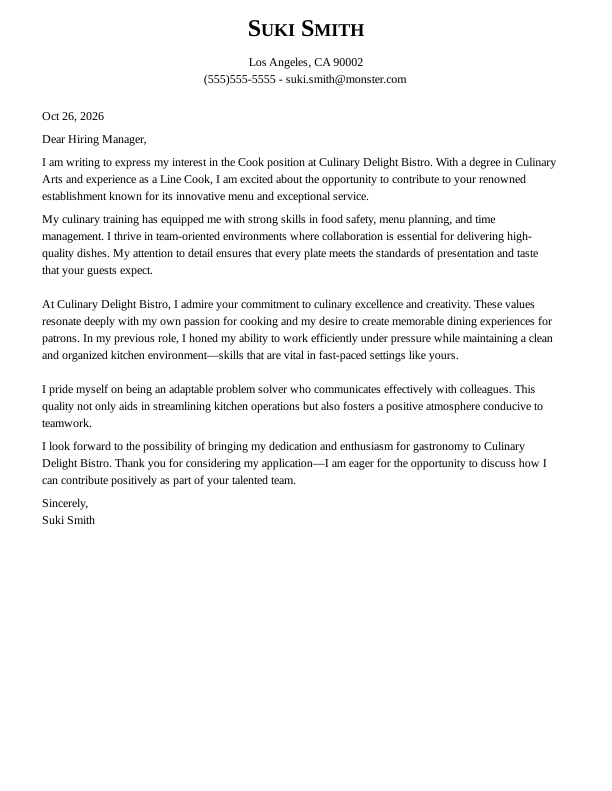
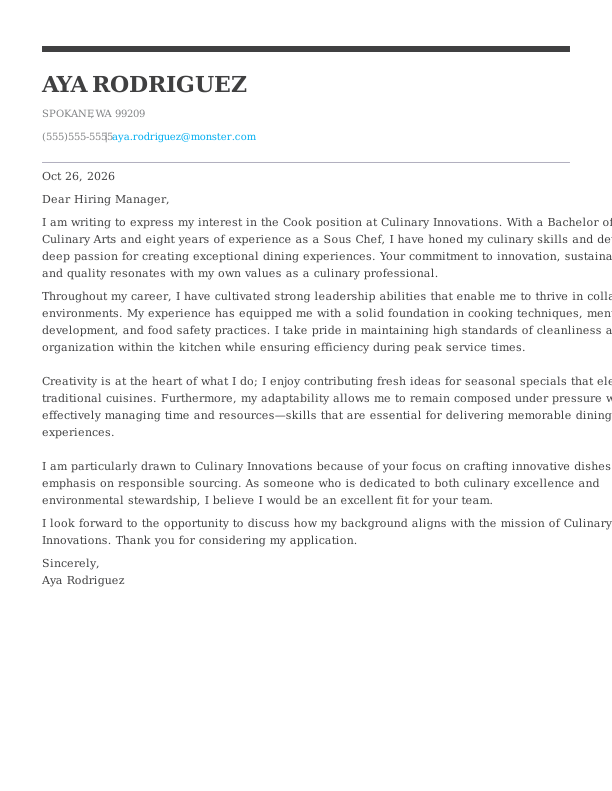
Cook Entry-Level Cover Letter
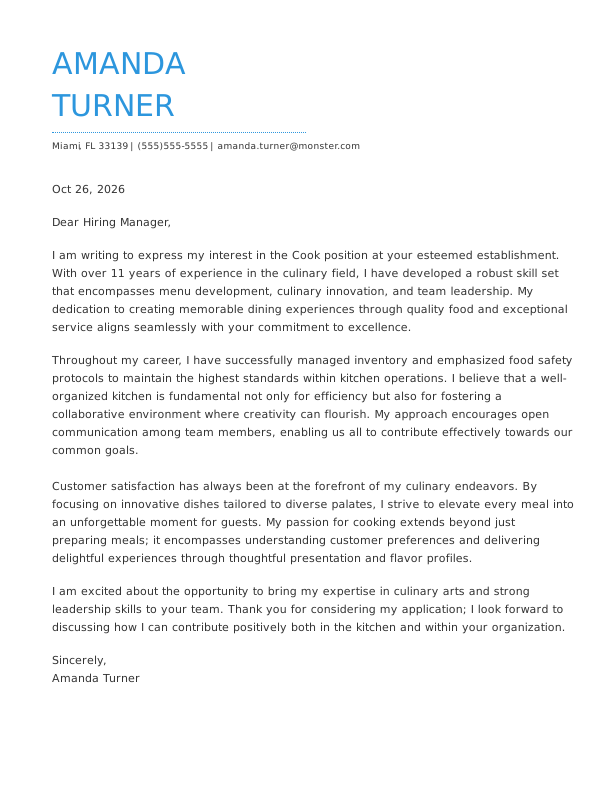
Cook Mid-Level Cover Letter
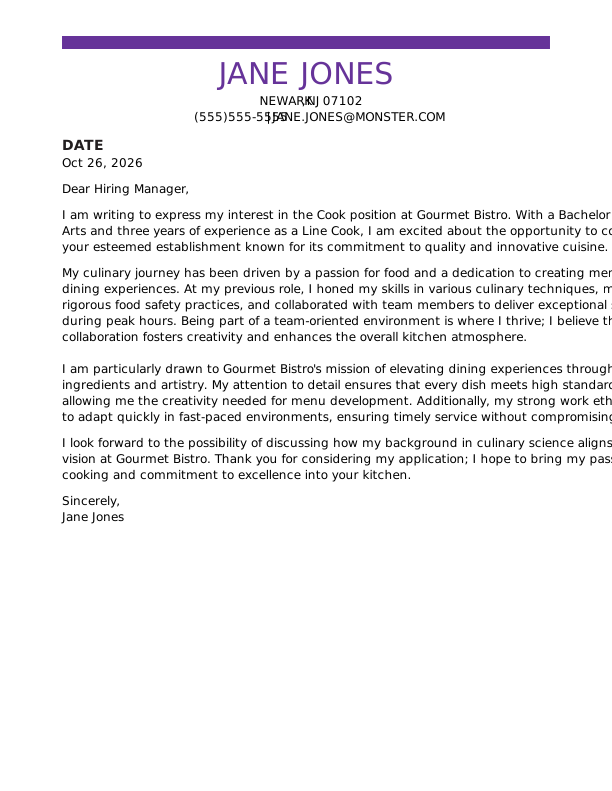
Cook Experienced Cover Letter
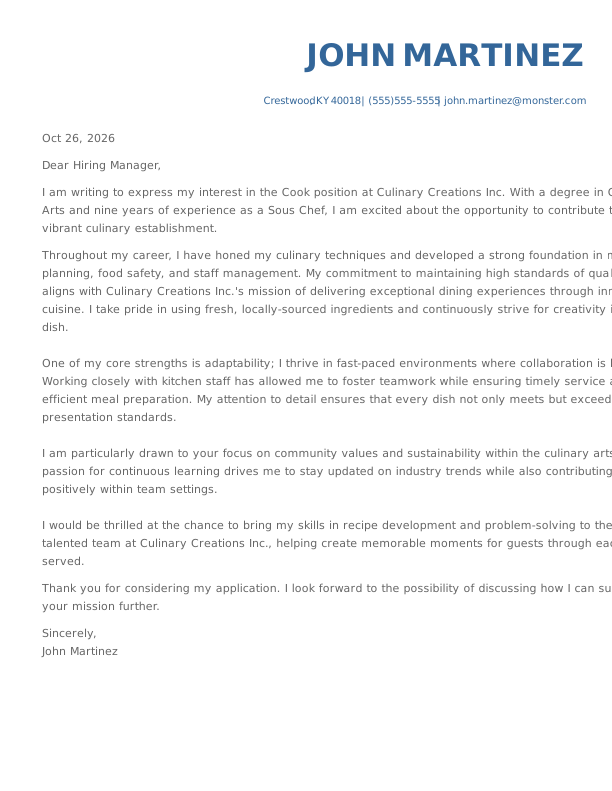
Cook Entry-Level Cover Letter
Cook Mid-Level Cover Letter
Browse Free Cover Letter Templates
- Academic
- Account Manager
- Accountant
- Accounts Payable
- Administrative Assistant
- Admissions Counselor
- Architecture
- Artist
- Assistant Principal
- Babysitter
- Barista
- Bartender
- Bookkeeper
- Brand Ambassador
- Business Analyst
- Business
- Caregiver
- Chef
- Civil Engineering
- Computer Science
- Construction
- Consulting
- Copywriter
- Cosmetology
- Custodian
- Customer Service
- Customer Service Representative
- Data Analyst
- Data Entry
- Dental Assistant
- Dental Hygienist
- Digital Marketing
- Electrical Engineering
- Emt
- Engineering
- Esthetician
- Event Coordinator
- Executive Assistant
- Fashion Designer
- Finance
- Financial Analyst
- Firefighter
- Flight Attendant
- Graphic Designer
- Hair Stylist
- Healthcare
- Hr Generalist
- Investment Banking
- It
- Janitor
- Journalism
- Lab Technician
- Law Clerk
- Lawyer
- Librarian
- Logistics
- Maintenance Worker
- Makeup Artist
- Manager
- Marketing Coordinator
- Marketing
- Marketing Manager
- Massage Therapist
- Mechanic
- Mechanical Engineer
- Medical Assistant
- Non Profit
- Nursing
- Occupational Therapy
- Office Assistant
- Office Manager
- Operations Manager
- Paralegal
- Personal Trainer
- Pharmacist
- Pharmacy Technician
- Photographer
- Physician Assistant
- Pilot
- Police Officer
- Program Manager
- Project Manager
- Property Manager
- Psychology
- Receptionist
- Research Assistant
- Restaurant Manager
- Retail
- Sales
- Sales Manager
- School Counselor
- Security
- Security Officer
- Social Work
- Software Engineer
- Special Education Teacher
- Starbucks
- Substitute Teacher
- Teacher
- Teaching Assistant
Cover Letter Examples for Cooks
Cover letter expectations change as your cooking career develops, from learning prep routines to managing stations and taking on kitchen leadership. Choose the template that matches your experience level to highlight the skills, training, and accomplishments most relevant to your next role.
Entry-Level Cook Cover Letter
Designed for cooks early in their careers and applicants moving into kitchen work, this example shows how to highlight culinary training, related experience, and practical skills.
Mid-Career Cook Cover Letter
For cooks with several years of experience, this example shows how to highlight your kitchen responsibilities, cooking skills, and ability to handle busy service periods.
Experienced Cook Cover Letter
Best suited for cooks with an extensive kitchen background, this example shows how to present your culinary expertise, planning experience, and readiness for greater responsibility.
Cook Cover Letter Template (Text)
Copy this cook cover letter template, paste it into your document, and swap in your kitchen experience, menu highlights, and preferred restaurant type.
Hiro Park
Silverlake, WA 98292
(555)555-5555
hiro.park@monster.com
Oct 26, 2026
Dear Hiring Manager,
I am writing to express my interest in the Cook position at Gourmet Kitchen Inc. With a Bachelor of Culinary Arts and seven years of experience as a Sous Chef, I have honed my culinary techniques and developed a strong foundation in food safety, sanitation, and team leadership.
Gourmet Kitchen Inc.’s commitment to creativity and quality resonates deeply with me. My passion for crafting exceptional dishes aligns perfectly with your mission to deliver exquisite culinary experiences. I thrive in dynamic kitchen environments where collaboration is key, ensuring that every dish not only meets but exceeds standards of excellence.
Throughout my career, I have demonstrated adaptability and attention to detail while managing high-pressure situations. My ability to communicate effectively within a team fosters an environment where innovation can flourish. I take pride in menu planning and enjoy contributing creatively to recipe development while maintaining strict adherence to food safety guidelines.
I am excited about the opportunity to bring my skills in culinary arts and customer service to Gourmet Kitchen Inc., where we can inspire our community together through remarkable dining experiences. Thank you for considering my application; I look forward to discussing how I can contribute positively as part of your esteemed kitchen team.
Sincerely,
Hiro Park
How to Write a Cook Cover Letter
To write a cook cover letter, turn your kitchen experience into clear details about food preparation, station work, and service. Follow the steps below to connect that experience to the employer’s menu and kitchen needs.
1. Research & Prepare
Read the job posting and look at the employer’s menu before deciding what to include. Consider how your experience fits its food, service style, and kitchen responsibilities. If you’re applying to a school, hospital, or catering operation, focus on the production routines and dietary requirements mentioned in the posting.
Gather a few details to guide your letter:
- Note the cooking methods, stations, and prep duties the job involves.
- Check for required food safety credentials and shift availability.
- Choose examples that relate to the menu, meal volume, or type of service.
2. Hook the Reader
Start with a cooking skill or experience that relates directly to the opening. You could mention a station you’ve worked, the type of food you prepare, or how you keep service organized. If you’re new to professional cooking, draw on culinary training, supervised kitchen work, or volunteer meal preparation.
Try an opening that reflects your background:
- Culinary training: “Through my culinary program, I’ve practiced knife skills, batch preparation, and sanitation while preparing meals with classmates.”
- Station experience: “With four years on grill and sauté stations, I’m comfortable coordinating orders and adjusting prep during busy dinner shifts.”
- Relevant menu experience: “My experience preparing seasonal vegetable dishes and working with local produce fits your restaurant’s focus on seasonal menus.”
3. Tell Your Professional Story
Describe a shift, task, or improvement that helps the kitchen manager understand how you work. Explain your contribution and the result, adding numbers when they clarify the workload or change. Use figures you can support, and keep team results separate from work you handled yourself.
Adapt examples like these with your own details and figures:
- “Prepared ingredients for a lunch service averaging 150 meals, checking quantities against the day’s production plan.”
- “Reduced discarded prep from 10 pounds to 7 pounds per week by adjusting batch sizes to match sales.”
- “Helped cut average ticket times from 12 minutes to 9 minutes over two months by reorganizing station setup and coordinating with the grill cook.”
4. Showcase Your Skills
Choose a requirement from the posting and explain how you’ve handled it in the kitchen. Instead of simply listing food safety or teamwork, describe an action that shows the skill in use. Be clear about your responsibilities and mention when you followed a chef’s instructions or reported an issue.
These examples show how to connect skills to everyday work:
- Food safety: “I checked and recorded cooler temperatures, reported a reading outside the required range, and followed the chef’s instructions for handling the affected food.”
- Prep and timing: “I checked expected orders before service and prepared smaller batches of garnishes throughout the shift to keep them fresh.”
- Team communication: “I confirmed substitutions with the chef and coordinated cooking times with the next station so dishes were ready together.”
5. Explain Any Special Circumstances
If a career change, break, or move needs context, explain it in a sentence or two. Focus on what prepares you for the work now, such as recent kitchen experience, completed training, or your start date. Skip personal details that don’t help the employer understand your application.
For common situations, you could use wording like this:
- “After a caregiving break, I returned to regular volunteer shifts preparing meals at a community kitchen.”
- “I’m moving from prep work into a line cook role after training on the grill during weekend services.”
- “I’m relocating in March, and I’ll be available for evening and weekend shifts starting April 1.”
6. End With a Professional Goodbye
Thank the hiring manager and express interest in discussing the role. For example: “Thank you for considering my application. I’d welcome the chance to discuss how my prep and line cooking experience could support your kitchen.” Include your availability if the posting asks for it, then finish with “Sincerely” or “Best regards,” followed by your full name.
4 Tips for Formatting Your Cover Letter
Keep your cook cover letter organized so the kitchen manager can quickly find your relevant experience, training, and availability. Short paragraphs and consistent spacing make those details easier to scan. Aim for a readable page that gives your examples enough room without crowding the text.

Address the Hiring Manager Directly
Look for the head chef’s or kitchen manager’s name in the posting or on the employer’s website. Use “Dear” followed by the person’s full name if you can confirm the person handles hiring. Otherwise, “Dear Hiring Manager” works well.

Match Your Header to Your Resume
Use the same header, font, and contact details on your letter and resume. Include your name, phone number, and professional email address so the employer can reach you about an interview. Check that the information matches on both documents.

Use Bullet Points for Key Achievements
If you have several relevant accomplishments, use two or three short bullets to make them easy to find. You might highlight a reduction in prep waste, experience covering multiple stations, or a change that improved service timing. Introduce the list with a sentence and avoid repeating the same details elsewhere.

Balance Spacing & Margins
Use a readable font at 10–12 points, with margins between 0.75 and 1 inch. Set line spacing between single and 1.15, and leave a blank line between paragraphs. Keep the letter to one page by trimming less relevant information rather than shrinking the text.
Top-Paying States for Cook Roles
Knowing what cooks earn across the country helps you compare offers and plan your next step with confidence. Salary data referenced here comes from the U.S. Bureau of Labor Statistics (BLS) and reflects recent nationwide averages for cooks.
Keep in mind that real pay can vary based on where you work, your years of experience, and your kitchen type such as restaurant, hotel, or catering. Shifts and demand during peak seasons may also affect hours and earnings. Specialty skills like prep, grill, or pastry can further influence outcomes.
| Alabama | $63,800 |
| Alaska | $60,810 |
| Arizona | $65,930 |
| Arkansas | $56,450 |
| California | $71,350 |
| Connecticut | $71,630 |
| Delaware | $67,330 |
| District of Columbia | $79,090 |
| Florida | $62,540 |
| Georgia | $57,970 |
| Hawaii | $92,690 |
| Idaho | $54,940 |
| Illinois | $63,360 |
| Indiana | $60,190 |
| Iowa | $48,630 |
| Kansas | $60,920 |
| Kentucky | $51,800 |
| Louisiana | $44,940 |
| Maine | $57,550 |
| Maryland | $64,130 |
| Massachusetts | $75,900 |
| Michigan | $59,170 |
| Minnesota | $63,800 |
| Mississippi | $50,150 |
| Missouri | $62,180 |
| Montana | $58,090 |
| Nebraska | $66,690 |
| Nevada | $62,140 |
| New Hampshire | $61,370 |
| New Jersey | $75,020 |
| New Mexico | $60,750 |
| New York | $70,200 |
| North Carolina | $66,330 |
| North Dakota | $71,280 |
| Ohio | $60,700 |
| Oklahoma | $51,420 |
| Oregon | $63,720 |
| Pennsylvania | $62,500 |
| Rhode Island | $87,950 |
| South Carolina | $64,050 |
| South Dakota | $47,900 |
| Tennessee | $62,210 |
| Texas | $55,130 |
| Utah | $50,400 |
| Vermont | $68,650 |
| Virginia | $62,120 |
| Washington | $71,430 |
| West Virginia | $65,150 |
| Wisconsin | $62,300 |
| Wyoming | $69,510 |
| Guam | $44,800 |
| Puerto Rico | $35,780 |
| Virgin Islands | $67,990 |
Key Takeaways
- Connect your cooking experience to the employer’s menu, service style, and kitchen duties rather than listing every task you’ve handled.
- Show how you maintain food safety, organize prep, and coordinate with other cooks through specific examples from training or kitchen work.
- Support your accomplishments with accurate details about meal volume, waste reduction, or service timing, and distinguish your contribution from the team’s results.
More Cover Letter Examples
Browse Monster’s Resume Templates
Monster also has hundreds of ATS-friendly resume templates for all career levels and industries. Create a matching resume to help you land the interview.
- Agriculture
- Baker
- Banquet Server
- Bar Manager
- Barback
- Barista
- Bartender
- Busser
- Cake Decorator
- Catering
- Chef
- Cook
- Dietary Aide
- Dishwasher
- Executive Chef
- Fast Food
- Fine Dining Server
- Food And Beverage Director
- Food And Beverage Manager
- Food Runner
- Hostess
- Kitchen Manager
- Line Cook
- Mcdonald's
- Meat Cutter
- Pastry Chef
- Prep Cook
- Private Chef
- Restaurant General Manager
- Restaurant Manager
- Restaurant
- Restaurant Server
- Shift Leader
- Sommelier
- Sous Chef
- Starbucks
- Waiter
- Waitress
Frequently Asked Questions
Last Update:
Do I really need a cover letter?
A cook cover letter is recommended because it helps explain how your kitchen experience fits the opening. You can describe the stations you’ve worked, your approach to prep, or why the menu interests you. If you’re entering professional cooking, use it to connect culinary training or related food preparation experience to the duties.
How long should my cover letter be?
Keep your cook cover letter to one page, usually around 250–400 words. Use three or four short paragraphs to introduce your background, explain a relevant example, and close. Give the kitchen manager enough detail to understand your experience without describing every shift, and include availability or food safety credentials when the posting asks for them.
Should my cover letter match my resume?
Your cook cover letter should match your resume’s font, header, and contact details, and both documents should give consistent dates and qualifications. Use the letter to explain something your resume only mentions briefly. For example, if you list inventory duties, describe how you adjusted prep quantities or helped use ingredients before they went to waste.
Can I use AI to write my cover letter?
Yes, AI can help you get started on a cook cover letter, especially if you’re unsure how to organize your experience. Use it to outline your ideas, then add details about the food you’ve prepared, stations you’ve worked, and responsibilities you’ve handled. Check that the draft accurately describes your skills, and adjust any wording you wouldn’t normally use.
What should I include in my cover letter header?
Your cook cover letter header should include your full name, phone number, professional email address, and city and state. Use contact details you check regularly so you don’t miss an interview request. For a formal letter, put the date and available employer details below your header, and keep the layout consistent with your resume.

Kirsten Chorpenning is a career advice writer who empowers job seekers to take control of their career paths using Monster’s comprehensive job search and resume tools. She specializes in helping job seekers find rewarding jobs in today’s dynamic work environment.
See More From Kirsten ChorpenningExplore Related Career Advice






How to Write a Cover Letter for Internal Positions or Promotions (Examples & Tips)
Updated:
Apr 23, 2026
|
19 min read


Cover Letter vs Resume: What’s the Difference & Do You Need Both?

Updated:
Apr 23, 2026
|
18 min read