


Free Musician Cover Letter Templates & Examples
A strong cover letter shows you can perform reliably and connect with audiences during live shows, studio sessions, or band rehearsals. Our free examples and guide help you highlight your repertoire, musical style, and experience so hiring managers see your fit.
Real-World Cover Letters That Get Results
 Free
Musician Entry-Level Cover Letter
Musician Mid-Level Cover Letter
Musician Experienced Cover Letter
Musician Entry-Level Cover Letter
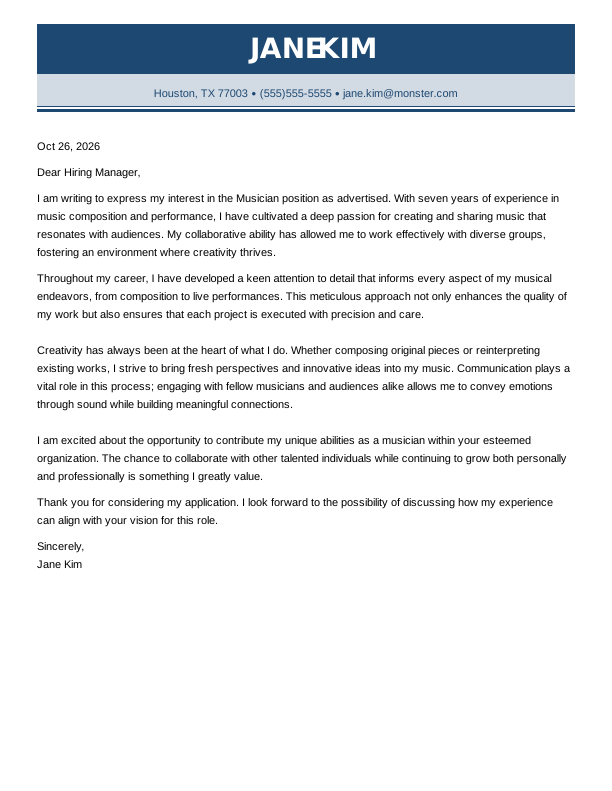
Musician Mid-Level Cover Letter
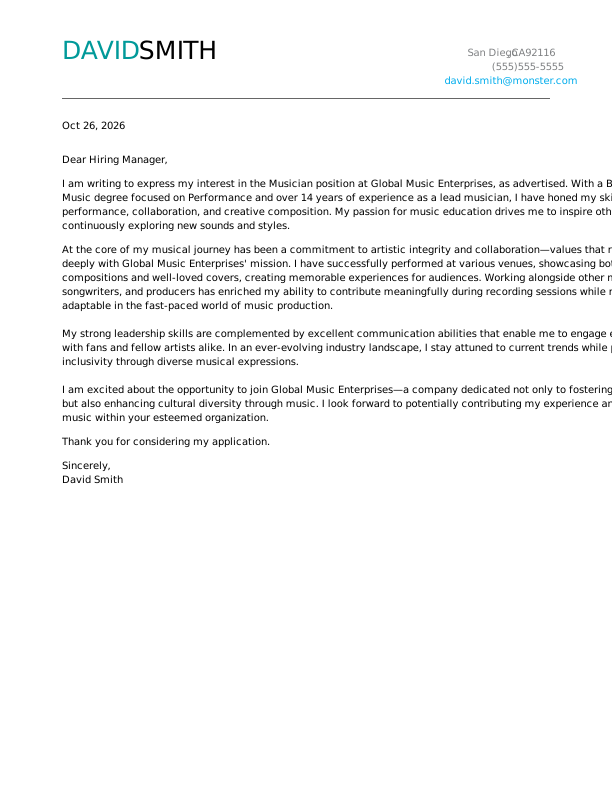
Musician Experienced Cover Letter
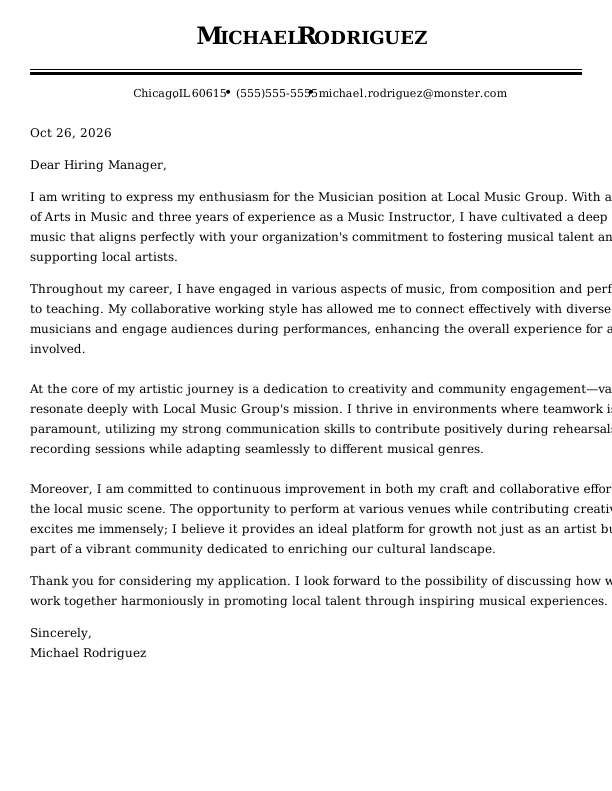
Musician Entry-Level Cover Letter
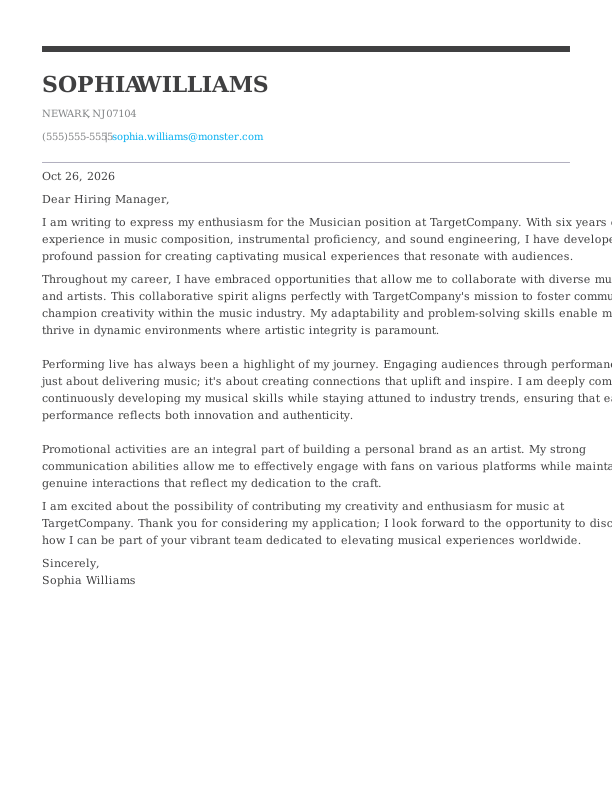
Musician Mid-Level Cover Letter
Browse Free Cover Letter Templates
- Academic
- Account Manager
- Accountant
- Accounts Payable
- Administrative Assistant
- Admissions Counselor
- Architecture
- Artist
- Assistant Principal
- Babysitter
- Barista
- Bartender
- Bookkeeper
- Brand Ambassador
- Business Analyst
- Business
- Caregiver
- Chef
- Civil Engineering
- Computer Science
- Construction
- Consulting
- Copywriter
- Cosmetology
- Custodian
- Customer Service
- Customer Service Representative
- Data Analyst
- Data Entry
- Dental Assistant
- Dental Hygienist
- Digital Marketing
- Electrical Engineering
- Emt
- Engineering
- Esthetician
- Event Coordinator
- Executive Assistant
- Fashion Designer
- Finance
- Financial Analyst
- Firefighter
- Flight Attendant
- Graphic Designer
- Hair Stylist
- Healthcare
- Hr Generalist
- Investment Banking
- It
- Janitor
- Journalism
- Lab Technician
- Law Clerk
- Lawyer
- Librarian
- Logistics
- Maintenance Worker
- Makeup Artist
- Manager
- Marketing Coordinator
- Marketing
- Marketing Manager
- Massage Therapist
- Mechanic
- Mechanical Engineer
- Medical Assistant
- Non Profit
- Nursing
- Occupational Therapy
- Office Assistant
- Office Manager
- Operations Manager
- Paralegal
- Personal Trainer
- Pharmacist
- Pharmacy Technician
- Photographer
- Physician Assistant
- Pilot
- Police Officer
- Program Manager
- Project Manager
- Property Manager
- Psychology
- Receptionist
- Research Assistant
- Restaurant Manager
- Retail
- Sales
- Sales Manager
- School Counselor
- Security
- Security Officer
- Social Work
- Software Engineer
- Special Education Teacher
- Starbucks
- Substitute Teacher
- Teacher
- Teaching Assistant
Cover Letter Examples for Musicians
Cover letter expectations change as your music career grows, from early gigs to leading ensemble projects. Pick the template below that matches your experience level to highlight your relevant repertoire, releases, tours, or performance background.
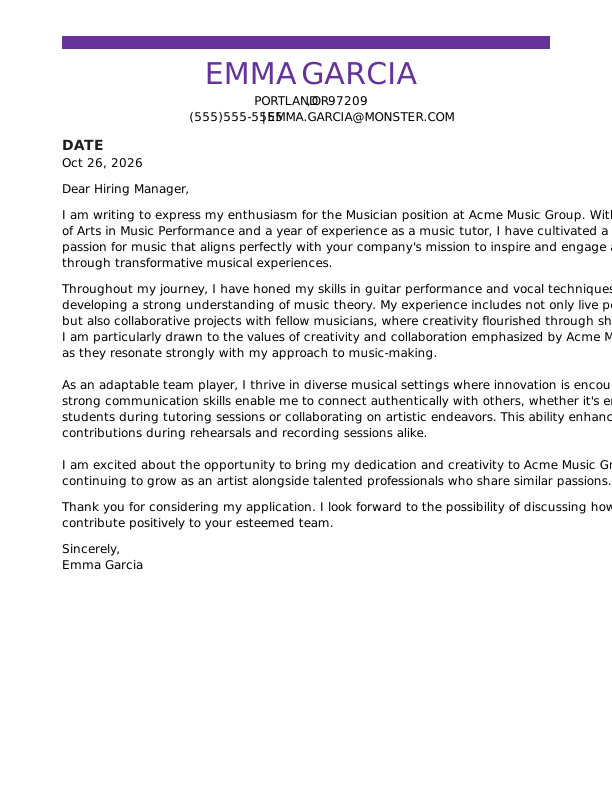
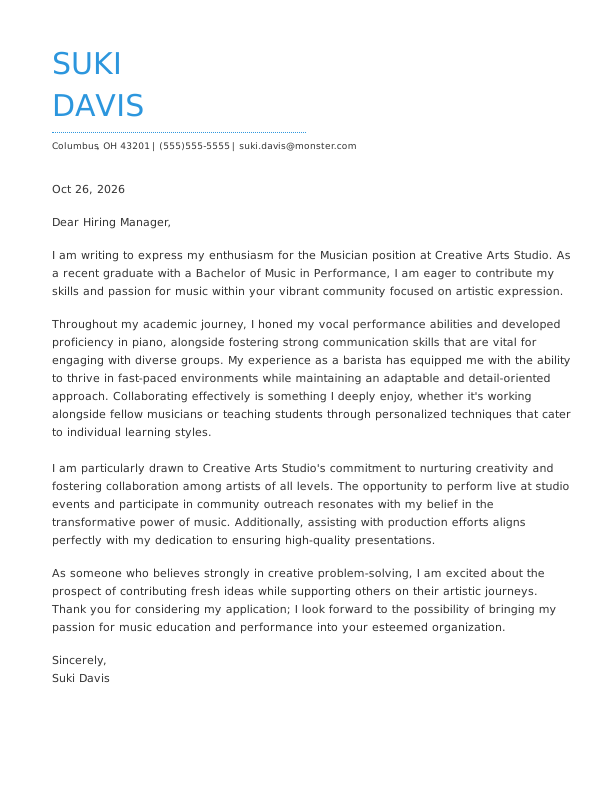
Entry-Level Musician Cover Letter
This template helps early-career musicians, recent graduates, or career changers highlight relevant training and core performance skills for entry-level roles.
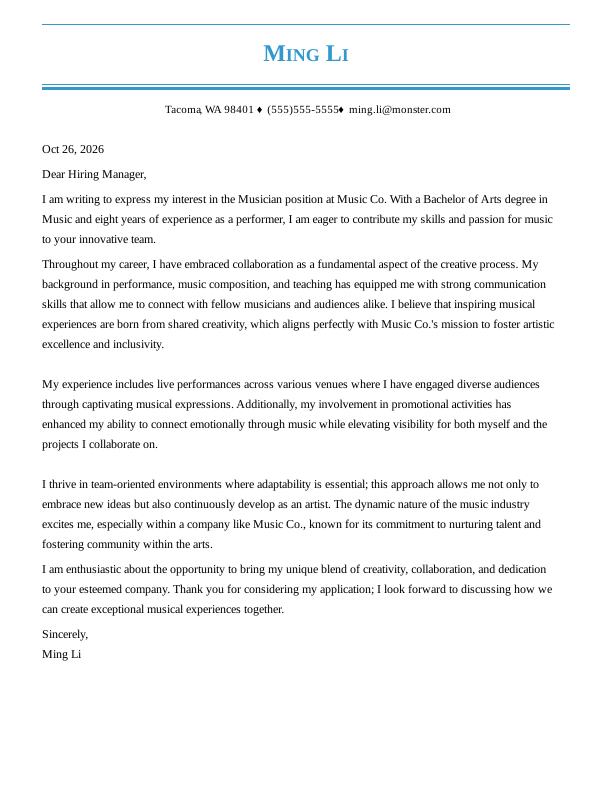
Mid-Career Musician Cover Letter
This template suits performers with several years of experience who manage bookings, lead band rehearsals, or focus on a specific musical genre.
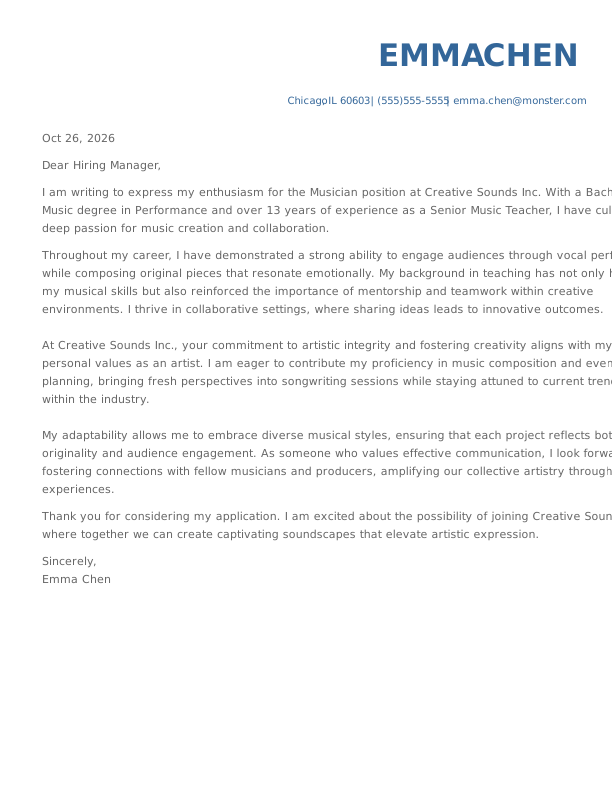
Experienced Musician Cover Letter
This template fits experienced musicians who direct ensembles, compose original pieces, or mentor other performers in senior roles.
Musician Cover Letter Template (Text)
Paste this musician cover letter template into your document, then copy the text and customize it with your venues played and notable releases or awards.
Chris Patel
Louisville, KY 40204
(555)555-5555
chris.patel@monster.com
Oct 26, 2026
Dear Hiring Manager,
I am writing to express my interest in the Musician position at The Music Hub. With a Bachelor of Music degree in Performance and four years of experience as a music instructor, I have honed my skills in music composition, performance, and teaching. My background has equipped me with a deep understanding of musical theory and an unwavering passion for sharing the joy of music with others.
At The Music Hub, I resonate strongly with your mission to nurture musical talent and engage communities through exceptional performances and educational initiatives. My collaborative working style allows me to thrive in dynamic environments where teamwork is essential. I take pride in fostering creativity among peers while delivering engaging performances that connect artists with audiences.
I have participated actively in various live performance settings, which have not only refined my artistic abilities but also enhanced my communication skills. Whether it’s performing at community events or collaborating on innovative projects, I approach each opportunity with enthusiasm and empathy.
In addition to live performances, I am eager to contribute to educational workshops that inspire others while promoting cultural exchange within our community. My adaptability enables me to explore diverse musical genres effortlessly; this versatility aligns well with The Music Hub’s values.
Thank you for considering my application. I look forward to the possibility of contributing to your vibrant team at The Music Hub and helping foster growth within the music community.
Sincerely,
Chris Patel
How to Write a Musician Cover Letter
Writing a strong musician cover letter starts with gathering details about your performance history, set lists, and formal training. Follow the steps below to tailor your experience to a specific job opening.
1. Research & Prepare
Research what the employer needs in live performance or studio work before writing. Check its focus genres, target audiences, and rehearsal schedules so your cover letter directly addresses its current operational goals.
Use these tips to guide your initial preparation for a music position:
- Review the employer’s event calendar to see which genres and audience types it books most often.
- Check the job posting for specific tools or software listed for rehearsal tracking, scheduling, or audio production.
- Read recent industry articles or press releases about its latest record releases or tour schedules.
2. Hook the Reader
Start with an opening line that shows immediate fit for the role rather than a generic intro. Connect your experience directly to the employer’s stage requirements, sound, or schedule needs right away.
Consider these strong lead-in approaches depending on your primary musical focus:
- Tour-ready repertoire fit: “Built a 90-minute set that pairs 35 minutes of crowd sing-alongs with 20 minutes of deep cuts, using Ableton setlists to keep transitions tight during a 12-date tour.”
- Studio workflow and deliverables: “For my latest EP, I tracked audio in Pro Tools at 96 kHz and delivered stems within two days following mastering revisions.”
- Community credibility through live outcomes: “As bandleader for a weekly residency at The Lantern Room, I grew nightly attendance from 60 to 120 guests over six weeks while maintaining consistent audio levels.”
3. Tell Your Professional Story
Use your letter body to share how you engage audiences and handle real performance situations. Include specific numbers like ticket sales or audience growth to give clear proof of your impact.
Here are examples of measurable achievements to include in your narrative:
- Increased ticket sales from 62% to 91% for a headlining show by refining set pacing and promoting single releases online.
- Generated $18.4K in merchandise sales across three tour dates by bundling exclusive posters with music sign-ups.
- Recorded and mixed 12 tracks within 10 days while maintaining an average 4.7 out of 5 satisfaction rating on post-show attendee surveys.
4. Showcase Your Skills
Rather than stating generic qualities, highlight practical examples that demonstrate your core musical capabilities directly. Match specific moments from your past work to key requirements in the job ad.
Examples of key skill areas to showcase include:
- Performance readiness: “Drilled setlist transitions during rehearsals to ensure show sets started promptly on schedule.”
- Audio gear troubleshooting: “Checked signal path routing when monitor audio dropped during soundcheck, quickly restoring proper instrument tone.”
- Collaboration and communication: “Reviewed stage cues with the rhythm section before performing to keep dynamics synchronized during key song transitions.”
5. Explain Any Special Circumstances
Address any career gap, role transition, or location move briefly in one or two clear sentences. Highlight active performance work or ongoing practice to show current readiness for ensemble needs.
Here are ways to explain common career circumstances concisely and effectively:
- “Following a six-month break for personal reasons, I returned to active playing by rehearsing weekly with a community choir and refreshing my set list.”
- “Shifting from classical performance to session work after completing chart-reading training and producing client demos in Ableton Live.”
- “After relocating to Seattle last winter, I established local gigs through union listings and updated my audition recordings.”
6. End With a Professional Goodbye
Conclude your cover letter with a polite thank-you and a direct next step, such as offering to share audio samples or discuss set options. Keep your closing sentence concise and professional.
For example, state that you would welcome the opportunity to discuss setlists tailored to the venue’s audience. End with a standard closing sign-off like “Sincerely” or “Best regards.”
4 Tips for Formatting Your Cover Letter
Hiring managers often skim musician cover letters quickly, so a clean layout helps them spot your key experience right away. Clear formatting makes your performance background, setlist versatility, and job fit easy to read during an initial review.

Use a Professional Font & Layout
Pick a clean font like Arial, Calibri, or Georgia at 10–12 pt to keep your letter readable during quick skims. Use 1-inch margins and match your resume’s header style to maintain a consistent presentation.

Address the Hiring Manager Directly
Find the specific contact name on the job listing or venue directory whenever possible. If an individual contact is not listed, use a professional greeting like “Dear Hiring Manager” instead of outdated phrasing.

Use Bullet Points for Key Achievements
Include three to four bullet points to highlight measurable results, such as attendance growth, stream counts, or rehearsal consistency. Bullet points help managers spot your key achievements fast.

Balance Spacing & Margins
Use 1.0 to 1.15 line spacing with clear line breaks between paragraphs to prevent dense blocks of text. Set standard margins to ensure your letter looks neat both on screen and in print.
Key Takeaways
- Show your live performance readiness by citing a specific set you delivered under short notice or tight schedules.
- Include clear metrics like ticket growth, streaming numbers, or rehearsal turnaround times to prove your impact.
- Tailor your cover letter to match whether the role emphasizes touring stamina, songwriting output, or studio sight-reading precision.
More Cover Letter Examples
Browse Monster’s Resume Templates
Monster also has hundreds of ATS-friendly resume templates for all career levels and industries. Create a matching resume to help you land the interview.
Frequently Asked Questions
Last Update:
Do I really need a cover letter?
You should include a cover letter because it explains the story behind your sound and performance approach. A resume lists your past gigs and training, but a letter shows how you prepare for rehearsals and connect with live audiences.
A cover letter allows you to explain your active set preparation and state why you want to work with a specific venue or ensemble.
How long should my cover letter be?
Your musician cover letter should be under one page long, ideally between 250 and 400 words. Hiring managers often review applications quickly, so concise writing helps your main qualifications stand out.
Structure your letter into three or four short paragraphs that focus on your strongest achievements. Emphasize relevant training, key performance credits, and ensemble experience to show fit fast.
Should my cover letter match my resume?
Your musician cover letter should match your resume visually to present a single cohesive application. Use matching fonts, colors, and header formatting across both documents for a polished look.
Ensure the content complements your resume instead of repeating it line for line. While your resume lists past shows or releases, your letter can detail a key achievement and express your interest in the organization.
What should I include in my cover letter header?
Your cover letter header should include your full name, phone number, professional email, city, state, date, and recipient details. Include the booking contact’s name and venue name if available, matching the visual layout of your resume header.
Should I mention salary expectations in my cover letter?
You should only mention salary expectations in your musician cover letter if the job post requests them. When required, state a flexible pay range based on local market standards and note that you are open to discussing overall compensation terms.

Megan Dawkins is a career industry editor who empowers job seekers to take control of their career paths using Monster’s comprehensive job search and resume tools. She specializes in helping job seekers navigate the flexible job market.
See More From Megan DawkinsExplore Related Career Advice







How to Write a Cover Letter for Internal Positions or Promotions (Examples & Tips)

Updated:
Apr 23, 2026
|
19 min read


Cover Letter vs Resume: What’s the Difference & Do You Need Both?

Updated:
Apr 23, 2026
|
18 min read