


Free Management Cover Letter Templates & Examples
A strong management cover letter shows how you lead teams, solve everyday problems, and deliver reliable results. Use our free examples and simple writing tips to highlight your leadership wins and show employers what you can do for them.
Real-World Cover Letters That Get Results
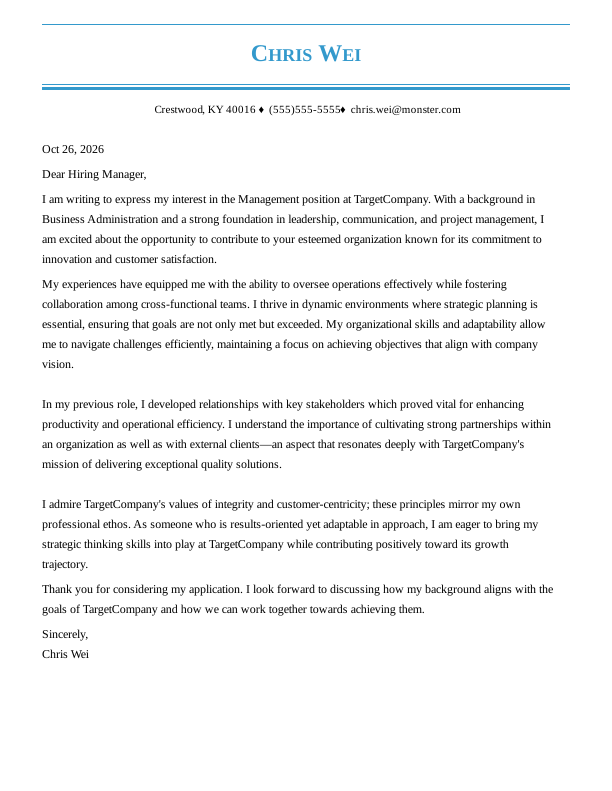
 Free
Management Entry-Level Cover Letter
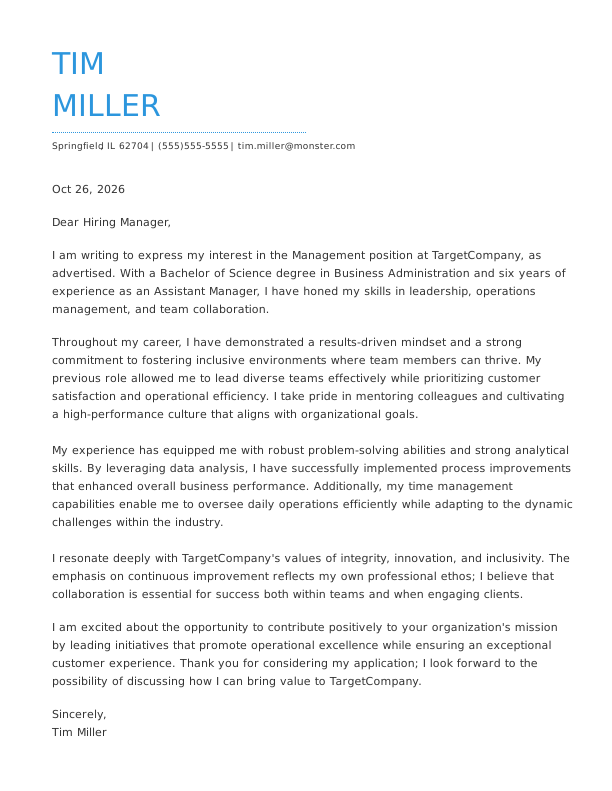
Management Mid-Level Cover Letter
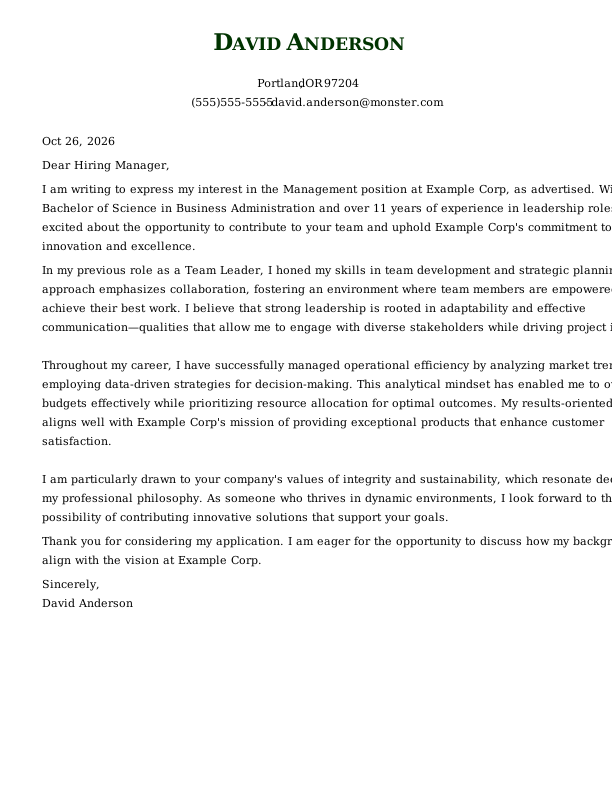
Management Experienced Cover Letter
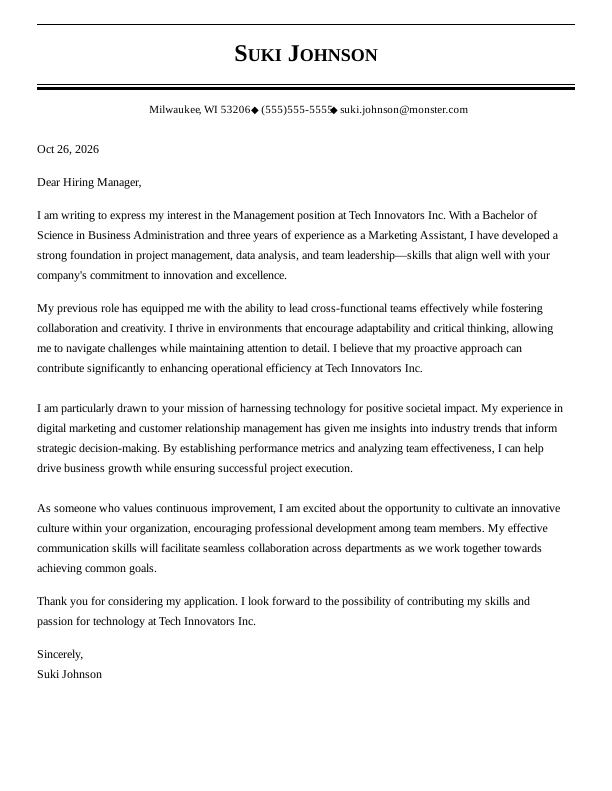
Management Entry-Level Cover Letter
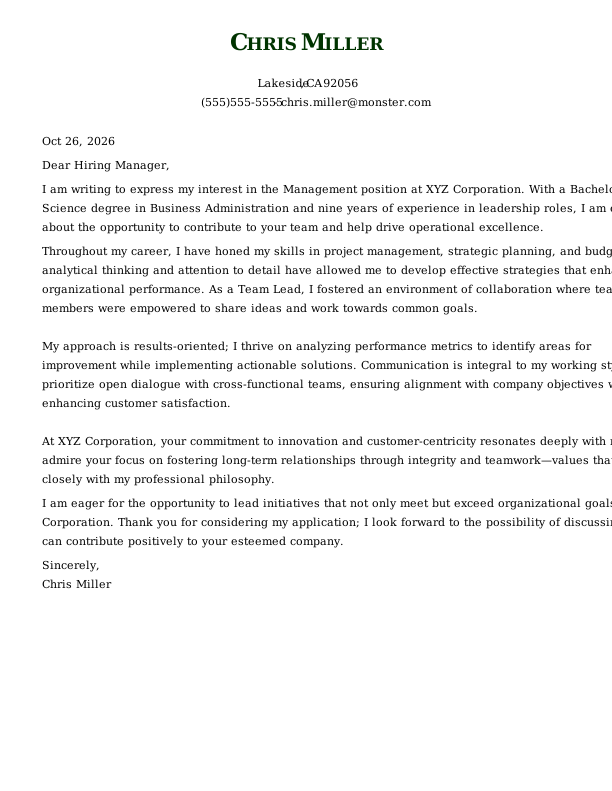
Management Mid-Level Cover Letter
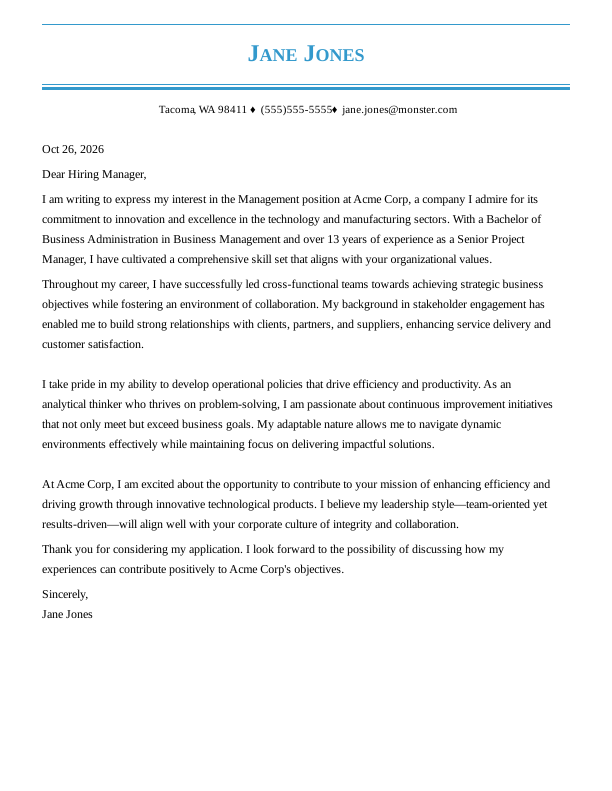
Management Experienced Cover Letter
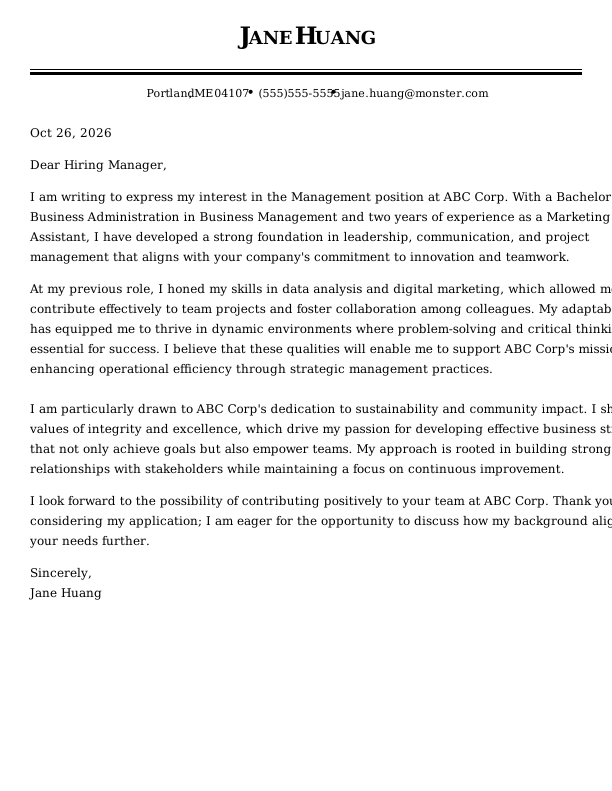
Management Entry-Level Cover Letter
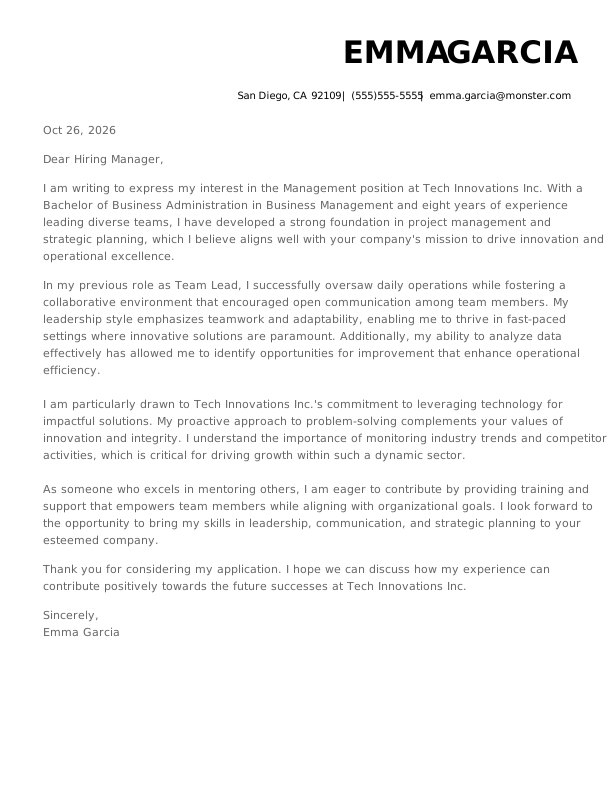
Management Mid-Level Cover Letter
Browse Free Cover Letter Templates
- Academic
- Account Manager
- Accountant
- Accounts Payable
- Administrative Assistant
- Admissions Counselor
- Architecture
- Artist
- Assistant Principal
- Babysitter
- Barista
- Bartender
- Bookkeeper
- Brand Ambassador
- Business Analyst
- Business
- Caregiver
- Chef
- Civil Engineering
- Computer Science
- Construction
- Consulting
- Copywriter
- Cosmetology
- Custodian
- Customer Service
- Customer Service Representative
- Data Analyst
- Data Entry
- Dental Assistant
- Dental Hygienist
- Digital Marketing
- Electrical Engineering
- Emt
- Engineering
- Esthetician
- Event Coordinator
- Executive Assistant
- Fashion Designer
- Finance
- Financial Analyst
- Firefighter
- Flight Attendant
- Graphic Designer
- Hair Stylist
- Healthcare
- Hr Generalist
- Investment Banking
- It
- Janitor
- Journalism
- Lab Technician
- Law Clerk
- Lawyer
- Librarian
- Logistics
- Maintenance Worker
- Makeup Artist
- Manager
- Marketing Coordinator
- Marketing
- Marketing Manager
- Massage Therapist
- Mechanic
- Mechanical Engineer
- Medical Assistant
- Non Profit
- Nursing
- Occupational Therapy
- Office Assistant
- Office Manager
- Operations Manager
- Paralegal
- Personal Trainer
- Pharmacist
- Pharmacy Technician
- Photographer
- Physician Assistant
- Pilot
- Police Officer
- Program Manager
- Project Manager
- Property Manager
- Psychology
- Receptionist
- Research Assistant
- Restaurant Manager
- Retail
- Sales
- Sales Manager
- School Counselor
- Security
- Security Officer
- Social Work
- Software Engineer
- Special Education Teacher
- Starbucks
- Substitute Teacher
- Teacher
- Teaching Assistant
Cover Letter Examples for Managements
Cover letter expectations shift as you take on larger teams and bigger operational goals. Select the example that best matches your current career stage for tips on how to present your leadership skills and day-to-day business impact.
Entry-Level Management Cover Letter
This template is built for professionals stepping into their first management role. It highlights foundational leadership abilities, relevant coursework, and transferable skills from early projects or team coordination.
Mid-Career Management Cover Letter
This template works best for managers with a few years of hands-on experience under their belt. It emphasizes daily operational oversight, team mentorship, and practical process improvements that keep work running smoothly.
Experienced Management Cover Letter
This template fits seasoned leaders with extensive industry backgrounds. It centers on long-term strategy, cross-department alignment, budget management, and guiding organizations through steady operational growth.
Management Cover Letter Template (Text)
Copy this management cover letter template into your document, then personalize it with your leadership metrics and the company or department you’re targeting.
Emily Garcia
Riverview, FL 33581
(555)555-5555
emily.garcia@monster.com
Oct 26, 2026
Dear Hiring Manager,
I am writing to express my interest in the management position at Acme Corp, as advertised. With a Bachelor of Business Administration degree in Management and seven years of experience as a project manager, I have developed a strong foundation in leading teams and optimizing operations within dynamic environments.
At my previous role, I successfully oversaw various projects that required strategic planning and budget management. My approach is detail-oriented and results-driven, ensuring that each initiative aligns with broader organizational goals while fostering innovation. As an effective communicator, I prioritize collaboration among team members and departments to enhance productivity and professional development.
I am particularly drawn to Acme Corp’s commitment to sustainability and its mission to drive growth through innovative solutions. I believe that my proactive leadership style can contribute significantly to your objectives by inspiring teams to achieve excellence while maintaining customer satisfaction.
My analytical skills enable me to monitor industry trends effectively, which informs decision-making processes essential for maintaining competitive advantage. Additionally, my adaptability equips me well for the fast-paced environment at Acme Corp.
I am excited about the opportunity to bring my expertise in project management and team leadership to your esteemed company. Thank you for considering my application; I look forward to the possibility of discussing how I can contribute positively at Acme Corp.
Sincerely,
Emily Garcia
How to Write a Management Cover Letter
Writing an effective management cover letter comes down to telling clear stories backed by real outcomes. The steps below show you how to tailor your leadership background to a specific opening so hiring managers can spot your strengths right away.
1. Research & Prepare
Before writing a single word, take time to understand what the organization needs its new manager to tackle right away. Look into the company’s operating rhythm, tools, and current business priorities, such as managing costs or improving customer retention. This lets you write about real challenges instead of relying on generic leadership statements.
To gather specific details you can speak to in your letter, try these quick steps:
- Review the job post to note key performance indicators, software requirements, and reporting structures.
- Check the company’s recent announcements or annual filings to see which strategic initiatives it is prioritizing right now.
- Browse company news or blog posts to spot the operational challenges the team might be facing today.
2. Hook the Reader
Grab the hiring manager’s attention right in your opening sentence by showing how you direct teams, track progress, or solve operational hurdles. Skip standard lines like “I am writing to apply,” which hiring managers see dozens of times every day.
Here are a few ways to open with immediate impact:
- Highlight an operational metric: “In my last operations role, I cut department overtime by 9% simply by introducing weekly scheduling reviews and clearer escalation rules.”
- Spotlight process improvements: “I led a new workflow rollout across two teams, reducing project cycle times from 10 days to 6 through daily check-ins and clearer work limits.”
- Showcase cross-functional leadership: “Following an internal review with our technical and compliance leads, I created a centralized risk log and had it fully approved within 30 days.”
3. Tell Your Professional Story
Your resume lists what you did, but your cover letter explains how you make decisions and lead people through everyday work. Including numbers helps give hiring managers a clear picture of the scale you manage and the results you deliver.
Consider sharing specific achievements like these:
- Standardized team reporting templates, cutting monthly financial close time by 2.5 days.
- Managed a $3.2 million departmental budget while finishing two quarters in a row 6% under projected spend.
- Coached a team of 12 leads, helping reduce customer service escalations from 74 per month to 41 per month within three months.
4. Showcase Your Skills
Instead of calling yourself a “great communicator” or a “natural leader,” pick a specific requirement from the job post and describe a time you handled that exact situation.
Here are a few examples of showing your skills in action:
- Developing direct reports: When a team member missed an important delivery target, I walked through the process with them, identified where communication broke down, and set up a weekly check-in that kept future tasks on track.
- Refining workflows: I organized our team’s project tracking board to clarify handoffs between departments, which cleared up recurring delays and made ownership obvious to everyone involved.
- Managing stakeholder updates: Before rolling out a major process update, I prepared a summary outlining the key trade-offs and risks so leadership could sign off with confidence.
5. Explain Any Special Circumstances
If you have a gap in employment, are changing career paths, or are moving to a new city, address it directly in one or two simple sentences. Hiring managers want to know that your operational skills and knowledge of industry tools are up to date.
A short, straightforward explanation keeps the focus on your readiness:
- Career breaks: After taking six months away to care for family, I stayed sharp by consulting on weekly retrospectives and tracking agile sprints in Jira.
- Career shifts: I am moving from front-line operations into people management, supported by my ongoing HR certification coursework and direct experience running employee onboarding workflows.
- Relocations: I relocated to Austin last fall and am fully prepared to lead local team operations while using tools like Workday to manage ongoing performance reviews.
6. End With a Professional Goodbye
Wrap up your letter with a clear, confident closing and a brief note of thanks. Keep it concise, and invite a conversation where you can discuss the value you offer.
Offer a concrete talking point rather than a passive closing line. For instance, write: “I’d welcome the chance to discuss how my approach to team goal-setting can support your quarterly operational plans.”
Add a simple thank-you line, and sign off with “Sincerely” or “Best regards,” followed by your full name.
4 Tips for Formatting Your Cover Letter
Hiring managers often spend less than a minute scanning each application while balancing interviews, team meetings, and daily operations. A clean, well-structured document ensures your letter is organized and easy on the eyes, signaling that you bring that same clarity to managing workflows and communicating with a team.
Use these pro tips for a great cover letter format and efficient layout:

Keep It to One Page
A strong management cover letter should never exceed one page. Aim for 250 to 400 words split across three or four concise paragraphs. This gives you enough space to outline your leadership approach, share a metric-backed win, and describe the team or budget size you have handled, all without slowing the reader down.

Address the Hiring Manager Directly
Take a few minutes to check the job description, the company website, or professional networks to identify who oversees the department or hiring team. Using their name makes your application feel personal and intentional. If you cannot locate a specific person, use “Dear Hiring Manager” or “Dear Hiring Team” rather than stiff, outdated greetings.

Match Your Header to Your Resume
Use the same contact header, font styles, and color accents on your cover letter as you did on your resume. Keeping your styling consistent makes your documents look like a polished, unified application package that is easy for a recruiter or hiring committee to review.

Use Bullet Points for Key Achievements
Break up your text with three or four bullet points that highlight your most meaningful management wins. Bullet points stand out on the page, letting the reviewer scan your performance metrics, budget milestones, and process improvements before they read the rest of your story.
Top-Paying States for Management Roles
Knowing what managers earn can help you compare offers, plan your next move, and negotiate with confidence. Salary ranges vary widely by location, industry, and scope of responsibility, so it helps to ground decisions in solid benchmarks. The data below is sourced from the U.S. Bureau of Labor Statistics (BLS) and reflects recent nationwide averages for management roles.
Keep in mind that experience level, team size, and specialized skills can shift outcomes. Budget constraints and hiring demand also affect pay at different employers.
| Alabama | $118,670 |
| Alaska | $133,390 |
| Arizona | $127,960 |
| Arkansas | $100,260 |
| California | $167,520 |
| Connecticut | $159,110 |
| Delaware | $159,760 |
| District of Columbia | $179,190 |
| Florida | $128,110 |
| Georgia | $137,790 |
| Hawaii | $122,890 |
| Idaho | $107,850 |
| Illinois | $139,280 |
| Indiana | $125,210 |
| Iowa | $114,190 |
| Kansas | $121,650 |
| Kentucky | $108,040 |
| Louisiana | $117,440 |
| Maine | $121,450 |
| Maryland | $142,190 |
| Massachusetts | $167,440 |
| Michigan | $128,130 |
| Minnesota | $137,180 |
| Mississippi | $103,970 |
| Missouri | $111,750 |
| Montana | $110,810 |
| Nebraska | $117,900 |
| Nevada | $122,930 |
| New Hampshire | $144,490 |
| New Jersey | $175,900 |
| New Mexico | $124,530 |
| New York | $182,530 |
| North Carolina | $134,940 |
| North Dakota | $115,770 |
| Ohio | $121,730 |
| Oklahoma | $111,770 |
| Oregon | $133,860 |
| Pennsylvania | $131,730 |
| Rhode Island | $138,780 |
| South Carolina | $123,260 |
| South Dakota | $124,730 |
| Tennessee | $128,940 |
| Texas | $133,180 |
| Utah | $128,550 |
| Vermont | $121,870 |
| Virginia | $153,710 |
| Washington | $173,550 |
| West Virginia | $106,450 |
| Wisconsin | $134,010 |
| Wyoming | $127,420 |
| Guam | $82,180 |
| Puerto Rico | $90,240 |
| Virgin Islands | $93,170 |
Key Takeaways
- Tailor your management achievements to the specific operational goals, team size, and tools listed in the job description.
- Back up your leadership experience with concrete metrics that demonstrate how your decisions improved workflows, budgets, or team performance.
- Format your letter into short paragraphs and scannable bullet points so a busy hiring manager can evaluate your background in a quick scan.
More Cover Letter Examples
- Assistant Manager
- Business Manager
- CEO
- Chief Of Staff
- Executive
- General Manager
- Hr Manager
- Human Resources
- Product Management
- Project Coordinator
- Team Leader
Browse Monster’s Resume Templates
Monster also has hundreds of ATS-friendly resume templates for all career levels and industries. Create a matching resume to help you land the interview.
- Assistant Project Manager
- Associate Product Manager
- Benefits Specialist
- Business Administration
- Business Development
- Business Management
- Business Manager
- Business Operations
- Business Owner
- Business
- Ceo
- Change Manager
- Chief Of Staff
- Ciso
- Community Outreach Coordinator
- Coo
- Corporate Trainer
- Director Of Operations
- Director
- Entrepreneur
- Executive Director
- Executive Manager
- Executive Recruiter
- Executive
- Freelance
- General Manager
- Healthcare Management
- Hr Analyst
- Hr Business Partner
- Hr Consultant
- Hr Coordinator
- Hr Director
- Hr Manager
- Hr Specialist
- Managing Director
- Onboarding Specialist
- Operations Manager
- Program Coordinator
- Program Director
- Program Manager
- Project Coordinator
- Project Manager
- Recruiter
- Recruiting Coordinator
- Recruitment Coordinator
- Regional Manager
- Risk Management
- Senior Manager
- Senior Program Manager
- Senior Project Manager
- Senior Recruiter
- Small Business Owner
- Supervisor
- Talent Acquisition Specialist
- Team Leader
- Technical Recruiter
- Training Manager
- Vice President
Frequently Asked Questions
Last Update:
Do I really need a cover letter?
Yes. You should include a cover letter for a management role even if it is optional. While a resume outlines your career history, a cover letter explains the leadership philosophy and decision-making behind those roles. It gives you the space to show how you guide teams, resolve operational issues, and support organizational goals.
How long should my cover letter be?
A management cover letter should be one page long, typically between 250 and 400 words. Keeping your letter concise ensures a busy hiring manager can review your qualifications quickly. Focus on three or four short paragraphs that highlight your strongest leadership wins, the tools you use, and the scope of teams you manage.
Should my cover letter match my resume?
Your cover letter should match your resume in visual style, using the same fonts, margins, and contact header. This consistency presents a neat, professional package to the hiring team. In terms of content, use the cover letter to add context to your biggest career achievements rather than repeating your resume bullets word for word.
What should I include in my cover letter header?
A cover letter header should include your full name, phone number, professional email address, and location. Below your details, add the date and the recipient’s information, including their name, title, and the organization’s address. Keeping this layout identical to your resume header makes your full application look organized and easy to navigate.
How do I write a cover letter for an internal position?
When writing a cover letter for an internal management position, highlight your proven track record with the organization’s existing workflows, cross-team relationships, and company culture. Mention specific operational improvements you led in your current role, and outline how your familiarity with the company’s goals will help you step into leadership and support the team immediately.

Toni Frana is a Certified Professional Resume Writer (CPRW), member of the Professional Association of Resume Writers & Career Coaches, and career expert who empowers job seekers to take control of their career paths using Monster’s comprehensive job search and resume tools.
See More From Toni FranaExplore Related Career Advice







How to Write a Cover Letter for Internal Positions or Promotions (Examples & Tips)

Updated:
Apr 23, 2026
|
19 min read


Cover Letter vs Resume: What’s the Difference & Do You Need Both?

Updated:
Apr 23, 2026
|
18 min read