
Free Quality Control Inspector Resume Templates & Examples
Spotting defects and enforcing standards on the production line protects both the product and the brand. Browse free quality control inspector resume and CV examples that convey your inspection protocols and compliance documentation.
Real-World Resumes That Get Results
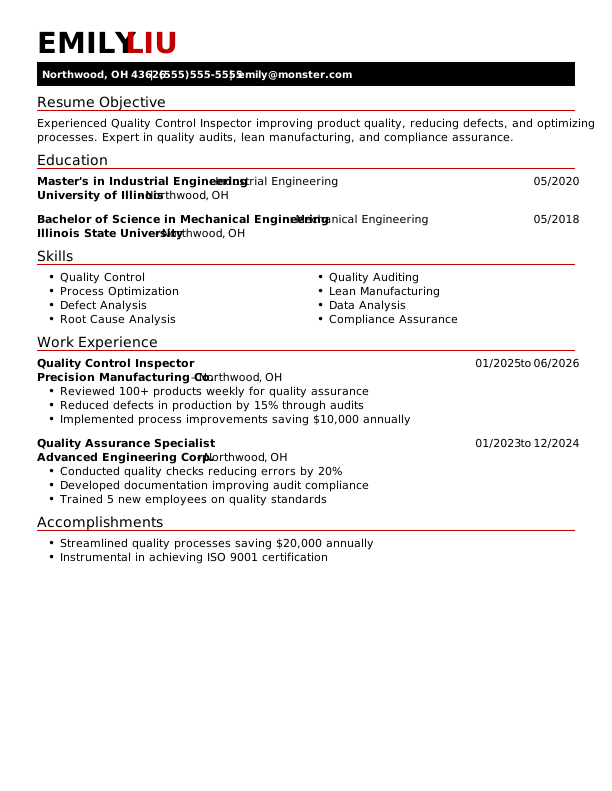
Quality Control Inspector Entry-Level Resume
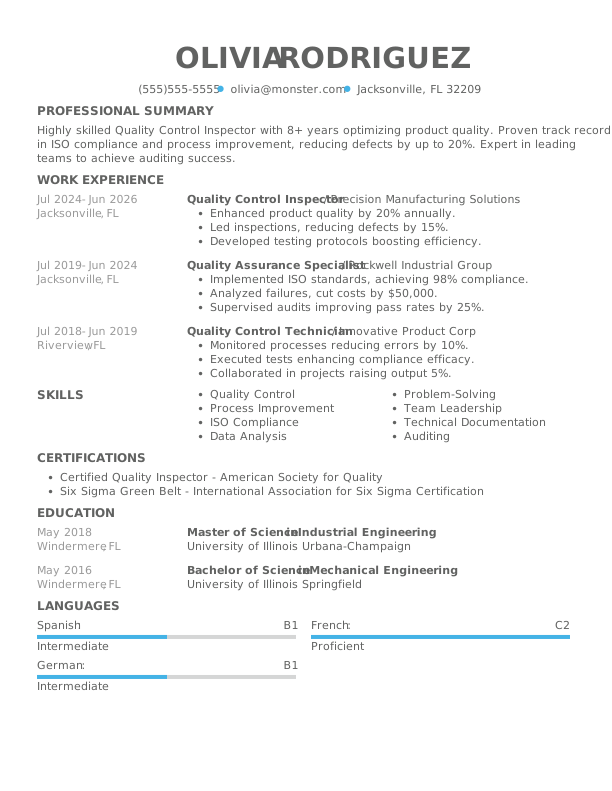
Quality Control Inspector Mid-Level Resume
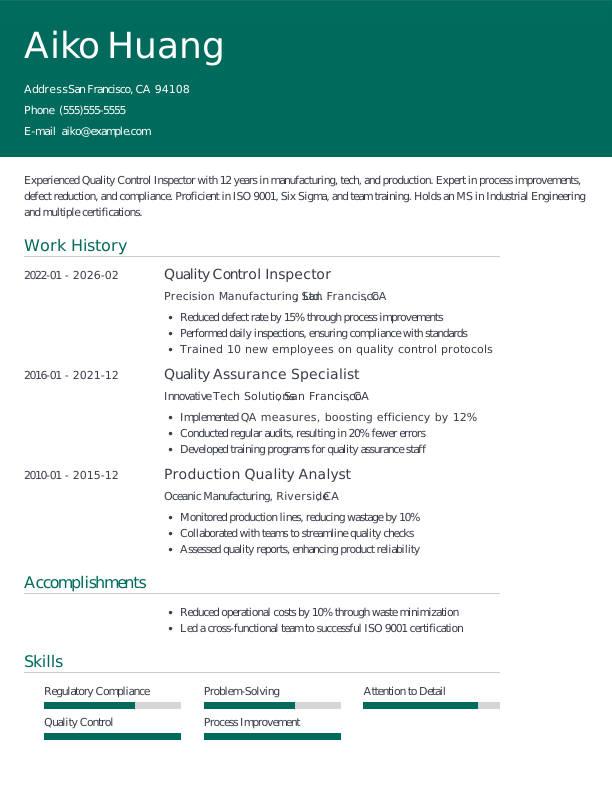
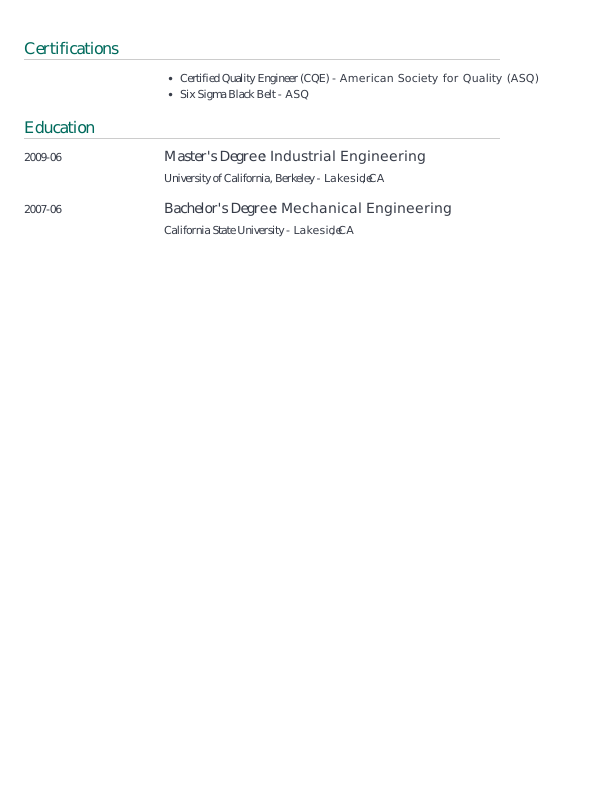
Quality Control Inspector Experienced Resume
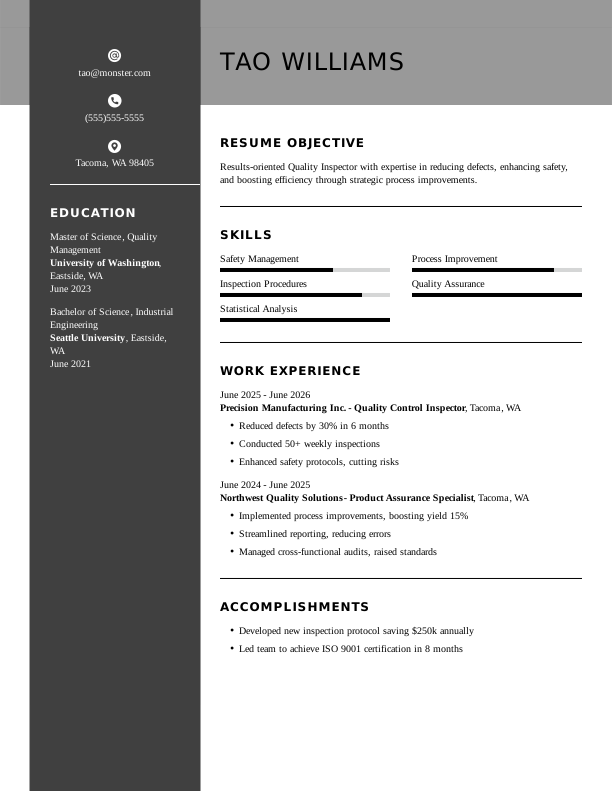
 Free
FreeQuality Control Inspector Modern Resume
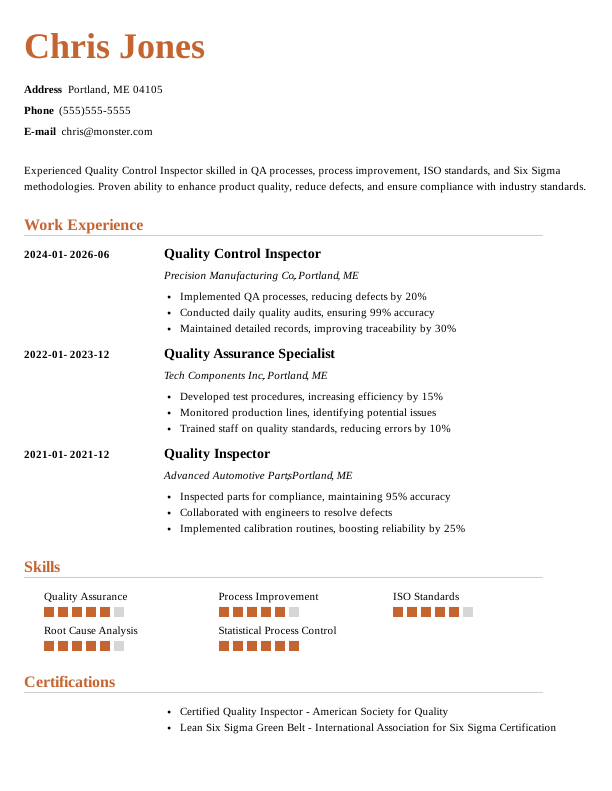
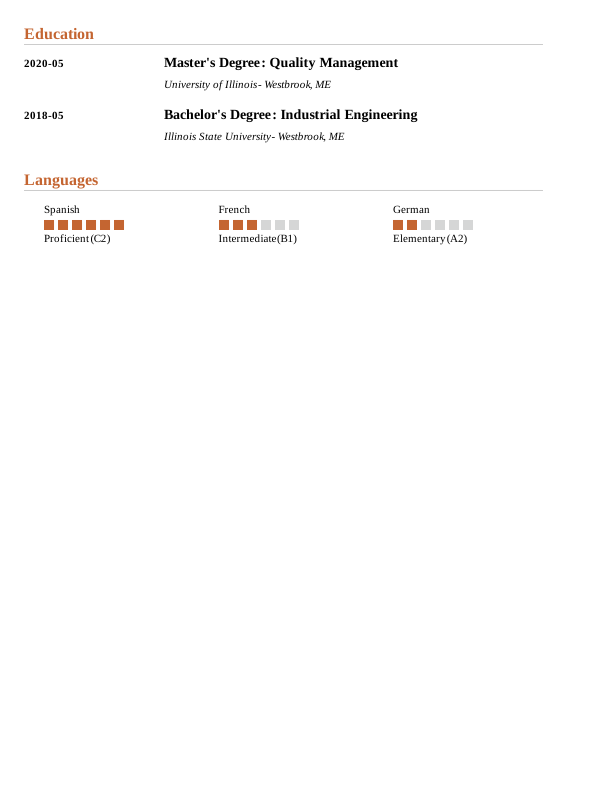
Quality Control Inspector Creative Resume
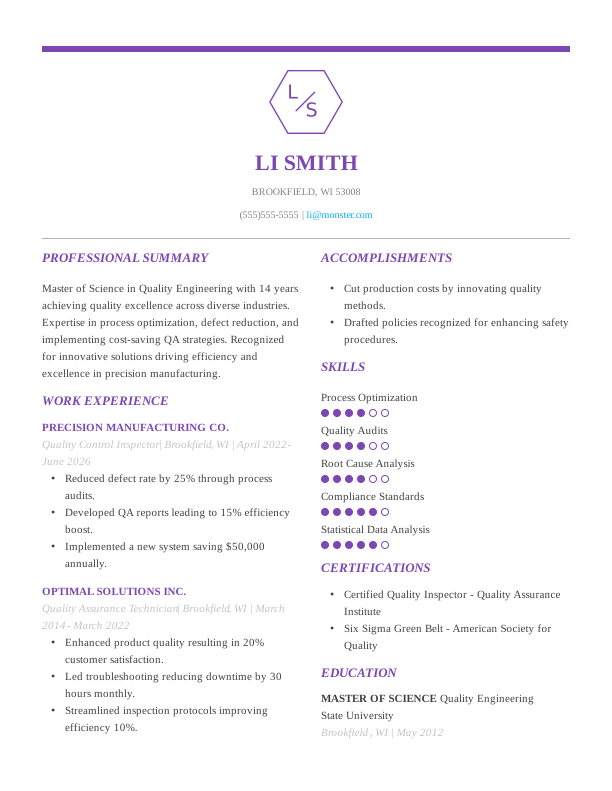
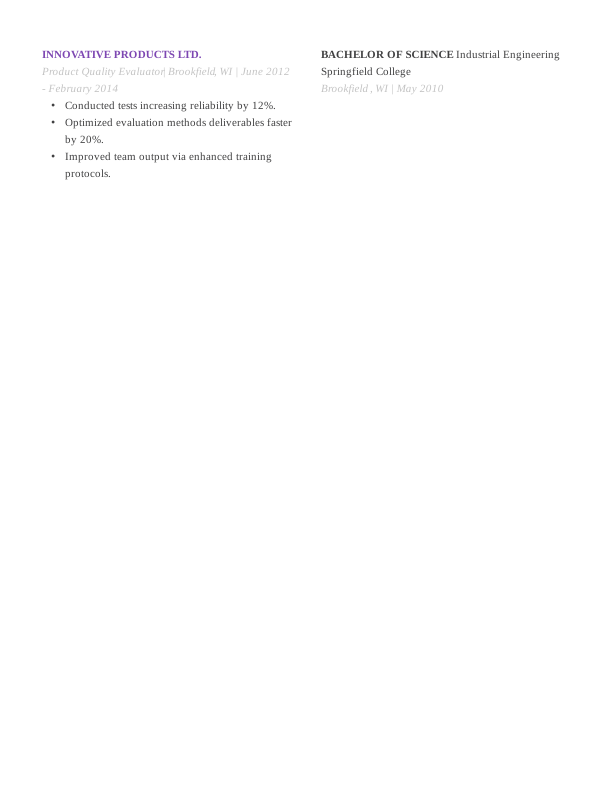
Quality Control Inspector Traditional Resume
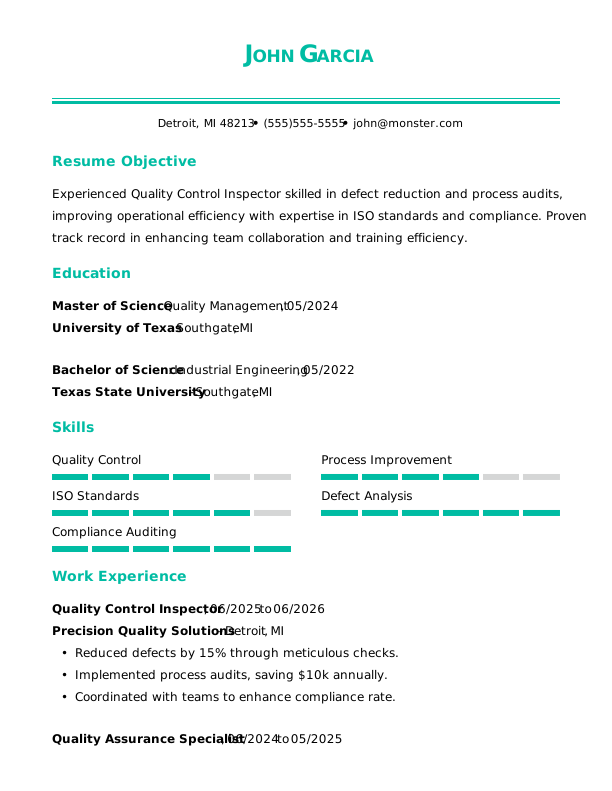
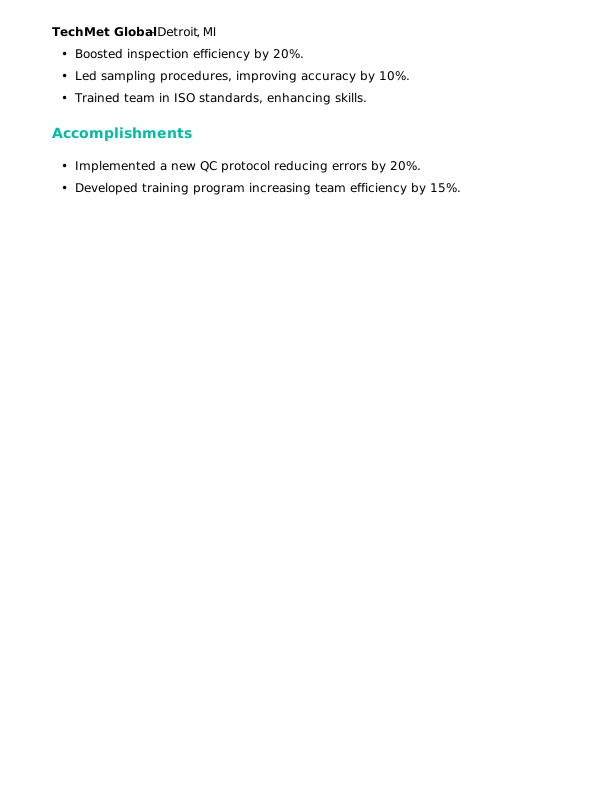
Quality Control Inspector Simple CV Example
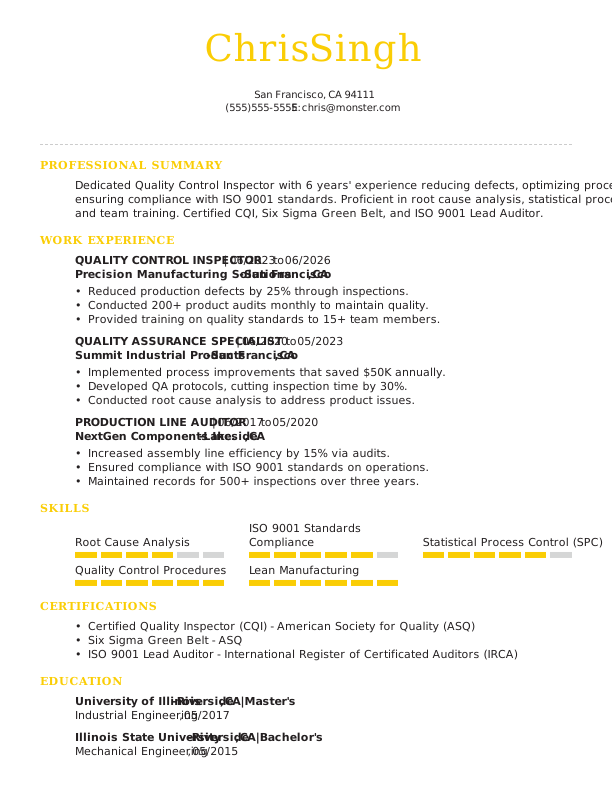

Quality Control Inspector CV Format
Browse Free Resume Templates
- Accounts Payable
- Adjunct Professor
- Artist
- Auto Mechanic
- Baker
- Business Development Manager
- Business
- Certified Nursing Assistant
- Classic & Traditional
- Cleaner
- College Student
- Concierge
- Construction Worker
- Corporate
- Creative & Unique
- Custodian
- Customer Service
- Dental Assistant
- Direct Support Professional
- Entry-Level
- Flight Attendant
- Hospitality & Food Service
- Front Desk Receptionist
- Healthcare
- High School
- Housekeeping
- Hvac Technician
- Hybrid
- Inventory Manager
- Logistics
- Maintenance
- Management
- Modern
- Mortgage Loan Processor
- Pet Sitter
- Phlebotomist
- Production
- Rbt
- Sales
- Security Services
- Restaurant Server
- Simple & Basic
- Social Work
- Teacher
- Technology
Resume Examples for Quality Control Inspectors
Quality control inspector resumes and CVs can differ greatly depending on whether you’re just starting out or are an experienced professional. Explore tailored templates for each experience level, along with our Resume Builder, to create your own customized version.
Entry-Level Quality Control Inspector Resume
Ideal for recent graduates needing assistance writing a resume with no experience, this template is also suitable for individuals transitioning into quality control from other sectors.
Mid-Career Quality Control Inspector Resume
A good fit for quality control professionals with several years of experience, this template highlights recent achievements and positions job seekers for advancement into supervisory or specialized roles.
Experienced Quality Control Inspector Resume
An ideal choice for quality control professionals with over 10 years of experience, this template supports job seekers aiming for senior roles in quality assurance and process management.
Quality Control Inspector Resume Template (Text)
Use this customizable text format for a quality control inspector resume to copy, paste, and tailor directly in your document.
Amanda Turner
Miami, FL 33139
Professional Summary
Dedicated Quality Control Inspector with 4 years of experience. Expert in ISO 9001, process improvements, and quality assurance, driving a 20% reduction in defects.
Work Experience
June 2024 – June 2026
Superior Manufacturing – Miami, FL
Quality Control Inspector
- Conducted quality checks on 1,000+ units weekly
- Reduced defect rate by 20% through process improvements
- Maintained documentation for ISO 9001 compliance
June 2022 – May 2024
Pinnacle Enterprises – Hollywood, FL
Quality Assurance Specialist
- Implemented QA procedures, reducing errors by 15%
- Monitored and reported on product quality using metrics
- Collaborated with teams to resolve 50+ quality issues
June 2020 – May 2022
Innovative Solutions – Hialeah, FL
Product Quality Analyst
- Analyzed quality data for 200+ products monthly
- Led quality improvement projects, saving $50k annually
- Drafted reports for senior management review
Education
May 2020
University of Illinois Champaign, IL
Master of Science Quality Management
May 2018
University of Wisconsin-Madison Madison, WI
Bachelor of Science Industrial Engineering
Certifications
- Certified Quality Inspector – American Society for Quality
- Lean Six Sigma Green Belt – International Association for Six Sigma Certification
Skills
- Quality Assurance
- Process Improvement
- ISO 9001
- Data Analysis
- Inspection Techniques
- Root Cause Analysis
- Quality Management Systems
- Technical Documentation
How to Write a Quality Control Inspector Resume
As a quality control inspector, understanding how to write a resume involves showcasing your attention to detail, relevant experience, and a clear format that reflects the job requirements. Use the guidance below to emphasize your key strengths and tailor your resume for the positions you’re interested in.
1. Contact Info
Your contact information should be clear, professional, and easy to find at the top of your resume.
Make sure to include:
- Full name
- Phone number
- Professional email address
- City and state (ZIP code is optional)
- LinkedIn profile or personal portfolio (if relevant)
 PRO TIP
Avoid including personal information such as your Social Security number, age, or photos unless specifically requested by the employer.
2. Resume Profile
A resume profile is a brief introduction (two to four sentences) that highlights your qualifications and unique value. It serves as a compelling pitch to hiring managers, capturing their interest and prompting them to explore your resume further.
Typically placed at the top of your resume, the profile can be formatted as either a summary or an objective, each serving distinct purposes. Understanding these differences helps you tailor this section for maximum impact:
- A resume summary emphasizes key experience, skills, and achievements relevant to quality control roles. This format is particularly beneficial for individuals with a solid work history or transferable experience who want to highlight their contributions in the field of quality assurance.
- A resume objective highlights your aspirations and career goals, showcasing what you aim to achieve in your next role. It’s particularly beneficial for recent graduates, career changers, or individuals with limited experience, such as entry-level technicians or those shifting into quality control from other sectors.
Let’s take a look at an example of each to see how a resume summary and a resume objective differ:
Quality control inspector resume summary example:
Detail-oriented quality control inspector with over 6 years of experience in manufacturing environments, specializing in product inspection and compliance. Proficient in data analysis, quality assurance processes, and team collaboration. Acknowledged for improving production standards and contributing to significant reductions in defect rates.
Quality control inspector resume objective example:
Recent graduate with a degree in quality control eager to launch a career in a dynamic manufacturing environment. Committed to maintaining high standards of quality and safety while contributing strong analytical skills and attention to detail in a production or quality assurance role.
3. Work Experience
The work experience on your resume is a pivotal selling point. Employers assess your job history to understand not only where you’ve worked but also the tangible impact you’ve made in quality assurance.
Your background in inspection and adherence to standards clearly demonstrates how you’re well-suited for the role of quality control inspector.
The work experience section should contain:
- Job title
- Employer name and location
- Dates of employment (month/year)
- 3–5 bullet points describing your relevant responsibilities and achievements
Tailor your content to highlight experiences relevant to the quality control inspector role. Start each bullet point with an action verb (like “Inspected,” “Analyzed,” “Documented”) to improve clarity and impact.
Incorporate quantifiable metrics whenever possible. Specific numbers, such as defect rates or compliance percentages, showcase your contributions and help differentiate you from other job seekers in the job market.
In general, consider following the format of:
[action verb] + [responsibility] = [result/achievement]
For example:
Conducted thorough inspections on 1,000+ units monthly, ensuring compliance with safety standards and achieving a 98% pass rate.
Note that you can also flip the result/achievement with the responsibility:
Achieved a 15% reduction in defects through implementing new quality control protocols and training staff on best practices.
With these techniques in mind, your resume bullets may look something like:
- Conducted inspections of 200+ products daily, ensuring compliance with quality standards and reducing defects by 20%.
- Implemented new testing protocols that improved accuracy of quality assessments, leading to a 15% decrease in customer complaints.
- Trained and mentored junior inspectors on inspection techniques and safety practices, improving team performance.
- Used statistical process control tools to analyze data trends and identify areas for improvement.
- Collaborated with production teams to address quality issues promptly, ensuring minimal disruption to operations.
4. Skills
The skills section provides a concise overview of professional abilities specific to quality control inspection. This helps hiring managers quickly assess qualifications and determine fit for the role.
Skills can be categorized into three groups:
- Soft skills are personal qualities that influence how well quality control inspectors collaborate with colleagues.
- Hard skills are specific, measurable abilities gained through education, training, or experience.
- Technical skills refer to the specific competencies required to operate tools and technologies in a given field.
5 Soft Skills for Your Resume or CV
- Attention to detail
- Effective communication
- Team collaboration
- Time management skills
- Analytical thinking
5 Hard Skills for Your Resume or CV
- Quality assurance methodologies
- Statistical process control (SPC)
- Defect tracking software (Jira, Bugzilla)
- Visual inspection techniques
- ISO 9001 compliance
In general, aim to include a diverse mix of relevant skills that align with the job requirements to demonstrate your overall value.
PRO TIP
If you’re a newer quality control inspector, consider placing your skills section higher on the resume, right after your summary. For those with more experience, it’s advisable to position this section lower and weave your skills throughout your work history instead.
5. Education
Understanding how to list education on your resume is essential to showcasing your qualifications. Start with your most recent or relevant degree, clearly stating the type of degree and the institution.
If you’ve recently graduated, you might include your graduation year, GPA (if it’s 3.5 or above), any honors received, and relevant coursework to highlight your academic achievements.
Quality control inspector resume education section example:
Associate Degree in Quality Control Technology
Community College of Philadelphia, Philadelphia, PA
Graduated: 2023 | Graduated with Distinction
PRO TIP
If you’re progressing from an Associate Degree in Quality Control to a Bachelor of Science in Quality Management, or have earned another relevant degree, list both in reverse-chronological order.
6. Certifications
Including listing certifications on your resume highlights your qualifications and helps cover any gaps in practical experience. Although this section isn’t standard on every resume, it’s often valuable for many quality control inspectors. Employers frequently look for specific certifications related to safety and quality standards, particularly in manufacturing or laboratory environments.
Focus on including only those certifications that directly improve your application and align with the role you’re pursuing. Make sure your credentials are current and presented in a clear format so employers can easily review them.
Quality control inspector certification examples:
- Certified Quality Inspector (CQI) | American Society for Quality | Expires: 01/2028
- Six Sigma Green Belt Certification | ASQ | Expires: 06/2027
- Quality Management System Auditor | International Register of Certificated Auditors (IRCA) | Expires: 03/2028
- ISO 9001:2015 Lead Auditor | PECB | Expires: 12/2027
Start Building Your Job-Winning Resume
Use Your Existing Resume
Import your current resume to transfer your information to one of our professional templates.
Create a New Resume
Start fresh with a template that catches your eye and follow the prompts to add your details.
Tailor Your Work History to Beat the ATS
Your work experience is more than a list of job titles. It’s an opportunity to showcase the measurable impact you’ve made on product quality, compliance, and operational efficiency. This approach also results in an ATS-friendly resume that applicant tracking systems (ATS) can easily scan.
To create an effective work history, tailor it to the specific quality control role you’re targeting by using relevant keywords and terminology. Begin by carefully analyzing the job description. Identify frequently mentioned skills, standards, or inspection techniques, and then incorporate those elements into your experience descriptions when possible.
Key Takeaways
- Tailor your resume to the job description. Incorporate keywords from the posting to assist both ATS and hiring managers.
- Highlight measurable achievements to demonstrate value. Use specific metrics (e.g., defect rates, inspection timelines, compliance scores) to improve your impact.
- Select a suitable format based on your experience. Entry-level inspectors may opt for a functional layout, while seasoned professionals often choose reverse-chronological resumes.
More Resume & CV Examples
- Assembler
- Assembly Line Worker
- Assembly Technician
- Chemist
- Cnc Machinist
- Cnc Operator
- Machine Operator
- Manufacturing Engineer
- Manufacturing
- Manufacturing Technician
- Material Handler
- Mechanical Designer
- Operator
- Plant Manager
- Process Operator
- Qa Analyst
- Qa Tester
- Quality Control
- Quality Control Specialist
- Quality Engineer
- Quality Manager
- Safety Manager
Cover Letters for Your Resume
Browse our library of cover letter examples to complete your application. A resume will have a better chance of getting noticed.
- Academic
- Account Manager
- Accountant
- Accounts Payable
- Administrative Assistant
- Admissions Counselor
- Architecture
- Artist
- Assistant Principal
- Babysitter
- Barista
- Bartender
- Bookkeeper
- Brand Ambassador
- Business Analyst
- Business
- Caregiver
- Chef
- Civil Engineering
- Computer Science
- Construction
- Consulting
- Copywriter
- Cosmetology
- Custodian
- Customer Service
- Customer Service Representative
- Data Analyst
- Data Entry
- Dental Assistant
- Dental Hygienist
- Digital Marketing
- Electrical Engineering
- Emt
- Engineering
- Esthetician
- Event Coordinator
- Executive Assistant
- Finance
- Financial Analyst
- Firefighter
- Flight Attendant
- Graphic Designer
- Hair Stylist
- Healthcare
- Hr Generalist
- Investment Banking
- It
- Janitor
- Journalism
- Lab Technician
- Law Clerk
- Lawyer
- Librarian
- Logistics
- Makeup Artist
- Manager
- Marketing Coordinator
- Marketing
- Marketing Manager
- Massage Therapist
- Mechanic
- Mechanical Engineer
- Medical Assistant
- Non Profit
- Nursing
- Occupational Therapy
- Office Assistant
- Office Manager
- Operations Manager
- Paralegal
- Personal Trainer
- Pharmacist
- Pharmacy Technician
- Photographer
- Physician Assistant
- Pilot
- Police Officer
- Program Manager
- Project Manager
- Property Manager
- Psychology
- Receptionist
- Research Assistant
- Restaurant Manager
- Retail
- Sales
- Sales Manager
- School Counselor
- Security Officer
- Social Work
- Software Engineer
- Special Education Teacher
- Substitute Teacher
- Teacher
- Teaching Assistant
- Truck Driver
- Vet Tech
- Veterinary Assistant
- Web Developer
Frequently Asked Questions
Last Update:
What resume format should I use for my quality control inspector resume?
There are three main resume formats available for quality control inspector positions. Your choice should reflect your experience level and the aspects of your background you wish to highlight:
- Chronological: The most popular format, a chronological resume highlights your work experience as a quality control inspector by detailing your responsibilities and achievements. This format is ideal for applicants with a consistent and relevant job history that reinforces their qualifications and showcases their expertise in the field.
- Functional: Also known as a skills-based resume, the functional resume emphasizes a qualifications summary and an expanded skills section to showcase your relevant abilities. By giving less emphasis to work history, this format is beneficial for job seekers lacking relevant experience or those with employment gaps.
- Combination: A combination resume integrates both chronological and functional elements, featuring a skills section alongside work experience. This format benefits quality control inspectors by allowing them to showcase their expertise in inspection processes while also demonstrating their career progression within the industry.
Should I include a cover letter with my resume?
Yes, you should include a cover letter with your quality control inspector application. A tailored cover letter improves your resume by allowing you to articulate your interest in the position and showcase relevant skills that may not be immediately evident from your resume alone. This personalized touch can help distinguish you from other applicants who may not take this extra step.
If you’re feeling uncertain about how to write a cover letter, don’t worry. Numerous resources are available to assist you, including guides on writing effective cover letters, examples tailored for different industries, and various formats to choose from based on your experience and style.
For added convenience, consider using a cover letter generator to simplify the process. This tool can help you quickly create a professional cover letter by offering templates and suggestions tailored to the specific job you’re applying for.
What keywords should I include to pass applicant tracking systems (ATS)?
To improve your resume for ATS, focus on incorporating keywords from the job posting. Look for terms like “quality assurance,” “defect analysis,” or “process improvement” that directly relate to the quality control inspector role. This tactic ensures your resume resonates with what hiring managers are seeking.
Additionally, include relevant certifications such as Six Sigma, ISO 9001, and tools you’re familiar with, like Minitab or AutoCAD. By doing this, you demonstrate your qualifications and technical expertise, increasing your chances of standing out during the screening process.
Should I include internships or volunteer quality inspections?
Yes, you should include internships and volunteer roles, especially if you’re new to the field. Highlighting these experiences demonstrates your practical skills in real-world situations and helps differentiate you when you have limited formal positions on your resume.

Kirsten Chorpenning is a career advice writer who empowers job seekers to take control of their career paths using Monster’s comprehensive job search and resume tools. She specializes in helping job seekers find rewarding jobs in today’s dynamic work environment.
See More From Kirsten ChorpenningExplore Related Career Advice


How to Put Transferable Skills on Your Resume: 120 Skills, Examples, & Tips
Updated:
Aug 27, 2026
|
16 min read


How to Write a Functional Resume (Formatting Tips, Template, & Examples)
Updated:
Aug 7, 2026
|
17 min read


Functional vs Chronological Resume: Which Format Is Right for You?
Updated:
Aug 3, 2026
|
16 min read

100+ Resume Adjectives to Help You Write a Stronger Resume in 2026 (With Examples)
Updated:
Jul 30, 2026
|
12 min read