
Free Nonprofit Resume Templates & Examples
Boost your chances with expertly designed nonprofit resume templates that help you get more interviews. These free resume templates include writing tips and guidance to craft a standout resume or CV that highlights your impact for hiring managers.
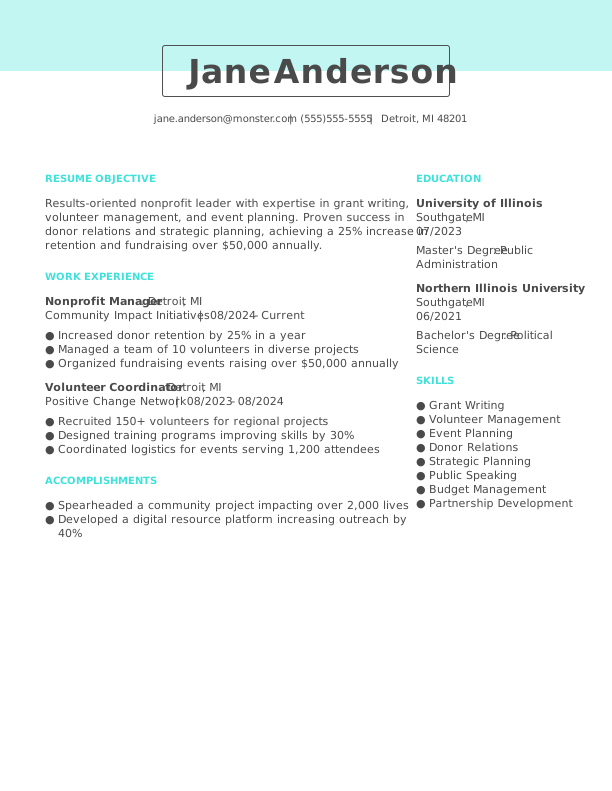
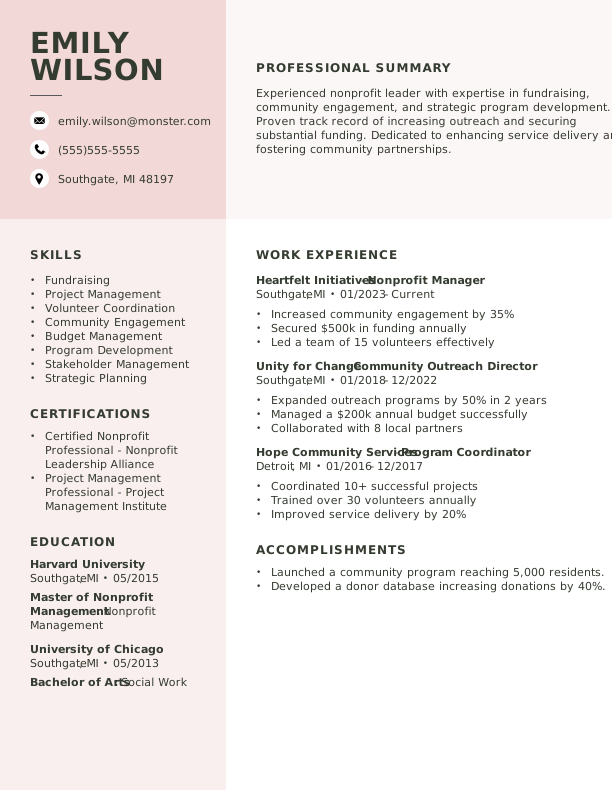
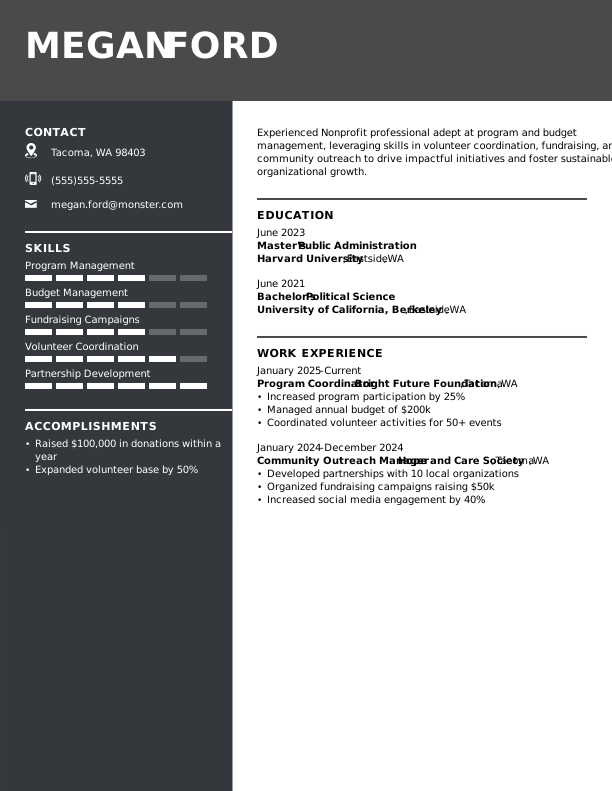
Real-World Resumes That Get Results
 Free
Free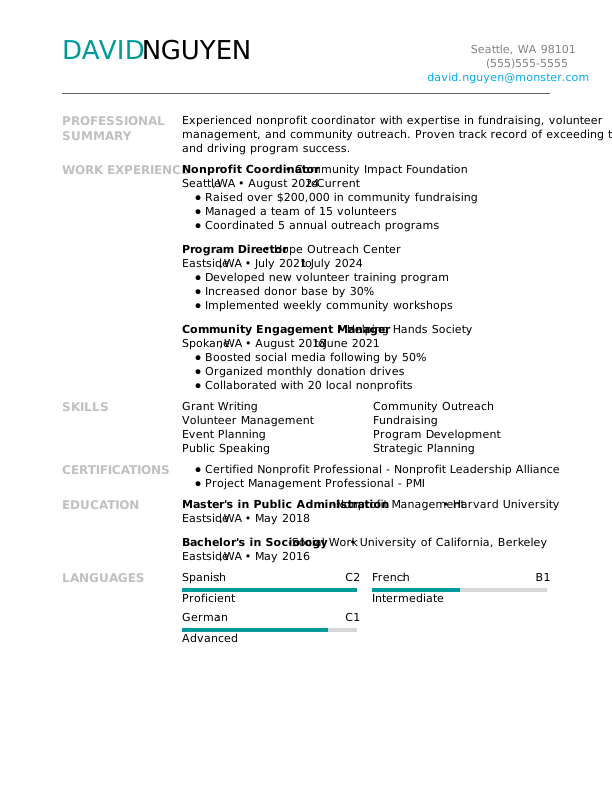
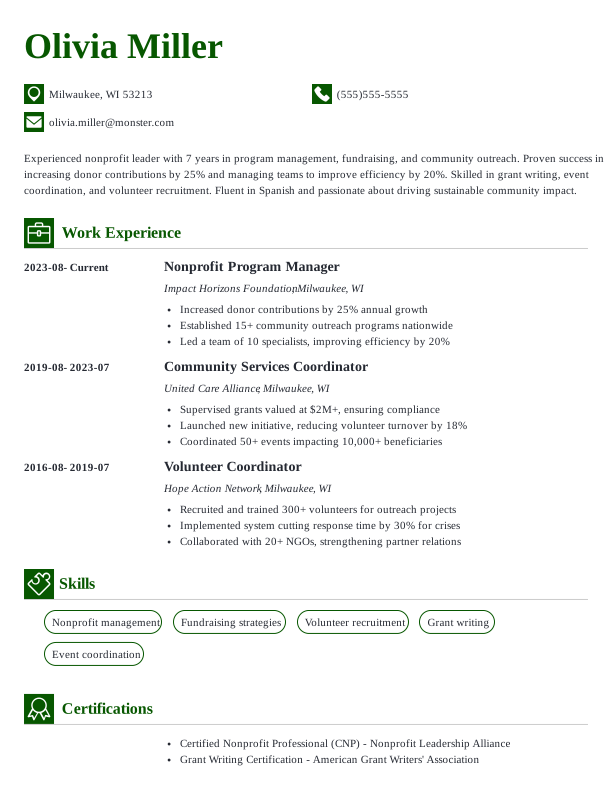

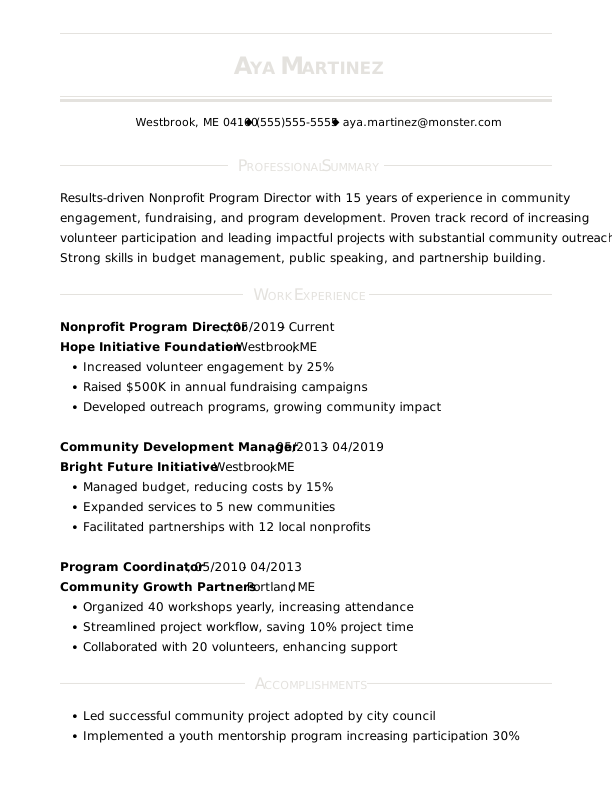

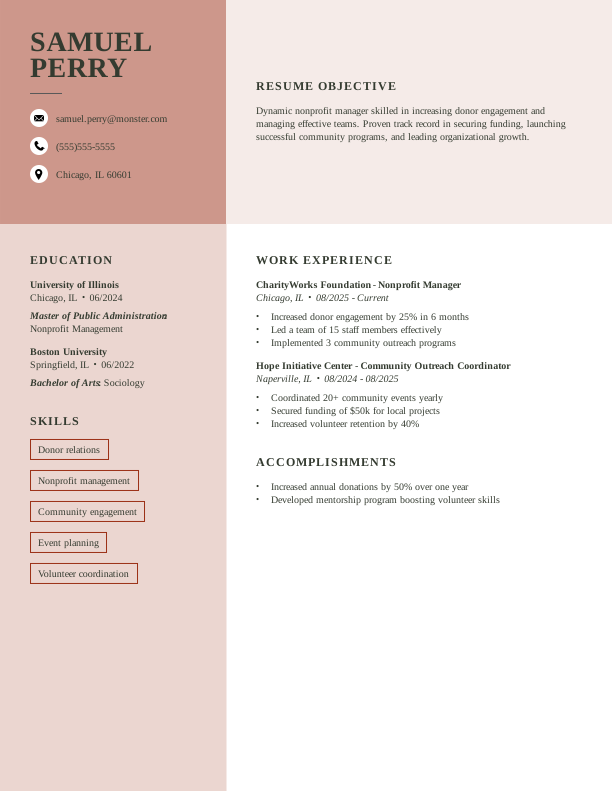
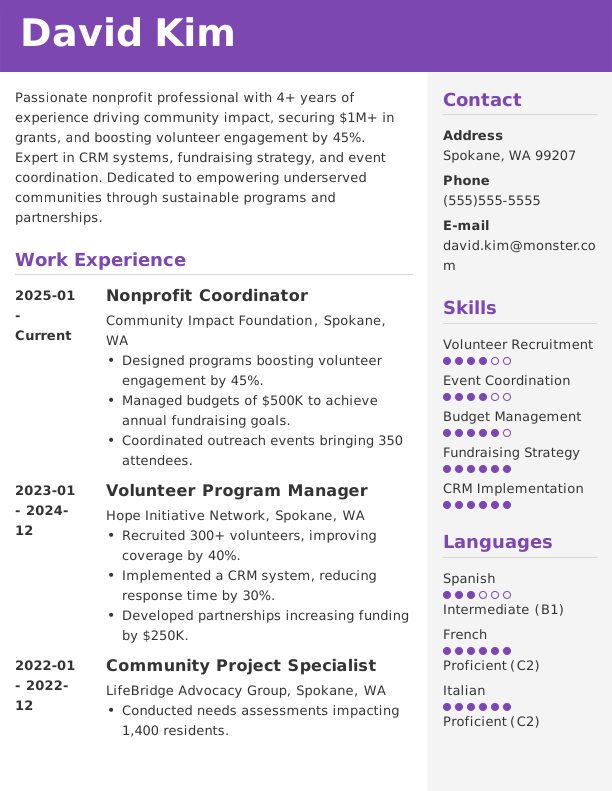

Browse Free Resume Templates
- Accounts Payable
- Adjunct Professor
- Artist
- Auto Mechanic
- Baker
- Business Development Manager
- Business
- Certified Nursing Assistant
- Classic & Traditional
- Cleaner
- College Student
- Concierge
- Construction Worker
- Corporate
- Creative & Unique
- Custodian
- Customer Service
- Dental Assistant
- Direct Support Professional
- Entry-Level
- Flight Attendant
- Hospitality & Food Service
- Front Desk Receptionist
- Healthcare
- High School
- Housekeeping
- Hvac Technician
- Hybrid
- Inventory Manager
- Logistics
- Maintenance
- Management
- Modern
- Mortgage Loan Processor
- Pet Sitter
- Phlebotomist
- Production
- Rbt
- Sales
- Security Services
- Restaurant Server
- Simple & Basic
- Social Work
- Teacher
- Technology
Resume Examples for Nonprofit Jobs
Nonprofit resumes and CVs change depending on the specific field or role. Explore templates for different stages and contexts to inspire your own resume for nonprofit jobs.
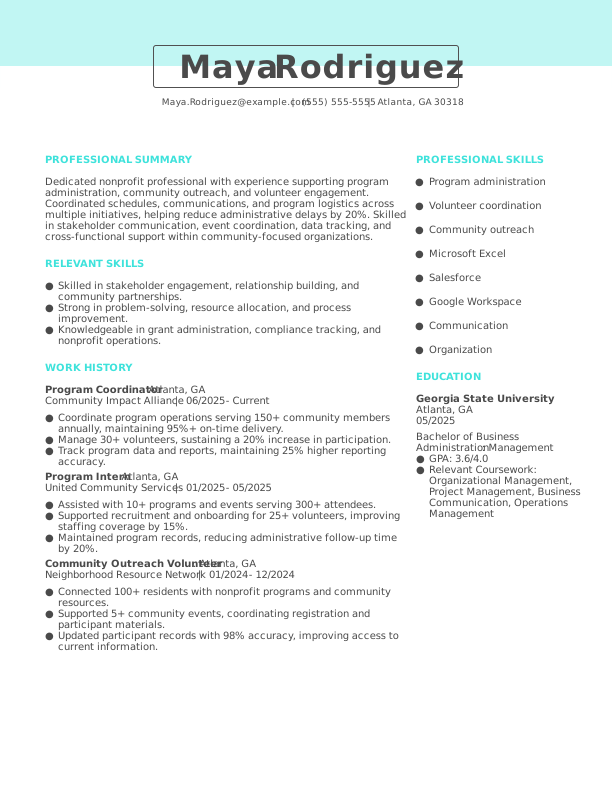
Program Coordinator Nonprofit Resume
This program coordinator resume emphasizes hands-on nonprofit experience, volunteer coordination, program administration, and relevant skills for professionals building an early-career nonprofit career.
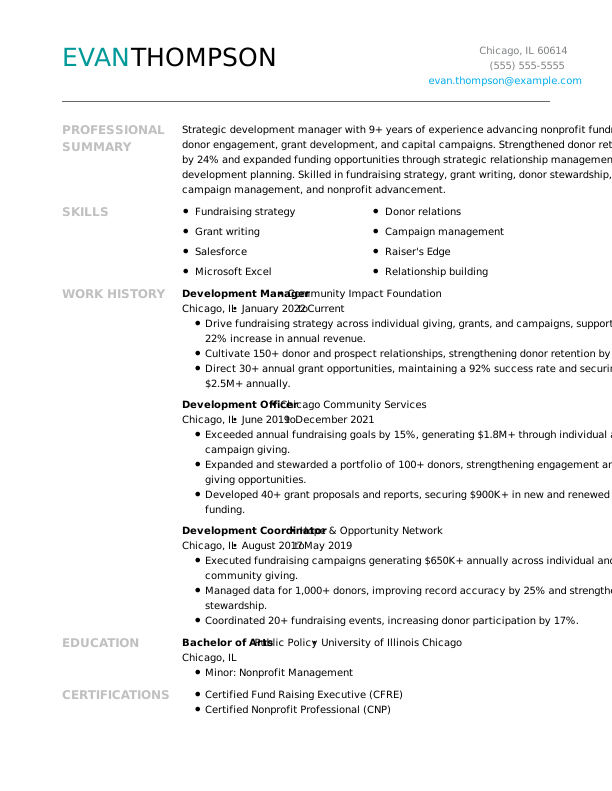
Development Manager Nonprofit Resume
This development manager resume highlights fundraising results, donor relations, grant writing, and nonprofit leadership experience for professionals pursuing advancement and development roles.
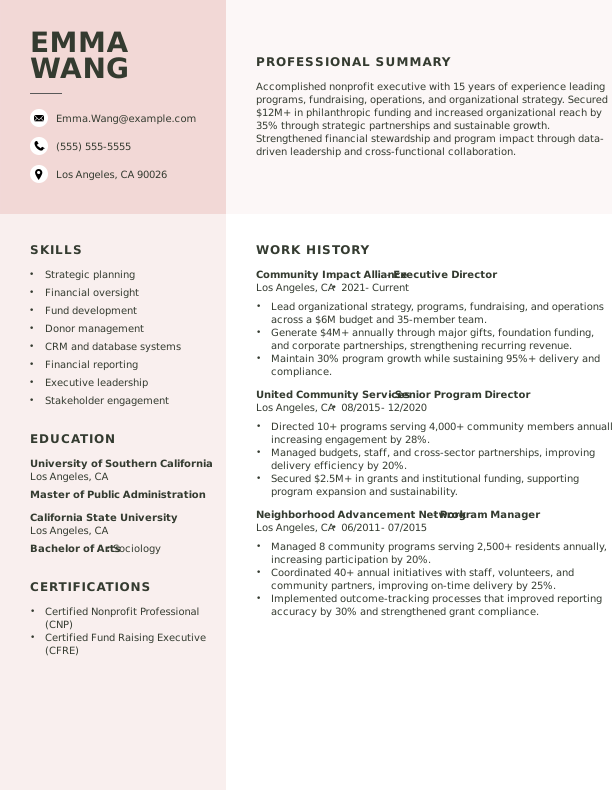
Executive Director Nonprofit Resume
This executive director resume showcases senior nonprofit leadership, fundraising, financial oversight, and program management experience, with measurable results that demonstrate organizational impact.
Nonprofit Resume Template (Text)
Use an editable text resume template for a nonprofit position, in a document or file, then copy, edit, and personalize.
Suki Kim
Buffalo, NY 14207
(555)555-5555
Suki.Kim@example.com
Professional Summary
Experienced nonprofit leader skilled in program development, fundraising, and community outreach. Proven track record in securing funding and improving program efficiency to impact thousands of lives.
Work Experience
Nonprofit Program Director
Community Impact Foundation – Buffalo, NY
May 2024 – Current
- Led team of 25 volunteers to raise program efficiency by 20%
- Secured $500K in funding through grant applications
- Developed outreach programs impacting 10,000+ community members
Charity Program Manager
Hope for All Organization – Buffalo, NY
January 2022 – April 2024
- Coordinated projects reducing homelessness by 15%
- Managed $1M annual budget effectively
- Initiated partnerships boosting donor engagement by 25%
Volunteer Coordinator
Helping Hands Network – New York, NY
January 2021 – December 2021
- Recruited and trained 200+ volunteers
- Increased volunteer retention rate by 30%
- Organized community events attended by 5,000 people
Education
Master of Social Work
University of California, Berkeley, Berkeley, CA
May 2020
Bachelor of Arts in Sociology
University of California, Berkeley, Berkeley, CA
June 2018
Certifications
- Certified Nonprofit Professional – Nonprofit Leadership Alliance
- Project Management Professional – Project Management Institute
Skills
- Grant Writing
- Volunteer Management
- Program Development
- Fundraising
- Community Outreach
- Budget Management
- Strategic Planning
- Public Speaking
How to Write a Nonprofit Resume
As a nonprofit professional, knowing how to write your resume means showcasing relevant skills, impact-focused experience, and clear formatting that helps hiring managers quickly understand your fit. Follow the steps below to highlight your strengths and customize your resume for each target role you’re applying to.
1. Contact Info
Your contact information should be clearly displayed at the top of your resume, making it easy for nonprofit recruiters to reach you quickly and professionally.
Include the following essential information:
- Full name (add relevant certifications if applicable)
- Phone number
- Professional email address
- City and state (ZIP optional)
- LinkedIn profile or portfolio (if relevant)
 PRO TIP
Avoid listing marital status, Social Security number, headshots, or full street addresses on your nonprofit resume unless an employer specifically requests them.
2. Resume Profile
A resume profile is a short introduction, typically two to four sentences, that highlights who you’re and what you bring to the role. Think of it as your first pitch to hiring managers. It gives them quick context about your strengths and makes them want to keep reading.
You place this section at the top of your resume, usually as either a summary or an objective. A summary focuses on experience, while an objective centers on goals: next, let’s compare how each one works for nonprofit roles.
- A resume summary is a brief approach that spotlights relevant nonprofit experience, community impact, and key skills alongside measurable accomplishments. It’s ideal for applicants with work history or transferable experience who want to showcase their results in nonprofit work.
- A resume objective is forward-looking and centers on your career goals, including what you want to achieve in the nonprofit sector. It’s a strong fit for recent grads, nonprofit career changers, or applicants with limited experience.
Let’s compare a resume summary with a resume objective to see how each supports nonprofit roles:
Nonprofit resume summary example:
Compassionate nonprofit professional with 6+ years of experience supporting community-based programs in fast-paced social services environments. Skilled in grant reporting, program coordination, and stakeholder engagement. Recognized for delivering measurable outcomes through data-informed initiatives and consistent, high-quality service delivery.
Nonprofit resume objective example:
Recent nonprofit graduate eager to begin a career supporting mission-driven work in a nonprofit organization. Passionate about community impact, with a strong commitment to service and skills in clear communication and collaborative problem solving for nonprofit teams, shelters, or community outreach programs.
3. Work Experience
The work experience on your resume is your biggest selling point. Employers look beyond job titles and duties to understand the impact you’ve made for people and communities.
Your nonprofit background shows how you can drive mission-focused outcomes, manage stakeholders, and coordinate programs—proof you’re qualified for the role.
The work experience section should contain:
- Job title
- Employer name and location
- Dates of employment (month/year)
- • Delivered mission-driven programs, managed stakeholders, secured grants, and improved community outcomes through reporting and volunteer coordination.
Tailor your bullets to the specific nonprofit role by using mission-aligned language and relevant program terms. Start each bullet with an action verb (like “Coordinated,” “Launched,” “Managed”) to clearly show your work in fundraising, volunteer management, or community outreach.
Add quantifiable impact wherever possible, such as dollars raised, volunteer hours, or event attendance. Specific outcomes show measurable value and help you stand out by proving how your efforts advanced the organization’s goals.
In general, consider following the format of:
[action verb] + [responsibility] = [result/achievement]
For example:
Coordinated fundraising for a nonprofit, managing 3 donor campaigns and securing $250K in gifts while raising event attendance by 30% through targeted outreach.
Note that you can also flip the result/achievement with the responsibility:
Increased monthly recurring donations by 22% by redesigning the CRM pipeline, segmenting prospects, and automating follow-up workflows.
For more nonprofit work experience examples, check elsewhere on the page.
With these techniques in mind, your resume bullets may look something like:
- Managed nonprofit programs serving 500+ beneficiaries annually, increasing on-time enrollment by 18% through streamlined intake workflows.
- Coordinated fundraising campaigns raising $250K in six months, improving donor retention by 12% year over year.
- Developed and maintained grant reporting for 10+ active awards, meeting all compliance deadlines and reducing rework by 20%.
- Used CRM and spreadsheet tools to track outreach metrics, increasing volunteer sign-ups by 35% across two regions.
- Collaborated with cross-functional teams and community partners to launch three new initiatives, expanding service coverage by 25%.
4. Skills
Your nonprofit skills section highlights fundraising, program delivery, and community partnerships to support mission-driven work. It helps recruiters and hiring managers spot fit and experience in seconds. Skills can be grouped into three categories: fundraising, program operations, and stakeholder engagement.
- Soft skills are personal traits and interpersonal abilities that shape how well someone works with others, whether you’re coordinating programs or supporting donors in the nonprofit sector.
- Hard skills are specific, quantifiable abilities you gain through education, training, or hands-on experience—such as grant writing, budgeting and financial reporting, and conducting program evaluations in nonprofit jobs.
- Technical skills are the practical abilities to use tools and systems to carry out work with accuracy and consistency, including Grant Management Systems and donor databases like Salesforce Nonprofit Cloud.
5 Soft Skills for Your Resume or CV
- Mission-driven leadership
- Volunteer and stakeholder coordination
- Empathetic community engagement
- Strategic program planning
- Impact-focused communication
5 Hard Skills for Your Resume or CV
- Grant writing and budgeting (QuickBooks, Excel)
- Impact measurement and KPIs (Tableau, Power BI)
- CRM database management (Salesforce Nonprofit Cloud, Bloomerang)
- Program evaluation methods (logic models, surveys)
- Compliance reporting and documentation (IRS 990, COI tracking)
In general, include a balanced mix of relevant skills that match the nonprofit job requirements to reflect your value for mission work and stakeholder support.
PRO TIP
If you’re a newer nonprofit professional, place your skills section higher on the resume after your summary so hiring managers see your most relevant strengths right away. If you’re more experienced, move it lower and weave key skills into your work history instead of listing them separately.
5. Education
Knowing how to format your education on a resume helps nonprofit employers quickly see your qualifications. Start the section with your most recent or most relevant degree for the role, and include the degree type and school name.
If you’re a recent graduate, you can also add your graduation year, GPA if it’s 3.5 or higher, honors, and coursework that connects directly to the mission or job duties.
Nonprofit resume education section example:
Bachelor of Arts in Nonprofit Management
New York University, New York, NY
Graduated: 2023 | President’s List (3 semesters)
PRO TIP
If you’ve progressed from an Associate Degree to a Bachelor’s degree, or earned multiple relevant degrees, list them in reverse-chronological order—put the Bachelor first.
6. Certifications
Listing certifications on your resume can help offset limited experience by showing you have the training behind the work.
Although not always part of a traditional resume, this section is valuable for most professionals in the field. Employers often require specific credentials for specialized roles, such as CPR and First Aid for community health positions or safeguarding training for youth programs.
Provide only relevant certifications and credentials that support your candidacy, and keep them up to date. List them clearly with names, issuing organizations, and expiration dates when applicable.
Nonprofit certification examples:
- Certified Nonprofit Professional (CNP) | License #NP-88421 | Nonprofit Leadership Alliance | Expires: 09/2028
- Nonprofit Financial Stewardship Certification (NFSC) | Association of Fundraising Professionals | Expires: 11/2027
- Grant Management Certification (GMC) | Grant Professionals Certification Institute | Expires: 03/2028
- Certified Volunteer Administrator (CVA) | Points of Light | Expires: 08/2027
Start Building Your Job-Winning Resume
Use Your Existing Resume
Import your current resume to transfer your information to one of our professional templates.
Create a New Resume
Start fresh with a template that catches your eye and follow the prompts to add your details.
Tailor Your Work History to Beat the ATS
Tailor your work history to the specific role by using relevant keywords and phrasing from the posting. Start by analyzing the job description carefully, then identify repeated skills, responsibilities, or required focus areas. Mirror those elements in your experience descriptions when possible.
This approach helps create an ATS-friendly resume that applicant tracking systems (ATS) can scan.
Key Takeaways
- Tailor your resume to each role by mirroring the organization’s language and required skills. This helps both ATS scanning and hiring managers spot the match quickly.
- Show outcomes with numbers when possible (e.g., raised $25K+, delivered 300+ services, improved retention by 10%, recruited 50 volunteers). Focus on impact beyond responsibilities.
- Pick a format that fits your experience level. New professionals can use a functional or hybrid layout, while experienced applicants often do best with a reverse-chronological resume.
More Resume & CV Examples
- Assistant Manager
- District Manager
- Employee Relations
- Front Office Manager
- Grant Writer
- Museum
- Office Manager
- Product Manager
- Volunteer
Cover Letters for Your Resume
Browse our library of cover letter examples to complete your application. A resume will have a better chance of getting noticed.
- Academic
- Account Manager
- Accountant
- Accounts Payable
- Administrative Assistant
- Admissions Counselor
- Architecture
- Artist
- Assistant Principal
- Babysitter
- Barista
- Bartender
- Bookkeeper
- Brand Ambassador
- Business Analyst
- Business
- Caregiver
- Chef
- Civil Engineering
- Computer Science
- Construction
- Consulting
- Cosmetology
- Custodian
- Customer Service
- Data Analyst
- Dental Assistant
- Dental Hygienist
- Electrical Engineering
- Emt
- Engineering
- Esthetician
- Event Coordinator
- Executive Assistant
- Finance
- Financial Analyst
- Firefighter
- Flight Attendant
- Graphic Designer
- Hair Stylist
- Healthcare
- Hr Generalist
- Investment Banking
- It
- Janitor
- Journalism
- Lab Technician
- Law Clerk
- Lawyer
- Librarian
- Logistics
- Makeup Artist
- Manager
- Marketing
- Marketing Manager
- Massage Therapist
- Mechanic
- Mechanical Engineer
- Medical Assistant
- Non Profit
- Nursing
- Occupational Therapy
- Office Manager
- Paralegal
- Personal Trainer
- Pharmacist
- Pharmacy Technician
- Photographer
- Physician Assistant
- Pilot
- Police Officer
- Project Manager
- Property Manager
- Psychology
- Receptionist
- Research Assistant
- Restaurant Manager
- Retail
- Sales
- Sales Manager
- School Counselor
- Security Officer
- Social Work
- Software Engineer
- Substitute Teacher
- Teacher
- Teaching Assistant
- Truck Driver
- Vet Tech
- Veterinary Assistant
- Web Developer
- Welder
Frequently Asked Questions
Last Update:
What resume format should I use for my nonprofit resume?
Choosing a resume format for nonprofit roles comes down to three primary options. Your experience level and what you want to highlight, like impact, leadership, or program delivery, guide the best fit:
- Chronological: The most popular format, a chronological resume focuses on your work experience, detailing your responsibilities and achievements. This makes it ideal for applicants with relevant job history that reinforces or adds credibility to their qualifications.
- Functional: Also known as a skills-based resume, the functional resume emphasizes a qualifications summary and expanded skills section instead of work history. This format can help nonprofit job seekers who have limited relevant experience or significant employment gaps highlight transferable strengths for the role.
- Combination: A combination resume mixes functional and chronological formats by pairing a skills section with detailed work experience. It helps nonprofit professionals highlight relevant abilities while showing career progression, making it useful for mid-career growth or moving into specialized roles.
Should I include a cover letter with my resume?
Yes, you should include a cover letter with your nonprofit job application in most situations. It gives you space to explain your motivation for the mission and connect your resume details to the role in a way hiring teams can quickly understand.
If writing feels intimidating, use a guide on how to write your cover letter and review cover letter examples that match nonprofit work, such as roles focused on community outreach, grants, or program support. You can also choose among different cover letter formats so your tone fits the organization and your experience stays easy to scan.
A cover letter generator can help you draft a strong first version by offering structure and prompts based on the posting.
How long should a nonprofit resume be?
For nonprofit roles, resume length often depends on how much relevant experience you have. Most professionals with less than 10 years of experience should aim for a single page, focusing on impact, key responsibilities, and any mission driven work that matches the job.
If you’re applying for a senior or specialized position, two pages can be appropriate as long as every section stays focused. Use clear headings and trim older or less relevant details so hiring managers can scan quickly.
What keywords should I include to pass applicant tracking systems (ATS)?
To pass ATS, pull keywords straight from the nonprofit job posting and mirror them in your resume where they fit naturally. If you see phrases like program management, grant writing, donor stewardship, community outreach, or volunteer coordination, use those exact terms in your experience bullets.
Add concrete proof too. List relevant certifications such as CPR, First Aid, or nonprofit Leadership programs if they apply to you. Include tools you know that match the role, like Salesforce nonprofit Cloud, DonorPerfect, Kindful, Mailchimp, Google Workspace, or QuickBooks. This helps ATS confirm your skills fast and supports interviews.

Elizabeth Muenzen is a Certified Professional Resume Writer (CPRW) and member of the Professional Association of Resume Writers & Career Coaches who empowers job seekers to take control of their career paths using Monster’s comprehensive job search and resume tools.
See More From Elizabeth MuenzenExplore Related Career Advice


How to Put Transferable Skills on Your Resume: 120 Skills, Examples, & Tips

Updated:
Aug 27, 2026
|

16 min read


How to Write a Functional Resume (Formatting Tips, Template, & Examples)
Updated:
Aug 7, 2026
|
17 min read


Functional vs Chronological Resume: Which Format Is Right for You?
Updated:
Aug 3, 2026
|
16 min read
100+ Resume Adjectives to Help You Write a Stronger Resume in 2026 (With Examples)
Updated:
Jul 30, 2026
|
12 min read